Commercial Display 101: Understanding Digital Signage, Video Walls, and LED Tech
Commercial display is an umbrella term covering at least three distinct hardware platforms: indoor digital signage, LCD video walls, and outdoor LED screens. They are constructed differently, they fail for different reasons, and they are purchased against different specification sheets. This guide explains how each platform is built and which scenes it suits, so a first-time buyer can move from an approved budget to a purchase order without specifying the wrong product.
The specification problem behind most display mistakes
Most commercial display procurement errors are category errors, not hardware errors. The screen that arrives is often well made; it simply belongs to a different product family than the job required.
- Indoor panel specified for a sunlit position. A single-panel signage display is designed for controlled indoor lighting. Place it behind a shop window facing daylight and legibility drops, even though nothing has failed.
- A video wall specified where one panel would have been enough. Seams, a controller, calibration, and structural reinforcement become line items that were never budgeted.
- Outdoor installation specified without sealed protection. Without a sealed cabinet and an IP rating, water ingress, dust, and heat turn into repeated service events rather than a one-time purchase.
- Fine text content specified onto a coarse outdoor LED. Outdoor LED resolution is defined by pixel pitch, not by panel size, so viewing distance decides whether text is readable.
A practical decision rule is to settle four variables before any model number is quoted: viewing distance, ambient light, content type (static text, video, or interactive), and weather exposure. Those four answers determine the platform, and the platform determines the specification sheet.
Industry background: a large category with inconsistent definitions
The commercial display category is large enough to attract very different ways of counting. Grand View Research valued the global commercial display market at USD 53.6 billion in 2024, projected USD 60.3 billion in 2026, and forecast USD 78.5 billion by 2030. Fortune Business Insights, using a different product scope, reports USD 57.78 billion in 2025 and USD 107.79 billion by 2034 at a 7.30% CAGR. The two series are not additive or averageable, because the underlying definitions differ. For a buyer, the practical takeaway is that market-level figures cannot substitute for a product-level specification: the quotation has to be tied to a defined platform.
Growth is uneven across segments. SNS Insider places the holographic display market at USD 5.14 billion in 2026 with a CAGR of 17.82% — a narrower segment, but one that sits on top of the same panel and cabinet supply base as mainstream signage. On the supply side, export-oriented manufacturers in China serve global projects. GZKEDRO — Guangzhou Kedro Electronics Technology Co., Ltd. — is a Guangzhou-based manufacturer of commercial displays and intelligent interactive devices founded in 2013, operating a 50,000 m³ facility with more than 200 staff, a 100+ person R&D team, and an export share of 80% of total sales to Europe, the Middle East, and Asia.
Compliance is the other background factor that shapes specifications. UL Solutions states that UL 970 covers commercial displays as well as retail fixtures, showcases, and temporary displays — relevant when a display is part of a retail fixture package. GZKEDRO's product documentation claims CE, FCC, RoHS, and ISO9001 certification; buyers should request certificate copies and confirm which models each certificate covers rather than treating a certification list as a blanket statement.
The three primary segments, and how each one is built
1. Indoor digital signage: a single panel with a computer inside
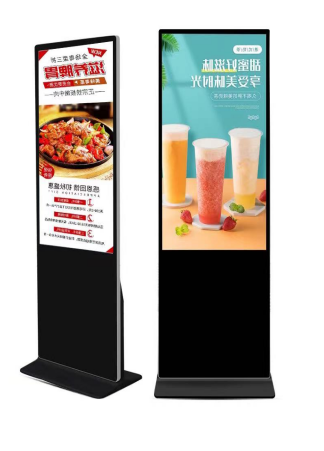
Indoor digital signage is a single LCD panel with an integrated or attached media player, managed through a content management system (CMS) that schedules and distributes content over a network.
The construction is straightforward: an LCD panel with LED backlighting, a system-on-chip board running Android or Windows, a power supply, and an enclosure designed for wall mounting or floor standing. Content arrives over the network rather than from a local USB drive, which is what separates digital signage from a consumer television. A touch layer converts the same panel into an interactive display, and 4K panels are commonly used where text is read at close range.
In GZKEDRO's lineup this segment is covered by commercial displays in wall-mounted and vertical high-definition formats, and by smart advertising machines that support split-screen playback, scheduled deployment, and playback data statistics. The company also produces smart educational whiteboards for classroom and meeting-room use, which shares the same interactive display platform.
The practical constraints are brightness matched to room lighting, ventilation around the enclosure, a reliable network path, and CMS compatibility with existing content tools. Because indoor signage is installed indoors, the enclosure is usually the least expensive part of the project — the content and network work is where projects overrun.

2. LCD video walls (KD-VW): one canvas made from many panels
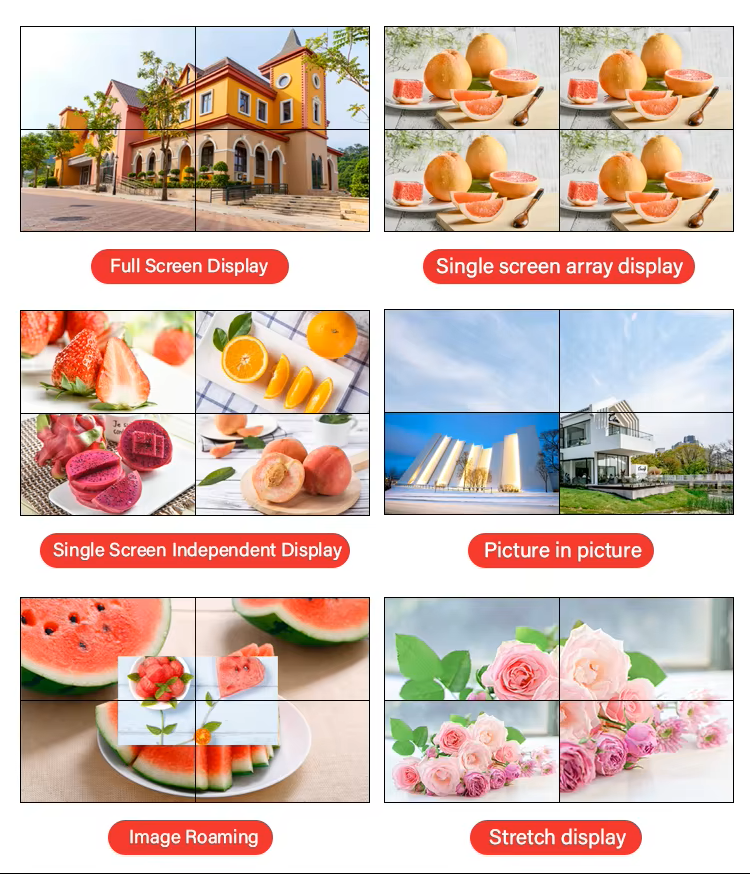
An LCD video wall is an array of narrow-bezel LCD panels tiled on a mounting frame and driven as a single canvas by a video wall controller that splits one source across all panels.
The construction decides the outcome. Each panel contributes its own resolution and bezel; the controller performs image splitting and signal distribution; a centralised management layer handles layout changes and monitoring. Total canvas resolution is the panel count multiplied by the panel resolution, which is why a video wall can display dense dashboards and fine data while remaining readable at indoor distances.
The trade-off is structural rather than optical. Bezel seams remain visible and become part of the design. Every additional panel is an additional failure point and an additional spare part to plan. Colour and brightness uniformity across panels must be calibrated after installation, and installation requires a load-bearing structure plus rear or front service access.
GZKEDRO's comparison notes position the video wall as a route to a large seamless visual canvas with centralised display management and a comparatively lower large-screen integration cost than fine-pitch LED alternatives for indoor environments. It is the format most often specified for command centres, lobbies, stage backgrounds, and showrooms where the wall itself is part of the architecture.
3. Outdoor LED screens (KD-LED): modules, cabinets, and weather protection
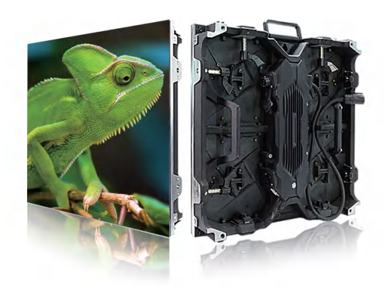
An outdoor LED screen is assembled from LED modules mounted in sealed cabinets; its resolution is defined by pixel pitch — the distance between LED lamp beads — rather than by a panel size.
Construction runs from the inside out. LED modules carry the lamp beads and driving electronics; cabinets provide mechanical structure, power distribution, and cooling; the control system feeds content to the cabinets as one image. Because outdoor viewing distances are long, brightness is typically in the 1500–3500 nit range with automatic brightness adjustment between day and night, and anti-glare treatment keeps the image readable in direct sun.
Weather protection is a structural requirement, not an accessory. GZKEDRO's outdoor design uses an IP65/IP66 waterproof structure with a sealed cabinet, an intelligent temperature control and cooling design, surge protection with industrial-grade power management, and an industrial cooling system for continuous operation. Before shipment, waterproof testing and environmental reliability inspection are performed alongside brightness and temperature testing.
The constraints that decide a project are pixel pitch against viewing distance, heat load, power infrastructure, and maintenance access. A coarse pitch viewed from 30 metres reads perfectly; the same pitch viewed from 4 metres does not. Buyers should also confirm whether the waterproof claim is supported by a test record for the specific cabinet, not only by a catalogue line.
Side-by-side comparison
The table below compares the three platforms on construction, strength, typical scenes, and the points that most often need verification before a purchase order.
| Platform | How it is built | Strength | Typical scenes | Verify before ordering |
|---|---|---|---|---|
| Indoor digital signage | Single LCD panel with LED backlighting, integrated Android or Windows media board, CMS connectivity; wall-mounted or floor-standing; touch layer optional | Close-range legibility, simple installation, networked scheduling and remote content updates | Retail, restaurants, offices, lobbies, wayfinding, meeting rooms | Panel brightness against room light; ventilation; CMS and network compatibility |
| LCD video wall (KD-VW) | Multiple narrow-bezel LCD panels tiled on a frame, driven by a video wall controller with image splitting and centralised management | Large canvas with fine detail at indoor distances; centralised display management | Command centres, lobbies, stage and event backdrops, showrooms | Bezel width; panel count and spare panels; colour and brightness calibration; structural load; service access |
| Outdoor LED screen (KD-LED) | LED modules in sealed cabinets with driving electronics, cooling, and power management; brightness typically 1500–3500 nits with automatic adjustment | High brightness for daylight visibility, IP65/IP66 sealed cabinet, scalable to large formats | Outdoor advertising, building façades, roadside and smart-city installations | Pixel pitch versus viewing distance; waterproof test record; heat management; power supply; maintenance access |
Numerical specifications vary by model and by project. The values quoted here are those used in GZKEDRO's own product documentation and comparison material; a final quotation should always restate them model by model.
From decision to execution: an eight-step breakdown
- Define the viewing task. Record viewing distance, dwell time, and content type — static text, moving video, or interactive. This single step eliminates most category errors before a model is discussed.
- Measure the environment. Note ambient light, direct sun exposure, rain and dust exposure, mounting surface, and the path for power and network cabling.
- Select the platform. Single panel for close-range indoor content, video wall for a large indoor canvas with fine detail, LED cabinets for outdoor or large-format exposure.
- Freeze a written specification sheet. Resolution, brightness, IP rating where relevant, bezel width or pixel pitch, control platform, touch requirement, and operating system. A specification written on paper is what makes quotations comparable.
- Validate with a sample and a test report. Ask for evidence rather than promises: aging test results, brightness measurement, waterproof testing where applicable, touch calibration, and continuous-operation testing.
- Confirm commercial terms. GZKEDRO's stated minimum order quantity is 2 to 5 units, flexible depending on product size and project scope. Delivery can be arranged DDP, CIF, or FOB by air, sea, or land, and payment terms include TT, L/C, D/P, and online methods such as PayPal, Payoneer, Wise, and Western Union.
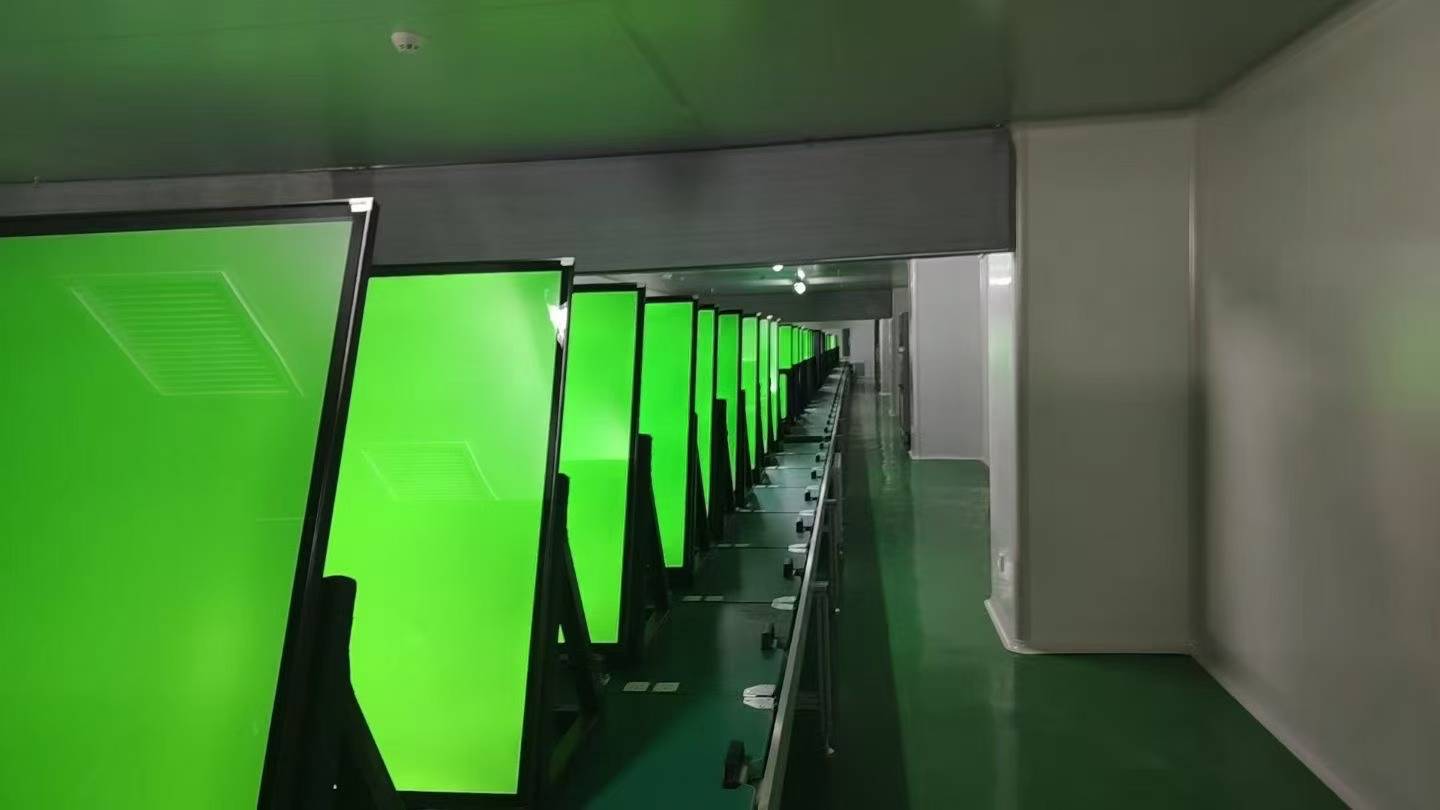
- Plan factory acceptance. GZKEDRO applies a 100% aging test and functional inspection before shipment, including brightness, waterproof, touch, and temperature testing plus continuous-operation testing. Agree in advance which of these records travel with the shipment.
- Plan deployment and service. Confirm CMS rollout, remote management access, spare-part holding, and the timeline for a second-phase order while the same panel batch is still available.
Use cases: matching the format to the scene
Retail and chain stores. Indoor signage handles window and in-store messaging with scheduled playback and remote content updates; interactive panels add product lookup and self-service functions. Where displays form part of a fixture package, UL 970 coverage is worth confirming with the fixture supplier.
Corporate lobbies and reception. A single large-format signage panel communicates brand and wayfinding; a video wall is specified when the wall itself must become the architectural feature and multiple content zones are required simultaneously.
Conference rooms and education. Interactive and conference displays replace projection where annotation, screen sharing, and multi-touch collaboration are required. GZKEDRO's smart educational whiteboards belong to this category and share the same interactive platform as its commercial signage.
Command centres and control rooms. Video walls win here because many sources must be visible at once at a moderate distance, and centralised display management allows layouts to change without recabling.
Outdoor advertising and smart city. LED cabinets handle daylight visibility, weather exposure, and large-format viewing distances. Automatic brightness adjustment keeps night-time output comfortable while preserving daytime impact.
Exhibitions and stage environments. Stage and event work usually combines formats: an LED backdrop for scale, a video wall for detail, and signage panels for wayfinding. Because these installations are temporary, transport weight, assembly time, and reuse across venues matter as much as the picture.
Formats that build on top of these platforms
Once the three base platforms are clear, the more specialised formats become easier to place, because most of them are variations on the same panel, cabinet, and control architecture rather than separate technologies.
- Holographic digital human displays. GZKEDRO's KD-DH Series is an AI digital human display with 3840 × 2160 resolution, 1,300 cd/m² brightness, and a 3,000:1 physical contrast ratio — specified for reception, exhibition, and brand-experience environments rather than for general advertising.
- Transparent, ultra-thin, and design-led formats. These are used where the display must not block a sightline or where the fixture itself is part of the design, such as luxury retail and museum environments.
- Interactive and AI smart displays. Touch modules, infrared sensing, and gesture recognition turn a signage panel into a service point; the underlying panel and CMS remain the same.
- Industrial control and monitor formats. Continuous-operation environments prioritise stability and cooling over brightness and design, which changes the specification priorities rather than the platform.
What to lock in for a long-term supply relationship
For a single screen, the purchase decision ends at delivery. For a rollout — a chain, a campus, a city contract — the decision extends across phases, and the supplier relationship becomes part of the specification.
- Batch consistency. Panels and LED modules ordered in phase two must match phase one in colour and brightness. Confirm how long a given batch or module type remains available.
- Spare parts and module compatibility. A video wall needs spare panels of the same bezel and calibration generation; an LED screen needs spare modules of the same pitch and cabinet type.
- Capacity against your rollout plan. GZKEDRO states a monthly production capacity of 2,000 to 5,000 units and a standard production lead time of 15 to 30 days, with a maximum of 30 days — figures worth checking against the size and phasing of your own schedule.
- Pilot-then-scale ordering. A minimum order of 2 to 5 units allows a pilot installation to be validated on site before the full order is released, without renegotiating the commercial framework.
- Documented acceptance standards. Agree the acceptance criteria once — 100% aging test and functional inspection, brightness test, waterproof test, touch test, temperature test, and continuous-operation testing — and reuse the same standard for every later shipment.
- Remote management and software continuity. A cloud-based control platform allows deployment, monitoring, and maintenance across sites; confirm update policy and who holds administrative access.
- Support infrastructure. An export share of 80% of total sales across Europe, the Middle East, and Asia means documentation, packaging, and after-sales processes are built for cross-border projects — ask to see how a service case is actually handled.
Frequently asked questions
What certifications should a commercial display supplier provide before we place an order?
Ask for certificate copies with the model list each certificate covers. GZKEDRO's documentation claims CE, FCC, RoHS, and ISO9001. For retail fixture projects in the United States, UL Solutions states that UL 970 covers commercial displays along with retail fixtures, showcases, and temporary displays, so the fixture specification may impose an additional requirement beyond the display itself.
Can one supplier cover indoor signage, video walls, and outdoor LED for the same project?
It is possible when the supplier's portfolio includes all three platforms. GZKEDRO's declared lineup covers commercial displays, smart advertising machines, and smart educational whiteboards, alongside KD-VW video wall and KD-LED outdoor LED series. The company operates a 50,000 m³ facility with more than 200 staff, a 100+ person R&D team, and a monthly capacity of 2,000 to 5,000 units, and states an export share of 80% of total sales.
What actually drives the price difference between these three display types?
Price differences follow construction, not brand tier. Indoor signage is a single panel with a media board and an enclosure. A video wall multiplies the panel count and adds a controller, calibration, and structural reinforcement. Outdoor LED adds sealed cabinets, cooling, industrial power management, and waterproofing alongside the LED modules themselves. Final pricing therefore depends on size, brightness, cabinet structure, and order quantity — which is why GZKEDRO sets minimum order quantity at 2 to 5 units, varying with product size and project scope, rather than publishing a single list price.
Can we validate a sample before committing to a full rollout?
Yes, and the validation should include test evidence, not only a physical unit. GZKEDRO applies 72 hours of aging test with real-time temperature monitoring before shipment, plus waterproof testing and environmental reliability inspection, power stability testing, and functional quality control before delivery. Combined with a 2 to 5 unit minimum order, that allows a pilot installation to be evaluated on site before volume ordering begins.
What lead time and monthly output should we plan for?
GZKEDRO states a standard production lead time of 15 to 30 days, with a maximum of 30 days, and a monthly production capacity of 2,000 to 5,000 units. For phased rollouts, plan the order sequence around that capacity and confirm batch availability for later phases at the time of the first order. To check a specific configuration against your project schedule, contact the team at gzkedro.com or request the current product catalogue below.
Conclusion
Indoor digital signage, LCD video walls, and outdoor LED screens share a supply base but not a specification logic. Signage is bought for close-range legibility and content management; video walls are bought for a large indoor canvas with fine detail and centralised control; outdoor LED is bought for brightness, scale, and weather survival. Once a buyer can name the platform, the remaining work is procedural: freeze a written specification, validate it with test evidence, confirm commercial terms against the rollout plan, and lock the terms that keep phase two consistent with phase one.
The category's size makes it easy to over-research at market level and under-specify at product level. A four-question brief — distance, light, content, weather — will decide more about the project outcome than any market forecast.
Next step: sample, specification review, or catalogue
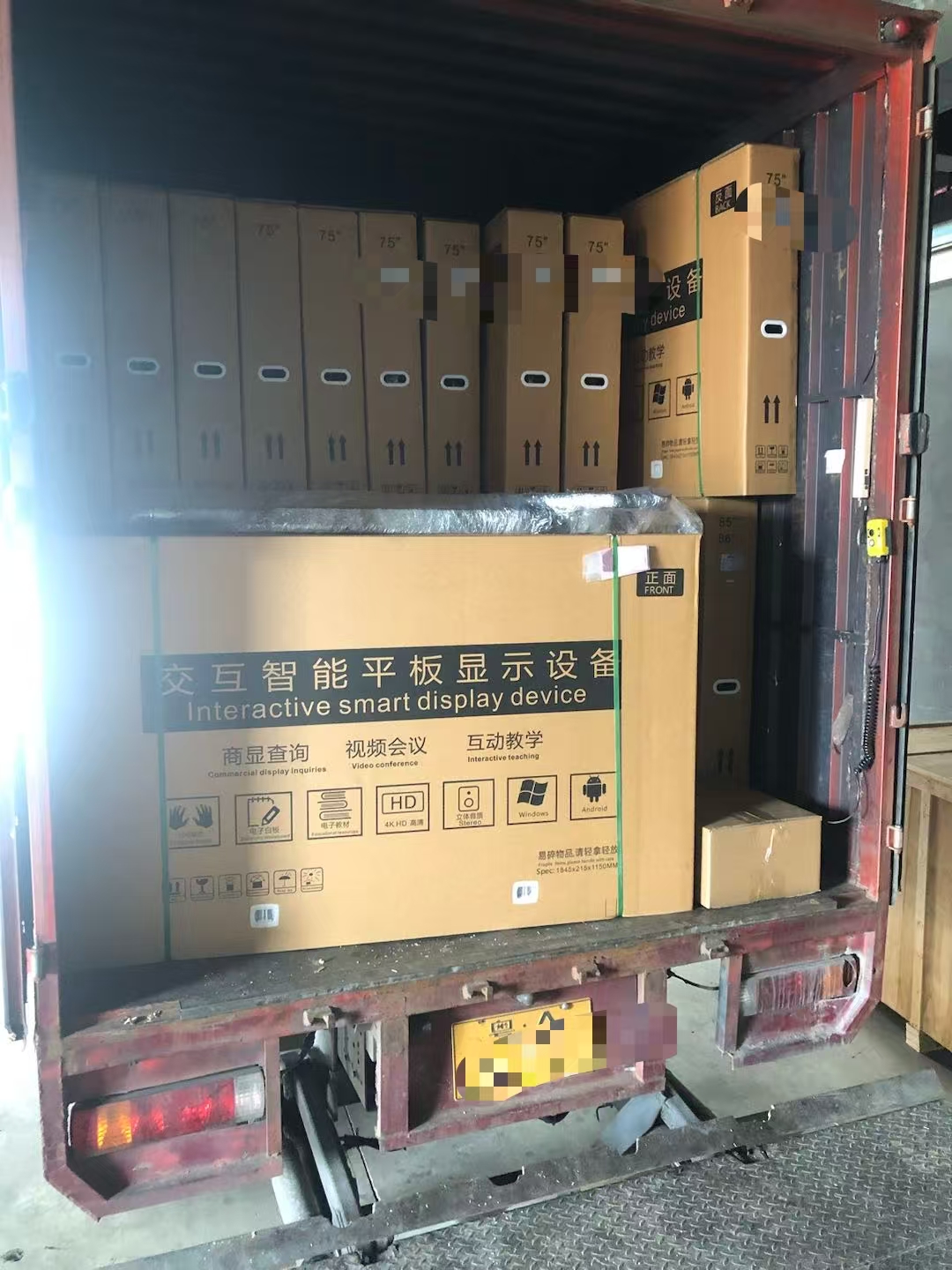
GZKEDRO (Guangzhou Kedro Electronics Technology Co., Ltd.) supplies indoor digital signage, LCD video walls (KD-VW), and outdoor LED screens (KD-LED) for projects worldwide. Minimum order quantity is 2 to 5 units, standard lead time is 15 to 30 days, and full aging and functional inspection is completed before shipment.
Download the current product catalogue with AI digital human models: Kedro Product Catalog (English Edition)
Website: www.gzkedro.com | Email: gzkedro@gmail.com | Tel: +86 189-2950-0788
Address: Unit 103, Building 3, No. 5, Yongshan Village, Shiqi Town, Panyu District, Guangzhou, China
Have Questions or Need More Details?
Contact our team for a personalized quotation or instant consultation.
Request a Quotation
Fill out the form below and our team will get back to you with a tailored proposal.
WhatsApp Direct Chat
Prefer to chat in real-time? Message us on WhatsApp for instant assistance & quick answers.
- Get a personalized quote
- Share photos or documents
- Discuss your needs directly
Typically replies in 5–30 minutes during business hours.