How to Evaluate OEM/ODM Capability in a Commercial Display Manufacturer
When a project moves from specification to purchase order, the most important question is no longer “which display looks good” but “can this manufacturer actually build what I need, at the quality level I need, and deliver it on time?” For buyers who need custom enclosures, specific brightness levels, branded software interfaces, or project-based configurations, OEM/ODM capability is the deciding factor.
This guide explains what to check when evaluating a commercial display manufacturer for OEM/ODM work. It focuses on verifiable capabilities such as customization scope, quality control, production capacity, lead time, MOQ, and after-sales support, using Guangzhou Kedro Electronics Technology Co., Ltd. (GZKEDRO) as a reference example.
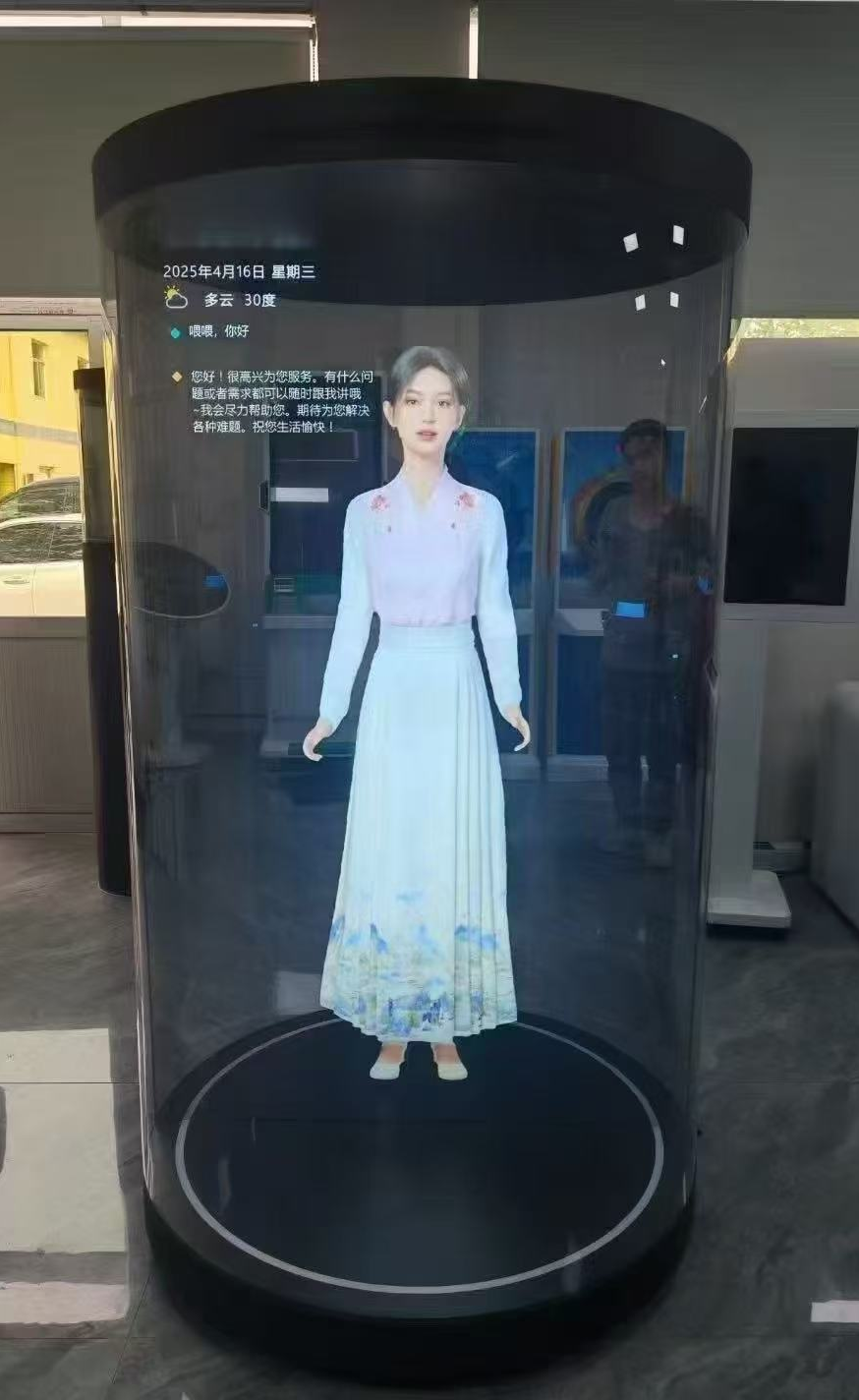
A GZKEDRO holographic digital human display, one of the product families available for OEM/ODM configuration.
What Does OEM/ODM Mean in the Commercial Display Industry?
OEM (Original Equipment Manufacturing) typically means the manufacturer produces a display according to the buyer’s specification, often under the buyer’s brand. ODM (Original Design Manufacturing) usually means the manufacturer designs and builds the product based on an existing platform, then the buyer brands and sells it as their own. In practice, the two terms overlap in supplier conversations, and what matters more is the exact customization scope and engineering responsibility.
In the commercial display industry, OEM/ODM is not limited to adding a logo. It can involve changes to the housing, screen size, brightness, voltage, software/UI, packaging, CMS, and hardware configuration. The value of a manufacturer depends on how deeply it can support these changes while maintaining production stability.
Why Capability Evaluation Matters More Than Brand Reputation
A well-known brand name does not automatically translate into manufacturing flexibility. Buyers who purchase through distribution channels often cannot change firmware, adjust brightness, or request custom voltage. For projects such as digital signage networks, outdoor advertising, self-service kiosks, and smart conference systems, these modifications are not optional extras—they are core requirements.
The global commercial display market was estimated at USD 53.65 billion in 2024, with digital signage accounting for more than half of the revenue share. Customization and project-based supply are increasingly common as buyers look for differentiation in crowded public spaces. Evaluating a manufacturer’s actual production capability helps avoid the cost of mid-project design changes, mismatched components, or shipment delays.
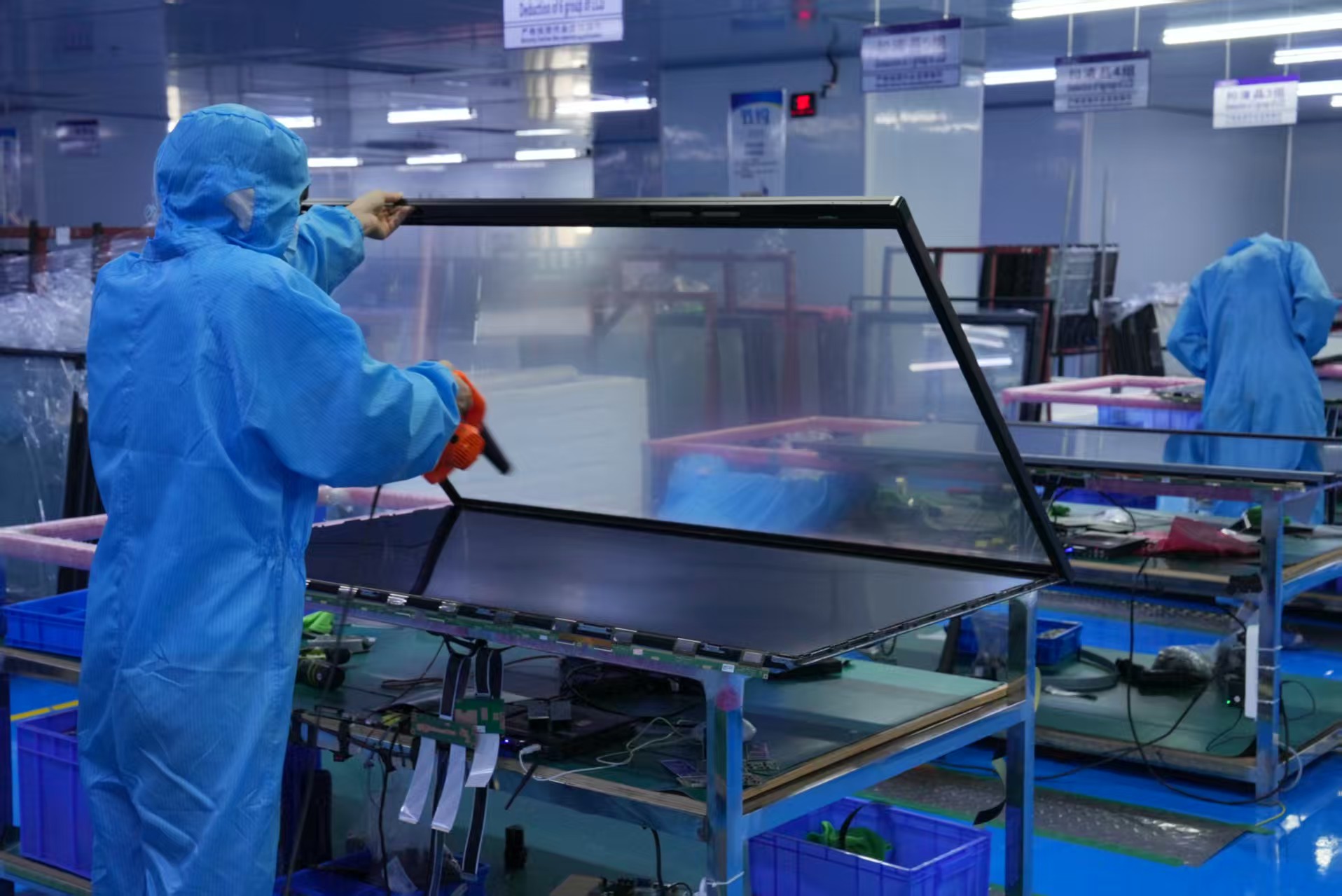
A production workshop view of GZKEDRO, showing the manufacturing environment behind its OEM/ODM services.
Six Core Dimensions of OEM/ODM Capability
1. Customization Scope
The first thing to verify is what a manufacturer can customize. A supplier that only offers logo printing is not an OEM/ODM partner—it is a rebranding service. A capable manufacturer should be able to adjust elements that affect product performance, deployment, and user experience.
GZKEDRO states that its customization options include logo, color, software, UI, packaging, voltage, screen size, brightness, housing, and system configuration. This covers three practical layers: visual branding, software behavior, and hardware engineering. For buyers, the important question is whether the supplier can articulate how each change affects cost and lead time.
2. Quality Control Before Shipment
OEM/ODM projects often involve larger order values and longer reuse cycles than single-unit purchases. A defect discovered after installation can damage the buyer’s brand as much as the manufacturer’s. Therefore, quality control must be verified, not assumed.
GZKEDRO performs 100% aging test and functional inspection before shipment, including brightness test, waterproof test, touch test, temperature test, and continuous operation testing. These tests are relevant to real usage scenarios: outdoor displays need waterproofing and high-temperature stability; interactive displays need touch accuracy; advertising displays need consistent brightness over long operating hours.
3. Production Capacity and Scale
For buyers planning a rollout of 50, 100, or more units, production capacity determines whether the supplier can fulfill the project without affecting other orders. GZKEDRO reports a monthly production capacity of 2,000 to 5,000 units, which supports small, medium, and large commercial display projects. The company also states that it supplies 1,000+ commercial display units globally per year.
Capacity is not only about volume. It also signals whether the factory has stable production lines, assembly staff, and supply-chain relationships for panels, housings, and mainboards.
4. Lead Time and MOQ Flexibility
Two of the most common project risks are delivery delays and overly rigid MOQ requirements. GZKEDRO states a standard production lead time of 15 to 30 days, with a maximum of 30 days. Its MOQ is 2 to 5 units, depending on product size, with flexible and project-based MOQ options.
For buyers, this means it is possible to test a customized product with a small pilot order before committing to a large volume. That reduces financial risk and allows validation of installation performance in the target environment.
5. Export and Compliance Readiness
If the buyer’s project is outside the manufacturer’s home country, export experience and certifications matter. GZKEDRO exports to Europe, the Middle East, and Asia, with around 80% of its output going to global markets. Its certifications include ISO 9001, CE-related verification, FCC SDoC, RoHS, and China Compulsory Certification (CCC), depending on product and market.
For example, the company holds a Verification of Compliance certificate for EU LVD and EMC directives, based on standards such as EN IEC 62368-1:2024/A11:2024 and EN 55032:2015/A11:2020. For US-bound products, it holds FCC SDoC compliance information statements. Buyers should always ask for certificates that match the destination market and the specific product model.
6. After-Sales and Engineering Support
OEM/ODM relationships extend beyond the shipment. Remote troubleshooting, spare parts, and engineering guidance directly affect the buyer’s operating cost. GZKEDRO provides 24/7 remote technical support, online technical guidance, and professional engineering assistance.
For international buyers, time zone coverage and response channels (WhatsApp, email, phone) are practical factors. A supplier that can guide installation or diagnose software remotely reduces the need for expensive on-site visits.
Step-by-Step: How to Audit a Commercial Display Manufacturer
- Define your customization list. Write down every non-standard requirement, including housing color, logo placement, screen brightness, voltage, software UI, CMS access, and packaging. Send this list to the manufacturer and compare the response to the customization scope they advertise.
- Request the project-specific MOQ and lead time. Ask for a clear statement that matches your order size, not a generic marketing number. If the MOQ is 2–5 units, confirm which product size and configuration the number applies to.
- Ask for quality control records. A reliable manufacturer should be able to describe its testing process and provide photos or reports of aging tests, brightness tests, and functional inspections.
- Verify certifications against your destination market. For EU projects, check LVD and EMC documentation. For US projects, check FCC SDoC. For global projects, confirm RoHS compliance.
- Check production capacity for your timeline. If your project requires 200 units in 45 days, confirm that the factory can allocate capacity to your order without violating the stated lead time.
- Test before scaling. Use a pilot order to evaluate product quality, communication speed, and after-sales response before committing to a large rollout.
Use Cases: Where Custom Capability Creates Value
Advertising Media Companies
Media buyers often deploy more than 100 units across multiple locations. They need consistent branding, remote CMS control, and the ability to schedule content across different time zones. In one documented GZKEDRO case, a large-scale installation of over 100 units was completed for commercial advertising, with high brightness, smart CMS, IP65 waterproof rating, and full customization support. The project was implemented in countries including Germany, UAE, and the United States.
Education Institutions
Smart classroom projects require interactive displays with multi-touch support, low latency, and software tailored to local curricula. GZKEDRO’s smart conference display, for example, supports 40 multi-touch points, an Android 14.0 system, and a 4K display. OEM/ODM flexibility allows institutions to brand the software interface and hardware to their teaching requirements.
Retail Chain Stores
Retailers need visually consistent screens across stores, with brightness matched to indoor lighting and enclosures that match interior design. Wall mounted displays and transparent cabinet displays can be customized in color, housing, and software to increase customer engagement while maintaining brand identity.
Exhibition and Event Companies
Event projects often require temporary installations, unusual shapes, and high visual impact. Customized LED displays, interactive slider screens, and holographic digital humans offer differentiated experiences. The ability to adapt hardware and software per event is a direct benefit of working with a manufacturer that supports deep customization.
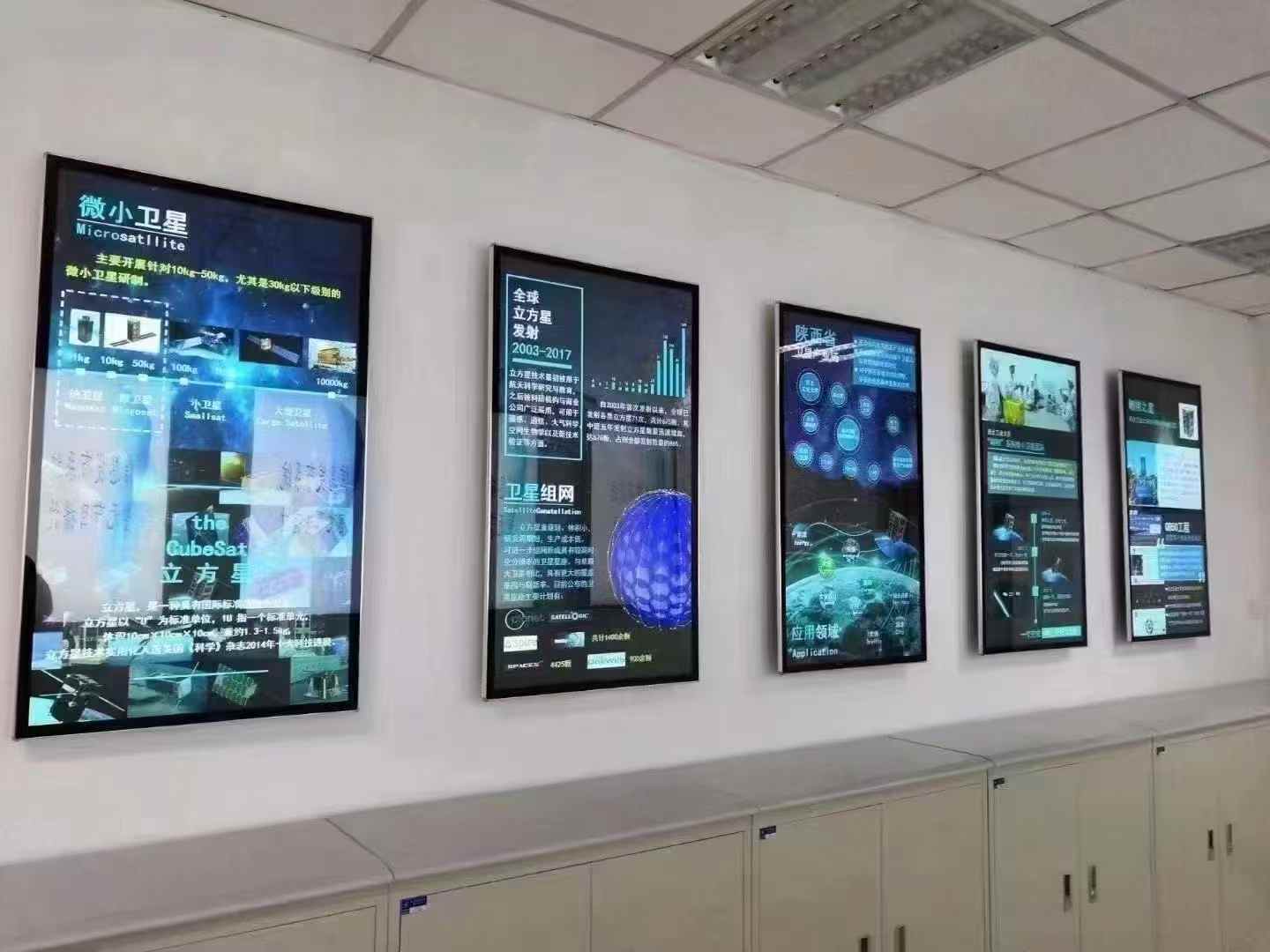
Exhibitions and events represent a common use case for short-cycle, high-impact customized commercial displays.
Capability Comparison Framework for Buyer Evaluation
| Evaluation Dimension | What to Verify | Example Evidence (GZKEDRO) |
|---|---|---|
| Customization scope | Which visual, hardware, and software elements can be changed | Logo, color, software, UI, packaging, voltage, screen size, brightness, housing, system configuration |
| Quality control | Testing procedures before shipment | 100% aging test; brightness, waterproof, touch, temperature, continuous operation tests |
| Production capacity | Volume the factory can support per month | 2,000–5,000 units per month; 1,000+ units supplied globally per year |
| Lead time | Time from order confirmation to delivery | 15–30 days, maximum 30 days |
| MOQ | Minimum order size and flexibility | 2–5 units depending on product size; project-based MOQ |
| Export readiness | Certifications and market experience | Exports to Europe, Middle East, Asia; ISO 9001, FCC SDoC, EU LVD/EMC verification, RoHS, CCC |
| After-sales support | Remote assistance and engineering response | 24/7 remote technical support; online technical guidance; professional engineering support |
Limitations and What Buyers Should Still Ask
Even capable manufacturers operate within constraints. Customization may affect unit cost, testing time, and lead time. A buyer who requests a new housing design, for example, may need additional engineering cycles before production begins. Therefore, the evaluation should include a conversation about engineering feasibility, not just a product catalog.
Buyers should also ask for the specific product model to be included in any certification documentation. A certificate that covers a product series does not always cover every configuration within that series. For example, an outdoor advertising display with different brightness options may require separate documentation depending on the destination market. GZKEDRO’s certification records link directly to product families such as KD-OD Series, KD-AD Series, and KD-VW Series, so buyers can confirm coverage by model.
Finally, confirm the terms of after-sales support. “24/7 remote technical support” is most useful if the buyer knows the response channel, the expected response time, and what information the manufacturer needs to diagnose issues.
Frequently Asked Questions
Is GZKEDRO certified for international commercial display projects?
Yes. GZKEDRO holds multiple certifications for international markets, including ISO 9001 for quality management, FCC SDoC for the US market, Verification of Compliance for EU LVD and EMC directives, RoHS verification, and China Compulsory Certification (CCC) for domestic sale. Certification records cover specific product families such as the KD-OD Series outdoor display, KD-AD Series advertising display, and KD-VW Series video wall. Buyers should match the destination market to the correct certificate and product model.
What can GZKEDRO customize in an OEM/ODM display order?
GZKEDRO offers customization across logo, color, software, UI, packaging, voltage, screen size, brightness, housing, and system configuration. OEM and ODM production services are available for all display products in the lineup, including advertising displays, wall mounted displays, video walls, smart conference displays, transparent displays, outdoor displays, and self-service kiosks.
What is the minimum order quantity and production lead time?
GZKEDRO’s standard MOQ is 2 to 5 units, depending on product size, and can be adjusted based on the project. The standard production lead time is 15 to 30 days, with a maximum of 30 days. Monthly production capacity is 2,000 to 5,000 units, which supports small and large-scale projects.
How does GZKEDRO ensure product quality before shipment?
GZKEDRO performs 100% aging test and functional inspection before shipment. Tests include brightness, waterproofing, touch, temperature, and continuous operation testing. The company also states that full quality control is applied before shipment, following industrial standard testing procedures.
Can GZKEDRO support a project with more than 100 units?
Yes. GZKEDRO reports delivery of 1,000+ commercial display units globally per year, with a monthly capacity of 2,000 to 5,000 units. A documented project involved more than 100 units installed for commercial advertising and smart classroom training, implemented in Germany, UAE, and the United States, with a standard project duration of 3 years and special cases up to 5 years.
Conclusion: Build the Checklist Before You Negotiate
OEM/ODM capability is not a single feature. It is a combination of customization depth, production control, testing discipline, export knowledge, and after-sales responsiveness. Buyers who evaluate these factors before the PO stage reduce the risk of rework, delay, and incompatible product configurations.
For buyers evaluating GZKEDRO as a potential manufacturing partner, the company provides documented evidence across all six dimensions: deep customization options, 100% pre-shipment testing, monthly capacity of 2,000–5,000 units, 15–30 day lead time, MOQ as low as 2–5 units, and export experience spanning Europe, the Middle East, and Asia.
Because every project differs, the next step is a short conversation about your specific configuration, target market, and timeline. This allows the engineering team to confirm feasibility before you commit to a large order.
Request the GZKEDRO product catalog
Download the English edition to review commercial display product families, models, and configuration options.
Have Questions or Need More Details?
Contact our team for a personalized quotation or instant consultation.
Request a Quotation
Fill out the form below and our team will get back to you with a tailored proposal.
WhatsApp Direct Chat
Prefer to chat in real-time? Message us on WhatsApp for instant assistance & quick answers.
- Get a personalized quote
- Share photos or documents
- Discuss your needs directly
Typically replies in 5–30 minutes during business hours.