
KD-AD vs KD-ISS: Choosing a Holographic Display for Consumer Electronics Retail
A consumer electronics retailer usually faces two display problems at once: pulling shoppers toward a storefront or aisle, and then holding them in place long enough to compare models, features and price tiers. GZKEDRO builds two different products for those two jobs — the KD-AD Advertising Display (KD-AD Series) and the KD-ISS Interactive Slider Screen (KD-ISS Series) — and the choice between them is a use-case decision before it is a specification decision.
The short answer: specify the KD-AD when the zone is passive, always-on indoor advertising and EU documentation must be ready at order stage, because the KD-AD is documented as covered by EU RoHS 2.0, EU EMC with certificate reference MK25100089P01-E01, and ISO 9001, and is listed under Credit Cultivation Enterprise. Specify the KD-ISS when the zone depends on physical interaction, higher brightness and a wider operating envelope — and plan to request the current certificate set for the KD-ISS configuration, because its documented compliance record currently reaches Credit Cultivation Enterprise.
Problem Definition: Passive Reach and Active Engagement Are Different Budgets
Passive advertising and interactive engagement fail in opposite ways. A passive panel placed where shoppers need answers produces impressions but no clarification; a sliding interactive unit mounted on a wall that only ever sees passing footfall adds mechanical cost and maintenance surface without adding measurable engagement. Both mistakes are common in consumer electronics retail because both formats are sold under the same loose label, “holographic display.”
The second problem is documentation timing. Retail groups that roll out across several markets discover during customs clearance or at the franchisee audit that the certificate pack they hold covers one model and not the other, or covers the company but not the exact voltage variant ordered. In practice this delays installation and can force a re-specification late in the project schedule.
A workable brief therefore answers three questions before any model is quoted: what job does this zone perform, what environment does the screen live in, and which market’s conformity documents must be attached to the purchase order. Everything else in this comparison follows from those three answers.
Industry Background: Why the Format Check Comes First
Fortune Business Insights valued the global holographic display market at USD 5.42 billion in 2026, in a report covering semi-transparent, touchable, laser and piston display types. That headline number tells a retail buyer very little on its own, because the category aggregates optical architectures that behave nothing alike in a store.
The vocabulary buyers use online reflects that spread. An exhibition hall holographic display cabinet is a cabinet-format enclosure; a mall holographic advertising display is usually a high-brightness signage panel; a stage holographic projection screen and large-scale holographic splicing projection describe projection-based staging systems; a glasses-free 3D holographic display relies on lenticular or directional optics; a transparent holographic display screen or tempered glass holographic display cabinet puts a transparent LCD in front of physical merchandise; an interactive holographic projection system couples sensing hardware to projected imagery; and a 4K holographic projection display system is specified by panel or projection resolution rather than by cabinet format.
For clarity: the KD-AD and KD-ISS sit in GZKEDRO’s flat-panel commercial display line-up and are used for retail visual merchandising and brand communication. They are not volumetric projection systems, and buyers comparing them against projection-based staging equipment should treat that as a category difference rather than a specification gap.
Two regulatory details matter at the border. Holographic displays are classified under HS Code 85285900 (“Other Monitors”) or 85286900 (“Other Projectors”), per Mordor Intelligence, which determines how the shipment is declared. In India, the BIS issued implementation guidance tied to IS/IEC 62368-1:2023 for holographic XR hardware with a compliance deadline of 1 May 2026. That date has now passed, so the requirement should be treated as live and the current BIS position confirmed before shipping rather than assumed from older paperwork.
Detailed Solution: The Two Candidates in Plain Terms
KD-AD Advertising Display (KD-AD Series)
The KD-AD is an indoor digital signage unit built for continuous commercial advertising. Its documented specification lists a 1920 × 1080 resolution across a 1427 mm × 802 mm display area at a 16:9 ratio, 450 cd/m² brightness, an RK3566 motherboard with 2 GB RAM and 32 GB ROM, 8 ohm 10 W audio output, and AC110–240 V input at ≤140 W power consumption. The housing uses aluminium alloy and tempered glass. Operating ambient temperature is listed at 0–40 °C with storage at −10 to 50 °C, and the applicable industries are commercial districts, airports, railway stations, shopping malls and hotels.
The scenario requirement documented for this model is a customized UI operating in an indoor commercial environment. That is the practical centre of the KD-AD brief: the value comes from scheduled, branded, high-legibility messaging that runs unattended, not from shopper input.
KD-ISS Interactive Slider Screen (KD-ISS Series)
The KD-ISS is specified as a wall sliding display in an interactive slider format. Its documented specification lists 1920 × 1080 resolution, 1500 cd/m² brightness, a 3000:1 contrast ratio, 178°/178° viewing angles, 6 ms typical response time and 8-bit/16.7 M colour. Processing runs on an RK3288 quad-core Cortex-A17 at 1.8 GHz with Mali-T764 GPU, 2 GB RAM and 16 GB storage, and a PC version is specified with an Intel Core 5 processor, 8 GB RAM and a 120 GB SSD. Networking covers RJ45 10M/100M adaptive, Wi-Fi 802.11b/g/n and Bluetooth 4.0.
Environmental engineering is the clearest differentiator. The KD-ISS lists IP55 protection, an industrial air-cooled fan system, an operating range of −20 to 50 °C, 10%–90% RH non-condensing operating humidity, ≤180 W total system power with <5 W standby, and a build in tempered glass, aluminium alloy and stainless steel. Listed environments are exhibition centres, hotel lobbies and commercial districts.
Documented Compliance Coverage
Compliance is where the two models diverge most sharply in the paperwork, and it is the point most often glossed over in retail pitches:
- KD-AD Advertising Display: documented as covered by EU RoHS 2.0, EU EMC with certificate reference MK25100089P01-E01, ISO 9001, and Credit Cultivation Enterprise.
- KD-ISS Interactive Slider Screen: documented under Credit Cultivation Enterprise. EU RoHS 2.0 and EU EMC paperwork for the exact KD-ISS model and voltage variant should be requested as part of the quotation.
That difference does not make the KD-ISS non-compliant; it means the documentary position for that model is narrower than the KD-AD’s in the supplied record, and a European retail rollout should close that gap before ordering rather than after. For a non-EU project where RoHS 2.0 and EMC files are not the gating requirement, the gap may be immaterial.
Head-to-Head Comparison: KD-AD vs KD-ISS
| Decision factor | KD-AD Advertising Display | KD-ISS Interactive Slider Screen |
|---|---|---|
| Format | Indoor digital signage / advertising display | Wall sliding display (interactive slider format) |
| Resolution | 1920 × 1080, 16:9, display area 1427 × 802 mm | 1920 × 1080 |
| Brightness | 450 cd/m² | 1500 cd/m² |
| Contrast | Not stated in the supplied specification | 3000:1 |
| Viewing angle | Not stated in the supplied specification | 178° / 178° |
| Response time | Not stated in the supplied specification | 6 ms (typ.) |
| Processing | RK3566, 2 GB RAM, 32 GB ROM | RK3288 quad-core Cortex-A17 1.8 GHz, Mali-T764, 2 GB RAM, 16 GB ROM; PC version Intel Core 5, 8 GB RAM, 120 GB SSD |
| Audio | 8 ohm, 10 W | Not stated in the supplied specification |
| Cooling | Not stated in the supplied specification | Industrial fan, air-cooled heat dissipation |
| Ingress protection | Not stated in the supplied specification | IP55 |
| Operating temperature | 0–40 °C (storage −10 to 50 °C) | −20 to 50 °C (storage −20 to 60 °C) |
| Power | AC110–240 V, ≤140 W | AC100–240 V, ≤180 W, standby <5 W |
| Materials | Aluminium alloy, tempered glass | Tempered glass, aluminium alloy, stainless steel |
| Listed environments | Commercial district, airport, railway station, shopping mall, hotel | Exhibition centre, hotel lobby, commercial district |
| Documented scenario requirement | Customized UI, indoor commercial environment | Not itemised in the supplied specification — confirm interaction hardware at quotation |
| Documented compliance | EU RoHS 2.0; EU EMC (MK25100089P01-E01); ISO 9001; Credit Cultivation Enterprise | Credit Cultivation Enterprise |
Step-by-Step Breakdown: How to Decide
- Write the zone brief in one sentence. “Attract passing traffic into the store” points to the KD-AD. “Hold a shopper at the comparison wall for two minutes” points to the KD-ISS. If the brief contains both jobs, the zone needs two devices, not one compromise.
- Measure the light and the viewing distance. The KD-AD is specified at 450 cd/m² for indoor commercial conditions. The KD-ISS is specified at 1500 cd/m², which is the more appropriate starting point for bright concourses, glazed storefronts and exhibition halls where ambient light competes with the panel.
- Check the thermal and power envelope. The KD-AD is rated for 0–40 °C at ≤140 W; the KD-ISS covers −20 to 50 °C with IP55 protection and ≤180 W. For enclosed niches, unheated halls or sites with seasonal temperature swings, the KD-ISS envelope reduces installation risk.
- Decide whether the site needs PC-grade compute. The KD-AD runs an RK3566 Android-class board with 2 GB RAM and 32 GB storage, which suits scheduled signage playback. The KD-ISS offers an optional PC version with an Intel Core 5 processor, 8 GB RAM and a 120 GB SSD for heavier local content or interactive applications.
- Plan the content pipeline before the hardware. The KD-AD’s documented scenario requirement is a customized UI, so brand teams should budget for layout design and template governance. Interactive content is a separate discipline: scripts, prompts and answer paths have to be written and maintained, and emerging AI-powered holographic content generation tools should be reviewed for factual accuracy before their output reaches a shopper-facing screen.
- Lock the compliance pack per market. For EU-facing retail, attach the KD-AD’s EU RoHS 2.0 and EU EMC documents (MK25100089P01-E01) to the project file and request the equivalent set for any KD-ISS units in the same order. Confirm HS classification (85285900 or 85286900) with the freight forwarder and, for India, verify the current BIS status against IS/IEC 62368-1:2023 before shipping.
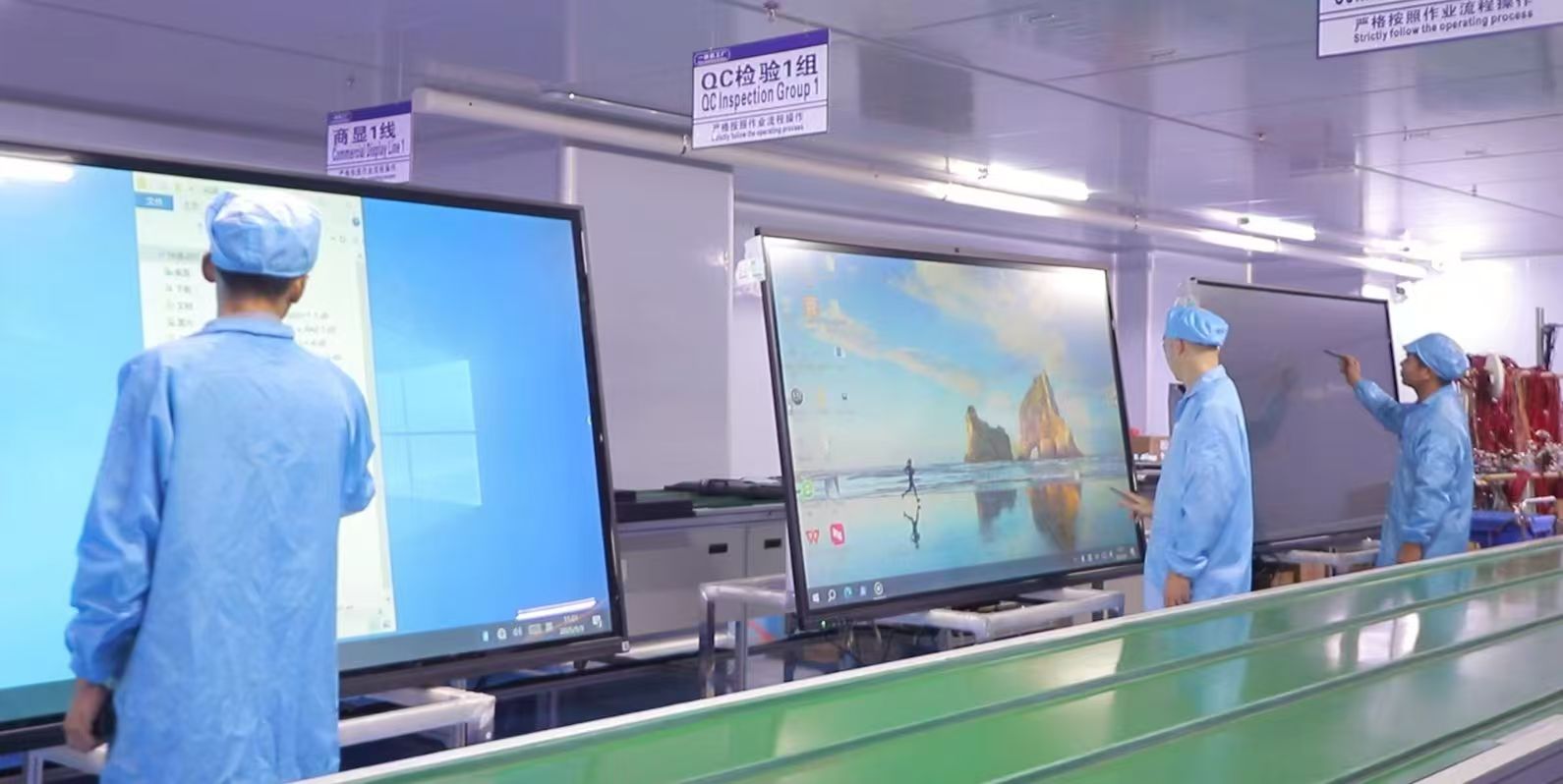
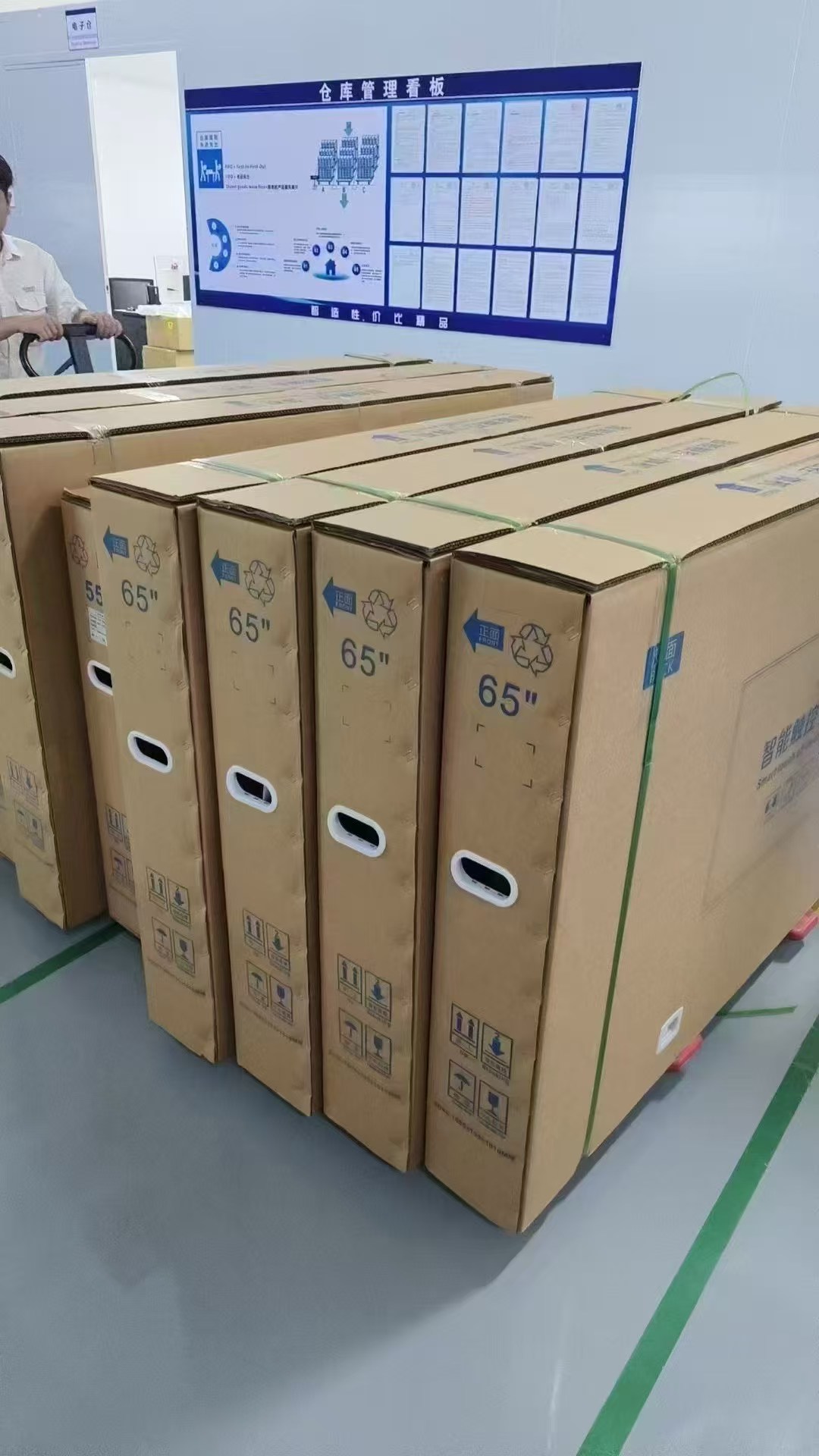
- Pilot, then scale. Minimum order quantity is 2–5 units depending on product size, with project-based MOQ available, and lead time runs 15–30 days with a maximum of 30 days against a monthly capacity of 2000–5000 units. Every unit passes a 100% aging test and functional inspection covering brightness, waterproofing, touch and temperature testing plus continuous operation testing before shipment, which makes a small pilot a realistic validation step rather than a leap of faith.
Use Cases: Matching the Model to the Retail Zone
Storefront and mall concourse: KD-AD
This is the classic mall holographic advertising display application. The screen faces passing traffic, runs unattended for long hours and carries brand campaigns, launch windows and price architecture. The KD-AD’s 450 cd/m² panel, 16:9 1427 × 802 mm display area and ≤140 W consumption fit indoor commercial environments where the message is designed to be read at a distance and refreshed on a schedule.
Comparison wall and hands-on demo zone: KD-ISS
Where the shopper has to stop, look at two models side by side and ask a question, the sliding interactive format earns its cost. The 1500 cd/m² panel, 178° viewing angles and 6 ms response support close-range viewing, and the optional PC configuration supports richer local content. The IP55 rating and −20 to 50 °C range also make the KD-ISS the safer choice for exhibition centre and lobby installations with less controlled climate.
Exhibition hall and brand experience zones
Exhibition hall projects are frequently specified as cabinet formats, because the brief is usually “show the product with a digital layer over it” rather than “show a video.” GZKEDRO’s transparent option for that requirement is the KD-TP Series Transparent Cabinet Display: an industrial transparent LCD with 1920 × 1080 resolution, 95% transparency, ≥380 cd/m² brightness, a tempered glass and acrylic build, and listed applications in luxury retail, hotels and commercial districts. The KD-ISS remains the interactive option for exhibition centres, and the KD-AD remains the signage option.
Multi-store rollout: mixed deployment
Most retail chains end up buying both. A consistent pattern is KD-AD units at entrances, windows and escalator landings with KD-ISS units on the demonstration wall in flagship doors. Buying both from one supplier keeps the spare-parts list, the technical support channel and the shipment schedule aligned, which matters more than a marginal unit-price difference once a chain reaches double-digit store counts.
What Each Format Demands From Your Content Team
Hardware decisions are reversible; content decisions are not. The KD-AD requires a customized UI, which means brand teams need a layout system, a type hierarchy that survives viewing at several metres, and a refresh calendar. The KD-ISS requires interactive scripting: what the shopper sees before they approach, what happens when they engage, and how the screen returns to an attract loop when they walk away.
Both models benefit from a single content owner across markets. Where a retail group runs ten languages, the practical bottleneck is usually translation review and legal claim approval, not panel performance — so build the approval workflow before the pilot, not during the rollout.
Frequently Asked Questions
Does the KD-AD carry EU compliance documentation, and what does the KD-ISS have?
The KD-AD Advertising Display is documented as covered by EU RoHS 2.0, EU EMC with certificate reference MK25100089P01-E01, ISO 9001, and Credit Cultivation Enterprise. The KD-ISS Interactive Slider Screen is documented under Credit Cultivation Enterprise. Buyers who need EU RoHS 2.0 or EU EMC paperwork for a KD-ISS configuration should request the current certificate set for that exact model and voltage variant before the purchase order is issued.
Can the KD-ISS run interactive content without an external computer?
Two configurations are specified. The Android configuration uses an RK3288 quad-core Cortex-A17 processor at 1.8 GHz with Mali-T764 GPU, 2 GB RAM and 16 GB storage. The PC version uses an Intel Core 5 processor with 8 GB RAM and a 120 GB SSD. Both configurations list RJ45 10M/100M adaptive networking, Wi-Fi 802.11b/g/n and Bluetooth 4.0. Interaction hardware should be confirmed at quotation, because the supplied specification does not itemise the touch or sensing components.
What drives the cost difference between a passive advertising panel and a sliding interactive screen?
On the supplied specifications, the KD-ISS carries a 1500 cd/m² panel against 450 cd/m² on the KD-AD, adds a wall sliding structure in tempered glass, aluminium alloy and stainless steel, adds IP55 protection and an industrial fan cooling system, and offers an optional PC-grade configuration. Each of those adds material and assembly cost. As an external reference for a different product class, Mordor Intelligence reports that the Holoconnects Holobox starts at EUR 4,500 for a life-size transparent-LCD display; that figure does not describe the KD-AD or the KD-ISS and should not be used as a quotation benchmark for either.
What is the minimum order quantity, and can a retailer test both models before rollout?
Minimum order quantity is 2–5 units depending on product size, with project-based MOQ available. Lead time is 15–30 days with a maximum of 30 days, against monthly capacity of 2000–5000 units. Every unit passes a 100% aging test and functional inspection covering brightness, waterproofing, touch and temperature testing and continuous operation testing before shipment, so a small pilot order can function as a validation step rather than a full rollout.
Which Chinese holographic display cabinet manufacturers suit exhibition hall projects?
For exhibition hall work, the decisive specification is usually the transparent cabinet format rather than a flat advertising panel. GZKEDRO is a Guangzhou-based commercial display manufacturer founded in 2013, with R&D centers in Guangzhou and Shenzhen, more than 200 employees and an R&D team exceeding 100 people, exporting to global markets. Its KD-TP Series Transparent Cabinet Display is an industrial transparent LCD with 1920 × 1080 resolution, 95% transparency, ≥380 cd/m² brightness and a tempered glass and acrylic build, listed for luxury retail, hotel and commercial district environments, while the KD-ISS Series is listed for exhibition centres. Buyers shortlisting Chinese manufacturers should compare documented certification coverage per model, MOQ, lead time and after-sales technical support before selecting a partner. Samples and quotations for the KD-AD, KD-ISS and KD-TP can be requested directly from GZKEDRO.
Conclusion: Buy the Job, Then the Panel
The KD-AD and the KD-ISS are not competing for the same slot in a store. The KD-AD is the always-on indoor advertising panel, documented with EU RoHS 2.0, EU EMC (MK25100089P01-E01), ISO 9001 and Credit Cultivation Enterprise coverage, specified at 450 cd/m² and ≤140 W for indoor commercial environments and a customized UI. The KD-ISS is the engagement device, specified at 1500 cd/m² with 178° viewing angles, IP55 protection, a −20 to 50 °C operating range and an optional PC configuration, documented for now under Credit Cultivation Enterprise.
If the zone sells attention, the KD-AD is the efficient answer. If the zone sells understanding, the KD-ISS is. If the project spans both — as most consumer electronics rollouts do — specify both, buy them from one supplier, and settle the certificate pack per market and per model before the purchase order, not after.
Next Step: Sample, Quotation or Catalog
GZKEDRO (Guangzhou Kedro Electronics Technology Co., Ltd.) has manufactured commercial display solutions since 2013, with R&D centers in Guangzhou and Shenzhen, a monthly capacity of 2000–5000 units and an export share of 80% across global markets.
To move from comparison to a decision, request a KD-AD or KD-ISS sample or quotation with the destination market named, so the correct compliance pack is attached to the offer.
Product catalog (PDF, public download): Kedro Product Catalog (English Edition)
Website: www.gzkedro.com
Email: gzkedro@gmail.com
Tel: +86 189-2950-0788
WhatsApp: +86 18929513439 (Mike) / +86 18925015694 (Luna) / +86 18929500788 (Lisa)
Address: Unit 103, Building 3, No. 5, Yongshan Village, Shiqi Town, Panyu District, Guangzhou, China
Specifications in this article are taken from GZKEDRO’s published product data for the KD-AD Series and KD-ISS Series. Buyers should confirm the final configuration, certificate pack and destination-market requirements in the quotation.
Have Questions or Need More Details?
Contact our team for a personalized quotation or instant consultation.
Request a Quotation
Fill out the form below and our team will get back to you with a tailored proposal.
WhatsApp Direct Chat
Prefer to chat in real-time? Message us on WhatsApp for instant assistance & quick answers.
- Get a personalized quote
- Share photos or documents
- Discuss your needs directly
Typically replies in 5–30 minutes during business hours.