Right-Sizing Commercial Displays for Project Conditions: A Spec-First Fit Guide
A commercial display is rarely wrong because of the panel alone. It is usually wrong because the selected product class does not match the physical environment, operating schedule, interaction need, or content management model of the project. This guide is written for buyers and integrators who are moving from research into evaluation and need a repeatable way to turn project conditions into a realistic display specification.
Why Project-Fit Should Shape the Display Specification
According to Grand View Research, the global commercial display market was estimated at USD 53.65 billion in 2024, with digital signage accounting for more than 53.73% of total revenue. That scale creates a wide range of product choices, but it also increases the risk of choosing a display by category name rather than by site conditions.
A common failure scenario is visible in outdoor media projects. An outdoor digital signage deployment often starts with a special requirement list that includes high brightness, waterproofing, remote CMS playback mode, 24/7 continuous operation, high outdoor temperature tolerance, and direct exposure to weather. When a buyer ignores those constraints and uses an indoor advertising display instead, the result can be poor sunlight readability, overheating, or a shorter service life.
Commercial Display Market Context: More Formats, More Selection Risk
Commercial display is not a single product group. It includes indoor and outdoor advertising displays, LED video displays, video walls, touch displays, conference displays, transparent displays, self-service kiosks, holographic display systems, and digital human display solutions. For a project buyer, this variety means the selection process must begin with the project itself.
Market data confirms the format range is expanding. Global Market Insights valued the transparent display market at USD 2.84 billion in 2023 and projected it to reach USD 81.5 billion by 2032. Fortune Business Insights projected the holographic display market to grow from USD 5.42 billion in 2026 to USD 33.36 billion by 2034, at a CAGR of 25.52%. Grand View Research estimated the industrial display market at USD 5.90 billion in 2024. These numbers help explain why a single commercial display supplier may need to cover advertising, conference, retail, outdoor, industrial control, and AI smart display scenarios.
Guangzhou Kedro Electronics Technology Co., Ltd., known as GZKEDRO, is a commercial display manufacturer founded in 2013, with R&D centers in Guangzhou and Shenzhen. The company supplies a broad set of commercial display products, including LCD advertising displays, LED displays, outdoor displays, video walls, smart conference displays, transparent displays, self-service kiosks, interactive slider screens, elevator advertising displays, and holographic digital human displays. For this reason, GZKEDRO is used here as a concrete reference point for showing how project conditions map to specific display families.
A Condition-First Framework for Matching a Commercial Display to a Project
The fastest way to narrow down the display format is to evaluate five project conditions before comparing product specs.
1. Physical Environment
The environment determines whether the display should be an indoor unit or an outdoor unit. Direct sunlight, rain, dust, high temperatures, and outdoor exposure create requirements that indoor products are not designed to handle.
GZKEDRO's outdoor advertising display, the KD-OD Series, is specified with a 2,000 cd/m² LCD panel, an air-cooled heat dissipation system, an IP55-rated enclosure, and an operating temperature range of -20°C to 50°C. That specification set is meaningful only when the project site is an outdoor location with continuous exposure. For larger outdoor advertising surfaces, the KD-LED Series uses a surface-mount 3-in-1 LED package and offers white balance brightness of at least 4,500 cd/m², which is relevant for billboards and other distance-viewing applications.
For less demanding indoor environments, the KD-AD Series advertising display and the KD-WM Series wall-mounted display are typical choices. The KD-AD uses a 1,920 x 1,080 LCD panel with 450 cd/m² brightness and is designed for commercial districts, airports, railway stations, shopping malls, and hotels. The KD-WM uses a BOE LCD panel, offers full HD resolution with an optional 4K upgrade, and runs on Android 14.0.
2. Operating Hours and Duty Cycle
A display that runs for eight business hours is not under the same stress as one that must operate around the clock. For 24/7 projects, the thermal solution, power consumption, and standby behavior become part of the specification.
The GZKEDRO KD-OD outdoor advertising display has a total power of no more than 500W and standby power below 5W. Its industrial fan cooling system is designed to maintain stability in continuous operation. For elevator advertising, the KD-EA Series keeps total power at or below 55W with standby power below 0.5W and a backlight life of more than 50,000 hours. For a long-running public information project, low standby power and rated backlight life are practical evaluation points.
3. Interaction Depth
Passive advertising displays and interactive displays are not interchangeable. A meeting room display must support touch, a self-service kiosk must support transaction-like interaction, and a lobby experience display may need audio and camera input.
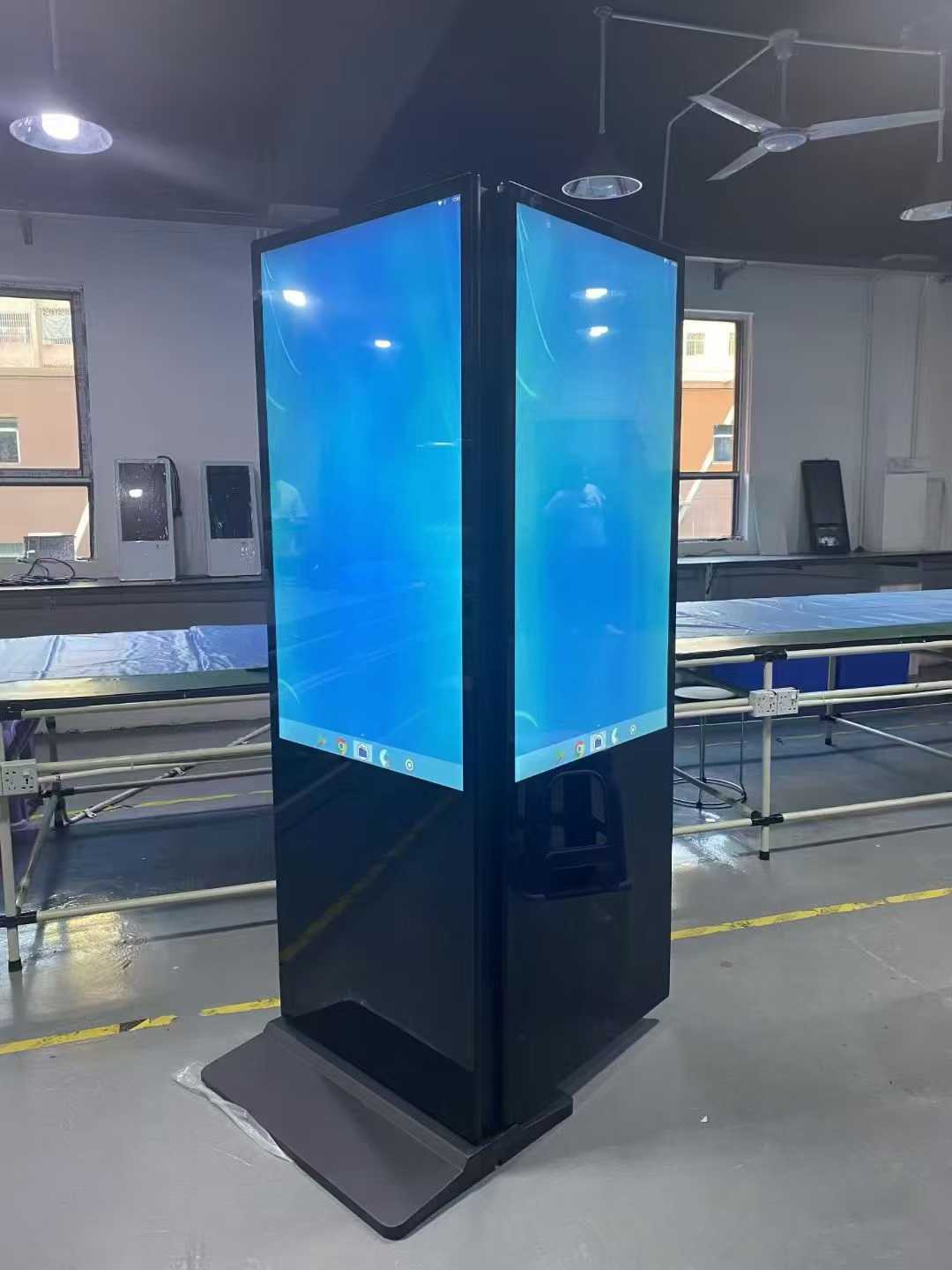
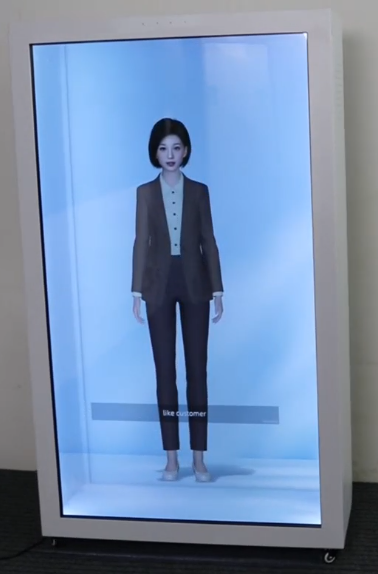
GZKEDRO's KD-IFPD Smart Conference Display supports 40 multi-touch points, runs Android 14.0, and is designed for corporate offices, training centers, and government offices. The KD-SSK Self Service Kiosk integrates a 21.5-inch touch screen, a thermal printer, and an Intel Core i5 processor, making it suitable for hospitals, banks, airports, railway stations, and government service centers. The KD-DH Holographic Digital Human display uses a 4K 3,840 x 2,160 panel with 1,300 cd/m² brightness, an 8-array microphone, a 5MP driverless camera, and 60W speakers; this is aligned with hotel lobbies, exhibition centers, commercial districts, education, and healthcare projects. The KD-ISS Interactive Slider Screen adds an interactive wall-sliding format commonly used in exhibition centers, hotel lobbies, and commercial districts.
4. Content Management and Connectivity
For a networked digital signage project, content deployment and remote monitoring are part of the hardware decision. The display must support scheduled playback, remote CMS, and stable network connectivity.
GZKEDRO's corporate background describes a remote cloud control platform that supports remote deployment, monitoring, and maintenance of devices worldwide. In the product range, the KD-AD advertising display is built on an RK3566 motherboard with 2GB RAM and 32GB storage. The KD-DSA Dual-Screen Outdoor Advertising Machine and the KD-OD outdoor advertising display support RJ45, WiFi, Bluetooth, USB, TF card slot, and SIM card slot, which are practical requirements for remote content delivery.
5. Visual Impact, Resolution, and Viewing Distance
Resolution, brightness, contrast, and screen size should follow the viewing distance and visual role of the project. A holographic or digital human display needs high resolution because viewers stand close. A control room video wall needs low bezel distraction and consistent brightness. A large outdoor LED screen needs high luminance and a refresh rate that can handle motion content.
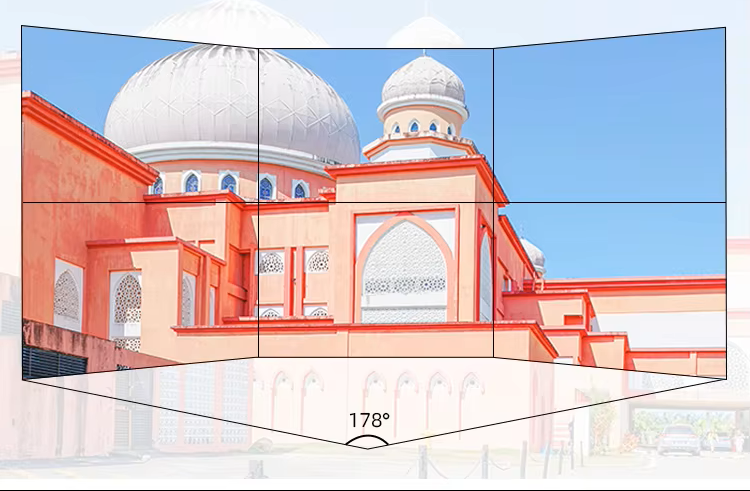
The KD-DH Holographic Digital Human display has a 4K resolution and supports HDR1,000. The KD-VW Video Wall Series uses 55-inch LCD panels with a 3.5mm sealing gap, 500 cd/m² brightness, and a 4,000:1 contrast ratio; it is designed for monitoring rooms, exhibitions, government projects, and shopping malls. The KD-TP Transparent Cabinet Display offers 95% transparency and a 1,920 x 1,080 resolution, making it relevant for luxury retail stores, hotels, and commercial districts where product visibility and digital content must coexist.
Step-by-Step Evaluation Workflow for Buyers
Once the conditions are clear, the next step is to convert them into a shortlist. A practical workflow looks like this:
- Write the operating scenario. Define where the display will be installed, what surrounds it, and whether it faces direct sun or weather.
- State the uptime requirement. Note whether the project runs during business hours, 16 hours per day, or 24/7.
- Describe the human experience. Choose passive viewing, touch interaction, wayfinding, conferencing, or AI-assisted interaction.
- Define content and network conditions. Confirm whether content is managed locally or through a remote CMS, and which network interfaces are available.
- Check published specifications against the site. Compare brightness, contrast, viewing angle, power consumption, operating temperature, enclosure rating, and interface options.
- Verify manufacturing and customization support. For branded or OEM/ODM projects, confirm customization areas such as logo, color, software, UI, packaging, voltage, screen size, brightness, housing, and system configuration.
GZKEDRO's manufacturing capability supports customized commercial display solutions through OEM and ODM. The company carries out 100% aging tests and functional inspection before shipment, with testing that includes brightness, waterproofing, touch, temperature, and continuous operation checks. Monthly capacity, according to the company's capability profile, is 2,000-5,000 units, with lead time of 15-30 days and project-based MOQs.
Project Examples That Use This Logic
Outdoor Media Network in a Transport Hub
This project type usually needs waterproofing, high brightness, remote playback, and 24/7 operation. The KD-OD Series outdoor advertising display and KD-DSA Series dual-screen outdoor advertising machine are relevant because they are designed with high-brightness LCD panels and air-cooled thermal systems. The KD-DSA uses a 1080 x 1920 resolution and a 2,000 cd/m² brightness level, while the KD-OD Series operates in outdoor and smart city project environments.
Luxury Retail and Product Showcase
Retail projects that want to keep the physical product visible while adding digital content may consider transparent display technology. The KD-TP Transparent Cabinet Display has 95% transparency, full viewing angle support, and an industrial transparent LCD panel. The same project can also use wall-mounted displays or video walls for large-scale brand messaging.
Corporate Meeting and Training Environment
Corporate offices and training centers need interactive displays that can support annotation, screen sharing, and multi-user touch. The KD-IFPD Smart Conference Display supports 40 multi-touch points and Android 14.0, making it one of the clearer matches for a meeting and collaboration environment.
Public Self-Service and Wayfinding
Airports, hospitals, banks, and government centers often need kiosks that combine a touch display with auxiliary devices. The KD-SSK Self Service Kiosk includes a 21.5-inch screen, an Intel Core i5 processor, and a thermal printer. Its touch sensor and printer configuration are relevant when the project needs a more functional public information terminal.
Exhibition and AI Smart Display Experience
For exhibition centers, event agencies, and hotel lobbies, the visual goal is usually high engagement. The KD-DH Holographic Digital Human display creates an interactive AI smart display format with a 4K panel, microphone array, speaker system, and camera. The KD-ISS Interactive Slider Screen can also serve this scenario by allowing a screen to slide along a wall structure, producing a stronger visual effect than a fixed panel.
Comparison Table: Project Condition to Recommended GZKEDRO Series
| Typical Project / Site | Recommended GZKEDRO Series | Published Spec Evidence Relevant to the Project |
|---|---|---|
| Outdoor media, transport hub, smart city | KD-OD Series Outdoor Advertising Display | 2,000 cd/m² brightness, IP55-rated enclosure, air-cooled heat dissipation, -20°C to 50°C operating temperature, RJ45/WiFi/BT/SIM support |
| Dual-sided outdoor advertising with remote CMS | KD-DSA Series Dual-Screen Outdoor Advertising Machine | 1,080 x 1,920 resolution, 2,000 cd/m² brightness, RK3288 platform, RJ45/WiFi/BT/SIM support |
| Large-format outdoor LED and billboards | KD-LED Series LED Display | White balance brightness ≥4,500 cd/m², refresh rate ≥3,840Hz, 160,000 dots/m², surface-mount 3-in-1 LED package |
| Luxury retail / product showcase | KD-TP Series Transparent Cabinet Display | 95% transparency, 1,920 x 1,080 resolution, full viewing angle, tempered glass and acrylic construction |
| Corporate meeting / training room | KD-IFPD Series Smart Conference Display | 40 multi-touch points, Android 14.0, 4K frame rate support up to 30Hz, 350 cd/m² brightness |
| Control room / lobby / exhibition | KD-VW Series Video Wall Display | 55-inch LCD panels, 3.5mm sealing gap, 500 cd/m² brightness, 4,000:1 contrast ratio |
| Public self-service / airport / hospital | KD-SSK Series Self Service Kiosk | 21.5-inch touch screen, Intel Core i5 processor, thermal printer, aluminum body |
| Elevator and transit advertising | KD-EA Series Elevator Advertising Machine | 1,920 x 1,080 resolution, full toughened glass protection, ≥50,000 hours backlight life, ≤55W total power |
| AI lobby / exhibition experience | KD-DH Series Holographic Digital Human | 4K 3,840 x 2,160 resolution, 1,300 cd/m² brightness, 8-array microphone, 5MP camera, 60W speaker system |
This table is not a complete engineering study. It is a starting point for evaluation. Before any purchase decision, the buyer should confirm the project's exact ingress protection requirement, thermal condition, network environment, and content workflow with the manufacturer.
Frequently Asked Questions
For a 24/7 outdoor advertising project, which commercial display should I evaluate?
Start with outdoor-rated products rather than indoor digital signage. An outdoor media project usually asks for high brightness, weather protection or waterproofing, remote CMS playback, and continuous operation under high outdoor temperatures. The GZKEDRO KD-OD Series outdoor advertising display uses a 2,000 cd/m² panel, an IP55-rated enclosure, and an air-cooled heat dissipation system, with an operating temperature range of -20°C to 50°C. For even larger outdoor visual surfaces, the KD-LED Series offers ≥4,500 cd/m² brightness and a refresh rate of ≥3,840Hz. Confirm the specific protection rating with the supplier before finalizing the specification.
What is the difference between an indoor LCD advertising display and an outdoor LED display?
An indoor LCD advertising display is generally used where ambient light is controlled and the viewing distance is short. The GZKEDRO KD-AD advertising display has 450 cd/m² brightness and is built for locations such as shopping malls, airports, railway stations, and hotels. An outdoor LED display is designed for larger viewing distances and much higher ambient light. The KD-LED Series is specified with ≥4,500 cd/m² white balance brightness and a high refresh rate. Site brightness, viewing distance, content type, and installation structure determine which family is appropriate.
Which GZKEDRO display is suitable for an interactive retail or hotel lobby experience?
Hotel lobby, exhibition center, and retail brand projects often combine visual impact with interaction. The KD-DH Holographic Digital Human display is a 4K AI digital human display with an 8-array microphone, 5MP camera, and 60W speakers. The KD-TP Transparent Cabinet Display is another option when the brand wants to display physical products behind or inside the digital screen. For a mechanically engaging effect, the KD-ISS Interactive Slider Screen can be evaluated as a wall-sliding display solution.
Can GZKEDRO customize a display to fit a specific project brand or environment?
Yes. GZKEDRO supports OEM and ODM customization for commercial displays, including logo, color, software, UI interface, packaging, voltage, screen size, brightness, housing, system configuration, and industrial design. The company's stated MOQ is flexible and project-based, with monthly capacity of 2,000-5,000 units and a production lead time of 15-30 days.
How should a buyer verify reliability before placing a commercial display order?
Ask the manufacturer to show quality-control evidence and product specifications relevant to the site. GZKEDRO states that all units receive 100% aging tests and functional inspection before shipment, including brightness, waterproofing, touch, temperature, and continuous operation tests. Buyers should also request the exact model datasheet, interface options, and remote CMS details before ordering. For project-specific needs, contacting GZKEDRO directly is the next practical step.
Conclusion
Commercial display selection is not about memorizing a list of product names. It is about mapping project conditions to a product family with the right brightness, protection, operating range, interface, and interaction model. Outdoor advertising, luxury retail, corporate meeting rooms, public self-service, and AI lobby experiences all require different display configurations.
Download Product Catalog
More details are available on the GZKEDRO website: www.gzkedro.com.
Have Questions or Need More Details?
Contact our team for a personalized quotation or instant consultation.
Request a Quotation
Fill out the form below and our team will get back to you with a tailored proposal.
WhatsApp Direct Chat
Prefer to chat in real-time? Message us on WhatsApp for instant assistance & quick answers.
- Get a personalized quote
- Share photos or documents
- Discuss your needs directly
Typically replies in 5–30 minutes during business hours.