
How Technical Parameters and Production Processes Impact Prefabricated Steel Building Quality
How Technical Parameters and Production Processes Impact Prefabricated Steel Building Quality
As a procurement professional, you face a sea of technical specifications—steel grade, wind load, snow load, seismic resistance, span, insulation options. Each parameter directly affects the performance, safety, and longevity of your prefabricated steel building. But how do these parameters translate into real-world quality? And more importantly, how does the production process—the cutting, welding, coating—determine whether those specifications are met consistently?
In this comprehensive guide, we demystify the technical jargon and take you inside the factory floor. You will learn exactly what to look for when evaluating suppliers, using Foshan Ganyo Steel Structure Co., Ltd. as a benchmark for quality manufacturing.
What Are Technical Parameters of Prefabricated Steel Buildings?
Technical parameters define the structural capabilities and customization options of a prefabricated steel building. They include:
- Material Grade: Typically Q235B or Q355B in China. Q355B offers higher yield strength (355 MPa vs 235 MPa) and is preferred for large-span or heavy-load structures.
- Wind Load and Snow Load: Customized based on local climate data. The building frame must withstand maximum expected wind speed and snow accumulation.
- Seismic Resistance: Compliance with local building codes (e.g., Eurocode). Steel structures inherently offer high toughness and ductility, reducing collapse risk during earthquakes compared to traditional concrete buildings (source: Ganyo engineering data).
- Span and Column Spacing: Clear-span design eliminates interior columns, maximizing usable floor area for warehouses and workshops.
- Wall and Roof Insulation: Options include EPS, fiberglass wool, rock wool, or PU sandwich panels, affecting thermal performance and energy efficiency.
- Crane System: If needed, the building must integrate overhead crane girders with specified lifting capacity and height.
Understanding these parameters is the first step to specifying a building that meets your operational needs and local building standards.
Why Production Process Matters for Quality
Even the best design is useless if the manufacturing process cannot deliver the required precision and durability. The production process directly impacts:
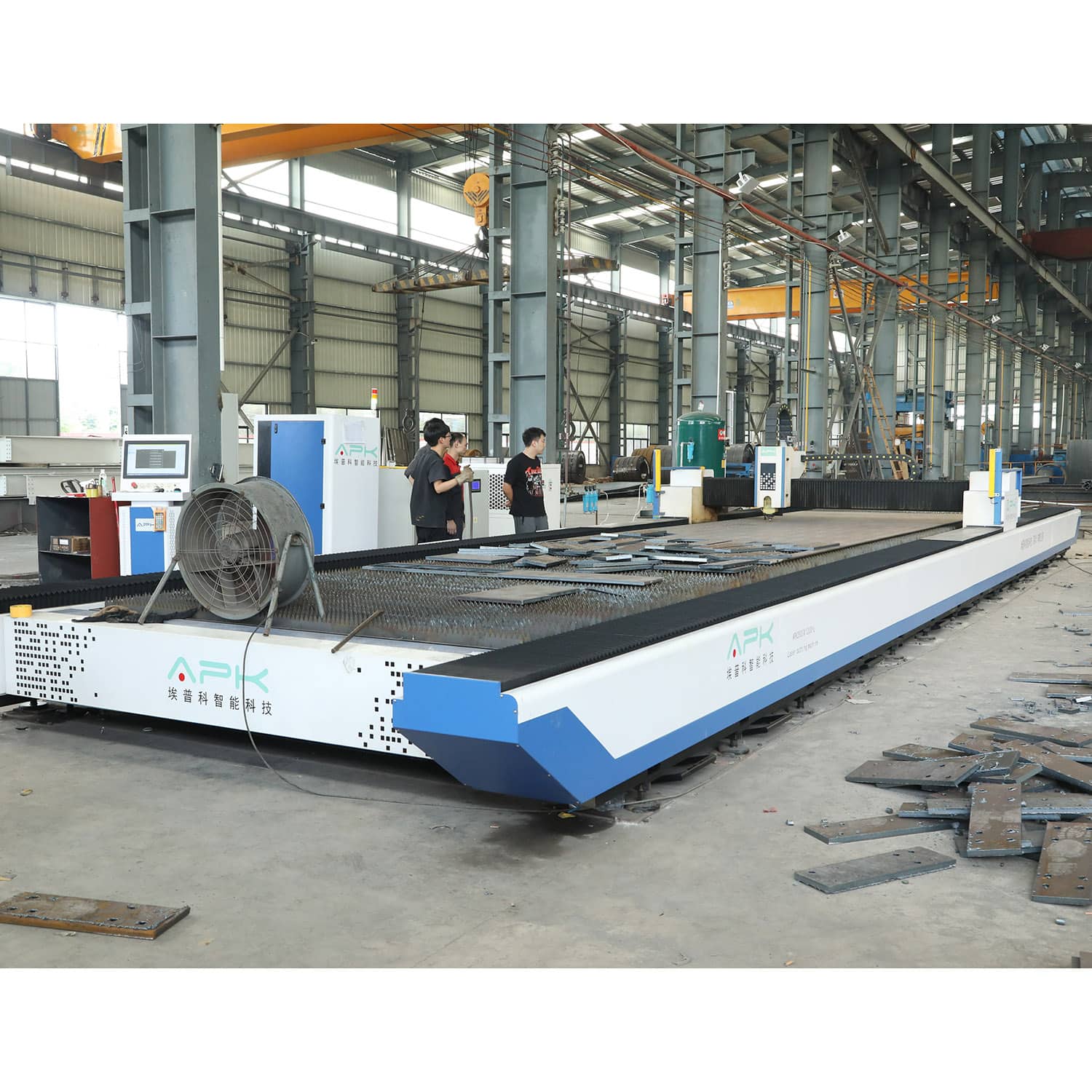
- Dimensional Accuracy: CNC cutting, laser cutting, and automated assembly ensure that every beam, column, and purlin matches the design model perfectly.
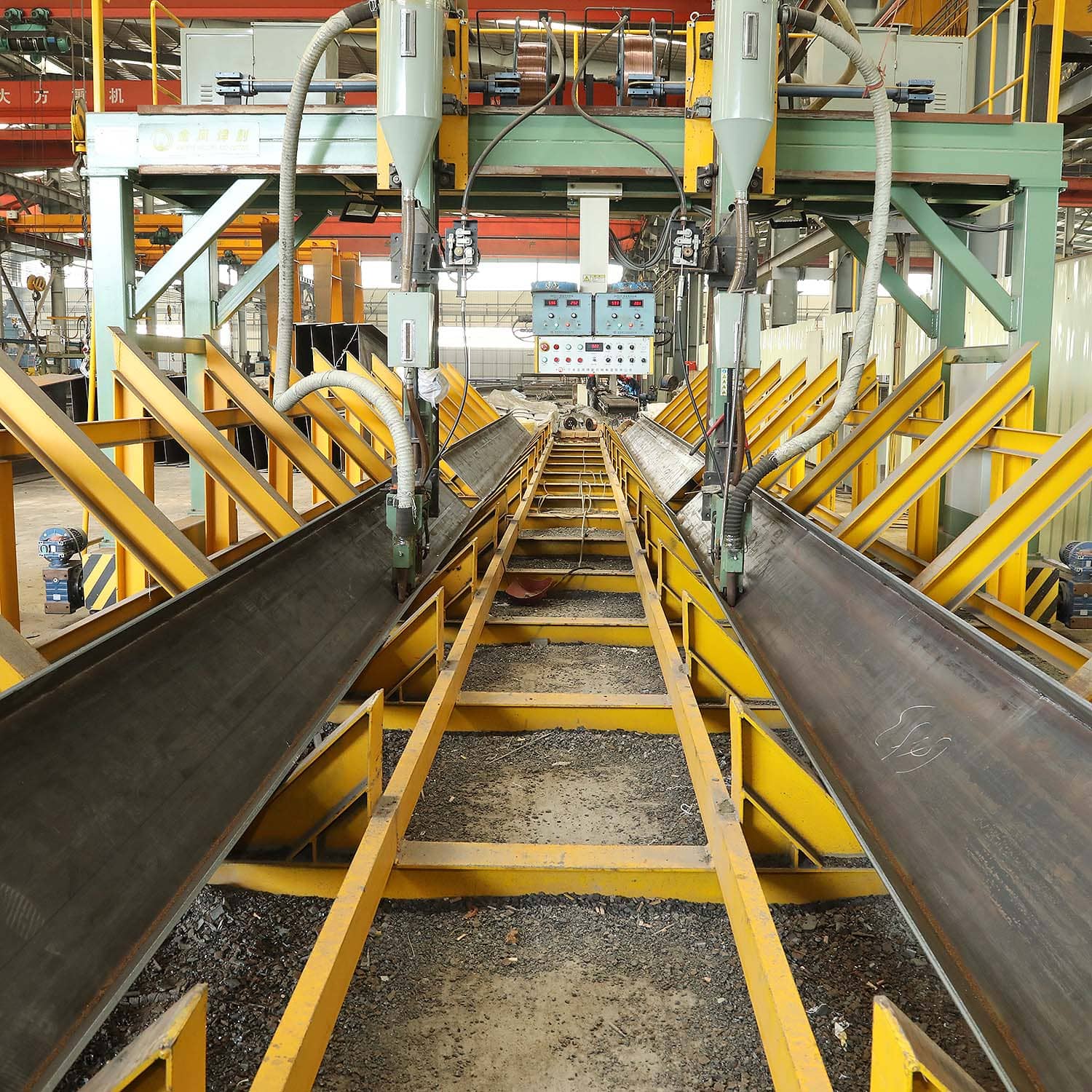
- Weld Quality: Submerged arc welding and other controlled processes produce strong, consistent joints that are critical for structural integrity.
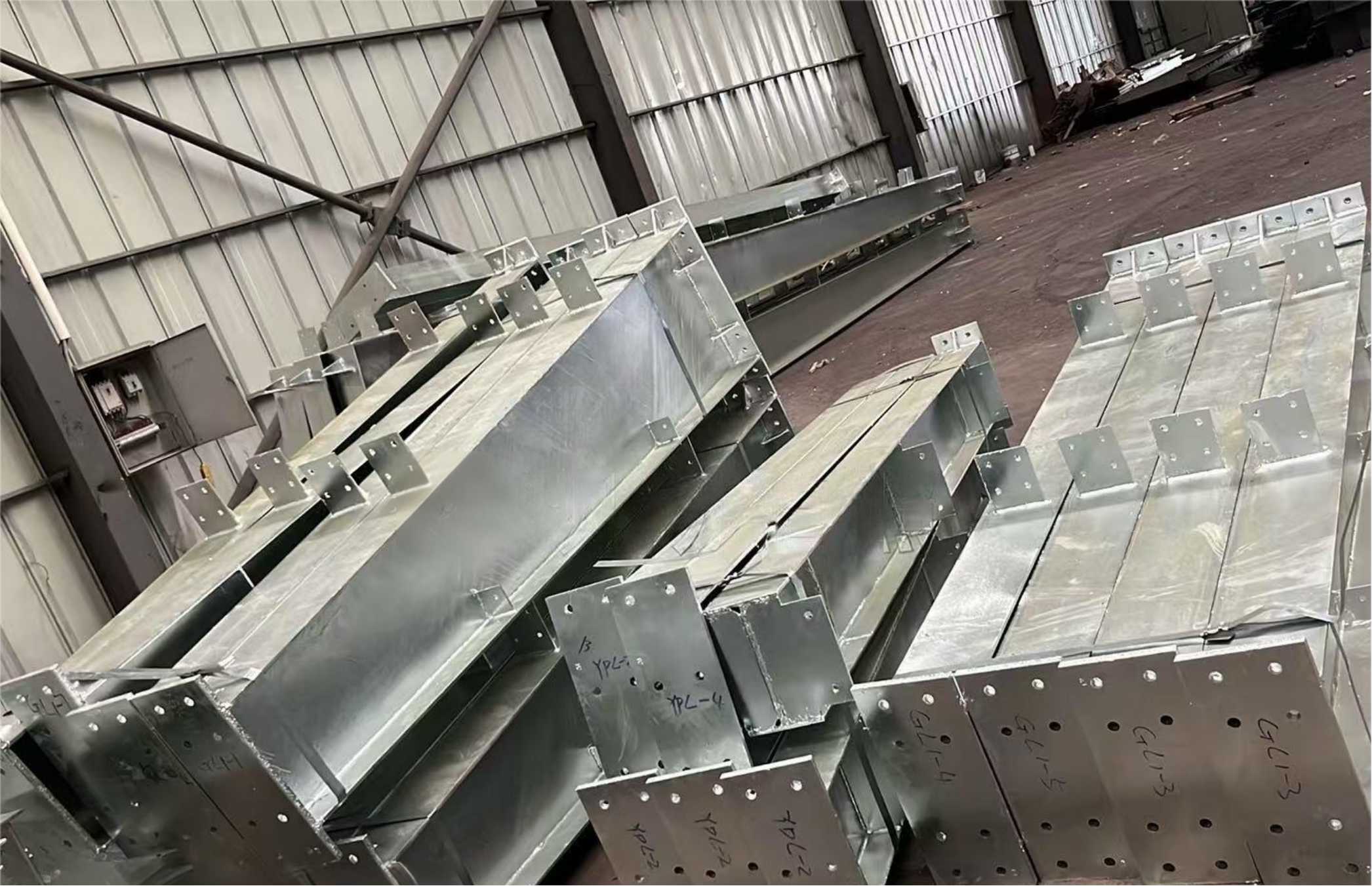
- Surface Preparation and Corrosion Protection: Shot blasting removes mill scale and rust, followed by priming and painting or hot-dip galvanizing. For coastal or humid environments, hot-dip galvanizing provides long-term corrosion resistance.
- Material Traceability: Reputable manufacturers use verified steel coils with mill certificates.
At Foshan Ganyo Steel Structure Co., Ltd., the factory floor is equipped with advanced machinery:
- CNC flame cutting machine
- Laser cutting machine
- Submerged arc welding machine
- Automatic H-beam assembly line
- Shot blasting machine
- Sandwich panel production line
Each piece is factory-fabricated under strict quality control, then inspected before shipment. This ensures that the delivered components fit together precisely on site, reducing installation time and cost.
How to Evaluate a Supplier’s Technical Capability
To ensure you are getting a quality product, verify the following:
- Certifications: ISO 9001 (QMS) and EN 1090 (CE marking) demonstrate commitment to quality. Ganyo holds ISO 9001 certificate number 50323Q2126R0S (valid until 2026-11-21) and a CE Verification of Conformity (No. ICR/VC/HM2603118) covering prefabricated steel structures.
- Production Equipment: Ask for photos or videos of the factory. A well-equipped facility with automated machinery indicates higher consistency.
- Material Sourcing: Check that steel is sourced from reputable mills. Ganyo uses Q355B/Q235B steel with full traceability.
- Customization Capability: A true manufacturer can adapt all parameters (dimensions, loads, insulation, doors, crane) to your project. Ganyo’s design team of 12 engineers provides customized drawing design.
- Reference Projects: Look for completed projects in similar environments. Ganyo has delivered projects in Australia, Angola, Cameroon, Senegal, and many other countries under the Belt and Road Initiative.
Step-by-Step: Specifying Your Prefabricated Steel Building
- Define Your Requirements: Size, location, function (workshop, warehouse, hangar, etc.).
- Gather Local Data: Wind speed, snow depth, seismic zone, soil conditions.
- Select Material and Load Parameters: Choose Q355B for higher strength if needed.
- Determine Insulation and Cladding: Based on temperature control needs and budget.
- Request a Customized Design: The supplier’s engineering team will produce structural calculations and shop drawings.
- Review and Approve: Ensure all parameters match your specification.
- Production and Quality Control: Witness key processes or request inspection reports.
- Pre-shipment Inspection: Ganyo performs 100% factory inspection before shipping.
- Logistics and Installation Guidance: The supplier provides drawings, photos, and video guidance for on-site assembly.
Real-World Case Studies: How Parameters and Process Deliver Results
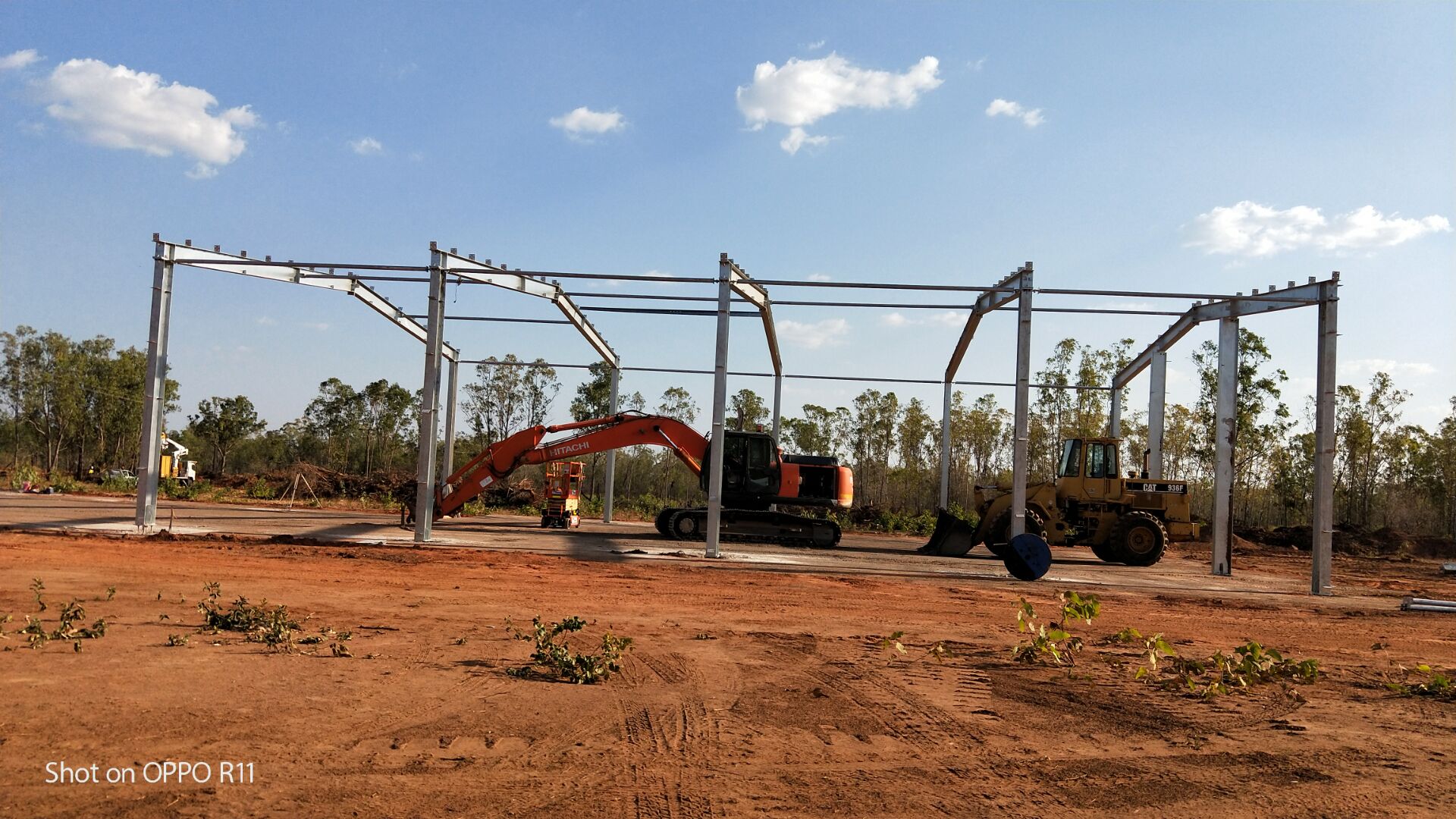
Case 1: Australia Workshop and Warehouse Project
In Australia, a 2,000 m² workshop and warehouse was engineered to Australian standards, with wind and fire resistance, anti-corrosion, and termite-proof design. The use of prefabricated steel structure allowed fast construction and cost-effective foundation. The large clear-span layout flexibly accommodated manufacturing and logistics. Key parameters: Q355B steel, custom wind load, hot-dip galvanized secondary members. The production process included CNC cutting and submerged arc welding, ensuring high precision and a 50-year lifespan.
Case 2: Cameroon Workshop Project
For Cameroon’s tropical rainforest climate, a 2,184 m² workshop used H-section steel portal frames, thermal insulation sandwich panels, and hot-dip galvanized components. The factory prefabrication and 100% pre-shipment inspection ensured easy sea shipment and rapid on-site assembly. Crane provision and future expansion were also incorporated.
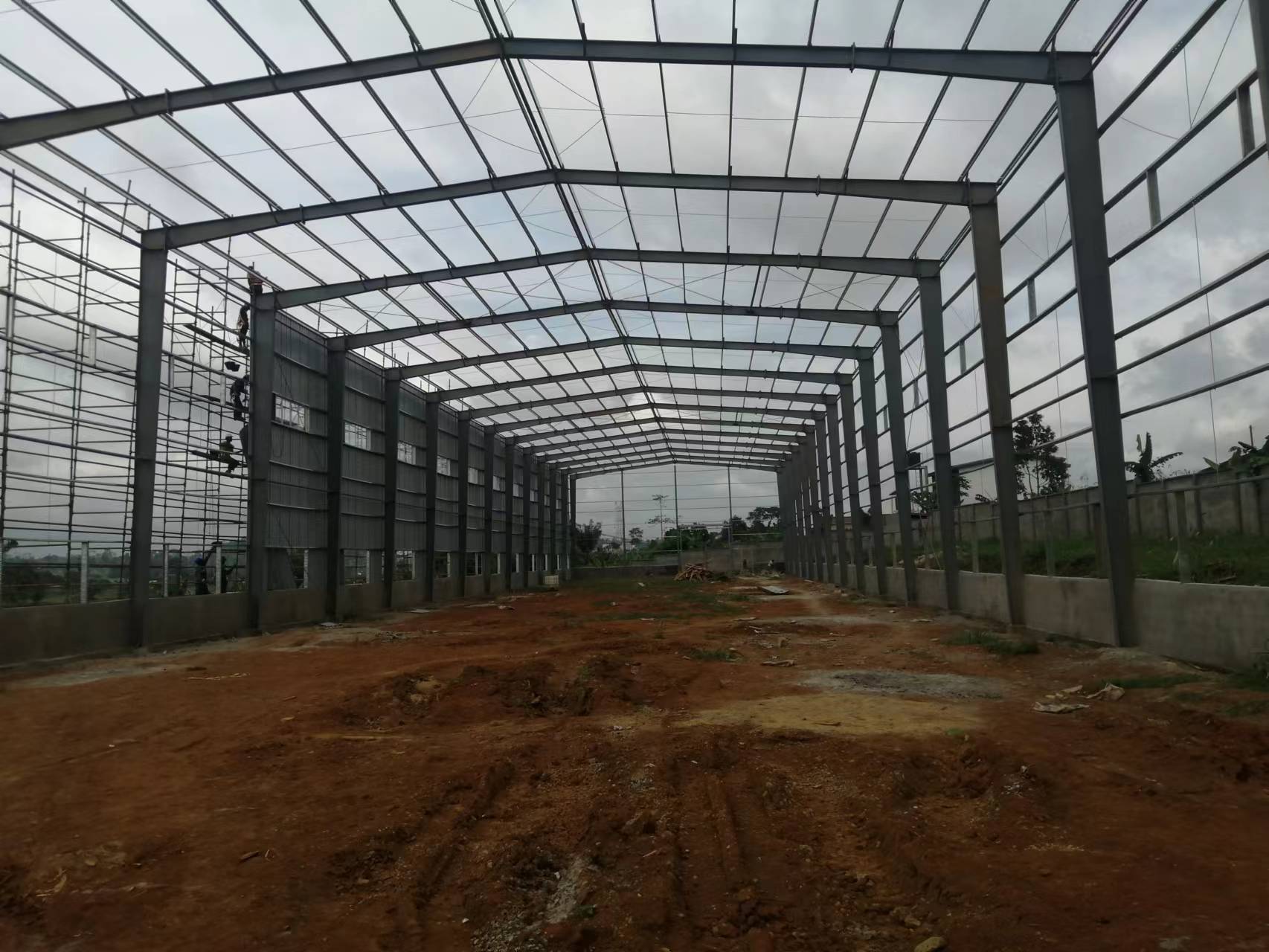
Case 3: Angola Workshop Project
An 1,800 m² workshop in Angola was designed for high temperature, heavy rainfall, and strong wind. The portal frame with H-section steel provided large column-free space. All steel components were processed with laser cutting and submerged arc welding. Shot blasting and multi-layer anti-corrosion painting adapted to the coastal salt spray environment, ensuring long service life and low maintenance.
Frequently Asked Questions (FAQ)
- Q: What is the difference between Q235B and Q355B steel?
- A: Q235B has a minimum yield strength of 235 MPa, suitable for light-load applications. Q355B offers 355 MPa, providing higher strength for larger spans and heavier loads. For most industrial and commercial buildings, Q355B is recommended.
- Q: How does hot-dip galvanizing protect steel?
- A: Hot-dip galvanizing immerses steel in molten zinc, creating a metallurgically bonded coating that provides cathodic protection. It is highly effective in coastal or high-humidity environments, preventing rust for decades with minimal maintenance.
- Q: What certifications should a reliable supplier have?
- A: Look for ISO 9001 quality management system certification and product-specific certifications such as CE marking under EN 1090. These indicate that the manufacturer follows standard procedures and has been audited by an independent body.
- Q: Can I customize the dimensions and features?
- A: Yes. Reputable suppliers like Ganyo offer full customization: length, width, height, wind/snow loads, seismic resistance, wall type, insulation, doors, windows, and crane system. You provide your local data, and they design accordingly.
- Q: What is the minimum order quantity (MOQ)?
- A: Typically 200 square meters. Ganyo’s MOQ is 200 m², with a lead time of 30–45 days and monthly capacity of 1,000–2,000 tons.
- Q: How do I ensure quality before shipment?
- A: Request pre-shipment inspection. Ganyo conducts 100% factory inspection and testing. You can also arrange a third-party inspection.
Conclusion
Technical parameters and production processes are the twin pillars of quality in prefabricated steel buildings. By understanding what each parameter means and how it is executed on the factory floor, you can confidently select a supplier who delivers a building that meets your operational requirements, withstands local environmental conditions, and provides decades of reliable service.
For your next project, partner with a manufacturer that combines engineering expertise, advanced manufacturing equipment, rigorous quality control, and a proven track record. Foshan Ganyo Steel Structure Co., Ltd. exemplifies these qualities, with ISO and CE certifications, a 50,000 m² factory, 12 engineers in R&D, and projects across 60+ countries.
Download the company brochure for a detailed overview of products and capabilities: Ganyo Steel Structure Brochure (PDF)