Prefabricated Steel Buildings: Certifications, Material Grades, and Custom Parameters Buyers Must Verify
Prefabricated Steel Buildings: Certifications, Material Grades, and Custom Parameters Buyers Must Verify
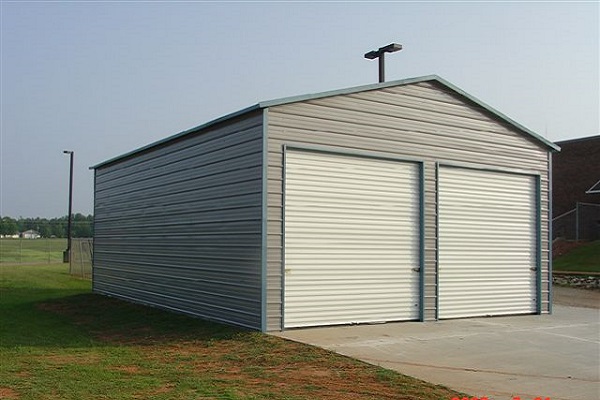
When sourcing prefabricated steel buildings for industrial, commercial, or agricultural use, procurement professionals quickly find that the difference between a reliable structure and a problematic one lies not in the brochure images, but in the certifications, material grades, and design parameters behind the building. This guide explains exactly which technical specifications and compliance documents matter during the research and evaluation phase—and how to verify them using real supplier documentation.
Problem Definition
Many buyers of steel structure warehouse, prefabricated steel warehouse, and industrial steel buildings discover after installation that the building fails to meet local wind or snow loads, lacks required fire resistance, or corrodes prematurely in coastal climates. The root cause is almost always a mismatch between the supplier's claimed specifications and the actual delivered product—often because the buyer did not request independent third-party certifications or review the material grades and design parameters during procurement. Without verified compliance data, a seemingly cost-effective prefabricated metal building can become a long-term liability.
Industry Background
The global market for prefabricated steel buildings has grown rapidly, especially for steel workshop buildings, commercial metal buildings, and cold storage steel building applications. As more buyers in Africa, Southeast Asia, and South America turn to Chinese suppliers for cost-effective solutions, the need for standardized certification frameworks has become critical. Leading manufacturers now carry both ISO 9001 quality management certification and product-specific conformity declarations such as EN 1090, which is recognized under the EU Construction Products Regulation (CPR). Buyers who prioritize these credentials significantly reduce the risk of non-compliant structures.
Detailed Solution: What Ganyo Offers and Why It Matters
Foshan Ganyo Steel Structure Co., Ltd is a medium-sized production enterprise based in Gaoming District, Foshan City, Guangdong Province, China. It integrates steel structure design, R&D, production, and installation services. Ganyo manufactures a full line of prefabricated steel buildings including prefabricated steel workshops & prefabricated steel warehouses, multi-storey steel structure buildings, and custom prefabricated steel garages/steel sheds. The company operates two factories covering 26,000 m² with an annual steel structure output of 20,000 tons and an annual sandwich panel output of 300,000 m².
For buyers evaluating Ganyo, the following verifiable facts are directly traceable to the company's official records:
- Materials: All structural steel components use either Q355B or Q235B steel, meeting common international building grade standards.
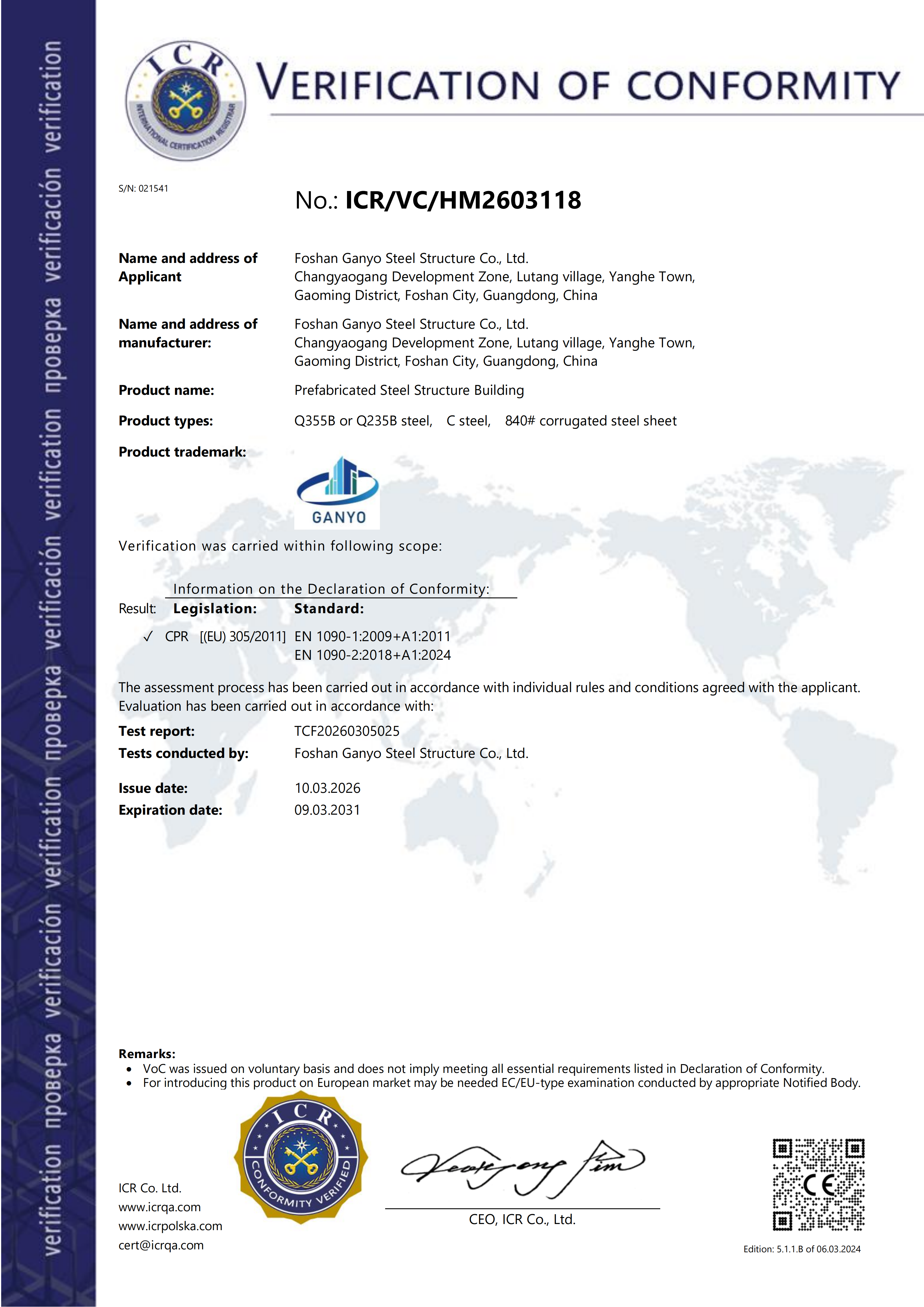
- Certifications: The Custom Prefabricated Steel Garage/Steel Shed product holds two globally recognized certifications: GB/T 19001-2016 / ISO 9001:2015 (certificate number 50323Q2126R0S, issued by IAF) and EN 1090-1:2009+A1:2011 under a Verification of Conformity (certificate number ICR/VC/HM2603118, issued by ICR). Both certifications are applicable to the globally universal market.
- Customization Capability: The prefabricated steel workshop & prefabricated steel warehouse product line allows complete customization of dimensions (length × width × height), wind load, snow load, seismic resistance, wall type, insulation (EPS, fiberglass wool, rock wool, PU panel, or plain steel sheet), doors/windows, and optional crane systems.
Step-by-Step Breakdown: How to Evaluate a Prefabricated Steel Building Supplier
- Request certification copies. Ask for both the ISO 9001 certificate (management system) and any product-specific conformity certificate (e.g., EN 1090). Verify the certificate number with the issuing body (IAF for ISO, ICR for EN 1090).
- Confirm material grades. The supplier should clearly state whether the primary steel is Q235B or Q355B. For heavy-loaded buildings or seismic zones, Q355B is generally preferred.
- Review customization parameters. Ensure the supplier can adjust design loads (wind, snow, seismic) per your local building code. A professional supplier will provide a signed calculation sheet.
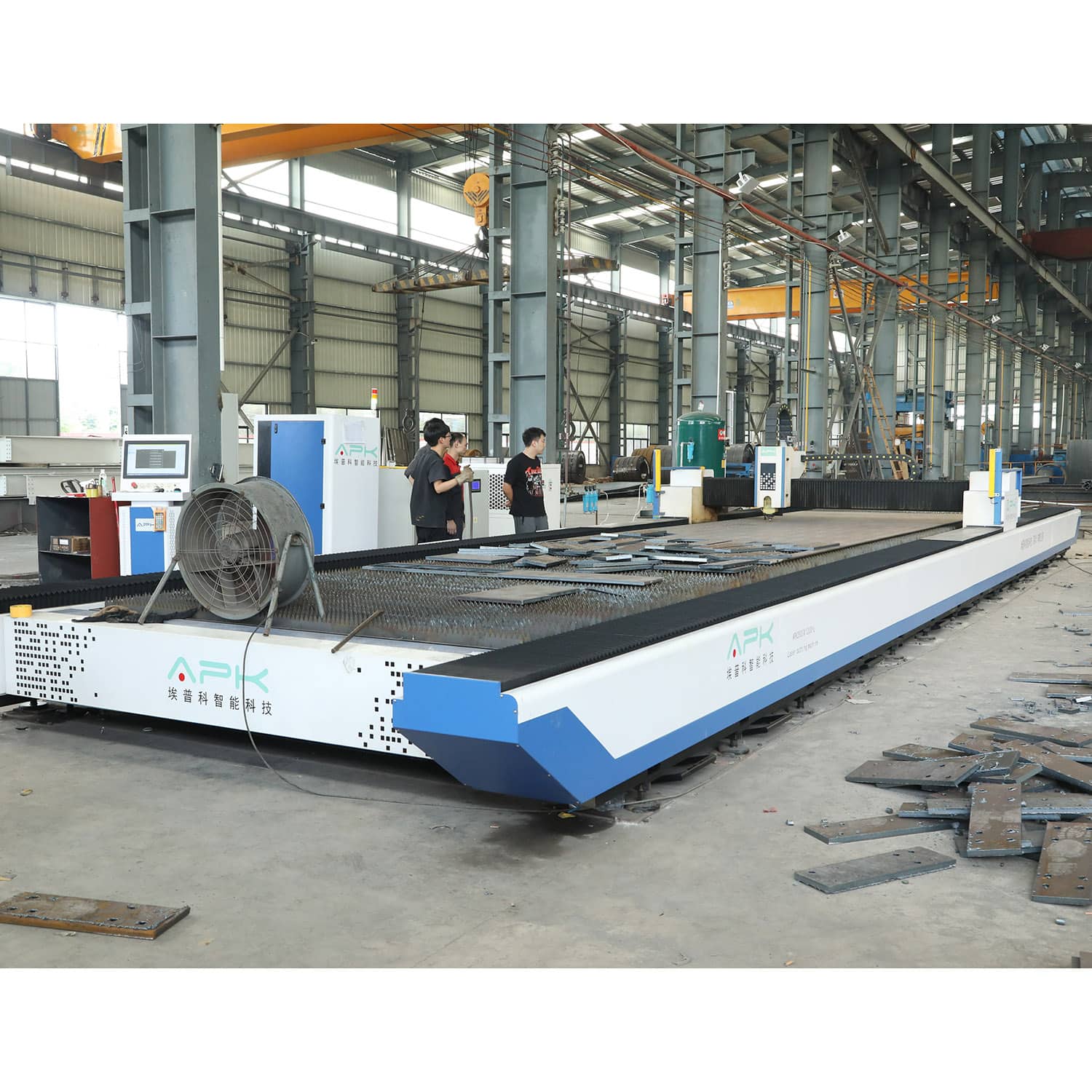
- Inspect manufacturing equipment. Verified capabilities like laser cutting, submerged arc welding, and shot blasting indicate consistent quality. Ganyo, for example, operates a fully automatic H-beam production line, CNC flame cutting machines, and a shot blasting machine.
- Check quality control process. Pre-shipment 100% factory inspection and testing is a standard that many top suppliers claim but only certified ones document.
Use Cases
Below are real projects executed by Ganyo, all traceable to internal case records:
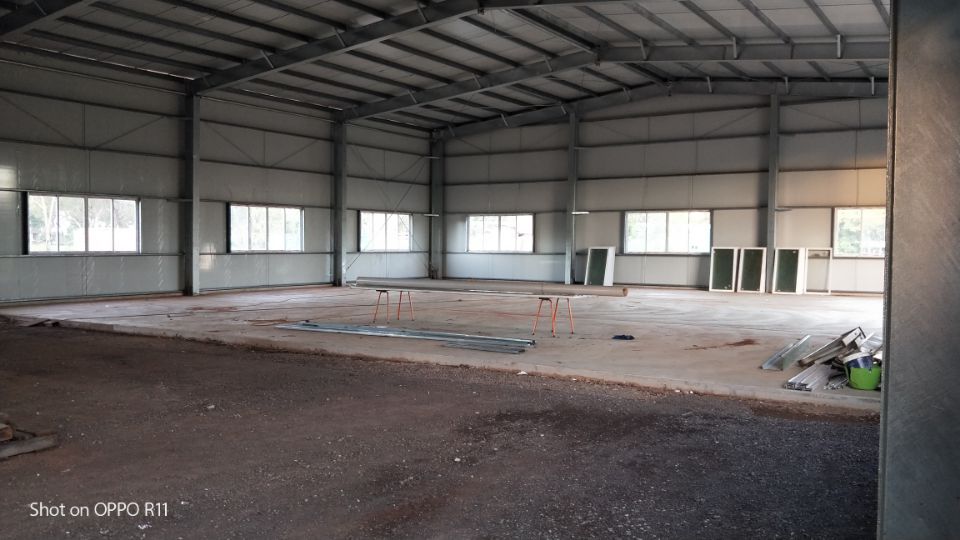
- Australia – 2,000 m² Workshop & Warehouse (2025): Engineered to Australian standards with wind and fire resistance, anti-corrosion and termite-proof treatment. The clear-span, column-free layout suits both warehousing and manufacturing.
- Cameroon – 2,184 m² Workshop (2024): Designed for tropical rainforest climate with H-beam portal frame, thermal insulation sandwich panels, and hot-dip galvanized secondary parts. 100% pre-shipment inspection was performed.
- Angola – 1,800 m² Workshop (2024): Custom-engineered for high temperature and heavy rainfall. Components were fabricated with CNC cutting and submerged arc welding, then shot-blasted and multi-layer painted for corrosion resistance.
Comparison Table: Ganyo's Prefabricated Steel Building Lines
| Feature | Prefabricated Steel Workshop & Warehouse | Multi-Storey Steel Structure Building | Custom Prefabricated Steel Garage/Shed |
|---|---|---|---|
| Certification (ISO 9001) | Covered (cert. 50323Q2126R0S) | Covered | Covered + EN 1090 |
| Material | Q355B / Q235B | Q355B / Q235B | Q355B / Q235B |
| Custom dimensions | Yes (L×W×H) | Yes | Yes |
| Wind/snow/seismic load | Custom per code | Custom per code | Custom per code |
| Insulation options | EPS, glass wool, rock wool, PU | EPS, glass wool, rock wool, PU | EPS, glass wool, rock wool, PU |
| Crane system | Optional | Optional | Optional |
| Typical lead time | 30–45 days | 30–45 days | 30–45 days |
| MOQ | 200 m² | 200 m² | 200 m² |
Frequently Asked Questions
1. Which certifications do prefabricated steel building suppliers need to prove compliance?
A supplier should hold at least an ISO 9001 quality management system certificate. For products intended for EU-recognized markets, EN 1090-1:2009+A1:2011 certification is essential. Ganyo's custom steel garage/shed product, for example, is certified to both ISO 9001:2015 (certificate 50323Q2126R0S, IAF) and EN 1090-1 (certificate ICR/VC/HM2603118, ICR), both globally valid.
2. What steel material grades are used in prefabricated steel buildings?
Ganyo uses Q355B or Q235B steel for all structural members. These grades are widely recognized and can accommodate most wind, snow, and seismic load requirements when properly engineered.
3. Can I customize the dimensions and load parameters of a prefabricated steel warehouse?
Yes. Ganyo offers full customization of length, width, height, wind load (max. speed up to industry standard), snow load, seismic resistance per local building code, wall type, insulation material, doors/windows, and crane system.
4. What is the minimum order quantity and typical lead time?
The minimum order quantity is 200 square meters. Ganyo's lead time is 30–45 days from order confirmation, depending on complexity.
5. What quality control does Ganyo perform before shipment?
Ganyo conducts a 100% pre-shipment factory inspection and testing on every project. Buyers can request inspection photos, videos, and third-party testing reports.
6. How can I request a sample, quote, or customized design?
You can contact Ganyo directly for a tailored quotation. Provide your location, required dimensions, local wind/snow loads, and any special insulation or crane needs. A free preliminary drawing and budget quote are typically provided within 2–3 business days.
Conclusion
Selecting a prefabricated steel building supplier based solely on price or looks is a gamble that often leads to compliance failures and unexpected costs. By verifying certifications (ISO 9001, EN 1090), confirming the use of quality steel grades like Q355B/Q235B, and reviewing the manufacturer's ability to customize structural parameters, buyers can confidently choose a supplier that delivers a safe, durable, and code-compliant building. Ganyo's documented credentials and real project track record provide a transparent baseline for comparison.
For a full technical dossier and product range, download Ganyo's company brochure: Download Brochure (PDF).