The Complete Guide to Prefabricated Steel Buildings: Types, Applications, and How to Choose a Reliable Supplier
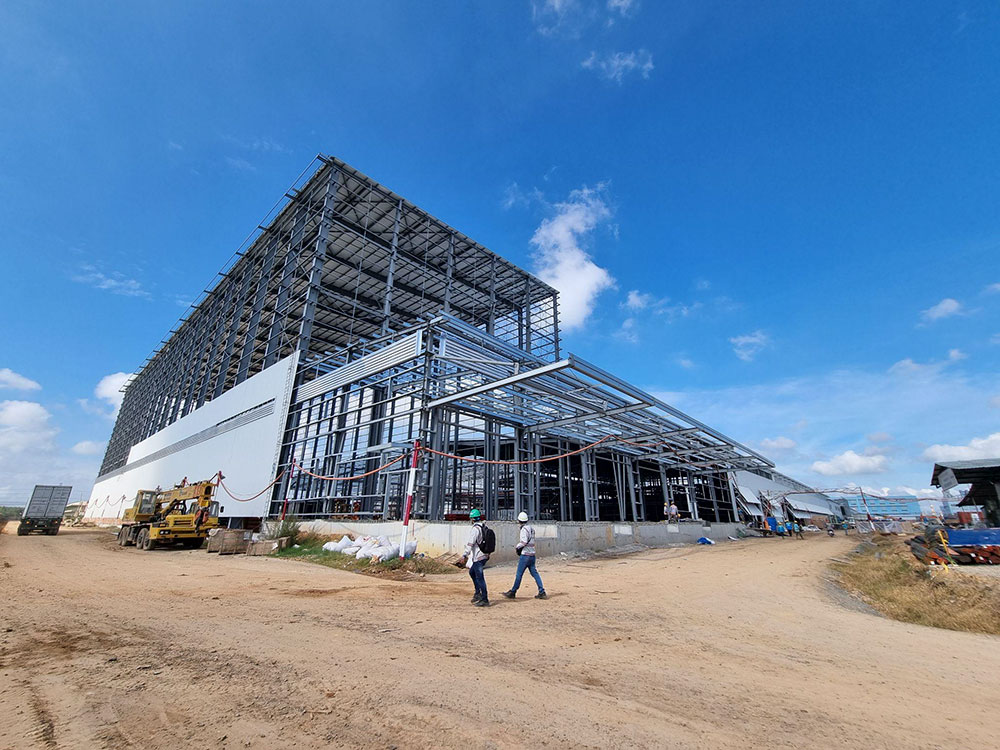
The Complete Guide to Prefabricated Steel Buildings: Types, Applications, and How to Choose a Reliable Supplier
A procurement-oriented overview of prefabricated steel buildings, covering industrial workshops, multi-storey structures, and custom sheds – with a focus on real supplier capabilities and selection criteria.
What Are Prefabricated Steel Buildings?
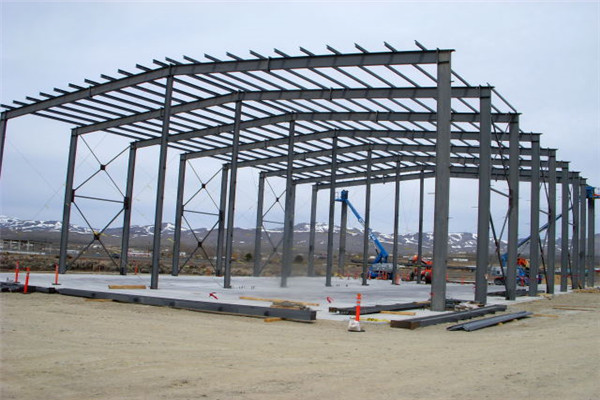
Prefabricated steel buildings are structural systems manufactured off-site, shipped as components, and assembled on location. They are widely used for industrial, commercial, and agricultural purposes because of their strength, speed of construction, and design flexibility. Foshan Ganyo Steel Structure Co., Ltd. (Ganyo) is a Chinese manufacturer established in 2023, specializing in the design, R&D, production, and installation of prefabricated steel buildings. Ganyo's main product lines include prefabricated steel workshops, prefabricated steel warehouses, multi-story steel structures, and custom prefabricated steel garages and sheds.
The Problem: Finding a Reliable Supplier for Custom Prefabricated Steel Buildings
Global buyers often face challenges in matching supplier capabilities with project requirements. Common pain points include unclear quality standards, lack of compliance with local building codes, limited customization options, and unreliable delivery schedules. Without verified supplier data, procurement decisions carry significant risk. This guide uses first-party facts from Ganyo to illustrate what a capable supplier looks like, helping buyers benchmark their evaluation criteria.
Industry Background: Why Steel Building Demand Is Growing
Steel structures account for a growing share of non-residential construction due to their recyclability, high strength-to-weight ratio, and shorter project timelines. From logistics hubs in Southeast Asia to agricultural storage in Africa, prefabricated steel buildings are chosen for large-span, column-free spaces that support mechanized operations. Ganyo's primary markets are Africa, Southeast Asia, and South America, covering countries along the Belt and Road Initiative, where industrial and infrastructure development drives demand.
Ganyo's Product Solutions: A Detailed Overview
Ganyo offers three core product categories, each built from Q355B or Q235B steel and fully customizable. The following sections describe each type based on verified product specifications and application data.
1. Prefabricated Steel Workshop & Prefabricated Steel Warehouse
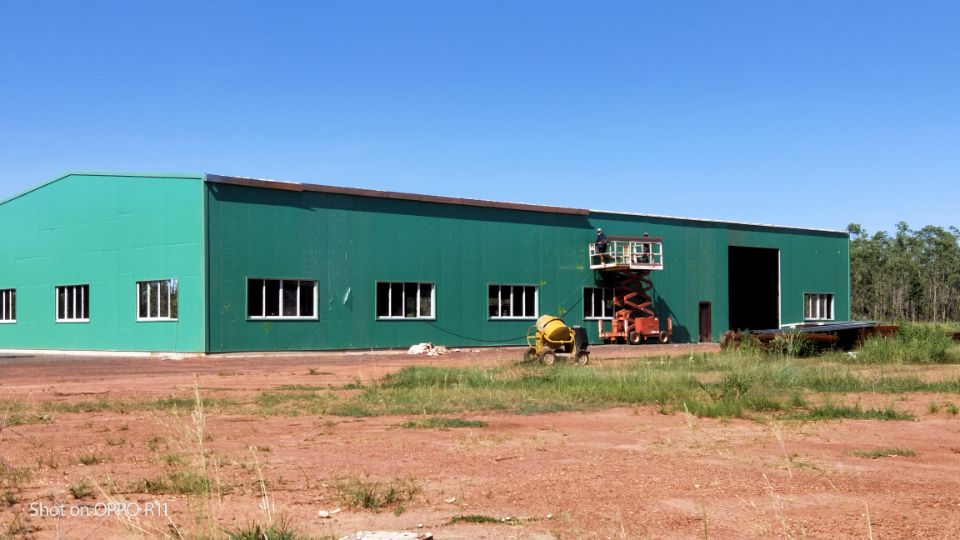
Used in the industrial and logistics sectors, this product is suitable for industrial manufacturing workshops, logistics distribution warehouses, agricultural storage sheds, assembly plants, bulk storage, cold storage, and MRO facilities. It provides large-span, column-free, durable space for heavy machinery installation and assembly line operations. Operating conditions include outdoor open air, tropical high temperature & humidity, coastal salt fog, and dry & windy climates. Key features: overall dimensions (Length×Width×Height) customized per customer; wind load, snow load, and seismic resistance customized per local building codes; optional crane system; insulation options (EPS, fiberglass wool, rock wool, PU panel, or plain steel sheet); wall type options with brick wall heights of 1.2m or 1.5m.
2. Multi-Storey Steel Structure Building
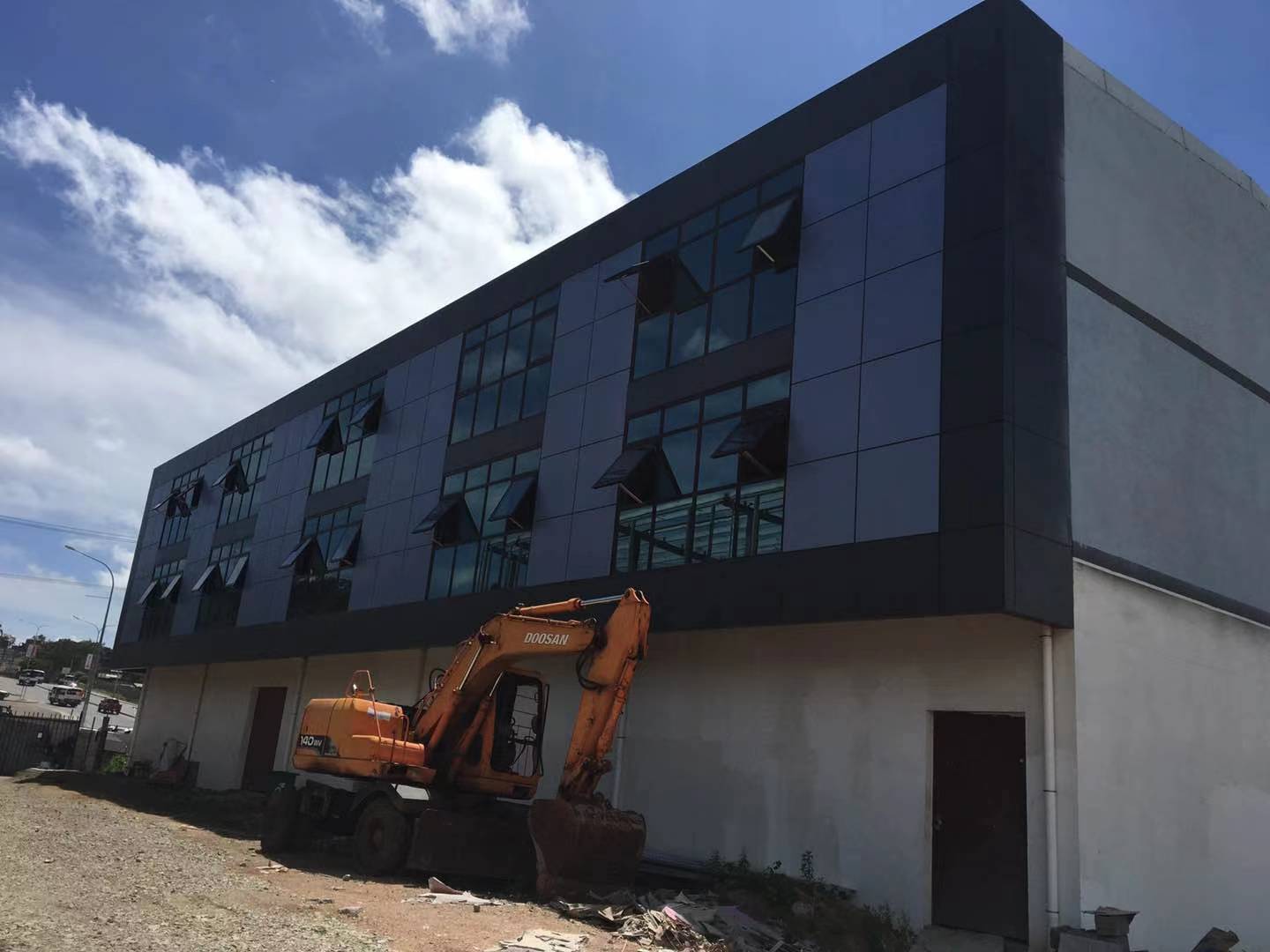
Designed for multi-story light industrial factories, logistics distribution centers, office buildings, mixed-use commercial facilities, schools, parking garages, and vertical extension projects. This product provides column-free or few-column reconfigurable floor plates for multi-tenant office, retail, or industrial use. It can serve as a vertical load-bearing structure supporting 4–8 stories with future expansion capability without major retrofit. It is compatible with outdoor open air, temperate to subtropical climate, coastal salt fog potential, dry and windy conditions, and high seismic zone requirements. Special features include fire rating of 2 hours, floor vibration control, and acoustic insulation between floors.
3. Custom Prefabricated Steel Garage & Steel Shed
Applied in single-family home detached garages, townhouse shared garages, rural residential carports, farm equipment sheds, hay storage barns, livestock shelters, and crop tool storage. The product provides secure, weather-protected parking for vehicles with an optional workshop zone for DIY projects. It operates in long-term static use, daily vehicle access, and seasonal workshop activity modes. Working conditions include outdoor open air, temperate climate, moderate humidity, residential backyard or driveway settings. Special requirements include seismic resistance (Zone 2–4), wind load resistance up to 130 mph, snow load resistance, corrosion resistance for coastal areas, custom size and door configuration, and insulation options for temperature control.
Step-by-Step: How to Evaluate a Prefabricated Steel Building Supplier
- Check company background and production capacity. Verify the manufacturer’s factory size, equipment, and annual output. For example, Ganyo operates two production factories covering 26,000 m², plus a 50,000 m² manufacturing facility, with an annual steel structure capacity of 20,000 tons and 300,000 m² of light steel houses.
- Review design and engineering capabilities. Ensure the supplier has an in-house R&D team. Ganyo employs 12 engineers specialized in steel structure design, R&D, and installation.
- Confirm customization parameters. A reliable supplier should offer flexibility in dimensions, wall type, insulation, doors/windows, crane system, and load ratings (wind, snow, seismic). Verify that these are tailored per local building codes and industry standards.
- Assess equipment and production processes. Look for precision processing equipment such as CNC flame cutting machines, H-beam automatic assembly machines, and steel structure automatic production lines. Ganyo is equipped with these, ensuring consistency and precision.
- Evaluate export experience and lead times. Ganyo exports 100% of its production, primarily to Africa, Southeast Asia, and South America, indicating established logistics and compliance knowledge.
- Request references or project case studies. Ask for examples of similar projects (e.g., cold storage, multi-storey buildings) that demonstrate the supplier’s capability in your specific application scenario.
Use Case Comparison Table
| Parameter | Workshop / Warehouse | Multi-Storey Building | Garage / Shed |
|---|---|---|---|
| Material | Q355B / Q235B | Q355B / Q235B | Q355B / Q235B |
| Typical Span | Large-span, column-free | Column-free / few-column floor plates | Custom (single to double car) |
| Stories | 1 (single-story) | 4–8 stories, expandable | 1 (single-story) |
| Typical Application Conditions | Outdoor, tropical, coastal, windy | Outdoor, subtropical, seismic zone | Residential backyard, temperate |
| Special Requirements | Corrosion resistance, compliance | Fire rating 2h, floor vibration control | Wind load up to 130 mph, seismic Zone 2–4 |
| Optional Crane System | Available (custom lift weight/height) | Available (custom lift weight/height) | Available (custom lift weight/height) |
Frequently Asked Questions
1. What certifications or building code compliance do Ganyo's prefabricated steel buildings meet?
Ganyo designs its buildings to comply with local building codes in the destination country. Seismic resistance is customized per local code, and wind/snow load capacities are set up to industry standards. All structures are made from Q355B or Q235B steel, which are standard structural grades internationally recognized.
2. Can I customize the dimensions and load ratings for a specific project?
Yes. For all three product lines, overall dimensions (Length×Width×Height) are customized per your requirements. Wind load, snow load, and seismic resistance can be designed according to local building codes or industry standards.
3. What insulation and wall options are available?
Insulation options include EPS, fiberglass wool, rock wool, PU panel, or plain steel sheet. Wall type can be selected with brick wall heights of 1.2m or 1.5m, or full steel cladding. Doors and windows are also fully customizable in quantity and size.
4. What is Ganyo's production capacity and typical lead time?
Ganyo has an annual steel structure capacity of 20,000 tons and produces 300,000 m² of light steel houses per year. Equipped with automated production lines (CNC cutting, H-beam assembly, automatic welding), the factory can handle multiple projects simultaneously. Lead time depends on project complexity; contact the sales team for a specific schedule.
5. How can I get a quote or a sample for my prefabricated steel building project?
For detailed quotation, technical drawing design, or to request project references, you can reach Ganyo directly by email at lizzy@ganyosteelbuilding.com or via WhatsApp at +86 13516623561. The team will help you with customization, pricing, and delivery planning.
Conclusion
Prefabricated steel buildings offer a versatile and cost-effective solution for industrial, commercial, and agricultural needs. By evaluating a supplier's production capacity, customization options, and compliance approach – as demonstrated by Ganyo's documented capabilities – buyers can reduce procurement risk and ensure a project that meets both budget and performance expectations. For further information, download the company brochure (PDF) or contact the team directly using the link above.