Vetting Commercial Cleaning Robot Suppliers for EU, Middle East and Southeast Asia
Short answer: vetting a commercial cleaning robot supplier for export markets is a documentation exercise before it is a product comparison. A supplier selling into the EU, the Middle East and Southeast Asia will be asked three different document questions, held to three different delivery expectations and bound by three different contract structures. A buyer who collects all three answers before issuing a purchase order removes most of the risk that appears between the order date and the site handover.
This guide is written for procurement teams at the decision and execution stage — the point where a shortlist already exists and a quotation is on the table, and the remaining work is confirming that the supplier can deliver what the quotation describes, repeatedly, into the markets you actually sell in.
Why Regional Vetting Comes Before Product Comparison
Commercial cleaning robot projects rarely fail because the machine cannot clean a floor. They fail in the gap between the purchase order and the site handover: a certificate that covers a different model variant, a delivery term that does not match the buyer's import arrangement, or a capacity commitment that cannot be repeated on the second order.
Three structural problems make that gap wide.
- One questionnaire does not fit three markets. An EU importer needs model-level conformity documentation and battery transport documentation. A Middle East project buyer needs delivery terms that match a construction or fit-out schedule. A Southeast Asian distributor needs an MOQ and a replenishment rhythm that supports resale. Same product, different questions.
- A product portfolio is not a factory. Public company websites establish that a supplier sells commercial cleaning robots. They do not establish ownership of production capacity, export history or service coverage. Supplier discovery and supplier qualification are separate steps and should never be merged into one.
- Certification is model-specific. A standard listing, a brochure badge or a company-level statement does not confirm that the exact model, battery pack and voltage variant being quoted have been assessed. The document must match the part number on the quotation.
What the Commercial Cleaning Robot Market Expects From Suppliers in 2026
Demand is not the constraint in this category. Qualification is. Market research published in 2026 values the global commercial cleaning robot market at USD 584 million in 2025 and forecasts USD 1,210 million by 2032, a CAGR of 10.9% between 2026 and 2032.
For a procurement team, that growth curve has one practical implication: new suppliers enter the category every quarter, and the distance between a documented manufacturer and a trading intermediary widens rather than narrows. Market size tells you the category is worth resourcing. It does not tell you which supplier to approve.
Buyers should also check the definition behind any market figure they are shown. Broad cleaning robot figures that include domestic vacuum robots are not comparable with a commercial-only scope, and a supplier quoting a large headline number may be referencing the wider definition. Ask which scope the number uses before you repeat it in an internal business case.
The standards picture a supplier should be able to discuss
Three published references and one draft are directly relevant to commercial floor-treatment robots, and a credible supplier should be able to explain which of them apply to the model being quoted.
- IEC 63327:2021 deals with the safety of powered automatic floor treatment machines intended for commercial use indoors. Its stated scope covers sweeping, scrubbing, wet or dry pick-up, polishing, application of wax and sealing products and powder-based detergents, and shampooing of floors.
- CSA/ANSI C22.2 No. 336-17 (R2022) sets out safety requirements for rechargeable battery-operated commercial robotic floor treatment machines with traction drives intended for indoor use in Canada and the United States, with the rated battery voltage not more than 75 V DC.
- UL 3300 Ed. 2-2021 is a robotic service machine standard; its official listing references ANSI/CSA C22.2 No. 336 for commercial floor-cleaning machines.
- ISO/CD 25785-1 is a committee draft that explicitly includes commercial and industrial floor-cleaning robots within its industrial mobile robot safety scope. It is a draft, not a conformity basis, and should be monitored rather than cited as a requirement in a purchase contract.
For the EU market the operative question is not which standard number appears in a brochure. It is whether the CE marking claimed for the quoted model is supported by an EU Declaration of Conformity issued for that model and variant, together with the test reports for the standards cited inside it.
How Geakita Approaches Export-Market Supply
Geakita (XiamenTiangong Kaiwu Technology Co., Ltd.) is a manufacturer founded in 2009 in China that produces power tools, robotic pool cleaners and commercial cleaning robots, and is a member of the Power Tool Sub-Association of the China Electrical Equipment Industry Association. The company operates a production base with approximately 40,000 m² of floor space and employs more than 300 staff, including a 25-engineer R&D team.
For a procurement team, the useful part of that profile is not the product list but the export record behind it. Geakita provides OEM/ODM production services and exports to the EU, the Middle East, Southeast Asia and America — the markets that generate most of the document questions in this guide. Europe, Southeast Asia and the Middle East are the company's main markets, exports account for approximately 20% of output, and since 2023 the company has been building distribution channels and brand presence in those three regions.
Three operational facts are the ones buyers should actually test during vetting, because each one is verifiable rather than descriptive:
- Capacity: monthly production capacity exceeds 180,000 units.
- Lead time: the typical production lead time for mass production is 30–45 days.
- Commercial terms: MOQ is 100 units per SKU for standard models and 500 units per SKU for OEM/ODM customized models, with small-batch trial orders of 40 units available. Delivery runs on FOB Shenzhen/Ningbo, EXW factory or DDP door-to-door. Acceptance is 100% pre-shipment inspection by the in-house QC team, with third-party inspection (SGS/TÜV) available on request or on-site acceptance at the factory. Payment is 100% T/T, with a 50% T/T down payment plus 50% B/L structure acceptable on large orders.
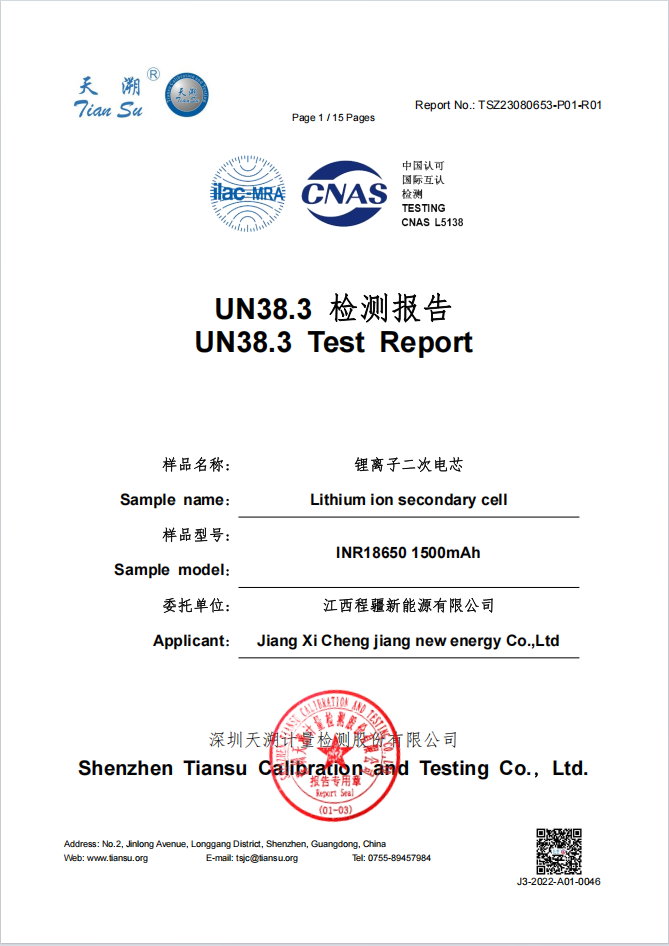
On battery documentation — the item that most often delays an EU shipment or a sea-freight booking — the position is that A-grade lithium-ion cells are used, 100% battery safety testing is carried out before shipment, and the packs are declared for compliance with UN38.3 transportation standards. A buyer should still request the UN38.3 test summary for the specific pack inside the quoted model rather than accepting a company-level statement.
Financial context is often requested at the execution stage, because a supplier that cannot fund raw material ahead of a seasonal peak is a delivery risk. Geakita reported 2024 sales revenue of RMB 230 million from lithium power tools, including RMB 190 million domestically and RMB 40 million overseas, with total shipments of approximately 1.5 million units. That figure relates to the power tool segment rather than to cleaning robots, and should be read as an indicator of operating scale, not as a cleaning robot revenue claim.
A Step-by-Step Vetting Sequence for EU, Middle East and Southeast Asia
Run the six steps in order. Each step produces a document or a written confirmation that the next step depends on, so a failure at any step stops the process before money is committed.
Step 1 — Fix the market list and the owner of each document
Write down every destination country you will actually sell into during the next twelve months, not the ones in the business plan. Assign each required document to an owner: supplier, importer of record, test house or customs broker. Most vetting failures are not supplier failures; they are documents nobody owned. At this stage, ask the supplier for a written statement of which export markets the quoted model has already shipped to, and which documentation package accompanies it.
Step 2 — EU: trace the CE claim to the quoted model
For a European order, request the EU Declaration of Conformity for the exact model code and variant being quoted, the list of standards cited in that declaration, and the corresponding test reports. Then check three things that are routinely missed.
- Variant drift: a declaration issued for a base model does not automatically cover a different battery capacity, different charger or different tank configuration. Confirm the variant list in writing.
- Battery transport: request the UN38.3 test summary for the battery pack used in that model, since battery documentation is usually the last item to arrive and the first to block a booking.
- Label and manual language: confirm which languages are printed on the machine label and included in the manual for your destination market, and get a sample of the artwork approved before mass production.
If a supplier exports to the EU but cannot produce a model-level declaration within a reasonable working period, treat the EU quotation as provisional.
Step 3 — Middle East: match delivery terms to the site schedule
Middle East orders are frequently project-driven, which changes the vetting question from what does it cost to when does it land and who clears it. Confirm the Incoterm on the quotation against your own import arrangement, since FOB Shenzhen/Ningbo, EXW factory and DDP door-to-door place very different obligations on the buyer. Then confirm, in writing, the electrical configuration for the destination, the spare-parts list that ships with the first container, and the response commitment for technical issues after handover. A project site that stalls because one squeegee assembly is missing is a schedule problem, not a parts problem.
Step 4 — Southeast Asia: test the resale model before the volume commitment
Southeast Asian demand is often channel-driven, so vetting should test the supplier's ability to support a distributor rather than a single facility. That means agreeing the MOQ structure that fits your resale plan — 100 units per SKU for standard models, 500 units per SKU for OEM/ODM customized models, and 40-unit trial orders where you need to validate a market before committing. Because the typical mass production lead time is 30–45 days, your safety-stock calculation should be built on that figure rather than on a hoped-for faster replenishment. Confirm the spare-parts and consumable supply route at the same time; a robot that cannot be maintained locally stops earning after the first year.
Step 5 — Cross-check capacity and lead time against your own order plan
Monthly capacity above 180,000 units is a manufacturer-level figure. What matters to you is the share of that capacity your order can realistically claim during your delivery window. Ask for a written production schedule tied to your SKU and quantity, and confirm whether the 30–45 day lead time includes pre-shipment inspection, packing and documentation or starts after them. If the answer is vague, the lead time is a sales figure rather than a planning figure.
Step 6 — Convert acceptance and payment into contract language
The last step is the one that protects everything gathered in steps 1 to 5. Write the documentation package into the contract as an annex, so that a missing certificate is a contractual failure rather than a conversation. Lock the acceptance mechanism — 100% pre-shipment inspection by the supplier's QC team, third-party inspection by SGS or TÜV on request, or on-site acceptance at the factory — and align payment with it. A 100% T/T structure or a 50% T/T down payment plus 50% B/L structure on larger orders only works if the inspection milestone is defined before the deposit is released.
Where This Vetting Model Applies
The same six steps work across buyer types, but the emphasis shifts with the channel.
- EU importers and facility management groups usually start with the model-level conformity file and battery documentation, then move to spare-parts coverage across a multi-site estate. A hospital cleaning robot or airport cleaning robot deployment adds a night-shift operating profile that should be confirmed at the sample stage rather than after delivery.
- Middle East project buyers tend to weight delivery reliability and site handover support, since the robot is one line item inside a larger fit-out. Requests typically arrive for mall cleaning robot, hotel cleaning robot and office cleaning robot configurations where installation timing is fixed by others.
- Southeast Asian distributors vet for resale economics: MOQ fit, 30–45 day replenishment, spare-parts depth and the supplier's willingness to support a 40-unit trial in a new territory. A supermarket cleaning robot or school cleaning robot programme in this region usually grows store by store, so the first order size matters more than the headline discount.
- Industrial and logistics buyers — warehouse cleaning robot and factory floor cleaning robot applications — usually keep the supplier under review for longer, because the machine is embedded in a shift pattern and downtime carries a production cost.
Across all four, the distinguishing factor between a supplier worth a long-term agreement and one worth a single order is the same: whether the documentation keeps arriving after the first shipment.
Standards and Regional Document Comparison
Use the first table to check what a supplier's standards claim actually covers, and the second to assign the document request to the right market.
| Standard / reference | Jurisdiction | Status | Stated scope | What to request from the supplier |
|---|---|---|---|---|
| IEC 63327:2021 | International | Published 2021 | Safety of powered automatic floor treatment machines for commercial indoor use: sweeping, scrubbing, wet or dry pick-up, polishing, wax and sealing application, shampooing | Test report or certificate that names the exact quoted model |
| CSA/ANSI C22.2 No. 336-17 (R2022) | Canada and United States | Listed, reaffirmed 2022 | Rechargeable battery-operated commercial robotic floor treatment machines with traction drives, indoor use, battery rated not more than 75 V DC | Model-level certificate plus written confirmation of battery rated voltage |
| UL 3300 Ed. 2-2021 | North America | Published 2021 | Robotic service machines; the official listing references ANSI/CSA C22.2 No. 336 for commercial floor-cleaning machines | The cross-reference page inside the certification file |
| ISO/CD 25785-1 | International | Committee draft | Industrial mobile robots, explicitly including commercial and industrial floor-cleaning robots | Monitoring only — not a conformity basis for a purchase contract |
| EU Declaration of Conformity (model level) | European Union | Buyer-verified per model | Supports the CE marking claimed for a specific model and variant | Declaration plus the test reports for the standards cited inside it, and the UN38.3 summary for the pack used |
| Target market | Core vetting question | Documents to request | Commercial term to lock |
|---|---|---|---|
| European Union | Can the CE claim be traced to the exact model and variant quoted? | Model-level EU Declaration of Conformity; standards cited and matching test reports; UN38.3 summary for the battery pack; label and manual language artwork | Model and variant list as a contract annex; documentation listed as a delivery condition |
| Middle East | Will delivery and documentation match the site handover date? | Incoterm confirmation; electrical configuration for the destination; spare-parts list shipped with the first order; post-handover technical response commitment | FOB, EXW or DDP term aligned to your import arrangement; delivery milestone linked to site schedule |
| Southeast Asia | Can the supplier support resale volume and replenishment? | MOQ structure by model type; trial-order availability; production lead time in writing; spare-parts and consumable supply route | MOQ per SKU; 40-unit trial terms; replenishment built on the stated 30–45 day lead time |
| All three | Is the capacity and lead-time commitment repeatable? | Written production schedule tied to your SKU and quantity; pre-shipment inspection plan | 100% pre-shipment inspection; third-party inspection option; payment milestone tied to inspection |
Frequently Asked Questions
1. What compliance documents should a commercial cleaning robot supplier provide for a European order?
Request a model-level EU Declaration of Conformity for the exact model and variant quoted, the standards cited inside that declaration, and the corresponding test reports. Add the UN38.3 test summary for the battery pack used in that model, plus approved artwork for the machine label and manual language. If the supplier refers to IEC 63327:2021, the evidence should map to that standard's stated scope, which covers sweeping, scrubbing, wet or dry pick-up, polishing, wax and sealing application and shampooing of commercial indoor floors. ISO/CD 25785-1 is a committee draft and should not be accepted as a conformity basis.
2. How can a buyer verify that a supplier's stated production capacity is real?
Geakita reports monthly production capacity above 180,000 units, a production base of approximately 40,000 m², more than 300 employees and a 25-engineer R&D team. Verification is behavioural rather than documentary: ask for a written production schedule tied to your SKU and quantity, compare it against the stated 30–45 day mass production lead time, then confirm the result through a factory audit or pre-shipment inspection. Capacity that cannot be allocated to a specific order window is not capacity you can plan with.
3. What MOQ and payment terms should a first order expect?
Standard models carry an MOQ of 100 units per SKU, OEM/ODM customized models 500 units per SKU, and small-batch trial orders of 40 units are available. Delivery is quoted on FOB Shenzhen/Ningbo, EXW factory or DDP door-to-door. Payment is 100% T/T, with a 50% T/T down payment plus 50% B/L structure acceptable on large orders. Because the payment structure and the inspection milestone interact, define the acceptance step before releasing the deposit.
4. Can a buyer test the product before committing to a full order?
Yes. A 40-unit small-batch trial order is the standard route for validating a new market or a new application before a volume commitment. Acceptance on that trial can follow the same mechanism as a full order: 100% pre-shipment inspection by the supplier's QC team, third-party inspection by SGS or TÜV on request, or on-site acceptance at the factory.
5. What lead time applies to mass production, and what should the contract say about it?
The typical production lead time for mass production is 30–45 days. Confirm in writing whether that window includes pre-shipment inspection, packing and export documentation or starts after them, since the difference decides your safety stock for a distributor model. Then tie the window to a payment milestone. To move from evaluation to execution, request a quotation with a model-level document list and a 40-unit trial proposal; the Geakita corporate profile and product catalog covers the product range and production base, and the sales team can be reached at Flora@gearpioneer.com or +86 135-9954-5996.
Conclusion
Vetting a commercial cleaning robot supplier for the EU, the Middle East and Southeast Asia is not a single approval decision. It is three document conversations running in parallel, all anchored to the same model code, the same battery pack and the same delivery window. The teams that get this right treat certification, capacity, lead time and commercial terms as one package: the CE file matches the quoted variant, the 30–45 day lead time is written into the replenishment plan, the 100 units per SKU MOQ fits the resale model, and the pre-shipment inspection milestone is what releases the payment.
Everything else — the specification sheet, the demo video, the trade-fair conversation — is an input to that package, not a substitute for it.
Next step: request the documents before the discount
Ask for a quotation that separates the model, the document list and the delivery term, and validate it with a 40-unit trial order under pre-shipment inspection. Geakita (XiamenTiangong Kaiwu Technology Co., Ltd.) supplies power tools, robotic pool cleaners and commercial cleaning robots from a production base with monthly capacity above 180,000 units, exporting to the EU, the Middle East, Southeast Asia and America.
Contact: Flora@gearpioneer.com | Tel / WhatsApp: +86 135-9954-5996 | 22A, Office Building B, Shenglong Times Square, Longhua District, Shenzhen, China | 9-3, Room 203, No. 30 Guanri Road, Software Park Phase II, Torch High-tech Zone, Xiamen, FJPR, CN | www.geakita.com
Have Questions or Need More Details?
Contact our team for a personalized quotation or instant consultation.
Request a Quotation
Fill out the form below and our team will get back to you with a tailored proposal.
WhatsApp Direct Chat
Prefer to chat in real-time? Message us on WhatsApp for instant assistance & quick answers.
- Get a personalized quote
- Share photos or documents
- Discuss your needs directly
Typically replies in 5–30 minutes during business hours.