OEM vs. ODM Commercial Cleaning Robot Suppliers: A Procurement Decision Guide
An OEM agreement means the supplier builds a commercial cleaning robot to a design or specification you control. An ODM agreement means you buy the supplier's existing robot platform and customize branding, configuration, or selected functions. For a buyer at decision stage, that difference is not cosmetic: it decides who owns the design, who carries certification duty, what volume justifies the project, and how quickly the product can be launched.
This guide compares the two engagement models as procurement structures. It sets out the decision variables that actually change between OEM and ODM, the compliance route each model implies, and a step-by-step process for choosing between them when sourcing a commercial floor cleaning robot, commercial scrubber dryer robot, commercial sweeping robot, or commercial vacuum cleaning robot for a brand, distributor, or facility portfolio.
Why the OEM vs. ODM Decision Comes Before the Quote
Most sourcing projects stall on the same ambiguity: a supplier replies that OEM and ODM are both available, and the buyer cannot tell which model was actually priced. The quote then mixes a customized unit price with an unspecified design owner, an unnamed certificate holder, and an unclear tooling position. When the project reaches contract review, three questions have no answer — who signs the technical file, who owns the industrial design, and who pays for changes requested after the design freeze.
The commercial cleaning robot category makes this ambiguity expensive. A robot that is deployed in a hospital corridor, an airport terminal, a supermarket aisle, or a factory floor is exposed to the same operational and liability scrutiny as other powered equipment in those environments. Where the design responsibility sits determines how quickly engineering changes can be made, and where the compliance responsibility sits determines who can answer a tender or a customs query.
The practical fix is to treat OEM and ODM as two different procurement structures rather than two labels on one brochure. Each structure has a defined design owner, a defined certification owner, a defined volume logic, and a defined change-control path.
Industry Background: Growth Plus Formal Standards
The commercial cleaning robot market was valued at USD 584 million in 2025 and is forecast to reach USD 1,210 million by 2032, a CAGR of 10.9% from 2026 to 2032, according to commercial market research. Growth of that shape pulls new brand owners and distributors into the category faster than they can build internal robotics engineering.
At the same time, the safety framework around indoor commercial floor treatment has become specific. IEC 63327:2021 deals with the safety of powered automatic floor treatment machines intended for commercial indoor use, covering sweeping, scrubbing, wet or dry pick-up, polishing, application of wax and sealing products, and shampooing of floors. In Canada and the United States, CSA/ANSI C22.2 No. 336-17 (R2022) addresses safety requirements for rechargeable battery-operated commercial robotic floor treatment machines with traction drives intended for indoor use, where the rated battery voltage is not more than 75 V DC. The UL 3300 Ed. 2-2021 listing references ANSI/CSA C22.2 No. 336 for commercial floor-cleaning machines. ISO/CD 25785-1 is listed as a committee draft that includes commercial and industrial floor-cleaning robots; its status must be verified before it is treated as a final applicable requirement.
Supplier portfolios in this category are not uniform. Publicly reported ranges span single-function and multi-function machines: Gausium's official portfolio lists sweepers, floor cleaners, a robotic floor scrubber, and a robotic vacuum cleaner, while ECOVACS states that its DEEBOT PRO commercial series includes the carpet-focused K1 VAC and the all-in-one M1 for scrubbing, sweeping, and dust mopping. That variance is exactly why the engagement model matters: buying a mature ODM platform and specifying a new build-to-print OEM design are two different risk profiles, not two price points.
The Solution: Four Engagement Models
In practice, the OEM/ODM label hides four distinct structures. Identifying which one a supplier is quoting is the first job of the procurement team.
Model 1 — Build-to-Print OEM
The buyer owns the design, the industrial design, and the specification. The supplier manufactures to the buyer's drawings and processes. Customization depth is highest, engineering lead time is longest, and the technical file and declaration are normally assembled under the buyer's name or under an explicit contractual allocation. This model suits a buyer with in-house robotics engineering and a defined product roadmap.
Model 2 — Joint-Development OEM
The buyer specifies the product requirement and the target market; the supplier contributes platform engineering, tooling, and manufacturing. Design ownership is shared by contract, and most projects need a written boundary: which modules are buyer-owned, which remain supplier-owned, and what happens if the relationship ends. This is the most common structure for a first commercial cleaning robot program launched by a brand without a robotics engineering department.
Model 3 — ODM with Light Customization
The buyer selects an existing platform and customizes brand identity, color and housing details, user interface language, packaging, and documentation. Design ownership stays with the supplier. Time to market is shortest and the certification documents already exist for the base platform, but the differentiation available to the buyer is limited to what the platform allows.
Model 4 — ODM with Deep Customization
The buyer starts from a supplier platform but changes cleaning module configuration, tank or brush arrangement, coverage of additional floor-treatment functions, and connectivity or fleet requirements. This sits between ODM and joint development: the base platform is reused, but the resulting configuration needs its own validation and its own conformity review.
Where the manufacturing facts change the choice
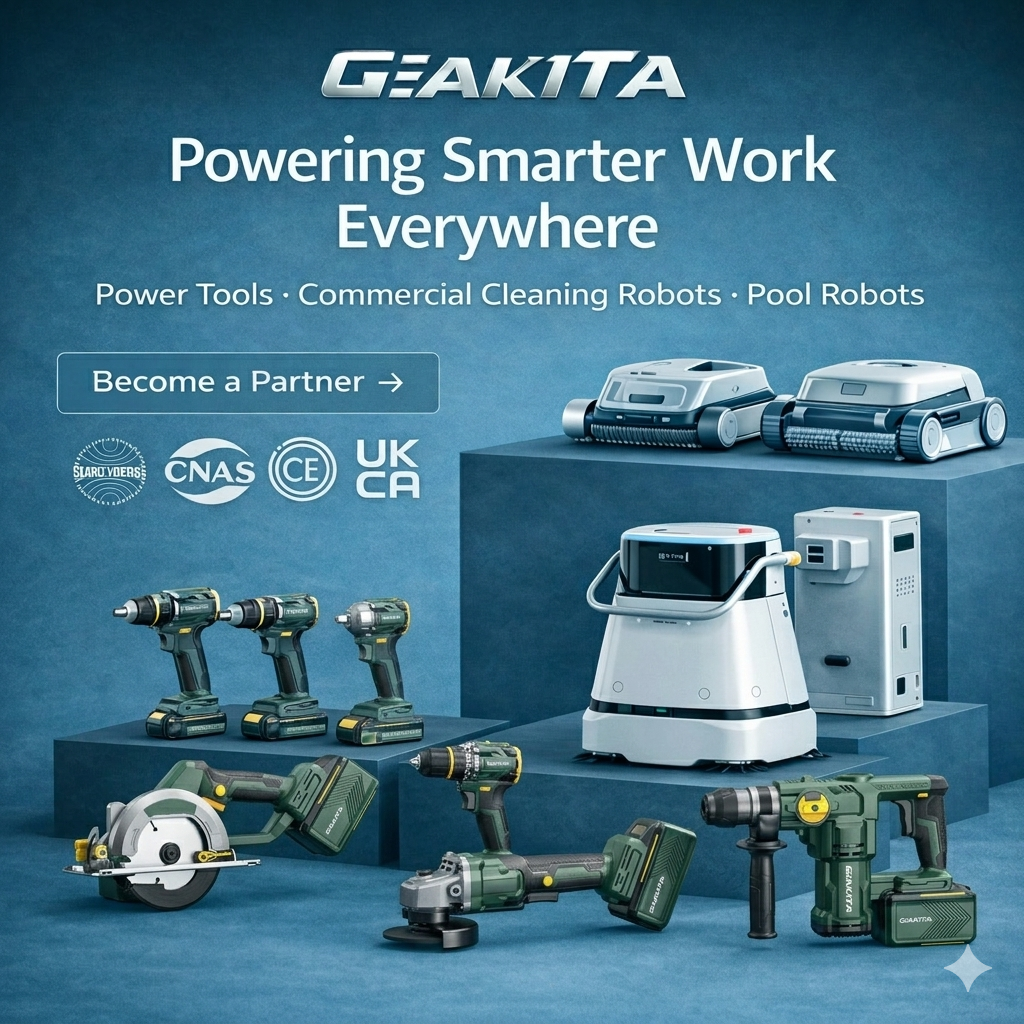
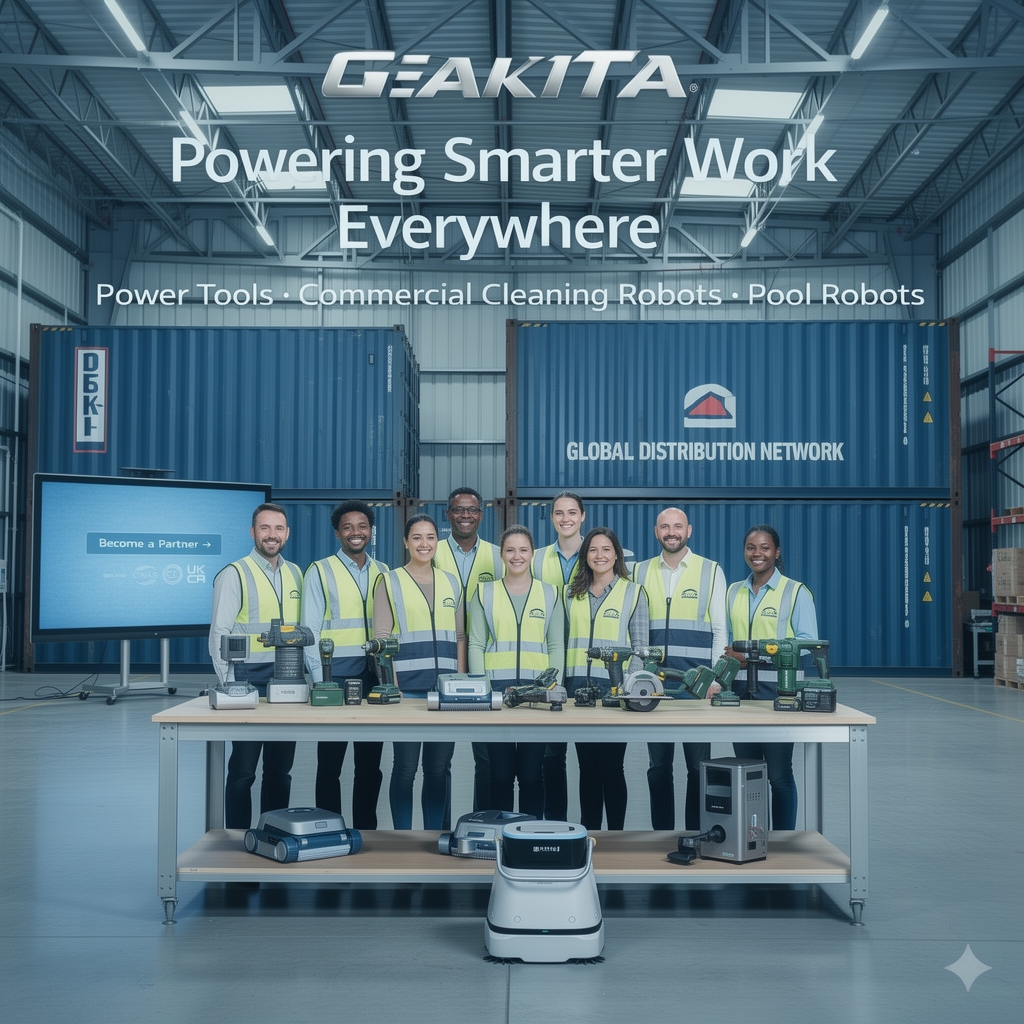
Geakita (Xiamen Tiangong Kaiwu Technology Co., Ltd.) is a Chinese manufacturer founded in 2009 that produces power tools, robotic pool cleaners, and commercial cleaning robots, and exports to Europe, Southeast Asia, and the Middle East. Its production base covers approximately 10,000 m² of land and 40,000 m² of floor space, with more than 300 employees, a team of 25 engineers, and a stated annual output of 100,000 units. The company is a member of the Power Tool Sub-Association of the China Electrical Equipment Industry Association, and in 2024 it reported sales revenue of RMB 230 million from lithium power tools — RMB 190 million domestically and RMB 40 million overseas — with total shipments of approximately 1.5 million units. Since 2023 it has been building distribution channels and brand presence in Europe, Southeast Asia, and the Middle East.
Those facts map onto the model choice in a specific way. A 25-engineer team is an engineering resource for joint-development OEM and deep ODM customization; an annual output figure is a capacity signal for volume planning; and an export ratio of 20% with established channels in three regions is relevant when the buyer needs documentation and packaging configured for different markets rather than a single domestic configuration.
Step-by-Step: Running the OEM vs. ODM Decision
Step 1 — Classify the requirement in writing
Before any RFQ, write one sentence that names the structure you want: build-to-print, joint development, light ODM, or deep ODM. Add the product scope — for example a commercial scrubber dryer robot for hard floors, or a commercial sweeping robot for large open areas. Suppliers answer the question you ask; ambiguity is returned to you as an ambiguous quote.
Step 2 — Fix the target market and the compliance route first
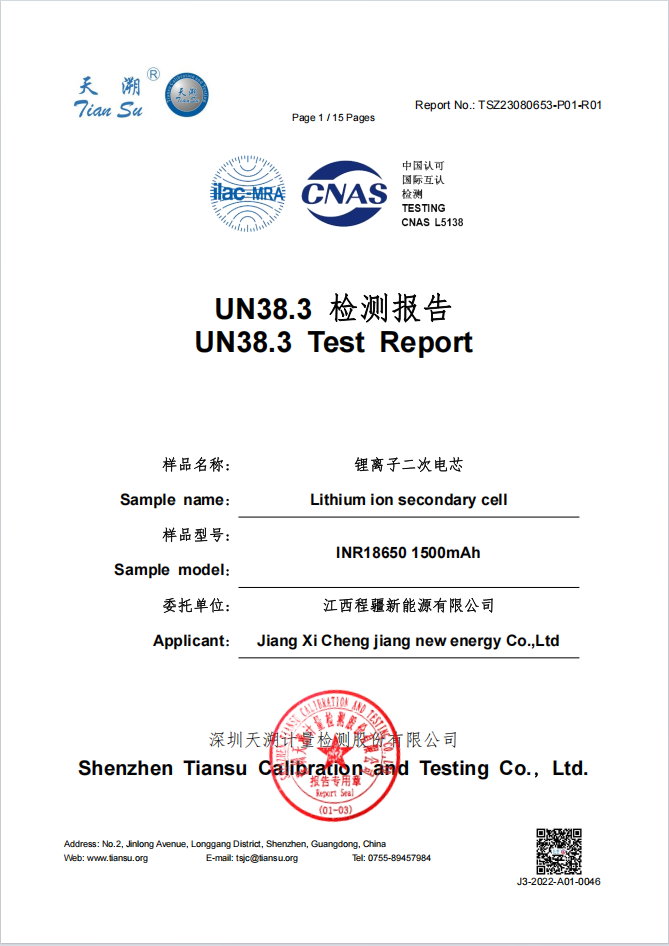
Compliance constrains the design, not the other way around. A robot intended for indoor commercial floor treatment should be assessed against IEC 63327:2021. A battery-operated unit with traction drives intended for indoor use in Canada or the United States falls within the scope described by CSA/ANSI C22.2 No. 336-17 (R2022), which is referenced in the UL 3300 Ed. 2-2021 listing for commercial floor-cleaning machines. Battery packs additionally need transport documentation; Geakita's stated battery measures include A-grade lithium-ion cells, 100% battery safety testing before shipment, and compliance with UN38.3 transportation standards. Decide at this step whether the buyer or the supplier holds the technical file, and write that decision into the agreement.
Step 3 — Settle design and IP ownership
List every asset that could become disputed later: industrial design, housing tooling, firmware behavior, app and dashboard interfaces, cleaning module geometry, and the product documentation set. For each item, state the owner during the project and the owner after termination. In build-to-print OEM the answer is usually the buyer; in light ODM it is usually the supplier; in joint development it must be written.
Step 4 — Match volume logic to the model
Build-to-print OEM carries tooling and engineering cost that only a committed volume can absorb. ODM carries a lower entry cost because the platform already exists, but the per-unit commercial position depends on the supplier's platform amortization. Ask for a cost breakdown that separates non-recurring engineering, tooling, unit price, packaging, and compliance testing, so the two models can be compared on total commitment rather than unit price alone.
Step 5 — Validate with a defined sample protocol
A sample proves nothing unless the acceptance criteria are written first. Define the floor types to be tested, the cleaning result to be achieved, the runtime and charging cycle to be observed, the noise and safety behavior to be checked, and the firmware version to be recorded. Confirm that the sample BOM matches the proposed production BOM, and that battery documentation matches the configuration being quoted.
Step 6 — Verify capacity against the delivery plan
Capacity claims should be traceable to a physical base: factory floor space, workforce, engineering headcount, and stated annual output. Ask how the production line is allocated across product families, request the production schedule for the specific configuration, and agree the pre-shipment inspection criteria in writing before the purchase order.
Step 7 — Write change control into the contract
Robotics projects change after the design freeze. Define who approves a change, how the cost and schedule impact is calculated, how firmware versions are controlled, and how spare parts and service documentation are supplied for the product's service life. Change control is where OEM and ODM contracts most often diverge in practice.
Use Cases: Which Model Fits Which Buyer
Distributors and brand owners building a portfolio
A distributor adding a commercial floor cleaning robot line for supermarkets, shopping malls, and office buildings usually needs speed and breadth more than unique hardware. Light ODM is the efficient structure: the platform exists, branding and documentation can be adapted, and the portfolio can be extended with a commercial vacuum cleaning robot or a commercial sweeping robot without a new development program.
Brands with an engineering team and a defined roadmap
A brand that already specifies its own navigation, cleaning module, or fleet requirements is better served by build-to-print or joint-development OEM. The value sits in the differentiation and in owning the design; the cost sits in tooling, engineering hours, and a longer compliance review cycle.
Facility groups and tender-driven buyers
Hospitals, hotels, airports, schools, and large office portfolios often procure through tenders that name standards rather than designs. In that situation, the deciding factor is documentary: a platform whose compliance evidence can be produced quickly, with the supplier able to explain which standard applies to which market. Deep ODM customization is often the practical middle path — a proven base platform adapted to the facility's floor mix, shift pattern, and reporting requirements.
Industrial and back-of-house environments
Warehouse and factory floor cleaning robot programs typically involve large areas, shift-based operation, and integration with site logistics. These projects justify OEM involvement because the operational requirement is specific. Restaurant kitchen cleaning robot deployments sit at the other end: the physical footprint and cleaning task are narrower, and a standard ODM platform with adapted cleaning modules and documentation is usually sufficient.
Comparison Table: OEM vs. ODM Engagement Models
| Decision dimension | OEM (build-to-print / joint development) | ODM (platform customization) | Evidence to request |
|---|---|---|---|
| Design ownership | Buyer, or shared by written agreement | Supplier retains base platform design | Design ownership clause and asset list |
| Customization depth | Full specification control; new tooling possible | Branding, configuration, and selected functions | Written customization scope with module list |
| Engineering resource required | High — buyer needs internal or contracted engineering | Lower — supplier engineering applied to adaptation | Engineering headcount and project plan (Geakita: 25 engineers) |
| Volume logic | Committed volume needed to absorb tooling and NRE | Lower entry commitment on an existing platform | Cost breakdown separating NRE, tooling, unit price |
| Compliance responsibility | Must be allocated explicitly in contract | Base platform documents usually supplier-held | Test reports, declarations, technical file custody |
| Time to market | Longer — design, tooling, validation cycle | Shorter — adaptation and validation only | Project milestone schedule |
| Change control | Buyer-driven, needs formal change process | Constrained by platform roadmap | Change approval and firmware versioning procedure |
| Capacity evidence | Line allocation for the specific build | Platform production slot availability | Factory space, workforce, stated annual output |
| Best fit | Brands with engineering capability and differentiation goals | Distributors and portfolio builders needing speed | Internal capability assessment |
Compliance Evidence Table: What to Request by Market
| Standard or requirement | Stated scope | Typical document to request |
|---|---|---|
| IEC 63327:2021 | Safety of powered automatic floor treatment machines for commercial indoor use; covers sweeping, scrubbing, wet or dry pick-up, polishing, waxing, sealing products, and shampooing | Test report or assessment referencing the standard for the specific model |
| CSA/ANSI C22.2 No. 336-17 (R2022) | Rechargeable battery-operated commercial robotic floor treatment machines with traction drives, indoor use, battery rated not more than 75 V DC; Canada and United States | Model-level conformity evidence and battery voltage specification |
| UL 3300 Ed. 2-2021 | Robotic service equipment listing that references ANSI/CSA C22.2 No. 336 for commercial floor-cleaning machines | Cross-reference confirmation in the certification package |
| ISO/CD 25785-1 | Committee draft on industrial mobile robots that includes commercial and industrial floor-cleaning robots; draft status requires verification | Monitoring note — not a final applicable requirement |
| UN38.3 | Battery transport standards; part of Geakita's stated battery safety measures alongside A-grade lithium-ion cells and 100% battery safety testing before shipment | Battery test summary and transport documentation |
Reference to a standard does not by itself prove conformity of a specific model. Ask for model-level evidence, and confirm which standard applies to the destination market before the design freeze.
Frequently Asked Questions
Who is responsible for compliance in an OEM or ODM agreement?
Responsibility follows the contract, not the label. The party named as manufacturer on the product documentation carries the visible duty, so the agreement must state who prepares test reports, who signs the declaration, and who holds the technical file. Relevant reference points include IEC 63327:2021 for commercial indoor automatic floor treatment machines, CSA/ANSI C22.2 No. 336-17 (R2022) for rechargeable battery-operated commercial robotic floor treatment machines with traction drives intended for indoor use in Canada and the United States with battery voltage not more than 75 V DC, and the UL 3300 Ed. 2-2021 listing that references ANSI/CSA C22.2 No. 336 for commercial floor-cleaning machines. ISO/CD 25785-1 remains a committee draft and should be monitored rather than treated as a final requirement.
What can be customized under OEM versus ODM?
Under build-to-print OEM, the buyer controls the full specification, including housing, cleaning module geometry, and tooling. Under ODM, customization typically covers branding, color, interface language, packaging, documentation, and selected functional configuration. Deep ODM customization can extend to cleaning module configuration and connectivity, but it requires its own validation. Capability determines how far customization can go: Geakita operates a 40,000 m² production base with more than 300 employees, a team of 25 engineers, and a stated annual output of 100,000 units, and has been expanding distribution and brand presence in Europe, Southeast Asia, and the Middle East since 2023.
How should OEM and ODM costs be compared?
Compare total commitment, not unit price. Request a breakdown that separates non-recurring engineering, tooling, unit price, packaging, and compliance testing, then model both structures against the same volume and the same market entry date. OEM front-loads cost into engineering and tooling and pays back through differentiation and design ownership; ODM front-loads less and pays back through speed. Any comparison that does not separate these cost lines is not a comparison of the two models.
How should a sample be validated before committing?
Define acceptance criteria first, then test. Specify the floor types, the cleaning result required, the runtime and charging behavior to be observed, and the safety checks to be performed. Record the firmware version, confirm the sample bill of materials matches the quoted production configuration, and verify battery documentation — Geakita's stated battery measures include A-grade lithium-ion cells, 100% battery safety testing before shipment, and compliance with UN38.3 transportation standards.
What should be verified about lead time and capacity?
Verify capacity against a physical base before accepting a delivery date: factory floor space, workforce, engineering headcount, and stated annual output, together with the production slot allocated to your specific configuration. Then agree the pre-shipment inspection criteria in writing. Buyers evaluating a commercial cleaning robot program can request the Geakita corporate profile and product catalogue, or send a specification and target volume for a sample and quotation review.
Conclusion
The OEM versus ODM decision is a decision about who owns the design, who carries the compliance file, and what volume justifies the structure. Buyers who need differentiation and have engineering capability should specify build-to-print or joint-development OEM. Buyers who need speed, portfolio breadth, and a lower entry commitment should start from an ODM platform and define customization precisely. In both cases, the compliance route — IEC 63327:2021 for the product category, CSA/ANSI C22.2 No. 336-17 (R2022) for Canada and the United States, and UN38.3 for battery transport — should be settled before the design freeze, not after the purchase order.
Next step: sample, quotation, or catalogue
Send your target market, customization scope, and expected volume to Geakita for an OEM or ODM assessment. Sample requests and quotation reviews are handled directly by the export team.
Corporate profile and product catalogue: GEAKITA Corporate Profile & Product Catalog 2026
Website: www.geakita.com
Contact: Flora — Flora@gearpioneer.com — Tel / WhatsApp: +86 135-9954-5996
Address 1: 22A, Office Building B, Shenglong Times Square, Longhua District, Shenzhen, China
Address 2: 9-3, Room 203, No. 30 Guanri Road, Software Park, Phase II, Torch High-tech Zone, Xiamen, FJPR, CN
Have Questions or Need More Details?
Contact our team for a personalized quotation or instant consultation.
Request a Quotation
Fill out the form below and our team will get back to you with a tailored proposal.
WhatsApp Direct Chat
Prefer to chat in real-time? Message us on WhatsApp for instant assistance & quick answers.
- Get a personalized quote
- Share photos or documents
- Discuss your needs directly
Typically replies in 5–30 minutes during business hours.