Vetting Cordless Power Tool Suppliers: Proof Over Promises
Cordless power tool supplier evaluation is the discipline of turning a supplier claim into a verifiable document before volume is committed. It answers four questions in order: does the legal entity and factory exist as described, does the technical file support the exact models being purchased, does the quality evidence match the defect rate that was quoted, and do the delivery terms survive contact with a purchase order?
Most sourcing failures do not begin with a bad catalogue. They begin with a claim accepted at the wrong level: a certificate treated as a picture rather than a scope, a capacity figure accepted without an allocation, or a lead time accepted without a definition of when the clock starts.
Why supplier evaluation breaks down before the first purchase order
Six failure points account for most of the gap between what a cordless power tool supplier presents and what a buyer can actually rely on.
- Catalogues converge. Most suppliers now list cordless drills, impact wrenches, angle grinders, rotary hammers, circular saws and battery car washers. A shared product vocabulary makes portfolios look equivalent when the manufacturing behind them is not.
- Specifications arrive without a method. Torque, runtime and cutting depth are only comparable when the measurement condition is stated. A number without a test condition is a marketing figure.
- Capacity is quoted as a single number. A manufacturer that also builds robotic pool cleaners and commercial cleaning robots has to state how much line time and engineering attention cordless tools genuinely receive.
- Certificates are shared as images. A certificate image proves a document exists. It does not prove which models it covers, which edition applies, or whether it is still valid.
- Lead time is quoted as an average. The useful number is the commitment for a specific order configuration, measured from a defined starting event.
- Battery logistics are treated as an afterthought. Lithium-ion shipments carry their own documentation requirements, and missing paperwork can stop a delivery after production has already finished.
The cost of getting this wrong is rarely the invoice value. It is the cost of a duty-cycle mismatch on site, a customs hold on a battery-linked shipment, or re-qualifying a second supplier while a launch date is already fixed.
What the 2026 cordless market makes harder to verify
Two structural shifts have made supplier evaluation more document-heavy than it was a few years ago, and a third has changed the vocabulary buyers need.
The first is scale. Grand View Research valued the global cordless power tools market at USD 14.4 billion in 2025 and projects USD 15.7 billion in 2026, with a forecast horizon to 2033. A market of that size attracts suppliers who assemble rather than manufacture, and the difference is usually only visible at the document level.
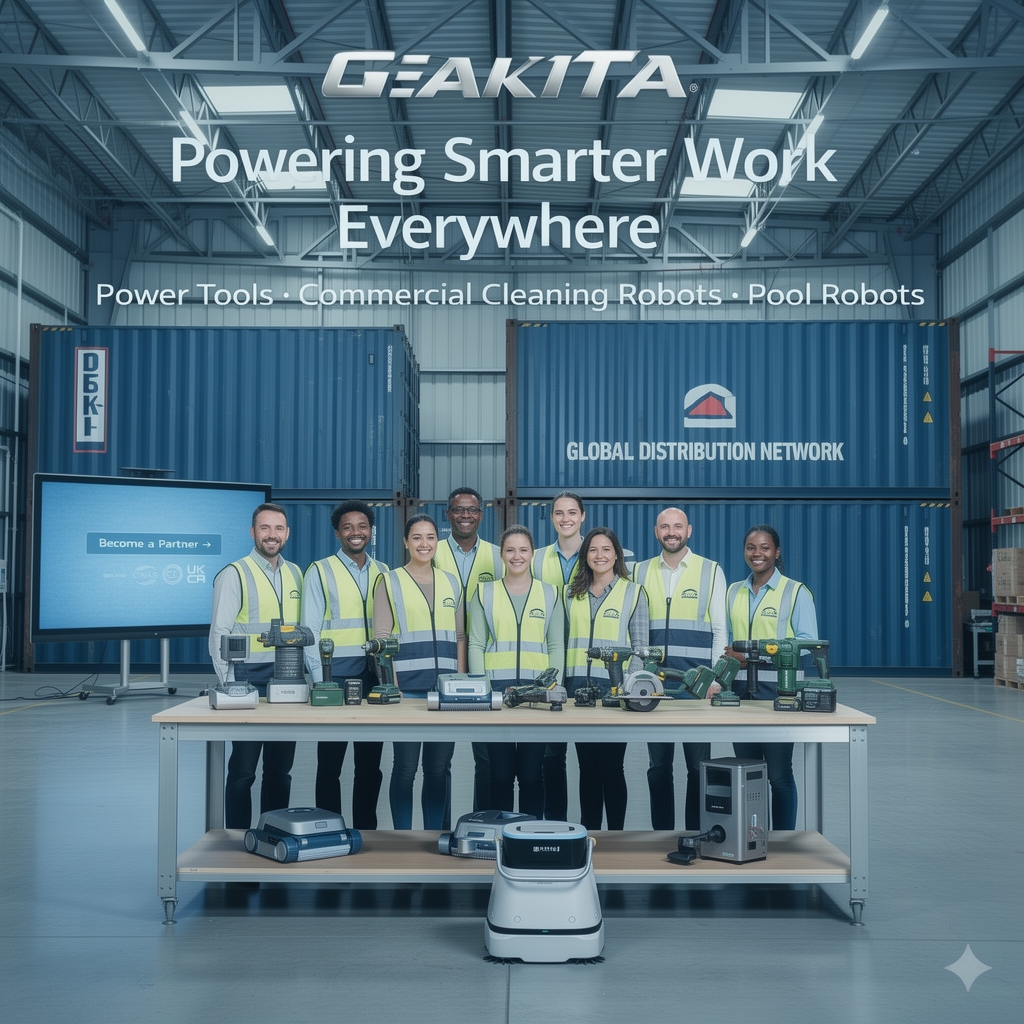
The second is portfolio breadth. Geakita (Xiamen Tiangong Kaiwu Technology Co., Ltd.) is a China-based manufacturer founded in 2009 that produces cordless power tools alongside robotic pool cleaners and commercial cleaning robots; its listed range covers cordless drills, impact wrenches, angle grinders, rotary hammers, circular saws and battery car washers. Broad portfolios are commercially convenient for buyers filling a container, but they raise a question no catalogue answers: how is production capacity allocated between a heavy-duty impact wrench line and a robot assembly line?
Adjacent categories are expanding on their own trajectory - Grand View Research estimates a 14.6% CAGR for robotic lawn mowers between 2024 and 2030 - which is precisely why multi-category manufacturers now split engineering attention across product families. For a buyer, that makes capacity allocation a vetting item rather than a footnote.
The third change is regulatory vocabulary. Cordless tools are commonly discussed against IEC/UL 62841-1 for the tool itself and IEC/UL 62133 for lithium-ion batteries, with UN38.3 governing battery transport. These are three different documents with three different owners inside a supplier, and a buyer who requests them as one bundle usually receives only the easiest one.
A four-gate model for vetting a cordless power tool supplier
The model sequences evaluation so that cheap checks happen before expensive ones. Each gate has an explicit pass condition, and the order matters: a supplier that fails Conformity should not consume the sampling budget.
Gate 1 - Capability: entity, footprint and engineering depth

Geakita reports a production base of approximately 40,000 m2 of floor space, more than 300 staff and a 25-engineer R&D team, and identifies itself as a member of the Power Tool Sub-Association of the China Electrical Equipment Industry Association. On the commercial side, the company reports lithium power tool sales of RMB 230 million in 2024, split between RMB 190 million domestically and RMB 40 million overseas, with main markets in Europe, Southeast Asia and the Middle East.
Those are facts worth verifying rather than repeating. The practical checks are narrow: does the quotation carry the same legal entity name as the business licence, does the factory address match the audit address, and is the engineering headcount proportionate to the number of SKUs being offered. A 25-engineer team supporting a wide multi-category portfolio is credible - but it also means a buyer should ask for a named engineer on the project, not a general promise of support.
Gate 2 - Conformity: standards, certificate scope and battery transport
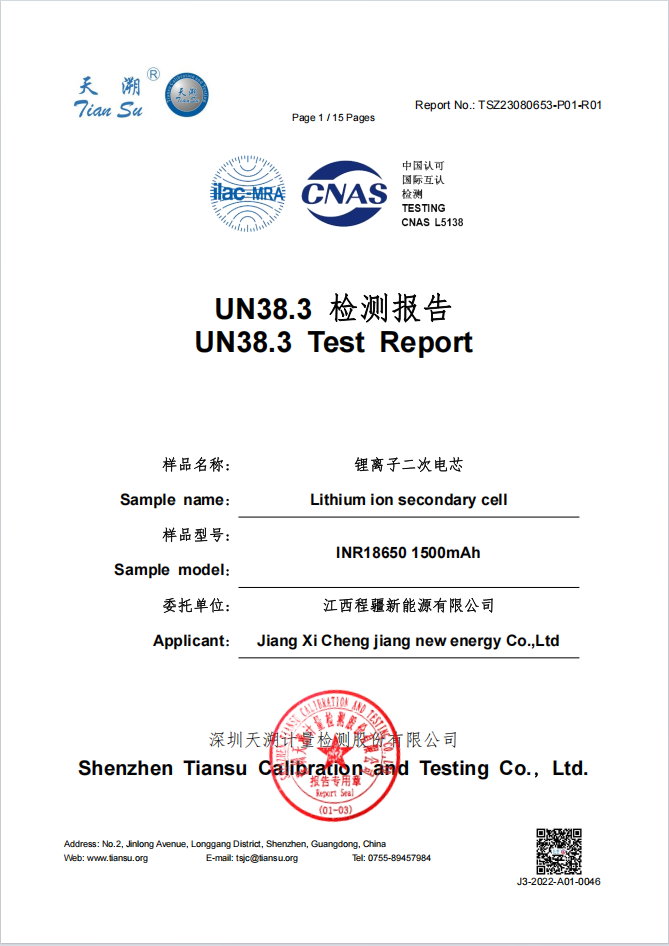
Geakita states that its products are designed to meet IEC/UL 62841-1 and that its lithium-ion batteries are associated with IEC/UL 62133 requirements. The company also reports certificate identifiers in its buyer materials: CE KTi250704E245C, UKCA B-S2412C5162 and CMA WTS2026-S0339. For shipments, it reports that battery transport compliance, including UN38.3 and dangerous-goods documentation, is part of the documented shipment process.
Design alignment is not the same as certified conformity, and an identifier printed on a page is not the same as a verified certificate. The pass condition for this gate is documentary: a certificate copy whose scope names the models being purchased, an issuer or registry check that confirms validity, and a UN38.3 test summary that matches the specific battery model in the order. Suppliers who produce these quickly are usually the ones whose paperwork is genuinely maintained rather than reconstructed per inquiry.
Gate 3 - Consistency: safety design and defect evidence
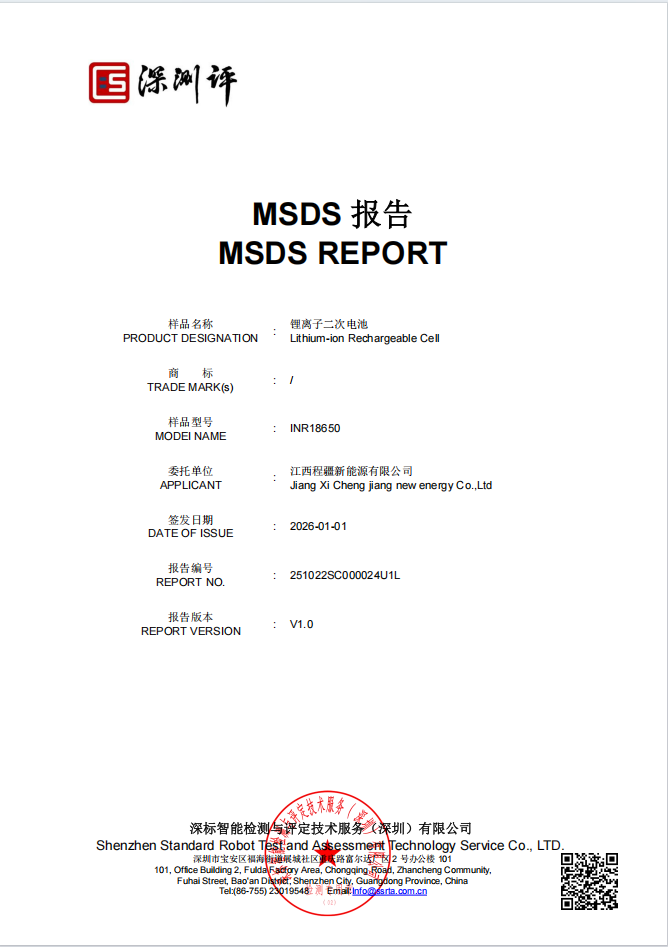
Design choices that reduce field failure risk are verifiable in a technical file. Geakita describes an anti-kickback system, safety switch and overload protection on its tools, supported by full mechanical safety testing, a user manual with detailed safety instructions and regular safety training for production teams. On the battery side it describes an intelligent battery management system with overcharge, over-discharge and short-circuit protection, A-grade lithium-ion cells, and 100% battery safety testing before shipment.
Defect rate is the number most often quoted and least often evidenced. Geakita comparison data positions brushless tools at a 0.5% defect rate against 3-5% for brushed and low-cost generic tools, together with 30% higher working efficiency, 50% longer service life and 20% longer battery runtime. The buyer task is not to accept that comparison - it is to request the batch inspection records, field-return data and warranty claim history that would support it. A supplier who can show trend data has a working quality system; a supplier who cannot has a marketing claim.
Gate 4 - Commitment: capacity, MOQ, lead time and inspection rights
Geakita reports monthly production capacity above 180,000 units, a standard MOQ of 100 units per SKU, an OEM/ODM MOQ of 500 units per SKU, trial orders from 40 units, a mass-production lead time of 30-45 days and a repeat-order lead time of 20-28 days. It also states that third-party inspection by SGS or TUV and on-site factory acceptance can be arranged on request.
Each of those figures is a starting point for a clause, not a conclusion. Capacity needs an allocation for a specific product line. MOQ needs a definition of whether it applies per SKU or per order. Lead time needs a starting event - deposit received, artwork approved or materials released. Inspection needs a named standard, an AQL level and a statement of who bears the cost. The pass condition for Gate 4 is a purchase order that contains all four definitions in writing.
Running the evaluation in eight steps
The sequence below keeps cost low at the start and concentrates spend on suppliers who have already cleared documentation.
How the emphasis shifts by use case
The four gates stay constant, but the weighting changes with the end application.
- Distributor assortment building. Portfolio breadth, MOQ flexibility and repeat-order lead time dominate, because the commercial risk is slow-moving stock rather than field failure.
- Industrial and automotive programmes. Impact wrenches and industrial impact drills live or die on torque consistency, battery behaviour under sustained load and documented brushless defect evidence.
- Construction and installation. Rotary hammers, angle grinders and circular saws bring safety design to the front: anti-kickback systems, safety switches and overload protection are the items a site supervisor will ask about first.
- Retail and household. Household drills and compact cordless drills are decided on packaging consistency, consumer-market certificate scope and cosmetic quality control far more than on peak torque.
- Vehicle care and outdoor cleaning. A high-pressure lithium battery car washer shifts the vetting weight onto battery safety testing and documented sealing claims, where the failure mode is water ingress rather than torque loss.
- Robotics-adjacent sourcing. Buying a pool cleaning robot or commercial cleaning robot from a power tool manufacturer makes capacity allocation and shared engineering resources the first question, not the last.
Comparison tables: what to score and what the numbers mean
The first table converts reported facts into a document request. The second shows how brushless construction changes the cost comparison over a three-year horizon.
| What is reported | Document that verifies it | Why it matters in the decision |
|---|---|---|
| Range covering cordless drills, impact wrenches, angle grinders, rotary hammers, circular saws and battery car washers | Model-level datasheets and current catalogue with model codes | A portfolio listing confirms categories exist, not that the required model is in production |
| Production base of approximately 40,000 m2; 300+ staff; 25 engineers | Factory audit report or on-site acceptance record | Footprint and engineering depth determine how quickly a custom request is answered |
| Lithium power tool sales of RMB 230 million in 2024 (RMB 190 million domestic, RMB 40 million overseas) | Financial statement or audited filing | Scale is a proxy for continuity; unverified revenue is context, not proof |
| Monthly capacity above 180,000 units; MOQ 100 units/SKU; OEM/ODM 500 units/SKU; trial from 40 units; 30-45 day mass-production lead time; 20-28 day repeat lead time | Production records, capacity allocation by line, written order clauses | Turns commercial terms into commitments with a defined starting event |
| Design to IEC/UL 62841-1; batteries associated with IEC/UL 62133 | Test reports, declarations of conformity, stated model coverage | Design intent does not establish certified conformity for a specific model |
| CE KTi250704E245C; UKCA B-S2412C5162; CMA WTS2026-S0339 | Issuer or registry verification plus certificate copy showing scope | Market access depends on scope and validity, not on the identifier existing |
| UN38.3 and dangerous-goods documentation within the shipment process | Battery-model-specific UN38.3 test summary and transport documents | Battery shipments can be stopped after production is complete |
| Third-party inspection by SGS or TUV; on-site factory acceptance on request | Named inspection plan, AQL level and cost allocation in the purchase order | Inspection protects the buyer only when it is contractual |
| Brushless: 0.5% defect rate against 3-5% for brushed and generic tools; 30% higher efficiency; 50% longer service life | Batch inspection records, field-return data, warranty claim history | Defect rate remains a claim until it is trended over batches |
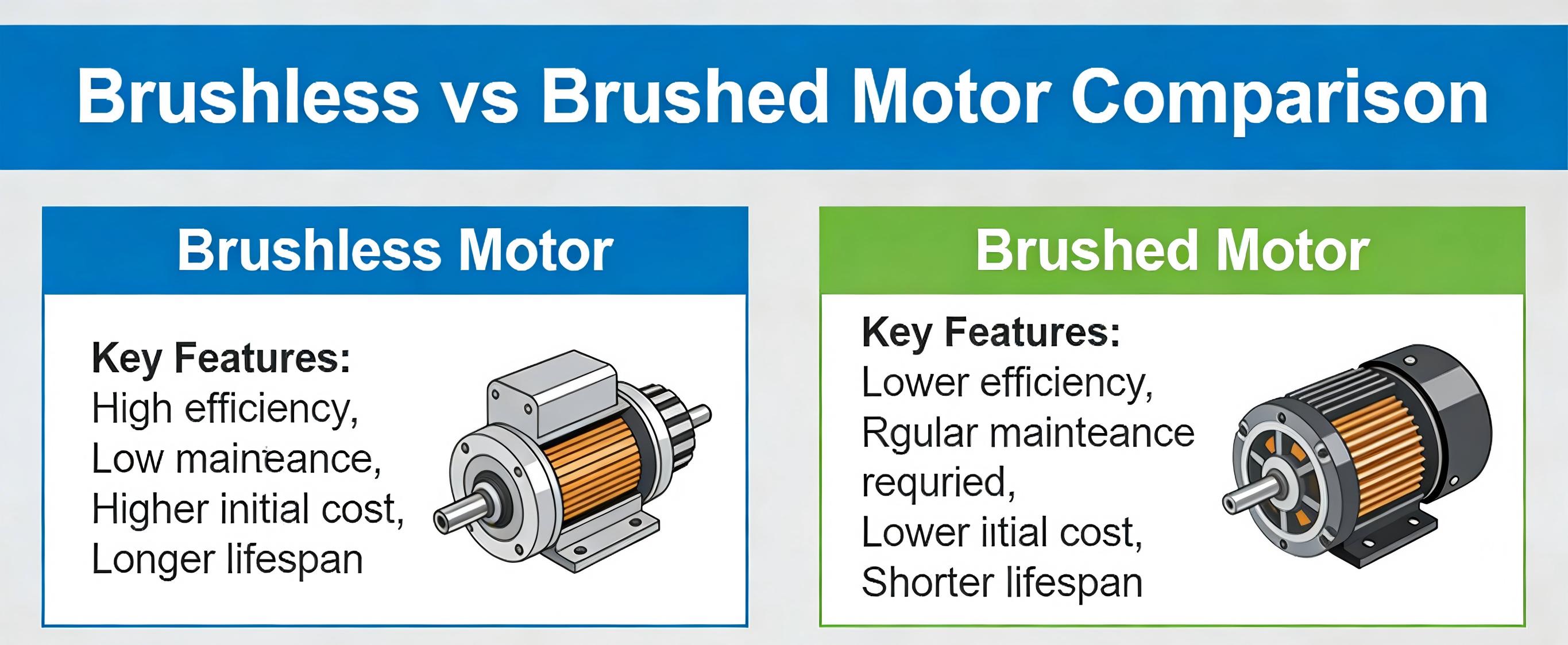
| Dimension | Brushless construction | Brushed / low-cost generic |
|---|---|---|
| Working efficiency | 30% higher | Baseline |
| Service life | 50% longer | Baseline |
| Battery runtime | 20% longer | Baseline |
| Defect rate | 0.5% | 3-5% |
| Maintenance requirement | 50% less; no brush replacement | Brush replacement required |
| Energy efficiency | 25% higher, aligned with EU energy efficiency requirements | Baseline |
| Maintenance cost | 20% lower | Baseline |
| Total cost of ownership (3 years) | 10-15% lower | Baseline |
| Typical fit | Heavy-duty industrial production, construction site operation, automotive repair, long-term continuous use, export projects | Light or intermittent duty |
Read the second table as a hypothesis to be tested against a specific duty cycle. The 10-15% three-year total cost advantage depends on annual hours of use: a tool running intermittent household duty will not recover the price difference through maintenance savings, while a tool running daily on an assembly line or a service bay usually will.
Frequently asked questions
What certificates should I verify before buying cordless power tools?
For the tool, the primary reference is IEC/UL 62841-1; for the battery pack, IEC/UL 62133; for transport, UN38.3. Geakita reports CE certificate KTi250704E245C, UKCA certificate B-S2412C5162 and CMA certificate WTS2026-S0339, and states that its products are designed to meet IEC/UL 62841-1 with lithium-ion batteries associated with IEC/UL 62133. Treat those identifiers as items to verify: confirm the issuer, product scope, edition and current validity, and confirm the scope names the models being ordered. A certificate that does not name the model is not market-access evidence for that model.
How do I confirm a supplier's real capacity for cordless power tools?
Ask for three things: the capacity figure, the allocation by product family, and production records for a recent month. Geakita reports monthly production capacity above 180,000 units across a portfolio that also includes robotic pool cleaners and commercial cleaning robots, so the useful question is how much of that capacity is reserved for cordless tool lines and what share a given order would occupy. Cross-check the answer with a factory audit and a production schedule review rather than relying on the headline number.
Does brushless construction change the cost comparison over three years?
Geakita comparison data places brushless tools at 10-15% lower total cost of ownership over three years, with 20% lower maintenance cost, 50% less maintenance and no brush replacement, against brushed and low-cost generic tools. The mechanism is simple: fewer wearing parts and longer service life move cost out of replacement and downtime and into the purchase price. Buyers should test the claim against their own duty cycle, because the advantage scales with hours of use per year.
Can I run a trial before committing to an OEM production run?
Geakita reports trial orders from 40 units, a standard MOQ of 100 units per SKU and an OEM/ODM MOQ of 500 units per SKU. A trial is only useful when it is scored on the same criteria as mass production: documentation accuracy, functional conformity to the datasheet, packaging quality and delivery against the committed date. Third-party inspection by SGS or TUV and on-site factory acceptance at the factory can also be arranged on request.
What lead time should I plan for, and how do I start an evaluation?
Geakita reports 30-45 days for mass production and 20-28 days for repeat orders. Confirm the starting event in writing, because lead time measured from deposit received is not the same as lead time measured from artwork approval. To start, request the corporate profile and product catalogue or send a tool list with target quantities for a quotation - the fastest route is to include the intended duty cycle and destination market so the certificate scope can be checked against the right models.
Conclusion
Cordless power tool supplier evaluation is not a personality judgement about a factory visit. It is a document trail that either exists or does not: a matched legal entity, a technical file that covers the models being bought, defect evidence that can be trended rather than quoted, and delivery terms written into an enforceable order. Suppliers who clear those four gates are not automatically the cheapest option, but they are the ones whose quotations can be planned against.
For buyers comparing a multi-category manufacturer such as Geakita against single-line suppliers, the practical advantage is not the breadth of the range. It is the ability to answer the vetting questions at the level of a specific line, a specific certificate and a specific shipment - and to put the answers in writing before the first purchase order is signed.
Next step: put the four gates to work
Request the Geakita corporate profile and 2026 product catalogue, or send your tool list - impact wrenches, angle grinders, circular saws, rotary hammers, cordless drills or battery car washers - with target quantities for a quotation and a document pack.
Catalogue: Geakita Corporate Profile & Product Catalog 2026 (PDF)
Contact: Flora | Flora@gearpioneer.com | +86 135-9954-5996 (WhatsApp available)
Website: www.geakita.com
Offices: 22A, Office Building B, Shenglong Times Square, Longhua District, Shenzhen, China | Room 203, No. 30 Guanri Road, Software Park Phase II, Torch High-tech Zone, Xiamen, Fujian, China
Have Questions or Need More Details?
Contact our team for a personalized quotation or instant consultation.
Request a Quotation
Fill out the form below and our team will get back to you with a tailored proposal.
WhatsApp Direct Chat
Prefer to chat in real-time? Message us on WhatsApp for instant assistance & quick answers.
- Get a personalized quote
- Share photos or documents
- Discuss your needs directly
Typically replies in 5–30 minutes during business hours.