
Energy Storage System Partnership: SolisStorage’s Global Service Network, OEM Capacity, and Lifecycle Commitment
Energy Storage System Partnership: SolisStorage’s Global Service Network, OEM Capacity, and Lifecycle Commitment
This guide is written for buyers at the decision-to-execution stage: distributors entering the energy storage market, commercial and industrial (C&I) asset owners preparing to finalise contracts, and OEM buyers who need a partner that can deliver over the entire system lifecycle.
The Problem: Hardware Selection Is Not the Same as Partnership Selection
An energy storage system is typically designed as a long-term asset. In the C&I sector, the planned lifecycle often reaches 10 to 15 years. During the decision and execution phase, buyers are naturally focused on price, specifications, and delivery dates. Yet the true cost of an energy storage system partnership becomes visible after commissioning, through maintenance, spare parts availability, software updates, and the manufacturer’s ability to respond when a fault occurs.
Many asset owners benchmark initial quotes carefully but underestimate how lifecycle operation and maintenance costs can reduce project returns. The operational challenge is not only about replacing a battery cell or inverter; it is about coordinating support across BMS, PCS, EMS, and grid-connection equipment. When system components come from multiple vendors, troubleshooting can become slow and expensive. A partnership with a manufacturer that controls core power electronics, system integration, and software can simplify the entire chain.
Industry Background: Why Long-Term Thinking Is Becoming the Default in Energy Storage Procurement
The market context reinforces the need for partnership continuity. Global Market Insights valued the energy storage systems market at approximately USD 668.7 billion in 2024 and projects it to reach USD 5.12 trillion by 2034. MarketsandMarkets estimates the residential energy storage segment will grow from USD 2.69 billion in 2024 to USD 4.58 billion by 2030, at a 9.3% CAGR. For longer-duration applications, the same research firm estimates the Long-Duration Energy Storage market at USD 4.85 billion in 2024, growing at a CAGR of 13.6% through 2030. These figures use different definitions and cannot be compared directly, but together they explain why project owners, utilities, and distributors are seeking suppliers with multi-year stability rather than one-off equipment sellers.
There is also strong evidence that inverter and ESS suppliers are consolidating their positions through technology scale. According to Wood Mackenzie, Solis (Ginlong Technologies) ranked as the world’s #1 residential PV inverter supplier in 2023 and the third largest inverter manufacturer globally. This scale matters to buyers because a long-term energy storage system partnership depends on the supplier’s ability to invest in R&D, maintain factory output, and support products over many years.
Detailed Solution: What SolisStorage Offers as a Long-Term Energy Storage System Partner
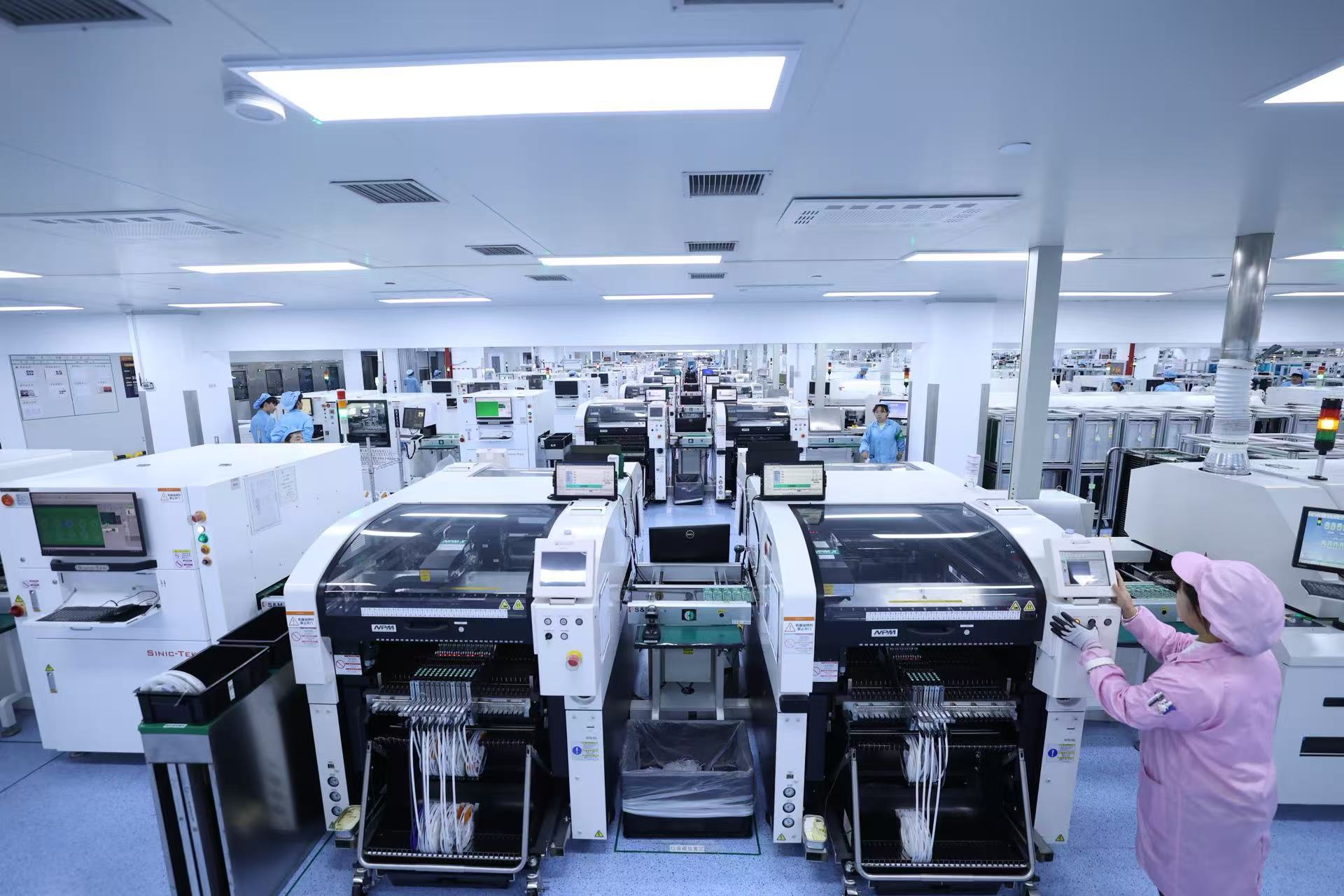
SolisStorage is the energy storage system solutions provider and dedicated energy storage subsidiary of Solis (Ginlong Technologies), whose Shenzhen Stock Exchange code is 300763.SZ. The parent company was founded in 2005 and today operates a factory area of 98,114.69 m², with more than 5,000 employees, an annual inverter output capacity of 80 GW, and an R&D team of over 1,000 people. SolisStorage focuses on the independent development of core energy storage technologies, including PCS, EMS, and system integration, and serves residential, commercial and industrial, and utility-scale applications.
For a buyer finalising a purchase, the practical question is not simply which model to choose. It is whether the supplier has the manufacturing capacity, quality controls, service network, and technology architecture to support the asset through its full useful life. The sections below outline how SolisStorage addresses each of these requirements.
1. Manufacturing Capacity and Production Stability
Supply continuity is a core component of a long-term partnership. SolisStorage reports a monthly production capacity of more than 10,000 units globally. For large OEM orders, typical production lead time is 30–45 days, while standard models can be available as spot goods. This combination helps distributors and project developers plan inventories without facing unpredictable delays during deployment peaks.
2. Quality Assurance Before Shipment
Quality control is another reason asset owners choose a manufacturer rather than an integrator without production control. SolisStorage implements a comprehensive quality assurance process that includes 100% full functional testing before shipment, raw material incoming inspection, aging testing, high-low temperature cycle testing, and IP protection testing. These tests are designed to identify defective components before units leave the factory, reducing commissioning risk at the project site.
3. Global Service Network and After-Sales Support
An energy storage system operating in Europe, Africa, the Middle East, or Asia needs local response capability, not only a remote helpline. SolisStorage support includes 24/7 global remote technical assistance, 27 local overseas service centers, 48-hour on-site fault handling and whole machine replacement guarantee, and long-term spare parts supply. This service structure is especially important for C&I system owners who cannot afford a multi-week outage while waiting for replacement components.
4. Commercial Terms and On-Site Execution
Decision-stage buyers also need clear commercial execution. According to SolisStorage’s procurement terms, the minimum order quantity is one unit, and delivery can be arranged as FOB Ningbo or EXW factory delivery. Acceptance is structured through factory acceptance testing plus on-site installation and commissioning. Payment terms are described as deposit plus payment before or after shipment plus final acceptance payment, with specific conditions depending on customer tier, order size, and regional policies.
5. Lifecycle-Oriented Product Architecture
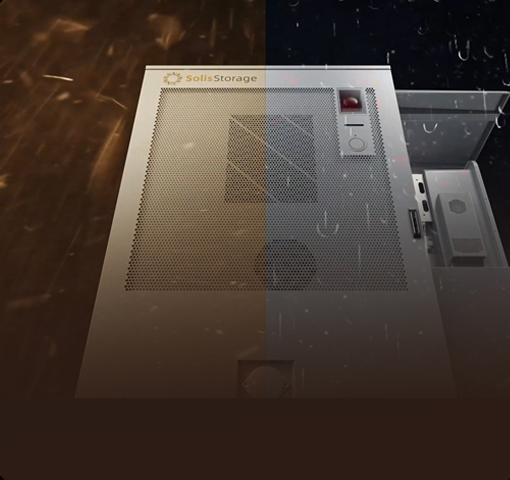
The product itself influences long-term maintenance cost. SolisStorage’s EverCore ESS for C&I applications uses an AC-DC separation architecture that physically separates the hybrid energy storage inverter from the battery cabinet. This design reduces heat accumulation in the battery compartment, enables the hybrid inverter to reach an IP66 protection rating while the battery cabinet maintains IP55, and allows independent DC-side expansion. For project owners, flexible DC-side expansion means storage capacity can be enlarged over time without replacing the inverter, which reduces system expansion costs.
EverCore retains an air-cooled design and uses an independent three-air-duct system combined with Coanda-effect airflow attachment technology. According to Solis engineering experience, this thermal management combination improves heat dissipation efficiency by about 30% compared with traditional air cooling and shortens maintenance complexity relative to liquid-cooled systems. Based on industry-experience modelling shared by Solis, EverCore can save approximately €9,500 per unit in O&M costs over the full project lifecycle by eliminating liquid cooling fluid replacement, simplifying PCS replacement, simplifying pack replacement, and reducing routine inspection complexity.
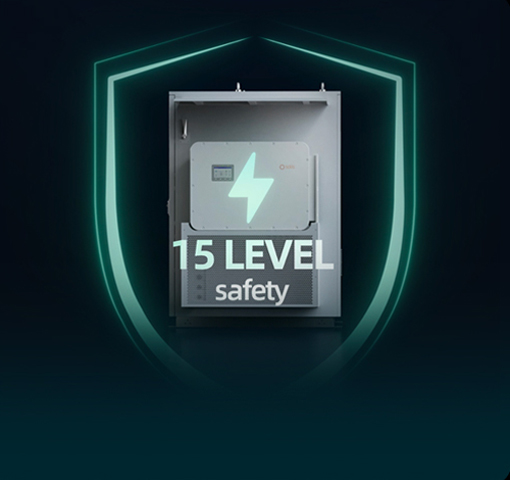
Safety architecture is equally important for a long-term asset. EverCore has a 15-layer, three-dimensional protection system covering cell, pack, and system levels. It uses thermal insulation materials resistant to 1,000°C between packs, a three-stage progressive fire-fighting mechanism, and A-grade 314Ah LFP cells with a cycle life of 8,000 cycles at 0.5C charge/discharge, with remaining capacity of at least 70%. For buyers, this means the storage system is designed to remain insurable and operable over a longer economic window.
6. Open Software Ecosystem for Evolving Electricity Markets
A long-term energy storage system partnership increasingly depends on software openness. In markets where revenue can come from retail time-of-use arbitrage, ancillary services, demand response, or virtual power plant dispatch, a closed hardware system has limited future value. SolisStorage’s EverCore software ecosystem reports completed or ongoing connections with 102 third-party VPP/EMS operators across 11 European countries. Representative integrations include the Kraken energy management platform linked to Octopus Energy in the UK, aggregator platforms such as Check Watt in the Nordic market, and dozens of local EMS providers in German-speaking countries and the Benelux region.
On the AI scheduling side, Solis’s self-developed Solis AI Cloud Platform has been deployed at more than 5,500 energy storage power stations worldwide. The platform integrates Nordpool wholesale electricity price data and Flatpeak retail price data to build multi-source price forecasts and adjust charge-discharge strategies at minute level. In one residential storage project in Latvia, Solis AI optimisation increased annual electricity bill savings by 302.6%. This illustrates how software can amplify the financial value of hardware over the operating life of the system.
Step-by-Step: How to Execute a Long-Term Energy Storage System Partnership
Buyers moving from selection to execution can use this framework to validate whether a supplier is genuinely positioned for a long-term relationship.
- Verify the manufacturer’s ownership and financial continuity. Confirm the legal entity, stock listing, founding date, and core business. For SolisStorage, the parent company is listed as Ginlong (Solis) Technologies with stock code 300763.SZ and was founded in 2005.
- Audit manufacturing capacity. Ask for monthly production capacity, factory area, team size, and lead time expectations. SolisStorage states a monthly production capacity of over 10,000 units globally.
- Review test and inspection protocols. Confirm that every unit is subjected to functional testing before shipment, not just a random sample. SolisStorage documents 100% full functional test, raw material incoming inspection, aging test, high-low temperature cycle test, and IP protection test.
- Map the after-sales service network. Identify the number of local service centers, remote response availability, on-site response time, and spare part policies. SolisStorage provides 24/7 remote support, 27 overseas service centers, 48-hour on-site fault handling, whole machine replacement guarantee, and long-term spare parts supply.
- Evaluate system architecture for maintenance cost. Ask how the inverter, battery, and thermal management are arranged. AC-DC separation and air-cooled designs can reduce maintenance complexity and lower total lifecycle cost.
- Confirm software and grid-service compatibility. For Europe, ask about VPP/EMS integrations, price data interfaces, and remote optimisation. SolisStorage reports 102 third-party VPP/EMS operator connections across 11 European countries.
- Clarify commercial execution terms. Confirm MOQ, delivery basis, acceptance, and payment schedule. SolisStorage’s standard MOQ is one unit, with FOB Ningbo/EXW delivery and acceptance through factory testing plus on-site commissioning.
Use Cases for Decision-to-Execution Buyers
Distributor Entering the C&I Energy Storage Category
A distributor looking to add a C&I energy storage line needs a supplier with fast order turnaround, standardised quality, and local support. SolisStorage’s spot goods for standard models, monthly capacity above 10,000 units, and 27 overseas service centers reduce the risk of stocking a new category without a service backbone.
C&I Asset Owner Managing Multiple Sites
An industrial facility owner deploying several EverCore ESS units across different sites benefits from modular expansion and centralised monitoring. One EverCore inverter can support multiple battery cabinets, allowing phased investment. SolisCloud and the open software ecosystem give the operator a single platform to monitor charge-discharge behaviour and respond to market signals.
OEM or Private-Label Buyer
For OEM buyers, lead time is often the difference between winning and losing an end-customer contract. The stated 30–45-day lead time for mass OEM orders, combined with in-house PCS, EMS, battery system integration, and factory testing, offers a practical execution path for private-label and solution-brand programs.
Comparison Table: What to Evaluate Before Finalising an Energy Storage System Supplier
| Evaluation Area | Questions for the Supplier | SolisStorage Evidence |
|---|---|---|
| Manufacturing stability | What is the factory’s monthly and annual capacity? | Factory area 98,114.69 m²; annual inverter output 80 GW; monthly ESS production capacity exceeds 10,000 units. |
| Quality assurance | Is every unit tested before shipment? | 100% full functional test, raw material incoming inspection, aging test, high-low temperature cycle test, and IP protection test. |
| After-sales support | How fast can the manufacturer respond on site? | 24/7 global remote support, 27 local overseas service centers, 48-hour on-site fault handling, whole machine replacement guarantee, long-term spare parts supply. |
| Supply and lead time | Can the supplier deliver standard and OEM orders on schedule? | Typical 30–45 day lead time for mass OEM orders; spot goods available for standard models. |
| System lifecycle design | Does the architecture simplify maintenance? | EverCore AC-DC separation, air-cooled thermal management, approximate €9,500 lifecycle O&M saving per unit based on Solis industry-experience modelling. |
| Software ecosystem | Can the ESS participate in VPP/EMS platforms and market optimisation? | 102 third-party VPP/EMS operators connected or in process across 11 European countries; Solis AI Cloud deployed at 5,500+ storage sites. |
FAQ: Energy Storage System Purchasing and Partnership Questions
1. What quality assurance steps does SolisStorage follow before shipping an energy storage system?
SolisStorage performs 100% full functional test before shipment, along with raw material incoming inspection, aging test, high-low temperature cycle test, and IP protection test. These steps are designed to catch failures at the factory stage rather than at the project site.
2. What after-sales service can a long-term buyer expect from SolisStorage?
The manufacturer provides 24/7 global remote technical support, 27 local overseas service centers, 48-hour on-site fault handling and whole machine replacement guarantee, and long-term spare parts supply. This service coverage supports distributors and end users across multiple regions.
3. What are the minimum order and payment terms for an energy storage system from SolisStorage?
The minimum order quantity is one unit, and delivery can be arranged as FOB Ningbo or EXW factory delivery. Acceptance includes factory acceptance testing plus on-site installation and commissioning. Payment terms are determined by customer tier, order size, and regional policies, typically structured as deposit, payment before or after shipment, and final acceptance payment.
4. How long does an OEM order take, and how does SolisStorage manage production capacity?
Typical production lead time is 30–45 days for mass OEM orders, with spot goods available for standard models. SolisStorage reports monthly production capacity of over 10,000 units globally, which provides scheduling flexibility for distributors and project developers.
Conclusion: Choose a Partner That Can Support Energy Storage Systems Over Their Full Life
The right energy storage system supplier is not only the one offering the best initial quote. It is the supplier whose quality protocols, service network, supply capacity, and technology roadmap can protect the asset for the next 10 to 15 years. SolisStorage combines the corporate stability of Solis (Ginlong Technologies), manufacturing scale, engineering depth in PCS/EMS/system integration, and an open software ecosystem. For distributors, C&I asset owners, and OEM buyers moving from decision to execution, this combination creates a practical basis for a long-term energy storage system partnership.
To discuss a specific project, OEM program, or distribution opportunity, contact SolisStorage at sales@ginlong.com or visit the global website at www.solisinverters.com. A downloadable corporate brochure is also available for further reference.
Next step — Download the Solis Global Brochure to review the company’s product portfolio and service capabilities, or contact the sales team for project-specific documentation.
SolisStorage is the energy storage solution subsidiary of Ginlong (Solis) Technologies Co., Ltd., whose headquarters is located at No.188 Jinkai Road, Binhai Industrial Park Xiangshan, Ningbo, Zhejiang, China 315712.