
EverCore vs. FlexCore-ID: Choosing the Right ESS for C&I and Stackable Applications
EverCore vs. FlexCore-ID: Choosing the Right ESS for C&I and Stackable Applications
Choosing between a centralized commercial & industrial (C&I) energy storage system (ESS) and a distributed stackable ESS is a critical decision for project owners. SolisStorage offers two distinct solutions to address these different deployment paradigms: the EverCore ESS for large-scale C&I and power grid applications, and the FlexCore-ID stacked energy storage system for flexible, small-to-medium business and building scenarios. This guide compares their technical specifications, intended use cases, and scalability paths to help you make an informed procurement decision.
Problem Definition: C&I vs. Stackable Deployment Scale
Investing in the wrong ESS architecture often leads to two costly outcomes. First, sizing a modular, small-scale battery stack for a high-power industrial site forces the system to discharge deeply and repeatedly, shortening its operational lifespan. Second, deploying a large centralized battery for a small facility, such as a clinic network or a farm, usually results in low asset utilization and an extended payback period. The core challenge is matching the systemic energy capacity and inverter power to the actual physical and electrical constraints of the site, while preserving a logical upgrade path for future energy needs.
Industry Background: Energy Storage Across Different Segments
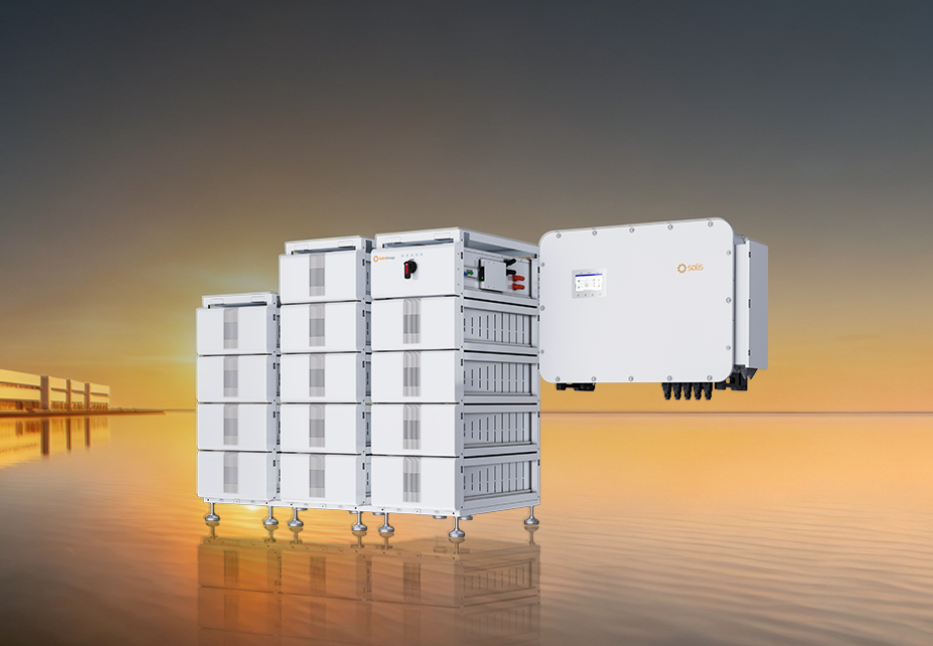
The global energy storage system (ESS) market continues to expand across multiple segments. While large industrial users require high-capacity systems for peak shaving and frequency regulation, small distributed businesses require flexible, space-saving ESS units for self-consumption and backup power. SolisStorage addresses this by integrating power conversion, battery packs, and energy management into distinctly packaged ESS solutions: the high-density centralized cabinet (EverCore) and the modular, expandable stack (FlexCore-ID). Understanding these differences allows stakeholders to align investment with operational strategy.
Detailed Solution: Unpacking the SolisStorage ESS Portfolio
EverCore ESS: The Integrated C&I Power Cabinet
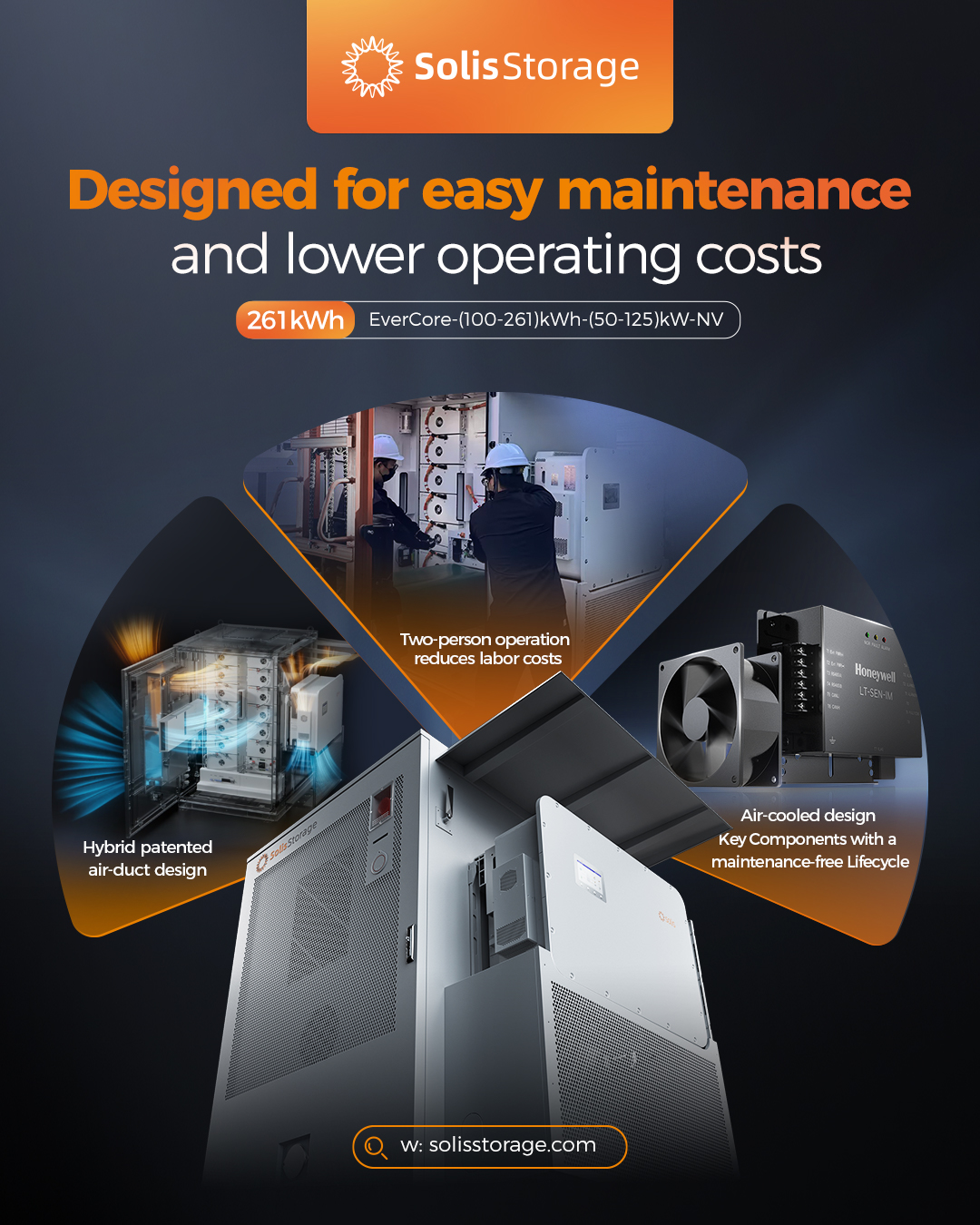
EverCore ESS is a C&I energy storage system designed for the renewable energy and power grid industry. This includes applications in renewable power plants, utility companies, and commercial & industrial users. Its core architecture is built around integrating high-capacity battery cells with a dedicated hybrid inverter.
- Rated energy capacity: 100.5 kWh / 120.6 kWh / 261.2 kWh
- Inverter power rating: 50 kW / 60 kW / 125 kW
- Cell type: EVE, LFP (Lithium Iron Phosphate) 3.2V / 314Ah
- Cycle life: 8,000 cycles
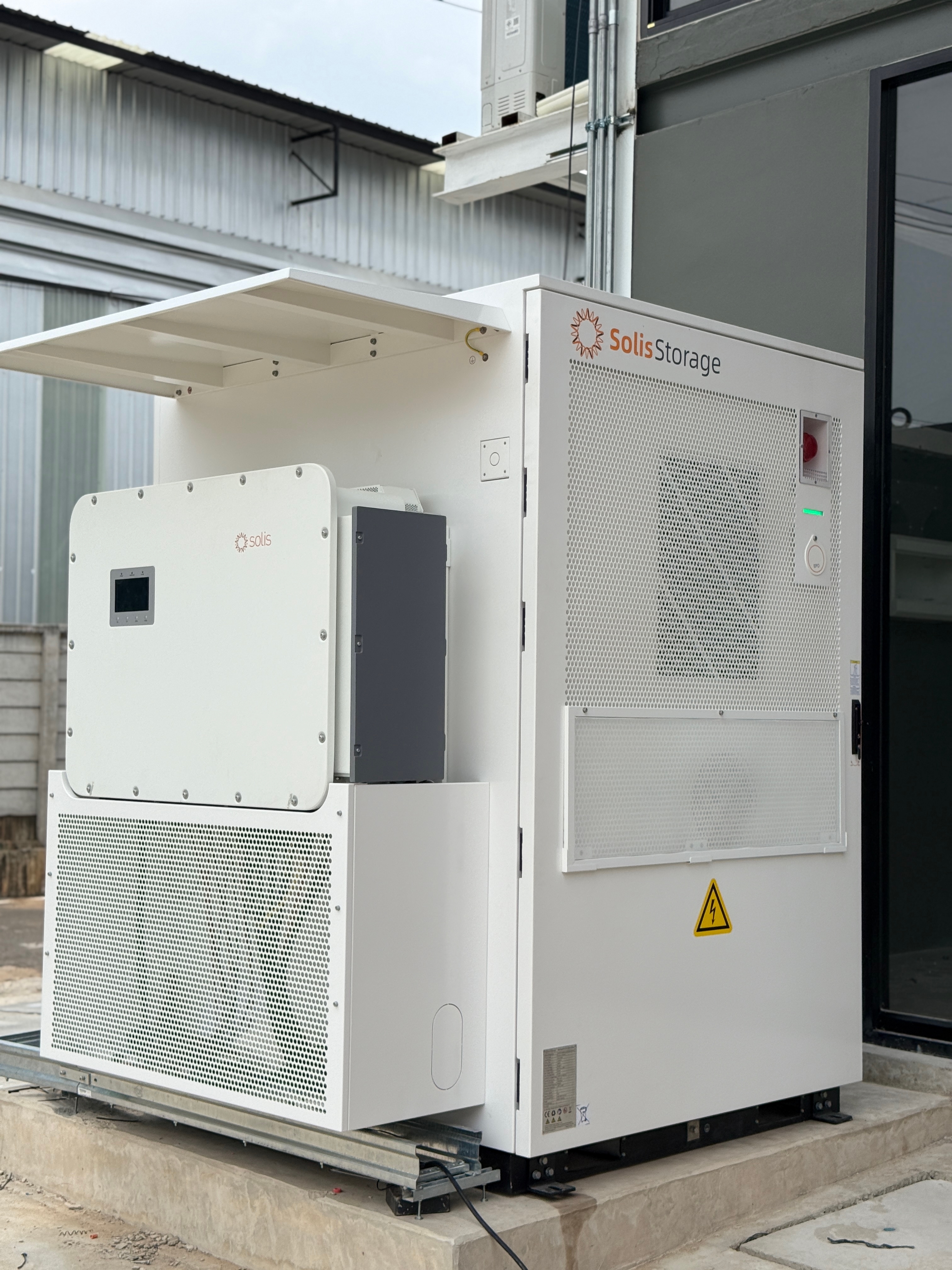
- Protection rating: IP55 (Battery Cabinet) + IP66 (Inverter)
EverCore ESS utilizes an aluminum alloy casing with core electronic components. Systems like this are engineered to interface directly with high-voltage infrastructure, providing robust energy shifting capabilities for industrial operations. Its integrated cabinet architecture is suitable for projects that require a powerful, single-point energy asset with reliable outdoor or industrial installation characteristics.
FlexCore-ID: A Modular Stackable Battery Solution
FlexCore-ID is categorized as a stackable energy storage system. It is explicitly intended for smaller-scale and distributed applications, including small farms, shopping malls, hospitals, large residences, and small industrial and commercial enterprises. For these segments, the ability to modularly scale energy capacity is just as important as the cost per kilowatt-hour.
- Battery pack model: FlexCore-ID-BAT20kWh
- Battery chemistry: LFP (Lithium Iron Phosphate)
- Cell capacity: 314 Ah
- Cell cycle life: ≥8,000 cycles at 25±2°C, 0.5P, EOL70%
Constructed with an aluminum alloy casing and core electronic components, FlexCore-ID gives project designers the flexibility to layer battery modules according to specific backup duration requirements. This modular approach significantly reduces the initial capital outlay for growing businesses while maintaining the long-term reliability of premium LFP cells.
Step-by-Step Breakdown: How to Choose Between EverCore and FlexCore-ID
When evaluating these two systems, buyers should follow a structured, evidence-based process:
- Define the load profile. Calculate the site's maximum power demand in kW and the required energy throughput in kWh. If the project demands more than 50 kW of continuous power, the EverCore platform (50 kW – 125 kW inverters) is the primary candidate.
- Assess available space and environment. For dedicated power rooms with high ambient dust or water exposure, EverCore's robust IP55 cabinet + IP66 inverter rating ensures operational continuity. For constrained spaces requiring vertical expansion, FlexCore-ID's stackable architecture (starting with the 20 kWh FlexCore-ID-BAT20kWh pack) maximizes every square meter.
- Determine scalability plans. If energy needs are expected to double within two years, focusing on a modular system like FlexCore-ID allows incremental investment. For large industrial sites expecting to add multiple production lines, EverCore's architecture allows for centralized expansion to meet higher demand.
- Align with risk and maintenance strategy. EverCore is engineered as a turnkey, centrally-managed C&I ESS for continuous operation. FlexCore-ID is structured around individual battery packs, which may be managed and potentially maintained as discrete units for localized backup power.
- Review lifecycle targets. Both systems use LFP battery chemistry with a long lifespan. EverCore cells offer 8,000 cycles, while FlexCore-ID cells are rated for ≥8,000 cycles at 0.5P (EOL70%). The decision rests less on cumulative cycle life—which is similar—and more on capacity integration and site integration.
Use Cases: Aligning System Architecture with Site Requirements
Case Study 1: Large Industrial Manufacturing Plant (EverCore ESS)
Industrial manufacturers running heavy machinery have significant peak power demands. A SolisStorage EverCore ESS configuration with 261.2 kWh of energy capacity and a 125 kW inverter can perform load shifting and peak shaving effectively. This mitigates high grid demand charges, directly lowering operational costs.
Case Study 2: Hospital Backup and Self-Consumption (FlexCore-ID)
Hospitals and large residences require resilient backup power, but their load profiles differ from factories. FlexCore-ID is suited for these settings, offering a stackable configuration that provides reliable backup for critical lighting, IT, and refrigeration systems. Its aluminum housing and LFP cells ensure long-term standby readiness.
Case Study 3: Small Industrial & Commercial Enterprises (FlexCore-ID)
For small to medium enterprises in the C&I space, such as shopping malls or small farms, capital efficiency is critical. The FlexCore-ID allows these businesses to start with fewer modules and expand as their PV generation or energy demand increases. Its intended application scope directly covers these business types.
Comparison Table: EverCore ESS vs. FlexCore-ID
| Feature / Specification | EverCore ESS (C&I) | FlexCore-ID (Stackable) |
|---|---|---|
| System Category | C&I ESS | Stackable ESS |
| Target Applications | Renewable plants, utilities, commercial & industrial users | Small farms, malls, hospitals, large residences, small C&I enterprises |
| Rated Energy Capacity | 100.5 kWh / 120.6 kWh / 261.2 kWh (system level) | Modular system based on FlexCore-ID-BAT20kWh pack |
| Inverter Power Rating | 50 kW / 60 kW / 125 kW | Depends on inverter integration and project configuration |
| Battery Cell Type | EVE LFP, 3.2V / 314Ah | LFP, 314Ah |
| Cell Cycle Life | 8,000 cycles | ≥8,000 cycles (25±2°C, 0.5P, EOL70%) |
| Protection Rating | IP55 (Cabinet) + IP66 (Inverter) | Aluminum alloy casing (Confirm detailed IP rating per final configuration) |
| Physical Configuration | Integrated centralized power cabinet | Stackable modular battery packs |
FAQ: Decision Guide for ESS Buyers
Are both EverCore and FlexCore-ID compliant with C&I safety requirements?
Yes. The EverCore ESS is designed for commercial, industrial, renewable energy, and power grid applications. The FlexCore-ID is designed for small farms, shopping malls, hospitals, large residences, and small industrial and commercial enterprises. Both models use LFP battery chemistry and are manufactured with stringent quality controls, making them suitable for different scales of commercial deployment.
What are the main specification differences between EverCore ESS and FlexCore-ID?
EverCore ESS is a consolidated C&I energy storage system offering rated energy capacities of 100.5 kWh, 120.6 kWh, and 261.2 kWh, with inverter ratings of 50 kW, 60 kW, and 125 kW. FlexCore-ID is a stackable system built on the FlexCore-ID-BAT20kWh module, utilizing larger-format LFP cells (314Ah). Buyers should choose EverCore for high-power, centralized energy assets and FlexCore-ID for modular, capacity-flexible installations.
Which system is more scalable for a growing business?
FlexCore-ID is explicitly designed as a stackable ESS, making it the natural choice for growing businesses that need to add capacity incrementally, such as multi-tenant buildings or expanding retail operations. EverCore ESS serves as a robust, high-power C&I asset where rapid, large-scale deployment is necessary for industrial sites. The optimal scalability strategy depends on whether your growth is distributed (adding more sites) or centralized (expanding one facility).
I run a small industrial or commercial facility. Which solution is best for my project?
For small to medium industrial and commercial enterprises—such as a shopping mall or a small factory—the FlexCore-ID stackable system is designed specifically for this context. It allows you to right-size your initial investment and scale the battery stack alongside your business's energy demands.
How does SolisStorage support buyers evaluating these systems for future projects?
SolisStorage, backed by the expertise of Ginlong (Solis) Technologies (founded in 2005), provides technical support across more than 100 countries and regions worldwide. For detailed engineering parameters, project inquiries, and procurement planning, you can contact the Solis sales team via phone at +86 574 65802188 or email at sales@ginlong.com to speak with an energy storage specialist. Download the full brochure to get started on your technical review.
Looking for more detailed specifications and implementation guidance?
Download the Solis Global Brochure (PDF)Conclusion
For modern energy projects, the decision between a C&I ESS and a stackable ESS ultimately comes down to the physics of the site and the economics of future expansion. The SolisStorage EverCore ESS provides a comprehensive, high-voltage solution with robust protection ratings—making it the preferred architecture for industrial facilities, renewable plants, and grid infrastructure.
Conversely, the FlexCore-ID stackable ESS empowers smaller enterprises, agricultural operations, healthcare facilities, and large residential properties to adopt battery storage without massive upfront infrastructure changes. By aligning the system design with your specific load requirements—via the structured evaluation above—you can optimize return on investment and achieve long-term energy independence.