
How to Decode Energy Storage System Specifications and Certifications in 2026
An energy storage system (ESS) datasheet is more than a list of numbers. It is a verification document that connects manufacturer claims, project requirements, and market compliance. Buyers who evaluate only nominal energy capacity or price often discover later that the inverter power does not match the load profile, the cycle life is below project expectations, or the system lacks the certification required for grid connection.
This article explains how to read ESS specifications and certification documents in a structured way. It uses the SolisStorage product portfolio - IntelliHome, FlexCore-ID, and EverCore ESS - as a reference, because these three product families illustrate the main parameters used across residential, stackable, and C&I energy storage systems.
Why ESS Specification and Certification Review Matters
A battery energy storage system is a capital asset with a project lifecycle that often spans 10 to 15 years. The wrong specification can lead to three common failures:
- Compliance failure: the system is not certified for the target market, delaying grid connection or insurance.
- Performance mismatch: inverter power, energy capacity, or cell cycle life does not match the usage pattern.
- Hidden lifecycle cost: cooling fluid replacement, complex maintenance, or short cell life reduce project IRR.
Therefore, a disciplined review of parameters and certifications should happen before purchase, not after installation.
Market Context: Energy Storage System Growth and Standards
The global energy storage systems market was valued at approximately USD 668.7 billion in 2024 and is projected to reach USD 5.12 trillion by 2034, according to Global Market Insights. The residential energy storage market is estimated to grow from USD 2.69 billion in 2024 to USD 4.58 billion by 2030, at a CAGR of 9.3% (MarketsandMarkets). Long-duration energy storage (LDES) is also expanding, with a market value of USD 4.85 billion in 2024 and a projected CAGR of 13.6% through 2030 (MarketsandMarkets).
As the market grows, standards have become more important. IEC 62619 is a key international safety standard for secondary lithium cells and batteries used in industrial and energy storage applications. In North America, UL 9540 and UL 9540A address system safety and thermal runaway fire propagation. For the EU market, equipment must also meet CE requirements, including the EMC Directive 2014/30/EU.
Reference Product Families: SolisStorage IntelliHome, FlexCore-ID, and EverCore ESS
Ginlong (Solis) Technologies Co., Ltd. was founded in 2005 and is listed on the Shenzhen Stock Exchange (300763). SolisStorage is the company's energy storage solution arm, focusing on PCS, EMS, and system integration for residential, C&I, and utility-scale applications. In this section, we look at three representative product families and their published parameters.
IntelliHome: Residential Energy Storage System

IntelliHome is a residential energy storage system designed for household use. It uses LiFePO4 battery chemistry with a nominal capacity of 5 kWh and a rated cell capacity of 100 Ah. The operating voltage range is 44.8-57.6 V, with a recommended charge and discharge current of 50 A. Its cycle life is greater than 6000 cycles, corresponding to approximately 10 years. The enclosure has an IP66 ingress protection rating and is made of aluminum alloy.
FlexCore-ID: Stackable Energy Storage System
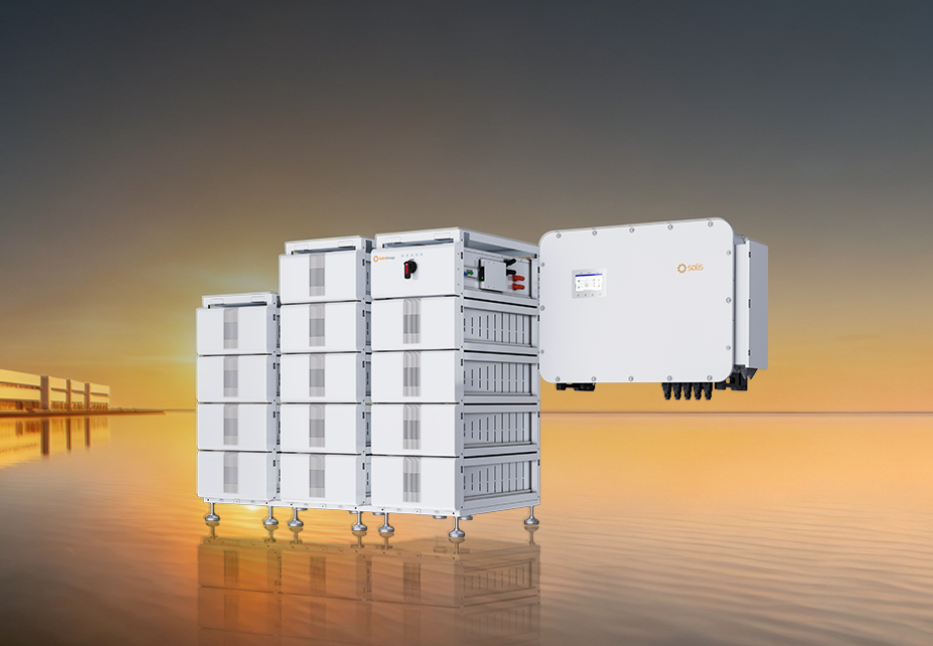
FlexCore-ID is a stackable energy storage system intended for small farms, shopping malls, hospitals, large residences, and small industrial and commercial enterprises. The battery pack model is FlexCore-ID-BAT20kWh. It uses LFP chemistry with 314 Ah cells and a cycle life of 8000 cycles or more at 25±2°C, 0.5P, EOL70%. The system is constructed with an aluminum alloy casing and core electronic components.
EverCore ESS: C&I and Industrial Energy Storage System
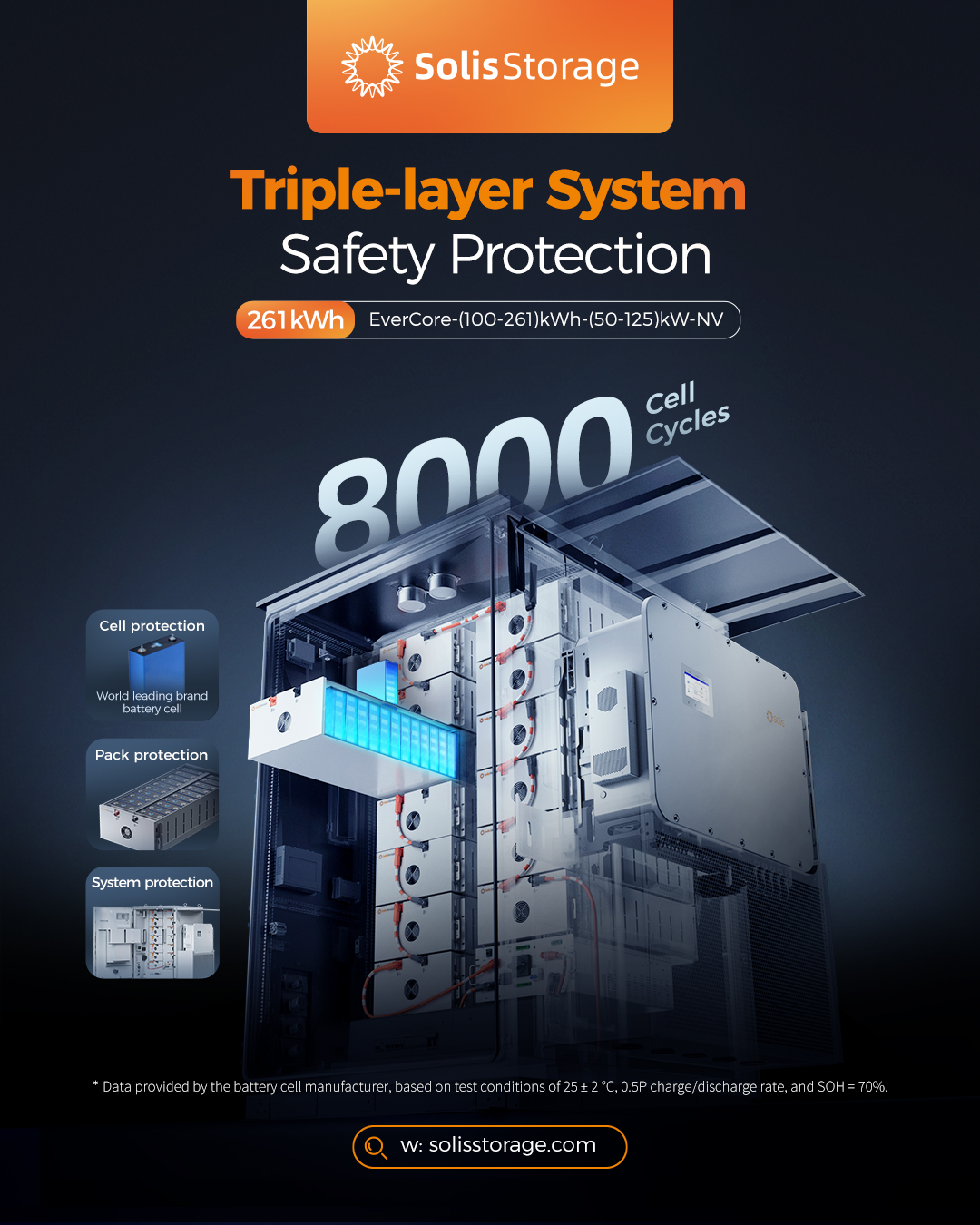
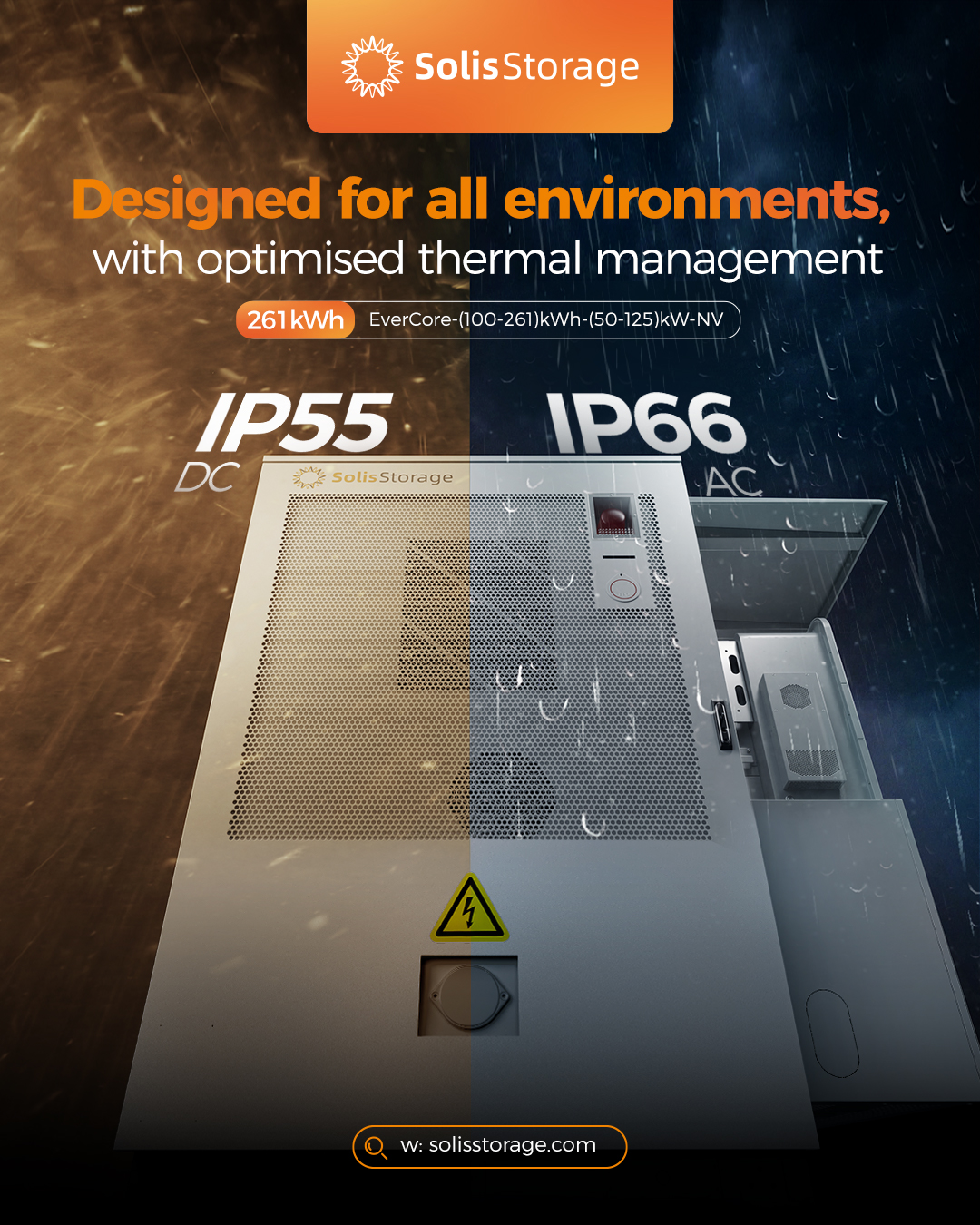
EverCore ESS is a C&I energy storage system for the renewable energy and power grid industry. It is available in rated energy capacities of 100.5 kWh, 120.6 kWh, and 261.2 kWh, with inverter power ratings of 50 kW, 60 kW, and 125 kW. The battery uses LFP chemistry with EVE LFP 3.2V/314Ah cells and achieves a cycle life of 8000 cycles. The cabinet has an IP55 protection rating, while the inverter is rated IP66. The casing is made of aluminum alloy.
EverCore uses a hybrid inverter that integrates PCS, STS, PV inverter, circuit breaker protection, and EMS in a single unit. The AC-DC separation architecture physically separates the inverter from the battery cabinet, which helps thermal separation, protection separation, and flexible DC-side expansion. The inverter dissipates 6 kW of power heat directly to ambient air, leaving only 3.5 kW of electrochemical heat inside the battery cabinet. An external PV inverter is not required, and up to six EverCore units can be connected in parallel for direct grid connection. The system remains air-cooled, using a three-air-duct design and Coanda-effect airflow attachment to improve heat exchange efficiency. It operates at temperatures from -25°C to 55°C and at altitudes up to 4000 meters.
From an O&M perspective, the air-cooled architecture avoids liquid cooling. Based on industry experience, Solis estimates the EverCore ESS saves approximately €9,500 per unit in O&M costs over the full project lifecycle, by eliminating coolant replacement, simplifying PCS and pack replacement, and reducing routine inspection complexity. Key components include Minebea cooling fans with 10-year maintenance-free performance and Honeywell industrial-grade flammable gas detectors with 10-year calibration-free performance.
For revenue-generating projects, EverCore supports open software integration. Solis reports that EverCore has been connected or is being connected to 102 third-party VPP/EMS operators across 11 European countries, including integrations with the Kraken platform in the UK and Check Watt in the Nordic market. The Solis AI Cloud Platform has been deployed at more than 5,500 energy storage power stations worldwide.
Certifications: What a Verified ESS Must Show
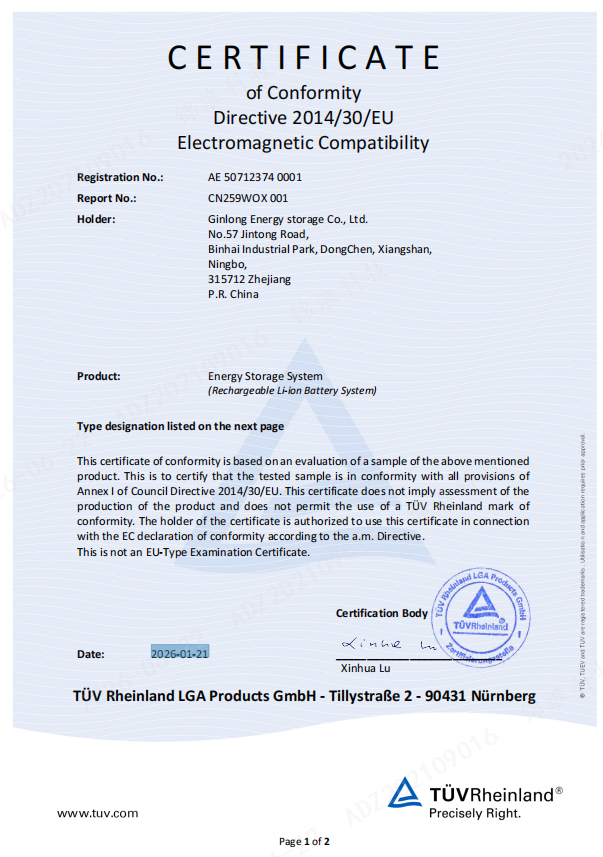
For the EU market, the EverCore ESS product - including the EverCore-261kWh and EverCore-261kWh-PRO models - holds two relevant certifications issued by TUV:
- IEC 62619 (certificate number JPTUV-182135): covering the safety of secondary lithium cells and batteries used in industrial and energy storage applications.
- CE EMC Directive 2014/30/EU (certificate number AE 50712374 0001): covering electromagnetic compatibility under standards EN IEC 61000-6-2:2019, IEC 61000-6-2:2016, EN IEC 61000-6-4:2019, and IEC 61000-6-4:2018.
These certificates are product-specific. Buyers should check that the model name, certificate number, and applicable market match their project. For other markets, additional standards such as UL 9540 or UL 9540A may apply.
Step-by-Step: How to Validate an ESS Before Purchase
- Define the project duty. Is the system for peak load shifting, backup power, self-consumption of PV, or grid ancillary services? The duty determines the ratio of inverter power to battery energy.
- Check cell chemistry and cycle life. Look for the battery chemistry, cell capacity, cycle life at end-of-life, and the test conditions. LFP is the dominant chemistry in the systems described here. A cycle life of 8000 cycles at 70% EOL is a strong baseline for C&I applications.
- Match inverter power and energy capacity. For example, the EverCore ESS 125kW/261.2kWh variant provides about two hours of discharge at rated power. If the project requires longer duration or phased expansion, one inverter can connect multiple battery cabinets on the DC side.
- Evaluate environmental constraints. Check the IP rating, operating temperature range, altitude limit, and corrosion protection. EverCore's IP55 cabinet and IP66 inverter, C4-grade anti-corrosion, and -25°C to 55°C operating range cover high-temperature deserts and cold European climates.
- Confirm market compliance. Match the certificate numbers, standards, and issuing body to the target market. If a certificate is not listed for the exact model, ask for the project-specific validation.
- Estimate total lifecycle cost. Compare cooling method, modularity, and O&M requirements. Air-cooled designs can eliminate coolant replacement, and modular architectures simplify component replacement.
Use Cases: Matching the Right ESS to the Application
Warehouse Self-Use in Denmark
In Denmark, an industrial warehouse uses a 125kW/261kWh EverCore ESS for self-usage. The system switches between on-grid and off-grid in less than 10 milliseconds to prevent interruptions. The project is designed for 20 years of operation, with electricity bill savings as the primary objective.
Self-Consumption and Backup in Thailand
In Thailand, a self-consumption and backup power project uses a 125kW/522kWh EverCore configuration, combining two battery cabinets with one inverter. The system operates stably while saving electricity bills.
Stackable Systems for Small Commercial Facilities
FlexCore-ID suits small farms, shopping malls, hospitals, large residences, and small industrial and commercial enterprises that need scalable battery capacity without moving to a full C&I cabinet.
Residential Storage for Homeowners
IntelliHome provides households with a compact 5 kWh LFP battery with IP66 protection, suitable for solar self-consumption and backup applications.
Comparison Table: SolisStorage ESS Families
| Parameter | IntelliHome | FlexCore-ID | EverCore ESS |
|---|---|---|---|
| Product type | Residential | Stackable | C&I / Industrial |
| Battery chemistry | LiFePO4 | LFP | LFP (EVE 3.2V / 314Ah) |
| Nominal energy capacity | 5 kWh | Battery pack model FlexCore-ID-BAT20kWh | 100.5 / 120.6 / 261.2 kWh |
| Cell capacity | 100 Ah | 314 Ah | 314 Ah |
| Operating voltage | 44.8-57.6 V | — | — |
| Recommended charge/discharge current | 50 A | — | — |
| Cycle life | >6000 cycles / 10 years | ≥8000 cycles (25±2°C, 0.5P, EOL70%) | 8000 cycles |
| Ingress protection | IP66 | — | IP55 (cabinet) + IP66 (inverter) |
| Enclosure material | Aluminum alloy | Aluminum alloy | Aluminum alloy |
| Applicable industry | Residential / household | Small farms, malls, hospitals, large residences, small C&I | Renewable energy and power grid; C&I and industrial users |
| EU certifications | — | — | IEC 62619; CE EMC 2014/30/EU |
“—” means the parameter was not specified in the manufacturer’s published data used for this article.
Frequently Asked Questions
Which EU certifications does the EverCore ESS hold?
The EverCore ESS product, including the EverCore-261kWh and EverCore-261kWh-PRO models, is certified to IEC 62619 by TUV (certificate number JPTUV-182135) and to CE EMC Directive 2014/30/EU by TUV (certificate number AE 50712374 0001). The EMC certification covers EN IEC 61000-6-2:2019, IEC 61000-6-2:2016, EN IEC 61000-6-4:2019, and IEC 61000-6-4:2018.
What power and capacity configurations are available for EverCore ESS?
The EverCore ESS is available in three configurations: 50kW/100.5kWh, 60kW/120.6kWh, and 125kW/261.2kWh. The 125kW hybrid inverter integrates PCS, STS, PV inverter, circuit breaker protection, and EMS, and supports up to six battery cabinets in parallel, enabling DC-side expansion.
How does the system design reduce total cost of ownership?
The air-cooled, AC-DC separated architecture avoids liquid cooling and reduces heat generated inside the battery cabinet. Based on industry experience, Solis estimates the EverCore ESS saves approximately €9,500 per unit in O&M costs over the full project lifecycle, by eliminating coolant replacement, simplifying PCS and pack replacement, and reducing routine inspection complexity.
Can a buyer order a standard unit as a sample before committing?
Yes. Standard off-the-shelf ESS models have an MOQ of 1 unit, while customized OEM orders require an MOQ of 20 units. Standard models are available as spot goods, and every unit receives a 100% full functional test before shipment.
What is the lead time for OEM ESS orders?
Mass OEM orders typically have a lead time of 30-45 days, depending on configuration and regional requirements. Standard models with spot goods can be delivered faster. After-sales support includes 24/7 global remote technical support and service from 27 local overseas service centers.
Conclusion: Build ESS Procurement on Verified Parameters
An energy storage system is a long-term infrastructure investment. Reading datasheets and certification documents carefully reduces compliance risk, improves system performance, and protects lifecycle economics. The SolisStorage portfolio - IntelliHome, FlexCore-ID, and EverCore ESS - demonstrates the range of parameters a buyer should examine, from cell chemistry and cycle life to IP rating and EU certification.
For project-specific evaluation, download the Solis Global Brochure or contact the Solis sales team.

Download the Solis Global Brochure (PDF)
Contact: sales@ginlong.com | www.solisinverters.com