
How to Match an Energy Storage System to Your Project: A 2026 Scenario Fit Guide
How to Match an Energy Storage System to Your Project: A 2026 Scenario Fit Guide
Residential, commercial, industrial, off-grid, and utility-scale projects impose different demands on an energy storage system. This guide explains how to evaluate project fit for a battery energy storage system, what to verify before purchase, and where SolisStorage products such as EverCore ESS, FlexCore-ID, and IntelliHome are designed to be deployed.
The Problem: Why a Technically Good ESS Can Still Be the Wrong Fit
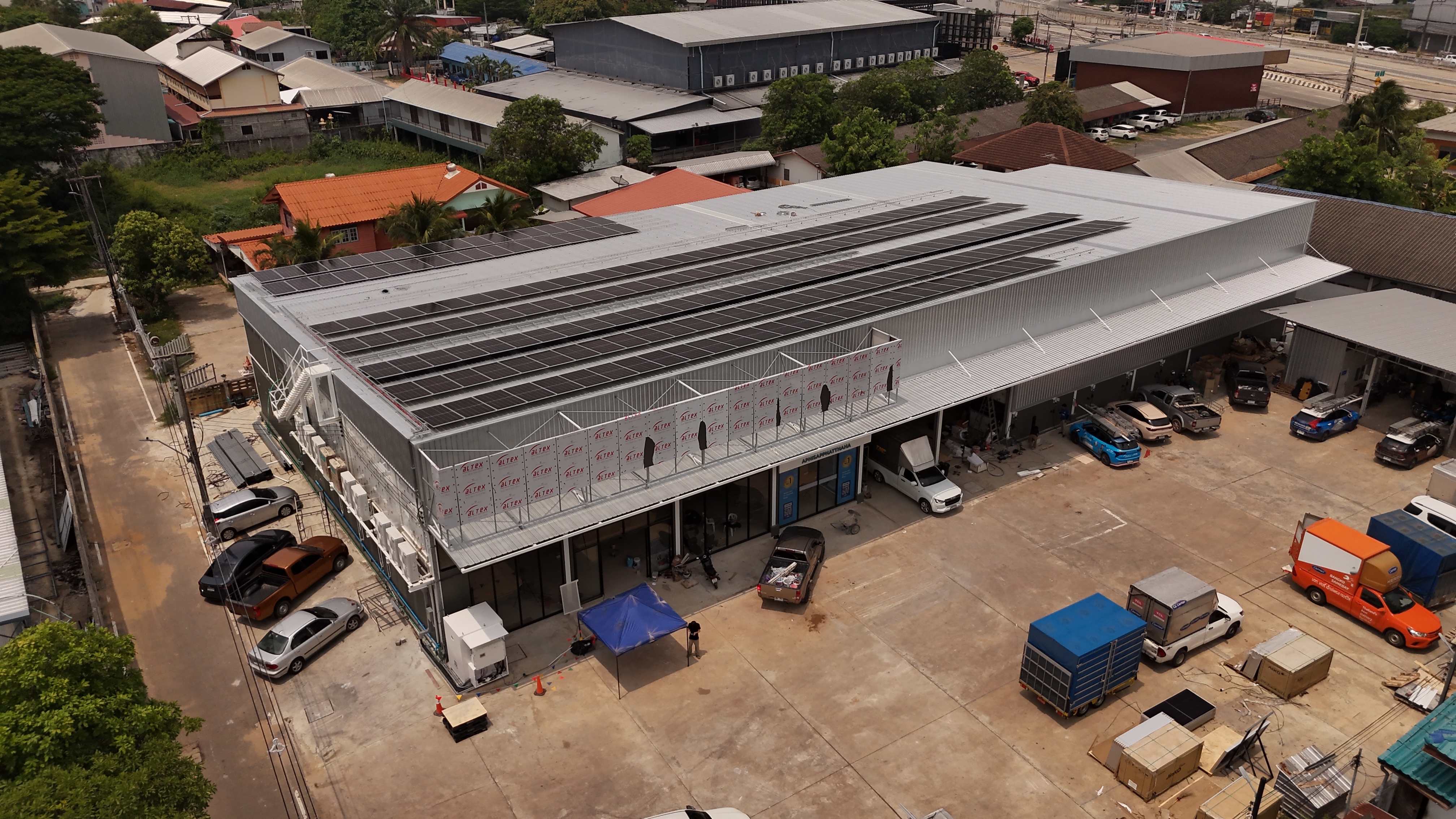
An energy storage system that performs well in one project may underdeliver in another. A residential home in Germany, a warehouse in Denmark, a small factory in Thailand, and a utility-scale renewable plant each have different load profiles, available space, grid connection rules, and commercial objectives.
Project/scenario fit is therefore not a secondary consideration; it determines whether a system can deliver expected savings, maintain reliable backup, or participate in grid services. The key is to select an ESS architecture and product family that can operate under the actual conditions of the site: indoor or outdoor installation, climate, altitude, anti-corrosion requirements, PV configuration, and revenue model.
What Project Fit Means for Energy Storage Buyers
Evaluating project fit requires aligning three layers: the application, the operating environment, and the commercial model.
- Application layer: What is the ESS expected to do? Peak load shifting, self-consumption of PV power, backup power supply, frequency regulation, or Virtual Power Plant (VPP) participation?
- Environment layer: Where will the system be installed? Residential outdoor, industrial outdoor, coastal salt fog area, high-temperature desert, or high-altitude location?
- Commercial layer: How long will the asset operate? What are the expected energy savings, lifecycle maintenance costs, and potential revenue streams?
An energy storage system designed for wide temperature ranges, coastal salt fog, and high-altitude conditions, with IP66/IP55 protection and C5 anti-corrosion certification, is more suitable for outdoor industrial and harsh-climate installations. For indoor residential or light-commercial sites, the protection rating may be less critical than energy capacity, backup switching speed, and battery cycle life.
Long-duration energy storage requirements introduce another dimension. When a C&I facility needs sustained discharge over several hours rather than short peak shaving, attention should move to battery capacity (kWh), cycle life, DC-side expansion capability, and the thermal performance of the battery cabinet. Buyers should calculate effective usable energy over a 10-15 year operating period, not simply compare inverter power or nominal capacity.
Five Project Archetypes and Their ESS Requirements
1. Residential Energy Storage for PV Self-Consumption and Backup
Homeowners and small businesses usually install a residential energy storage system to increase PV self-consumption and maintain power during outages. Key requirements are moderate capacity, long cycle life, high ingress protection for outdoor installation, and compact design.
For example, the Solis IntelliHome series is a residential ESS with a 5 kWh nominal capacity, LiFePO4 chemistry, IP66 protection, and a cycle life rated above 6,000 cycles/10 years. It is suitable for household outdoor environments where dust and water resistance matter. For larger residences, small farms, or small commercial sites, stackable systems such as Solis FlexCore-ID can scale battery packs to a higher usable capacity while using the same LFP platform.
2. C&I Energy Storage for a Warehouse or Factory
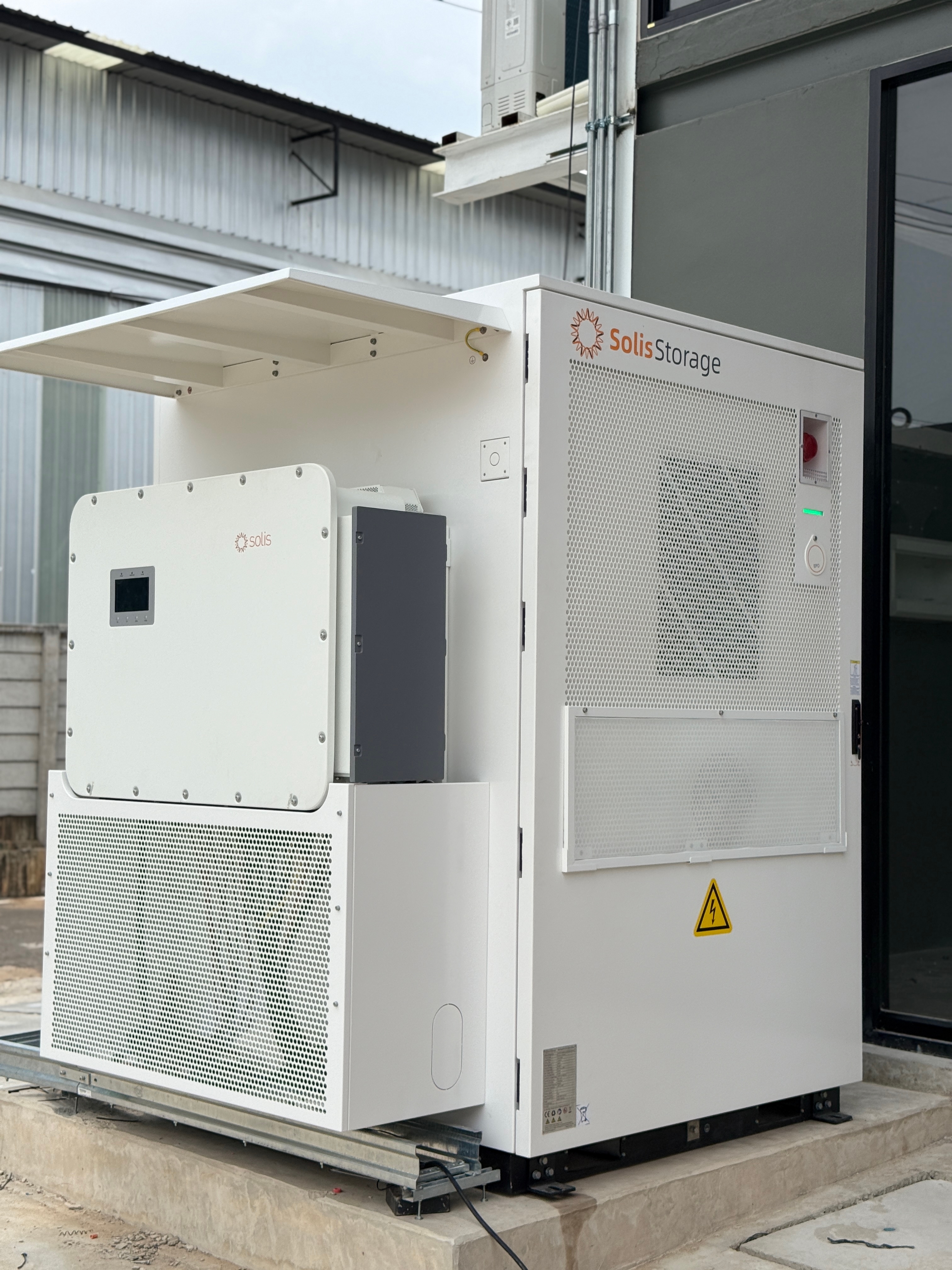
Commercial and industrial users typically need larger battery capacity, higher inverter power, and the ability to switch between grid-tied and off-grid modes without interrupting sensitive equipment. The SolisStorage EverCore ESS is designed for these C&I conditions. It is available with rated energy capacity of 100.5/120.6/261.2 kWh and inverter power ratings of 50/60/125 kW.
- Physical AC-DC separation: the hybrid energy storage inverter is a separate unit from the battery cabinet, simplifying thermal management and allowing independent DC-side expansion.
- Grid-tied to off-grid switching in under 10 ms in integrated designs, preventing production interruptions.
- DC-side expansion: one inverter can connect multiple battery cabinets, enabling phased investment.
Reference case – Denmark: A C&I industrial end user installed an EverCore system rated at 125 kW/261 kWh for warehouse self-usage. The system was chosen to switch between on-grid and off-grid in under 10 milliseconds to prevent interruptions, with the project objective of saving on electricity bills over a 20-year horizon.
3. Commercial Self-Use and Backup in Asia-Pacific Markets
In Southeast Asia and other growth markets, C&I facilities frequently install ESS for self-use and backup, not only for peak shaving. These projects may operate in high temperatures and high humidity, with less stable grid connections.
EverCore's air-cooled design with independent three-air-duct architecture is engineered to handle such conditions. The system is rated for operation at -25°C to 55°C and altitudes up to 4,000 m, with IP55 battery cabinet protection and IP66 inverter protection. The 314Ah LFP cells also provide a cycle life of 8,000 cycles (at 0.5C charge/discharge, remaining capacity ≥70%).
Reference case – Thailand: A self-consumption and backup power project owner installed an EverCore system at 125 kW/522 kWh for self-use and backup. The system is reported to operate stably while saving on electricity bills.
4. Industrial and Utility-Scale Energy Storage under Harsh Outdoor Conditions
Industrial and utility-scale storage sites are often exposed to wide temperature swings, coastal salt fog, high altitude, and remote site conditions. In such cases, project fit depends primarily on environmental protection and system reliability.
According to the company's product scenario specifications, the EverCore series is designed for environments such as household outdoor and industrial outdoor, operating under wide temperature range, coastal salt fog, and high altitude conditions. Special requirements for this scenario include C5 anti-corrosion certification and IP66/IP55 protection. Buyers should ask suppliers for evidence of corrosion protection and field experience in similar climates.
5. VPP, Frequency Regulation, and Grid Ancillary Services
When an ESS is intended to earn revenue beyond self-consumption, software openness becomes part of project fit. The system must be able to connect to third-party VPP or EMS operators and respond to external scheduling signals. SolisStorage states that EverCore has been connected or is being connected with 102 third-party VPP/EMS operators in 11 European countries, including platforms such as Kraken (UK), Check Watt (Nordic), and dozens of local EMS providers in German-speaking regions and Benelux.
The product description confirms that this energy storage solution is applied in peak shaving, frequency regulation, and VPP projects, and that it operates in grid-tied, off-grid, and seamless backup switching modes supporting 24/7 continuous operation. A site seeking to enter FCR/aFRR/mFRR markets should be evaluated not only on battery hardware but also on communication protocol compatibility and EMS integration capability.
System Architecture: What to Look for in C&I ESS Design
For C&I and industrial projects, the internal architecture of the energy storage system is as important as the battery chemistry.
AC-DC Separation vs. Integrated Hybrid Design
EverCore ESS uses a physical separation of AC and DC: the hybrid energy storage inverter (AC side) and battery cabinet (DC side) are independent units. In this architecture, inverter power heat is dissipated directly into the ambient environment, leaving only electrochemical heat inside the battery cabinet. This design supports better temperature uniformity while retaining an air-cooled approach.
Cooling Method: Air Cooling vs. Liquid Cooling
Many C&I buyers assume large-capacity systems require liquid cooling. The EverCore engineering approach shows an alternative: a three-air-duct design combined with Coanda-effect airflow attachment technology. This thermal management combination is stated to increase heat dissipation efficiency by 30% compared to traditional air cooling. For buyers, the practical relevance is lower lifecycle maintenance because air-cooled systems avoid liquid coolant replacement.
Expansion and Phased Investment
EverCore supports independent DC-side expansion with one inverter connecting multiple battery cabinets in parallel. This matters for businesses with limited initial budgets: storage capacity can grow as the business or load grows, without purchasing additional inverters. The stated benefit of this architecture is a reduction in system expansion cost of around 10%.
Control Integration and Serviceability
EverCore integrates PCS + STS + PV inverter + circuit breaker protection + EMS into one unit, using a single central controller rather than separate CPUs for BMS, PCS, EMS, and STS. For a project owner, simpler control architecture means fewer failure points and easier troubleshooting. Serviceability is further supported by component choices such as industrial-grade fans with a 10-year maintenance-free performance and flammable gas detectors with a 10-year calibration-free performance.
Project Fit Evaluation Framework
| Evaluation Dimension | Key Questions | What to Check |
|---|---|---|
| Application objective | What will the system do: self-consumption, backup, peak shaving, frequency regulation? | Required capacity, inverter power, switching speed, grid-tied and off-grid capability |
| Operating environment | Indoor or outdoor? Coastal, dusty, humid, high-temperature, or high-altitude site? | IP rating, anti-corrosion grade, operating temperature range, altitude rating |
| PV integration | Is the ESS being added to an existing PV plant? | DC or AC coupling support, PV over-sizing ratio, inverter compatibility |
| Expansion plan | Will load grow over time? Is phased investment expected? | DC-side expansion support, number of battery cabinets per inverter |
| Commercial model | How will the project earn or save money over 10-15 years? | Cycle life, round-trip performance assumptions, O&M costs, VPP/EMS compatibility |
| Maintenance capability | Who will maintain the system? What is the local service arrangement? | Spare parts availability, remote monitoring, system modularity for fan, pack, or inverter replacement |
This framework helps buyers compare systems on evidence rather than marketing claims. For a solar battery energy storage project, the starting point should always be the site's load and grid profile, not the system's nominal capacity.
Step-by-Step: How to Match an ESS to a Specific Project
Follow these steps when evaluating a battery energy storage system for your project.
Step 1 – Define the Primary Use Case
Write down the main objective: reduce electricity bills through PV self-consumption, provide backup power, perform peak load shifting, or generate revenue through grid services. If multiple objectives exist, rank them. This determines the system's required capacity and operating mode.
Step 2 – Quantify Load and PV Profiles
Collect 12 months of consumption data, the PV generation curve, and the grid import/export profile. Identify daily peak windows, seasonal variation, and critical loads that need backup. Use these to estimate the minimum battery capacity and inverter power.
Step 3 – Assess Site Conditions
Confirm installation location: indoor or outdoor, available footprint, ambient temperature range, altitude, humidity, salt fog exposure, and dust level. If the site is near a coast, anti-corrosion rating C5 becomes a decision factor. If the site is above 2,000 m, verify the inverter's altitude derating.
Step 4 – Select System Architecture
Choose AC-coupled or DC-coupled architecture based on the existing PV system. For C&I projects with phased expansion needs, evaluate ESS products that allow multiple battery cabinets per inverter and AC-DC separation. For large warehouses or factories, verify seamless grid-tied/off-grid transfer time.
Step 5 – Compare Lifecycle Cost, Not Only Capex
Compare the cost of ownership over 10-15 years. Include battery replacement assumptions, cooling fluid replacement, inverter or fan maintenance, and routine inspection costs. Air-cooled systems with modular components can be more cost-effective than liquid-cooled systems over the full lifecycle, even if the initial price is similar.
Step 6 – Verify Certification and Compatibility
Ask for battery standards certification, system-level safety certification, and grid code compliance for the target market. If the project intends to use third-party EMS or VPP platforms, request a list of compatible operators.
Step 7 – Arrange a Technical Review with the Supplier
Share the load profile and site conditions with the ESS supplier and request a system sizing proposal. A credible supplier should be able to explain the assumptions used and compare the product's environmental ratings against your site.
Use Cases: When Each SolisStorage System Fits
| Project Scenario | Typical Customer | Recommended SolisStorage Series | Key Selection Rationale |
|---|---|---|---|
| Home PV self-consumption with backup | Residential household | IntelliHome | 5 kWh LFP battery, IP66, >6,000-cycle rated life, compact aluminum alloy casing |
| Small farm, mall, hospital, large residence | Small commercial / large residential | FlexCore-ID (stackable) | Stackable LFP packs using 314Ah cells, scalable capacity, 8,000-cycle cell design |
| Warehouse or factory self-consumption and backup | C&I industrial end user | EverCore ESS | 125 kW/261 kWh configurations, AC-DC separation, <10 ms switching, air-cooled reliability |
| Outdoor C&I in coastal, salt-fog, or high-altitude sites | Industrial / utility | EverCore ESS | IP55+IP66, C5 anti-corrosion coating, -25°C to 55°C and up to 4,000 m rating |
| VPP / frequency regulation participation in Europe | C&I asset owner / aggregator | EverCore ESS | Integration with 102 third-party VPP/EMS operators in 11 European countries |
Comparison: EverCore ESS vs. Common Alternatives for C&I Scenario Fit
If a C&I buyer is choosing among commercial energy storage systems, the main differentiators are not only battery capacity and price, but also whether the system architecture fits the site's expansion plan, maintenance capability, and revenue model.
| Comparison Dimension | SolisStorage EverCore ESS | Typical C&I ESS Alternatives in the Market |
|---|---|---|
| Architecture | Physical AC-DC separation: external hybrid inverter + separate battery cabinet | Often integrated or semi-integrated AC-DC design; varies by manufacturer |
| Cooling method | Air cooling with three-air-duct / Coanda-effect design | Many large-capacity systems adopt liquid cooling |
| Ingress protection | IP66 inverter + IP55 cabinet | Typical outdoor cabinets range from IP54 to IP55 (verify per model) |
| Grid-tied / off-grid switching | <10 ms without external STS | Depends on inverter design; some require external STS |
| DC-side expansion | Up to 6 battery cabinets per inverter | Varies; some systems require additional inverters for expansion |
| Cell cycle life | 314Ah LFP, 8,000 cycles at 0.5C (EOL ≥70%) | 280Ah LFP cells commonly rated at ~7,000 cycles |
| VPP/EMS ecosystem | 102 third-party VPP/EMS operators in 11 European countries | Not always published; needs to be verified for each supplier |
| Lifecycle maintenance | Maintenance-free fans (10 years), calibration-free gas detectors (10 years) | Depends on component selection and cooling architecture |
Important caveat: The comparison above is based on publicly available positioning and typical industry designs. Buyers must verify the specifications of any alternative manufacturer for their specific project. This table is not a claim that EverCore is always the best fit; it is a decision aid to show which architectural differences matter for C&I scenario fit.
How a System Is Configured: Battery, Inverter, and Energy Management
Regardless of manufacturer, a complete energy storage system is more than a battery cabinet. The product requires supporting equipment including a lithium iron phosphate battery, smart energy management platform, and monitoring sensors. For EverCore, the inverter integrates PCS, STS, PV inverter, circuit breaker protection, and EMS into a single unit, reducing external components.
The system operates 24/7 in grid-tied mode, off-grid mode, or seamless backup switching. A smart energy management platform with monitoring sensors is required to optimise charge-discharge strategy. In VPP projects, the EMS also needs to accept external dispatch commands through open protocols or approved platforms.
Frequently Asked Questions
What are the main application scenarios for an EverCore ESS?
EverCore ESS is designed for C&I environments such as warehouses, factories, shopping centres, and renewable energy plants. In marketing materials, the scenario description covers peak shaving, frequency regulation, VPP projects, backup power supply, and self-consumption of PV power. It is also specified for household outdoor and industrial outdoor environments with wide temperature ranges, coastal salt fog, and high-altitude conditions.
Which protection ratings and anti-corrosion features should a C&I ESS have for outdoor projects?
For outdoor C&I projects, SolisStorage specifies IP66 and IP55 protection and C5 anti-corrosion certification. In the EverCore system, the hybrid inverter unit has IP66 protection, while the battery cabinet has IP55. If your project is located near a coast, in a salt-fog zone, or in a dusty industrial site, these ratings are critical purchase criteria.
How much capacity can one EverCore inverter support if the project expands later?
An EverCore unit is an energy storage inverter and battery cabinet system. The EverCore technical description states that a single hybrid inverter can connect up to 6 battery cabinets in parallel, enabling DC-side expansion without additional inverter investment. If you plan phased construction, confirm with SolisStorage that the selected configuration, such as 125 kW/261 kWh, can be extended with additional cabinets under your site's connection conditions.
What is a typical project reference for EverCore in Europe?
One documented reference is a warehouse self-usage project in Denmark, where an EverCore system was installed for a C&I industrial end user. The reported result is electricity bill savings, with a highlight of switching between on-grid and off-grid in under 10 milliseconds to prevent interruptions. The project duration estimate is 20 years.
Can EverCore participate in VPP or grid ancillary services programs?
According to SolisStorage, EverCore has been connected or is being connected with 102 third-party VPP/EMS operators across 11 European countries. Examples include the Kraken energy management platform under Octopus Energy in the UK, mainstream aggregator platforms in the Nordic market, and dozens of local EMS providers in German-speaking regions and Benelux. For a VPP project, confirm the specific list of compatible operators with the supplier.
What is the next step to evaluate EverCore for a specific site?
To evaluate EverCore or other SolisStorage products for your project, contact Solis with your load profile, site conditions, and project timeline. Because standard models are available and OEM customized orders are supported with different lead times, a technical review can move quickly. You can also download the Solis Global Brochure for a broader portfolio overview.
Get a Project-Specific Sizing Proposal
Send your site information and project objectives to Solis for a technical review covering EverCore ESS, FlexCore-ID, or IntelliHome system selection.
sales@ginlong.com | WhatsApp: +86 158-5815-3307