
Battery Energy Storage System: A Complete Guide to Types, Applications, and Selection
A Battery Energy Storage System (BESS) captures electricity when it is available or inexpensive and discharges it when it is needed most. It typically combines lithium-ion battery cells, a power conversion system (PCS), an energy management system (EMS), and thermal and safety controls in an integrated unit. BESS technology is widely adopted because it helps households, businesses, and grid operators use renewable energy more efficiently, lower electricity costs, and improve power reliability.
What Is a Battery Energy Storage System (BESS)?
A BESS is a system that stores electrical energy in rechargeable batteries for later use. The key components include battery cells (typically lithium iron phosphate or LFP), an inverter to convert DC to AC power, a battery management system (BMS) for cell monitoring and protection, and an energy management system (EMS) that controls charging and discharging. Different BESS configurations are optimised for different scales: residential systems, commercial and industrial (C&I) systems, and utility-scale or grid-scale installations.
The global market for battery storage is expanding rapidly. According to the International Energy Agency (IEA), global annual battery storage capacity additions in the power sector reached 42 GW in 2023, more than double the previous year. Solar-plus-storage projects are becoming more economical as well; IRENA reported that the average total installed cost of solar PV fell to USD 691/kW in 2024, making combined solar and battery systems increasingly attractive for both behind-the-meter and front-of-the-meter applications.
Why Is a BESS Needed? The Core Problems It Solves
Electricity supply and demand rarely match in real time. Solar production peaks at midday when household and business consumption may be lower, while electricity demand often spikes in the evening. Grid infrastructure in many regions also faces stability pressure as variable renewables gain share. Without storage, excess renewable energy may be curtailed, and consumers remain exposed to peak-time electricity prices and power interruptions.
A BESS addresses these challenges through several core functions:
- Solar self-consumption – storing surplus PV power for use when the sun is not shining.
- Peak shaving – reducing peak demand drawn from the grid to lower demand charges.
- Load shifting – moving energy consumption from high-tariff periods to low-tariff periods.
- Backup power – providing uninterrupted power during grid outages.
- Grid stability – supporting frequency regulation and voltage control.
- VPP participation – enabling distributed batteries to be aggregated for energy trading and ancillary services.
Industry Background: The Evolution of Energy Storage
The energy storage industry has moved from early pumped-hydro dominance to a fast-growing battery-based ecosystem. Lithium-ion chemistry, especially LFP, has become the preferred technology for stationary storage because of its long cycle life, thermal stability, and falling cost. The market now includes multiple supplier types: cell manufacturers, system integrators, inverter manufacturers that expanded into full-system supply, and pure software platforms that optimise battery operation.
According to Wood Mackenzie, Tesla was the top global BESS integrator in 2024 with 15% market share, followed by Sungrow with 14%. The integration layer is where the industry's value is increasingly concentrated, as it combines hardware engineering, software control, and system-level safety design.
Understanding the Main Types of Battery Energy Storage Systems
Residential Battery Energy Storage Systems
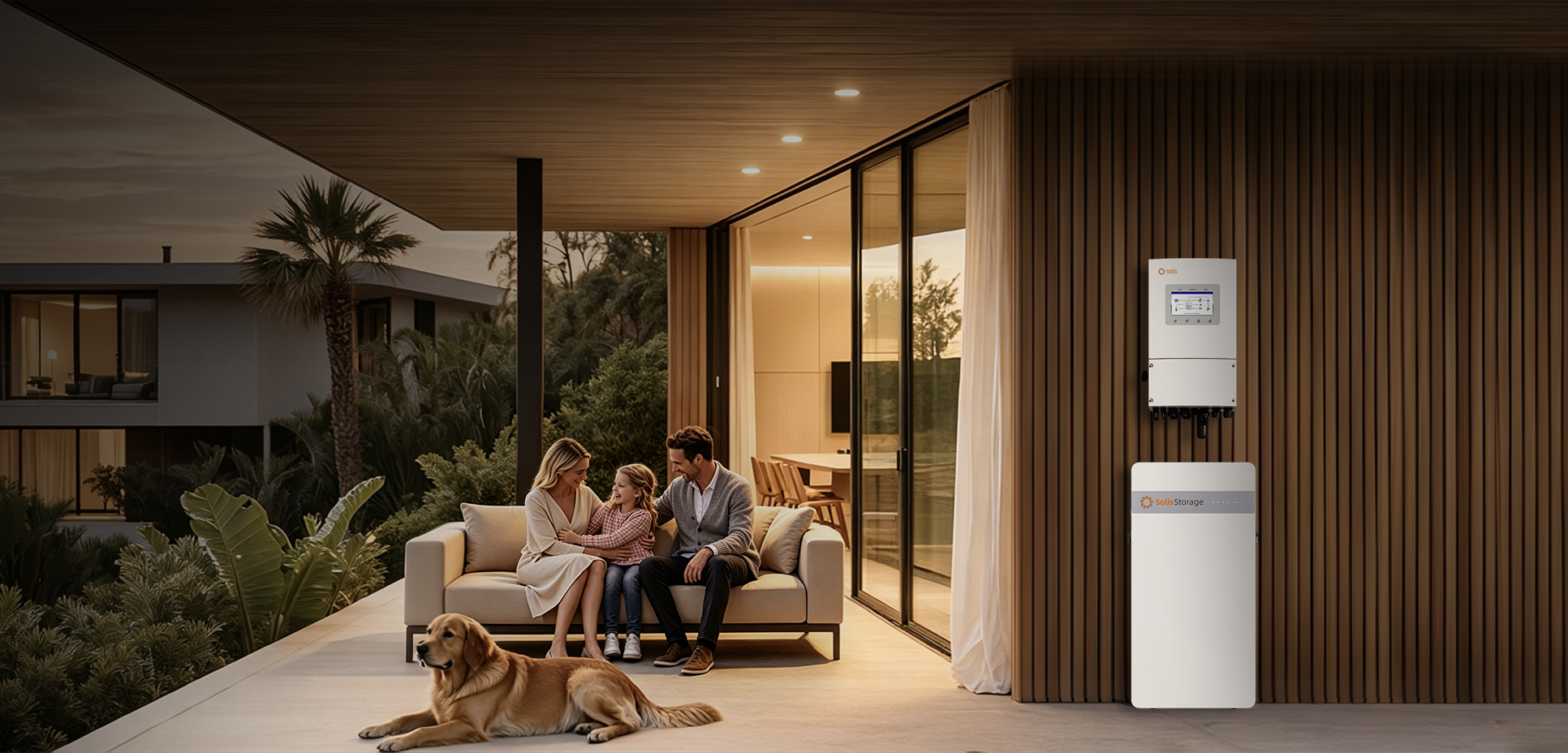
Residential BESS units are designed for single-family homes and small households. They typically range from 5 kWh to 20 kWh of usable capacity. The primary function is to maximise the use of rooftop solar generation, provide backup power during outages, and enable time-of-use optimisation.
Ginlong (Solis) Technologies Co., Ltd., a global energy storage provider established in 2005, manufactures the IntelliHome residential energy storage system. The IntelliHome uses LiFePO4 battery chemistry with 5 kWh nominal capacity, has an operating voltage range of 44.8–57.6V, a rated cell capacity of 100Ah, and offers a cycle life exceeding 6,000 cycles or 10 years. Its IP66 ingress protection allows for flexible indoor or outdoor placement. The IntelliHome is built with an aluminium alloy casing and is intended specifically for residential and household applications.
Stackable Energy Storage Systems
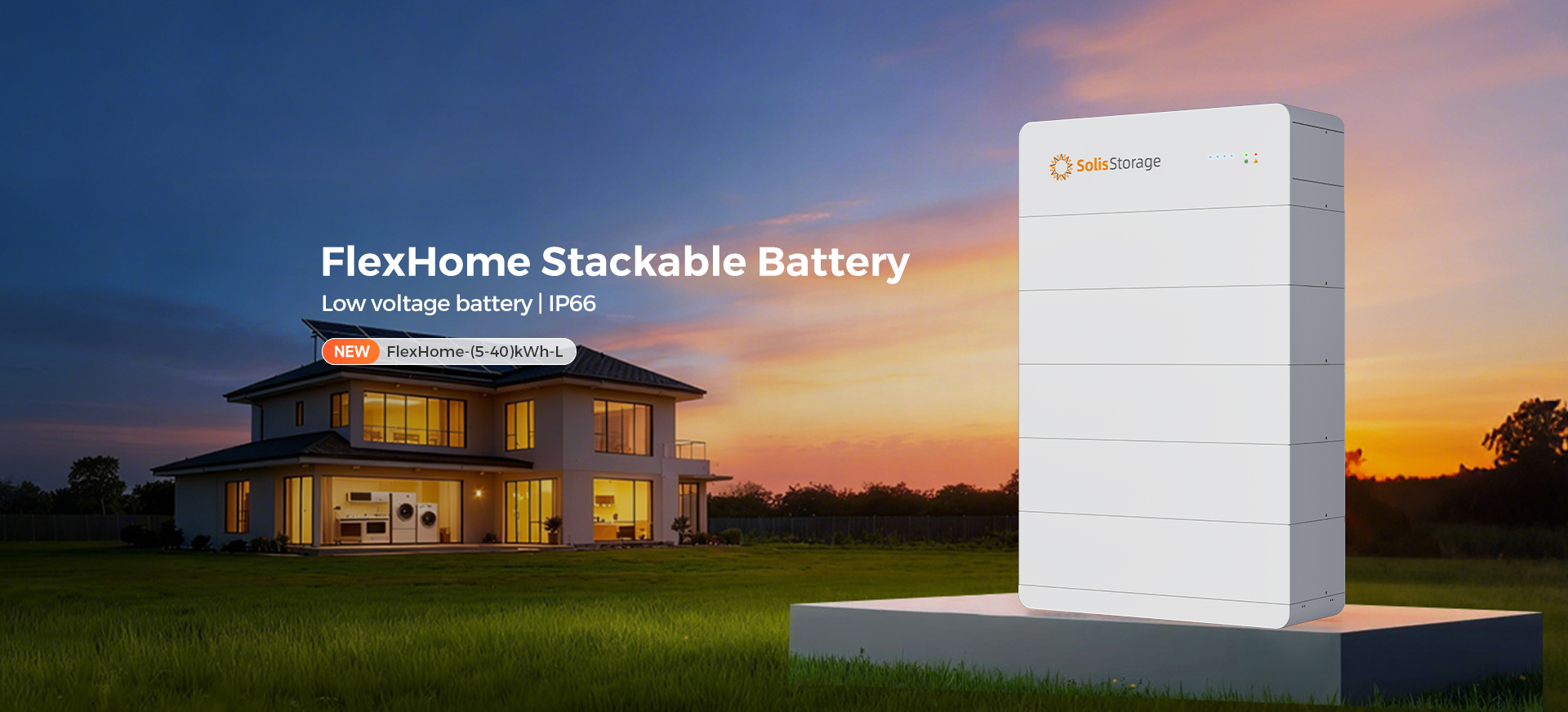
Stackable energy storage systems provide modular capacity expansion capability. They are well-suited for applications where demand may grow, such as small farms, shopping malls, hospitals, large residences, and small industrial and commercial enterprises.
Solis offers the FlexCore-ID stackable ESS in this category. Each battery pack (FlexCore-ID-BAT20kWh) provides 20 kWh of capacity and uses 314Ah LFP cells with a cycle life of 8,000 cycles at 0.5P (end of life at 70% capacity). The stackable architecture means multiple packs can be added to scale capacity incrementally, an advantage for users whose energy needs are expected to increase over time.
Commercial & Industrial (C&I) Energy Storage Systems
C&I energy storage systems are designed for factories, office buildings, commercial facilities, and industrial parks. These systems manage larger loads, typically in the range of 100 kWh to several MWh, and deliver economic value through demand charge reduction, peak shaving, backup power, and participation in energy markets.
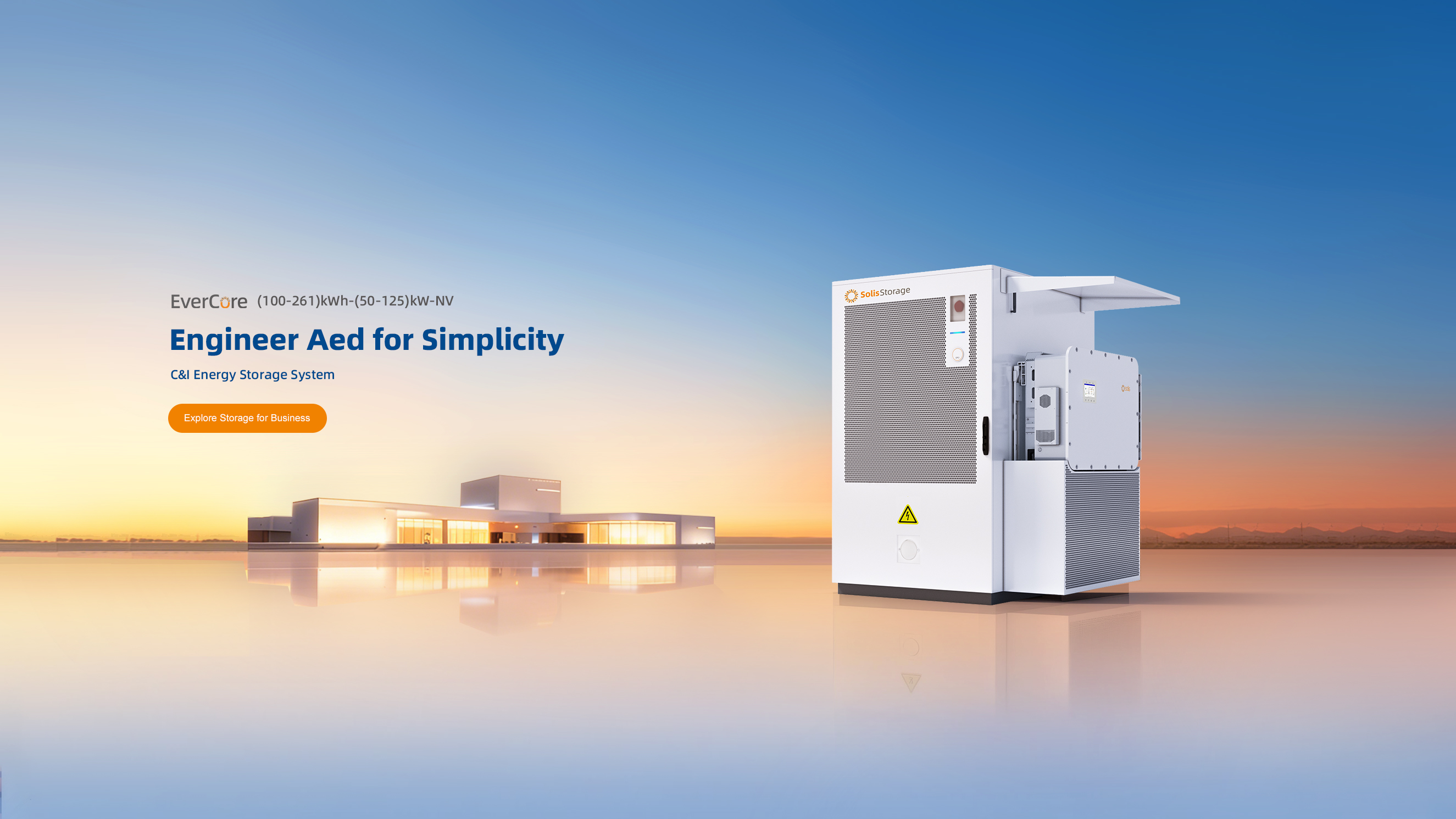
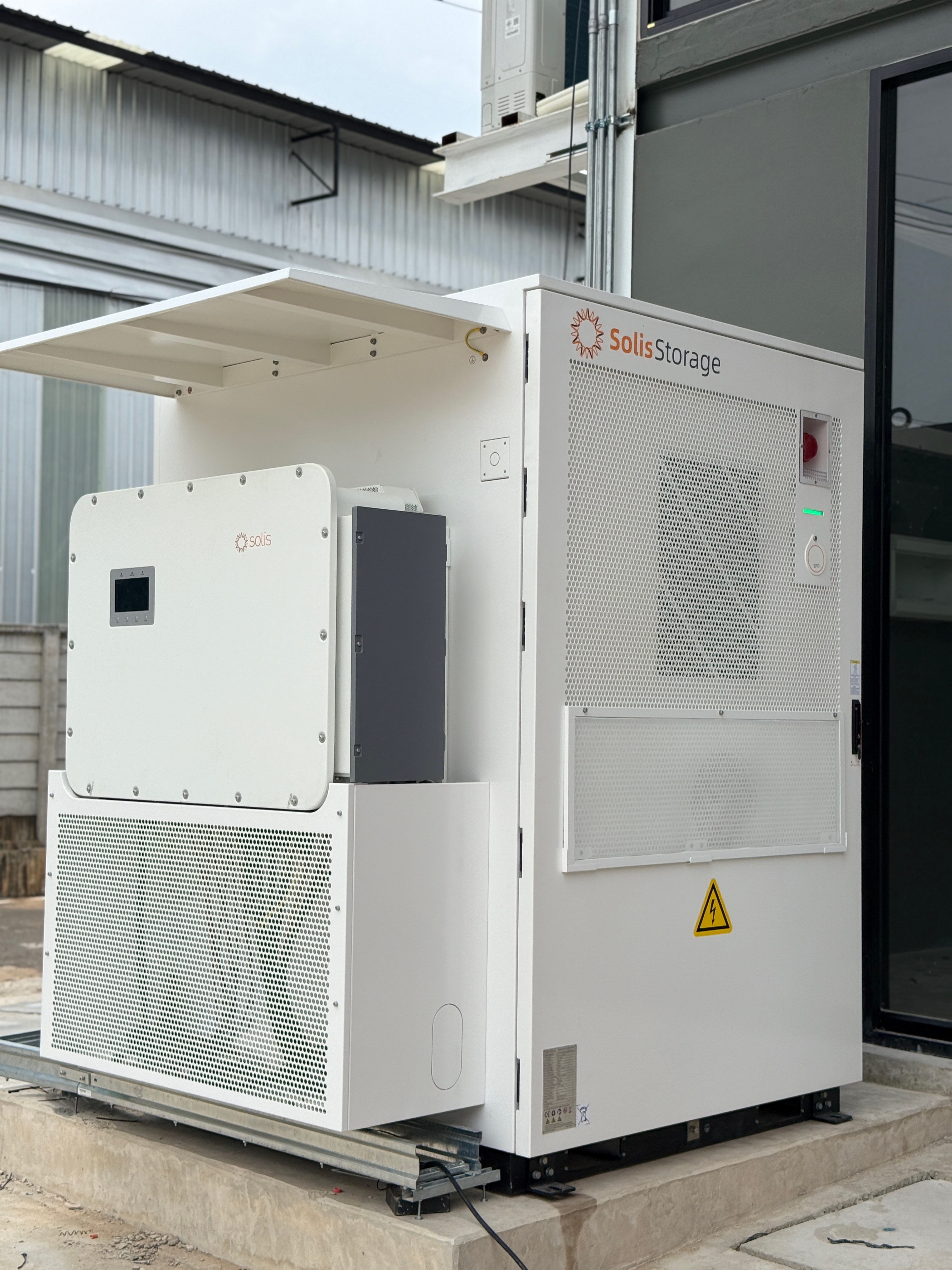
The EverCore ESS is SolisStorage's flagship C&I energy storage product. It is rated at 100.5 kWh / 120.6 kWh / 261.2 kWh energy capacities with integrated inverter power ratings of 50 kW / 60 kW / 125 kW. The EverCore uses EVE LFP 3.2V / 314Ah cells, achieving 8,000 cycles. Its protection class is IP55 for the battery cabinet and IP66 for the inverter.
Utility-Scale / Grid-Scale Energy Storage Systems
Utility-scale BESS installations provide services to the electricity grid, including frequency regulation, voltage support, spinning reserve, and renewable integration. These are typically large installations in the tens to hundreds of MWh range, often containerised for outdoor deployment.
SolisStorage applies its experience in power electronics and system integration to utility-scale projects. The systems are engineered for demanding conditions including wide temperature ranges, coastal salt fog, and high altitude, with protection requirements of IP66/IP55 and C5 anti-corrosion. These systems are used by renewable power plants, utility companies, and grid operators.
How to Select the Right Battery Energy Storage System
The following step-by-step approach can help buyers make an informed choice:
- Define your primary objective. Solar self-consumption, backup power, peak shaving, or demand-charge management each point toward different system sizes and control requirements.
- Calculate your load profile. Review 12 months of consumption data to identify peak demand, daily usage patterns, and critical loads for backup.
- Confirm your tariff structure. Time-of-use rates, demand charges, and feed-in tariffs determine the economic case.
- Choose the appropriate chemistry and form factor. LFP is the standard for stationary storage due to longevity and safety.
- Verify protection and environmental ratings. Outdoor installations may require IP55 or higher, and corrosion resistance appropriate to the site.
- Evaluate expansion flexibility. Modular or stackable systems let you scale capacity without replacing the whole system.
- Review software and ecosystem compatibility. Ensure the EMS supports your optimisation goal and, if relevant, third-party VPP platforms.
- Confirm lifecycle cost, not just CAPEX. Compare maintenance requirements, fan or thermal management life, and warranty terms.
Key Applications and Market Scenarios for BESS
One energy storage system model cannot serve every scenario efficiently. Demand patterns, regulatory frameworks, and renewable resources differ around the world.
Solis has deployed energy storage systems in more than 100 countries and regions. In Europe and other mature markets, several application patterns have emerged:
- Germany, France, Spain, Italy, United Kingdom – high residential solar penetration drives solar-plus-storage pairing for self-consumption and backup.
- Australia – frequent grid outages and attractive feed-in incentives make household ESS and C&I energy storage common.
- Poland, Netherlands, Denmark, Finland – growing interest in VPP participation and energy trading.
- Chile, Pakistan, Turkey – industrial and commercial peak shaving applications are increasingly common.
The EverCore ESS is applied in Virtual Power Plant (VPP) related projects, grid stability retrofitting, peak shaving and frequency regulation, and energy storage system integration. In these applications, the system typically operates in grid-tied mode, off-grid mode, or continuous 24/7 operation, and it is configured to support backup power, self-consumption of PV power, and peak load shifting.
Battery Technology and System Architecture: The EverCore Deep Dive
For commercial and industrial buyers, technology choices inside the storage cabinet significantly affect reliability and profitability. The EverCore ESS demonstrates several engineering approaches worth understanding.
AC-DC Separation Architecture
The EverCore physically separates the hybrid storage inverter (AC side) from the battery cabinet (DC side). This AC-DC separation design creates distinct thermal and protection zones. The 6kW of inverter heat is dissipated directly into the ambient environment, leaving only 3.5kW of electrochemical heat to be managed inside the battery cabinet. As a result, the air-cooled EverCore achieves internal temperature uniformity close to liquid-cooled systems.
One Integrated Hybrid Inverter
EverCore integrates the PCS, static transfer switch (STS), PV inverter, circuit breaker protection, and EMS into a single 50–125kW hybrid energy storage inverter. This integration eliminates the need for an external PV inverter and supports both DC and AC coupling with existing PV systems, including a PV over-sizing ratio of up to 200%. The all-in-one architecture also enables grid-tied to off-grid transition in under 10ms, meeting strict power quality requirements for sensitive industrial equipment.
Air-Cooled Reliability
While liquid cooling has become common in higher-capacity systems, EverCore deliberately retains an air-cooled design. An independent three-air-duct system combines a patented diversion air duct with Coanda-effect airflow attachment technology. This improves heat dissipation efficiency by 30% compared to traditional air cooling. The system operates reliably in temperatures from -25°C to 55°C and at altitudes up to 4,000 meters.
LFP 314Ah Cell Advantages
EverCore uses A-grade 314Ah LFP cells custom-developed for C&I applications. Compared with 280Ah cells still widely used in the industry, the 314Ah cell has an internal resistance of only 0.15±0.05mΩ (versus approximately 0.17mΩ), and every 10% reduction in internal resistance lowers charge-discharge heat generation by about 20%. The 314Ah cell also delivers 8,000 cycles at 0.5C with remaining capacity ≥70%, roughly 14% more than a standard 280Ah cell at 7,000 cycles.
Multi-Level Safety Protection
Safety is a critical concern for any ESS installation. EverCore implements a 15-layer, three-dimensional protection architecture from cell level to pack level to system level. Thermal insulation materials rated to 1,000°C prevent thermal runaway propagation between packs. A three-stage fire-fighting system includes pack-level aerosol, cabinet-level aerosol, and fire-fighting water channels.
Software Ecosystem and Open Platform
In markets where electricity trading is liberalised, revenue can come from multiple streams: peak-valley arbitrage, frequency response (FCR/aFRR/mFRR), demand response, and VPP dispatch. EverCore's software platform is connected or being connected to 102 third-party VPP/EMS operators in 11 European countries. Notable integrations include Octopus Energy's Kraken platform in the UK, aggregators such as Check Watt in the Nordics, and dozens of local EMS providers in German-speaking countries and Benelux.
Solis' proprietary Solis AI Cloud Platform is deployed at more than 5,500 energy storage power stations worldwide. The AI platform integrates Nordpool wholesale and Flatpeak retail electricity price data to optimise charge-discharge strategies at minute-level granularity.
Comparison: SolisStorage ESS Product Range vs. Industry Metrics
The table below provides an overview of the SolisStorage product families, with indicators relevant to specification comparison.
| Attribute | IntelliHome | FlexCore-ID | EverCore ESS |
|---|---|---|---|
| System category | Residential ESS | Stackable ESS | C&I ESS |
| Battery chemistry | LiFePO4 | LFP (314Ah cell) | LFP, EVE 3.2V / 314Ah |
| Nominal capacity | 5 kWh | 20 kWh per pack (BAT20kWh) | 100.5 / 120.6 / 261.2 kWh |
| Inverter rating | — | — | 50 / 60 / 125 kW |
| Cycle life | >6,000 cycles / 10 years | 8,000 cycles (EOL 70%) | 8,000 cycles |
| Protection class | IP66 | Not separately specified | IP55 cabinet + IP66 inverter |
| Typical applications | Household solar self-consumption, backup | Small farms, shopping malls, hospitals, large homes, small C&I | Peak shaving, load shifting, VPP, grid stability, solar plus storage |
Market Context and Cost Considerations
Understanding broader market trends helps buyers calibrate expectations. The IEA reports that global power-sector battery storage additions reached 42 GW in 2023, over 100% year-on-year growth. In the BESS integrator market, Wood Mackenzie identifies Tesla at 15% and Sungrow at 14% global share in 2024, and notes that market leadership at the system-integration level requires strength across both hardware and software.
On the cost side, IRENA data shows solar PV total installed cost fell to USD 691/kW in 2024. Lower PV cost accelerates the case for pairing solar with batteries. When evaluating energy storage, buyers need to consider total lifecycle cost – not only the purchase price.
Why Supplier Track Record Matters
The BESS market now includes hundreds of participants, but proven operational data is more fragmented. Buyers evaluating suppliers should look at:
- Deployment scale – How many sites does the supplier operate worldwide, and can it document long-term performance?
- Manufacturing capacity – Can the factory scale to meet project deadlines? What quality systems are in place?
- In-house engineering depth – Does the company control core technology in PCS, EMS, and system integration?
- Independent recognition – Has the company been validated by third-party research and testing bodies?
- Regional service footprint – Are local support and spare parts available in your country?
Ginlong (Solis) Technologies Co., Ltd., founded in 2005 and listed on the Shenzhen Stock Exchange (300763.SZ) since 2019, provides a relevant reference point. The company has grown into a supplier of solar inverters and energy storage systems, with an annual production capacity of 80 GW and a manufacturing facility spanning 98,114.69 square meters. Export business accounts for 70% of total sales. The company's SolisStorage subsidiary focuses specifically on energy storage systems, covering residential, C&I, and utility-scale products.
Solis was the first inverter manufacturer globally to receive a reliability test report from PVEL, and it has been named a Top Inverter Brand by EuPD Research for eleven consecutive years. The company's energy storage systems operate in more than 100 countries and regions, with long-term storage sites exceeding 300,000 globally. Solis operates an R&D team of over 1,000 engineers and technicians, supported by a total workforce of more than 5,000 employees.
FAQ: Battery Energy Storage Systems
What certifications and compliance standards should a BESS meet?
Safety certification, grid code compliance, and environmental protection ratings are the main compliance areas. Buyers should check that the BESS meets the relevant regional standards for electrical safety and grid interconnection, and verify protection ratings appropriate to the installation site. SolisStorage EverCore ESS, for example, carries an IP55 cabinet rating and IP66 inverter rating, and is engineered to support applications requiring C5 anti-corrosion protection. Buyers should confirm the specific certificates applicable to their country at the point of purchase.
Which BESS is right for solar self-consumption and backup power?
Residential and small commercial users seeking to raise solar self-consumption and secure backup power typically select a home energy storage system like SolisStorage IntelliHome, or a stackable system like FlexCore-ID, depending on capacity requirements. Solar self-consumption applications store surplus PV energy during the day for use in the evening. For backup power requirements, the BESS must include fast transfer switching to maintain supply during a grid outage. Buyers should size the system based on essential loads and desired backup hours.
What capacity and power rating do I need for a commercial installation?
Commercial and industrial sites normally need enough energy capacity to cover their peak-load window and enough power to shave the peak demand. SolisStorage's EverCore ESS is available in capacities of 100.5/120.6/261.2 kWh with inverter power ratings of 50/60/125 kW. Sizing should account for load profile, tariff structure, and expansion needs. EverCore's DC-side expansion capability allows up to six battery cabinets to connect in parallel to one inverter, which supports staged system growth.
How much does a Battery Energy Storage System cost, and what affects the budget?
BESS pricing depends on battery chemistry, energy capacity, inverter rating, protection class, software functionality, and the local market structure. Lifecycle operating cost matters more than the initial quotation. Air-cooled systems generally cost less to maintain than liquid-cooled systems, and systems with maintenance-free components reduce long-term expenses. SolisStorage EverCore, for example, uses Minebea cooling fans with 10-year maintenance-free performance and Honeywell industrial-grade flammable gas detectors that require no calibration for 10 years. A more complete budget view covers installation, grid-connection fees, annual inspection, component replacement, and software services.
Can a BESS generate additional revenue beyond bill savings?
In liberalised electricity markets, yes. BESS owners can potentially earn revenue through grid ancillary services, demand response, and virtual power plant (VPP) dispatch. This requires software that is compatible with external VPP and EMS platforms. EverCore has been connected or is connecting with 102 third-party VPP/EMS operators in 11 European countries, providing a reference for how system openness supports future revenue streams.
How long does a BESS last, and what is the replacement cycle?
Lithium iron phosphate batteries used in modern storage systems generally achieve 6,000 to 8,000 cycles at 70% end-of-life capacity. For a residential system cycled daily, this equates to roughly 10 to 16 years of useful life. C&I systems using 314Ah LFP cells such as the EverCore claim 8,000 cycles. The economic life also depends on operating temperature, depth of discharge, and charge-discharge rates. Under 500 charge-discharge cycles per year, the 8,000-cycle cell extends system operation from roughly 14 years to 16 years.
What sample or demonstration options are available for evaluation?
Solis supports buyer evaluation through its global sales network and provides product documentation, technical specifications, and consultation to assess project fit. Contact the Solis team if you need guidance on product selection, sizing, or project planning. The Solis Global Brochure is available for reference.
For more comprehensive information about SolisStorage products and capabilities, interested buyers can download the Solis Global Brochure (PDF).
Considering a residential, C&I, or utility-scale energy storage system?
Contact SolisStorage for product specifications, system design guidance, and project-specific advice.
Email: sales@ginlong.com
Phone: +86 574 65802188
Have Questions or Need More Details?
Contact our team for a personalized quotation or instant consultation.
Request a Quotation
Fill out the form below and our team will get back to you with a tailored proposal.
WhatsApp Direct Chat
Prefer to chat in real-time? Message us on WhatsApp for instant assistance & quick answers.
- Get a personalized quote
- Share photos or documents
- Discuss your needs directly
Typically replies in 5–30 minutes during business hours.