
Energy Storage System Compliance by Region: IP Ratings, Anti-Corrosion and Certification Paths
Compliance for an energy storage system is not one document — it is a regional question. The same battery cabinet, inverter and control architecture is evaluated against different site conditions and different documentation expectations in Europe, in Africa (including South Africa), in the Middle East and Central Asia, and in South Asia.
This guide is written for buyers at the evaluation and execution stage: procurement managers, EPC teams, integrators and distributors who must confirm, before a purchase order is signed, that the system they are buying matches both the physical environment of the site and the paperwork required by the market where it will be installed. The reference data used below comes from SolisStorage, the energy storage business of Ginlong (Solis) Technologies Co., Ltd. — a solar inverter manufacturer and energy storage solution provider founded in 2005, whose products are used in more than 100 countries and regions. The current portfolio includes the EverCore ESS for commercial and industrial (C&I) applications, the FlexCore-ID, and the IntelliHome residential family.
Why regional compliance fails in practice
Energy storage system compliance failures are rarely caused by a missing certificate alone. They are caused by a mismatch between three things: the site, the declared product ratings, and the document set the buyer actually receives.
Five failure modes appear repeatedly in cross-border projects:
- Protection rating mismatch. A unit is specified with an indoor assumption and then installed at a coastal or dusty outdoor site where the enclosure is exposed to wind-driven water and fine dust. Buyers should confirm the rating for each enclosure separately, because a system that separates AC and DC sides can carry different ratings on different cabinets.
- Corrosion class gap. Salt fog and industrial atmospheres attack fasteners, enclosures and mounting hardware before they affect electronics. The declared coating class for the enclosure and structural parts matters more in coastal regions than in inland ones.
- Environmental envelope exceeded. Ambient temperature range and installation altitude reduce usable capability if the site sits outside the declared operating envelope. High-altitude and high-temperature sites need the envelope confirmed in the datasheet, not in conversation.
- Certificate scope confusion. A certificate usually names specific models or capacities, not an entire catalogue. A buyer who receives a general conformity statement instead of a scope line cannot confirm that the delivered unit is covered.
- Acceptance criteria left unwritten. When factory acceptance testing, on-site commissioning and the final acceptance payment are not defined in the contract, disputes surface at handover rather than at signature.
The practical rule: map the site first, map the declared ratings second, and map the documentation third. In that order, region-by-region compliance becomes a checklist rather than a negotiation.
Industry background: what a regional market actually demands
Energy storage deployment today spans residential, C&I and utility-scale applications, and the buyer profile changes with each segment — a homeowner purchasing through an installer, a factory owner sizing a behind-the-meter system, or a utility procuring capacity. What does not change is that market access depends on documented capability rather than on a single global approval.
Solis operates in Europe, Africa (including South Africa), the Middle East and Central Asia, and South Asia, alongside other regions. That spread is relevant to buyers for one specific reason: the product engineering has to hold up across very different climate profiles, from high-temperature desert conditions in the Middle East to cold European winters. Third-party recognition follows the same logic — Solis has been named a “Top Inverter Brand” by EuPD Research for eleven consecutive years, and was the first inverter manufacturer globally to receive a reliability test report from PVEL. SolisStorage also reports long-term operating experience across more than 300,000 energy storage sites worldwide.
For a buyer, the useful interpretation is not that a brand is globally known, but that the same hardware family has to satisfy multiple regional acceptance routines. That is why the rest of this guide is organised around verification steps rather than around marketing claims.
Matching protection ratings, corrosion class and certification to the site
IP ratings: read the cabinet and the inverter separately
Ingress protection is the first filter in any regional specification, and it is frequently misread. The EverCore ESS publishes two ratings rather than one: the battery cabinet is rated IP55, while the hybrid energy storage inverter is rated IP66 — dust-tight and protected against powerful water jets.
That separation is a deliberate architecture decision. EverCore physically separates the AC side from the DC side, so the hybrid energy storage inverter and the battery cabinet each sit in their own enclosure with its own protection level. The engineering logic behind it is thermal as well as mechanical: because the inverter is external, roughly 6 kW of power-electronic heat dissipates directly into the ambient environment, leaving only about 3.5 kW of electrochemical heat to be managed inside the battery cabinet.
For a buyer comparing quotations, this creates a specific question to ask: which enclosure carries which rating, and where will each enclosure be installed? A specification that states a single IP number for a complete system is not sufficient to confirm outdoor siting at a coastal or dusty project.
Anti-corrosion class: C4 declared, and how to handle higher-corrosivity sites
Corrosion classification is the second filter, and it is the one most often left out of tenders. EverCore is produced to a C4-grade anti-corrosion coating standard. Combined with the IP55 cabinet and IP66 inverter ratings, the system is specified for operation from −25 °C to 55 °C and at altitudes up to 4,000 metres.
Where a project sits in a higher-corrosivity environment — for example directly on a coastline with sustained salt fog — the correct procurement action is not to assume a class, but to request the declared coating class and the basis on which it was determined, in writing, for the specific site. That single document request resolves the majority of coastal installation disputes before shipment, and it is a normal part of acceptance rather than an unusual demand.
Certification paths: scope, standards and validity dates
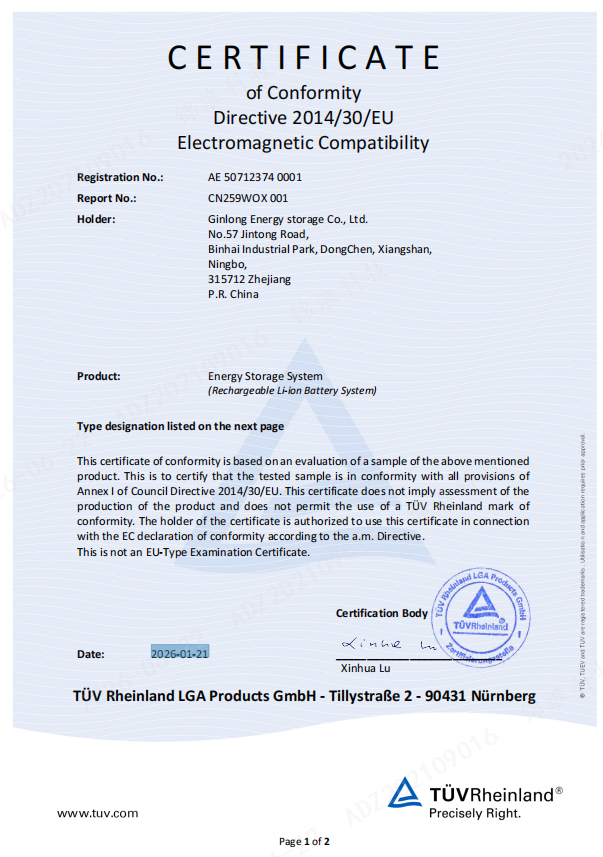
Certification is the third filter. Two certified documents from the current SolisStorage record illustrate what a complete compliance file looks like.
EMC conformity (EU). Certificate AE 50712374 0001 was issued by TUV on 21 January 2026 for CE (EMC Directive 2014/30/EU), with a scope of EverCore-261kWh and EverCore-261kWh-PRO. The cited standards are EN IEC 61000-6-2:2019, IEC 61000-6-2:2016, EN IEC 61000-6-4:2019 and IEC 61000-6-4:2018.
Battery safety. Safety certificate JPTUV-182135 was issued by TUV under IEC 62619 on 6 January 2026 and is valid to 1 June 2031.
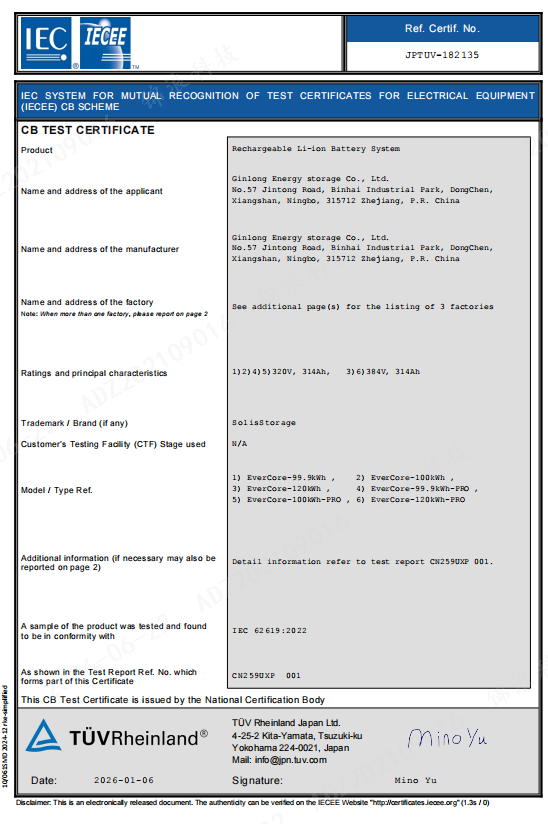
Three details in this pair of documents are worth copying into any procurement checklist: the issuing body, the model scope line, and the issue and expiry dates. A certificate that names a different model, or that has passed its validity date, cannot be used to close out a compliance file.
Compliance that continues after commissioning
Regional compliance does not end at the certificate. Thermal design determines whether the declared ratings hold up in service. EverCore retains an air-cooled design for 125 kW/261 kWh C&I systems, using an independent three-air-duct layout that combines a diversion air duct for the inverter with Coanda-effect airflow attachment across the battery pack surfaces. SolisStorage reports that this combination raises heat dissipation efficiency by around 30% compared with traditional air cooling.
Safety architecture is documented in the same way: EverCore is built around a 15-layer protection design spanning cell, pack and system level, uses thermal insulation material resistant to 1,000 °C between packs to limit lateral thermal spread, and applies a three-stage fire-suppression mechanism — pack-level aerosol, cabinet-level aerosol, and fire-fighting water channels.
Cell selection is part of the compliance story as well. EverCore uses A-grade 314 Ah LFP cells with internal resistance of 0.15±0.05 mΩ and 8,000 cycles at a 0.5C charge-discharge rate with remaining capacity of 70% or above. In practice, that is the kind of parameter a utility or insurer will ask about during technical due diligence.
Step-by-step: a regional compliance check for buyers
- Profile the site, not the country. Record ambient temperature range, humidity and salt-fog exposure, dust level, installation altitude, and whether the equipment will stand outdoors, under a canopy, or inside a plant room. Country-level assumptions hide coastal and high-altitude exceptions.
- Match declared ratings to that profile. Confirm IP55 for the battery cabinet and IP66 for the hybrid energy storage inverter where relevant, the C4-grade anti-corrosion coating standard, the −25 °C to 55 °C operating range, and the 4,000 m altitude limit. Where the site falls outside any of these, request a written statement before ordering.
- Map the market's documentation path. For the EU, that path runs through CE marking documentation, including the EMC Directive certificate with its model scope. For Africa (including South Africa), the Middle East and Central Asia, and South Asia, grid-connection approval, import conformity documentation and local commissioning records are typically project-specific and should be confirmed with the local authority or utility rather than assumed.
- Request certificate scope documents, not summaries. Certificates with scope lines, issuing bodies, cited standards and validity dates are the only documents that close a compliance file. Model-specific certificates such as AE 50712374 0001 (EverCore-261kWh and EverCore-261kWh-PRO) and JPTUV-182135 are the format to ask for.
- Confirm the configuration details that affect compliance. Customization options cover logo, outer package, software interface, regional voltage standard, communication protocol and function parameters, with OEM and ODM production services available. Regional voltage and communication settings should be locked in the order confirmation, not adjusted after delivery.
- Write acceptance criteria into the contract. SolisStorage publishes its commercial terms openly: MOQ of 1 unit for standard off-the-shelf models and 20 units for customized OEM orders; delivery FOB Ningbo or EXW factory; acceptance based on factory acceptance testing plus on-site installation and commissioning; payment structured as deposit, payment before or after shipment, and a final acceptance payment, with specific terms depending on customer tier, order size and regional policies.
- Plan the lifecycle file. Ask for the O&M documentation, spare-parts supply terms and local service coverage as part of the same purchase. SolisStorage provides 24/7 global remote technical support, 27 local overseas service centres, and a 48-hour on-site fault-handling and whole-machine replacement commitment.
Use cases: how the same system is specified differently
Coastal C&I site
Coastal installations place the enclosure and mounting hardware under continuous salt-fog exposure. The verification focus should be the declared corrosion class, the IP rating of each enclosure, and the maintenance schedule for external fittings. A 125 kW/261 kWh EverCore installation in Denmark, used for self-consumption at a warehouse with a 20-year project duration, illustrates the segment: the system switches between on-grid and off-grid in under 10 milliseconds, which matters when the load cannot tolerate interruption.
Hot and humid sites with backup duty
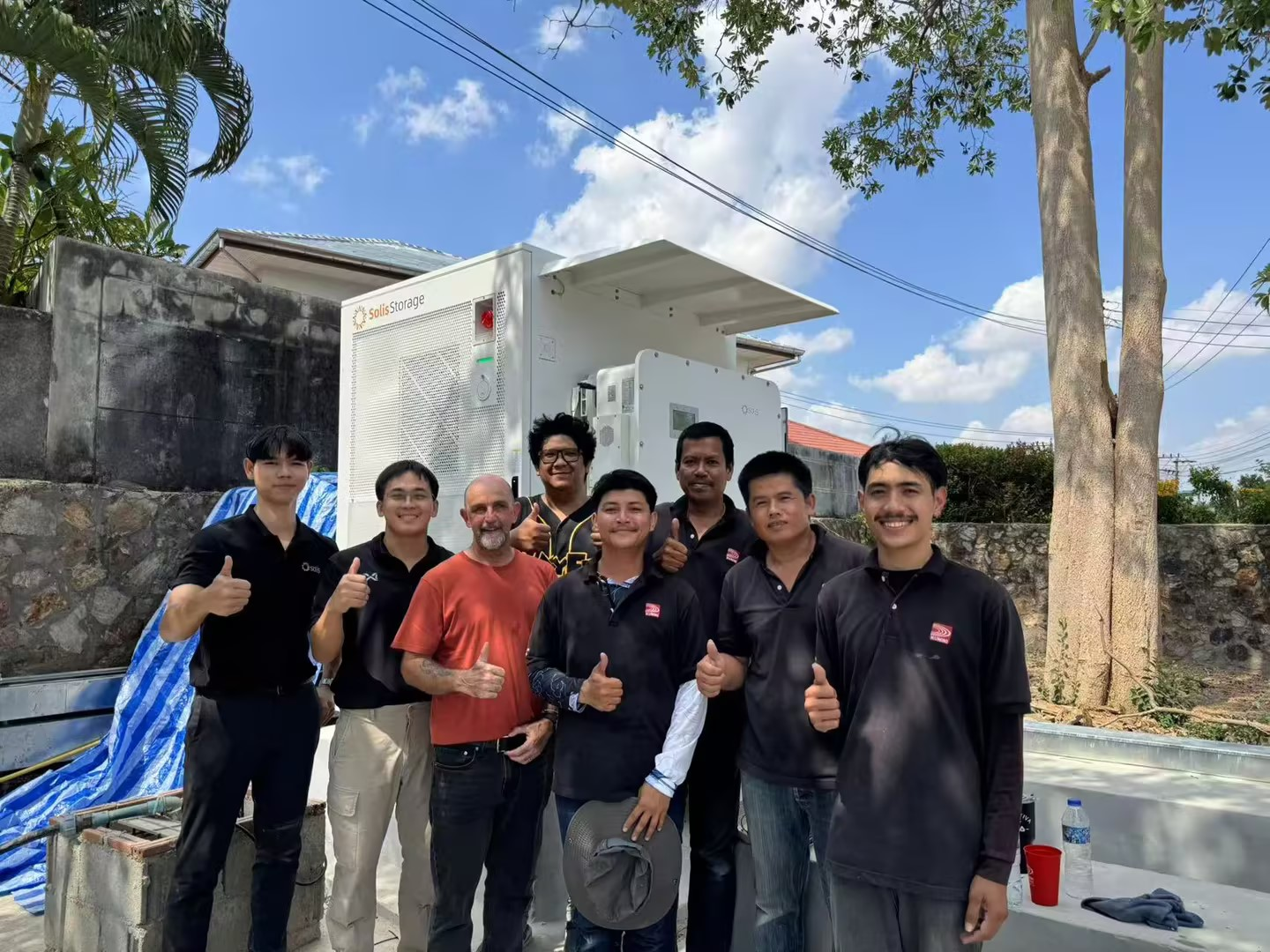
In South Asia and parts of South-East Asia, high humidity, monsoon rainfall and weak-grid conditions commonly appear in the same project. Here the priorities shift: water-ingress protection, heat dissipation design, and grid-tied/off-grid switching capability. A 125 kW/522 kWh project in Thailand combines self-use with backup power over a 20-year horizon, which places both the thermal design and the switching architecture inside the acceptance scope.
High-temperature desert and high-altitude sites
Middle East and Central Asian projects frequently combine very high summer ambient temperatures with dust, or, at higher elevations, with reduced air density. Buyers should confirm the upper temperature limit, the cooling method, the altitude rating and any derating that applies. The documented envelope for EverCore — up to 55 °C and 4,000 m — is the reference figure to compare against the site profile.
Phased expansion projects
Projects built in phases face a different compliance question: whether the additional capacity can be added without changing the certified installation base. EverCore supports independent DC-side expansion, with one inverter able to connect up to 6 battery cabinets in parallel, and up to 6 EverCore units can be connected in parallel for direct grid connection. SolisStorage reports this reduces system expansion costs by approximately 10%.
Regional compliance map: what to verify in each market
The table below is a verification framework rather than a regulatory statement. National and local requirements must always be confirmed with the competent authority, grid operator or utility for the specific project.
| Region / market | Site and climate conditions to plan for | Protection, corrosion and certification points to verify | Documentation to request from the supplier |
|---|---|---|---|
| Europe | Cold winters and wide seasonal temperature variation in northern markets; coastal and industrial installation sites in western and northern regions. | IP55 cabinet and IP66 inverter for outdoor siting; declared corrosion class for coastal or industrial atmospheres; low-temperature operating limit. | CE marking documentation including EMC Directive 2014/30/EU certificate with model scope; battery safety certificate such as IEC 62619; grid-connection approval from the local network operator. |
| Africa (including South Africa) | High ambient temperatures in many regions; strong UV and dust exposure; coastal salt fog along shorelines; sites with long service distances. | IP rating for outdoor cabinet siting; corrosion class for coastal salt fog; upper temperature limit and cooling design; service and spare-parts coverage. | Import and conformity documentation; utility or municipal grid-connection approval; commissioning and acceptance records; local service agreement. |
| Middle East & Central Asia | Very high summer ambient temperatures and dust in Gulf markets; wide temperature swings and cold winters in Central Asian markets; high-altitude sites in parts of the region. | Upper temperature limit and thermal design; dust-related IP rating; altitude rating; declared corrosion class. | Grid-connection approval; conformity documentation; written confirmation of temperature and altitude limits; commissioning records. |
| South Asia | Hot and humid conditions; monsoon rainfall and flooding risk; coastal salt fog; weak-grid conditions in some areas. | IP rating against water ingress; corrosion class; grid-tied and off-grid switching capability; heat dissipation design. | Grid-connection and safety approvals; ingress-protection documentation; commissioning and acceptance records. |
Verified SolisStorage reference data for comparison across these regions: products used in more than 100 countries and regions; EverCore rated IP55 (battery cabinet) and IP66 (hybrid energy storage inverter); C4-grade anti-corrosion coating standard; operating range −25 °C to 55 °C; altitude up to 4,000 m; CE (EMC Directive 2014/30/EU) certificate AE 50712374 0001 issued by TUV with scope covering EverCore-261kWh and EverCore-261kWh-PRO; IEC 62619 safety certificate JPTUV-182135 issued by TUV, valid to 1 June 2031.
FAQ: regional ESS compliance questions buyers ask
1. Which certifications and compliance documents should a buyer verify before ordering an energy storage system for a specific region?
Verify five items in writing. First, the certificate scope — the model or capacity actually covered; for example, the SolisStorage CE (EMC Directive 2014/30/EU) certificate AE 50712374 0001 issued by TUV covers EverCore-261kWh and EverCore-261kWh-PRO. Second, the standards cited in that certificate: EN IEC 61000-6-2:2019, IEC 61000-6-2:2016, EN IEC 61000-6-4:2019 and IEC 61000-6-4:2018. Third, battery safety documentation — IEC 62619 certificate JPTUV-182135, issued by TUV on 6 January 2026 and valid to 1 June 2031. Fourth, the declared protection ratings — IP55 for the battery cabinet and IP66 for the hybrid energy storage inverter. Fifth, the declared corrosion class and environmental envelope: C4-grade anti-corrosion coating, −25 °C to 55 °C operating range, altitude up to 4,000 m. Certificate PDFs with scope lines are the documents that close a compliance file; general conformity statements are not.
2. Can an energy storage system be adapted to a region's voltage standard, communication protocol and site conditions?
Yes, through OEM and ODM production services. The customization scope covers logo, outer package, software interface, regional voltage standard, communication protocol and function parameters. On the environmental side, the capability is bounded by declared limits rather than by custom engineering: EverCore operates from −25 °C to 55 °C, at altitudes up to 4,000 m, with an IP55 battery cabinet and an IP66 hybrid inverter under a C4-grade anti-corrosion coating standard. Where a site falls outside those limits, the buyer should ask for a written position before confirming the order. For customized OEM orders the MOQ is 20 units; standard off-the-shelf models can be ordered from 1 unit.
3. What drives the cost of a compliant configuration, and where does budget usually leak?
Four verified factors dominate. Capacity sizing comes first: EverCore is offered at 100.5 kWh, 120.6 kWh and 261.2 kWh with inverter ratings of 50 kW, 60 kW and 125 kW, so matching capacity to the load profile avoids paying for unused capacity. Phase planning comes second: independent DC-side expansion allows one inverter to connect up to 6 battery cabinets, which SolisStorage reports reduces system expansion costs by approximately 10%. Lifecycle O&M comes third: SolisStorage estimates full-lifecycle savings of approximately €9,500 per unit by eliminating liquid-cooling fluid replacement (€2,500), simplifying PCS replacement (€1,500), simplifying pack replacement (€1,500) and reducing routine inspection complexity (€4,000). Component selection comes fourth — Minebea cooling fans rated for 10 years maintenance-free and Honeywell industrial flammable gas detectors rated for 10 years calibration-free reduce recurring service cost. No public price list is issued; a quotation should be requested against your configuration and site data.
4. How can a buyer validate a system before committing to a full rollout?
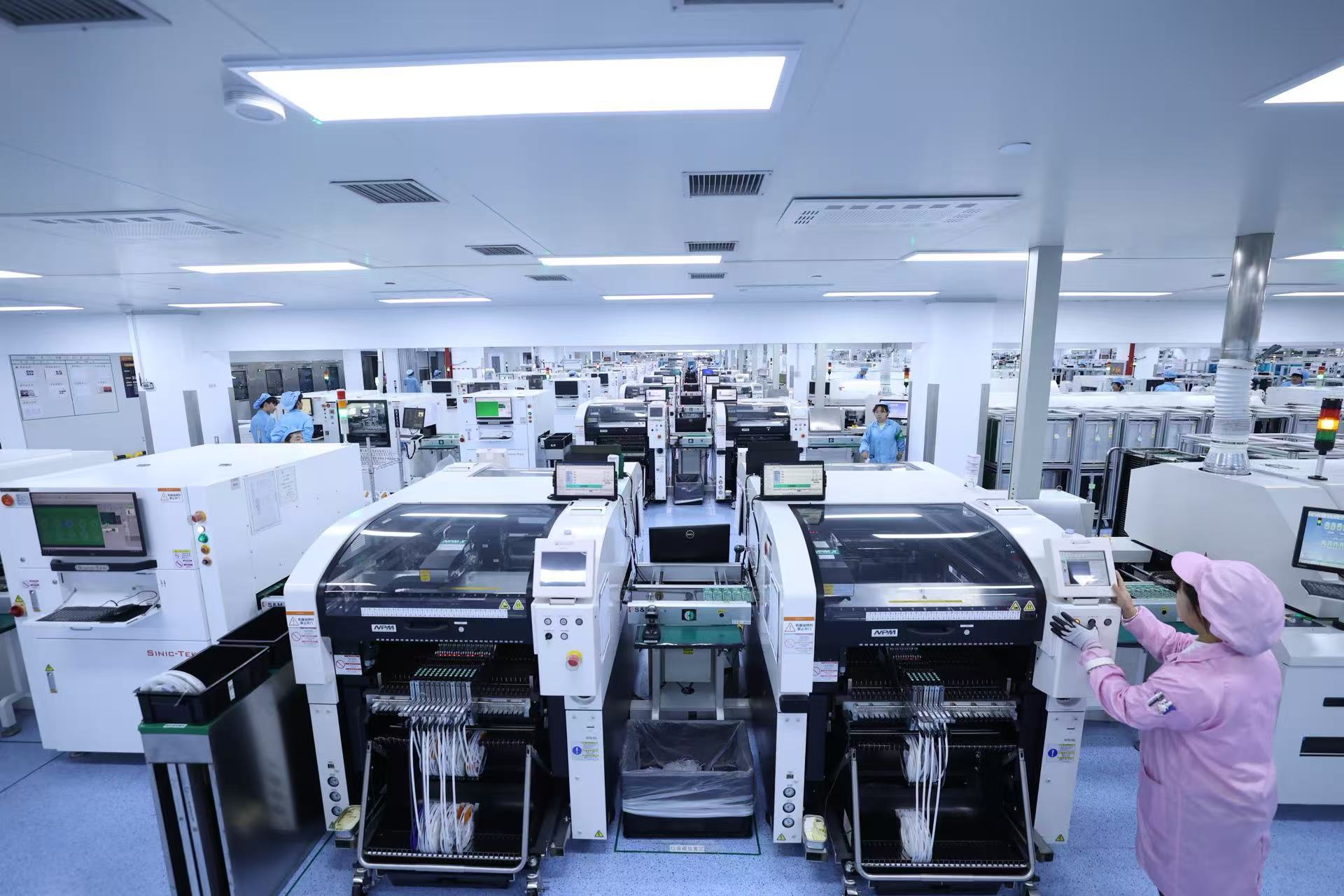
Two mechanisms are available. First, standard off-the-shelf models have an MOQ of 1 unit, so a single unit can be used for evaluation before a larger order is placed; customized OEM orders start at 20 units. Second, quality control before shipment covers raw-material incoming inspection, 100% full functional testing, aging testing, high-low temperature cycle testing and IP protection testing. Acceptance then combines factory acceptance testing with on-site installation and commissioning. Buyers who want to validate a configuration against their own site conditions can request a quotation or a sample unit through sales@solisstorage.com before the full rollout.
5. What are the typical lead times, delivery terms and payment structure?
For mass OEM orders, the lead time is 30–45 days; standard models are available as spot goods. Delivery terms are FOB Ningbo or EXW factory delivery. Payment is structured as a deposit, payment before or after shipment, and a final acceptance payment, with specific terms depending on customer tier, order size and regional policies. Because acceptance includes on-site installation and commissioning, schedule time for commissioning alongside transport and customs clearance when planning a regional deployment. Requesting a written delivery and acceptance schedule with the quotation is the simplest way to keep that timeline under control.
Conclusion: build the compliance file before the purchase order
Regional compliance for an energy storage system is a sequence, not a certificate. Profile the site, match the declared ratings — IP55 cabinet, IP66 inverter, C4-grade anti-corrosion coating, −25 °C to 55 °C and up to 4,000 m — and then collect scoped certificates such as AE 50712374 0001 and JPTUV-182135 with their issuing bodies, cited standards and validity dates. Finally, fix the acceptance criteria in the contract: factory acceptance testing, on-site commissioning, and the payment structure that follows them.
Buyers working on projects in Europe, Africa (including South Africa), the Middle East and Central Asia, or South Asia can request the certificate set, site-matching recommendation and commercial terms for their specific configuration before committing.

Next step for your project
Download the Solis global brochure for the product portfolio: Solis Global Brochure V3.9 (PDF)
Request a quotation, a sample unit or the compliance document set: sales@solisstorage.com · www.solisinverters.com · WhatsApp: +86 158-5815-3307
Ginlong (Solis) Technologies Co., Ltd. — energy storage systems for residential, C&I and utility-scale applications.
Have Questions or Need More Details?
Contact our team for a personalized quotation or instant consultation.
Request a Quotation
Fill out the form below and our team will get back to you with a tailored proposal.
WhatsApp Direct Chat
Prefer to chat in real-time? Message us on WhatsApp for instant assistance & quick answers.
- Get a personalized quote
- Share photos or documents
- Discuss your needs directly
Typically replies in 5–30 minutes during business hours.