
Warehouse Energy Storage: A 2026 Application Guide for Self-Consumption and Backup
A warehouse energy storage system is sized from the load the building must keep running during a grid event, not from its floor area. For most warehouse and light-industrial sites the sizing question splits into two separate calculations: how much energy is needed to shift solar generation or cut a demand peak, and how much power is needed to hold critical loads through an outage. The two answers rarely land on the same number, and the smaller of the two decides what the site actually has to buy.
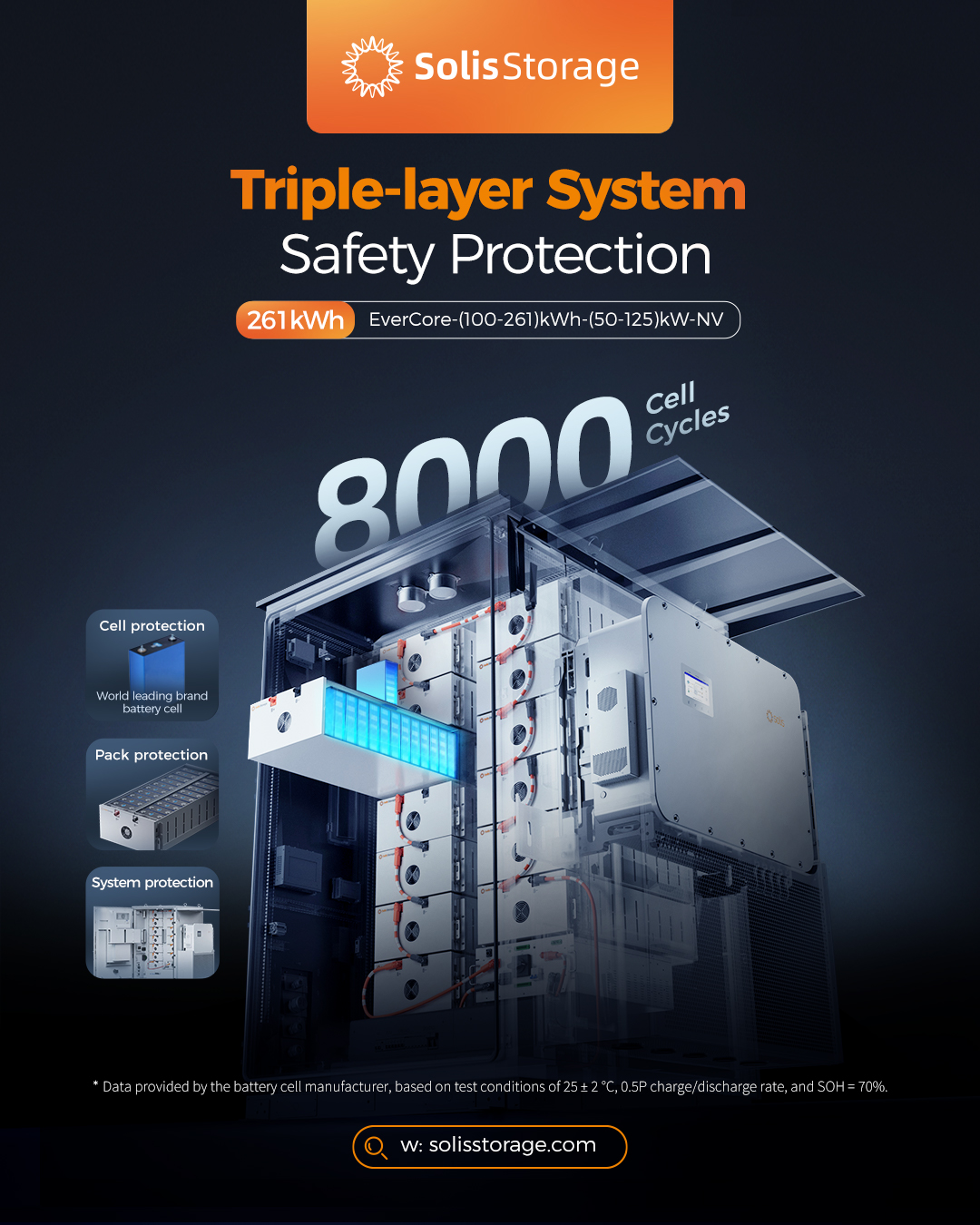
This guide works through that process for facility teams in the research and evaluation stage. It uses the EverCore ESS range from SolisStorage — 100.5 kWh, 120.6 kWh and 261.2 kWh battery cabinet ratings paired with 50 kW, 60 kW and 125 kW hybrid inverters — as the concrete reference, and it examines two recorded deployments: a 125 kW/261 kWh warehouse system in Denmark running self-consumption with sub-10-millisecond grid switching, and a 125 kW/522 kWh self-consumption and backup project in Thailand.
Why a warehouse is not a generic C&I site
Warehouse and light-industrial facilities combine three load characteristics that seldom appear together in an ordinary commercial building: a large but intermittent motor load from dock levellers, conveyors, forklift chargers and refrigeration compressors; a long low-load period outside operating hours; and a small set of loads whose interruption costs far more than the energy they consume — cold-chain temperature, warehouse management and security systems, and dock scheduling.
That combination changes what the storage system has to do. A bill-management case optimises discharge into expensive tariff windows, so annual energy throughput is the governing figure. A backup case optimises for power available at the instant of transfer, so the governing figures are the simultaneous critical-load kW and the required autonomy. One system can serve both, but only when the two calculations are made separately before a capacity is chosen. Sites that size on annual kWh consumption alone typically end up with either more energy than the tariff case can monetise, or less power than the critical load draws at the moment of transfer.
Warehouses also tend to be solar-ready. A large, unshaded roof means the storage decision is usually a solar-plus-storage decision rather than a standalone battery purchase, which is why PV coupling method and PV oversizing headroom belong in the evaluation alongside battery capacity.
Operating modes a warehouse system has to cover
EverCore ESS is specified for continuous 24/7 operation across grid-tied mode, off-grid mode and seamless backup switching, and a warehouse evaluation should confirm each of the four practical states rather than assume them.
- Grid-tied self-consumption. Rooftop PV charges the battery during the day and stored energy supplies the building instead of being exported. The relevant questions are how much midday generation would otherwise be exported, and whether the site's load profile absorbs it.
- Peak shaving and load shifting. The battery discharges when imported power is most expensive or when site demand approaches a contracted threshold. The relevant question is how sharp and how predictable the peak is.
- Off-grid operation. The system supplies the site without the grid, which matters for yards with weak or unreliable supply and for sites designed around a microgrid.
- Seamless backup switching. The system transfers from grid-tied to off-grid without dropping the load. EverCore performs this in under 10 milliseconds without an external static transfer switch, which is the threshold that matters for PLCs, refrigeration controllers, servers and dock scheduling terminals that reboot or fault on a longer interruption.
A fifth layer — VPP dispatch, demand response and ancillary service participation — sits on top of these operating states rather than replacing them, and it depends on the software layer discussed further below.
What the EverCore ESS architecture contributes to a warehouse case
EverCore ESS is the commercial and industrial energy storage system from SolisStorage, the energy storage subsidiary of Ginlong (Solis) Technologies Co., Ltd. Three design decisions in the platform carry direct consequences for a warehouse evaluation.
The AC and DC sides sit in separate enclosures
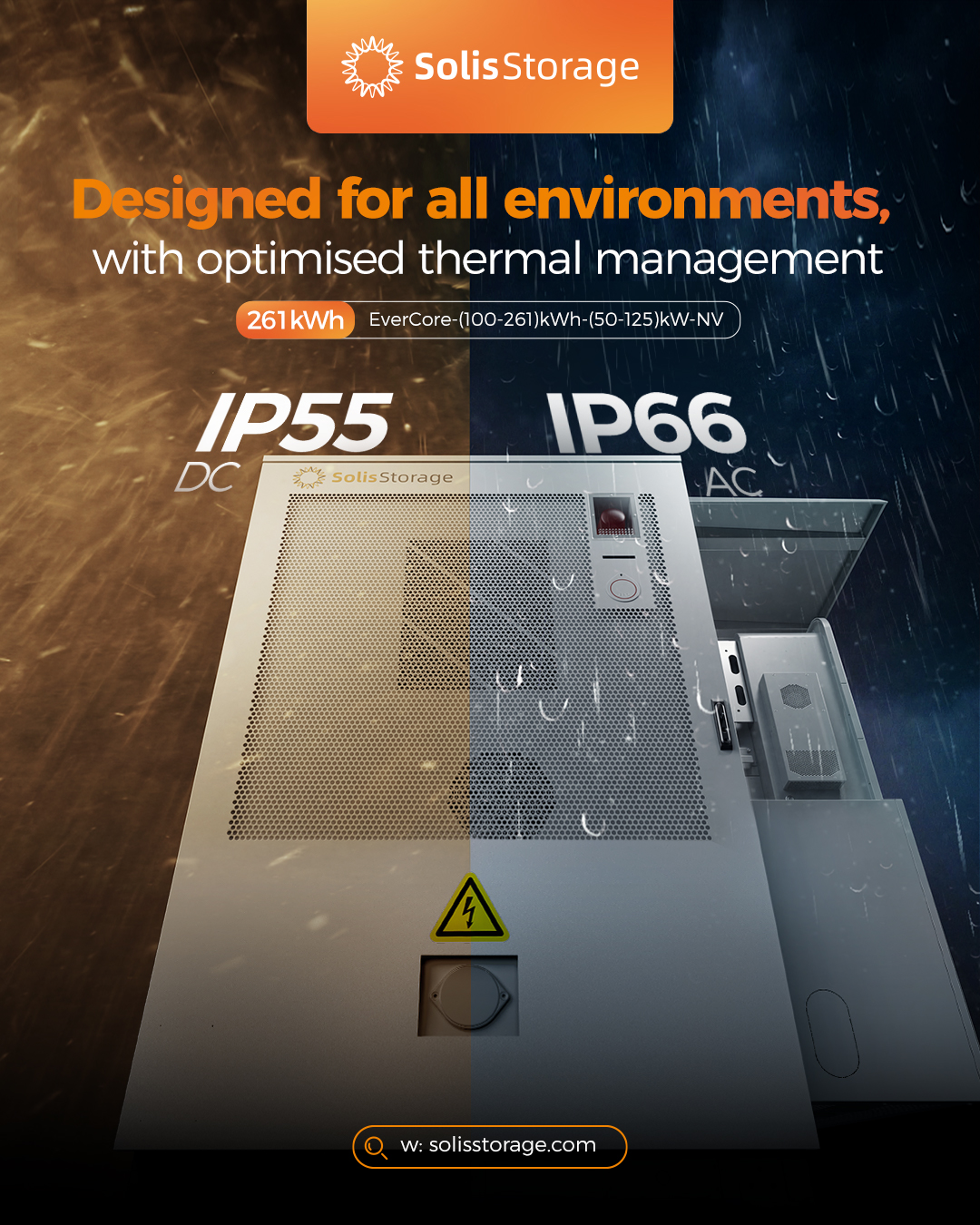
EverCore separates the hybrid energy storage inverter on the AC side from the battery cabinet on the DC side instead of integrating both in one cabinet. The thermal effect is stated in concrete terms: the external inverter dissipates roughly 6 kW of power-electronic heat directly to ambient air, leaving about 3.5 kW of electrochemical heat to be managed inside the battery cabinet. SolisStorage describes this as reaching temperature uniformity close to liquid-cooled designs while retaining air cooling, on the principle that reducing heat generation is more efficient than improving heat rejection.
The protection effect is more directly checkable. Because the inverter is an independent unit, it carries an IP66 rating — dust-tight and protected against powerful water jets — while the battery cabinet carries IP55. SolisStorage states that this separated protection design reduces the system's full-lifecycle failure rate by 50%, based on its own design analysis rather than a third-party test.
The expansion effect matters most for phased investment. A single inverter can connect up to six battery cabinets in parallel, so storage capacity grows on the DC side without a second inverter. SolisStorage estimates that this reduces system expansion cost by approximately 10% compared with adding inverter capacity alongside battery capacity.
One enclosure carries PCS, STS, PV inverter, protection and EMS
The 50–125 kW hybrid inverter integrates the power conversion system, static transfer switch, PV inverter, circuit breaker protection and energy management system into a single unit. For a warehouse bill of materials this removes three separate items: an external STS for backup transfer, an external PV inverter for the rooftop array, and an external grid cabinet for paralleling. Switching between grid-tied and off-grid takes under 10 milliseconds without an external STS; the PV input supports both DC and AC coupling so an existing string array can be retained; PV oversizing up to 200% is permitted; and up to six EverCore units can be paralleled for direct grid connection.
Control runs on a single central controller
Conventional C&I systems distribute control across separate processors for the battery management system, power conversion system, energy management system and static transfer switch. EverCore uses one central controller scheduling the whole system. Fewer communication links means fewer protocol-compatibility and latency risks, and fault location happens in one place rather than across several vendors' subsystems. For a facility team without an on-site power-electronics engineer, that difference surfaces mainly as troubleshooting time during the first year of operation.
Step 1: Build the load profile before choosing a capacity
The load profile is the input that decides everything downstream, and it is worth collecting properly before any configuration is discussed. A warehouse team should assemble the following.
- Interval demand data. Metered demand at the shortest interval the utility or the site's own meter provides, covering a full year so seasonal refrigeration and HVAC behaviour is visible.
- Peak demand and its timing. Not just the maximum kW but how often it recurs and how long it lasts, because a two-hour peak and a fifteen-minute spike call for different discharge strategies.
- A critical-load list in kW. Each load the site intends to keep running during an outage, recorded separately: refrigeration and cold rooms, WMS servers and network equipment, security and fire systems, selected lighting, dock controls.
- Motor and starting loads. Compressors, dock levellers and conveyor drives draw starting current well above their running current, and that surge has to be inside the inverter's capability.
- Outage history. Frequency, duration and cause over the previous two to three years, taken from the utility or the site log rather than from memory.
- PV capacity and generation shape. Existing array size, orientation and whether it is DC- or AC-coupled to the site distribution.
- Tariff structure. Energy charges by time band, demand charges, and any export limitation or compensation arrangement that changes the value of self-consumption.
- Planned load additions. Forklift charging expansion, EV bays, automation or a cold-store extension, since these change the profile within the asset's life.
Step 2: Size energy and power separately
Two numbers decide the configuration, and they are calculated in different ways.
Power is the sum of the critical loads that must run simultaneously, plus an allowance for motor starting. This figure selects the inverter rating. Energy is that critical power multiplied by the autonomy the site needs, which selects how much battery capacity sits behind the inverter. A site that needs four hours of refrigeration autonomy and a site that needs fifteen minutes to ride through a switching event can share the same inverter rating and require very different cabinet counts.
The EverCore range is built around a consistent energy-to-power relationship: 100.5 kWh with 50 kW, 120.6 kWh with 60 kW, and 261.2 kWh with 125 kW. Expressed as a nominal ratio of rated energy to rated inverter power, the three pairings come to approximately 2.0 hours, 2.0 hours and 2.1 hours respectively (calculated as rated kWh ÷ rated kW). That ratio is a nominal figure only — usable energy at the load is lower once depth-of-discharge limits and conversion losses are applied — but it is a useful first filter, because it tells a facility team what kind of duty the range is shaped for.
Reading the ratio correctly. A roughly two-hour nominal ratio suits peak shaving, self-consumption shifting and short-duration outage ride-through. It does not by itself deliver multi-hour refrigeration autonomy. Where autonomy is the binding requirement, the correct move is to add battery cabinets on the same inverter rather than to specify a larger inverter, since one EverCore inverter can serve up to six cabinets in parallel.
The LFP cells behind these ratings are 314 Ah cells with a stated cycle life of 8,000 cycles at 0.5C charge-discharge with remaining capacity of at least 70%. SolisStorage positions that at roughly 14 years of economic life at 500 cycles per year, extending to about 16 years against the 7,000-cycle figure it cites for conventional 280 Ah cells. For a warehouse running one charge-discharge cycle per working day, cycle life is unlikely to be the constraint; for a site cycling twice daily on arbitrage, it becomes central to the business case.
Step 3: Choose the operating mode and the switching requirement
Mode selection follows from which calculation binds. If bill savings dominate and the grid is stable, grid-tied self-consumption with peak shaving is the primary mode and backup becomes a secondary benefit. If outages are frequent or costly, backup is primary and the transfer time becomes a specification item rather than a feature — the sub-10-millisecond transfer is only valuable if the loads that need it are actually wired behind the backup bus, which is a distribution design question, not a battery question. If the yard has no reliable grid connection, off-grid becomes the design basis and the autonomy calculation governs. If revenue stacking is intended, the mode is partly set by the aggregator or VPP rather than by the site.
This is also the stage to confirm that mode changes can be scheduled rather than performed manually. A warehouse that shaves peaks on weekday afternoons and preserves charge on weekends needs time-based dispatch in the energy management system, not an operator with a laptop.
Step 4: Confirm siting, protection and thermal envelope
Warehouse storage usually lands outdoors, against a wall, in a yard or beside a loading dock, so the enclosure ratings do real work. EverCore is rated from -25°C to 55°C and for altitudes up to 4,000 m, with IP66 on the inverter and IP55 on the battery cabinet — a combination intended for outdoor industrial sites, coastal air and high-altitude yards. The platform is air-cooled, using three independent air ducts, a patented diversion duct for the inverter and Coanda-effect airflow attachment across battery pack surfaces, which SolisStorage reports as a 30% improvement in heat dissipation against conventional air cooling.
Safety provisions that a facility insurer will ask about include a 15-layer protection scheme spanning cell, pack and system level, thermal insulation rated to 1,000°C between packs to block lateral propagation, and three-stage fire suppression covering pack-level aerosol, cabinet-level aerosol and a firefighting water channel. Honeywell industrial flammable-gas detectors are specified as calibration-free for 10 years, and Minebea cooling fans as maintenance-free for 10 years.
Maintenance access deserves an explicit check during evaluation. SolisStorage's lifecycle comparison against liquid-cooled C&I systems estimates about €9,500 per unit saved over the project lifecycle — €2,500 from eliminating coolant replacement, €1,500 from simpler PCS replacement, €1,500 from simpler pack replacement and €4,000 from reduced routine inspection complexity. Those are company estimates rather than audited field data, but the direction is consistent with the architecture: an air-cooled system with no coolant loop has fewer scheduled service interventions to schedule around warehouse operating hours.
Step 5: Plan the monitoring and market layer
The matched equipment set for the warehouse and industrial-outdoor scenario is the LFP battery, a smart energy management platform and monitoring sensors — and the platform is where the commercial upside sits. The Solis AI cloud platform is deployed at more than 5,500 energy storage stations worldwide and integrates Nordpool wholesale price data with Flatpeak retail price data to build a multi-source price forecast model for charge-discharge scheduling.
Ecosystem openness matters in European markets where C&I storage revenue has moved beyond simple peak-valley arbitrage into ancillary services, demand response and VPP dispatch. EverCore has been connected, or is in the process of connecting, with 102 third-party VPP and EMS operators across 11 European countries, including the Kraken platform under Octopus Energy in the UK, Check Watt in the Nordic market, and multiple local EMS providers in the German-speaking region and Benelux. For a warehouse operator the practical step is to decide who owns dispatch — the site's own EMS or an aggregator — and to confirm protocol support before signing an aggregation contract, not after.
Two reference deployments: Denmark and Thailand
The two recorded projects bracket the range and show how the same inverter platform serves different objectives.
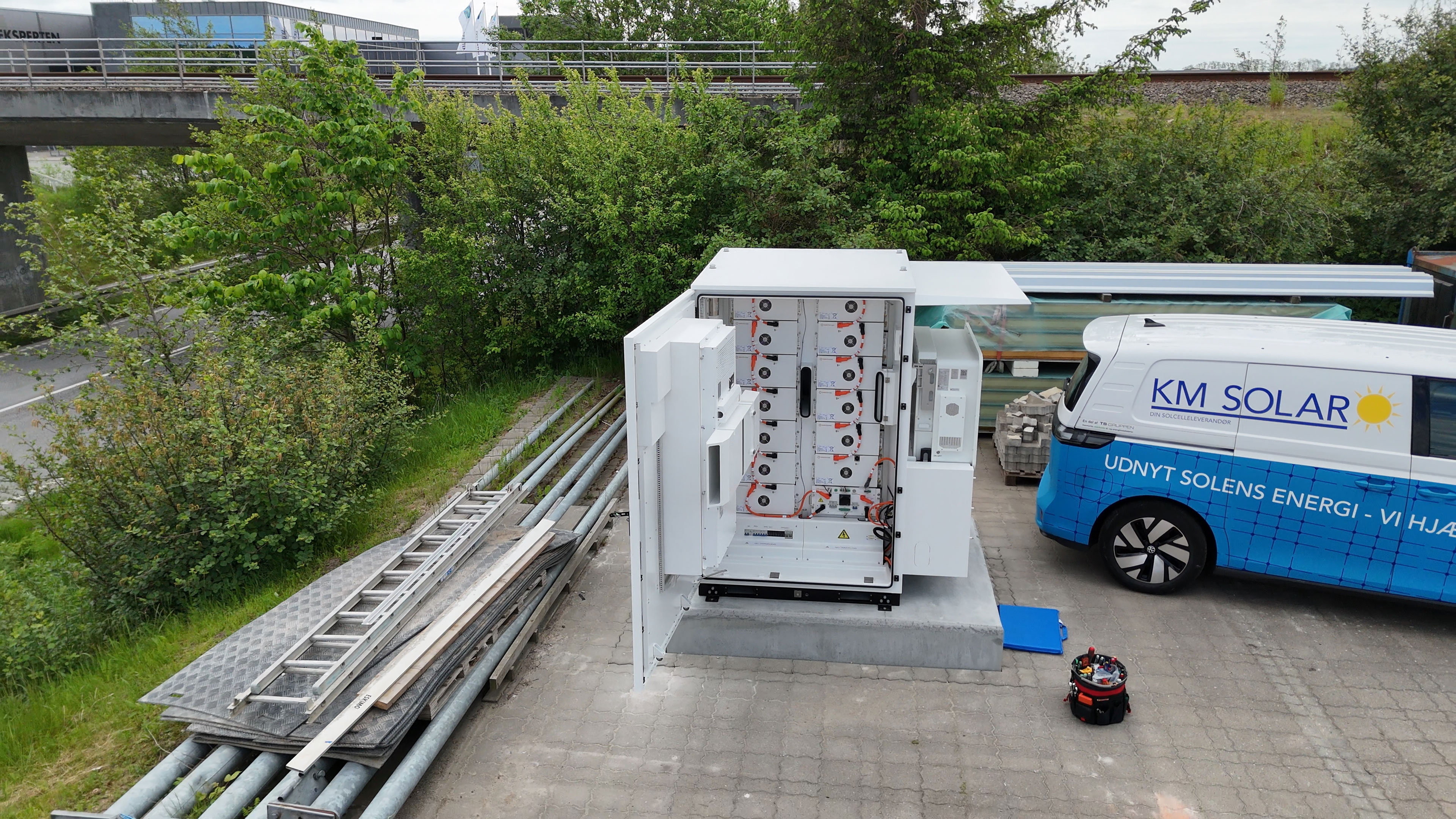
Denmark: 125 kW/261 kWh for warehouse self-consumption
A Danish warehouse operated by a C&I industrial end user runs a 125 kW/261 kWh EverCore system for self-consumption of on-site generation, recorded with a 20-year project duration and described as delivering savings on electricity bills. The configuration corresponds to the largest single EverCore rating — the 261.2 kWh cabinet with the 125 kW inverter. Its distinguishing feature is the sub-10-millisecond switch between on-grid and off-grid operation, which prevents interruptions to the facility rather than merely reducing import cost. The case record does not quantify the savings.
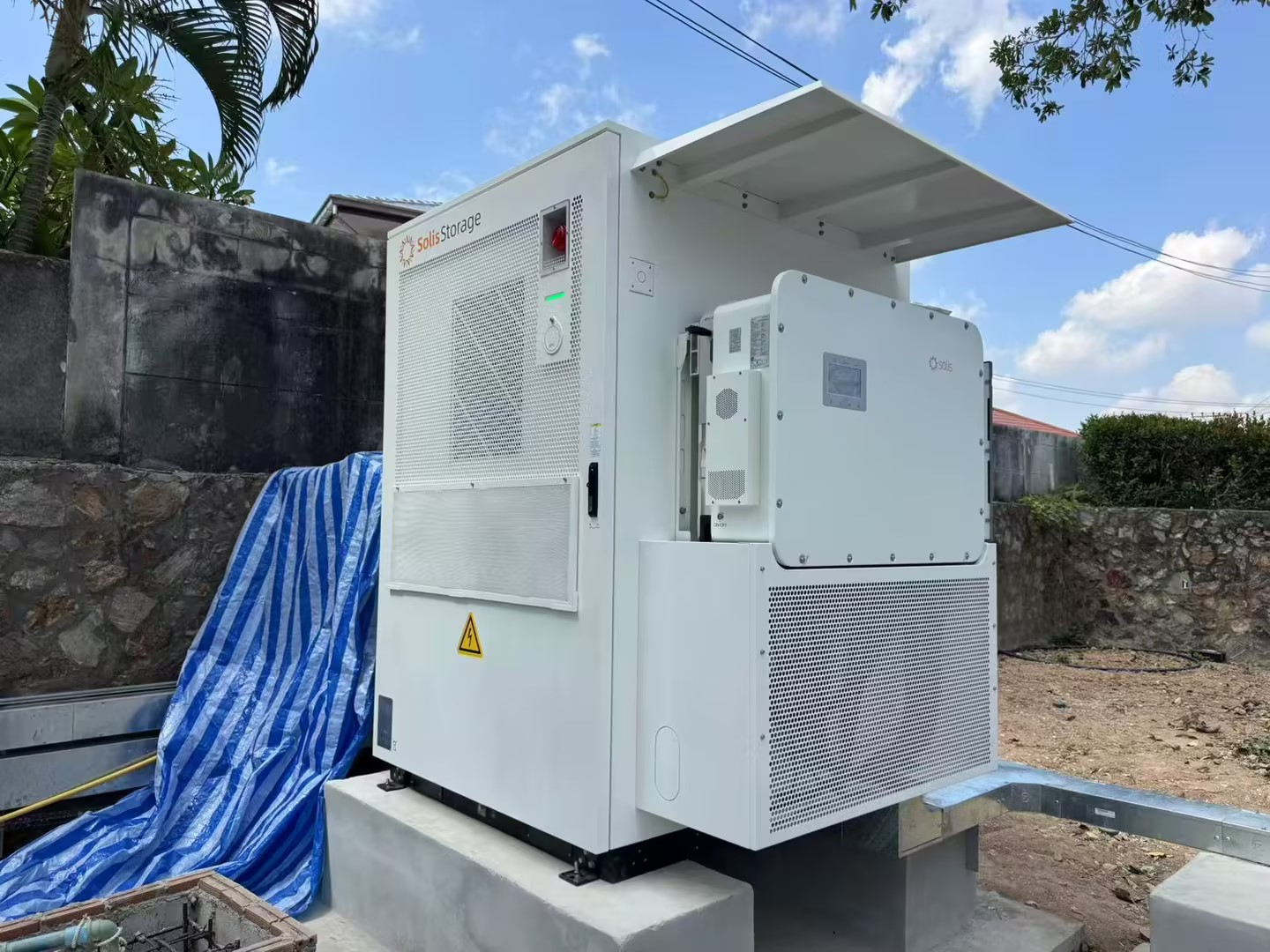
Thailand: 125 kW/522 kWh for self-consumption plus backup
A second project owner in Thailand operates a 125 kW/522 kWh system as a combined self-use and backup installation, recorded with a 20-year duration, stable operation and savings on electricity bills. The 522 kWh figure is approximately twice the 261.2 kWh cabinet rating, which is consistent with one 125 kW inverter serving two battery cabinets in parallel — the DC-side expansion path EverCore is designed around. That reading is a calculation from the recorded figures rather than a disclosed bill of materials, and it is worth confirming with the supplier if the exact cabinet count matters to your own layout. The case record again describes the saving qualitatively.
How to use these cases in an internal business case. Both records establish configuration, application and outcome direction — self-consumption, backup continuity and bill savings over a 20-year project duration. Neither provides a quantified saving, tariff structure or outage count. Treat them as evidence that the architecture has been deployed in warehouse-type applications, and request measured performance data from comparable sites for the financial model.
Configuration comparison
The table below compares the three EverCore configurations on published ratings only. The sizing-implication column is analytical and assumes a warehouse application of the kind described above.
| Configuration | Rated energy capacity | Inverter power rating | Nominal energy-to-power ratio (calculated) | Sizing implication |
|---|---|---|---|---|
| EverCore — entry | 100.5 kWh | 50 kW | ≈ 2.0 hours | Smaller yards, single critical-load group, self-consumption with moderate peak shaving |
| EverCore — mid | 120.6 kWh | 60 kW | ≈ 2.0 hours | Sites needing headroom above the entry rating at the same duty shape |
| EverCore — large | 261.2 kWh | 125 kW | ≈ 2.1 hours | Full-building backup bus, heavier motor load, or a base for DC-side expansion to six cabinets |
Common to all three: EVE LFP cells rated 3.2 V / 314 Ah, 8,000-cycle cell life, IP55 battery cabinet and IP66 inverter, air cooling, and a hybrid inverter integrating PCS, STS, PV inverter, circuit breaker protection and EMS. The recorded Danish project uses the 125 kW/261 kWh configuration; the recorded Thai project uses 125 kW/522 kWh.
What this guide cannot settle
An application guide that claims to answer everything is not being useful. Several items sit outside the available evidence and should be resolved in the technical offer rather than assumed.
- Quantified savings for your tariff. Neither reference project publishes a saving figure, a tariff structure or an export arrangement, so no saving can be projected from them.
- Warranty period and terms by market. The 20-year figure in both case records is project duration, not a warranty statement. Warranty length, degradation threshold and exclusions must come from the contract.
- Product-level certification for your country. A standard's scope is not proof that a specific model is listed to it. Ask for the certificate itself, with the model number on it.
- Acoustic level, weight and footprint. These constrain yard layout and slab design and should be requested before civil works are scoped.
- The exact cabinet count behind the Thai 522 kWh figure. The doubling of the 261.2 kWh rating is arithmetic, not a disclosed bill of materials.
Acceptance and purchasing terms to confirm before deployment
The commercial terms below are the ones that most often surface late in a warehouse project, and they are worth writing into the specification rather than negotiating after the equipment is ordered.
Order quantity, lead time and customisation
SolisStorage quotes a minimum order quantity of one unit for standard off-the-shelf models and 20 units for customised OEM orders, with lead times of 30–45 days for mass OEM orders and availability from stock for standard models. Customisation options cover logo, outer packaging, software interface, regional voltage standard, communication protocol and function parameters — relevant where a site's EMS or an aggregator's platform uses a specific protocol.
Quality evidence
Quality control covers raw material incoming inspection, aging test, high-low temperature cycle test and IP protection test, with 100% full functional testing before shipment. Ask for the test record for the specific unit serial numbers being delivered, not a generic certificate of conformity.
After-sales structure
Support is organised as 24/7 global remote technical support, 27 local overseas service centres, 48-hour on-site fault handling with whole-machine replacement guarantee, and long-term spare parts supply. For a warehouse where a multi-day outage is unacceptable, confirm the response time that applies to your region in writing, and confirm the spare-parts commitment period against the asset's expected service life. Over-the-air remote upgrades are supported for the system software.
Compliance checks
For North American sites, ANSI/CAN/UL 9540:2023 covers energy storage systems intended to receive and store energy for delivery to loads or the local power system, and includes requirements for both residential and non-residential installations. That describes the standard's scope, not any specific product's listing status. Confirm the product-level certificate, the local authority's fire and installation requirements, and the utility's interconnection requirements separately — they are three different approvals.
Acceptance test items to write into the contract
- A rated capacity test at agreed conditions, with the discharge rate, temperature and end-of-discharge criterion stated.
- A transfer-time verification against the sub-10-millisecond switching claim, measured at the backup bus with the critical loads connected.
- Verification of the IP55 cabinet and IP66 inverter ratings against the delivered unit documentation.
- An EMS or VPP integration test using the protocol the site or aggregator will actually use.
- A commissioning record covering the load profile used for sizing, the configured operating modes and the dispatch schedule.
- A spare-parts list and a documented escalation path for the 48-hour on-site commitment.
Frequently asked questions
What compliance approvals should a warehouse confirm before ordering an energy storage system?
Three separate approvals are usually involved, and they should be confirmed independently. The first is the product-level safety certification for the specific model and the market; ANSI/CAN/UL 9540:2023 is the relevant scope reference for the United States and Canada and covers energy storage systems used in residential and non-residential installations, but the standard's scope is not evidence that a given model is listed. The second is the local authority's installation and fire requirements for the proposed location. The third is the utility's interconnection approval for a grid-tied system. Ask the supplier for certificates carrying the exact model number, then confirm the site-specific requirements with the authority having jurisdiction.
Can one EverCore inverter handle self-consumption and backup for the same warehouse?
Yes, and that is the configuration the platform is built around. The 50–125 kW hybrid inverter integrates the power conversion system, static transfer switch, PV inverter, circuit breaker protection and energy management system in one unit, which means a single unit can run grid-tied self-consumption, switch to off-grid in under 10 milliseconds without an external static transfer switch, and support both DC- and AC-coupled PV with oversizing up to 200%. Whether the loads you care about are actually protected depends on how the distribution board is split between the backup bus and the non-backed bus — a wiring decision that must be made with the installing electrician.
What drives the cost difference between the 100.5, 120.6 and 261.2 kWh options?
The difference follows from capacity and inverter rating rather than from a different technology platform: all three use the same EVE LFP 3.2 V / 314 Ah cells with 8,000-cycle life, the same IP55 cabinet and IP66 inverter protection split, and the same hybrid inverter architecture. Moving up the range buys more energy and more power simultaneously, because the pairings run at a consistent nominal ratio of about two hours. A separate and often larger cost element is the expansion path: because one inverter can serve up to six battery cabinets in parallel, a phased build-out avoids a second inverter purchase, which SolisStorage estimates reduces expansion cost by approximately 10%. Lifecycle O&M is the third element — SolisStorage estimates roughly €9,500 per unit saved over the project life against liquid-cooled alternatives, driven by the absence of a coolant loop and simplified PCS and pack replacement.
Can a warehouse start with one unit and expand later?
Yes — phased expansion is one of the practical advantages of the separated architecture. The minimum order quantity is one unit for standard off-the-shelf models, and capacity grows on the DC side by adding battery cabinets to the existing inverter, up to six cabinets per inverter and up to six EverCore units in parallel for direct grid connection. The planning implication is that the initial site layout, slab and cable routes should be sized for the intended end state even if only one cabinet is installed at first, because retrofitting space around an operating system is more expensive than reserving it.
What lead time should a warehouse project plan for?
Standard off-the-shelf models are quoted as available from stock, while mass OEM orders carry a lead time of 30–45 days. The realistic project timeline also has to include the items that sit outside the equipment lead time: utility interconnection approval, the authority's installation sign-off, civil works for the slab or enclosure position, and the commissioning window. On the service side, support is structured as 24/7 global remote technical support with 27 local overseas service centres and 48-hour on-site fault handling with whole-machine replacement guarantee — response times that are worth confirming for your own region. If you are sizing a first warehouse project, a configuration review against your interval data and a site-specific quotation can be requested from the SolisStorage sales team at sales@solisstorage.com.
Conclusion
Warehouse energy storage rewards a disciplined sequence: profile the load, calculate power and energy separately, then match the result to a configuration whose energy-to-power shape fits the duty. The EverCore platform makes that match relatively legible, because its three ratings run at a consistent nominal ratio of about two hours, its inverter carries the transfer switch, PV inverter and protection that would otherwise be separate purchases, and its DC side expands up to six cabinets on one inverter for sites that grow. The Danish 125 kW/261 kWh warehouse and the Thai 125 kW/522 kWh self-consumption and backup installation show the two ends of that logic in operation, one prioritising continuity through sub-10-millisecond switching and the other combining self-use with backup at double the cabinet capacity.
The discipline that protects the investment is less technical: confirm the certification for your market, the warranty terms for your contract, the acceptance tests for your backup bus, and the service response time for your region before signing. Those four items decide whether the installed system performs as specified in year eight, not just on the commissioning day.
Have Questions or Need More Details?
Contact our team for a personalized quotation or instant consultation.
Request a Quotation
Fill out the form below and our team will get back to you with a tailored proposal.
WhatsApp Direct Chat
Prefer to chat in real-time? Message us on WhatsApp for instant assistance & quick answers.
- Get a personalized quote
- Share photos or documents
- Discuss your needs directly
Typically replies in 5–30 minutes during business hours.