
Decoding Digital Label Printer Specs: Tech Parameters & Quality Impact
Decoding Digital Label Printer Specs: Technical Parameters and Manufacturing Quality Explained
When investing in an industrial digital label printer, procurement teams are often confronted with a dense datasheet full of numbers: print speed in m/min, printhead type, ink configuration, curing power, media width, and more. But what do these numbers actually mean for your daily production? And perhaps more critically, how does the manufacturing process of the printer itself influence its long-term reliability and print quality?
This guide is written for label converters, packaging buyers, and operations managers who want to move beyond specifications and understand the real-world implications of each parameter—and how a printer's build quality, factory process, and quality control determine whether those specs are achieved consistently.
Problem Definition: Why Parameters Alone Can Mislead Buyers
Many equipment vendors advertise impressive headline numbers—120 m/min print speed, 1200 dpi resolution, wide format. But without understanding the interplay between components, the actual usable throughput may be far lower. Common pain points include:
- Speed vs. quality trade-off: Maximum speed may drop significantly when printing high-density graphics or variable data.
- Material compatibility gaps: A printer that works well on coated paper may fail on PET or BOPP films without proper surface treatment.
- Ink adhesion issues: UV ink performance depends on curing intensity, lamp life, and substrate preparation.
- Feeding and rewinding instability: Poor tension control leads to misregistration, wrinkling, and wasted material.
Furthermore, even the best design on paper will disappoint if the manufacturer's assembly, testing, and quality assurance processes are inadequate. Understanding how a printer is built is just as important as understanding its specs.
Industry Background: The Shift to Digital Label Printing
The global label printing market is rapidly transitioning from analog (flexo, letterpress) to digital due to demand for shorter runs, faster time-to-market, variable data (QR codes, serial numbers), and multi-SKU orders. According to industry estimates, digital label printing now accounts for more than 20% of total label volume and is growing at 8–10% annually.
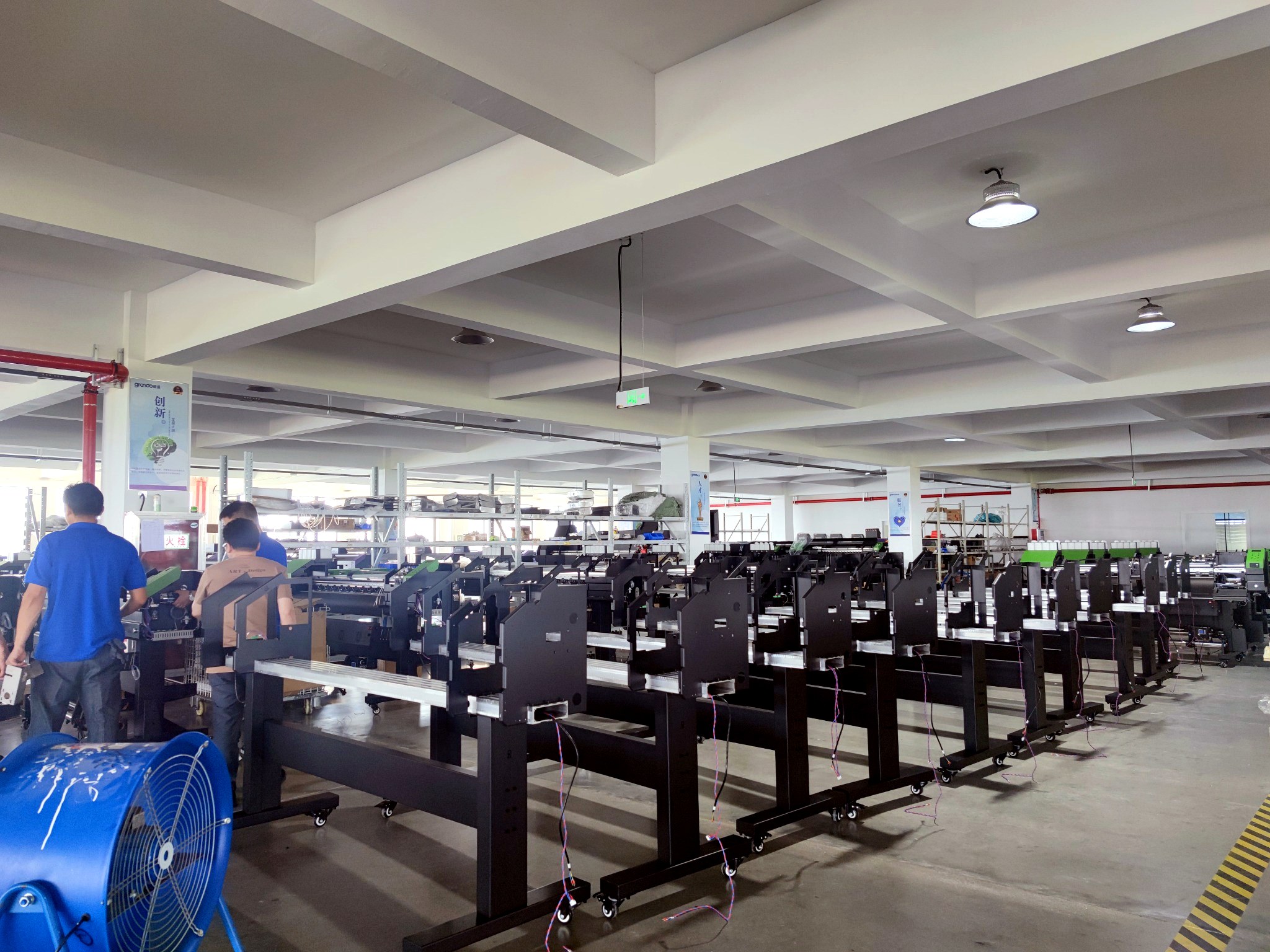
Manufacturers like Grandoprint (Nanjing Grando Digital Technology Co., Ltd.), with over 16 years of equipment manufacturing experience and a 20,000㎡ dual-base factory in Nanjing and Shanghai, have focused on building digital label printers that bridge the gap between speed, quality, and production flexibility. Their GR350S series, equipped with Epson S3200-U1/U3 printheads and UV inkjet technology, represents a typical high-speed, roll-to-roll digital label press.
Detailed Solution: How to Read Technical Parameters and Assess Manufacturing Quality
Part 1: Key Technical Parameters Decoded
Below we break down the most critical specs and what they mean for your production floor.
1. Printhead Technology: The Heart of the Printer
The printhead determines resolution, droplet placement accuracy, and reliability. The GR350S uses Epson S3200-U1/U3 piezoelectric printheads, known for high precision and consistent jetting. Piezoelectric technology allows precise control of ink droplet size and placement, essential for sharp text, smooth gradients, and readable barcodes.
2. Printing Speed: Not All Speeds Are Equal
Speed is quoted in meters per minute (m/min). The GR350S ranges from 20 to 100 m/min. However, the effective speed depends on:
- Print mode (draft vs. high-quality)
- Number of colors used (CMYK vs. CMYK+White+Varnish)
- Data complexity (variable data requires processing bandwidth)
For short-run, multi-SKU jobs, a moderate speed with quick job changeover is more valuable than raw top speed.
3. Printing Width and Media Handling
The GR350S accepts media widths from 120 to 360 mm and prints up to 350 mm. The roll-to-roll system supports unwinding diameter up to 700 mm. This wide format is ideal for both small labels and large packaging decals. Key features include intelligent deviation correction and a label sensor for mark tracking, ensuring accurate registration across long runs.
4. Ink Configuration: More Than CMYK
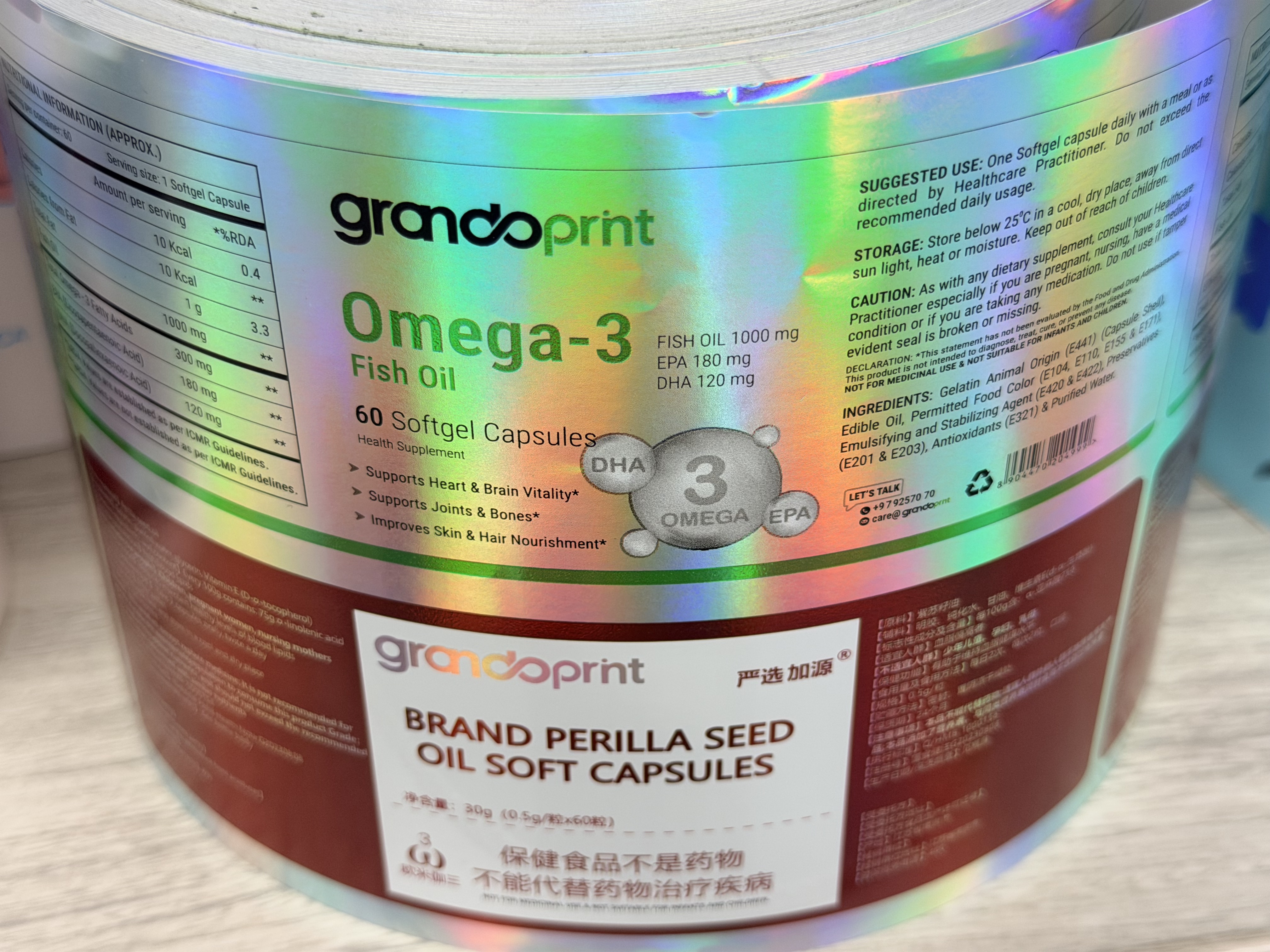
Modern digital label printers offer optional white ink (W) and varnish. The GR350S supports CMYKW + Varnish with optional spot varnish enhancement. White ink enables printing on transparent or colored substrates (e.g., clear PET, metallic films). Varnish adds gloss, protection, or tactile effects, crucial for premium cosmetic labels.
5. UV Curing: Dual Systems for Stability
The GR350S uses dual UV curing modules—one after each color pass ensures instant drying, preventing ink spread and enabling high-speed output. Proper curing also affects ink adhesion and scratch resistance. The printer includes corona treatment support for difficult film materials (PE, PET, BOPP, PP, OPP) to enhance ink adhesion.
6. Variable Data Processing
The GR350S supports direct database printing without batch PDF conversion. This means you can print unique QR codes, barcodes, serial numbers, and text on every label in a single continuous run—ideal for anti-counterfeit labels, logistics, and traceability.
| Parameter | GR350S Specification | Why It Matters |
|---|---|---|
| Printhead | Epson S3200-U1 / U3 | High precision, long life, reliable jetting |
| Print Speed | 20–100 m/min | Flexible for short-run and medium-run production |
| Ink | CMYKW + Varnish | Enables transparent film printing, gloss effects |
| Media Width | 120–360 mm | Wide format for diverse label sizes |
| Unwinding Diameter | Max. 700 mm | Longer runs with fewer roll changes |
| Power Consumption | 10 kW | Industrial-grade energy efficiency |
| Variable Data | Direct database, no PDF batch | Real-time unique code printing |
Part 2: How Manufacturing Process Affects Print Quality and Reliability
Even a perfectly designed print engine can fail if the printer's frame, rollers, tension control, or curing system are poorly manufactured. Here's how a factory's process quality translates into real-world performance.
A. Structural Integrity and Material Selection
The GR350S uses a reinforced industrial metal frame and sheet-metal cabinet. A rigid frame minimizes vibration during high-speed printing, which is essential for maintaining dot placement accuracy. Precision metal rollers and paper roll shafts (the subject of Grando's patent: Utility Model Patent for Paper Roll Shaft for Industrial Printer, Patent No. ZL 2024 2 1965691.4) ensure consistent feeding and rewinding tension.
B. Assembly and Quality Control
Grando operates a 20,000㎡ factory with over 500 employees. Their quality control includes:
- Inline inspection via sensors and vision systems for real-time defect detection
- Professional CIS-based high-resolution defect detection system
- 100% functional testing before delivery
Each GR350S unit undergoes a pre-shipment test to verify print quality, speed, and stability. This is standard procedure, and buyers can request test reports.
C. Certifications and Intellectual Property
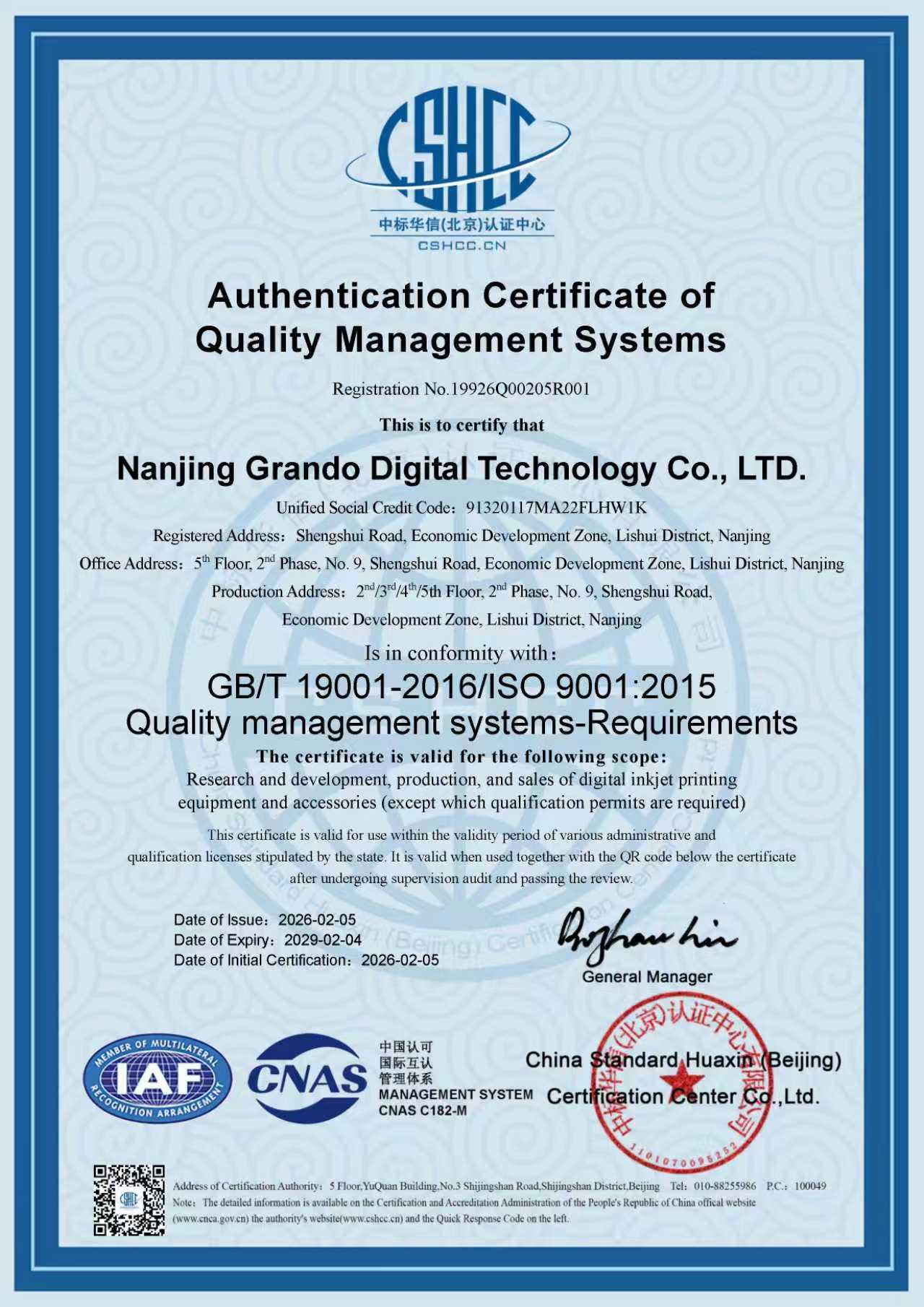
Grandoprint holds ISO 9001:2015 certification (Cert. No. 19926Q00205R001), covering R&D, production, and sales of digital inkjet printing equipment. The company also owns multiple patents, including:
- Anti-offset correction device for UV flatbed printers (Patent ZL 2023 2 3477531.3)
- Direct inkjet printer patent (ZL 2023 2 1391352.5)
- Printer with anti-collision function (ZL 2023 2 1184513.3)
- Positioning device for UV printer (ZL 2023 2 0352561.2)
These patents demonstrate the manufacturer's commitment to solving real production problems like misregistration, printhead damage, and material positioning.
D. After-Sales Support and Service Capability
A printer's long-term quality also depends on the manufacturer's service infrastructure. Grando provides:
- 1-year warranty
- On-site installation and commissioning
- Operator training
- Remote monitoring and diagnostics
- Original spare parts supply with fast response
Their OEM/ODM capability (monthly capacity 100 units, MOQ 1 unit) allows customization of printhead configuration, ink, voltage, software language, and branding.
Step-by-Step: How to Evaluate a Digital Label Printer's Parameters and Factory Quality
- Define your application: What substrates do you use (paper, film, synthetic)? What is the average run length? Do you need variable data?
- Compare speed vs. quality: Request test prints at different speeds on your actual materials. Check for sharpness, color registration, and ink adhesion.
- Inspect the mechanical build: Ask about frame material, roller precision, and tension control patents. Visit the factory or request a virtual tour.
- Verify certifications: ISO 9001 is a minimum. Patents indicate R&D focus. CE, RoHS compliance are important for export.
- Ask about pre-delivery testing: A reliable manufacturer will offer a pre-shipment test and share the report.
- Evaluate service and spare parts: Confirm warranty terms, remote support availability, and lead times for consumables.
Use Cases: Real-World Performance
Case 1: Label Printing Factory in Brazil and Italy
A customer sourced 20 units of the GR350S for label printing and packaging production. After one year of operation, they reported stable running with high printing consistency and a 30% reduction in production setup time. The printer's variable data capability allowed them to serve multi-SKU orders with zero plate-making.
Case 2: Cosmetic Label Manufacturer
The GR350S's spot varnish and white ink options enabled a cosmetics brand to produce premium labels on clear PET with high-gloss accents, eliminating the need for an additional varnish pass. The corona treatment module ensured adhesion on difficult plastic substrates.
Case 3: Food & Beverage Short-Run Producer
A food packaging converter used the GR350S to print QR codes and nutritional labels directly from their database, reducing artwork changeover time from 30 minutes (flexo) to under 2 minutes.
Frequently Asked Questions (FAQ)
Q: How do I know if a digital label printer will be stable for continuous production?
A: Look for a robust frame, proven tension control system (like intelligent deviation correction), dual UV curing, and a manufacturer with a track record of delivering hundreds of units. Request references and case studies.
Q: What maintenance is required for a UV inkjet label printer?
A: Regular printhead cleaning, ink system maintenance, and roller cleaning. Grando provides training and a detailed maintenance schedule. The GR350S includes a user-friendly control system with diagnostic alerts.
Q: Can I print on unsupported materials like PE or PP?
A: The GR350S supports a corona treatment option to improve ink adhesion on non-porous films. Always test your materials before ordering. Grando offers sample testing services.
Q: What is the typical lead time and payment terms?
A: Lead time is approximately 60 days after order confirmation. Payment is 30% deposit by T/T, 70% before delivery. MOQ is 1 unit.
Conclusion
Purchasing a digital label printer is a long-term investment. While technical parameters provide the baseline, the true differentiator lies in the manufacturing quality—how the machine is built, tested, and supported. A factory like Nanjing Grando Digital Technology Co., Ltd. (Grandoprint) that combines ISO-certified processes, patented innovations, and a comprehensive service network gives buyers confidence that the machine will deliver on its promise day after day.
To make an informed decision, download the company brochure and product catalog below, or contact their technical team for a live test on your labels.
Get the Full Product Brochure
Download the official Grandoprint product catalog for complete specifications, sample prints, and case studies.
📄 Download Brochure (PDF)Contact: Julia Wu | Tell/WhatsApp: +8613805155194 | Email: juliawu@grando-dg.com | No.9 Shengshui Road, Lishui Development Dist, Nanjing City, China