
Digital Label Printer Ownership FAQ: Support, Service, and the Long Run
The purchase order settles the equipment choice. It does not settle the ownership. What follows is a sequence of practical questions: where the press will sit and what the building must supply, what “accepted” means in writing, how a shift actually runs across the speed and width range, and what can be added two years later when the order book changes. This FAQ answers those post-decision questions against the documented specification of the Grandoprint GR350S roll-to-roll UV inkjet digital label printer.
Grandoprint is the brand of Nanjing Grando Digital Technology Co., Ltd., a digital inkjet equipment manufacturer founded in 2010 with dual bases in Nanjing and Shanghai covering more than 20,000 ㎡, over 500 employees and a 30-person R&D team. Its label programme centres on roll-to-roll UV inkjet presses for short-run, multi-SKU and variable-data work, and the company states that it supports buyers through equipment selection, sample testing, installation, training and long-term technical support.
Every figure below is either a documented specification or a stated commercial term: 380 V rated voltage, 10 kW power consumption, a 2850 × 1400 × 2040 mm footprint, 20–100 m/min printing speed and a 110–350 mm printing width. Where an answer depends on your own building, artwork or substrate, this article says so instead of filling the gap with a plausible number.
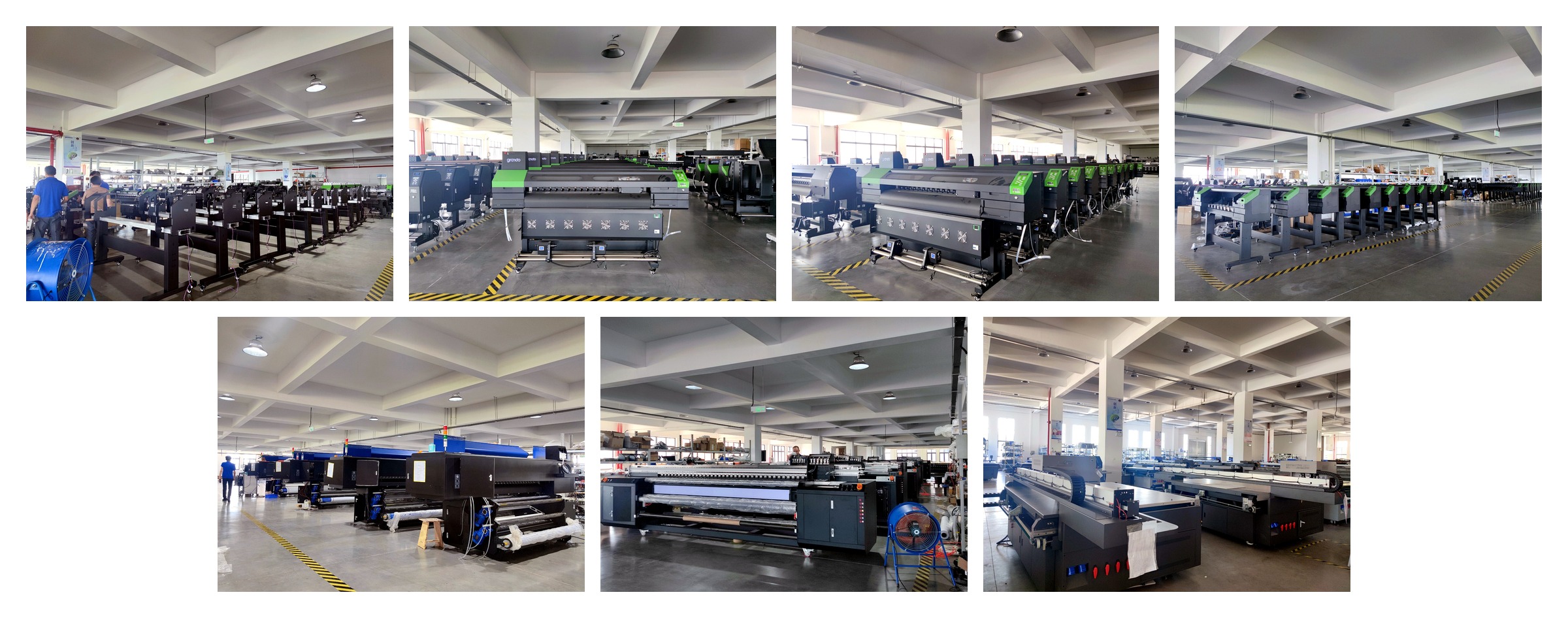
Grandoprint digital label printer manufacturing base — assembly, commissioning and testing before delivery.
What Ownership Planning Actually Has to Cover
Post-purchase work on an industrial digital label printer divides into four windows, and each one belongs to a different person in the buyer’s organisation. Facilities owns installation readiness. Purchasing owns the contractual acceptance and payment sequence. Production owns the steady-state routine of ink, printheads, substrates and job changes. Expansion — coating, new substrates, higher SKU counts — is a joint planning conversation between production and the supplier.
- Installation readiness: power, grounding, floor space, environment and the delivery route, confirmed before the machine leaves the factory.
- Contractual acceptance: what the pre-shipment test covers, on which substrate and artwork, and when the balance payment falls due.
- Steady-state operation: running the documented 20–100 m/min speed range and 110–350 mm width with repeatable output.
- Long-run flexibility: retrofitting coating modules and shifting toward database-driven variable data without replacing the press.
Most ownership friction starts when these four are handled as one vague “support” topic. They are separate checkpoints with separate evidence, and each can be documented before the machine ships.
Before the Machine Ships: Site Preparation and Utilities
Site preparation for the GR350S resolves into three documented numbers — 380 V rated voltage, 10 kW power consumption and a 2850 × 1400 × 2040 mm footprint — plus the environmental and static controls that protect print quality and operator safety.
Power supply and grounding
The equipment is rated at 380 V and consumes 10 kW, so the building supply should be planned against that rating rather than against a generic workshop socket. Configure the power supply strictly according to the voltage specification and use a dedicated power socket. Grounding is not optional: a professional grounding device must provide a conductive path between the machine’s metal frame and the earth, and the equipment is delivered with anti-static design and grounding devices as standard factory configuration.
These are machine ratings, not a site design. Cable sizing, breaker selection and local electrical-code compliance remain the responsibility of the buyer’s electrical contractor, who should receive the specification sheet before work starts.
Footprint, floor space and access
The machine occupies 2850 × 1400 × 2040 mm. That figure describes the machine, not the working envelope: roll handling, reel changes, operator access and service access all happen outside it. Confirm the required clearance with the supplier before finalising the layout, and check the delivery route — door widths, lift capacity and turning space — against the crated dimensions.
Environment and static control
Workshop humidity should be maintained at 40%–60% RH, with doors and windows kept closed during thunderstorms. Operators should touch a grounded metal plate before handling printheads to discharge static electricity, and wear anti-static gloves. The supplier’s service routine also includes periodic customer visits to verify that grounding facilities remain effective — a maintenance item rather than a one-off installation task.
| Item | Documented requirement | What the buyer confirms |
|---|---|---|
| Rated voltage | 380 V | Building supply and dedicated socket matched to the rating |
| Power consumption | 10 kW | Circuit capacity with headroom for the planned workload |
| Machine dimensions | 2850 × 1400 × 2040 mm | Floor area, clearance and delivery route |
| Grounding | Professional grounding device; conductive path from metal frame to earth | Earth resistance check and periodic re-verification |
| Workshop humidity | 40%–60% RH | Humidity monitoring and control in the print room |
| Static control | Anti-static design and grounding devices as standard; anti-static gloves for printhead handling | Operator procedure and glove supply at the press |
Signing Off: Acceptance Criteria and Purchasing Terms
The stated commercial terms are short enough to quote in full: MOQ 1 unit, FOB delivery terms, acceptance criteria defined as a pre-shipment test, and payment of a 30% deposit by T/T with the 70% balance paid before delivery.
Making “pre-shipment test” specific
Because the acceptance criterion is a pre-shipment test rather than an on-site performance trial, its value depends entirely on how precisely the test is defined before the machine is built. A workable specification names the substrate, the artwork, the ink configuration in use — CMYKW, with or without the optional varnish — the speed and width settings to be demonstrated, and the variable-data file if database printing is part of the plan. Agree what counts as a pass, and who signs it off.
This is where buyers get the most protection for the least effort: a test defined after the machine is assembled tends to describe whatever the machine already does.
Delivery timing and capacity planning
Grandoprint states a monthly production capacity of 100 units and a typical production lead time of around 60 days after order confirmation. That interval is the window for the electrical work, floor preparation, operator scheduling, first ink order and label-stock qualification — not a period to start planning.
Payment sequence and documents
The 30/70 T/T split places the majority of the payment before delivery, so the document set matters: confirm in advance which test records, packing list, certificate package and shipping documents you will receive, and when, so that customs clearance and internal sign-off do not stall the installation crew.
What Daily Operation Looks Like at 20–100 m/min and 110–350 mm
The press is specified for printing speeds from 20 to 100 m/min across a printing width of 110 to 350 mm. Within one roll-to-roll workflow that covers short runs, multi-SKU packaging work and continuous production, because the process is UV inkjet without traditional plate-making — there is no plate to change between designs.
Where a given job sits inside the speed range depends on the job: artwork coverage, substrate behaviour, and whether white ink or varnish is in the layup all shape what is realistic. Plan capacity around validated jobs and validated settings rather than around the top of the range, and treat the 110–350 mm width as the frame for label sizing and multi-lane gang runs.
Digital printing also changes the economics of the changeover itself. Job-changeover time falls because the plate-making and setup cycles disappear, which is why short-run, multi-SKU and variable-data work suits this class of press better than long, stable, single-artwork runs.
Variable data and direct database printing
The GR350S is documented as supporting variable data and direct database printing, so serial numbers, QR codes, barcodes and anti-counterfeit marks can be driven from data at print time instead of being pre-rendered into fixed batch PDFs. For a converter whose mix is drifting toward serialized logistics labels, promotional codes or short campaigns, that removes a production step between the customer’s data and the printed roll.
Data throughput, verification and reject handling are workflow questions rather than press specifications, so exercise them with your own files during sample testing or the pre-shipment test. A capability that is documented but not rehearsed on your data is still an untested capability.
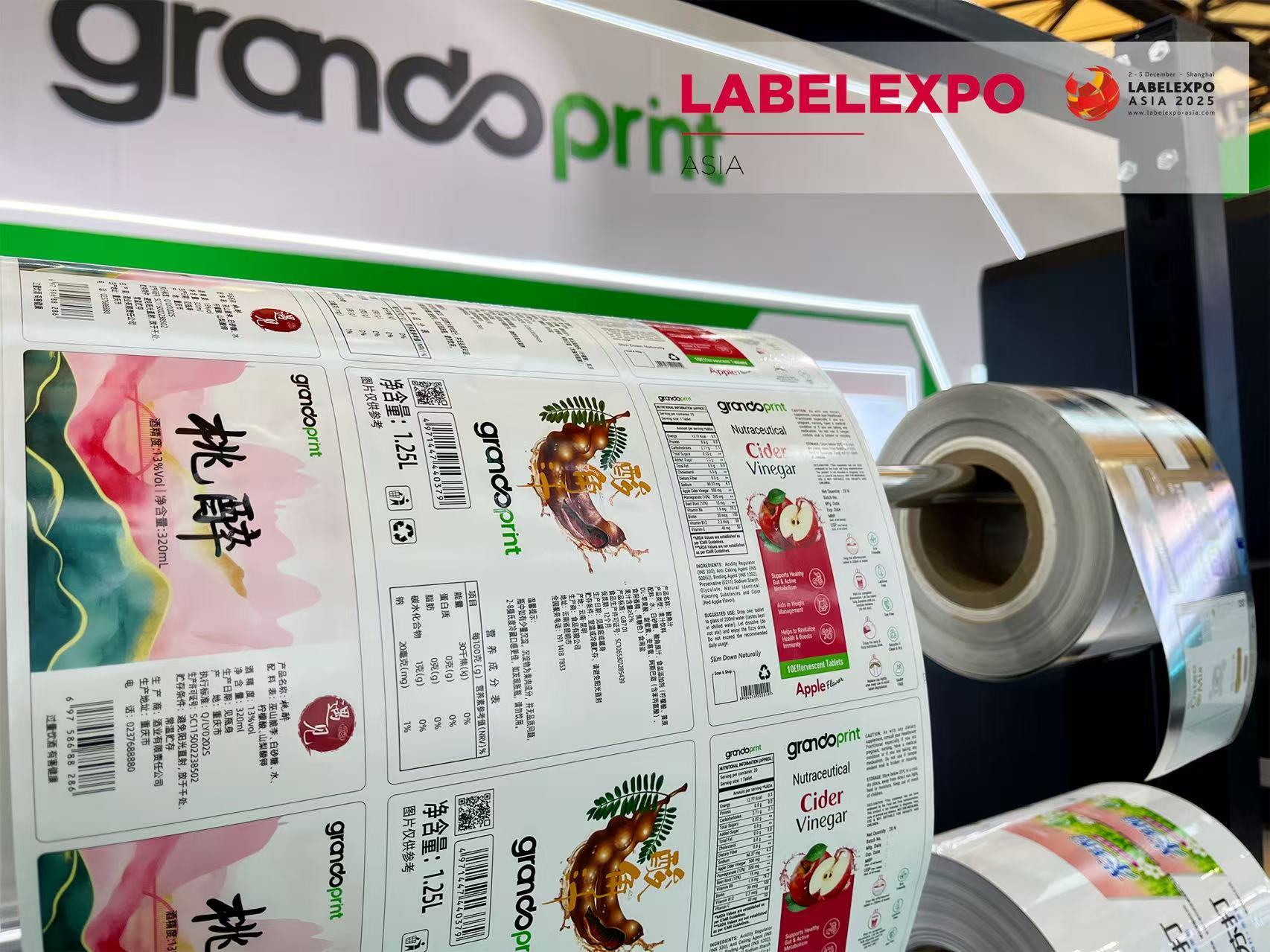
Printed label sample from the GR350S — output checks belong in the pre-shipment test, not in the first live order.
Ink, Printheads and Film Adhesion: The Recurring Consumables Questions
Consumables planning on the GR350S centres on a CMYKW ink set with an optional varnish, the Epson S3200-U1/U3 printhead configuration, dual UV curing, and — for film work — a corona treatment module for PE, PET, BOPP, PP and OPP.
Ink configuration and finish
CMYKW covers process colour plus white, which matters whenever the label needs an opaque base on a clear or dark substrate. Varnish is an option rather than part of the base ink set, and the decision whether to specify it at order or retrofit it later is a commercial one — see the retrofit section below. Consumable volumes, ink prices and service intervals are project-specific and should be requested as part of the quotation rather than assumed.
Printhead handling
The documented printhead configuration is the Epson S3200-U1/U3. Handling discipline is what protects it: anti-static gloves, discharge at a grounded metal plate before touching a head, and workshop humidity held at 40%–60% RH. Follow the machine manual for the current printhead care and replacement guidance; the schedule is a service-plan item, not an operating guess.
Film adhesion and the corona module
PE, PET, BOPP, PP and OPP films are the substrates that most often raise an adhesion question, because UV ink needs adequate surface energy to anchor. The corona treatment module addresses exactly that step. Where film work is planned, the practical route is to qualify the actual film stock, at the actual print settings, before committing to a production run — sample testing exists for this purpose and is part of the supplier’s stated service scope.
What belongs in the routine
- Grounding verification and static control checks, including the periodic follow-up the supplier performs.
- Humidity logging in the print room against the 40%–60% RH range.
- Printhead handling to procedure, with anti-static gloves in stock at the press.
- Ink and varnish inventory planning against the qualified job list, including white ink for opaque work.
- A named spare-parts contact and a documented escalation path for after-sales response.
The last point is not administrative housekeeping. Delayed after-sales response and insufficient spare-parts supply are the two service risks that turn a maintenance task into lost production, which is why the escalation path should be agreed before the first breakdown rather than after it.
Year Two and Beyond: Retrofit, Coating and a Changing Job Mix
The press is not a fixed configuration. The optional pre-coating and post-coating varnish systems can be retrofitted, so a converter can start with the ink set the current order book actually needs and add coating capability when the mix moves toward premium finishes or film work.
Keeping that door open is largely a decision made at installation. Layout should leave room for later modules, and the electrical plan should be discussed with the supplier at site-preparation stage rather than after the floor is finished. Retrofit timing and cost are project-specific and are quoted per case, so they belong in the planning conversation and not in an assumption.
The same logic applies to workflow. Because the press supports variable data and direct database printing without batch PDF conversion, a growing SKU count or a serialization requirement changes the data feeding the press rather than the press itself. That is the practical meaning of long-term flexibility: the machine stays, the job mix moves.
On the service side, Grandoprint states that it supports customers through equipment selection, sample testing, installation, training and long-term technical support, and reports an export share of around 70% with markets including the United States, Brazil, Mexico, Australia, Thailand, Germany, Italy, Kuwait, Angola and Ivory Coast. Those are company-reported figures; what they are useful for is a reference check on where the supplier already operates, not as a substitute for your own due diligence.

Manufacturing and service base — the long-run question is spare-parts and support access, not only machine specification.
Ownership Timeline at a Glance
| Stage | Decision to close | Documented reference point |
|---|---|---|
| Before order | Ink set, varnish now or retrofit later, film substrates in scope | CMYKW plus optional varnish; corona treatment module for PE, PET, BOPP, PP and OPP |
| Site preparation | Power, grounding, floor space, environment, delivery route | 380 V; 10 kW; 2850 × 1400 × 2040 mm; 40%–60% RH |
| Pre-shipment | Test inputs and pass criteria written into the contract | Acceptance criteria: pre-shipment test; MOQ 1 unit; FOB |
| Delivery and payment | Installation crew, first ink order and label stock scheduled | 30% T/T deposit, 70% before delivery; typical lead time around 60 days after order confirmation |
| First production | Validated settings per job, data workflow rehearsed | 20–100 m/min; 110–350 mm printing width |
| Expansion | Coating modules and higher SKU counts without replacing the press | Optional pre-coating and post-coating varnish systems, retrofittable; direct database printing |
FAQ: Questions Buyers Ask After the Decision
What utilities and floor space does a digital label printer need?
On the Grandoprint GR350S the documented requirements are a 380 V rated voltage, 10 kW power consumption and a machine footprint of 2850 × 1400 × 2040 mm, plus workshop humidity held at 40%–60% RH. A dedicated power socket configured to the voltage specification and a professional grounding device connecting the metal frame to earth are part of the installation, and clearance around the footprint for roll handling and service access should be confirmed with the supplier before the layout is fixed.
What purchasing terms and acceptance criteria apply?
The stated terms are an MOQ of 1 unit, FOB delivery, acceptance criteria based on a pre-shipment test, and payment of a 30% deposit by T/T with the 70% balance paid before delivery. Because acceptance rests on a pre-shipment test, the substrate, artwork, ink configuration, speed and width settings and any variable-data file should be written into the contract in advance, together with a clear definition of what constitutes a pass.
How long does delivery take, and how does capacity affect scheduling?
Grandoprint states a monthly production capacity of 100 units and a typical production lead time of around 60 days after order confirmation. That period should cover electrical work, floor preparation, operator scheduling, the first ink order and label-stock qualification, since all of those must be finished before the machine arrives if installation is not to become the bottleneck.
Which substrates need the corona treatment module?
The corona treatment module covers the film substrates that most often need surface preparation for UV ink adhesion: PE, PET, BOPP, PP and OPP. Papers and coated stocks follow a different path, while film jobs should be qualified on the actual stock at the actual print settings during sample testing, because adhesion behaviour belongs to the specific film and not to the category in general.
Can varnish capability be added after installation?
Yes — the optional pre-coating and post-coating varnish systems can be retrofitted. The practical planning step happens earlier: leave room in the layout for later modules and discuss the electrical implications with the supplier while site preparation is still open. Retrofit timing and cost are quoted per project, so they should be treated as a planning conversation rather than a fixed specification.
How does variable data work without batch PDF conversion?
The GR350S is documented as supporting variable data and direct database printing, which allows serial numbers, QR codes, barcodes and anti-counterfeit marks to be driven from a data source at print time instead of being pre-rendered into fixed batch PDFs. The press capability is only half the answer: data throughput, verification and reject handling must be rehearsed with your own files before production depends on them.
What maintenance routine protects the printheads and print quality?
The documented printhead configuration is the Epson S3200-U1/U3, and protecting it is mainly a discipline question: anti-static gloves, discharge at a grounded metal plate before handling a head, workshop humidity held at 40%–60% RH, and grounding verification as part of the service routine. Printhead care and replacement schedules are service-plan items, so request the current guidance with the machine documentation rather than working from assumption.
What speed and width should capacity planning assume?
The GR350S is specified for 20–100 m/min across a printing width of 110–350 mm. Actual throughput per job depends on artwork coverage, substrate and whether white ink or varnish is in the layup, so capacity should be planned on validated settings for your own work rather than on the top of the range — which is exactly what the pre-shipment test and sample runs are for.
Conclusion: Ownership Is a Planning Conversation
The questions that follow a digital label printer purchase are answerable in advance, and almost all of them are answered with documents rather than opinions: a specification sheet for the electrical contractor, a written definition of the pre-shipment test, a validated set of job settings, and a layout that leaves room for the coating modules you may add later. On the GR350S those answers sit on documented ground — 380 V and 10 kW, a 2850 × 1400 × 2040 mm footprint, 20–100 m/min across 110–350 mm, a CMYKW ink set with optional varnish, Epson S3200-U1/U3 printheads, dual UV curing and a corona module for PE, PET, BOPP, PP and OPP.
Long-term cooperation is best treated as a planning conversation rather than a sales promise: what the site can supply now, what the order book will ask for in two years, and which options should be specified at order rather than retrofitted. Bring your substrate samples, your data files and your floor plan to that conversation and the rest becomes scheduling.
To review the full machine specification and configuration options before that conversation, download the Grandoprint product brochure (PDF), or send your substrate and job-mix details to arrange a sample test.
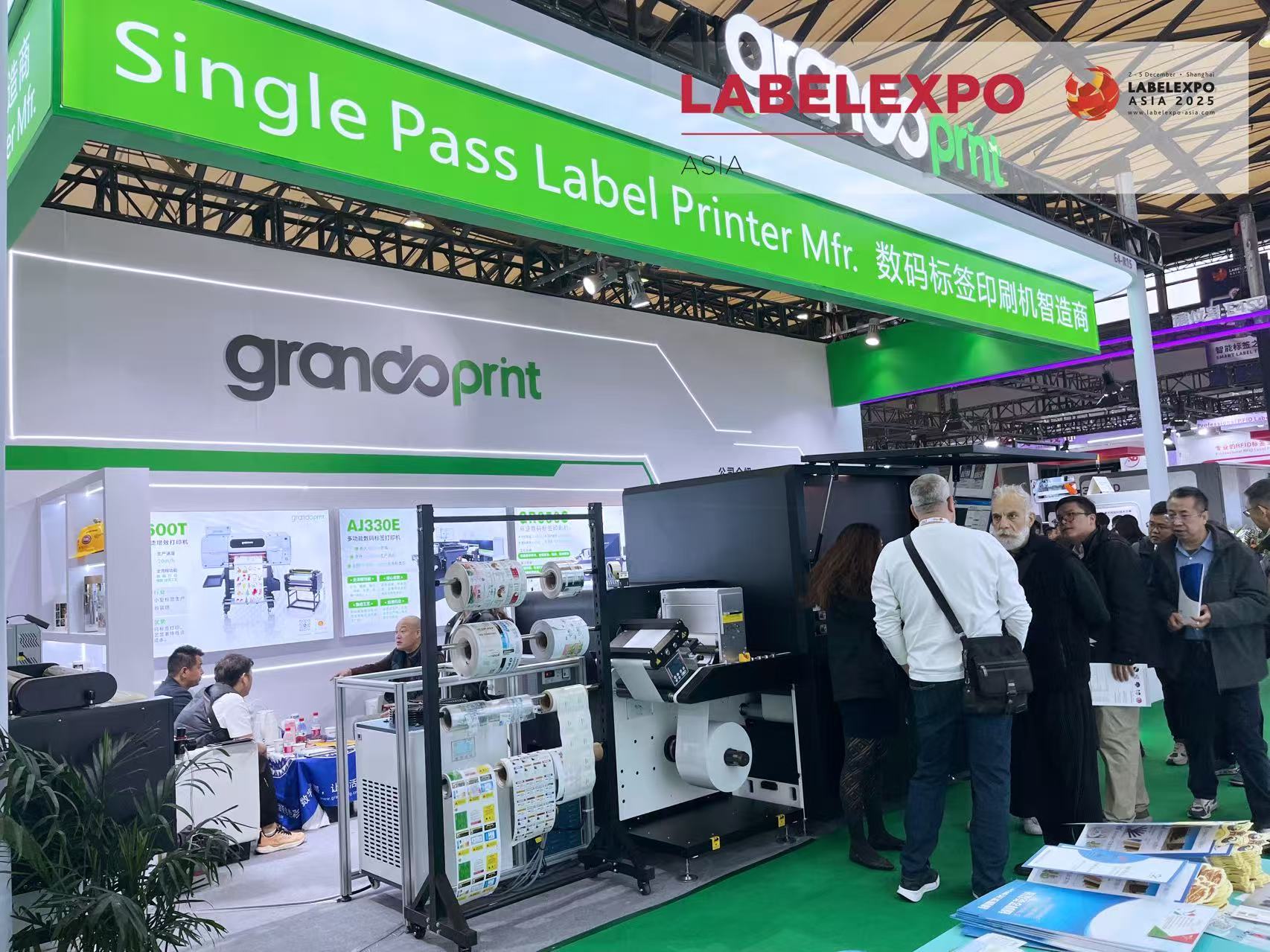
Configuration and retrofit planning with the Grandoprint team — specification, sample testing and service scope in one discussion.
Have Questions or Need More Details?
Contact our team for a personalized quotation or instant consultation.
Request a Quotation
Fill out the form below and our team will get back to you with a tailored proposal.
WhatsApp Direct Chat
Prefer to chat in real-time? Message us on WhatsApp for instant assistance & quick answers.
- Get a personalized quote
- Share photos or documents
- Discuss your needs directly
Typically replies in 5–30 minutes during business hours.