Digital Label Printer Selection Guide: Matching Equipment to Production Scenarios
Selecting the right digital label printer for your production line is no longer a one-size-fits-all decision. With the global digital label printer market valued at USD 3.097 billion in 2024 and projected to reach USD 8.654 billion by 2035 (Market Research Future), buyers must evaluate equipment against specific application scenarios — food, cosmetics, film labels, variable data, or industrial packaging. This guide provides a structured approach to match digital label printers with real production requirements, using the Grandoprint GR350S as a model for assessing configuration, compliance, and scalability.
Problem Definition: Why Generic Printer Specs Are Not Enough
Procurement teams often struggle to translate production needs into printer specifications. A food label digital printer requires different ink adhesion and curing than a cosmetic label digital printer; a variable data digital label printer demands direct database printing and barcode accuracy. Without a scenario-based selection framework, buyers risk investing in equipment that cannot handle their specific materials, order profiles, or compliance requirements.
Industry Background: The Shift Toward Scenario-Specific Digital Label Printing
Industrial label printers account for approximately 42.5% of the total label printer market (Dataintelo, 2025). Inkjet systems hold a 46% share of digital label printing by system type (Future Market Insights, 2025), driven by the need for short-run, multi-SKU, and variable data applications. The digital label printing market is expected to grow at a CAGR of 9.79% between 2025 and 2035 (Market Research Future). In this landscape, scenario-adapted equipment — such as a packaging digital label printer with corona and varnish options — becomes essential for converters and brand owners.
Detailed Solution: The Grandoprint GR350S as a Configurable Platform
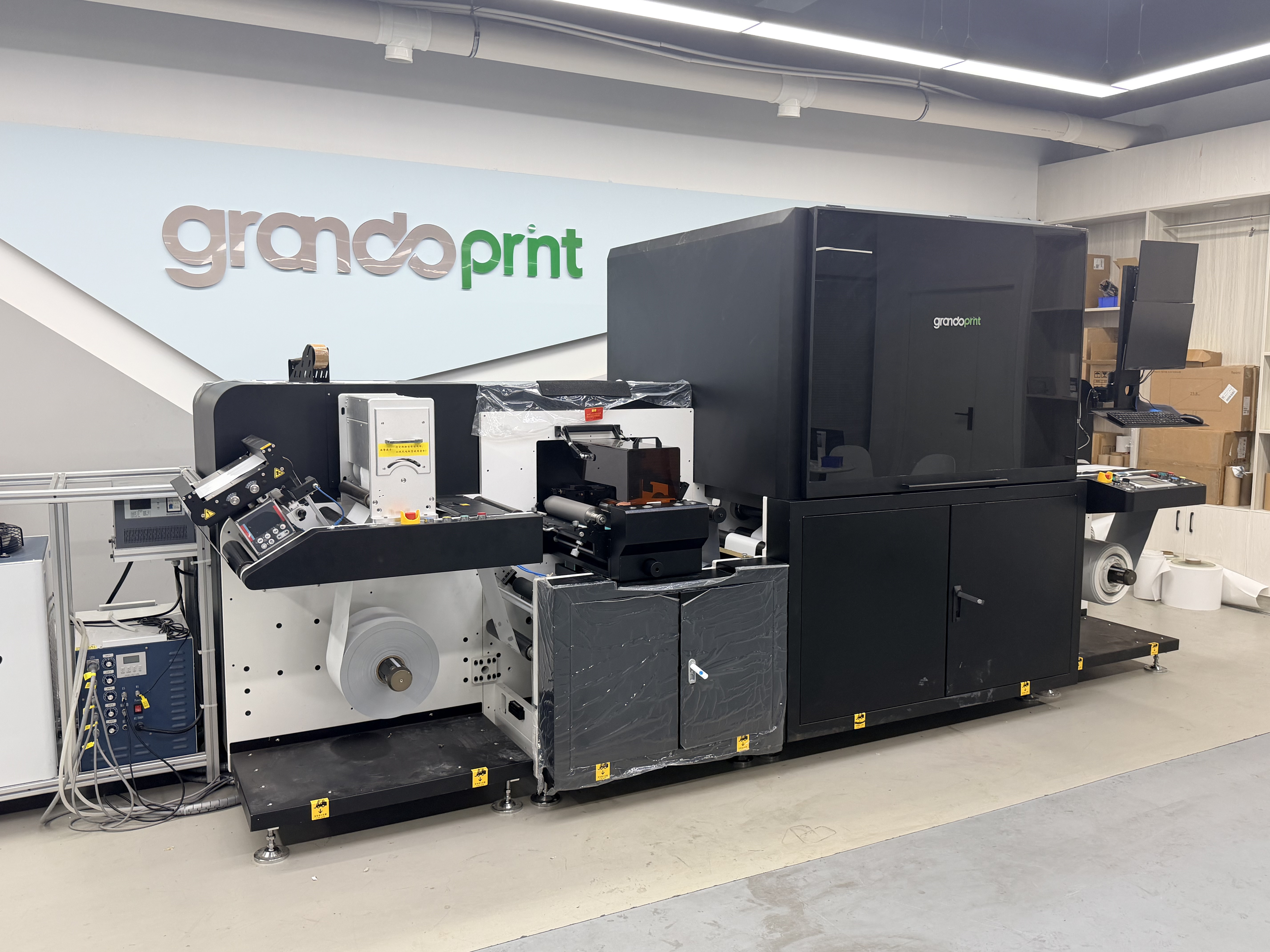
Nanjing Grando Digital Technology Co., Ltd. (brand Grandoprint) designs and manufactures the GR350S, a high-speed UV inkjet digital label printer engineered for industrial continuous production. The base model uses Epson S3200-U1 / S3200-U3 piezoelectric printheads, supports a printing width of 110–350 mm and a printing speed of 20–100 m/min. Unwinding diameter reaches max. 700 mm, with power consumption of 10 kW (380V). The printer measures 2850(W) × 1400(D) × 2040(H) mm and is built with an industrial metal frame and sheet-metal enclosure.
What makes the GR350S suitable for scenario matching is its modular architecture:
- Ink configuration: CMYKW + Varnish optional; spot varnish enhancement supported.
- Surface treatment: Built-in corona system for film labels (PE, PET, BOPP, PP, OPP); optional pre-coating system.
- Variable data processing: Direct database printing without batch PDF conversion; label sensor for mark tracking and intelligent deviation correction.
- Post-treatment: Dual UV curing and optional post-coating varnish system.
This flexibility allows the same base machine to serve as a food label digital printer, a cosmetic label digital printer, a PET label digital printer, a variable data digital label printer, a high resolution digital label printer, and a short run digital label printer, by selecting the appropriate optional modules.
Step-by-Step Breakdown: How to Match the Printer to Your Production Scenario
Step 1: Identify Your Primary Application
Food & Beverage Labels: Require UV digital inkjet printing, variable data processing, mark tracking, and dual UV curing. The GR350S in food label configuration supports these out of the box with a label sensor and variable data engine.
Cosmetic Labels: Need white ink, optional varnish, and spot varnish enhancement. The GR350S with CMYKW + Varnish covers high-end cosmetic packaging requiring gloss or tactile effect.
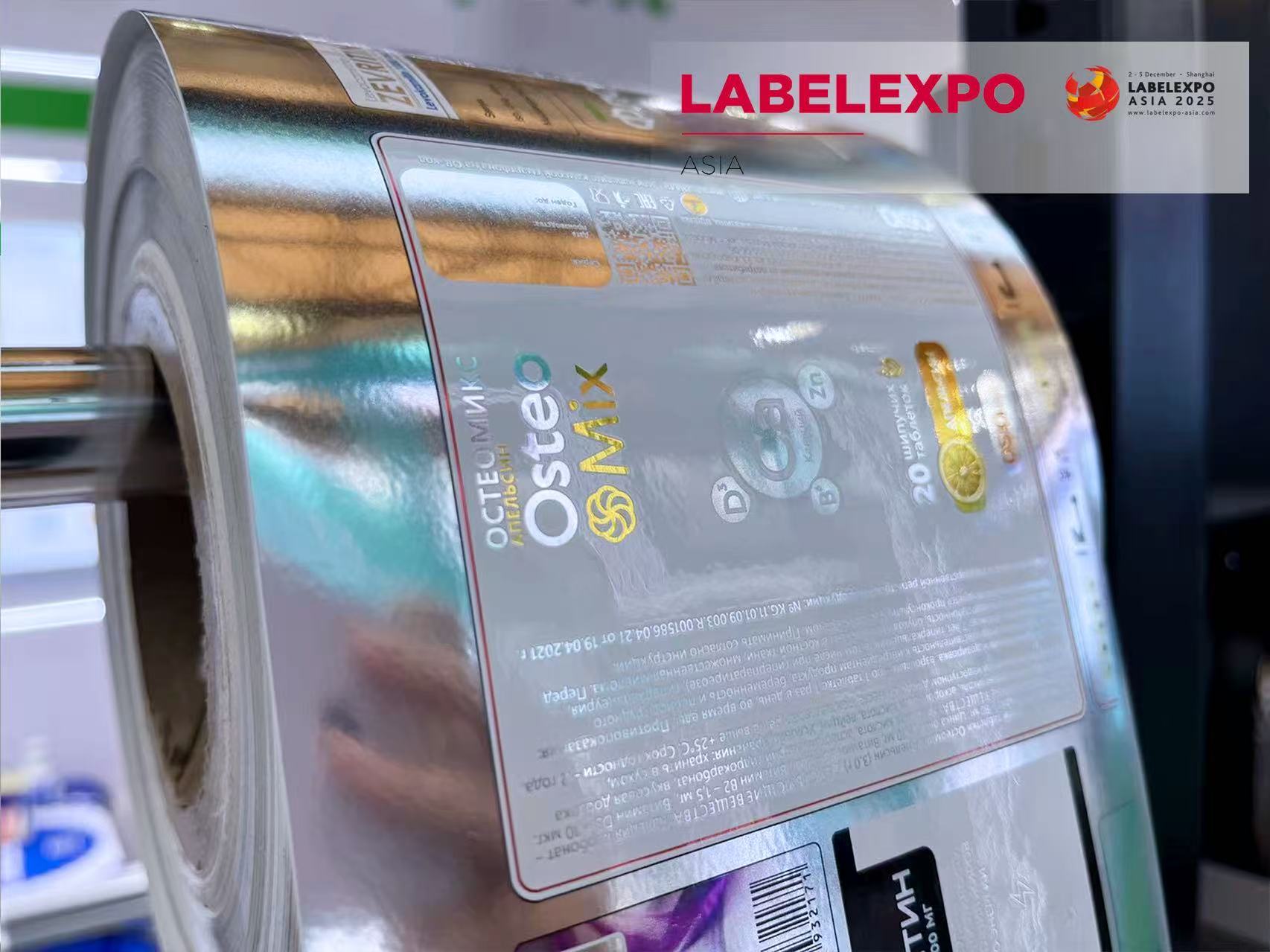
Film Labels (PET/PP/OPP): Demand corona treatment or pre-coating for ink adhesion. The GR350S with corona system handles PE, PET, BOPP, PP, OPP without pre-coating, with pre-coating as an option for the most difficult substrates.
Variable Data & Traceability Labels: Require direct database printing, barcode/QR code support, and anti-counterfeit features. The GR350S variable data configuration eliminates batch PDF conversion for real-time serialization.
Step 2: Select Optional Modules
Based on the application, choose from: pre-coating system, post-coating varnish system, corona treatment unit, material cleaning unit, intelligent deviation correction, and high-resolution real-time defect detection system (professional CIS-based system).
Step 3: Verify Environmental Requirements
The GR350S operates under the following conditions:
- Temperature: 18–32°C (ink storage 16–32°C constant)
- Humidity: 40–60%
- Cleanliness: Dust-free workshop
- Power supply: Three-phase 380VAC, 50/60Hz, ~10 kW
- Air supply: 0.6–0.8 MPa, clean and dry compressed air
Step 4: Request Material Testing
Typical materials for the GR350S include coated paper, clear PET, bright silver BOPP, PP, PE, OPP, and synthetic papers. Grandoprint offers pre-purchase sample testing — send your specific roll material to validate print quality and adhesion.
Step 5: Evaluate OEM & Scalability
Grandoprint provides OEM customization including printhead configuration, ink set, voltage standards, software language, branding, and spare parts package. Monthly production capacity is 100 units, with lead time around 60 days after order confirmation (depending on configuration and quantity). MOQ is 1 unit.
Use Cases: Real Production Scenarios
Case 1: OEM Partner in Brazil & Italy (20 Units)
An OEM client in Brazil and Italy deployed 20 units of GR350S for label printing and packaging production. Over a one-year period, the machines achieved stable operation with high printing consistency and reduced production setup time by 30%. The client highlighted variable data printing capability and adaptability to multi-SKU orders.
Case 2: Food & Beverage Label Converter
A converter running short-run food labels uses the GR350S in food label configuration (UV inkjet + mark tracking). They print QR codes, product info, and batch numbers directly from the database, eliminating PDF conversion steps.
Case 3: Cosmetic Brand Packaging
A premium cosmetics manufacturer uses the GR350S with CMYKW + Varnish to produce lotion and fragrance labels. Spot varnish enhancement provides a tactile finish that replaces traditional screen varnish, reducing turnaround by 40%.
Comparison Table: Scenario-Based Configuration of GR350S
| Scenario | Required Module / Feature | Ink Set | Media Examples | Typical Application |
|---|---|---|---|---|
| Food & Beverage Labels | UV inkjet, label sensor, mark tracking, variable data | CMYK + V (optional) | Coated paper, BOPP, PE | Product info labels, QR codes, bottle labels |
| Cosmetic Labels | CMYKW + Varnish, spot varnish enhancement, dual UV curing | CMYKW + Varnish | Clear PET, PP silver, coated paper | Skincare, perfume, premium product labels |
| Film Labels (PET/PP/OPP) | Corona system, pre-coating (optional) | CMYK + W (optional) | PET, BOPP, OPP, PE | Beverage wrap, flexible packaging, chemical labels |
| Variable Data / Traceability | Direct database printing, no batch PDF, label sensor, intelligent deviation correction | CMYK + V (optional) | Any compatible media | QR codes, barcodes, anti-counterfeit, serial numbers |
| Short-Run / Multi-SKU Packaging | Roll-to-roll feeding, fast job change, varnish option | CMYK + W + V (optional) | Coated paper, BOPP, PET | Daily chemical labels, promotional labels |
Source: Grandoprint GR350S product specifications; all data from published technical datasheets.
Frequently Asked Questions
1. What certifications does the Grandoprint GR350S hold for compliance?
The Grandoprint GR350S is manufactured by Nanjing Grando Digital Technology Co., Ltd., which is ISO 9001:2015 certified (Cert No. 19926Q00205R001) for the R&D and production of digital inkjet equipment. The company’s processes comply with industry standards for quality management. For EU markets, digital label printers must meet the RoHS Directive (2011/65/EU) and the EMC Directive (2014/30/EU) for CE marking — Grandoprint designs its equipment in alignment with these requirements. Buyers should request specific compliance documentation for their target market.
2. Can the GR350S print on PET and PP film without defects?
Yes. The GR350S Film Label UV Inkjet Printer configuration includes a built-in corona system that improves UV ink adhesion on film surfaces. It is compatible with PE, PET, BOPP, PP, and OPP films. For the most difficult substrates, an optional pre-coating system is available. All film materials should be tested prior to batch production to confirm print quality and adhesion. Grandoprint provides sample testing support.
3. What is the typical investment range for an industrial digital label printer like the GR350S?
Pricing for the GR350S varies significantly based on configuration — printhead options, ink set, varnish module, corona treatment, pre-coating system, and other optional features. Because the GR350S is often customized for specific production scenarios, there is no fixed price list. To receive a tailored quotation for your application, request a quote directly from Grandoprint with your required modules and production volume.
4. How can I test the GR350S with my own label materials before purchasing?
Grandoprint offers pre-purchase sample testing. You can send your specific roll material (e.g., coated paper, PET film, PP silver) along with your artwork or variable data requirements. The factory will print test samples to verify color accuracy, adhesion, and readability. This service helps ensure the printer meets your quality standards before committing to a purchase.
5. What is the lead time for a GR350S digital label printer?
Standard lead time for a GR350S is approximately 60 days after order confirmation, depending on the selected configuration, order quantity, and testing requirements. Grandoprint’s monthly production capacity is 100 units, enabling consistent scheduling. For urgent projects, expedited timelines may be discussed during the ordering process. Contact Grandoprint to request a sample test or receive a detailed lead time estimate for your configuration.
Conclusion
Matching a digital label printer to your production scenario is the most effective way to minimize setup time, reduce waste, and ensure long-term operational reliability. The Grandoprint GR350S demonstrates how a well-engineered platform with modular options can serve diverse applications — from food and cosmetic labels to variable data and film substrates. With ISO 9001:2015 certification, patented anti-collision function (No. ZL 2023 2 1184513.3), and a High-Precision Industrial Inkjet Control System (Reg No. 2025SR0599079), Grandoprint provides a reliable foundation for industrial label production.
To evaluate the GR350S for your specific project, visit the Grandoprint website or download the company brochure for detailed specifications and case studies.