
Factory Audit Checklist: Verifying Roll-to-Roll Digital Press Capabilities
A digital label printer is only as production-ready as the factory that builds it. This checklist is written for procurement managers and technical buyers who are about to visit an OEM facility and need to confirm four physical systems and one workflow system before signing: the structural frame and precision metal rollers, the paper roll shaft, the integral roll-to-roll feeding and rewinding assemblies, and the data processing control system. Documentation, shop-floor inspection, and a live run with your own data should all point to the same conclusion — that the machine you are being asked to buy is a production-grade solution, not a prototype dressed for a showroom.
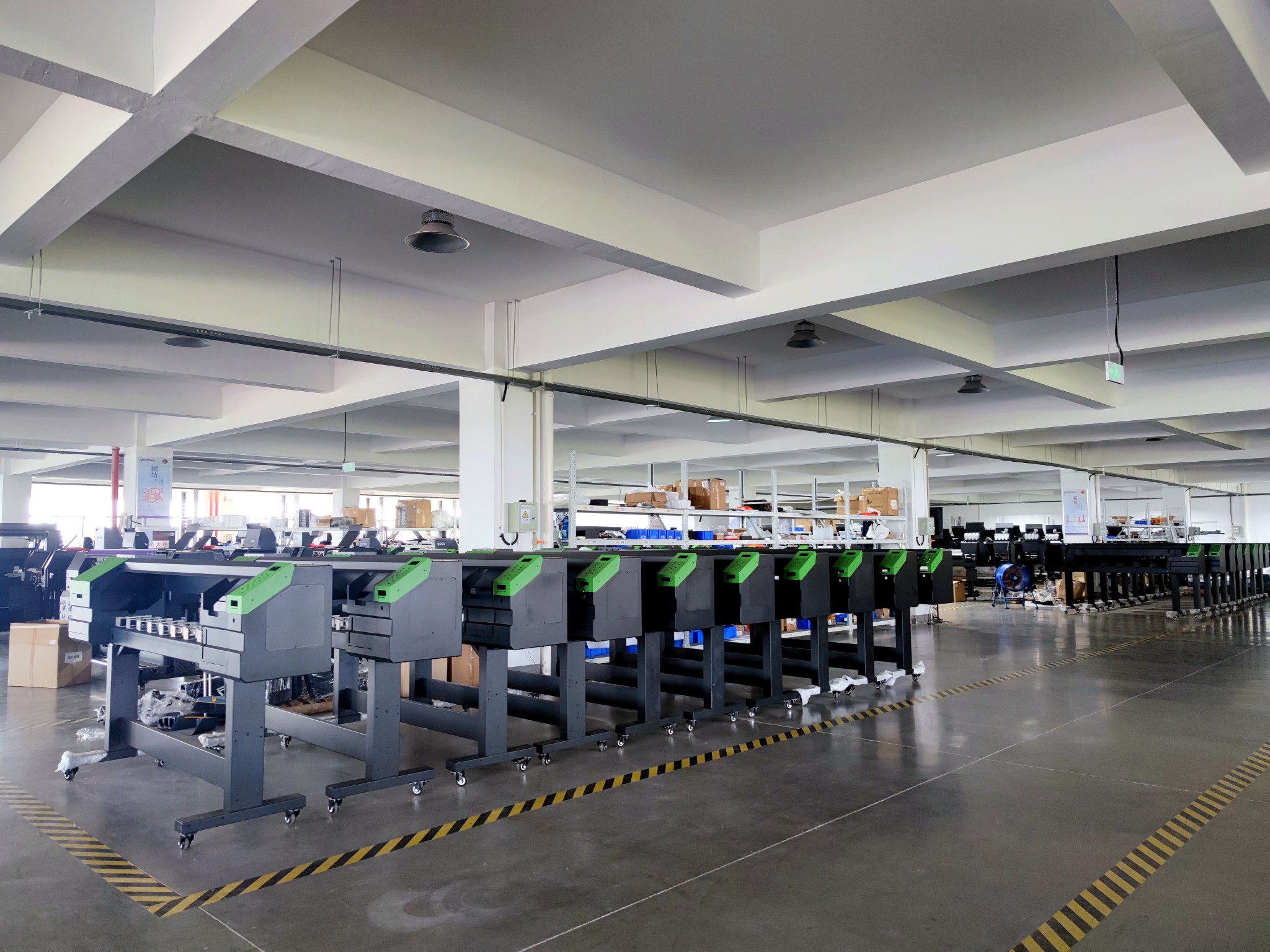
Production line at the Grandoprint manufacturing base — the first thing a factory audit should confirm is that presses are built on a line, not assembled one unit at a time for a demo.
Problem Definition: Why a Showroom Demo Cannot Verify a Press
A demonstration usually runs one job, on material chosen by the supplier, at a speed set by the operator. That is enough to show that a machine functions. It is not enough to prove that the same machine will hold registration, tension and print consistency across the documented 20–100 m/min working window, across shifts, and across substrates that change between orders.
Three specific risks justify an on-site audit rather than a remote purchase:
- Prototype-to-production gap. A prototype can produce one acceptable label. A production press has to repeat that label while the web is moving at speed through unwinding, printing, curing and rewinding — and keep doing it after the first roll.
- Documentation gap. Manufacturer specifications are the starting point of an audit, not the end of one. Independently verified speed, resolution, uptime and waste measurements for digital label presses are limited in public sources, so the buyer’s own test protocol often becomes the only verification available before purchase.
- Configuration gap. Two presses can carry the same model name and different printhead, ink, coating, curing or control configurations. An audit must confirm the configuration you are quoting, not the configuration on display.
The deliverable of a good audit is not an impression. It is a file: photographs of the frame, rollers, shaft and feeding assemblies; copies of certificates with the correct legal entity name; a serial number reserved for your order; a timestamped test job printed from your own data; and a written acceptance list that the supplier signs before shipment.
Industry Background: What Is Driving Equipment Verification
Digital label printing equipment demand continues to expand. The Business Research Company’s Digital Label Printer Market Report 2026–2030 values the digital label printer equipment market at USD 9.86 billion in 2026, up from USD 9.27 billion in 2025, with a projected CAGR of 6.4% for 2025–2030. Scope matters when reading such figures: the same data set treats print-label products (finished labels), label printing activities, and label printer equipment as three different markets, so equipment figures should not be merged with the much larger print-label market values.
Within press technology, Custom Market Insights reports that UV inkjet accounts for roughly 45% of digital label press technology (2025). That has a direct audit consequence: UV curing modules, ink delivery and the electrical cabinet are no longer peripheral details — they are the parts of the machine that most often separate a working prototype from a stable production asset.
Two further signals shape the checklist. First, industry commentary consistently lists digital label printing, personalization/customization and automation among the leading trends in label production, which raises the value of variable data and automated inspection. Second, compliance expectations are not uniform across markets: for marking and labeling systems in North America, UL 969 is the recognized standard for permanency, so if your end product falls under permanency requirements, substrate and ink qualification should be part of the sample stage rather than an afterthought.
Detailed Solution: The Four Build Pillars to Verify
The following pillars are drawn from the documented build of the GR350S, the roll-to-roll UV inkjet digital label press manufactured by Nanjing Grando Digital Technology Co., Ltd. (brand: Grandoprint), a source factory and R&D-driven manufacturer of digital inkjet printing equipment based in Nanjing, China, with dual manufacturing bases in Nanjing and Shanghai. Each pillar lists the documented reference point and the physical check that confirms it.
Pillar 1 — Structural Frame and Precision Metal Rollers
The documented material build of the GR350S is an industrial metal frame with sheet-metal enclosure, precision metal rollers, paper roll shaft, roll-to-roll feeding and rewinding assemblies, inkjet printing unit, UV curing modules, electrical control cabinet and industrial electrical components. The high-speed configuration is specified with a reinforced industrial metal frame.
What to verify on the floor:
- Whether the frame is a single reinforced industrial structure with a sheet-metal cabinet, or a bolted sub-frame that flexes under load.
- How many rollers sit in the web path, and whether the print and curing sections use precision metal rollers rather than plastic idlers.
- Roller surface condition, bearing play, and the alignment procedure the factory uses to set them.
- Where registration and protection engineering actually appears on the machine. Grandoprint holds a utility model patent for a positioning device for UV printers (Patent No. ZL 2023 2 0352561.2, issued 2023-08-22) covering printer positioning structure, printing alignment and material placement stability, and a utility model patent for a printer with anti-collision function (Patent No. ZL 2023 2 1184513.3, issued 2023-10-03) covering printhead protection and operational stability. Ask the engineer to point to the corresponding hardware.
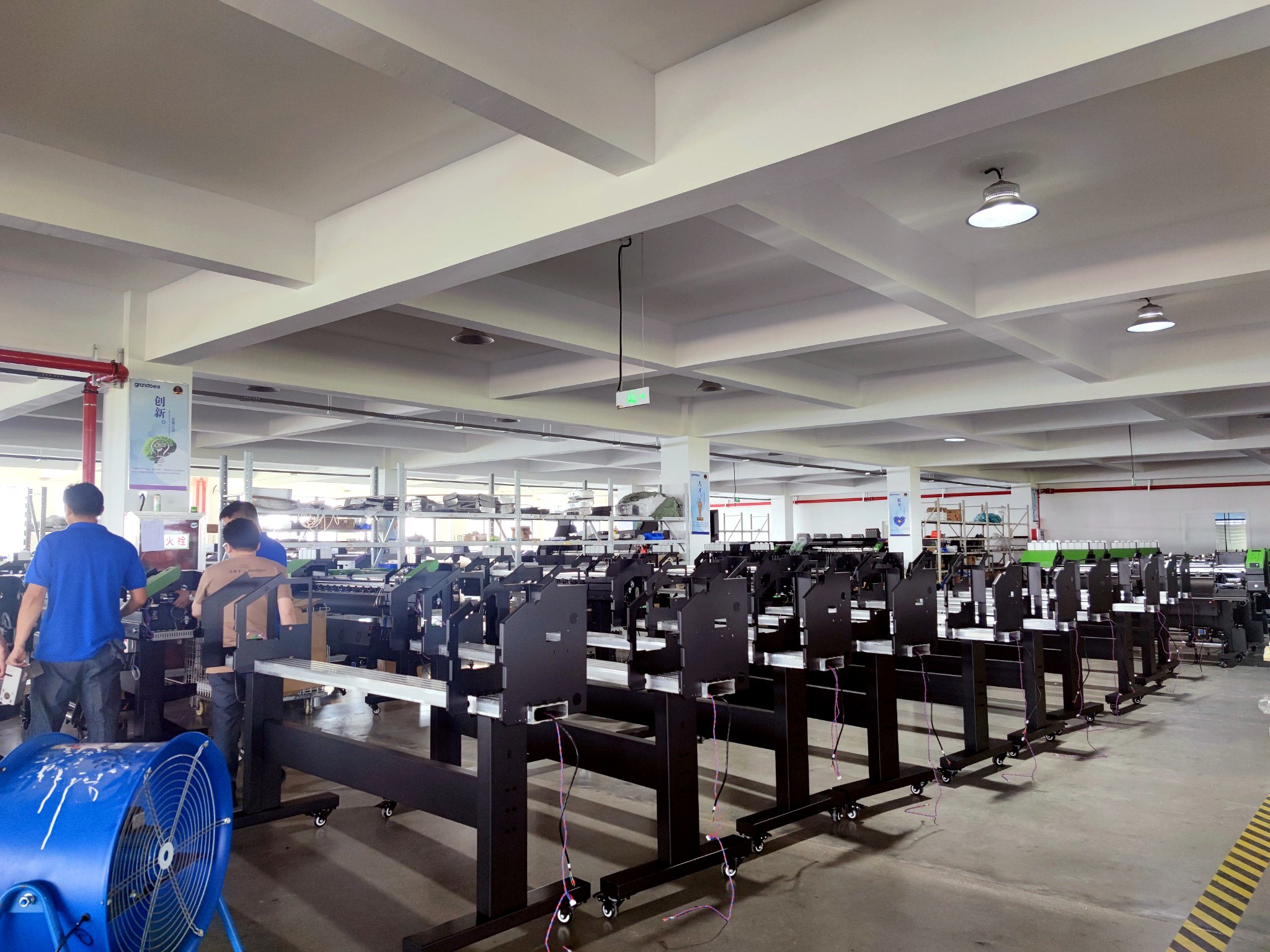
Assembly and testing workshop: frame rigidity, roller alignment and cabinet wiring can be observed before the machine is powered.
Pillar 2 — Paper Roll Shaft and Integral Roll-to-Roll Feeding and Rewinding
This is the pillar that most clearly separates a production press from a prototype. The documented roll-to-roll configuration of the GR350S includes roll-to-roll media width of 120–360 mm, printing width of 110–350 mm, maximum unwinding diameter of 700 mm, a label sensor for mark tracking, and intelligent deviation correction. The documented material set lists a paper roll shaft, feeding shaft, rewinding shaft, precision metal rollers, automatic deviation correction components, a label sensor system and the electrical control cabinet.
Grandoprint holds a dedicated utility model patent for a paper roll shaft for industrial printers (Patent No. ZL 2024 2 1965691.4, Certificate No. 22849535, issued 2025-05-13, valid to 2034-08-14, granted by the China National Intellectual Property Administration). Its stated scope covers roll-to-roll feeding structure, rewinding stability and media handling design — which is precisely the area an audit should stress.
What to verify on the floor:
- Whether unwinding and rewinding are integral, machine-mounted assemblies with their own drives and tension control, or external add-on units borrowed for the visit.
- Whether the machine can be run with a full 700 mm diameter roll down to the core without web wander or edge misalignment.
- Whether deviation correction is automatic and whether the label sensor performs mark tracking, rather than the operator setting registration by hand.
- Whether the shaft and clamping system handle roll weight repeatably — consistency here is what protects long-run print position.
Pillar 3 — Data Processing and Control System
A digital press is a data device as much as a mechanical one. The documented variable-data configuration of the GR350S supports variable data processing, direct database printing, and printing without batch PDF conversion, combined with label sensor mark tracking, a printing speed of 20–100 m/min and a printing width of 110–350 mm.
Grandoprint holds three software copyright registration certificates relevant to control behaviour: the High-Precision Industrial Printing Inkjet Control System V1.0 (Registration No. 2025SR0599079, issued 2025-04-10), the Multi-Point Temperature Control System for Digital Printers V1.0 (Registration No. 2025SR0611438, issued 2025-04-14), and the Flatbed Laser Inkjet Printing Precision Control System V1.0 (Registration No. 2025SR0627967, issued 2025-04-16), all registered with the National Copyright Administration of the People’s Republic of China. The company also holds a utility model patent for a direct inkjet printer (Patent No. ZL 2023 2 1391352.5, issued 2023-10-03) covering digital inkjet printer structure and direct printing equipment development.
The audit test that matters most here is simple: bring your own database export with serialized codes and ask the operator to print directly from it. If the workflow requires someone to pre-render a batch PDF every time the data changes, variable-data handling is being simulated manually — a classic prototype trait. Also ask how the control system reports a defective code inside a data file, and confirm the software version and upgrade path in writing.
Pillar 4 — Ink Path, Curing and Electrical Build
The documented GR350S ink configuration is CMYKW with optional varnish, piezoelectric inkjet printing with Epson S3200-U1 / S3200-U3 printheads, dual UV curing supported, a corona system supported for film substrates (PE, PET, BOPP, PP, OPP), an optional pre-coating system, and an optional post-coating varnish system. Power supply is 380V with 10 kW power consumption, and the machine footprint is 2850 (W) × 1400 (D) × 2040 (H) mm.
What to verify on the floor:
- Count the UV curing modules actually installed — dual UV curing is documented for premium, cosmetic and food-label configurations.
- Confirm the varnish or spot varnish module is physically present if your quotation includes it.
- Confirm corona treatment hardware if your jobs run on film rather than paper.
- Open the electrical control cabinet: industrial electrical components, correct grounding, labelled circuits, and confirmation of the voltage standard for your destination market. Voltage standard is one of the configurable items and should be locked into the order.
Step-by-Step Breakdown: The On-Site Audit Sequence
Stage 1 — Documentation Pre-Check (Before You Book Travel)
Request documents first and verify that the legal entity on every certificate matches the entity on your quotation. Grandoprint holds ISO 9001:2015 certification (Certificate No. 19926Q00205R001), issued 2026-02-05 and valid until 2029-02-04 by China Standard Huaxia (Beijing) Certification Center Co., Ltd., against GB/T 19001-2016 / ISO 9001:2015. The certified scope covers quality management for R&D, production and sales of digital inkjet printing equipment, UV inkjet label presses, digital label printers and related accessories. Also collect the registered patents and software copyrights listed above, and — if your market requires UL 969 permanency or CE marking — request the applicable declarations at this stage, not at delivery.
Stage 2 — Shop-Floor Build Inspection
Walk the assembly area and identify the unit being built for your order. Confirm that feeding and rewinding assemblies are installed as integral parts of the machine, inspect rollers, shafts and bearings, and photograph what you will be asked to accept. If the factory cannot show you a partially assembled unit, ask why.
Stage 3 — Motion and Web-Handling Test
Load your own roll (media width 120–360 mm, up to 700 mm unwind diameter) and run at both the low and high ends of the 20–100 m/min range. Watch for web wander, tension spikes at a splice, and edge alignment drift from full roll to core. Verify that mark tracking works through the label sensor and that deviation correction is automatic.
Stage 4 — Data and Control Test
Print a serialized variable-data job directly from a database. Confirm that no batch PDF conversion step is required, that the control system handles the file without manual intervention, and that the operator can demonstrate what happens when a code is unreadable or missing.
Stage 5 — Output and Substrate Verification
Run the substrates you actually use: coated paper, PP, PET, PE or BOPP as applicable, noting which jobs require corona treatment or optional pre-coating. Check varnish and spot varnish effect, white ink opacity under CMYKW, and UV adhesion on film. Keep the printed samples with date, operator and machine ID for your audit file.
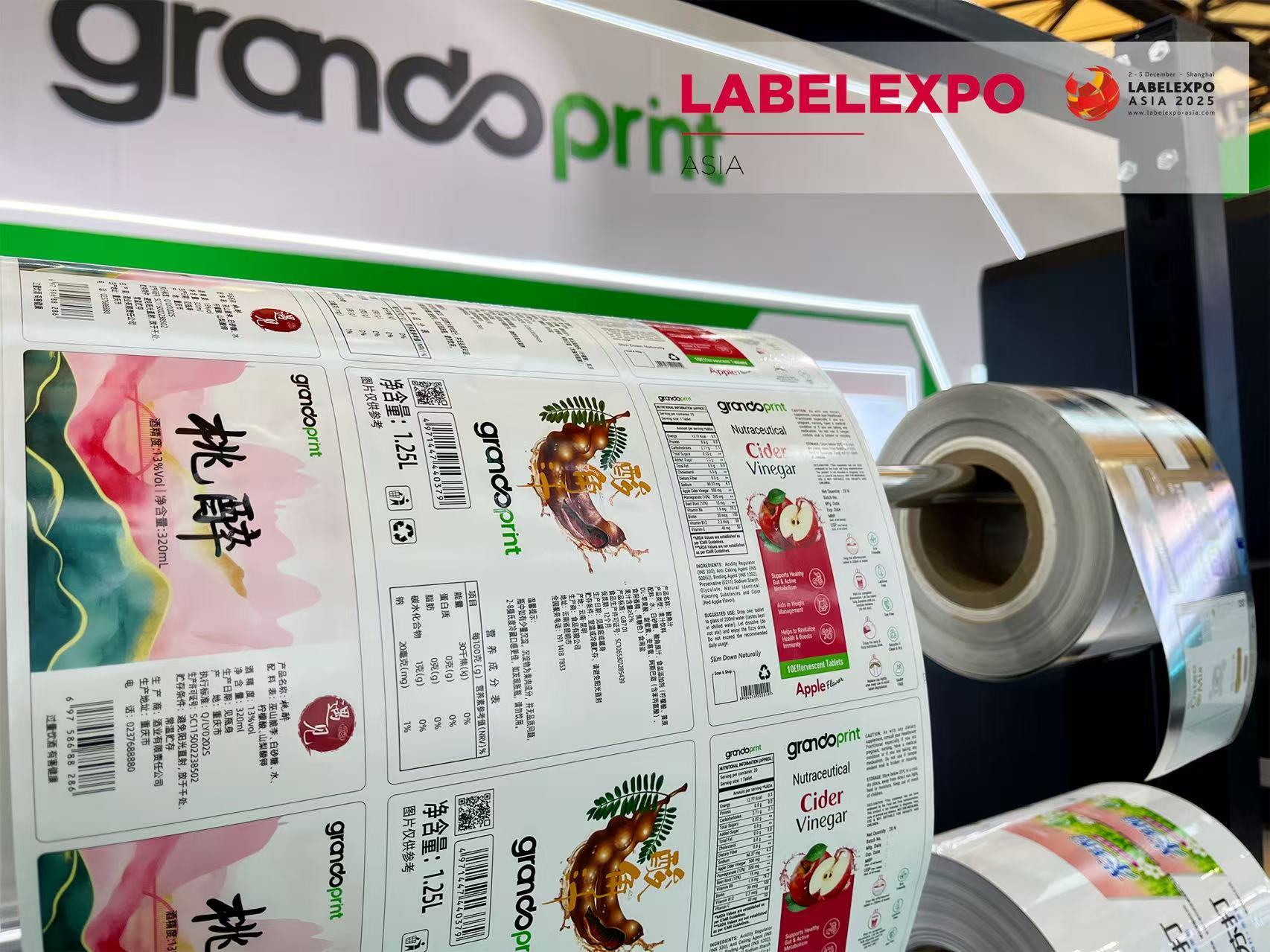
Retain physical samples from the audit run — coated paper, film and varnish builds should all be represented in your file.
Stage 6 — Pre-Shipment Acceptance and Commercial Terms
Documented quality control at Grandoprint combines inline inspection through sensors and vision systems (real-time defect, web break and roll diameter monitoring), a CIS-based high-resolution real-time defect detection system, and 100% functional testing before delivery. Ask that your acceptance test be repeated before shipment and that the results are recorded with the machine serial number. Confirm lead time — around 60 days after order confirmation, depending on machine configuration, order quantity, testing requirements and production schedule — together with the MOQ of 1 unit and the warranty terms, which are usually 1 year subject to contract.
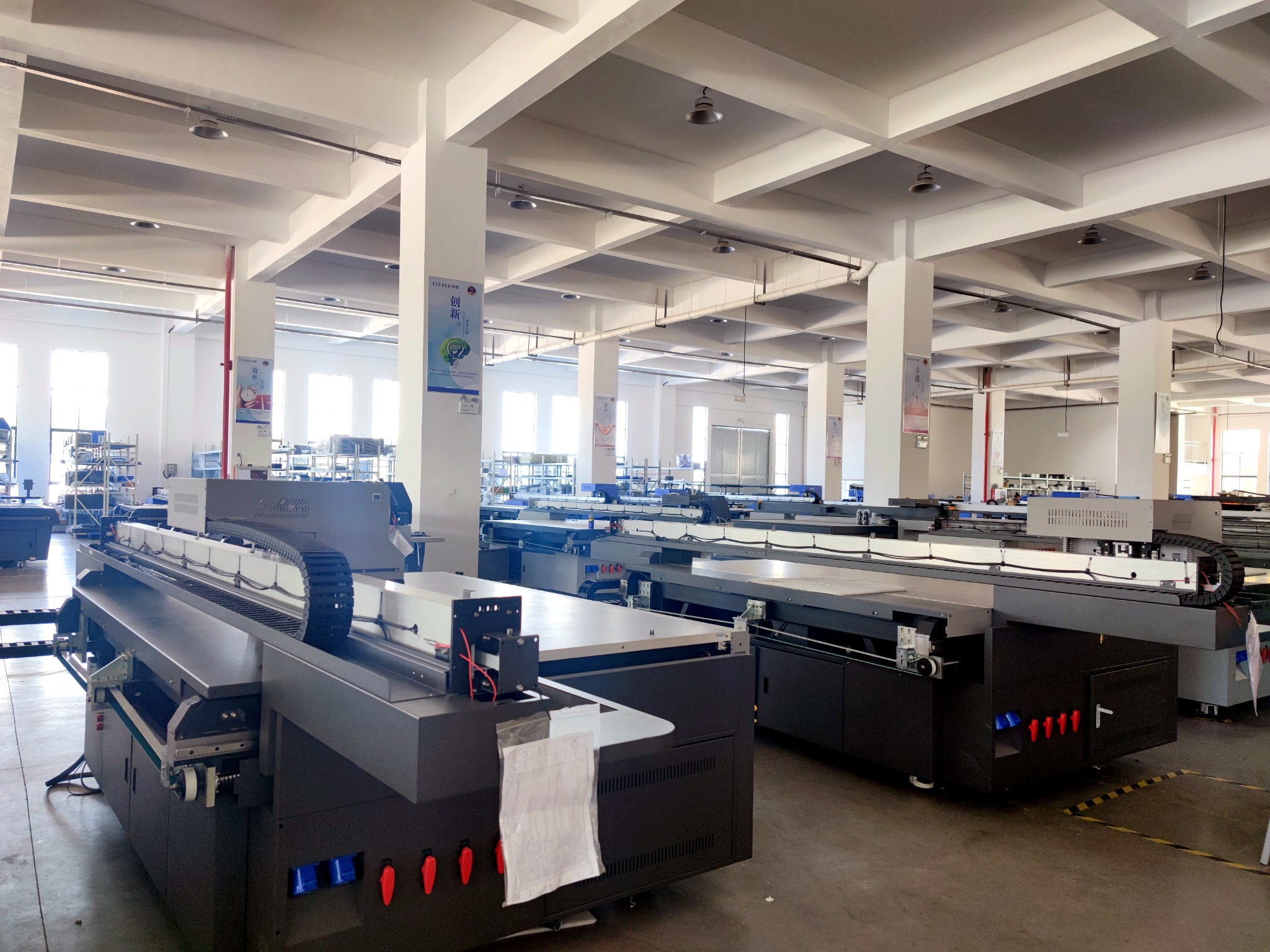
Manufacturing workshop: confirm where the pre-shipment functional test is performed and who signs it off.
Comparison Table: Documented Build Reference for Audit Cross-Checks
The table below maps each audit area to the documented GR350S reference point and to the evidence a buyer should request. It uses manufacturer-documented facts and registered certificates only; where a figure is not documented, no comparison value is shown.
| Audit Area | Documented Reference (GR350S) | Evidence to Request On Site |
|---|---|---|
| Structural build | Industrial metal frame; reinforced industrial metal frame in the high-speed configuration; sheet-metal enclosure | Photographs of the frame and cabinet; confirmation of which frame variant is quoted |
| Web-handling hardware | Precision metal rollers; paper roll shaft; feeding shaft; rewinding shaft; automatic deviation correction components | Utility model patent No. ZL 2024 2 1965691.4 (paper roll shaft for industrial printer) |
| Media and roll range | Media width 120–360 mm; printing width 110–350 mm; unwinding diameter max. 700 mm | Live run with your own roll, full diameter to core |
| Registration | Label sensor for mark tracking supported; intelligent deviation correction supported | Demonstration with your artwork and mark layout |
| Print engine | Piezoelectric inkjet printing; Epson S3200-U1 / S3200-U3 printheads; CMYKW + varnish optional | Printhead model shown on the machine; ink configuration in the quotation |
| Speed | 20–100 m/min | Run at both ends of the range and record output |
| Curing and coating | Dual UV curing supported; corona system supported; pre-coating optional; post-coating varnish optional; compatible films PE, PET, BOPP, PP, OPP | Physical count of curing modules and presence of corona / varnish modules |
| Data workflow | Variable data processing supported; direct database printing supported; no batch PDF conversion required | Live database print with your serialized data file |
| Electrical | Power supply 380V; power consumption 10 kW; electrical control cabinet and industrial electrical components | Cabinet inspection and confirmation of the voltage standard for your market |
| Footprint | 2850 (W) × 1400 (D) × 2040 (H) mm | Layout plan against your floor space |
| Quality control | Inline inspection via sensors/vision systems (real-time defect, web break, roll diameter monitoring); CIS-based high-resolution real-time defect detection; 100% functional testing before delivery | Copy of the pre-shipment test record with serial number |
| Company capacity | Dual bases in Nanjing and Shanghai; total factory area over 20,000㎡; 500+ employees; 30-person R&D team; 100 units monthly capacity; MOQ 1 unit; lead time around 60 days | Factory walk-through and written delivery schedule |
Use Cases: Matching the Audit to Your Production Profile
The same checklist applies to every buyer, but the emphasis changes with the application:
- Packaging converters and label printing factories. Focus on short-run and multi-SKU packaging label work, and on how fast the press moves between jobs. Documented GR350S application coverage includes packaging labels, barcode labels, QR code labels, anti-counterfeit labels and variable data labels.
- Cosmetics and skincare label producers. Focus on varnish and finish: the cosmetic configuration documents CMYKW plus optional varnish, spot varnish enhancement supported, post-coating varnish optional and dual UV curing supported.
- Food and beverage label printers. Focus on variable data, mark tracking and curing stability, all documented for the food and beverage configuration along with a 20–100 m/min speed range and 110–350 mm printing width.
- Traceability, logistics and anti-counterfeit work. Focus on the data pillar: direct database printing without batch PDF conversion, plus variable data processing for serial numbers and codes.
- Film label production. Focus on adhesion engineering: corona system supported, compatible materials PE, PET, BOPP, PP and OPP, with pre-coating optional.
One documented reference point is worth including in the audit file. An OEM client with installations in Brazil and Italy deployed 20 units for label printing and packaging production; over a one-year period the company reports stable operation with high printing consistency and a 30% reduction in production setup time, with support for variable data printing and adaptation to multi-SKU orders. This is a company-reported outcome, so it should be treated as a reference for what to test rather than a substitute for your own trial run.
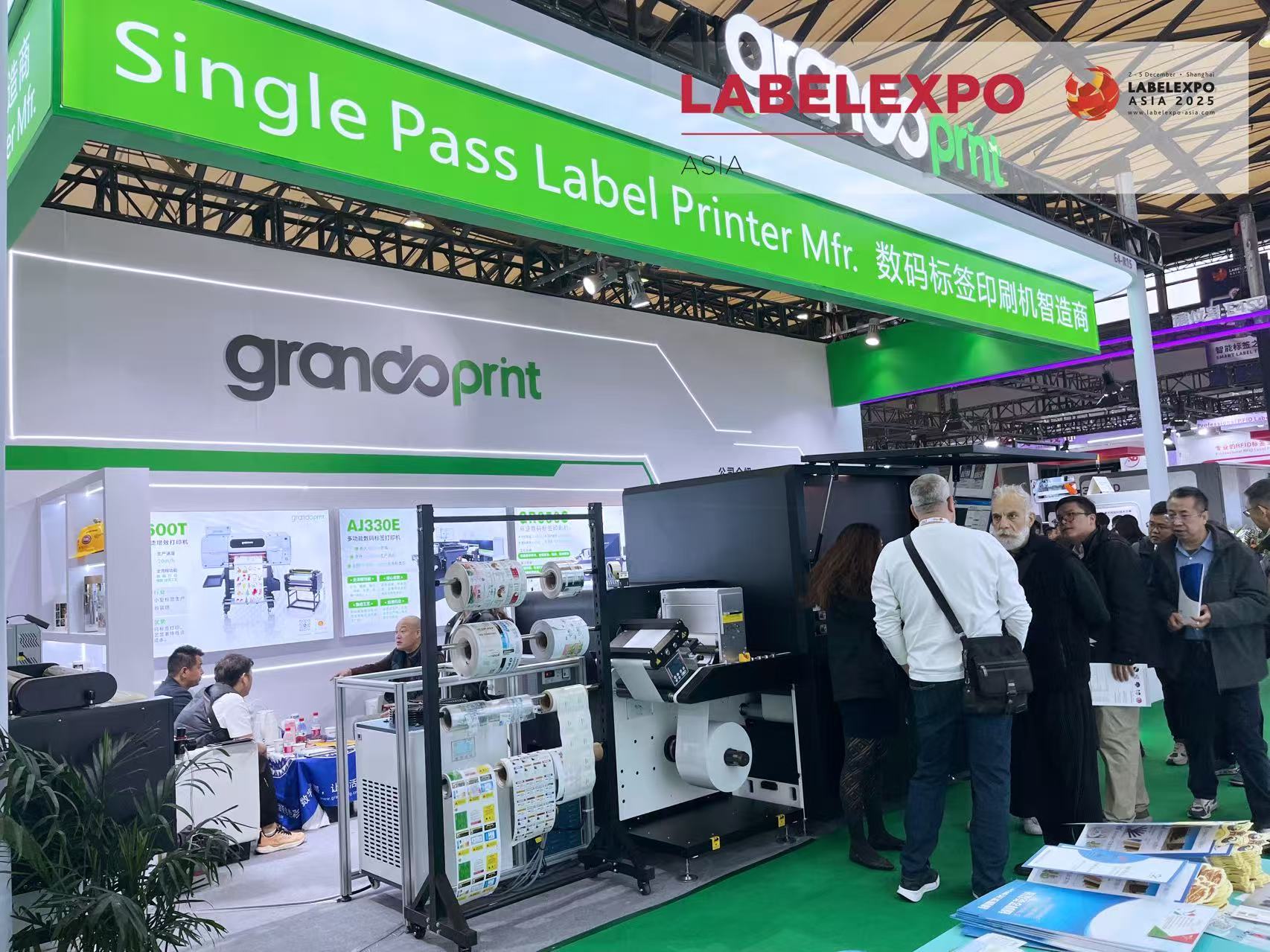
Machine demonstration for overseas label printing buyers — useful, but it does not replace an audit in the factory where your press is assembled.
FAQ
- 1. What certification and IP documents should I verify before approving a roll-to-roll digital label press supplier?
- Start with the quality management certificate and check that the certificate holder matches the legal entity on your quotation. Grandoprint holds ISO 9001:2015 certification, Certificate No. 19926Q00205R001, issued 2026-02-05 and valid until 2029-02-04 by China Standard Huaxia (Beijing) Certification Center Co., Ltd., under GB/T 19001-2016 / ISO 9001:2015, covering R&D, production and sales of digital inkjet printing equipment, UV inkjet label presses, digital label printers and related accessories. Then review registered intellectual property: the paper roll shaft utility model (ZL 2024 2 1965691.4), the direct inkjet printer utility model (ZL 2023 2 1391352.5), the UV printer positioning device (ZL 2023 2 0352561.2), the anti-collision printer utility model (ZL 2023 2 1184513.3), the anti-offset correction device utility model (ZL 2023 2 3477531.3), and three software copyright registrations covering inkjet control (2025SR0599079), multi-point temperature control (2025SR0611438) and precision control (2025SR0627967). If your market requires CE marking or UL 969 permanency for marking and labeling systems, request the relevant declarations and test evidence as part of the same document pack.
- 2. How can I confirm a press is production-grade rather than a prototype?
- Check five things. First, whether the feeding and rewinding assemblies are integral, machine-mounted systems with their own drives and tension control. Second, whether the web path uses precision metal rollers and a paper roll shaft engineered for roll-to-roll work — Grandoprint’s shaft design is protected by a dedicated utility model patent. Third, whether the frame is a reinforced industrial metal structure rather than a light sub-frame. Fourth, whether the control system prints directly from a database without a batch PDF conversion step. Fifth, whether the factory can show production evidence: inline inspection through sensors and vision systems for real-time defect, web break and roll diameter monitoring, a CIS-based high-resolution real-time defect detection system, and 100% functional testing before delivery. Supporting scale evidence includes dual manufacturing bases in Nanjing and Shanghai covering over 20,000㎡, 500+ employees, a 30-person R&D team and a stated monthly capacity of 100 units.
- 3. What cost drivers should the audit capture beyond the machine price?
- Record the configurable items, because they are what turn one quotation into two different machines: printhead configuration (Epson S3200-U1 / S3200-U3), ink configuration (CMYKW plus optional varnish), voltage standard, software language, machine branding, spare parts package and selected functional modules. Then record the operating inputs that follow from the configuration: 380V supply with 10 kW power consumption, ink and varnish consumption, UV curing, and corona treatment or optional pre-coating for film substrates. Ask for the quotation to be reissued against the exact configuration you inspected on the floor, so that the audit and the price refer to the same machine.
- 4. Can I print my own labels on my own substrate during the audit?
- Yes — sample testing is part of Grandoprint’s stated service scope, which covers equipment selection, sample testing, installation, training and long-term technical support. Send your artwork, mark layout and a database sample in advance so the job can be prepared, then document the run: media width 120–360 mm, printing width 110–350 mm, speed between 20 and 100 m/min, piezo inkjet printing with Epson S3200-U1 / S3200-U3 printheads, CMYKW plus optional varnish, and corona treatment supported for PE, PET, BOPP, PP and OPP films. Take the printed samples with you, including any film and varnish builds that apply to your products.
- 5. What lead time and after-sales terms should be written into the audit report?
- Documented commercial terms are a lead time of around 60 days after order confirmation — depending on machine configuration, order quantity, testing requirements and production schedule — an MOQ of 1 unit, and a warranty period usually of 1 year subject to contract terms. The service scope to confirm in writing includes on-site installation, commissioning and trial operation after delivery; operator training on operation and routine maintenance; telephone/remote online support and on-site maintenance; remote monitoring with real-time equipment status and fault warning; original spare parts supply from inventory; localized service through overseas technical service centers or authorized distributors; and software version upgrades with hardware module expansion. As a next step, you can request a sample test and a configuration-matched quotation directly from the manufacturer at juliawu@grando-dg.com or via WhatsApp at +8613805155194, referencing the audit checklist items you intend to verify.
Conclusion
A factory audit is a verification exercise, not a site visit. The machine that reaches your floor will be judged on four build pillars — frame and precision metal rollers, the paper roll shaft, the integral roll-to-roll feeding and rewinding assemblies, and the data processing control system — plus the documentation and test records that prove the factory builds and tests every unit the same way. When each pillar can be confirmed physically, shown in a registered patent or software filing, and reproduced in a live run with your own roll and your own data, the supplier has demonstrated production capability rather than prototype capability.
Use the tables above as your working document: one column for what you inspected, one for the evidence you filed, one for what the supplier must correct or confirm before shipment. Suppliers that welcome this level of scrutiny — and can produce certificate numbers, patent numbers and a signed pre-shipment test record on request — are the ones worth shortlisting for a long-term production relationship.
Next Step: Sample Test, Configuration Quote, and Factory Visit
Nanjing Grando Digital Technology Co., Ltd. (Grandoprint) manufactures the GR350S roll-to-roll UV inkjet digital label press and supports equipment selection, sample testing, installation, training and long-term technical support for global buyers.
Download the product brochure: Grandoprint digital label printer brochure (PDF)
Website: www.grando-dg.com
Email: juliawu@grando-dg.com | WhatsApp: +8613805155194
Address: No.9 Shengshui Road, Lishui Development Dist, Nanjing City, China

Request a sample test and a configuration-matched quotation before booking your factory visit.
Have Questions or Need More Details?
Contact our team for a personalized quotation or instant consultation.
Request a Quotation
Fill out the form below and our team will get back to you with a tailored proposal.
WhatsApp Direct Chat
Prefer to chat in real-time? Message us on WhatsApp for instant assistance & quick answers.
- Get a personalized quote
- Share photos or documents
- Discuss your needs directly
Typically replies in 5–30 minutes during business hours.