
Piezoelectric Inkjet Precision: The GR350S Technical Build
Piezoelectric Inkjet Precision: The GR350S Technical Build
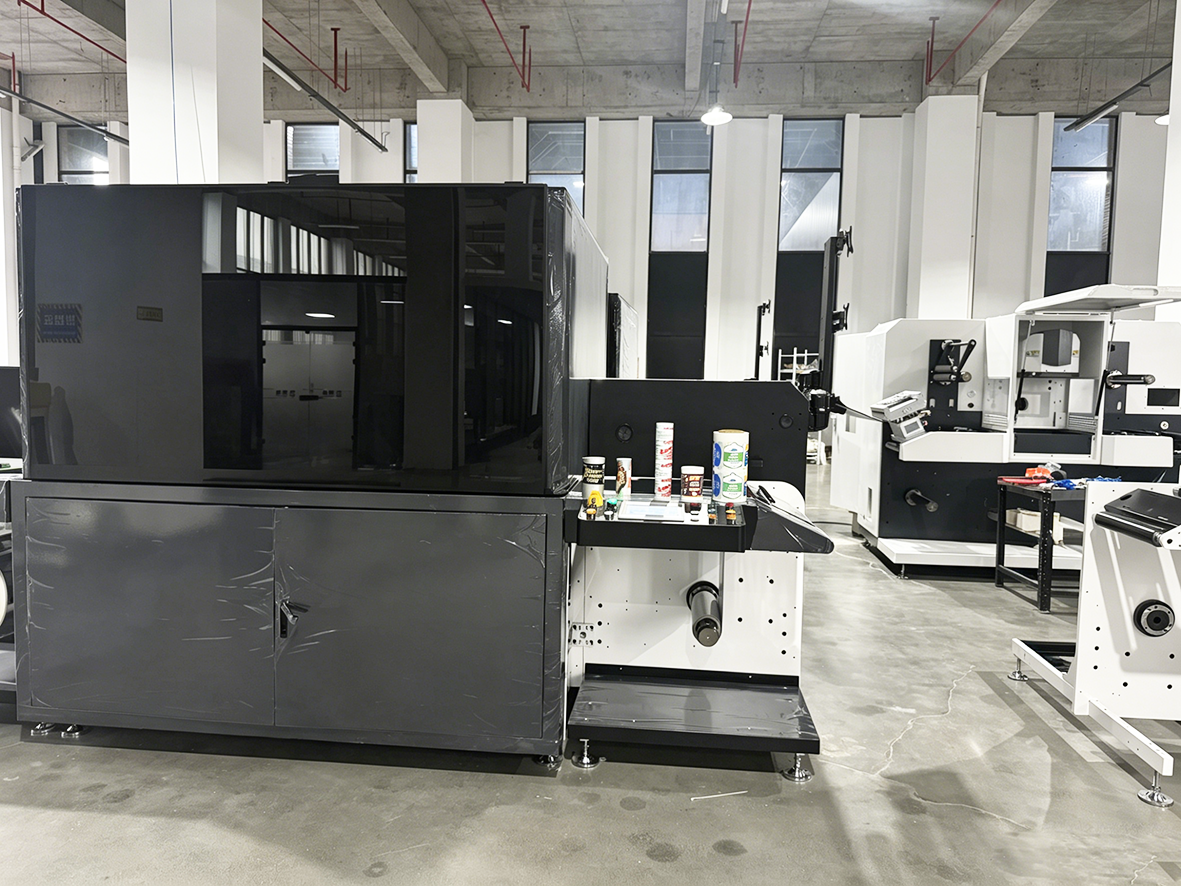
A label press is bought on output and rejected on engineering. The GR350S is a roll-to-roll UV inkjet digital label printer from Grandoprint, the brand of Nanjing Grando Digital Technology Co., Ltd., and it is aimed at the work that stresses a press hardest: short runs, multi-SKU jobs, variable data and customized orders. This technical breakdown looks inside the four systems that decide whether that capability survives contact with real production — the piezoelectric inkjet print engine, the UV curing configuration, the CMYKW plus optional varnish ink set, and the corona treatment module that governs how ink anchors to PE, PET, BOPP, PP and OPP films. Each section closes with the question a decision-stage buyer should put to the supplier, and the evidence that answers it.
The Real Problem: A Spec Sheet Cannot Describe Behaviour
Two label presses can carry the same headline figures and behave completely differently on a converter's floor. The gap opens in three places: how a droplet is formed and placed, how it is cured, and how the substrate accepts it. None of those is fully described by a resolution figure or a top-line speed.
For buyers, the failure modes are practical and expensive:
- Ink that lifts or feathers on poorly prepared film, particularly low-surface-energy polyolefins such as PE, PP and OPP.
- Cure that looks complete at the rewind but scuffs, delaminates or fails chemical exposure once the pack is on a shelf.
- White ink that settles in the system and prints unevenly from the first label of a shift to the last.
- Printhead damage from media strikes, which converts a production asset into a service event.
- Static-related faults — misregistration, wrinkling, missing codes and inspection omissions — which are as much an environmental problem as a mechanical one.
At the decision stage, the productive question is not 'what are the specifications?' but 'which system carries the specification, and how do I verify it?' That is the frame for everything below.
Where the Market Is Moving — And Why Inkjet Engineering Matters
Label demand is shifting toward shorter runs and more SKUs, and the equipment market reflects it. Market Research Future valued the global digital label printer market at USD 3.097 billion in 2024 and projects USD 8.654 billion by 2035, with the digital label printing machine market growing at a CAGR of 9.79% between 2025 and 2035. Within the printer market, industrial label printers are the largest product segment at approximately 42.5% of the total, according to Dataintelo. By system type, Future Market Insights estimates that inkjet systems hold a 46% share of the digital label printing market in 2025.
Published figures differ significantly depending on scope — some research houses count hardware only, others include consumables and services — so market size should be read as directional rather than definitive. The direction itself is consistent: inkjet is a mainstream production route for labels, not a niche. Publicly identified participants in the label printer market include Zebra Technologies, Brother, Epson, SATO Holdings and HP (HP Indigo), according to Intel Market Research. In a field that broad, build-level engineering — head control, curing, ink management and substrate preparation — is what actually separates one press from another in a procurement decision.
Inside the GR350S: The Systems That Carry the Specification
The GR350S uses roll-to-roll UV inkjet digital printing without traditional plate-making. That single architectural choice is what makes short-run, multi-SKU, variable-data and customized label orders practical on the platform. The commercial consequences are documented rather than asserted: plate-making cost and setup waste are reduced for small-batch and variable-data label orders, and for mixed jobs that process multiple SKUs in one continuous run, energy efficiency is higher with lower energy consumption per label for short-run work.
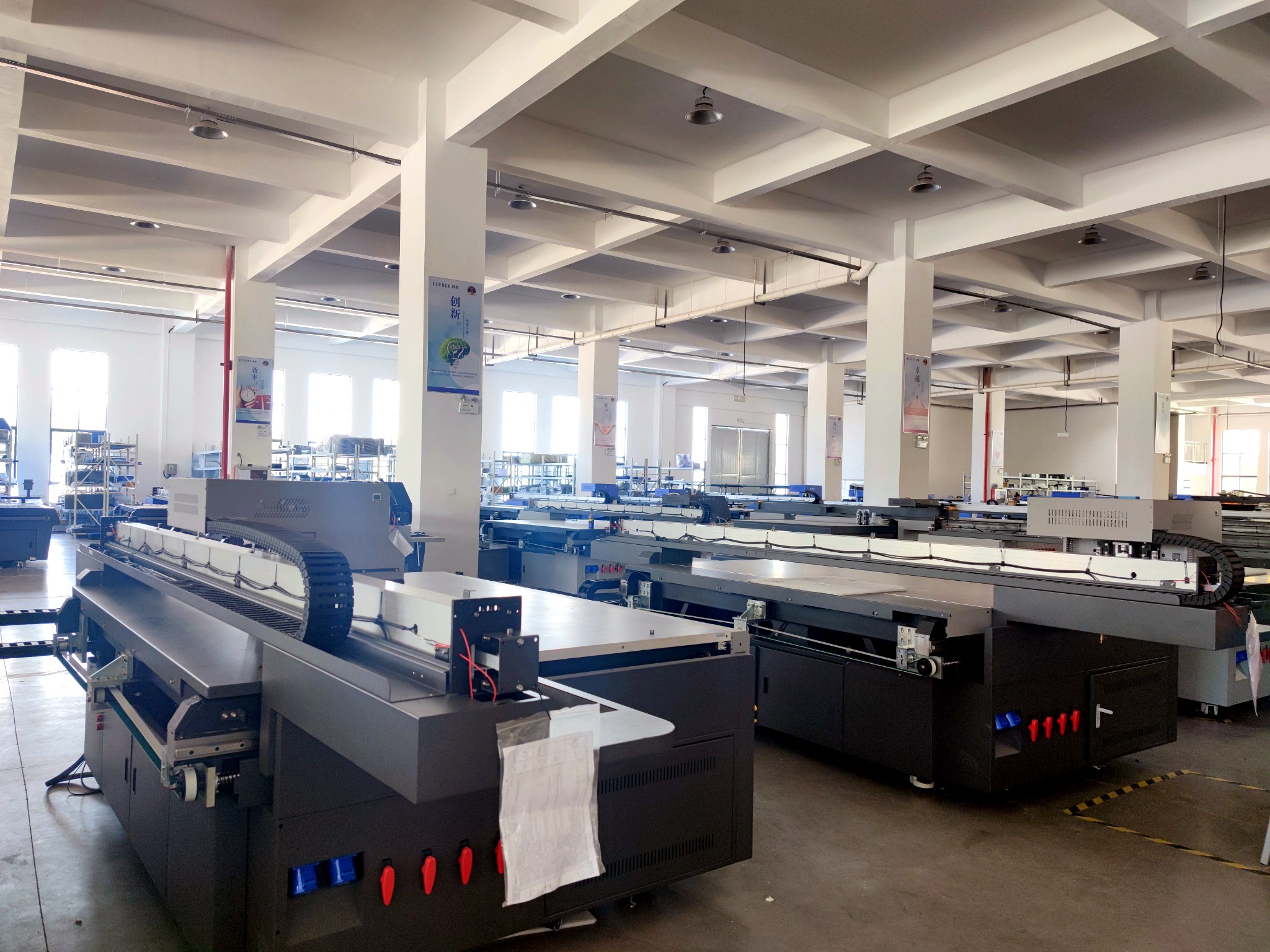
The machine is built by Nanjing Grando Digital Technology Co., Ltd., a manufacturer founded in 2010 with dual bases in Nanjing and Shanghai covering more than 20,000 ㎡, over 500 employees, a 30-person R&D and technical team, and annual output of 15,000 units; approximately 70% of output is exported to markets including the United States, Brazil, Mexico, Australia, Thailand, Germany, Italy, Kuwait, Angola and Ivory Coast. Quality claims attached to the platform are specific and checkable: ISO 9001:2015 certification for the R&D and production of digital inkjet equipment (Cert No. 19926Q00205R001), a registered High-Precision Industrial Inkjet Control System V1.0 (Reg No. 2025SR0599079), and a patent for an anti-collision function (No. ZL 2023 2 1184513.3). For CE-marked sales into the European Union, digital label printers must comply with the RoHS Directive (2011/65/EU) and the EMC Directive (2014/30/EU).
Piezoelectric printheads: controlled droplet formation
The print engine is a piezoelectric inkjet system. In this architecture a piezoelectric element deforms a chamber to eject ink, rather than boiling it as thermal inkjet does. Two consequences matter for label production: the ink is not subjected to thermal stress, which broadens ink compatibility to include UV-curable chemistries, and droplet formation can be controlled directly, which is what supports fine type, small barcodes and dense QR modules at high resolution.
The engineering risk in any piezo platform is mechanical. Printheads are the most valuable and most exposed components in the ink path, and they sit close to moving media. This is where the GR350S's registered control electronics (Reg No. 2025SR0599079) and its anti-collision patent (No. ZL 2023 2 1184513.3) belong in a procurement conversation — they are control and protection measures, not marketing lines.
UV curing: pinning between colours and final cure
UV inkjet only works if curing keeps pace with jetting. A curing configuration performs two distinct jobs. The first is an inter-colour pinning cure that stabilises each droplet before the next colour lands, which controls dot gain and inter-colour bleeding. The second is the final cure that cross-links the ink film so it resists scuffing, moisture and chemical exposure on the packed product.
The technical implications follow directly. Pinning quality determines how sharp edges and small type stay at production speed; final cure quality determines durability in the field. Curing also interacts with the ink set and the substrate — a film that has not been properly treated can show adhesion failure even when cure is complete, which is why corona treatment and curing should be evaluated together, not separately.
CMYKW plus optional varnish: colour range and durability
A CMYKW configuration adds white to the standard process set. White is what makes transparent, metallic and dark substrates printable: it is laid down first as an opaque base for the CMYK image above it. The optional varnish channel adds a further surface function in the same pass — a protective or decorative layer that changes how the finished label handles abrasion, chemicals and touch.
White ink is the demanding part of this configuration. White pigment is heavy and settles, so circulation and agitation in the ink system determine whether the last label of a run resembles the first. Varnish, meanwhile, changes the surface the label presents to the outside world, so finish selection is a durability decision as much as a visual one.
Corona treatment: adhesion on PE, PET, BOPP, PP and OPP
Film labels fail for invisible reasons. Polyolefin films — PE, PP and OPP — have low surface energy, and UV ink cannot anchor reliably to an untreated surface. Corona treatment raises that surface energy so the ink wets and bonds, and the module's placement, electrode condition and treatment uniformity determine whether adhesion is consistent across the full web width and through an entire run.
Two practical points follow. First, corona treatment decays over time, so treatment belongs inline immediately ahead of printing rather than as a separate offline step. Second, adhesion is a system property: film grade, treatment level, ink chemistry and cure all contribute to the result. That is why a sample run on the buyer's own stock — PET and BOPP included — is the only reliable confirmation.
Static control and the operating environment
Static electricity and workshop environment are part of the technical build, not housekeeping. Static discharge interferes with droplet placement — appearing as misregistration, wrinkled substrate, missing codes and inspection omissions — and it is also a production safety factor alongside mechanical safety and electrical risk.
The GR350S ships with anti-static design and grounding devices as standard factory configuration. Installation guidance covers a professional grounding path between the machine frame and earth; workshop humidity maintained at 40%–60% RH with doors and windows closed during thunderstorms; power supplied strictly according to the specified voltage through dedicated sockets; and handling procedures that include discharging static on a grounded metal plate before touching printheads and wearing anti-static gloves. Environmental requirements and static testing tools are documented in the user manual, and periodic customer visits are used to verify that grounding facilities remain effective over time.
Step-by-Step: Verifying a Build Like This Before You Commit
Use Cases: Where This Configuration Earns Its Place
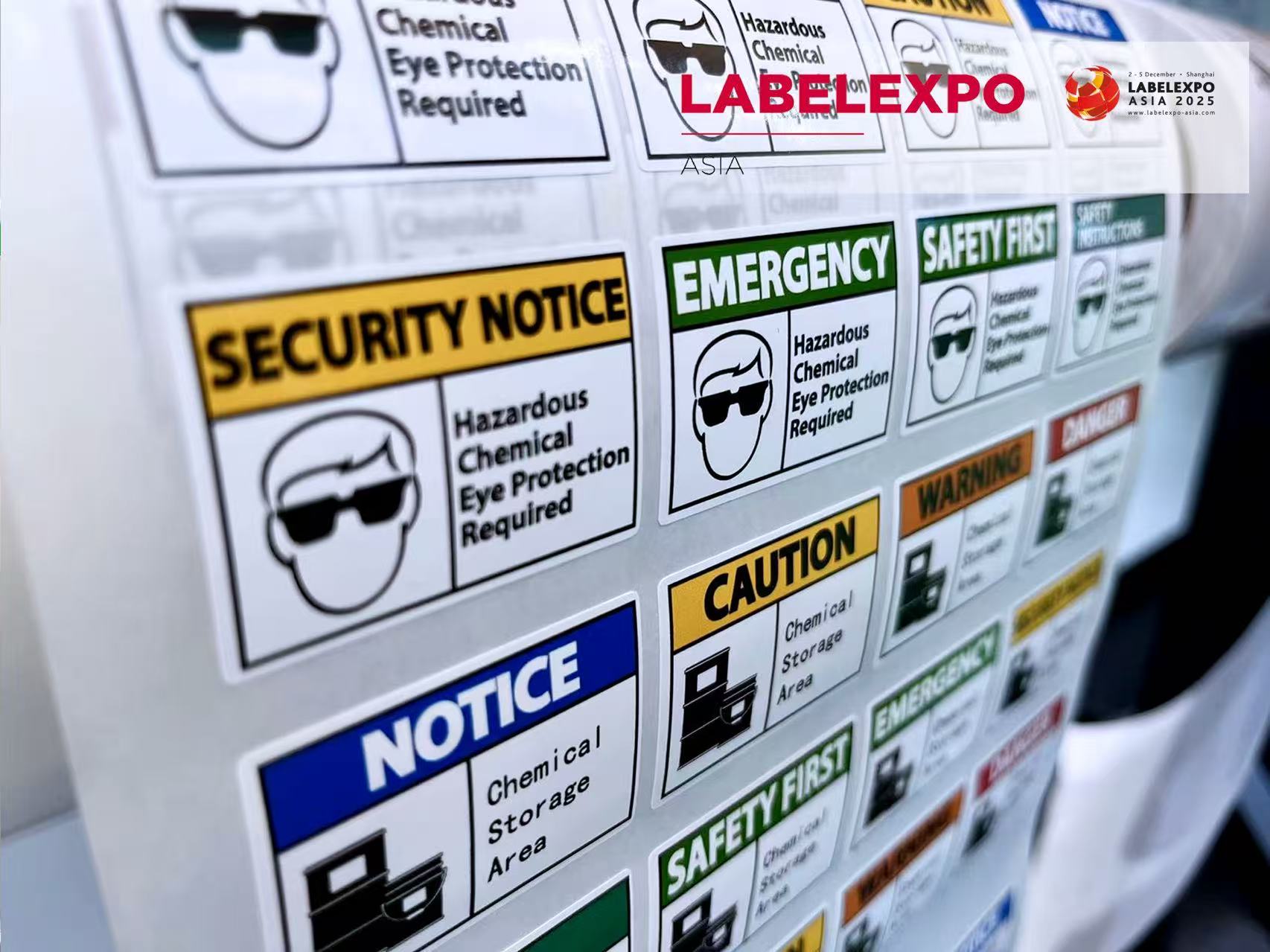
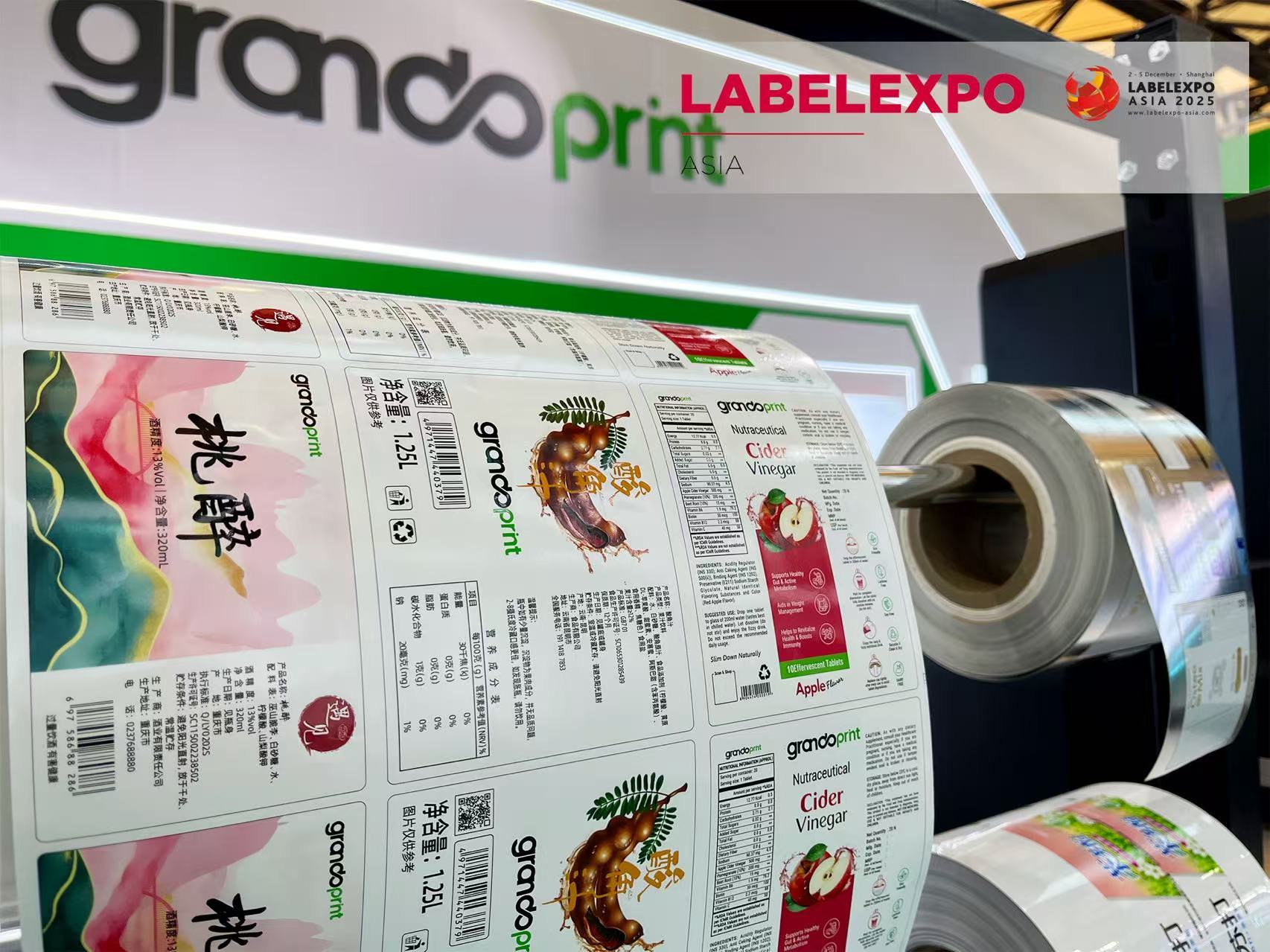
A plate-free roll-to-roll UV inkjet platform changes the economics of label work whenever the job changes more often than the machine runs. The documented fit includes short-run labels, multi-SKU packaging labels, QR code labels, barcode labels, serial number labels, anti-counterfeit labels, cosmetic labels, food packaging labels, daily chemical labels and customized small-batch label orders.
For a cosmetic brand, that means launching several SKUs at once without a plate budget per design. For a food packaging operation, it means artwork and text changes for regulatory updates without waiting on plate turnaround. For logistics and industrial marking, it means serialized, barcoded and QR-coded labels produced as data changes rather than as static artwork. In each case the technical build — printhead control, curing, ink configuration and corona treatment — is what makes the commercial flexibility usable.
GR350S vs Traditional Flexo and Letterpress: Decision Comparison
| Decision dimension | GR350S — roll-to-roll UV inkjet digital | Traditional flexo / letterpress |
|---|---|---|
| Printing method | Roll-to-roll UV inkjet digital printing | Plate-based flexo or letterpress printing |
| Plate-making | Not required; artwork is digital | Plates required per design |
| Short runs and multi-SKU work | Supported without plate changes between SKUs | Setup and plate changes per design |
| Variable data (QR, barcode, serial number) | Supported as part of the run | Less flexible for frequently changing data |
| Best-fit order profile | Short-run, multi-SKU, variable-data and customized label orders | Long-run orders with stable artwork and large quantities |
| Cost behaviour | Reduces plate-making cost and setup waste for small-batch and variable-data orders | May remain more economical for very large repeated orders |
| Changeover and flexibility | Reduced job changeover time; supports on-demand production | Efficient for long continuous runs; less flexible for frequent artwork changes |
| Energy use in mixed jobs | Higher efficiency; lower energy consumption per label for short-run jobs | Long pre-press and setup cycles affect energy per label |
| Speed consistency across designs | Consistent print speed across different designs | Adjustments required when new plates are introduced |
Neither route wins outright, and a credible supplier should say so. Digital inkjet wins where job changes are frequent, quantities are modest and data varies. Flexo and letterpress keep their place in very large repeated runs of stable artwork, where plate amortisation is not a disadvantage. The decision is a function of your order profile, not of the technology label alone.
Frequently Asked Questions
What certifications and compliance documents should a buyer confirm on the GR350S?
The manufacturer, Nanjing Grando Digital Technology Co., Ltd., holds ISO 9001:2015 certification (Cert No. 19926Q00205R001) covering the R&D and production of digital inkjet equipment. For sales into the European Union, digital label printers must comply with the RoHS Directive (2011/65/EU) and the EMC Directive (2014/30/EU) to carry CE marking. Request the certificate copies and the declaration of conformity as part of the purchase file before signing.
Does the GR350S print on film substrates such as PE, PET, BOPP, PP and OPP?
The GR350S is a roll-to-roll UV inkjet platform, and adhesion on these films depends on surface preparation. Low-surface-energy polyolefins such as PE, PP and OPP require corona treatment so that UV ink can wet and anchor; treatment is most reliable when it runs inline immediately before printing, because corona effect decays over time. Since adhesion is a system property of film grade, treatment, ink and cure, the practical confirmation is a sample run on your own stock rather than a specification statement alone.
Where does the cost advantage of the GR350S come from?
Two sources are documented. First, eliminating plate-making removes plate cost and reduces setup waste for small-batch and variable-data label orders. Second, for mixed jobs processing multiple SKUs in one continuous run, energy efficiency is higher and energy consumption per label is lower for short-run work. These advantages scale with job-change frequency; for very large-volume repeated orders with stable artwork, traditional flexo or letterpress printing may still be more economical.
How can a buyer validate print quality and durability before purchasing?
Through sample testing. Grandoprint provides equipment selection, sample testing, installation, training and long-term technical support. Send representative substrates — including the exact PE, PET, BOPP, PP or OPP films used in production — and evaluate adhesion, cure completeness, white opacity, varnish finish and variable-data readability on the finished labels. Alongside the samples, review the registered High-Precision Industrial Inkjet Control System V1.0 (Reg No. 2025SR0599079) and the anti-collision patent (No. ZL 2023 2 1184513.3), since both relate directly to print stability and head protection.
What is the fastest way to move from technical review to a decision?
Combine three steps: download the product brochure, request a sample test on your own material, and request a quotation built on your specific job mix — SKU count, run length and finish. Production planning figures should come from your own data rather than a generic estimate. You can reach the team at juliawu@grando-dg.com or WhatsApp +8613805155194, or review the equipment range at www.grando-dg.com.
Conclusion: Precision Is a Set of Verifiable Decisions
The engineering inside a digital label printer matters most where specifications stop and behaviour begins. Piezoelectric printheads determine how cleanly a droplet is formed and placed; the UV curing configuration determines whether that droplet survives handling, moisture and chemicals; the CMYKW plus optional varnish ink set determines the colour range and surface durability the press can offer; and the corona treatment module determines whether any of it adheres to PE, PET, BOPP, PP and OPP films. Alongside those four systems sit the control electronics, the anti-collision protection and the static-control discipline that keep a press in production rather than in service.
For a buyer at the decision stage, the takeaway is procedural: verify each system against evidence — certificates, registrations, patents, and above all sample output on your own substrates.
Move from technical review to a verified decision
Request a sample test on your own PE, PET, BOPP, PP or OPP film, get a quotation matched to your SKU mix, or download the full product brochure for specification detail.
Brochure: Download the Grandoprint product brochure (PDF)
Email: juliawu@grando-dg.com | WhatsApp: +8613805155194 | Web: www.grando-dg.com