
Shelf-Ready Cosmetics Labels: Applying the GR350S to Skincare Printing
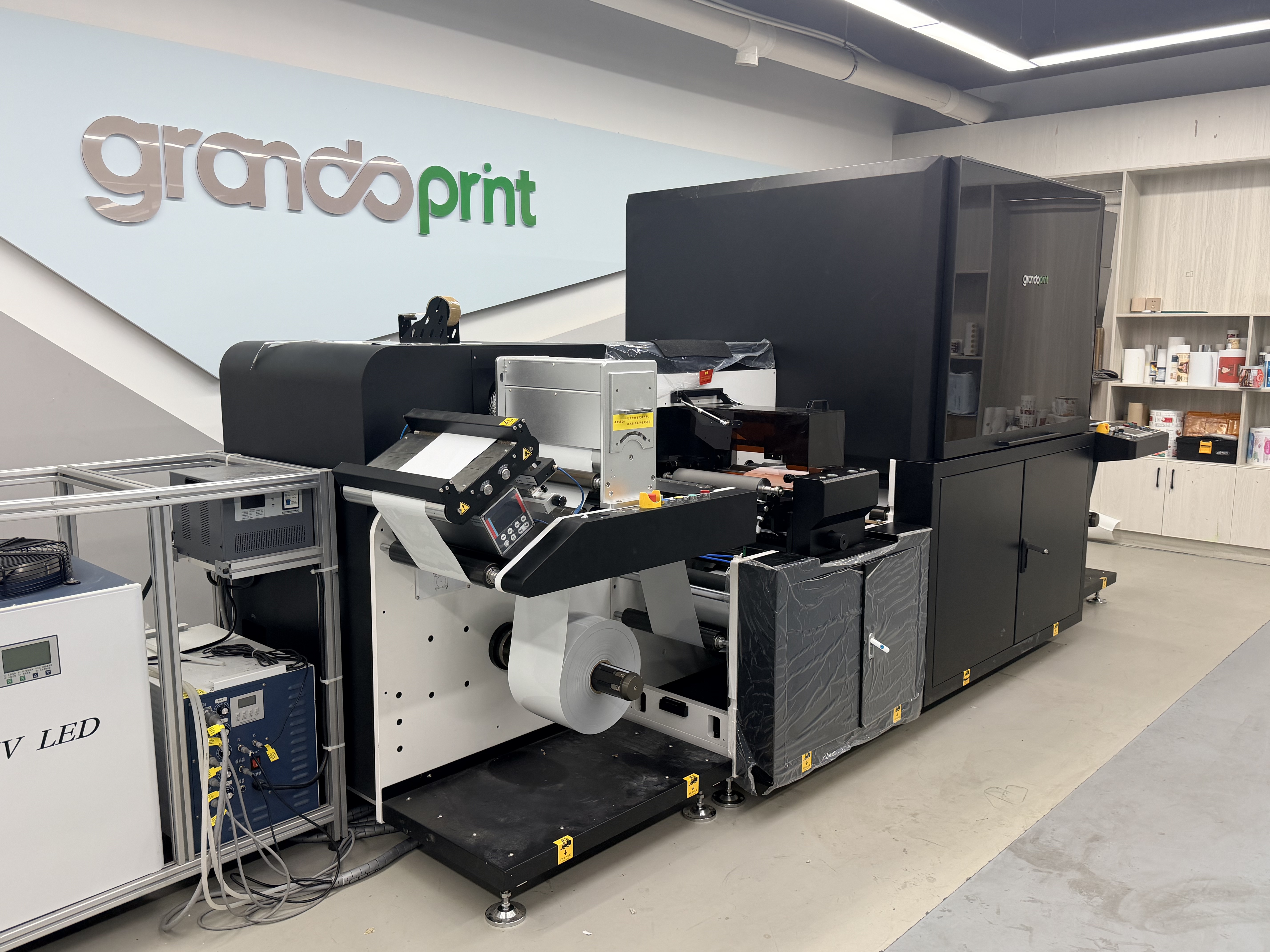
The Grandoprint GR350S is a roll-to-roll UV inkjet digital label printer that its manufacturer classifies as a Cosmetic Label Digital Printer. It is configured for the production profile that skincare and daily chemical packaging actually generates: short runs, many SKUs, frequent artwork revisions and variable data. This application guide explains how a converter applies the GR350S to skincare label production, covering substrate and artwork preparation, the optional post-coating varnish step used for surface finish, the daily roll-to-roll workflow, and the commercial terms that determine whether a cosmetics label job belongs on digital or on a flexo press.
Problem Definition: Why Skincare Label Demand Resists Conventional Press Planning
The difficulty in cosmetics label printing is not print quality. It is job structure.
A skincare portfolio rarely ships as one continuous, stable run. A serum, a cream, a toner and a travel-size variant may share the same bottle family but carry different product names, different ingredient panels, different batch codes and different market languages. In production planning terms, each of those becomes a separate job with its own artwork, its own approval and its own changeover.
- Many SKUs, small volumes. Launch quantities per variant are often modest, so the run length per design stays low while the number of designs stays high.
- Frequent artwork revision. New claims, reformulated ingredient lists, promotional flashes and seasonal editions all rewrite the artwork long before the packaging has finished its life cycle.
- Variable data on every roll. Batch numbers, serial numbers, QR codes and anti-counterfeit elements change job by job, and sometimes within a single job.
- Regulatory text and language variants. Export-market labels carry different mandatory text, which multiplies the number of distinct label versions for one product.
- Surface expectation. Cosmetics packaging is judged by touch and reflected light, so varnish or coating decisions sit inside the label specification rather than being treated as an afterthought.
On a flexo or letterpress press, every one of those artwork changes requires new plates. The consequence is commercial rather than mechanical: plate-making cost and start-up waste dominate short cosmetics orders. Grandoprint's process comparison states the trade-off plainly. Digital label printing can reduce plate-making steps and setup time for small-batch and frequently changing orders, while traditional flexo printing may still hold a cost advantage for very large-volume repeated orders with stable artwork. For a skincare line with dozens of active SKUs, it is the plate bill and the setup cycle, not the press speed, that decide the schedule.
Industry Background: Where Digital Label Printing Sits in 2026
Market data reflects what converters already observe on the shop floor. Market Research Future values the global digital label printer market at USD 3.097 billion in 2024 and projects it to reach USD 8.654 billion by 2035, with the digital label printing machine market growing at a CAGR of 9.79% between 2025 and 2035.
Scope matters when reading those figures. Future Market Insights estimates the digital label printing market at USD 12.3 billion in 2025 because its definition extends beyond hardware alone, while Custom Market Insights valued the digital label printing machines market at USD 11.9 billion in 2023. The absolute totals differ by scope, but the growth direction is consistent.
Two structural data points matter more for a skincare label buyer. Industrial label printers hold the largest product segment share of the total label printer market, at approximately 42.5% according to Dataintelo. And by system type, inkjet systems are estimated to hold a 46% share of the digital label printing market in 2025, according to Future Market Insights. Cosmetics and daily chemical labels sit inside that industrial, inkjet-led segment rather than at its edge.
Compliance shapes the shortlist as much as market growth does. Digital label printers placed on the European market must comply with the RoHS Directive (2011/65/EU) and the EMC Directive (2014/30/EU) in order to carry CE marking, which means the declaration of conformity for the exact machine configuration is a document worth requesting rather than assuming. On the manufacturer side, Grandoprint's quality management system for the research, development and production of digital inkjet equipment is certified to ISO 9001:2015 under certificate number 19926Q00205R001.
Detailed Solution: How the GR350S Is Applied to Cosmetics Label Production
The GR350S removes plate-making from the cosmetics label workflow. It is a roll-to-roll UV inkjet digital label press: label stock is fed from a roll, printed by an inkjet print engine, and rewound in one continuous production cycle. Nothing about the job is fixed onto a physical plate, so a design change is a file change rather than a production event.
Grandoprint is the brand of Nanjing Grando Digital Technology Co., Ltd., a manufacturer founded in 2010 that develops, assembles, commissions, tests and delivers digital inkjet printing equipment from dual bases in Nanjing and Shanghai. The company's stated R&D focus is concentrated on material feeding stability, tension control, printing consistency, structural design, application adaptability and delivery reliability, rather than on catalog expansion.
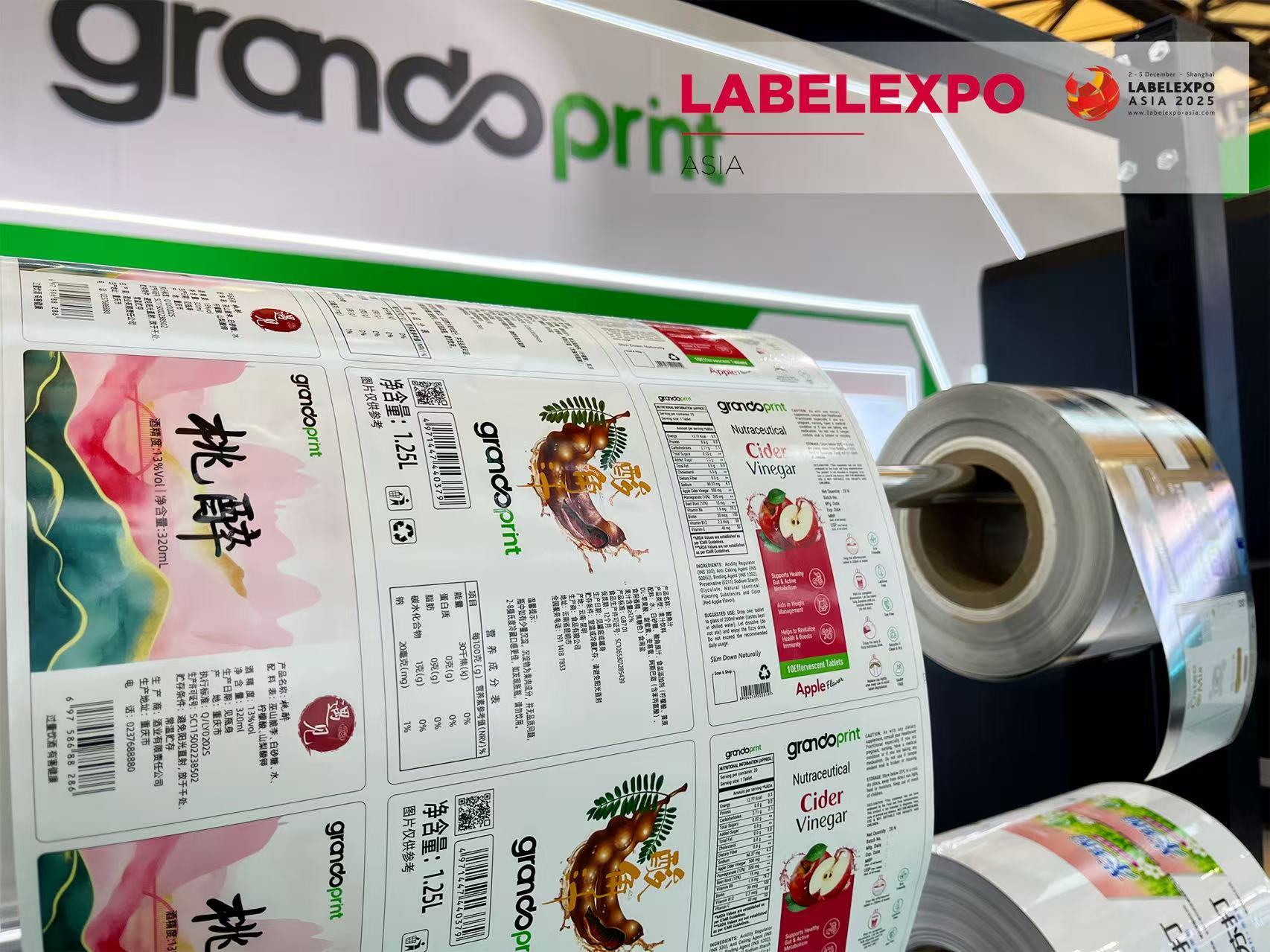
Applied to skincare and daily chemical printing, the platform covers the label types this sector orders: short-run labels, multi-SKU packaging labels, QR code labels, barcode labels, serial number labels, anti-counterfeit labels, cosmetic labels, food packaging labels, daily chemical labels and customized small-batch label orders.
Continuous roll-to-roll production for daily chemical and fragrance packaging
Cosmetics lines generally do not print one label and stop. They print a sequence of related labels across a packaging family. Roll-to-roll operation means the machine keeps running through that sequence: mixed SKUs can be processed in one continuous run, and print speed stays consistent across different designs, unlike traditional processes that must be re-adjusted for each new plate. For a fragrance or daily chemical line assembling a bottle, a carton and a secondary pack, that consistency is what allows one production slot to cover several components instead of several separate scheduling blocks.
The optional post-coating varnish system and shelf-level finish
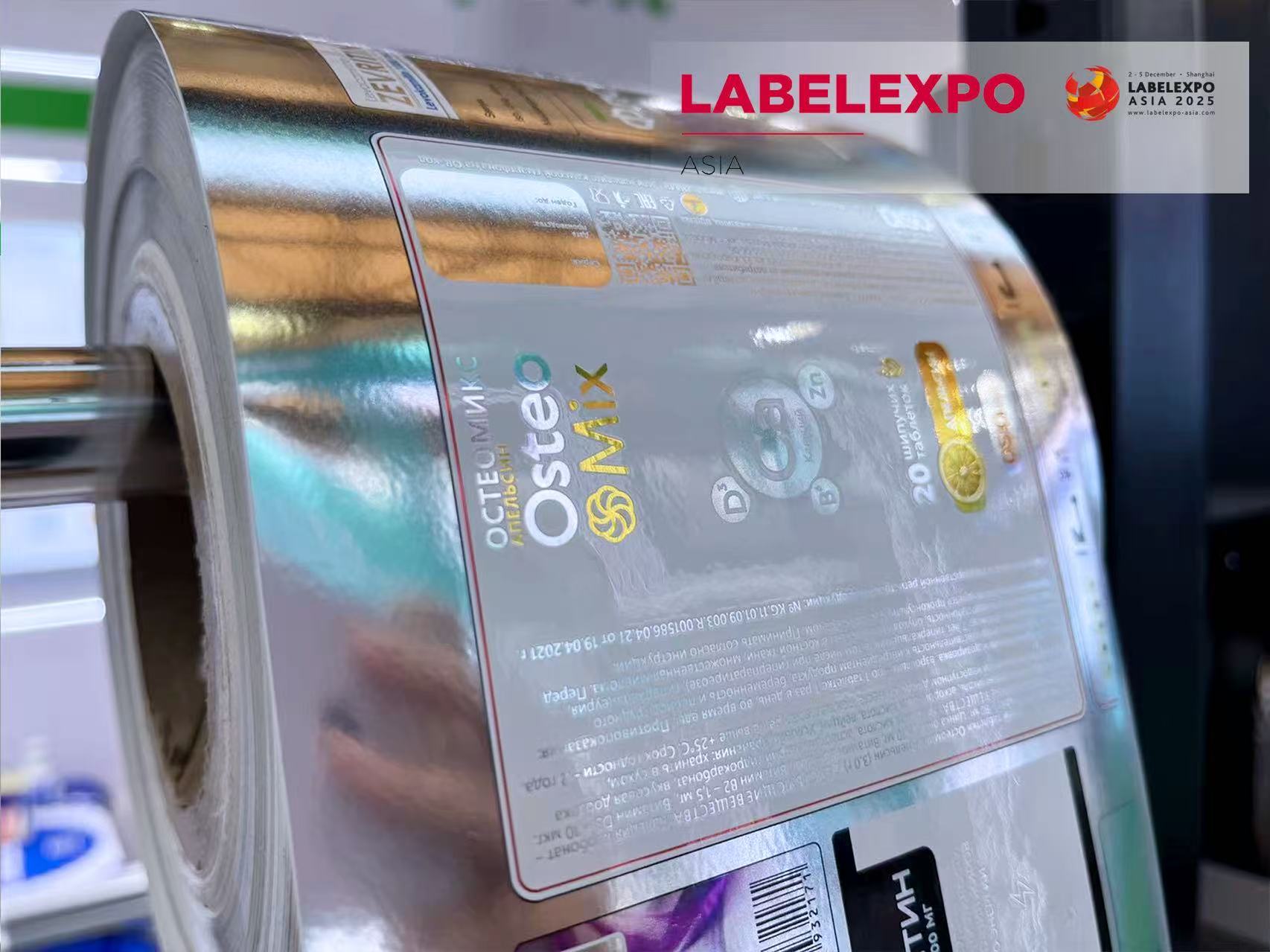
Where a label specification calls for a controlled surface finish, the GR350S can be configured with an optional post-coating varnish system that applies a coating after the print stage within the same roll-to-roll flow. For skincare packaging this addresses a real requirement: the label is handled, cartoned, shipped and displayed, and its surface character is part of how the product reads on shelf next to a competitor's. The practical advantage of an inline post-coating step is process continuity. The finish is specified as a configuration decision at ordering stage, applied as a production step, and does not require the printed roll to leave the machine and return as a second operation.
Variable data and short-run personalized batches
Personalization in cosmetics is a data problem before it is a printing problem. Batch codes, sequential serial numbers, QR codes for consumer engagement or traceability, and anti-counterfeit elements all sit in the variable-content layer of the artwork. Because the GR350S prints digitally, changing that layer costs a file update and nothing else. Short-run personalized batches therefore become economically ordinary rather than exceptional, which is exactly why the platform is listed as suitable for customized small-batch label orders.
Machine-level control and engineering
The GR350S operates on a High-Precision Industrial Inkjet Control System V1.0, registered under registration number 2025SR0599079, and the machine holds a patent for an anti-collision function under patent number ZL 2023 2 1184513.3. Both are technical identifiers a technical buyer can verify directly, rather than marketing descriptors. Grandoprint also maintains a multi-level product system spanning sampling through to mass production, which allows a converter to validate a label format on the same equipment family later used in volume.
Step-by-Step Breakdown: Running a Skincare Label Job on the GR350S
The sequence below is the operating logic for applying the machine to a cosmetics label job, from qualification through release.
Step 1 — Qualify the job before it reaches the press. Decide whether the order is a digital candidate. The criteria are order quantity, label size, material type and job change frequency. Short runs, multi-SKU sets and frequently changing artwork belong on the GR350S; very large repeated orders with stable artwork and large quantities may still be more economical on flexo or letterpress. Making this decision at quotation stage prevents the most common source of margin loss in cosmetics label work.
Step 2 — Match the substrate to the label's commercial life. Cosmetics labels are specified on coated paper, synthetic paper, PP and PET film depending on the container, the application surface and the finish. Grandoprint treats material compatibility as an ongoing R&D focus area rather than a fixed list, which means substrate qualification is done through sample testing on the actual stock before a production commitment is made.
Step 3 — Prepare artwork and the variable data layer. There is no plate to output, so the pre-press step is file preparation: the fixed design layer, plus the variable layer containing batch codes, serial numbers, QR codes or anti-counterfeit elements. Because the same file structure can be reused across a product family, this step compresses sharply when a cosmetics range shares one label template across variants.
Step 4 — Control the operating environment and static conditions. Static electricity is a genuine production and quality risk around digital label equipment, and the measures are specific: the machine is equipped with an anti-static design and grounding devices as standard factory configuration, and the frame must maintain a conductive path to earth. Workshop humidity is held at 40%–60% RH, doors and windows stay closed during thunderstorms, and the power supply is configured strictly to voltage specification using a dedicated power socket. Operators discharge before handling printheads and wear anti-static gloves. Grandoprint supplies static testing tools with the equipment and specifies these environmental requirements in the user manual, with periodic customer visits to verify that grounding facilities remain effective.
Step 5 — Decide whether the job needs the post-coating varnish pass. If the skincare label specification requires a surface finish, the optional post-coating varnish system is engaged as part of the same roll-to-roll run. If the design calls for a bare printed surface, the step is simply not configured into the job. This is a per-job and per-configuration decision, which is why it is worth settling during specification rather than after installation.
Step 6 — Inspect against acceptance criteria and release. The named quality risks in digital label production are misregistration, wrinkling, missing codes and inspection omissions. The formal acceptance criterion for delivery is a pre-shipment test, which means the inspection discipline is documented before the machine ships and is then carried into routine production. For cosmetics labels carrying batch codes or traceability data, missing-code checks are not optional.
Use Cases: Where the GR350S Fits in a Cosmetics Portfolio
- Skincare launch ranges with multiple variants. Several products, one packaging family, different ingredient panels and product names. The label types that dominate here are multi-SKU packaging labels run in short quantities per design.
- Limited editions and seasonal drops. Artwork that exists for one selling season and then changes. Plate-based processes carry the full cost of that change; digital carries only the file update.
- Personalized and small-batch cosmetic orders. Customized small-batch label orders, including personalized batches where the quantity per design does not justify a plate investment at all.
- Export-market label variants. Skycare and personal care products sold into several regions need market-specific text and language versions of the same product label, which multiplies distinct designs without multiplying volume.
- Daily chemical and fragrance packaging. Bottle, cap, carton and secondary packaging components produced as a coordinated set in one continuous run.
- Traceability and anti-counterfeit layers. QR code labels, barcode labels, serial number labels and anti-counterfeit labels applied to premium skincare where authenticity is part of brand value.
Comparison Table: GR350S Digital vs Traditional Flexo / Letterpress
The comparison below uses Grandoprint's own stated process difference between the GR350S and traditional flexo or letterpress label printing. It is a decision table, not a quality verdict: the correct choice depends on order quantity, label size, material type and job change frequency.
| Decision dimension | GR350S (roll-to-roll UV inkjet digital) | Traditional flexo / letterpress |
|---|---|---|
| Plate-making | Not required | Required for each design |
| Best-fit order profile | Short runs, multi-SKU, variable data and customized label orders | Long runs with stable artwork and large quantities |
| Job changeover | Reduced changeover time; supports on-demand label production | Efficient for long continuous runs, less flexible for frequent artwork changes |
| Cost behaviour | Reduces plate-making cost and setup waste on small-batch and variable-data orders | May remain more economical for very large-volume repeated orders |
| Mixed-job efficiency | Multiple SKUs processed in one continuous run; consistent print speed across different designs; lower energy consumption per label on short-run work | Requires adjustment for each new plate |
| Typical applications | Cosmetic labels, daily chemical labels, food packaging labels, QR code, barcode, serial number and anti-counterfeit labels, customized small batches | Long-run repeated label orders with stable artwork |
Supply Continuity for Long-Term Cosmetics Label Programs
Cosmetics label supply is a repeating commitment, not a single purchase. A brand that reprints the same family of labels across seasons needs capacity predictability and a service relationship that survives the first installation.
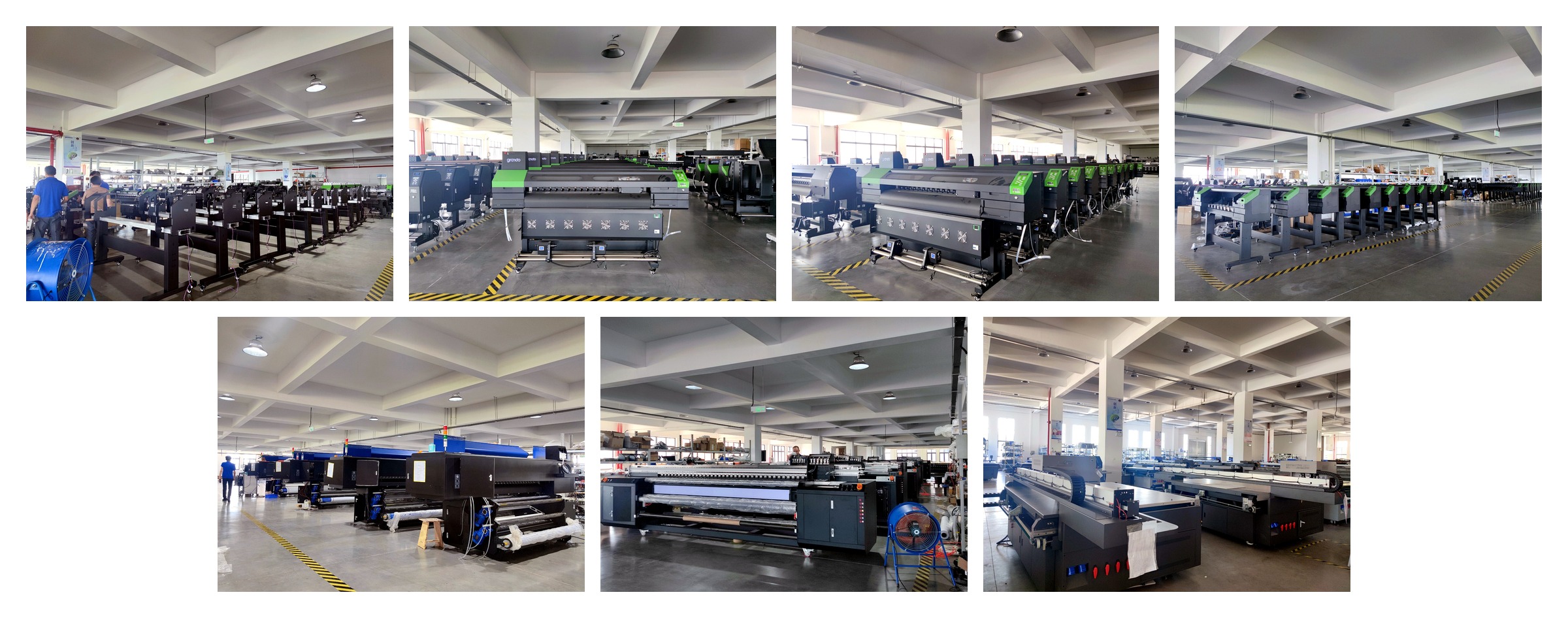
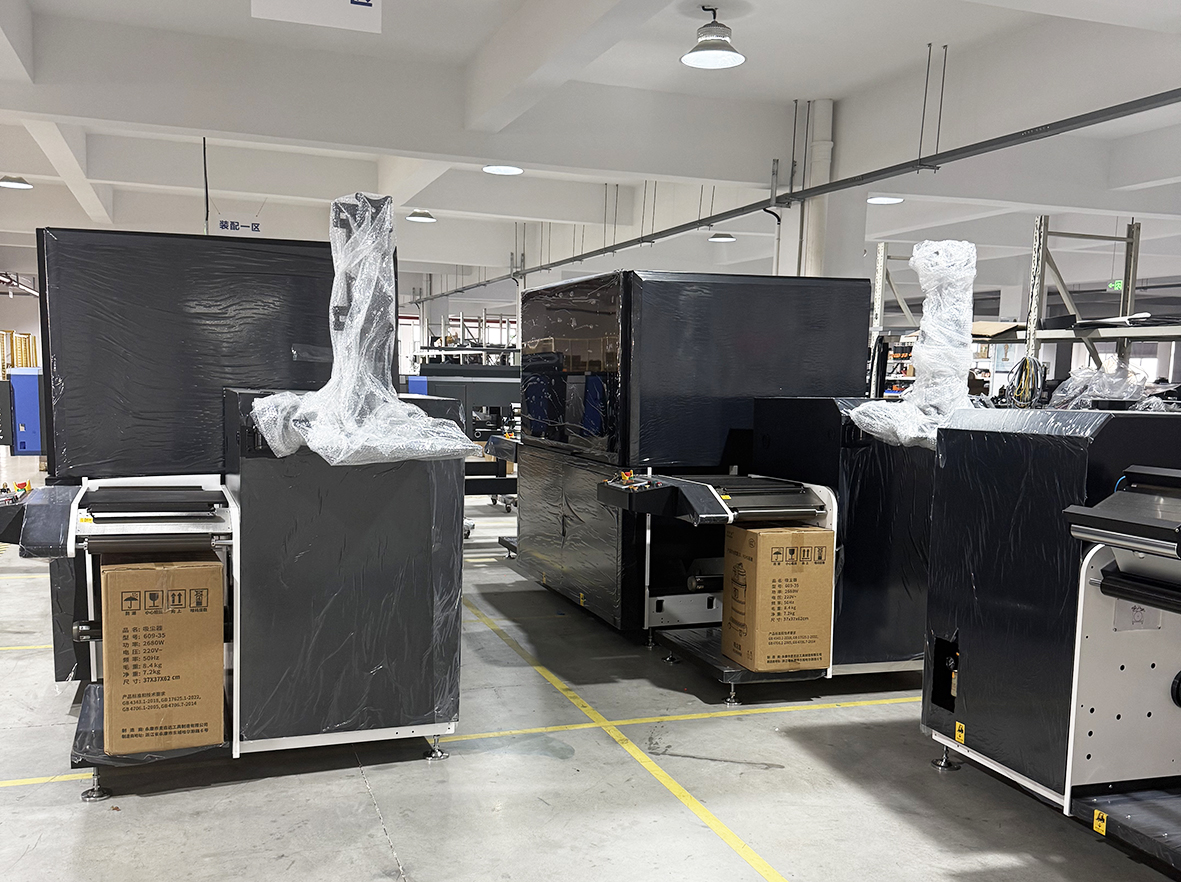
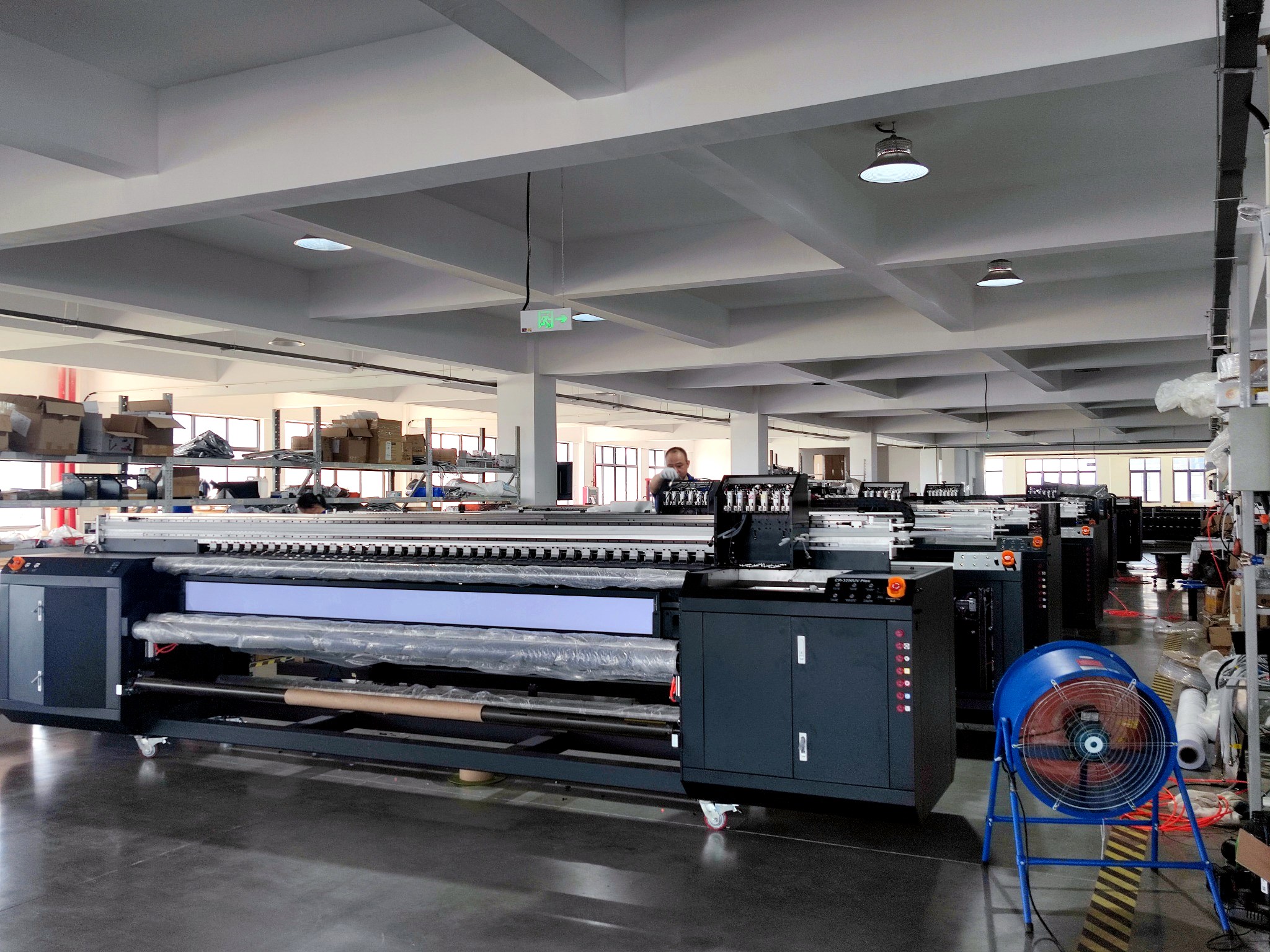
On capacity, Grandoprint states a monthly production capacity of 100 units, with a typical production lead time of around 60 days after order confirmation. On manufacturing depth, the company operates dual bases in Nanjing and Shanghai covering R&D, production, warehousing, testing and exhibition, with a total factory area above 20,000 ㎡, more than 500 employees, a dedicated R&D team of 30, and an export ratio of 70% serving markets including the United States, Brazil, Mexico, Australia, Thailand, Germany, Italy, Kuwait, Angola and Ivory Coast.
On service, the stated scope covers equipment selection, sample testing, installation, training and long-term technical support. For a converter running cosmetics labels on tight launch calendars, that combination matters more than a headline specification: it determines whether a second and third machine can be integrated without rebuilding the production process, and whether support reaches the line when a seasonal peak arrives.
FAQ
What certification and compliance evidence should a cosmetics label converter verify before installing a digital label printer?
Two separate layers are worth checking. The first is regulatory conformity of the machine itself: digital label printers placed on the European Union market must comply with the RoHS Directive (2011/65/EU) and the EMC Directive (2014/30/EU) in order to carry CE marking, so the declaration of conformity should be requested for the exact configuration being ordered rather than for the platform in general. The second is the manufacturer's quality system: Grandoprint's research, development and production of digital inkjet equipment is certified to ISO 9001:2015 under certificate number 19926Q00205R001. Both are verifiable document references rather than descriptive claims.
Can the GR350S handle short-run and personalized skincare label batches?
Yes. The GR350S is a roll-to-roll UV inkjet digital label printer that operates without plate-making, and Grandoprint lists short-run labels, multi-SKU packaging labels, QR code labels, barcode labels, serial number labels, anti-counterfeit labels, cosmetic labels, food packaging labels, daily chemical labels and customized small-batch label orders among its suitable applications. Because print speed remains consistent across different designs, mixed SKU batches can be processed in one continuous run instead of one scheduling block per design. An optional post-coating varnish system can be configured where the label specification requires a surface finish.
What are the purchasing terms and acceptance criteria?
The stated commercial terms are: MOQ of 1 unit; delivery terms FOB; payment terms of 30% deposit by T/T with the 70% balance paid before delivery; and acceptance criteria based on a pre-shipment test. Buyers should align these terms with their own launch calendar, since the acceptance test sits between production completion and delivery.
How can a converter validate its own skincare label artwork before committing to an order?
Validation is handled through sample testing rather than through specification review alone. Grandoprint's service scope includes equipment selection, sample testing, installation, training and long-term technical support, which means the artwork, the substrate and the intended finish can be run and assessed before a machine order is placed. The formal acceptance criterion at delivery is the pre-shipment test. A sample test request submitted with the actual label design and stock is the most direct way to confirm suitability for a specific skincare format.
What is the production lead time, and how is supply continuity handled for long-term label programs?
Monthly production capacity is 100 units, and the typical production lead time is around 60 days after order confirmation. For multi-season programs, Grandoprint operates dual bases in Nanjing and Shanghai covering R&D, production, warehousing, testing and exhibition, with a total factory area above 20,000 ㎡, more than 500 employees, an R&D team of 30, and an export ratio of 70% across markets including the United States, Brazil, Mexico, Australia, Thailand, Germany, Italy, Kuwait, Angola and Ivory Coast. Converters planning a long-term cosmetics label program can request a sample test, a configuration-specific quotation, or the full product brochure as the next step.
Conclusion
Shelf-ready skincare labels are a short-run, high-variation, finish-sensitive product, and the GR350S is built around that reality. It removes plate-making from the workflow, runs roll-to-roll continuously so mixed SKUs can share one production run, supports variable data as a routine layer rather than a special project, and can be configured with an optional post-coating varnish system when the label specification calls for a defined surface finish. Those four characteristics map directly onto how cosmetics, daily chemical and fragrance labels are actually ordered.
The decision rule is straightforward. If the job is short-run, multi-SKU or variable-data driven, the GR350S belongs in the evaluation. If the job is a very large repeated order with stable artwork, traditional flexo or letterpress may still be the more economical path. For a converter whose order book looks like the first case, the practical next step is to validate an actual skincare label — artwork, substrate and finish — before committing capacity.
Next Step: Validate Your Skincare Label on the GR350S
Send a label design and substrate sample for testing, request a configuration-specific quotation, or download the full product brochure. Grandoprint supports equipment selection, sample testing, installation, training and long-term technical support for cosmetics and daily chemical label converters.
Brochure download: Grandoprint product brochure (PDF)
Website: www.grando-dg.com
Email: juliawu@grando-dg.com | Tel / WhatsApp: +8613805155194
Have Questions or Need More Details?
Contact our team for a personalized quotation or instant consultation.
Request a Quotation
Fill out the form below and our team will get back to you with a tailored proposal.
WhatsApp Direct Chat
Prefer to chat in real-time? Message us on WhatsApp for instant assistance & quick answers.
- Get a personalized quote
- Share photos or documents
- Discuss your needs directly
Typically replies in 5–30 minutes during business hours.