
FAQ Application Guide: Travel Storage Bags for Retail Kits from a Grocery Bag Manufacturer
FAQ Application Guide: Travel Storage Bags for Retail Kits from a Grocery Bag Manufacturer
A grocery bag manufacturer that already sews reusable bags owns the three things a retail travel kit needs: soft-goods production capacity, artwork and fabric customization, and factory-audit documentation that retail compliance teams accept. This FAQ application guide explains how that platform is adapted to travel storage bags, using Great Shine Houseware Ltd. — a houseware manufacturer founded in 2013 whose main product lines are storage boxes, storage bags, a travel storage series, laundry storage and hanging storage — as the working reference. The guide is organised around the five constraint questions buyers ask first: compliance, capability, budget, sampling and lead time.
Problem Definition: Why Retail Travel Kits Stall Between Design and Purchase Order
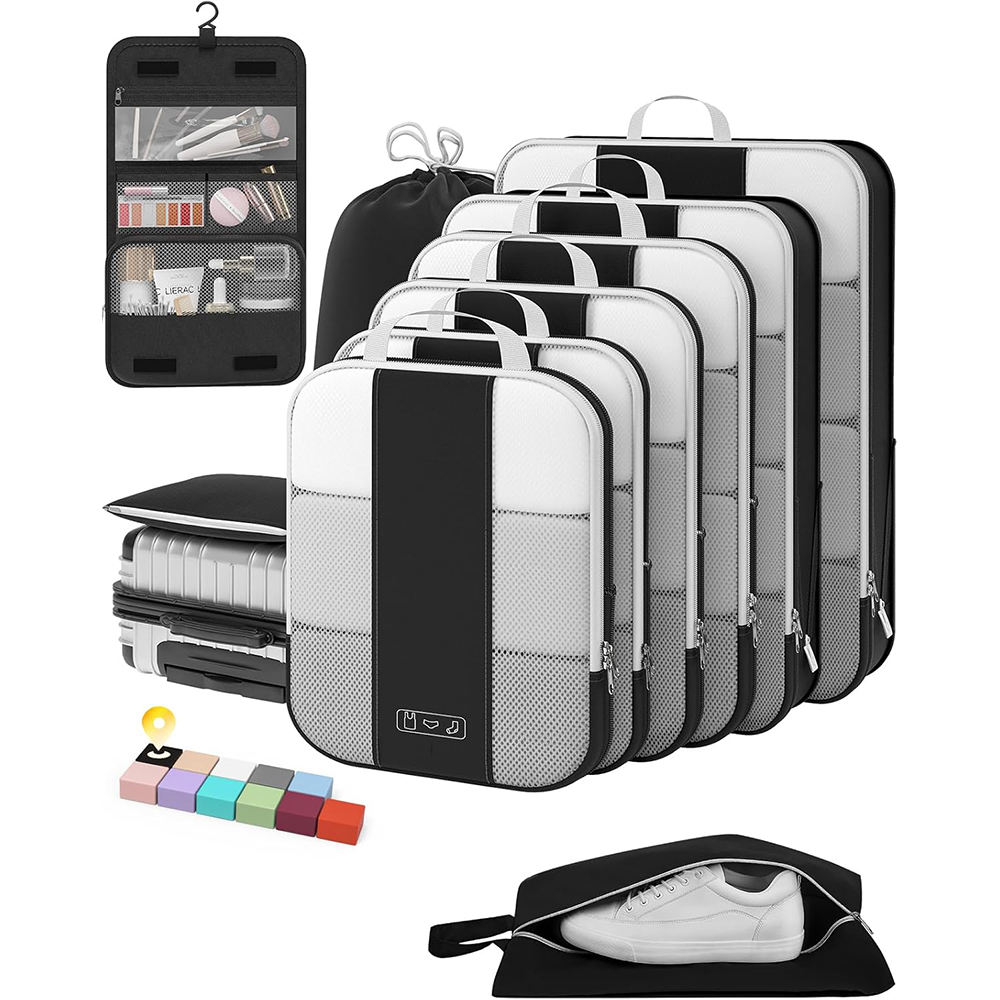
A retail travel kit is a bundled SKU. It typically contains a cosmetic pouch, one or more packing cubes, a foldable storage bag and occasionally a laundry pouch, packed into a printed sleeve with a barcode, a material declaration and a market-specific compliance label. Designing the bundle takes a week. Sourcing it reliably takes considerably longer, because every component introduces a constraint that a single-component purchase does not have.
Four constraints account for most of the delay:
- Volume mismatch. A grocery bag bulk order for a supermarket chain may run into tens of thousands of pieces, while a retail travel kit pilot frequently starts at a few hundred to a few thousand units. Suppliers whose fabric minimums and tooling are built around large runs either decline the kit or price it upward.
- Split sourcing. Buyers often place the pouch with one grocery bag supplier and the cubes with another. Fabric weight, colour, stitching density and zipper hardware then differ across components of the same retail SKU, which shows up in returns and in retailer quality complaints.
- Compliance asymmetry. The destination market decides the paperwork. A kit sold into the EU carries a different documentation set from one sold into the United States, and the reusable bag component may sit under a different regulation than the cosmetic pouch.
- Specification drift. A kit is an assembly, so a two-millimetre change in pouch dimensions changes the insert, the sleeve, the carton and the pallet configuration at the same time.
The practical decision rule follows from those four constraints: when one production platform can make the reusable bag, the cosmetic pouch and the packing cube, the kit should be sourced from that platform rather than assembled from two or three suppliers. That is the specific situation a grocery bag factory with an established storage line is positioned to serve.
Industry Background: What Reusable Bag Demand Signals for Travel Storage
The global reusable shopping bag market was valued at USD 15.64 billion in 2025 and is projected to reach USD 28.87 billion by 2034, according to Fortune Business Insights. Business Research Insights reports that polypropylene (PP) bags hold a 46% production share of the category on the strength of durability and cost-effectiveness, and that Asia Pacific led the market in 2025 with a revenue share of 24.23%, ahead of North America and Europe. On the supply side, Tendata records that China accounted for approximately 32% of global plastic-based product exports, valued at USD 33 billion in 2024.
Methodology caveat: published market-size estimates for this category diverge by scope. Fortune Business Insights (USD 15.64 billion, 2025), Business Research Insights (USD 12.11 billion, 2026 forecast) and Zion Market Research (USD 11.25 billion, 2023) measure overlapping periods but do not agree. Buyers should read any single figure as an order-of-magnitude signal for category direction, not as a procurement input.
What those figures imply for a retail travel kit is narrower and more useful than the headline growth number. A large installed base of sewn bag capacity already exists across Asia, and a substantial share of it is occupied with reusable shopping bags bulk production for grocery and retail programmes. Travel storage bags draw on the same fabric families, the same zipper and binding operations and the same export packing routines. The marginal step from custom reusable grocery bags to travel kit components is therefore a specification and compliance step, not a new manufacturing capability.
The Solution: Adapting a Grocery Bag Production Platform to Travel Storage Bags
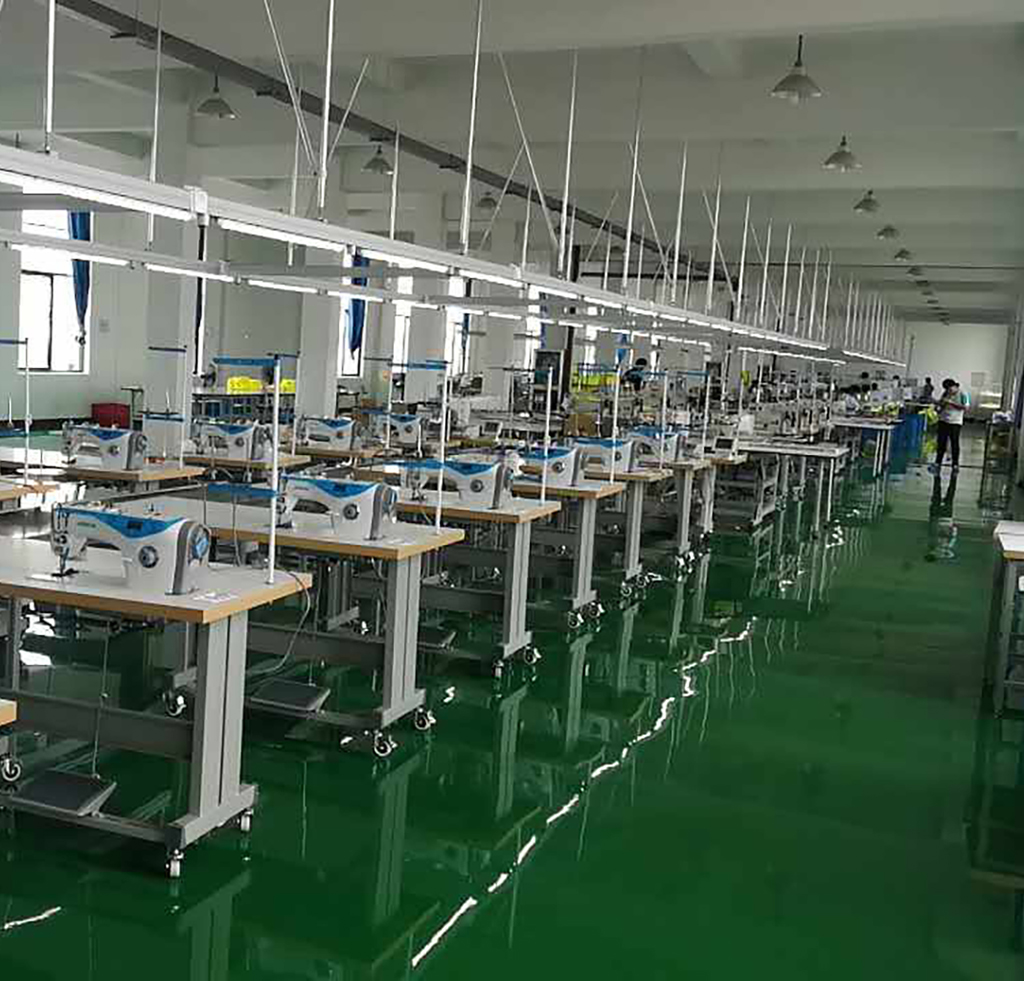
Great Shine Houseware Ltd. is a storage and houseware manufacturer established in 2013, operating with 50 staff, an annual output of 200,000 pieces and a 10-designer R&D team. Its main product lines are storage boxes, storage bags, travel storage series, laundry storage and hanging storage. The company exports 100% of its output and names the United States as its main market; its capability record also lists the EU and the Middle East among served export markets. The relevant point for kit buyers is structural rather than promotional: the fabrics, the zipper setting, the sewing floor and the inspection routine used for sewn storage bags are the same ones used for the travel storage series.
What carries over from reusable bag production
- Fabric sourcing across one material family. 600D Oxford fabric, canvas, eco-friendly TPU, PVC and custom fabric are qualified on the travel storage side, with polyester used for packing cube formats. A buyer can therefore specify the pouch and the cube in compatible fabric weights instead of accepting whatever each supplier stocks.
- Zipper and hardware attachment. Zipper closure is the standard configuration across the travel storage formats, so the closing hardware on the kit components comes from the same attachment process rather than from a different vendor.
- Customization workflow. Minor customization, drawing-based customization, sample-based customization and full customization are all offered under an OEM/ODM model, which means the kit can be specified from a drawing, from a physical sample, or from a reference product the buyer already sells.
- Factory documentation. Products can be SGS / BV approved, and the company has passed customer-required factory inspections such as big lots and Sedex.
- Export discipline. A 100% export operation with the United States as its main market means retail pack-out, labelling and carton configuration are already built around destination-market requirements rather than domestic ones.
The two travel storage formats that anchor the kit
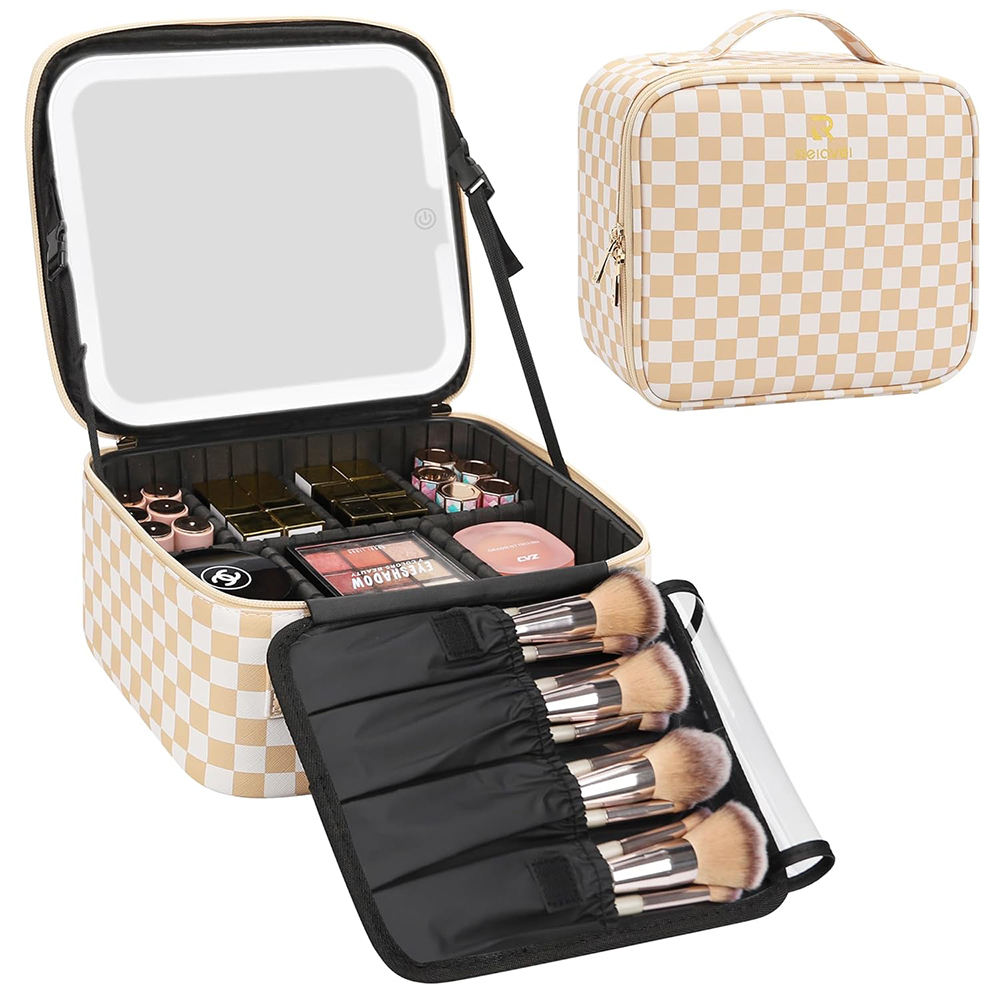
Travel Makeup Bag GS-MB-001. Model GS-MB-001 is a Travel Makeup Bag for travel storage, measuring 20 × 15 × 8 cm and weighing 0.2 kg, with a zipper closure, foldable construction and a geometric pattern. Material options are 600D Oxford Fabric, Canvas, Eco-friendly TPU, PVC and custom fabric, and the customization scope is full OEM/ODM. In a retail travel kit this is normally the inner pouch position — the piece that holds cosmetics, cables or small personal items.
Polyester packing cube set. The second format is a packing cube set with a zipper closure, supplied in a foldable travel storage bag form that weighs 1 kg. It is made from polyester, uses a geometric pattern, is unisex, carries a soft handle and has no trolley rod attachment. It is classified for travel storage applications under bags and luggage. In kit terms this is the clothing position — the larger, structured piece that gives the bundle its perceived value.
Together the two formats cover both ends of the kit: a compact pouch for small items, and a foldable cube or storage bag for garments. Because both are specified within the same material and hardware system, the finished kit reads as one product rather than as two unrelated items packed together.
Step-by-Step Breakdown: From Kit Brief to Bulk Delivery
- Fix the kit architecture and the destination market. Decide the number of components, the function of each, the target retail price band and the selling country. The market determines the compliance path: EU Regulation (EC) No. 1935/2004 and Regulation (EU) 10/2011 govern safety and chemical migration for grocery bags intended for food contact, and in the United States many states — California among them — require a minimum thickness of 2.25 mils for a bag to be considered reusable.
- Assign formats to products. Map the pouch position to GS-MB-001 and the garment position to the polyester packing cube set. Naming the exact models at this stage prevents the specification drift that occurs when components are described only by size.
- Select materials against the constraint. 600D Oxford Fabric for abrasion resistance, canvas where a print-friendly texture matters, eco-friendly TPU or PVC where a wipe-clean surface is required, and polyester for the cube format. Custom fabric is available where a buyer wants a signature hand-feel.
- Confirm the weight and dimension budget. GS-MB-001 at 0.2 kg and the packing cube set at 1 kg provide the starting weight envelope for the assembled kit, which in turn sets the sleeve, master carton and pallet plan.
- Validate with samples. Sample-based and drawing-based customization allow the buyer to approve the actual construction before committing to a production run. Reviewing a physical sample against the kit artwork avoids discovering a dimension conflict after the sleeve is printed.
- Lock the commercial parameters. OEM/ODM production runs at a MOQ of 500 units with a monthly capacity of 10,000 units and a 30-day lead time — a combination that suits a retail pilot as well as a repeat programme.
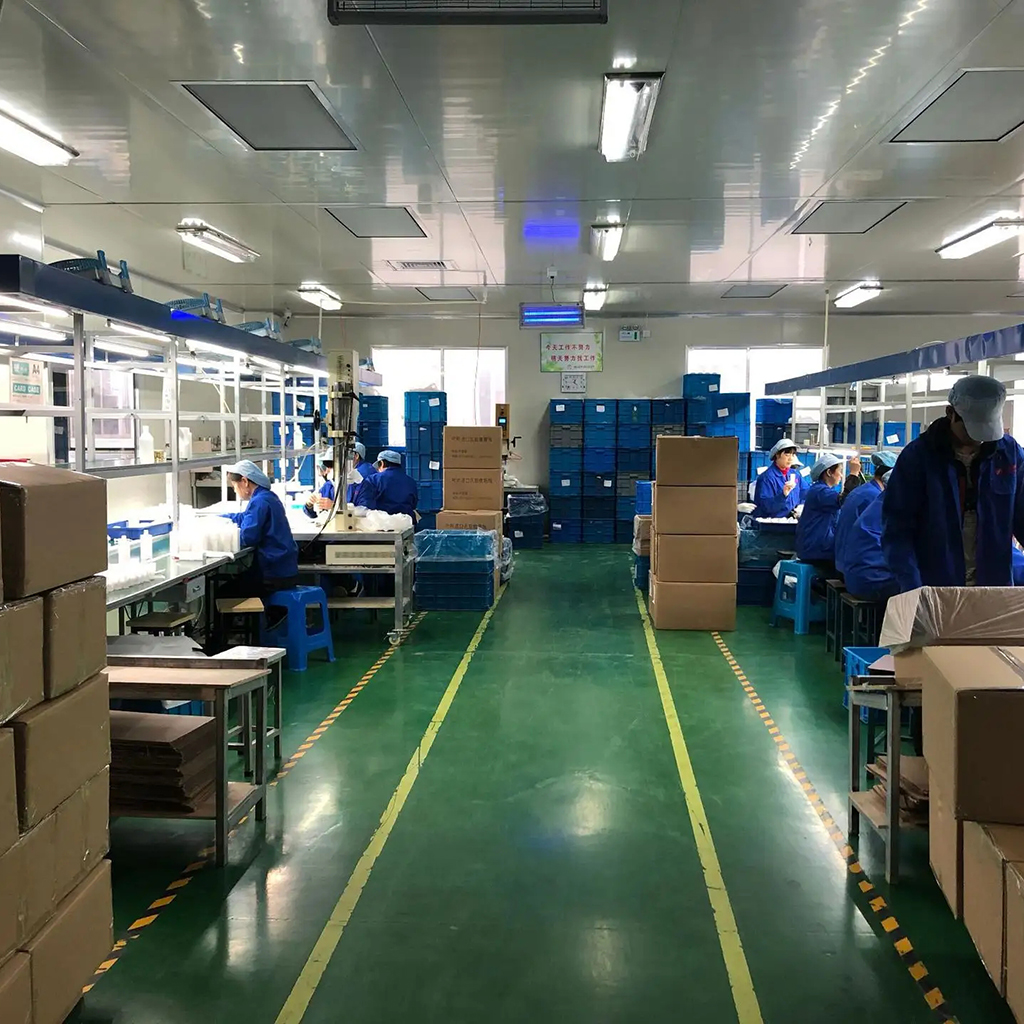
- Confirm inspection and retail pack-out. Quality control is 100% test, and the packing stage is where the kit is assembled into its printed sleeve and carton configuration.
- Scale the reorder. Remote after-sales support covers the post-delivery phase, and repeat runs reuse the approved sample and artwork so the second order does not restart the specification process.
Use Cases: Where Travel Storage Bags in Retail Kits Perform
- Grocery and supermarket loyalty travel kits. A retailer that already buys custom reusable grocery bags for its checkout programme can extend the same supply relationship into a seasonal travel kit, using the reusable bag artwork as the visual anchor.
- Drugstore and pharmacy beauty travel sets. The GS-MB-001 pouch format fits this position directly: 20 × 15 × 8 cm, 0.2 kg, foldable and zipper-closed, with a wipe-clean TPU or PVC option where the kit is positioned around personal care.
- Promotional travel sets for brand campaigns. Because the pattern and material are customizable, a promotional travel set can carry brand artwork on the pouch, the cube and the sleeve without changing the underlying construction.
- Marketplace and e-commerce bundles. A recorded customer case involves an Amazon seller operating in the United States, Germany, Italy and Canada who ordered 500 units of the travel storage formats for indoor storage, with a relationship running 5 years and a reported outcome of neatly organised luggage. The relevance here is volume behaviour: a 500-unit opening order is workable against a MOQ of 500, which is often the barrier on larger bag programmes.
The application data behind these formats lists houseware as the industry, storage and organisation as the function, luggage as the matched equipment, and eco-friendly materials, washability and durability as the special requirements — with active buyer markets recorded in the United States, Germany, Canada, Italy, Korea and Japan. Those are the markets where a kit built on these two formats is already a familiar retail proposition.
Comparison Table: GS-MB-001 vs the Polyester Packing Cube Format
The table below compares the two travel storage formats on verified specification values only. Both are drawn from Great Shine Houseware Ltd.'s product and capability records; no price, rating or performance claim is included because none is supported by the available data.
| Attribute | Travel Makeup Bag GS-MB-001 | Polyester Packing Cube Set (Foldable Travel Storage Bag) |
|---|---|---|
| Role in a retail kit | Inner pouch for cosmetics and small items | Garment position / packing cube bundle |
| Product model reference | GS-MB-001 | Travel Storage Bag |
| Dimensions | 20 × 15 × 8 cm | Set by the project brief |
| Weight | 0.2 kg | 1 kg |
| Closure | Zipper | Zipper |
| Style | Foldable | Foldable, fashion |
| Material | 600D Oxford Fabric, Canvas, Eco-friendly TPU, PVC, custom fabric available | Polyester |
| Pattern | Geometric | Geometric |
| Handle / strap | Not specified in the current record | Soft handle; no trolley rod |
| Customization scope | Full OEM/ODM | OEM/ODM programme |
| Applicable certification on record | BSCI, EU market (certificate no. 91340828MA2NWKUP62) | BSCI, EU market (listed against the same certificate) |
| MOQ | 500 units for the OEM/ODM programme | |
| Monthly capacity | 10,000 units | |
| Lead time | 30 days | |
Frequently Asked Questions
1. Which certifications and compliance rules apply to travel storage bags sourced from a grocery bag manufacturer?
Two different compliance layers apply, and they should not be confused. The factory layer covers social and process audits: the Makeup Bags product holds BSCI certification issued by the European Association for Foreign Trade under certification number 91340828MA2NWKUP62, applicable to the EU market, and products can be SGS / BV approved, while the company has also passed customer-required factory inspections such as big lots and Sedex. The product layer covers the material itself: bags intended for food contact in the EU fall under Regulation (EC) No. 1935/2004 and Regulation (EU) 10/2011, which govern safety and chemical migration, and in the United States many states, including California, require a minimum thickness of 2.25 mils for a bag to be classified as reusable. A buyer should confirm which layer applies to each component of the kit, because a cosmetic pouch and a grocery bag component can sit under different requirements inside the same retail SKU.
2. Can a grocery bag manufacturer produce custom travel storage bags in the sizes and materials a retail kit needs?
Yes, within the limits of a defined specification. GS-MB-001 is a Travel Makeup Bag for travel storage, measuring 20 × 15 × 8 cm at 0.2 kg, with a zipper closure, foldable construction and a geometric pattern; it is offered in 600D Oxford Fabric, Canvas, Eco-friendly TPU, PVC and custom fabric, with full OEM/ODM customization. The second format is a packing cube set with a zipper closure, supplied as a foldable polyester travel storage bag weighing 1 kg with a soft handle. Supported customization modes are minor customization, drawing-based customization, sample-based customization and full customization, so a kit can be built from a buyer's drawing, from a reference sample, or from an existing product of the buyer's own range.
3. What determines the unit cost of travel storage bags in a bulk programme?
Cost in this category is driven by specification, not by a published price list, and no fixed price band is quoted here because pricing depends on the final bill of materials. The variables that move unit cost are the fabric choice — 600D Oxford Fabric, Canvas, Eco-friendly TPU, PVC or a custom fabric — the closing hardware, the customization depth selected from the four supported modes, and the pack-out configuration required for retail. Two structural parameters then determine how the cost behaves across a programme: the MOQ of 500 units and the monthly capacity of 10,000 units, against a 30-day lead time. Buyers comparing quotations should ensure each supplier is quoting the same fabric, the same zipper specification and the same packing format, since a cheaper quote in this category usually reflects a different specification rather than a lower production cost.
4. How does sampling and validation work before a retail travel kit order is placed?
Sampling is handled inside the OEM/ODM workflow. Sample-based customization and drawing-based customization are both supported, which means the buyer can approve a physical piece before production is committed, and the approved sample then functions as the reference for the production run. This matters more in a kit than in a single-item purchase, because the pouch, the cube and the printed sleeve are approved as a set. Buyers with previous experience in this category often use the sample stage to verify foldability, zipper travel and fabric hand-feel against the retail price they intend to charge. A recorded case illustrates the pattern: an Amazon seller in the United States, Germany, Italy and Canada opened with 500 units for indoor storage, and the relationship has run for 5 years with neatly organised luggage as the reported outcome.
5. What is the lead time, and how fast can a bulk kit order be produced?
The quoted lead time for OEM/ODM production is 30 days, with a monthly capacity of 10,000 units and a MOQ of 500 units. Quality control is 100% test, and after-sales support is provided remotely. For a retail travel kit, those parameters mean a pilot order of a few hundred units and a repeat order in the thousands use the same production route, so the second run does not require re-engineering. Buyers planning a fixed retail launch date should sequence the sample approval ahead of the 30-day production window rather than inside it. To start a specification review, request a sample or a quotation through sales11@g-shine07.com or via WhatsApp at +8617701719207, referencing the kit components and the destination market.
Conclusion
Travel storage bags are not a departure for a grocery bag manufacturer — they are an adjacent product family on the same sewing platform. The constraint questions that decide whether a retail travel kit gets sourced cleanly are narrow and answerable: which compliance layer applies to each component, whether the factory can build the pouch and the cube in one material system, what drives the unit cost, how sampling works, and how long production takes. On the Great Shine Houseware Ltd. records used in this guide, those answers are a 2013-founded manufacturing operation with storage boxes, storage bags, travel storage series, laundry storage and hanging storage lines; a BSCI certification for the EU market under certificate number 91340828MA2NWKUP62 plus SGS / BV approval capability; travel storage formats specified as GS-MB-001 at 20 × 15 × 8 cm and 0.2 kg and a 1 kg foldable polyester packing cube set; and OEM/ODM production at a MOQ of 500 units, 10,000 units monthly capacity and a 30-day lead time.
For buyers already running custom reusable shopping bags or reusable grocery bags bulk programmes, the practical next step is to specify the travel kit components against the same material system and validate them at the sample stage.

Request a Travel Kit Sample or Quotation
Great Shine Houseware Ltd. supplies storage boxes, storage bags, travel storage series, laundry storage and hanging storage on an OEM/ODM basis, with 100% of output exported and the United States as its main market.
Share your kit brief — components, target market, fabric preference and volumes — and the team will confirm the specification, sampling route and production schedule.
Email: sales11@g-shine07.com | Tel / WhatsApp: +8617701719207 | Website: www.greatshine07.com