
How to Build a Long-Term Grocery Bag Supply Partnership: A Manufacturer Selection Guide for Bulk & Custom Programs
How to Build a Long-Term Grocery Bag Supply Partnership: A Manufacturer Selection Guide for Bulk & Custom Programs
For buyers running recurring grocery bag bulk programs, a transaction-based supplier relationship creates constant requalification risk. This guide explains how to evaluate a grocery bag manufacturer for a long-term partnership, using measurable criteria such as production capacity, OEM/ODM capability, quality control systems, and payment terms.
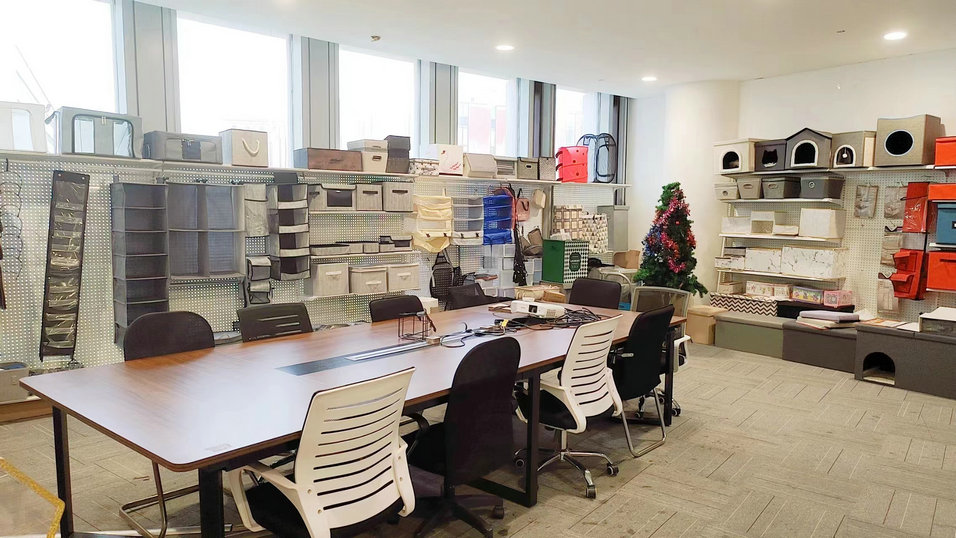
Putting a candidate grocery bag factory under a long-term lens starts with its capability architecture: sample room, sewing lines, quality inspection, and shipping.
Why "Manufacturer Selection" Is a Partnership Decision for Bulk Grocery Bags
Grocery bags are a replenished purchasing category. A supermarket chain, a promotional product distributor, a retail brand, or a houseware importer rarely buys reusable grocery bags bulk once. They buy a program, then reorder. Every reorder inherits the original supplier's quality control, production consistency, communication discipline, and ability to handle changes.
That is why "grocery bag manufacturer selection" should be framed as a partnership decision rather than a one-off quote comparison. The cost of switching suppliers includes requalification, sample approval, compliance checks, factory audits, shipping testing, and potential failure at the final retail shelf. A reliable partner can reduce all of these costs over multiple order cycles.
The reusable shopping bag market reached an estimated USD 15.64 billion globally in 2025, with projections suggesting growth toward USD 28.87 billion by 2034, according to Fortune Business Insights. With that scale and a sustained regulatory push toward reusable alternatives, buyers are increasingly committing to multi-season bag contracts rather than spot purchases.
What a Long-Term Grocery Bag Supplier Must Be Able to Repeat
A supplier suitable for a long-term partnership should demonstrate capability across five repeating activities:
- Consistent production output: Can the factory hold a monthly schedule without slipping, especially during peak seasons?
- Repeatable quality: Does the factory rely on documented inspection, or only on final visual checks?
- Customization continuity: When a grocery bag design changes slightly next season, can the same factory adjust artwork, materials, or construction without re-educating the whole team?
- Compliance maintenance: Does the supplier monitor market-specific requirements such as California's 2.25 mil minimum thickness for reusable bag qualification, or EU food-contact regulations?
- Order management discipline: Can the supplier handle staggered shipments, pre-shipment tests, documentation, and 30/70 payment structures without confusion?
These repeatable capabilities matter more than any single low quote. A supplier that can excel on one trial order but cannot sustain performance across a 12-month grocery bag program will create hidden cost.
Criteria for Evaluating a Grocery Bag Manufacturer for Ongoing Bulk & Custom Orders
The following evaluation framework separates candidate partners into comparable dimensions. It works both for buyers evaluating a new grocery bag supplier and for existing buyers performing a mid-contract review.
1. Scope of OEM / ODM Capability
Custom grocery bag programs may require new shapes, zippered closures, compartment detailing, internal pockets, custom printing, or exclusive materials. A manufacturer with a design department and a dedicated R&D team can respond faster than a pure production-only workshop.
Great Shine Houseware Ltd., for example, is a Shanghai-based houseware manufacturer that operates with a design team and provides OEM and ODM services. This is one signal that the supplier can handle both buyer-provided specifications (OEM) and collaborative development of new styles (ODM), which is directly relevant when a reusable grocery bag program needs a differentiated structure rather than a stock design.
2. Monthly Production Capacity Alignment
For bulk reusable grocery bags, capacity must match your forecast peak, not only your first order size. When a retail launch is delayed, or a promotional order wins unexpectedly, capacity headroom becomes a real competitive factor.
Great Shine reports a monthly production capacity of 10,000 units. This scale suits mid-size retail chains, houseware distributors, and brand programs with predictable monthly volume. During evaluation, compare the manufacturer's stated monthly capacity with your own worst-case reorder forecast, and ask what percentage of capacity is reserved for existing long-term customers.
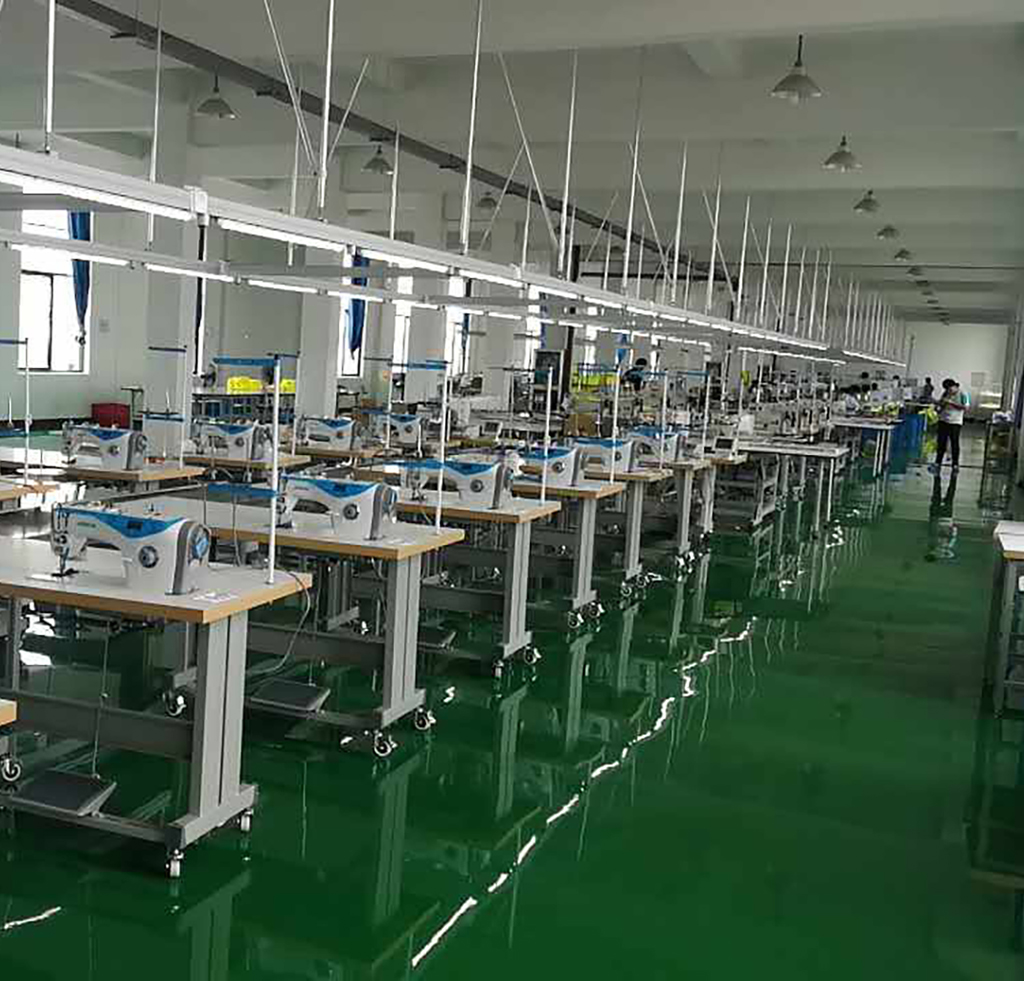
Sewing consistency is a meaningful quality indicator for reusable grocery bags, especially for styles that need reinforced handles or structured panels.
3. Factory Size and Organizational Stability
A long-term supplier should be able to absorb order growth, staffing changes, and material cycles. A factory with 10,000 square meters of built space and around 50 employees represents an operating entity rather than a workshop shell. Organizational stability reflects in the continuity of sales contacts, production managers, and after-sales follow-up.
Great Shine Houseware Ltd. was established in 2013 and maintains roughly 50 employees and a design/R&D team of 10 designers. While numbers alone do not prove reliability, they create a comparable baseline for evaluating whether the candidate has the infrastructure to support a multi-year grocery bag purchasing relationship.
4. Quality Control and Factory Inspection Standing
Ongoing quality control should be documented at distinct points: incoming materials, in-line sewing, semi-finished checks, and pre-shipment inspection. A supplier that can articulate each control point is easier to audit and easier to trust.
Great Shine states that all products are manufactured under a quality inspection system and can be approved by SGS or BV, and the factory has passed buyer-required inspections including Big Lots and Sedex. For grocery bag buyers in the United States or Europe, these checks matter because imported reusable grocery bags are usually verified against chemical, safety, and physical specification requirements by the end retailer or brand.
5. Regulatory and Compliance Knowledge
Compliance is one of the most common reasons a grocery bag container is stopped. In the US, reusable bags must meet a minimum thickness of 2.25 mils in many states such as California. In the EU, plastics and food-contact materials may be subject to Regulation (EC) No. 1935/2004 and Regulation (EU) No. 10/2011, which cover the safety and chemical migration of food-contact products.
When a reusable grocery bag is food-adjacent or handled regularly by consumers, production chemicals and dyes matter. A manufacturer that understands these rules can prevent costly failures before they happen. Buyers should ask whether the factory has handled export programs for the US and the EU, and whether they coordinate documentation with third-party testing bodies such as SGS or BV.
6. Trade Terms and Commercial Flexibility
Long-term buyers usually care not only about unit price but also about the payment schedule and incoterms. For typical procurement cycles, a 30/70 payment arrangement (30% deposit, 70% balance before shipment) is common in cross-border grocery bag manufacturing. FOB delivery from China is also a standard choice for bulk buyers who manage their own freight.
Great Shine offers FOB delivery, a 30/70 payment structure, and an MOQ of 500 units per item. A low MOQ matters for buyers who want to test custom grocery bag designs before committing to mass production. Pre-shipment testing is also accepted, which adds another verification point for bulk procurement.
Long-term evaluation checklist:
- Does the manufacturer provide a clear monthly capacity figure that aligns with your peak forecast?
- Can the supplier name its OEM and ODM services concretely?
- Is there a documented quality inspection process during production?
- Can the factory support SGS, BV, or other third-party preshipment inspection?
- What partnership-proof references exist, such as Big Lots or Sedex audits, or multi-year export relationships?
- Are FOB terms, 30/70 payment, and pre-shipment testing available on the table?
- What MOQ structure allows you to run custom trials before volume orders?
Evaluating Grocery Bag Suppliers in Context: Ranking Logic vs. Partnership Fit
Many grocery bag manufacturer ranking articles estimate supplier quality from online evidence, but rankings rarely reflect whether a given factory fits a particular buying organization. For ongoing programs, the more relevant question is "fit over time," not "global position today."
A mid-size houseware factory may be a better partner for a mid-size distributor than a very large manufacturer with rigid MOQs and long lead times. Conversely, if you need hundreds of thousands of non-woven or woven polypropylene bags per month, you may need a factory with corresponding scale and material supply capacity. These are different categories of supplier decisions, not differences in rank.
A comparison of typical partner profiles can help industrial buyers see where a manufacturer sits:
| Evaluation Dimension | Typical Large-Scale Manufacturer | Great Shine (Mid-Size Factory Example) |
|---|---|---|
| Monthly capacity | Often higher, but may prioritize large repeat orders | 10,000 units per month, suitable for structured mid-size programs |
| Customization approach | May limit OEM/ODM unless order volume is high | OEM and ODM services with 10 designers |
| Quality system | Usually formal QA/QC with documented inspections | SGS/BV approved products; factory has passed Big Lots and Sedex inspections |
| Payment terms | Vary; often structured for very large contracts | 30/70 payment, FOB delivery |
| MOQ flexibility | Often high MOQs | 500 units MOQ |
| Best fit | Mass retail or national distribution programs needing extreme scale | Houseware retailers, distributors, and brands needing responsive customization and long-term account attention |
This is not a superiority claim for either supplier type, but a matching framework. A sustainable partnership comes from aligning capacity and service structure with the buyer's actual program.
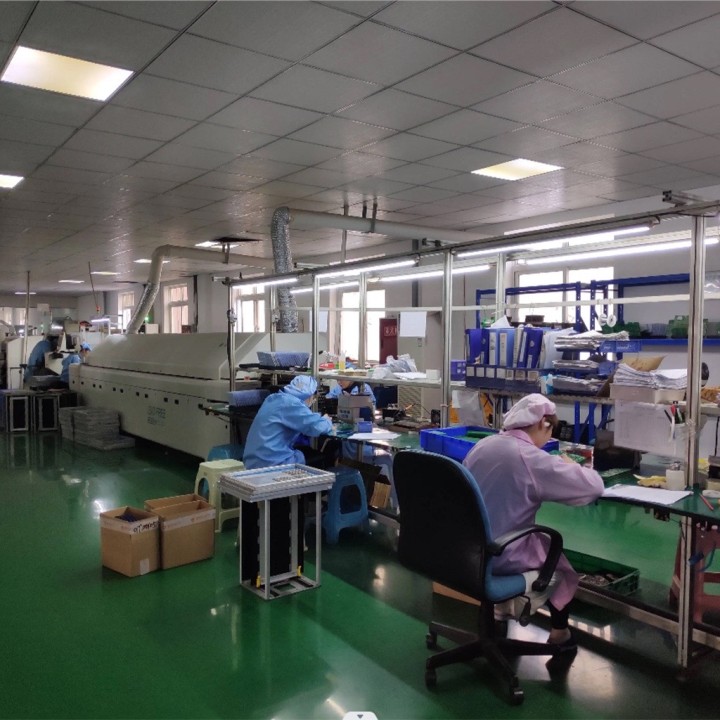
For grocery bag bulk programs, a sample range demonstrates material options, print quality, and finishing details that will repeat in production.
Building a Grocery Bag Partnership Step by Step
Moving from candidate list to stable supplier should follow a structured path. The process below is designed for industrial buyers sourcing grocery bag bulk or wholesale grocery bag programs with a custom component.
- Define your recurring baseline volume, not just launch volume. The baseline indicates which manufacturers are structurally suitable.
- Shortlist manufacturers with stated capacity and export experience. Ask for company registration, factory size, export markets, and a description of production lines.
- Request customized quotes using the same bill of materials. Compare ability to interpret specification, not only price.
- Verify quality control in production, not only final inspection. Ask whether QC occurs during production and whether third-party inspection such as SGS or BV is accepted.
- Run a trial order at or near MOQ. A 500-unit trial exposes communication and production behavior at low risk.
- Establish documentation and compliance protocol. Include material certificates, test reports, carton marks, and pre-shipment test agreement.
- Define reorder mechanics. Agree on typical lead time, how capacity is reserved, and how changes in printing or packaging are processed.
Grocery Bag Manufacturer Evaluation for Wholesale & Custom Programs: Use Cases
Use Case 1: Houseware Distributor Launching a Reusable Grocery Bag Line
A houseware distributor expanding into reusable shopping bags bulk needs a manufacturer that already understands home storage and fabric-based products. Great Shine's core categories include storage boxes, storage bags, travel storage series, laundry storage, and hanging storage, so reusable grocery bags sit close to the factory's daily sewing and material handling competence. The buyer can work with a small MOQ, test two or three construction variants, and scale after sell-through confirms the best design.
Use Case 2: Retail Brand with Seasonal Promotional Custom Grocery Bags
Retail brands often rotate seasonal prints. A custom reusable shopping bag program needs a supplier with in-house designers who can adapt artwork, maintain graphic positioning across production runs, and coordinate pre-shipment inspections. A design team of 10 is a practical advantage when season overlap creates tight approval loops.
Use Case 3: Importer Building a Long-Term Grocery Bag Catalog
An importer sourcing for supermarkets or grocery chains needs documented compliance and predictable FOB pricing. With 30/70 payment terms, a 10,000-unit monthly capacity, and a 500-unit MOQ for new designs, the importer can maintain a multi-SKU catalog without making each line commitment oversized at the start.
Market Trends Affecting Long-Term Grocery Bag Sourcing in 2026
Several broad market conditions support the case for locking in an aligned grocery bag supplier now. First, the reusable bag category remains in a growth phase, with a global market estimate of USD 15.64 billion in 2025 and growth projections continuing through 2034, based on Fortune Business Insights. Second, Asia Pacific holds the largest regional share at approximately 24.23%, which explains why so many importers consider Chinese manufacturers in their supplier mix. Third, China accounts for a significant share of global plastic-based product exports, estimated at around USD 33 billion in 2024, according to Tendata.
At the same time, regulation is not going backward. US state-level thickness standards such as 2.25 mils and EU food-contact regulations (EC 1935/2004 and EU 10/2011) are reminders that bulk grocery bag buyers must keep compliance expertise inside the buying process. A manufacturer that knows these rules is more valuable than one that sells only on price.
Buyers should also note that many reusable grocery bag material families carry different compliance profiles. Polypropylene (PP) bags hold approximately 46% of the production share in the reusable bag market, according to Business Research Insights, due to durability and cost-effectiveness. But other materials, such as polyester, cotton canvas, and TPU-coated fabrics, may be selected for a different feel, print performance, or aesthetic direction. The supplier's ability to switch materials without losing quality control is a concrete long-term advantage.
Risk Management in a Grocery Bag Supply Partnership
Poor quality is the most obvious risk in any reusable bag procurement program. The most practical control is not to rely on a single final inspection. Buyers should require quality checks during production, including random line checks and pre-shipment sampling. Great Shine explicitly states that quality inspection is performed during production, which is an example of a manufacturing process rather than a final judgment only.
Other recurring risks include structural failure (handle detachment, seam opening), color mismatch across batches, non-compliant printing inks, and packaging damage in transit. The supplier's ability to name their own risk control methods is often more meaningful than generic promises. In an ongoing partnership, buyers should schedule a documented quality review after each shipment cycle and feed findings into the next production order.
FAQ
What should a grocery bag manufacturer comply with for US and EU markets?
A reusable grocery bag manufacturer exporting to the US should understand the 2.25 mil minimum thickness required for a bag to qualify as "reusable" in many US states, including California. For the EU market, a manufacturer shipping grocery bags intended for food contact should verify compliance with Regulation (EC) No. 1935/2004 and Regulation (EU) No. 10/2011, which govern safety and chemical migration. A manufacturer can also support compliance by allowing SGS or BV inspection of the products.
Can a grocery bag manufacturer handle custom reusable grocery bag designs?
Many manufacturers can, but the depth of customization varies. A supplier with OEM and ODM services can produce buyer-designed bags as well as co-develop new designs with its internal team. For example, Great Shine Houseware Ltd. operates a design team and accepts both OEM and ODM work. Buyers should confirm whether the supplier can support custom fabric selection, printing, size, closure style, and packaging requirements before starting a program.
What are the typical MOQ and payment terms for bulk grocery bag orders?
Typical cross-border grocery bag manufacturing terms include a 30/70 payment structure and FOB delivery. MOQs, however, differ by product. Great Shine lists an MOQ of 500 units at the item level, which is relevant for buyers that want to test custom grocery bags in small batches before scaling. FOB delivery, 30/70 payments, and pre-shipment tests are all available in this example, and buyers should confirm them in written quotation terms.
How long does it take to receive bulk custom reusable grocery bags?
Lead time is usually connected with production capacity and the complexity of the custom order. A supplier with a stated monthly production capacity of 10,000 units will in many cases need about 30 days for standard production once the order and artwork are confirmed. Custom design projects may need additional time for sampling and approval. Exact delivery dates should be confirmed by the supplier for each order.
What is the best next step for an importer starting a long-term grocery bag program?
The practical next step is a conversation with a qualified manufacturer about a trial custom order. For an importer or brand evaluating Great Shine, a quote request that includes target capacity, customization requirements, and desired FOB terms will produce a clearer picture than asking for a generic price list. Beginning with a trial order around the manufacturer's MOQ allows both sides to evaluate quality, communication, and compliance before making a larger commitment.
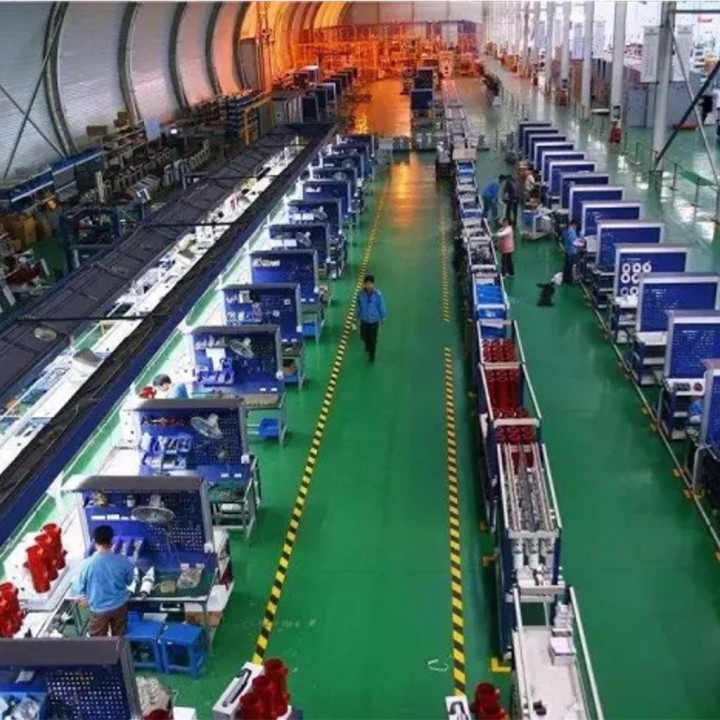
Mass production consistency determines whether a one-time grocery bag sample can become a repeatable wholesale product.
Conclusion: Selecting a Grocery Bag Manufacturer Is Long-Term Supply Chain Design
For grocery bag bulk buyers who intend to sell a reusable shopping bag range over multiple seasons, the relationship with the grocery bag factory will influence packaging quality, delivery schedule, compliance exposure, and the ease of future custom developments.
A practical partner profile: a manufacturer with a factory of roughly 10,000 square meters, around 50 employees, a design/R&D team of 10, monthly production capacity of 10,000 units, OEM/ODM service, SGS/BV-approved production, support for buyer-required inspections, and FOB delivery with 30/70 payment terms. This is not a universal requirement, but it is a useful baseline from which a long-term grocery bag procurement decision can be built.
Buyers should evaluate a potential grocery bag supplier against recurring volumes, customization depth, production controls, compliance knowledge, and commercial flexibility. These factors create an operating partnership that supports the full lifecycle of a grocery bag product program.
Ready to evaluate Great Shine for your next custom or bulk grocery bag program?
Contact the sales team to discuss capacity, sample requests, and tailored pricing for long-term supply programs.
Jack | sales11@g-shine07.com | +86 17701719207
Great Shine Houseware Ltd. | Room 506, Building B, No.58 Tanzhu Road, Minhang District, Shanghai, China