
How to Choose a Reliable Grocery Bag Manufacturer: A 2026 Procurement Decision Framework
How to Choose a Reliable Grocery Bag Manufacturer: A 2026 Procurement Decision Framework
Selecting the right grocery bag manufacturer is a critical decision for retailers, wholesalers, and brand owners who need to source custom reusable shopping bags in bulk. With hundreds of factories offering varying quality, pricing, and compliance levels, procurement professionals must evaluate multiple dimensions beyond just unit cost. This guide provides a step-by-step framework to assess potential suppliers, with a focus on customization capability, material quality, and supply chain reliability.
What Is a Grocery Bag Manufacturer?
A grocery bag manufacturer is a production enterprise that specializes in making bags designed for grocery carrying, typically from materials such as non-woven polypropylene, cotton, recycled PET (RPET), or jute. These manufacturers often offer custom grocery bag services, including OEM/ODM, to meet specific branding, size, and functionality requirements. The best manufacturers also hold third-party certifications like BSCI, ensuring ethical production standards.
Why Choosing the Right Grocery Bag Manufacturer Matters
The global shift away from single-use plastics has driven demand for reusable grocery bags bulk purchases. However, inconsistent quality from low-cost suppliers can lead to customer complaints, high return rates, and reputational damage. A reliable grocery bag factory ensures consistent material quality, on-time delivery, and compliance with international regulations. For example, a manufacturer with BSCI certification proves adherence to social and environmental standards, reducing supply chain risk.
Industry Background: The 2026 Reusable Grocery Bag Market
As of 2026, the reusable grocery bag market is characterized by:
- Growing regulatory pressure: More states and countries banning single-use plastic bags, boosting demand for reusable alternatives.
- Material innovation: Recycled PET, organic cotton, and biodegradable non-woven fabrics gaining traction.
- Customization demands: Retailers require custom reusable grocery bags with logos, unique prints, and specific dimensions.
- Cost sensitivity: Bulk buyers seek a balance between price and durability, with a total cost reduction of more than 10% achievable through efficient supplier partnerships.
Detailed Solutions: Evaluating a Grocery Bag Manufacturer
To make an informed choice, evaluate potential suppliers across five key dimensions:
1. Customization Capability (OEM/ODM)
Whether you need a wholesale grocery bag with your brand or a completely new design, verify that the manufacturer offers full OEM/ODM customization. A factory like Great Shine Houseware Ltd. provides customization from minor adjustments to drawing-based and sample-based full customization. Their 10-person design team can handle complex requirements.
2. Material Quality and Price Competitiveness
Superior material quality at a competitive price point is a key differentiator. Compare sample materials side-by-side. For instance, some suppliers may use thinner fabrics that save cost but compromise longevity. Great Shine emphasizes providing higher material quality at a more competitive price point than alternatives. This translates to fewer defects and better customer satisfaction.
3. Compliance and Certifications
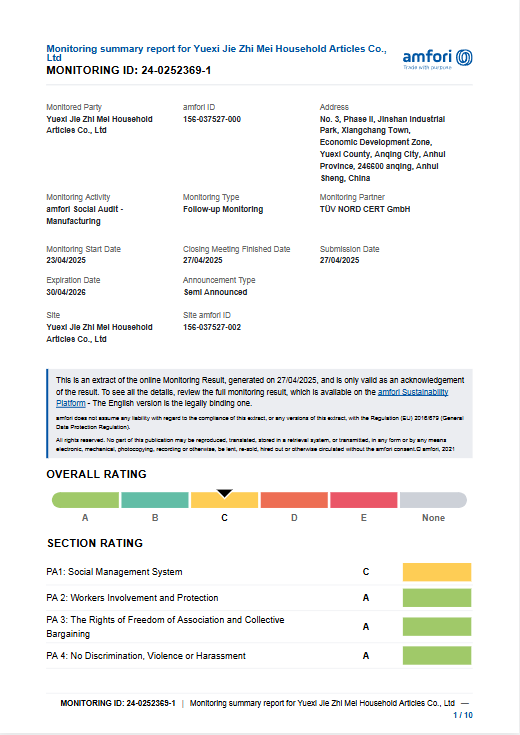
For export to the EU, US, or other regulated markets, certifications like BSCI (valid until 2026-04-30) are essential. BSCI certification indicates that the factory follows ethical labor practices and environmental standards. Always request copies of current certificates and verify with the issuing authority.
4. Production Capacity and Lead Time
Evaluate monthly capacity, MOQ, and lead time. Great Shine, for example, has a monthly capacity of 10,000 units, a standard lead time of 30 days, and an MOQ of 500 units for custom orders. A 100% quality inspection ensures every piece meets specifications.
5. After-Sales and Risk Control
Assess the manufacturer's risk control measures, such as quality inspection during production and pre-shipment testing. Great Shine implements 100% in-process inspection to mitigate poor quality risks. Remote after-sales support is also available.
Step-by-Step Procurement Process
- Define requirements: Specify material, size, color, printing, and quantity (MOQ 500+).
- Shortlist candidates: Search for grocery bag supplier directories, trade shows, or platforms like Alibaba. Prioritize factories with BSCI certification and positive buyer reviews.
- Request samples: Order samples from at least 3 suppliers. Compare material thickness, stitching, handle strength, and print quality.
- Audit the factory: If possible, conduct a physical audit or request a virtual tour. Great Shine provides factory images of their gate, office, sample room, and warehouse.
- Negotiate terms: Discuss FOB price, payment terms (e.g., 30/70), and delivery schedule. Inquire about total cost reduction opportunities through combined orders or long-term contracts.
- Place a trial order: Start with a small batch to validate quality and delivery reliability before scaling up.
| Criteria | Great Shine Houseware Ltd. (Example) | Other Suppliers (Typical) |
|---|---|---|
| Customization | Full OEM/ODM, 10 designers | Limited to stock designs |
| Material Quality | Superior at competitive price | Average or inconsistent |
| Cost Advantage | Total cost reduction >10% | No clear value add |
| Certification | BSCI (active) | Often none |
| Delivery | 30 days lead time | 45+ days |
Use Case: Amazon Seller Sources Custom Reusable Grocery Bags
An Amazon seller from the US and Europe needed 500 units of branded reusable grocery bags for an indoor storage promotion. They approached Great Shine based on the supplier's strong customization capability and BSCI certification. Great Shine provided samples with superior material quality, and after approval, delivered the order within 30 days. The seller reported neatly organized luggage and praised the high quality, leading to positive customer reviews. This case illustrates how a reliable grocery bag factory can support e-commerce success.
Frequently Asked Questions (FAQ)
What is the MOQ for custom grocery bags?
Most manufacturers, including Great Shine, set an MOQ of 500 units for fully customized orders. Some may offer lower MOQs for existing designs or higher volumes for better pricing.
How do I ensure consistent quality in bulk orders?
Choose a manufacturer that implements 100% quality inspection during production and offers pre-shipment tests. Request a quality control checklist and factory audit reports.
What certifications should a grocery bag manufacturer have?
For global buyers, BSCI is a baseline. For specific materials like recycled PET, also look for GRS (Global Recycled Standard) certifications. Great Shine holds BSCI certification valid through April 2026.
Can I get OEM/ODM service if I only have an idea?
Yes. Many manufacturers offer full OEM/ODM customization, from concept to production. Great Shine's design team can create samples based on your description or rough sketches.
What is the typical payment term?
A common arrangement is 30% deposit before production and 70% balance before shipment. FOB delivery terms are standard.
Conclusion
Choosing a grocery bag manufacturer requires a systematic evaluation of customization options, material quality, certifications, and cost structure. By applying the procurement framework outlined above and partnering with a compliance-minded factory like Great Shine, buyers can secure custom reusable shopping bags that meet both budget and quality targets. Start your sourcing journey by requesting samples and verifying certifications—your supply chain will thank you.