
How to Match a Grocery Bag Manufacturer to Your Project: A 2026 Scenario-Based Sourcing Guide
How to Match a Grocery Bag Manufacturer to Your Project: A 2026 Scenario-Based Sourcing Guide
Last updated: August 2026 · Target audience: procurement specialists, brand owners, distributors, and importers at the Research–Evaluation stage
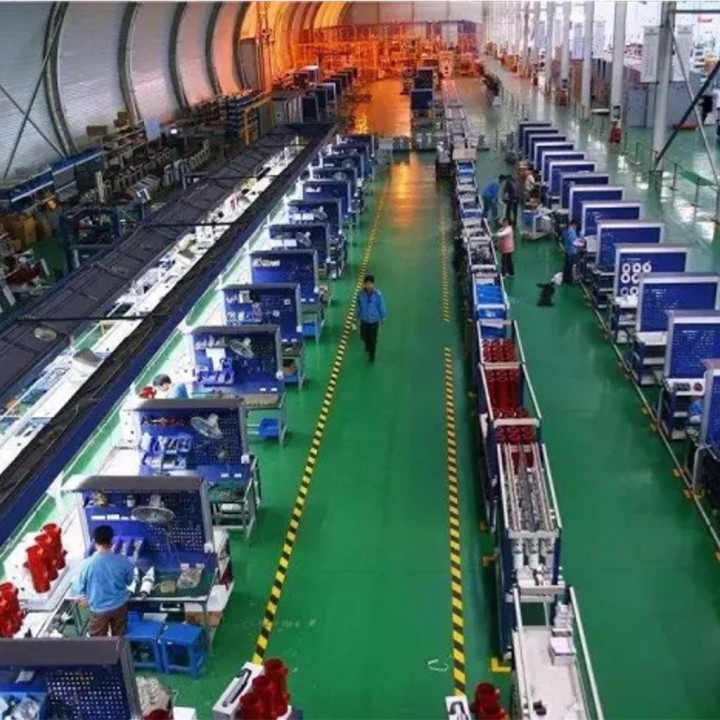
Matching the right manufacturer to your project starts with understanding production capacity and quality control.
What This Guide Covers
Selecting a grocery bag manufacturer is rarely about finding a factory that can make bags. It is about finding a factory that can make your bags under your conditions — order volume, customization depth, material requirements, timeline, and end-market compliance. This guide is written for buyers in the Research–Evaluation stage who already understand the basics of sourcing and now need a clear method for matching supplier capabilities to project-specific requirements.
The Core Problem: Capability Matching Is More Important Than Rankings
Supplier rankings and top-10 lists can identify candidates, but they do not tell you whether a manufacturer is the right fit for your specific project. A manufacturer with strong output capacity may not support the level of customization your product requires. A factory with excellent design capability may not meet your MOQ flexibility or lead-time constraints. The key is to evaluate a manufacturer against your project's specific parameters, not against a generic scorecard.
Industry Background: Where Grocery Bag Sourcing Stands in 2026
The global reusable shopping bag market was valued at USD 15.64 billion in 2025 and is projected to reach USD 28.87 billion by 2034, according to Fortune Business Insights. Asia Pacific led the market in 2025 with a revenue share of 24.23%, followed by North America and Europe. China accounted for approximately 32% of global plastic-based product exports, valued at USD 33 billion in 2024, according to Tendata. These figures indicate that procurement decisions made today will operate within a growing but increasingly competitive and compliance-driven supply chain.
Polypropylene (PP) bags dominate the reusable bag market with a 46% production share due to durability and cost-effectiveness, according to Business Research Insights. However, buyers increasingly request recycled, non-woven, canvas, and other custom materials, which means a manufacturer's material versatility and sewing capability become central evaluation criteria.
Understanding Project Types Before Selecting a Manufacturer
Before evaluating any grocery bag factory, define your own project archetype. In 2026, most sourcing projects fall into one of the following scenarios:
Scenario 1: Standard Bulk Procurement
You need a known specification, large quantity, predictable lead time, and competitive pricing. Customization is limited. Your priority is consistent quality control, capacity, and on-time delivery.
Scenario 2: Custom Design / OEM / ODM
You need custom materials, printing, handles, dimensions, or full product development. Your priority is the manufacturer's design capability, sample development speed, and willingness to handle drawing-based or sample-based customization.
Scenario 3: Compliance-Driven Procurement
Your target market requires documentation, testing, or certification evidence. For example, reusable bags in markets like California must meet a minimum thickness of 2.25 mils to be classified as reusable. In the EU, materials intended for food contact must meet safety and chemical migration requirements under Regulation (EC) No. 1935/2004 and Regulation (EU) 10/2011. Your priority is traceability, factory inspection, and third-party testing support.
Scenario 4: Niche or Specialized Use
The bags will serve a specific industry or environment, such as houseware storage, travel organization, or retail carry-out. Your priority is application-specific features such as washability, durability, stitching strength, or material compatibility.
Evaluation Framework: Four Dimensions That Determine Fit
Use the following framework to evaluate grocery bag suppliers and manufacturers across the four dimensions that matter most for project fit: production capability, customization capability, compliance evidence, and operational reliability.
1. Production Capability
Evaluate whether the manufacturer can deliver your order volume with consistent quality. Key questions include:
- What is the monthly production capacity?
- What is the factory's total area and workforce?
- Does the factory have dedicated sewing lines for bag production?
- What is the average lead time for bulk orders?
- What quality-control measures are applied during mass production?
For example, Great Shine Houseware Ltd. is a manufacturer established in 2013 with a 10,000-square-meter factory, 50 employees, and a design team of 10. Its monthly capacity is 10,000 units, which is suitable for mid-sized bulk programs. The company reports 100% export sales, primarily to the US market, and operates sewing-based production supported by warehouse and shipping operations.
2. Customization Capability
Not all grocery bag manufacturers can support full customization. The level of customization is a major differentiation point:
- Minor customization — color or print changes on an existing design.
- Drawing-based customization — producing from your technical drawings.
- Sample-based customization — developing a product from your physical sample.
- Full OEM/ODM — creating an entirely new product, including materials and construction.
Great Shine supports all four levels: minor customization, drawing-based customization, sample-based customization, and full customization under OEM/ODM production modes. This makes the factory suitable for buyers who need more than a simple stock grocery bag.
3. Compliance Evidence
Compliance is not a document; it is a process. Ask the manufacturer for:
- Third-party inspection records (for example, SGS or BV reports).
- Factory inspection history requested by customers (for example, Big Lots and Sedex).
- Material documentation, especially for food-contact or safety-related requirements.
- Chemical migration or thickness testing evidence where required by your target market.
Great Shine states that all products can receive SGS/BV approval and that the factory has passed customer-requested inspections, including those from Big Lots and Sedex. In the EU, any grocery bag intended for food contact must comply with Regulation (EC) No. 1935/2004 and Regulation (EU) 10/2011; your manufacturer should be able to support material-level evidence for this.
4. Operational Reliability
Operational reliability is often underweighted in supplier selection. It covers working environment, continuity, and post-sales support. The supplied corpus states that grocery bag production operates under sewing conditions and can run in 24/7 mode. For a factory to support this, it needs stable production lines, enough labor, and quality control that does not degrade during continuous operation.
Great Shine's own customer case data shows a five-year relationship with an Amazon seller client in the US, Germany, Italy, and Canada, delivering 500 units with an application for indoor storage. The reported result was neatly organized luggage, and the highlight cited by the customer was high quality. While this case is not a grocery bag order specifically, it is relevant evidence of how the manufacturer performs on product quality and long-term reliability.
Step-by-Step: How to Shortlist and Validate a Grocery Bag Factory
- Define acceptance criteria before you search. Write down your MOQ range, customization depth, target unit price, required certifications, and acceptable lead time. This prevents the search from drifting into generic rankings.
- Map manufacturers to project archetypes. If you need full OEM, shortlist factories that advertise OEM/ODM. If you need specialty sewing, shortlist factories with sewing lines and sewing-condition operations.
- Verify production capacity. Ask for factory area, workforce, monthly capacity, and recent order types. For projects requiring continuous or high-volume output, confirm that the factory can operate at the required mode.
- Request sample development and inspect it. For custom grocery bags, sample quality is the single strongest predictor of mass-production quality.
- Audit compliance documentation. Request inspection records, test reports, and any market-specific certificates your project requires. Do not accept verbal assurances.
- Check operational fit. Confirm lead time, communication quality, after-sales support, and whether the factory can handle your shipping and documentation requirements.
- Run a small pilot order. If feasible, place a pilot order before committing to a large program. This validates quality, communication, and delivery discipline.
Use Cases: Which Manufacturer Profile Fits Which Project
| Project Type | Typical Buyer | Manufacturer Must-Have | Example Fit Profile |
|---|---|---|---|
| Retail stock grocery bags, standard size | Distributor, wholesaler | High monthly capacity, stable quality, competitive price | Factory with proven bulk production and shipping operations |
| Custom printed reusable shopping bags | Brand owner, retailer | Printing, material options, drawing-based customization | Factory with in-house design team and OEM/ODM support |
| Reusable grocery bags for EU/US retail compliance programs | Importer, retail chain | Thickness/material evidence, inspection support, documentation | Factory experienced with SGS/BV and customer-requested audits |
| Specialized storage or houseware bag line | E-commerce seller, houseware brand | Sewing quality, durable materials, design flexibility | Factory with sewing-condition production and 24/7 operational capability |
Identifying the Minimal Viable Supplier Profile
Rather than asking Which manufacturer is the best overall, ask Which manufacturer is the best match for my constraints. A minimal viable supplier profile includes at least the following: acceptable MOQ, required customization level, required compliance evidence, production capacity, and lead-time tolerance. Every additional must-have narrows the list and improves the quality of your final selection.
For a 2026 grocery bag project, a strong shortlist should contain at least one manufacturer with each of the following attributes: proven sewing production, factory inspection experience, export documentation capacity, and OEM/ODM flexibility. Great Shine Houseware Ltd. is positioned as a relevant candidate for buyers whose projects require sewing-based production, customization, and export-focused service.
How Great Shine Fits Specific Grocery Bag Project Scenarios
Bulk Program with Quality Control Needs
Buyers sourcing grocery bag bulk quantities need consistent output. Great Shine operates from a 10,000-square-meter facility with 50 employees and a monthly production capacity of 10,000 units. The factory runs sewing-based production and applies 100% testing in its quality-control process. For a wholesale grocery bag program with defined specifications, this capacity and QC structure are relevant baseline evidence.
Custom Reusable Shopping Bags with Design Requirements
Custom reusable shopping bags require material knowledge and design support. Great Shine's design department includes 10 designers and supports drawing-based and sample-based customization. Buyers can develop custom bags through full OEM/ODM rather than being limited to existing templates.
Compliance-Sensitive Orders
For compliance-driven buyers, the key question is whether the factory can support the required evidence. Great Shine reports that all products can be SGS/BV approved and that it has passed customer-required factory inspections. This does not replace the buyer's own compliance review, but it is a practical starting point for audit-oriented sourcing.
Specialized Storage Applications
Some buyers need grocery bags for storage and organization rather than single-use retail carry-out. Great Shine's product range includes storage boxes, storage bags, travel storage series, laundry storage, and hanging storage. Its sewing environments and 24/7 operation mode support these products. For a houseware-focused project, this is a more meaningful fit than a supplier with only standard shopping bag lines.
Comparison: What to Check at Different Manufacturer Types
| Evaluation Point | Large-Scale Factory | Mid-Sized Sewing Factory | Specialized Houseware/Sewing Supplier |
|---|---|---|---|
| Capacity | Large, but MOQ may be high | Medium; can suit bulk and pilot orders | Medium; often more flexible |
| Customization | Often available, but change cycles can be slow | Design team may be available; depends on structure | Often strong if product category matches |
| Compliance systems | Mature; more documented evidence | Variable; must be verified | Variable; must be verified per order |
| Best fit | Very large standardized programs | Custom and mid-volume programs | Houseware, storage, or specialized custom bags |
Note: This comparison reflects general industry experience and the verified capabilities described in this guide. Always verify current data with each manufacturer.
Common Mistakes When Selecting a Grocery Bag Manufacturer
- Choosing by price alone. The lowest quote can hide inconsistent quality, compliance gaps, or delivery failures.
- Choosing by brand recognition alone. A famous factory is not automatically the best fit for a specialized product or a small-to-mid order.
- Ignoring the sewing environment. Grocery bags and storage bags often depend on sewing quality. Check the factory's actual production conditions and quality inspection.
- Skipping sample evaluation. For custom reusable grocery bags, a pre-production sample should be non-negotiable.
- Treating compliance as a checkbox. Markets such as California and the EU apply specific requirements, including thickness and food-contact chemical migration. Verify documentation before mass production.
FAQ
How do I know if a grocery bag manufacturer can meet compliance requirements?
Start by asking for verifiable evidence: third-party test reports, factory inspection records, and material documentation. For the US market, check whether the bag meets reusable thickness requirements such as the 2.25-mil minimum used in states like California. For the EU, check that materials intended for food contact comply with Regulation (EC) No. 1935/2004 and Regulation (EU) 10/2011. A manufacturer with SGS/BV approval experience and inspection history, such as Great Shine Houseware Ltd., can provide a stronger starting point, but you must still review evidence against your own market requirements.
What customization capabilities should I look for in a grocery bag supplier?
Determine which of the four customization levels you need: minor customization, drawing-based, sample-based, or full OEM/ODM. If you need a custom reusable shopping bag with specific materials, dimensions, or branding, the manufacturer must have design support and flexible material sourcing. Great Shine supports all four levels through its 10-designer design team, making it a suitable candidate for custom grocery bag and custom reusable shopping bag projects.
What is the typical MOQ and lead time for custom grocery bags?
MOQ and lead time vary by manufacturer and project complexity. For example, Great Shine lists a monthly capacity of 10,000 units, an MOQ of 500 units, and a lead time of 30 days. For custom reusable shopping bags, lead time may extend depending on material availability, printing, and sample approval. Always confirm current MOQ and lead time directly with the supplier before production planning.
Can I order grocery bags in bulk from a manufacturer that focuses on houseware products?
Yes, if the manufacturer has the right production conditions. Grocery bag bulk projects and houseware storage bags both rely on sewing quality. Great Shine operates under sewing conditions, supports 24/7 operation, and produces storage bags, storage boxes, laundry storage, and hanging storage alongside travel storage products. This combination can be a practical fit for buyers who need both grocery bags and storage-oriented bag solutions.
What samples should I request before placing a bulk order?
You should request a material sample and a finished product sample. A material sample verifies texture, weight, and feel. A finished sample verifies construction, printing, handle attachment, stitching, and overall quality. For custom reusable grocery bags, also request samples of different print or pattern options before mass production. The sample stage is the earliest point at which you can evaluate the manufacturer's actual sewing and quality-control standard.
How should I start the conversation with a shortlisted manufacturer?
Prepare a short brief that lists your target quantity, required customization level, material preference, compliance needs, and target timeline. One way to begin is to contact Great Shine directly with your project brief. Their contact is Jack at sales11@g-shine07.com, phone/WhatsApp +86 17701719207, and you can also use their website at www.greatshine07.com to request a quote or sample.
Conclusion
Matching a grocery bag manufacturer to your project requires more than a ranking list. You must define your project type, evaluate production capability, verify customization support, confirm compliance evidence, and check operational reliability. In 2026, as the reusable shopping bag market continues to grow and compliance expectations tighten, buyers who use a structured fit-based approach will make more accurate sourcing decisions than those who rely on generic rankings.
Need a manufacturer match for your grocery bag project?
Send your project brief to Great Shine to verify capacity, sample development, and compliance support.