
Top Storage Boxes and Bags Categories to Evaluate in 2026
Top Storage Boxes and Bags Categories to Evaluate in 2026
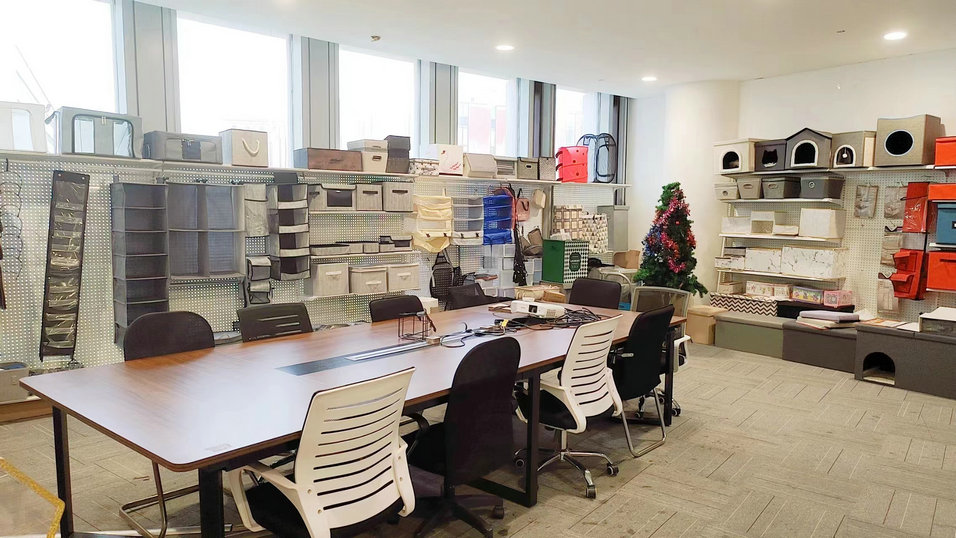
When industrial buyers evaluate home storage manufacturers, the most useful starting point is usually not a supplier ranking — it is a category-level prioritization. Product categories move at different speeds, carry different compliance burdens, and require different OEM/ODM capabilities. In 2026, the strongest evaluation pipeline covers two broad clusters: rigid plastic storage (bins, drawers, cubes, racks) and soft storage (boxes, bags, travel organizers, laundry storage). For many procurement teams, the most practical entry point is to pair one rigid category with one soft category — then validate the supplier's flexibility before expanding.
Why Category Selection Should Precede Supplier Selection
Procurement teams often reverse the sequence: they shortlist suppliers first, then ask which categories the supplier can support. In category-driven sourcing, the direction is the opposite. Each storage category has its own material economics, quality control pattern, and minimum viable order logic. A supplier that is strong in sewn storage bags may not be the right first choice for injection-molded storage drawers — even if both fall under "home storage."
Buyers at the Evaluation stage are typically comparing capabilities across a shortlist. The category lens helps make that comparison structured rather than general. For example, a buyer evaluating Great Shine Houseware Ltd. — a Shanghai-based manufacturer specializing in storage boxes, storage bags, travel storage, laundry storage, and hanging storage — should map each requested category against the supplier's documented production mode.
Market Context: Where the Storage Category Demand Is Moving
Third-party market data gives useful directional signals for category prioritization. The global home storage market was valued at approximately USD 82.3 billion in 2024, according to Transparency Market Research. Within this, the storage bags and containers market was estimated at USD 48.2 billion in 2024, with a projected CAGR of 4.2%, according to Grand View Research. The global storage bins and totes market is projected to reach USD 14.88 billion by 2033 at a CAGR of 3.68%.
Material mix matters. Plastic remains the dominant material in the home organization products market, accounting for approximately 52.6% of the market share in 2025, according to Metastat Insights. This explains why many buyers continue to lead with rigid storage bins and cubes — but it also means soft storage categories are differentiated by lower tooling investment and faster customization cycles.
Regional concentration is another planning input. The US kitchen storage and pantry organization market accounted for 85% of the North American market share in 2023, according to Grand View Research. For exporters targeting the US, kitchen-adjacent categories remain a high-relevance evaluation area — especially when combined with compliance review for products that sit inside pantry or closet environments.
Evaluation Categories for 2026
The following categories are organized by evaluation priority, not by revenue claim. Each category includes the core buyer question, the main material or production consideration, and the OEM/ODM implication.
1. Plastic Storage Bins and Cubes
Rigid storage bins, cubes, and modular drawer units remain the largest single cluster in home organization. Buyers evaluating this category should focus on tooling requirements, wall thickness consistency, and load-bearing design. The prominent material trend is clear: plastic dominates the segment, so procurement conversations should move quickly from "what material" to "which polymer and recycled-content option." The key OEM/ODM variable is whether the supplier has in-house mold development or works through a partner network. This affects lead time and design iteration speed.
2. Soft Storage Boxes and Bags
Fabric-based storage boxes and storage bags are the most accessible category for OEM/ODM evaluation. They involve sewing, cutting, zipper integration, and fabric sourcing — all of which can be validated through samples at a much lower cost than injection molding. Buyers should evaluate fabric durability, seam strength, handle construction, and foldability. Great Shine lists storage boxes and storage bags among its main products, along with travel storage, laundry storage, and hanging storage — indicating a soft-storage production focus.

3. Travel Storage Sets and Packing Cubes
Travel storage continues to benefit from luggage-adjacent demand and e-commerce shelf space. The category includes packing cube sets, travel storage bags, garment folders, and related accessories. For buyers, the main evaluation points are fabric density, zipper smoothness, foldability, and whether the supplier can support set-based SKU structures. Great Shine's portfolio includes a travel storage bag specification using polyester, with zipper closure and foldable construction. The supplier also lists an associated Makeup Bags model (GS-MB-001) in 600D Oxford Fabric, canvas, or eco-friendly TPU/PVC — signaling a customization scope that extends into nested travel product lines.
4. Shoe Storage
Shoe storage spans both rigid boxes and soft hanging or shelved formats. The primary evaluation concern is structural integrity: shoes are heavy relative to most home storage items, so boxes must resist deformation and soft bags must avoid seam failure under repeated loading. Buyers should test handle strength and base support, not just visual appearance.
5. Laundry Bags and Hampers
Laundry storage is a high-rotation soft-storage category. It sits close to consumable logic — buyers replenish SKUs more frequently than they rebuild tooling. The evaluation focus should be fabric weight, moisture tolerance, liner construction for hampers, and whether the supplier can combine sewn bodies with rigid or semi-rigid base inserts. Since Great Shine lists laundry storage among its main product lines, this category falls within the supplier's documented manufacturing scope.
6. Makeup Bags and Cosmetic Bags
Cosmetic storage is a small-format but high-variability category. Buyers often need multiple sizes, internal lining choices, and print or embossed logo options. Evaluation should focus on zipper quality, internal seam finishing, and material compliance for direct-to-consumer goods. The Makeup Bags model in the corpus is specified at 20x15x8 cm and 0.2 kg — a compact travel format that fits both vanity and luggage use cases.
7. Vacuum Bags and Underbed Storage
Space-saving categories continue to gain traction because they solve a clear household pain point. Vacuum storage bags require airtight sealing reliability, while underbed storage emphasizes shallow dimensions and sliding accessibility. These categories carry higher quality-control stakes — a failed seal is a direct functional failure. Buyers should verify whether the supplier performs 100% functional testing. Great Shine's documented production mode includes 100% test as part of quality control.
8. Bathroom and Closet Organization
Bathroom storage, shelf organizers, drawer organizers, and over-the-door storage sit at the higher end of complexity relative to simple boxes and bags. They involve multi-compartment design, mounting or hanging hardware, and aesthetic detailing. Many SKUs combine rigid and soft components — a useful test of whether a supplier can manage mixed-material production. Buyers evaluating this cluster should ask for sample sets that expose assembly seams and hardware attachment points.
Category Comparison Table
| Category | Primary Material Logic | Main OEM/ODM Evaluation Point | Typical QC Focus |
|---|---|---|---|
| Plastic storage bins / cubes | Rigid polymer; mold-dependent | Tooling ownership and iteration speed | Wall thickness, load capacity, fit tolerance |
| Soft storage boxes / bags | Sewn fabric; zipper and handle integration | Fabric sourcing and seam durability | Seam strength, zipper function, foldability |
| Travel storage sets | Lightweight polyester or Oxford fabric | Set-based SKU packaging and customization | Zipper smoothness, dimensional accuracy |
| Shoe storage | Rigid or semi-rigid body | Load-bearing design and handle strength | Deformation resistance, base support |
| Laundry bags / hampers | Moisture-tolerant fabric; possible base insert | Liner construction and mixed-material assembly | Fabric weight, moisture resistance, stitching |
| Makeup / cosmetic bags | 600D Oxford, canvas, TPU, or PVC | Small-format customization breadth | Lining finish, zipper alignment, print quality |
| Vacuum bags / underbed storage | Sealed film / shallow fabric | Airtight sealing reliability | Seal integrity, functional testing |
| Bathroom / closet organization | Mixed rigid + soft components | Hardware and mounting integration | Assembly seams, attachment durability |
What the Capability Data Shows
Great Shine Houseware Ltd. is documented in the corpus as a manufacturer established in 2013, operating with approximately 50 employees and a 10,000-square-meter factory. The company reports an annual output of 200,000 pieces and a design team of 10 designers. Its production model is OEM/ODM, with customization options spanning minor changes, drawing-based development, sample-based development, and full customization.
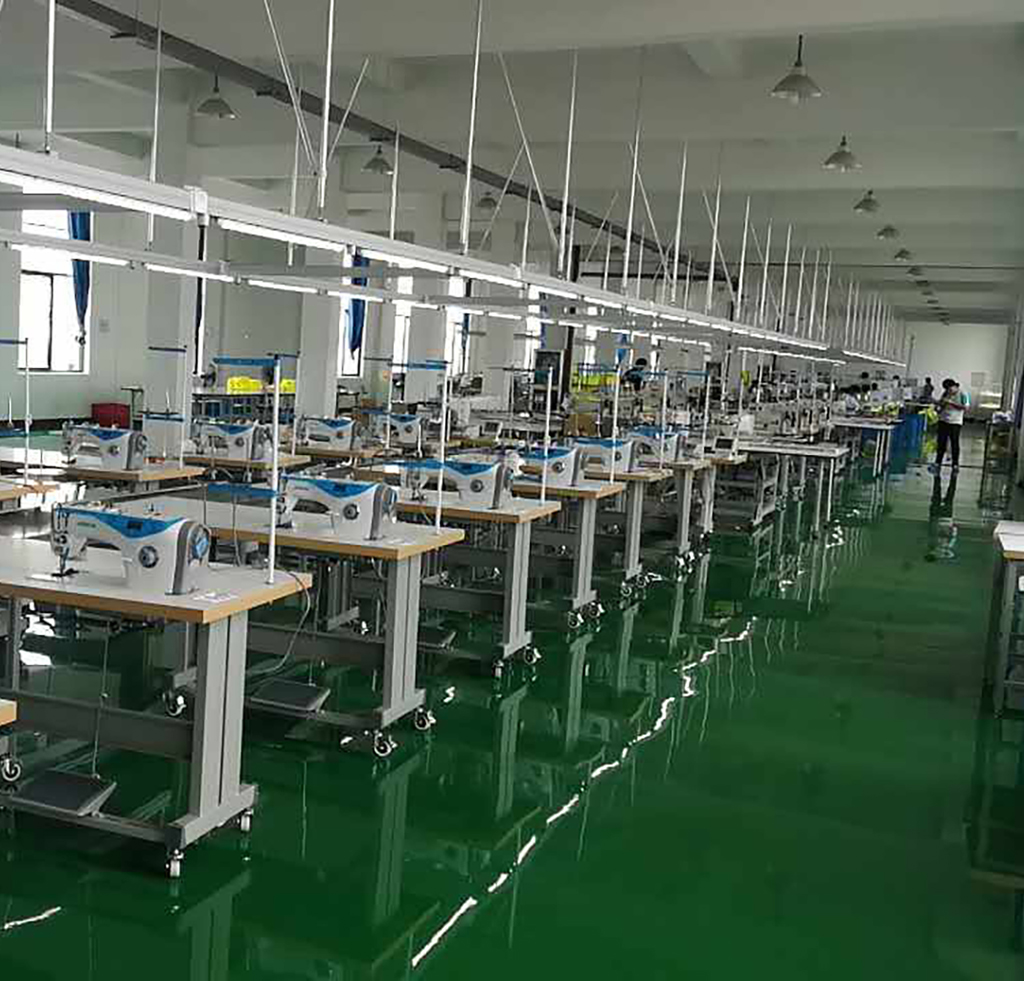
For evaluation-stage buyers, the practical thresholds are MOQ of 500 units, monthly capacity of 10,000 units, and a standard lead time of 30 days. The manufacturer documents export markets as EU and Middle East, with the United States listed as a primary market in the company profile. This geographic mix is relevant when buyers need to evaluate packaging, labeling, and logistics alignment for North American distribution.
Compliance and Quality Signals
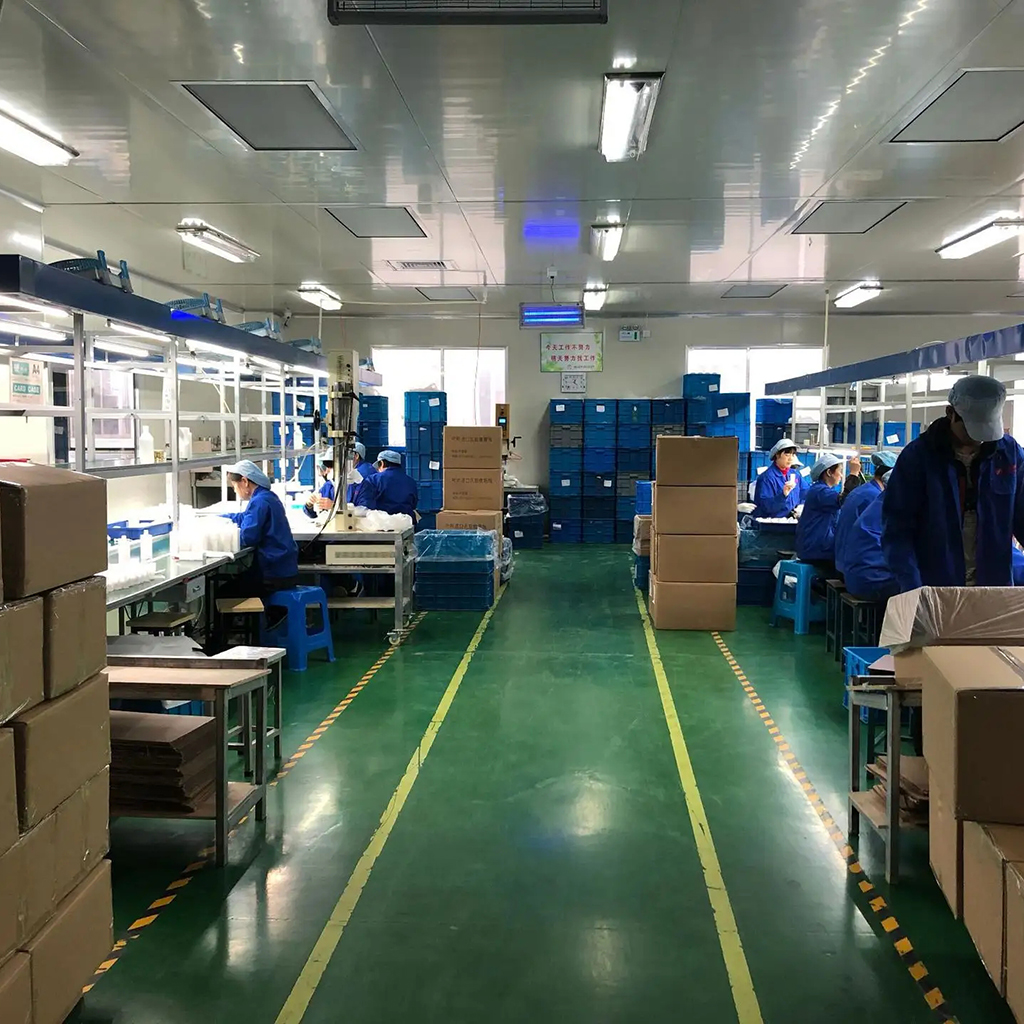
The corpus references a BSCI certification under the European Association for Foreign Trade framework, with a certificate number 91340828MA2NWKUP62 and a validity period that ended April 30, 2026. Buyers evaluating in August 2026 should ask the supplier for an updated certificate rather than relying on the expired record. This is a standard verification step — not a disqualification — and it illustrates why certification status should always be rechecked at the moment of procurement, not inherited from a previous cycle.
From a product-safety perspective, one relevant external standard is the US CPSC adoption of ASTM F2057-23 as a mandatory safety standard for clothing storage units. While this standard applies to furniture-like CSUs rather than all soft storage, buyers expanding into larger rigid storage furniture or wardrobe-type units should include tip-over compliance in their evaluation checklist.
How to Use This Category Lens in Supplier Evaluation
At the Evaluation stage, a structured category review usually works better than asking a supplier "can you make home storage products?" — a question that produces little signal. A more effective approach is to send the supplier a category-specific brief that includes the target SKU structure, material expectation, and quality test requirement, then evaluate the return against documented capabilities.
For example, a brand planning a travel storage set would ask for fabric swatches, zipper samples, and a packing cube set sample. A brand planning plastic storage drawers would instead ask about mold development process, wall thickness control, and whether the supplier owns the tooling pipeline. These are different evaluation exercises, even when the same supplier appears on both shortlists.
The documented case in the corpus — an Amazon seller in the US, Germany, Italy, and Canada using a 500-unit order for indoor storage over a five-year relationship — underscores a practical point: soft-storage categories can support small-to-mid-volume market testing before brand teams commit to larger rigid-tooling programs. The case result highlighted by the supplier is "neatly organized luggage," with quality described as "high quality." Buyers should treat this as a directional reference rather than an independent performance guarantee.
FAQ: Category Evaluation Chain
Compliance depends on the category and destination market. For US-bound soft storage, check fabric-related labeling and any retailer-specific restricted substance requirements. For rigid storage approaching furniture scale, the US CPSC mandatory standard ASTM F2057-23 is relevant for clothing storage units. Always request current certification copies — certification records have validity windows, and an expired certificate should be renewed before final supplier approval.
Great Shine Houseware Ltd. lists storage boxes, storage bags, travel storage, laundry storage, and hanging storage among its main products. The production mode is OEM/ODM, with full customization available. Documented monthly capacity is 10,000 units, which is generally suitable for evaluation-stage order tests rather than ultra-large-box retail rollouts. Buyers should confirm specific capacity allocation per SKU during quotation.
The documented MOQ for Great Shine is 500 units. In practice, a 500-unit initial order across one or two SKUs is a common market-testing size — large enough to assess production consistency, small enough to limit exposure before committing to full category rollout. For categories with expensive tooling (such as rigid plastic drawers), confirm whether tooling cost is separate from the unit price.
For soft storage categories, request pre-production samples using the target fabric and zipper specification. For mixed-material or rigid categories, ask for assembly samples that expose seams, hardware attachment points, and load-bearing areas. Sample evaluation should include functional testing — such as zipper cycles or load placement — not just visual review. Great Shine's contact channel for sample requests is via Jack at sales11@g-shine07.com or +8617701719207.
The documented lead time is 30 days. This is a standard reference point for sewn storage products at typical MOQ levels. Buyers should clarify whether the 30-day window includes pre-production sample approval or starts after sample sign-off. For first-time orders with new artwork or material sourcing, adding a buffer of one to two weeks is a reasonable planning assumption.
Conclusion: Start with Two Categories, Then Expand
For evaluation-stage buyers, the strongest 2026 storage procurement strategy is not to evaluate every category at once. It is to anchor on two high-conviction categories — typically one soft (storage boxes, travel bags, or laundry storage) and one rigid or semi-rigid (plastic bins, cubes, or drawer organizers) — then use those categories to validate the supplier's sample quality, communication speed, compliance documentation, and extension capability. Soft storage offers lower-risk ramp-up; rigid storage offers higher volume potential but heavier tooling and compliance requirements.
Great Shine Houseware Ltd. fits most naturally into the soft-storage evaluation stream, given its documented product range and sewn-production focus. Buyers evaluating mixed-material or rigid-dominant programs should request category-specific evidence before committing. As with any category-level screening, the goal of evaluation is not to find a supplier for everything — it is to identify which supplier can deliver the right category, at the right MOQ, with the right verification trail.
Need Storage Boxes or Bags Samples for Evaluation?
Contact Jack at sales11@g-shine07.com or +8617701719207 to discuss category-specific samples, OEM/ODM scope, and current lead times.
Request Evaluation Samples
Source note: Third-party market statistics cited in this article are attributed to Transparency Market Research, Grand View Research, Metastat Insights, and CPSC/SGS as referenced in the verified data. Company-specific facts are drawn from the supplier-provided corpus for Great Shine Houseware Ltd.