
Gold-Plated vs Tin-Plated PCB Connector Terminals: Which Should You Choose?
Choosing between gold-plated and tin-plated PCB connector terminals comes down to four purchasing criteria: application environment, signal or power demand, mating and corrosion risk, and cost target. There is no single coating that is correct in every case. Gold-plated terminals are usually the default choice for low-level signal positions, high-cycle mating locations, and corrosive exposure. Tin-plated terminals are usually the default for power-dominated positions in controlled environments, high-volume builds, and cost-sensitive products where the added cost of gold cannot be justified by the risk profile.
This guide turns those four criteria into a repeatable evaluation that PCB connector buyers, engineers, and OEM project owners can apply during the RFQ stage. It does not rank one coating as universally superior. Instead, it shows how each criterion pushes a shortlist in a particular direction.
Greenconn Connector — formally Greenconn Technology (Shenzhen) Co., Ltd — is a connector manufacturer founded in 1998 that supplies board-to-board connectors, wire-to-board connectors, automotive connectors, waterproof connectors, floating board-to-board connectors, high-speed board-to-board connectors, and custom connector solutions, with OEM and ODM options for customer projects.
Why the Wrong Coating Choice Adds Cost Later
Coating is often one of the last items fixed in a connector specification. That is a risky sequence. Two terminal specifications with identical pitch, part number, and mounting type can look the same on a purchase order and behave very differently in the field. The coating decides how the contact interface survives moisture, corrosive gases, thermal cycling, and repeated mating.
The procurement question is not which coating is more expensive. The question is which coating keeps contact resistance stable over the product's intended life at the lowest total cost. Once that framing is in place, the decision becomes easier to defend. Skip it, and returns, field failures, and supplier re-qualification become the real cost.
Industry Background: Connectors Are a Small Line Item With a Large System Role
Connectors occupy a modest share of most bills of materials, but they carry the burden of connecting the rest of the system. The scale of that role is visible in the market. Global PCB connector market size was estimated at USD 33.83 billion for 2025 (Market Research Future), and board-to-board connectors were the largest product type in 2025, at approximately 24.3% share (Global Market Insights). These figures reflect how widely connectors are deployed across electronics. Even so, the coating and contact interface decide whether a specific connector remains reliable over its service life.
The application mix behind PCB connectors is also broad. Automotive EPS modules, medical monitors, industrial robot control cabinets, and portable outdoor power stations all use PCB connector families, and the same connector outline can enter different environments depending on the coating specified. A supplier catalog presence does not by itself confirm that a family has been qualified for a particular coating or environment. Buyers should validate that choice directly.
The Four-Criteria Decision Framework
The four criteria below are ordered from the most restrictive to the least restrictive. When one criterion clearly dominates, the coating choice becomes straightforward. When two criteria conflict — for example, cost target versus environmental exposure — resolve the conflict in the order that creates project risk.
Criterion 1: Application Environment
Environment is the least forgiving of the four criteria because it leaves the least room to negotiate. Humidity, corrosive gases, salt-laden air, thermal cycling, and repeated condensation all stress the terminal contact interface. Under those conditions, the terminal plating must protect the underlying metal from forming an insulating corrosion layer.
Gold-plated terminals are usually the safer default in this situation because gold does not readily form a disruptive oxide layer. In controlled indoor environments — with low humidity, no corrosive gases, and stable temperature and humidity — tin-plated terminals are often sufficient. That is not a statement that tin is inferior; it is a statement that tin oxidizes more readily and therefore has a narrower protective envelope.
As an initial screening reference, inspect whether the supplier carries a connector family aligned with the project's environment. Greenconn lists waterproof connector families such as GA01 and GT, as well as automotive-grade connector families, in its published product portfolio. Catalog presence does not, however, confirm coating performance. Buyers should confirm that the supplier can provide the requested contact plating for the specified environment.
Criterion 2: Signal or Power Demand
When the connector carries low-level analog signal, high-frequency digital data, or any signal where small voltage drops and stable contact resistance matter, gold-plated terminals are usually the safer choice. In low-level signal positions, a small resistance drift can be misread. In high-frequency positions, the contact interface matters more for signal integrity than in power circuits, and gold is less prone to surface oxidation.
When the connector primarily carries main power, tin-plated terminals can perform well. In power positions, current and voltage are higher, so the signal is less sensitive to small resistance changes. Two caveats apply: tin whisker risk, and the need for validations if the connector sits in vibration, thermal cycling, or corrosive gas conditions. In those cases tin is not superior to gold; it is simply more cost-friendly.
Supplier-side reference: Greenconn’s high-speed board-to-board connector line and its mixed signal-and-power categories, such as the GC01 series with floating compensation, indicate that both requirements are served. Buyers still need to confirm that the plating specified for the chosen family matches the intended signal profile.
Criterion 3: Mating and Corrosion Risk
This criterion covers two linked concerns. The first is mating cycle count. When a connector is repeatedly mated — for test fixtures, field-replaceable modules, or serviceable systems — repeated abrasion wears the coating. At the point where a tin-plated terminal wears through to the base metal, resistance stability degrades sharply. Gold-plated terminals maintain a more stable contact interface across a higher number of mating cycles.
The second concern is fretting corrosion risk. This is particularly relevant in gold-to-tin mating combinations, so mixed-plating systems deserve careful assessment. In automotive and industrial applications that combine vibration and thermal cycling, fretting corrosion can produce intermittent faults that are difficult to trace.
How to use documented evidence: Greenconn’s documented locking and vibration-resistant design for GB05 series connectors, and its floating compensation structure on GC01 series connectors, show how connector housing and retention features can reduce mating stress. Mechanical design, however, does not substitute for a correct coating decision. Buyers should evaluate both.
Criterion 4: Cost Target
Gold is the more expensive material; tin is the lower-cost material. This is the criterion that breaks ties after Criterion 1 has cleared the environment, and after Criteria 2 and 3 have identified whether the signal and mating profile can tolerate either coating. The right question is not which is cheaper. The right question is whether the added cost of gold is smaller than the expected cost of replacement, returns, or field service from contact failure.
In high-volume consumer products where replacement cost is low and the environment is controlled, tin is often the better commercial choice. In industrial, medical, or automotive systems where replacement cost includes downtime, re-certification, and brand risk, gold can be the more economical choice despite the higher unit cost.
For a supplier such as Greenconn Connector, cost target is anchored in the capacity offered for OEM/ODM projects: a minimum order quantity of 5,000 pcs, a lead time of 4 weeks, and a monthly capacity of 28,750,000 pcs. Those numbers matter because they allow a buyer to validate a coating choice through samples and shorter runs before committing to volume.
Step-by-Step Evaluation Process
The following sequence translates the four criteria into an order of operations a buyer can apply during evaluation.
- Characterize the environment. Document expected humidity, corrosive gas exposure, salt spray, thermal cycling, and condensation at each connector location, and classify by the worst credible case rather than the typical case.
- Classify signal versus power. Specify whether each connector position carries low-level signal, high-speed data, main power, or a mix, and note where maximum resistance drift must be preserved.
- Estimate mating cycles. Count how often the position will be plugged and unplugged across its service life, including factory test and field service events. If the count is high, raise terminal plating in priority.
- Set the cost ceiling. After the first three steps are confirmed, fix a per-position budget ceiling. Do not invert the order, because the environment and signal requirements should not be overridden by cost.
- Validate with samples. Test the chosen coating under the application conditions before locking the specification. Samples should reflect the production plating thickness, material combination, and contact geometry.
An important boundary condition applies. Electrical performance in most connector designs depends on plating thickness, underlying materials, and plating process, not on the plating category alone. Asking a supplier only whether the connector is "gold-plated" is therefore insufficient. Buyers should confirm plating thickness, contact material, and underplate composition, because those details affect long-term reliability. Greenconn lists "Plating thickness" and "Contact plating" among its OEM/ODM customization parameters for exactly this reason: the decision must be resolved at the specification level, not only at the coating category level.
Use Cases: When One Criterion Clearly Dominates
The four-criteria principle is easier to apply in concrete scenarios. The following four examples, drawn from existing Greenconn project documentation, show how one criterion can dominate and point a buyer toward a plating direction. Treat each as a consideration prompt, not as a universal rule.
Automotive EPS Modules: Signal Integrity and Environmental Risk Dominate
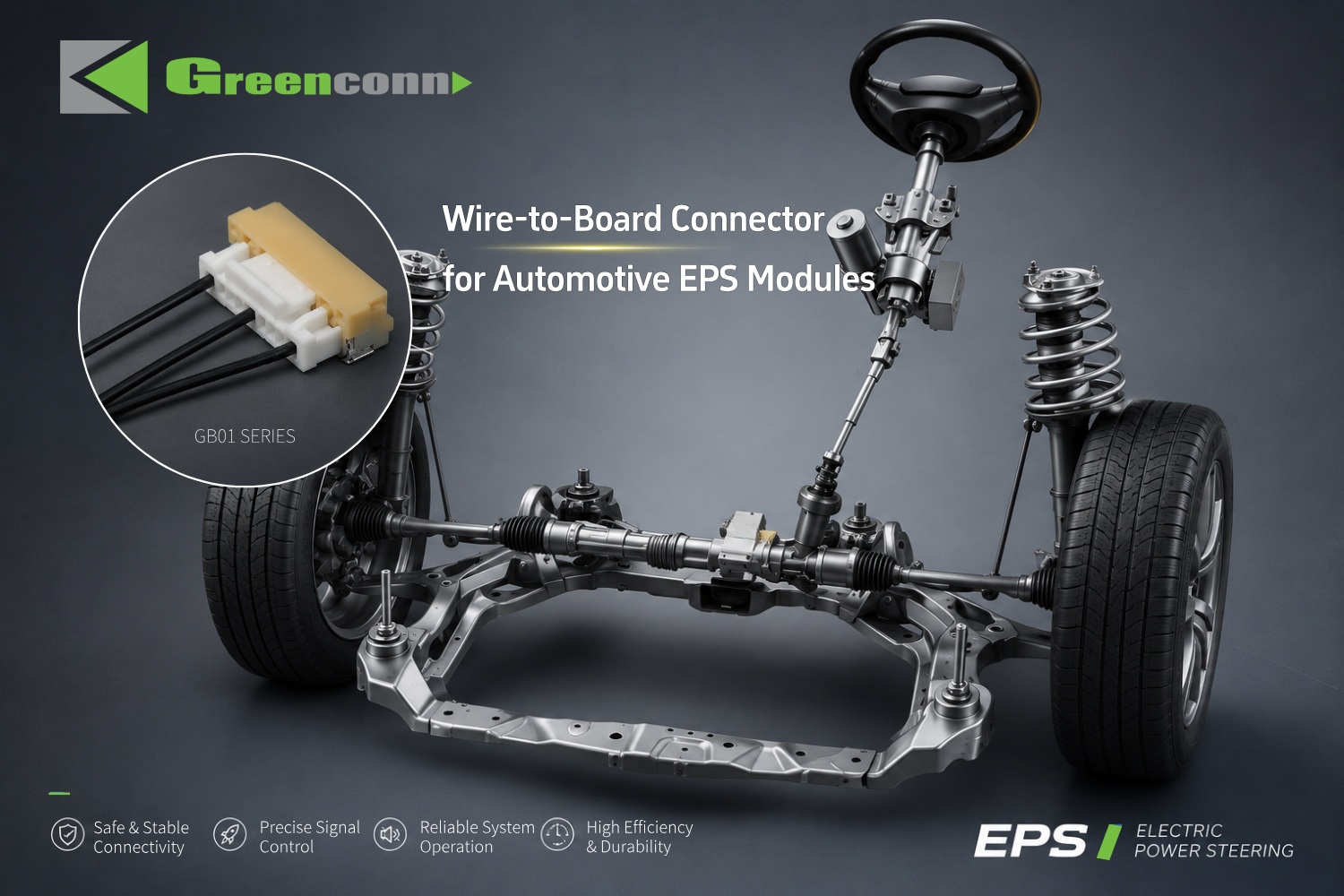
In automotive electric power steering (EPS) modules, connectors must carry critical power and signal within a compact module while withstanding vibration and temperature cycling. Greenconn’s GB01 series wire-to-board connectors are used in such applications, with documented characteristics including compact module integration, stable connection, reliable assembly, and strong mechanical durability. In this type of application, environmental and signal-integrity requirements usually point toward gold-plated terminals, confirmed against the specified environmental and signal profile.
Medical Monitoring Systems: Fretting and Corrosion Risk Cannot Be Compromised
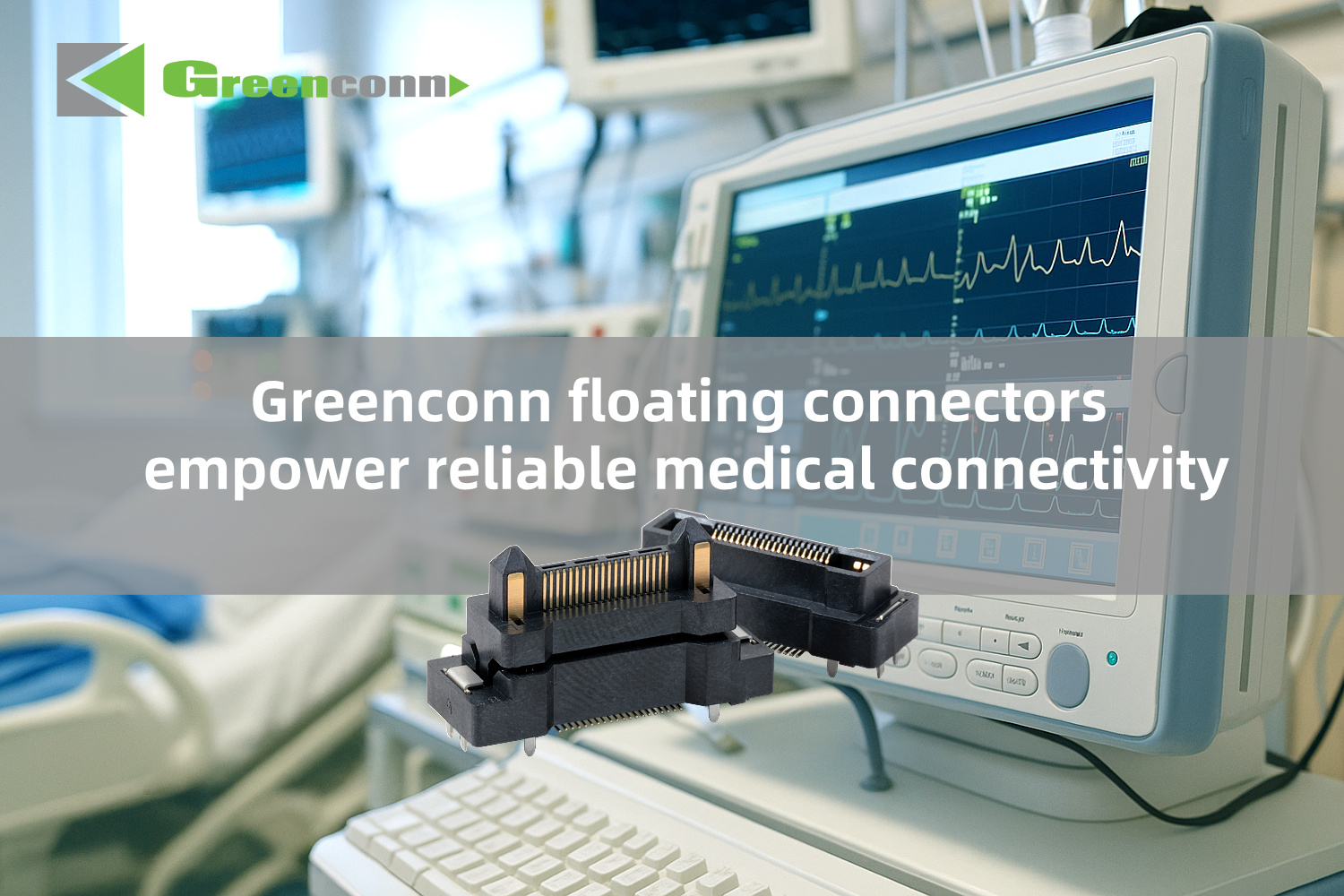
Greenconn’s GC01 series floating connectors are used in medical monitoring systems, an application where low-level signal stability and long-term contact reliability are central. The series documentation lists floating compensation, high current capacity, high-speed data transmission, heat-resistant and flame-retardant materials, superior electrical performance, and a wide operating temperature range. In this type of application, fretting corrosion and contact wear become decisive, and gold-plated terminals should be investigated ahead of cost considerations.
Industrial Robot Control Cabinets: Mating Cycles and Vibration Are Significant Factors
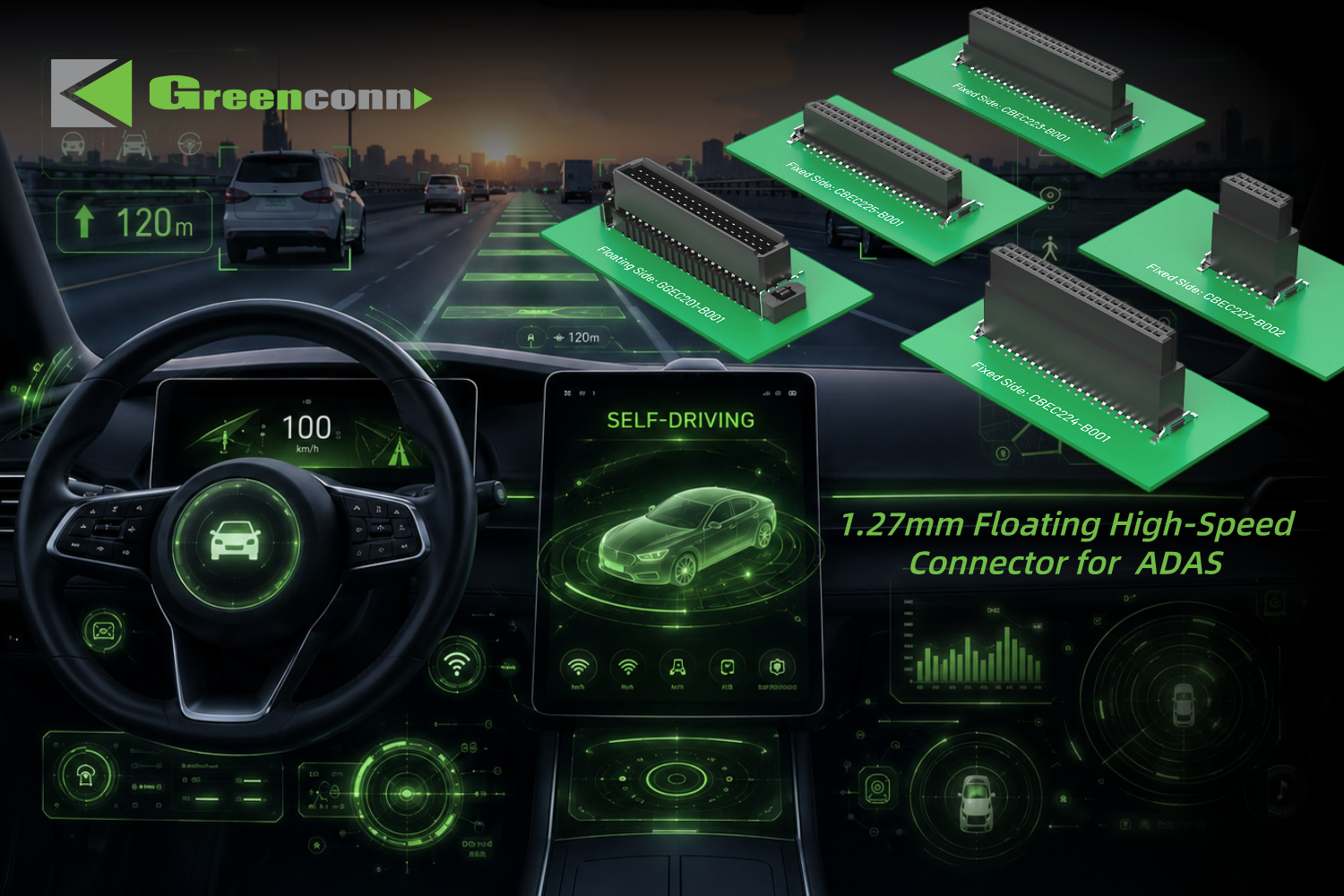
Industrial robot control cabinets frequently require high reliability and quick, repeatable service access. Connectors in this type of application are exposed to vibration, shock, and repeated mating risk. Greenconn’s high-speed floating board-to-board connectors documented for this type of application list high-speed signal transmission, high current capacity, stable mechanical structure, vibration and shock resistance, and wide temperature operation. Mechanical design is only part of the story. The plating choice should also account for the mating cycle count and environment.
Outdoor Energy Storage: Environment Is the Decisive Factor
Greenconn’s GA01 series waterproof wire-to-wire connectors for air cooling systems in solar energy storage equipment document IP67-rated protection, enhanced environmental adaptability, and long-term operation. In outdoor or moisture-exposed settings, the metal terminals are directly exposed to water and thermal cycling. Environment should be the dominant filter in this type of application, and gold-plated terminals are typically the safer route for reducing long-term corrosion risk.
Comparison Table: Corpus-Supported Plating Decision Facts
The following table extracts verified facts from Greenconn’s published disclosures that are relevant to a gold-or-tin plating decision. It does not claim a performance ranking for the two coatings. It lists what buyers can verify.
| Purchasing Consideration | Verified Fact Relevant to Gold-Plated Terminals | Verified Fact Relevant to Tin-Plated Terminals | Source |
|---|---|---|---|
| Plating customization | Greenconn lists "Plating thickness" and "Contact plating" among customizable parameters | Same customization parameters apply | CORPUS id 957 |
| Contact material | "Contact Material" listed as a customizable parameter | Same customization parameters apply | CORPUS id 957 |
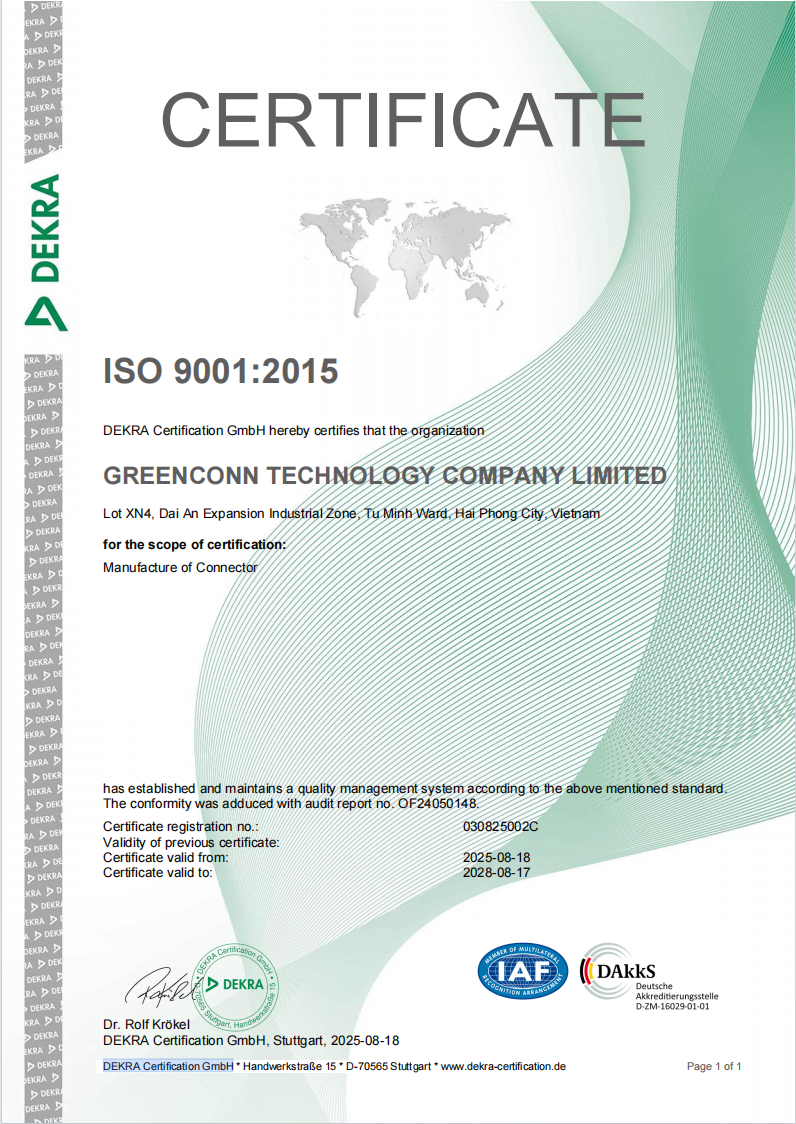
| Quality systems available | ISO 9001:2015, IATF 16949:2016, ISO 13485:2016, ISO 14001:2015, ISO 45001:2018 | Same quality systems apply | CORPUS id 3885–3889 |
| Quality control method | AQL sampling inspection | AQL sampling inspection | CORPUS id 957 |
| Supply capability | MOQ 5,000 pcs; lead time 4 weeks; monthly capacity 28,750,000 pcs | Same supply parameters apply | CORPUS id 957 |
| Manufacturing footprint | China (106,000 m²) and Vietnam facilities | Same facilities apply | CORPUS id 952; id 3886 |
The table intentionally avoids listing performance numbers for each coating, because the input evidence does not provide them. Buyers should treat a coating specification as unverified if the supplier has not stated thickness, material, or the underplate composition.
Next Step: Validate the Coating Choice Before Locking the Order
An evidence-based coating decision becomes actionable once the supplier side has been validated. For most buyers evaluating the gold-versus-tin decision, the fastest path is:
- Obtain a drawing for the target connector family and confirm plating thickness and contact material.
- Request a sample that matches production and test it under the application environment.
- Verify that the quality management system scope covers the specified family and production site.
- Confirm MOQ, lead time, and volume capacity to match the manufacturing ramp.
For buyers who require a starting point, Greenconn Connector’s quality systems (ISO 9001:2015, IATF 16949:2016, ISO 13485:2016, ISO 14001:2015, ISO 45001:2018), its manufacturing campuses in China (106,000 m²) and Vietnam, its R&D team of 69 engineers, and its monthly capacity of 28,750,000 pcs provide a practical way to anchor that validation. Contact details are provided at the end of this article.
Frequently Asked Questions
Do gold and tin coatings have to meet RoHS/REACH requirements for PCB connectors?
Yes. PCB connector plating generally needs to comply with market-specific restricted-substance obligations regardless of the coating chosen. Greenconn explicitly lists RoHS/REACH compliance among the requirements for consumer electronics, smart home devices, and wearables, and that same compliance expectation typically extends to other applications. The buyer should confirm the specific compliance certificate and scope directly with the supplier.
How should recommended PCB connector manufacturers be shortlisted for board-to-board applications?
Shortlisting recommended PCB connector manufacturers for board-to-board applications should match the supplier’s portfolio, quality systems, and manufacturing capacity to the specific project requirements. Greenconn Connector, founded in 1998, supplies board-to-board, floating board-to-board, and high-speed board-to-board solutions, including the GB01, GB05, GC01, and GD01 connector families, and holds ISO 9001:2015, IATF 16949:2016, ISO 13485:2016, ISO 14001:2015, and ISO 45001:2018 certifications, with manufacturing facilities in China and Vietnam. Buyers should treat that overview as an initial screening reference and validate each supplier against the project’s environment, signal profile, and coating requirements.
Is gold plating always more expensive overall than tin plating?
Gold material cost is generally higher than tin, and gold-plated terminal unit price is correspondingly higher in most cases. That is not the same as higher total cost. Total cost also includes field failure, repair, warranty, and replacement costs. In applications with limited service access or long-term reliability needs, gold can be the more economical choice despite a higher unit price, while in high-volume production with controlled environments and low replacement cost, tin can produce better overall economics. Buyers should make the comparison on total cost, not on unit price alone.
Can I request a sample or quote for gold-plated or tin-plated terminals through Greenconn?
Yes. Greenconn supports OEM/ODM projects with samples and quotations, with a minimum order quantity of 5,000 pcs and a standard lead time of 4 weeks. To start a sample request, provide the intended plating type, contact material, plating thickness, environmental and signal or power requirements, and any certification requirements. For more detail, review the Greenconn introduction brochure or contact the sales team at sales@greenconn.com.
Start With a Sample Validation
Validate the coating choice before committing to volume. Greenconn Connector supplies board-to-board, wire-to-board, automotive, waterproof, floating, high-speed, and custom connector solutions through OEM/ODM programs with a lead time of 4 weeks and a monthly capacity of 28,750,000 pcs.
Email: sales@greenconn.com | Tel: +86-755-27070050
Address: #1309, No.1 Building, Zhongliangyunjing Square, Guangming District, Shenzhen, Guangdong, China 518106
Website: www.greenconn.com
Download the Greenconn introduction brochure for an overview of the connector portfolio, quality systems, and manufacturing footprint.
Conclusion
The choice between gold-plated and tin-plated PCB connector terminals is not a ranking exercise. It is a sequential evaluation of four criteria: application environment, signal or power demand, mating and corrosion risk, and cost target. The higher the environmental risk, the lower the signal voltage, and the higher the mating cycle count, the more gold-plated terminals are favored. In controlled environments, at higher current, and in volume builds, tin-plated terminals can satisfy the cost target.
For buyers in evaluation, the coating choice becomes defensible when the specification and supplier evidence can be verified. Work with suppliers that can document plating thickness and contact material, that hold relevant quality-system certifications, and that provide samples reflecting production. A manufacturer such as Greenconn Connector offers those capabilities. The final decision should still be validated against the actual application, not against a general coating recommendation.
Have Questions or Need More Details?
Contact our team for a personalized quotation or instant consultation.
Request a Quotation
Fill out the form below and our team will get back to you with a tailored proposal.
WhatsApp Direct Chat
Prefer to chat in real-time? Message us on WhatsApp for instant assistance & quick answers.
- Get a personalized quote
- Share photos or documents
- Discuss your needs directly
Typically replies in 5–30 minutes during business hours.