
PCB Connector Supplier Evaluation: Capability Verification and Delivery Assurance
A PCB connector supplier should be approved on two separate evidence tracks. Capability verification establishes whether the supplier can manufacture the connector to your drawing, pitch, plating and environmental requirements. Delivery assurance establishes whether the purchase order, acceptance criteria and qualification records will hold each delivered lot to that specification. A supplier can pass the first track and fail the second, and that gap is a common reason a fully approved vendor still ships a rejected lot.
This page sets out a buyer-side framework for both tracks. Greenconn (Greenconn Technology (Shenzhen) Co., Ltd) is a Connector manufacturer founded in 1998, with four manufacturing facilities across China and Vietnam and a published set of certificate records on www.greenconn.com. Those records, its connector families and its stated purchasing terms are used below as worked examples of what to request, what to file, and what to write into a purchase order.

Capability verification starts at the manufacturing site that will actually produce the part, not at the company level.
Why Capability Evidence Alone Does Not Approve a Supplier
A certificate proves that a management system exists inside a defined scope. It does not prove lot conformity. The distinction matters because approval decisions usually fail in that gap, not in the absence of paperwork.
Greenconn's ISO 9001:2015 certificate 030825002C, issued by DEKRA, carries the scope "Manufacture of Connector" and is valid from 18 August 2025 to 17 August 2028. Read precisely, that record tells a buyer that connector manufacture is covered by a certified quality management system within those dates. It does not state the contact-resistance limit for a 1.25 mm pitch wire-to-board receptacle, the plating-thickness tolerance on a stamped contact, or the sample size applied to a 5,000-piece reel. Those are acceptance criteria, and they come from the delivery-assurance track.
Scope wording varies across a supplier's certificate set, and the variation is where most mismatches occur. The IATF 16949:2016 certificate 160319060-2 held by Greenconn, also issued by DEKRA and valid from 3 April 2026 to 2 April 2029, is scoped to "Design and Manufacture of Hardware Stamping Part". A buyer procuring a stamped-contact connector therefore needs to establish how that scope maps to the specific process and site producing their part, instead of treating an automotive certificate as blanket coverage for every connector family in the catalogue. The same logic applies to the ISO 13485:2016 certificate G25Q2GZ1104R0S, issued by Guardian Independent Certification (Beijing) Co., Ltd., whose scope is "Design and production of electronic connectors (radiofrequency ablation system, dynamic blood glucose meter)". A medical buyer working outside those named applications should confirm whether their programme falls inside the stated scope before treating the certificate as programme evidence.
The Two-Track Approval Model
The two tracks answer different questions and fail in different ways, which is why they should be scored separately rather than blended into a single supplier rating.
| Track | Question it answers | Evidence to hold before approval | Typical failure |
|---|---|---|---|
| Capability verification | Can this supplier manufacture the connector to my specification? | Current certificate records with scope and validity; producing site; process integration; product-family coverage; engineering and customization scope | A broad catalogue and a valid certificate are accepted in place of process matching |
| Delivery assurance | Will each delivered lot meet the agreed specification on the agreed date? | Purchase terms; written acceptance criteria with test methods; qualification reports for the applicable performance domains; continuity and support plan | "Pre-shipment test" is accepted as an acceptance criterion without defining characteristics, sample plan or limits |
Track A: Verifying Manufacturing Capability
Capability verification is a document-matching exercise. It is not an impression formed during a factory tour, and it is not a count of certificates.
Read certificate scope before certificate existence
A buyer should request the certificate record itself and read four fields: the standard, the certificate number, the issuing body and the scope, then check the validity dates against the production period of the programme.
| Certificate | Issuing body | Scope as recorded | Validity |
|---|---|---|---|
| ISO 9001:2015 030825002C | DEKRA | Manufacture of Connector | 2025-08-18 to 2028-08-17 |
| IATF 16949:2016 160319060-2 | DEKRA | Design and Manufacture of Hardware Stamping Part | 2026-04-03 to 2029-04-02 |
| ISO 14001:2015 111121007/1C | DEKRA | Manufacture of Connector | 2024-11-28 to 2027-11-28 |
| ISO 45001:2018 450224015 | DEKRA | Manufacture of Connector | 2024-02-28 to 2027-02-27 |
| ISO 13485:2016 G25Q2GZ1104R0S | Guardian Independent Certification (Beijing) Co., Ltd. | Design and production of electronic connectors (radiofrequency ablation system, dynamic blood glucose meter) | 2025-01-02 to 2028-01-01 |
Three of these five records are management-system certificates scoped to connector manufacture: quality, environmental and occupational health and safety. The automotive record is scoped to stamping-part design and manufacture. The medical record names two application areas. Reading them side by side is what tells a buyer which certificate is relevant to which programme, and which one needs a scope conversation before it can be filed. Greenconn's company profile also states certification to ISO 9001, ISO 14001, IATF 16949 and ISO 13485 together with a completed EcoVadis sustainability assessment; those statements are a pointer to the documents, not a substitute for them.
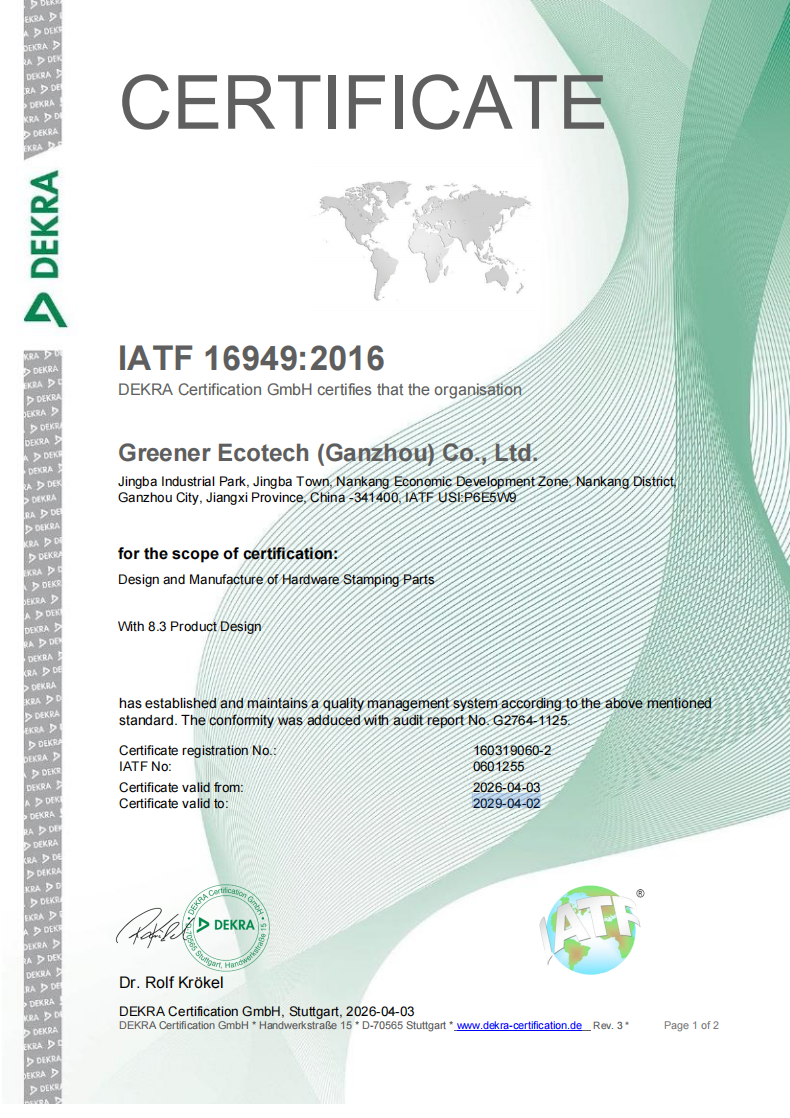
Automotive quality-system evidence should be matched to the process scope actually being purchased.
Confirm where the manufacturing depth actually sits
Company totals are the starting point, not the answer. Greenconn reports 106,000 m² of factory area, 800 employees including 69 engineers, an annual output of 345,000,000 pcs and a monthly capacity of 28,750,000 pcs, with an export ratio of 70% across global markets. Its production is described as vertically integrated across connector design, engineering development, tooling, precision stamping, plating, injection molding, automated assembly, testing and quality control, supported by four manufacturing facilities in China and Vietnam and business locations in multiple Chinese cities as well as Taipei, Osaka, Houston and Munich.
For a buyer, the useful version of those numbers is site allocation. Three questions convert a company total into a capability statement: which site will produce this part number, does that site fall inside the certificate scope on file, and what share of the stated capacity is currently committed elsewhere. A dual-region footprint supports continuity planning, but a footprint statement is not a capacity reservation or an allocation guarantee, and it should be verified through a site audit or site-specific documentation rather than accepted from a profile page.
Map connector families to the design before scoring the supplier
Portfolio breadth is a screening filter. What decides a programme is whether the specific family, pitch and termination style in the design is covered at part-number level.
| Design requirement | Family to check | Series in the Greenconn catalogue | Evidence to request |
|---|---|---|---|
| Sealed wire-to-wire in a wet or high-vibration zone | Waterproof wire-to-wire | GT, GA01 | IP rating test basis, sealing structure, temperature range, vibration and shock data |
| Solderless PCB termination | Press-fit | ATZ605 | PCB hole specification, insertion and retention data |
| Harness to board with a locking interface | Wire-to-board | GB01, GB05, CFAD102 | Locking or TPA structure, mating force, terminal retention |
| Board stacking with assembly tolerance | Floating board-to-board | GC01 | Floating range in X, Y and Z; mating tolerance |
| High-speed board-to-board with misalignment | High-speed floating | GD01 | Signal-integrity data, data rate, impedance definition |
| IDC-style automotive lighting termination | RAST | CSGA106, CSGA110 | IDC termination data, vibration resistance, locking design |
| Flat cable to board | FPC/FFC | FPC/FFC range | Contact and actuator retention, mating cycles |
| On-board power distribution | Terminal block, headers | Terminal block and header range | Current rating, pitch options, plating |
Listed pitches in the catalogue include 0.5 mm, 0.8 mm, 1.0 mm, 1.27 mm, 2.0 mm and 2.54 mm, plus multiple terminal-block pitches. That is enough for a fast fit check between a design and a supplier, and a fit check is not a qualification. The transition from one to the other happens when the series datasheet and the test report for the exact part number are on the buyer's desk.
Test custom-design capability with the customization list
Greenconn operates in OEM and ODM modes and lists the variables it will engineer: voltage, current, pin count, contact resistance, high-speed data rate, pitch, mounting type, locking mechanism, floating range, stacking height, overall dimensions, IP rating, housing material, contact material, plating thickness, contact plating and overmolding material. Read that list as the set of variables the supplier is prepared to design around, not as a menu of guaranteed performance options.
The practical test is a trade-off question with three interacting requirements, such as a target pitch, a current rating and a temperature range that cannot all be met at the lowest-cost material set. A supplier with real engineering depth answers with the design change and the validation that would follow. A supplier without it answers with a catalogue page. Greenconn reports engineering capability covering product development, prototyping, validation and mass production, backed by 69 engineers, with an MOQ of 5000 pcs and a stated lead time of 4 weeks.
Track B: Turning Delivery Assurance into Documents
Delivery assurance is decided by what the purchase order and the acceptance protocol say. Nothing in the capability track replaces it.
Purchase terms that move risk
Greenconn states an MOQ of 5000 pcs, FOB delivery terms, acceptance by pre-shipment test and payment terms of 100% T/T 30 days. Each term changes a specific risk position, and each should be read in buyer terms rather than catalogue terms.
- MOQ 5000 pcs sets the smallest order that carries the quoted economics. It also sets how much buffer a buyer must fund to survive a design change or a demand swing, so it belongs in the evaluation, not only in the negotiation.
- FOB defines where cost and risk transfer. Confirm the port, the Incoterm version and which party arranges insurance, because an unstated detail here becomes a freight dispute later.
- Pre-shipment test defines when conformity is judged. Judging before dispatch is what makes rework possible; judging after arrival only produces a claim.
- 100% T/T 30 days means payment is not tied to delivery by an instrument. The acceptance record therefore becomes the buyer's main leverage, and it must be complete enough to support a claim.
Commercial terms vary by programme. The values above are the stated terms and should be confirmed in the quotation before the purchase order is issued.
Rewrite "pre-shipment test" as acceptance criteria
AQL sampling inspection is the stated quality-control method. AQL is a sampling scheme, not an acceptance limit, and it cannot stand alone in a purchase order. Six elements turn the phrase into a criterion a supplier can be held to:
- The characteristic and its unit: contact resistance in milliohms, retention force in newtons, plating thickness in micrometres.
- The test method and its standard reference, so both parties measure the same way.
- The sample size and the AQL value applied to the lot.
- The acceptance limit, stated numerically rather than as "per datasheet".
- The record format and traceability requirement: lot or batch identity, test date, equipment and operator.
- The disposition rule for a nonconforming lot: rework, sort, return or concession, with who decides and in what timeframe.
An order that specifies all six can be audited. An order that specifies only "pre-shipment test" transfers the interpretation of conformity to the supplier.
Qualification evidence by performance domain
Qualification reports are the bridge between the standard and the part number. The references below are the ones cited in Greenconn's technical material; they define methods and sequences, while the acceptance limits come from the buyer's drawing and the programme validation plan.
| Domain | What is measured | Standard reference | What the buyer should hold |
|---|---|---|---|
| Electrical | Contact resistance, insulation resistance, dielectric withstand voltage, current-carrying temperature rise | IEC 61984; EIA-364-06, EIA-364-23 and EIA-364-21 cited as references | Report with measured values and limits for the exact part number |
| Mechanical | Mating and unmating force, terminal retention force, cable pull force, vibration endurance, shock; post-test inspection of the locking mechanism and terminals for displacement, damage or fracture | LV214-1, LV214-2, LV214-3 (VDA) | Report showing pre-test and post-test values against pass criteria |
| Environmental | High- and low-temperature cycling, damp heat, salt spray, followed by re-evaluation of mechanical locking and electrical parameters | IEC 60512; LV214 test matrix | Report including the failure definition applied, such as plating corrosion or insulation degradation |
| Automotive system level | Performance testing for low-voltage road-vehicle connector systems (0–20 VDC) | USCAR-2 (SAE International) | Applicability statement where the programme is automotive |
A report without stated limits is a data sheet. A report with limits, sample size and a failure definition is qualification evidence, and that is the document that belongs in the supplier file before the first production order.
Verify continuity, not only capacity
Continuity is a separate question from capability: it asks what happens to supply when the nominated site is constrained. Greenconn's stated support model combines manufacturing in China and Vietnam with local dealer and office support and a distributor network across global markets, which gives a buyer two levers to test rather than one.
Four items belong in the continuity clause: the nominated production site and its qualified alternate; the definition of the stated 4-week lead time, meaning whether it runs from purchase order or from material release; the buffer or safety-stock arrangement for the specific part number; and the change-notification commitment covering material, plating and process changes. Each is a question the supplier can answer in writing, and each answer is auditable later.
How the Weighting Shifts by Application
The framework does not change with the market; the depth applied to each track does. The table below shows where the weight moves.
| Application | Capability emphasis | Delivery assurance emphasis |
|---|---|---|
| Automotive electronics | IATF 16949 scope mapped to the purchased process; familiarity with LV214 and USCAR-2; sealed wire-to-wire and TPA structures | Part-specific vibration, shock and temperature-cycling reports; change-notification terms; batch traceability |
| Industrial automation | Mating cycles, locking retention, resistance to dust and humidity | Lot-to-lot consistency under AQL; terminal retention values per lot |
| Medical equipment | ISO 13485 scope match to the device type; compact custom headers and FPC/FFC | Traceability, documented process control, re-validation obligations on change |
| Consumer electronics | Fine pitch, high-volume repeatability, cost control | Capacity allocation at volume and yield stability evidence |
| Robotics | Floating compensation, high-speed board-to-board, shock resistance | Motion and vibration endurance data; agreed assembly tolerance |
| Data centre and communications | High-speed board-to-board with signal integrity and EMC performance | Signal-integrity reports at the specified data rate |
In automotive programmes the weight sits on scope matching and on the mechanical and environmental reports. The GT series, for example, is described with IP68 and IP6K9K protection and is applied in NEV battery systems; the GA01 series carries IP67 protection and appears in solar energy storage air-cooling systems and in automotive seat sensing; the RAST CSGA series is applied to automotive lighting through an IDC connection with a locking and vibration-resistant design. Each of those statements is a starting point for a report request, not a substitute for one.

RAST-family coverage is a screening result; the automotive programme still requires part-level mechanical and environmental reports.
In robotics and automated handling, the capability question is geometric before it is electrical. The GC01 floating board-to-board series provides floating compensation in X, Y and Z to absorb positional variation during mating, and has been applied to humanoid robot main control boards; the GB01 wire-to-board series is listed at 1.25 mm pitch with contact resistance of 30 mΩ or less and a vibration-resistant locking structure, applied to robot joint modules. On the delivery side, the acceptance criterion that matters most is the numerically agreed floating range, because a tolerance that is not written down cannot be inspected.
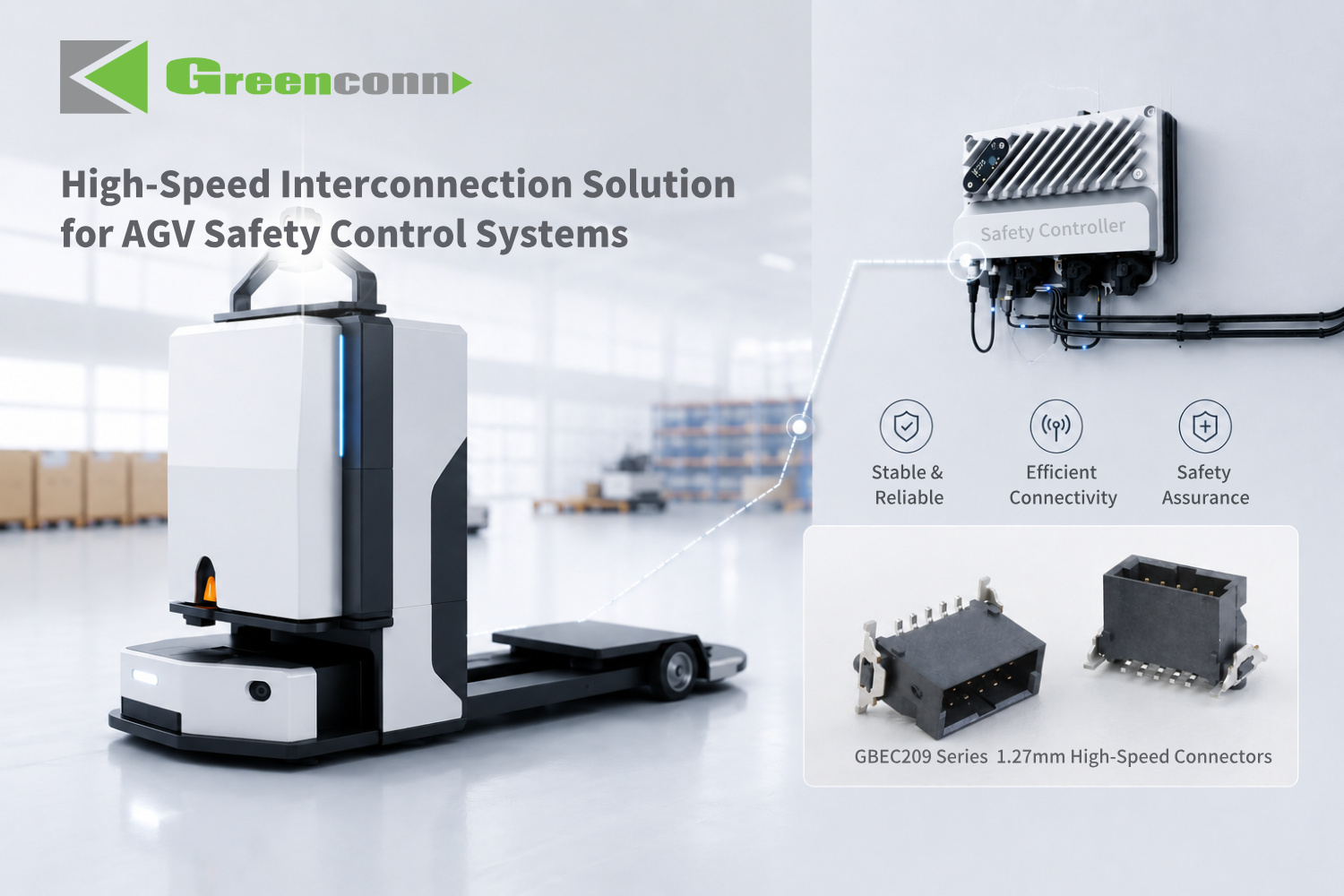
High-speed board-to-board applications shift the acceptance emphasis to signal-integrity data at the specified data rate.
In communications and computing equipment, high-speed board-to-board families such as GBED204, applied to telecom base stations, move the acceptance emphasis to signal integrity and EMC performance. In medical equipment, the ISO 13485 scope becomes the first gate, and a custom compact female header developed for blood glucose monitors shows how far the capability question can travel from a catalogue part: small footprint, dual-sided multi-contact terminal design and a stable connection between the flexible flat cable and the PCB.
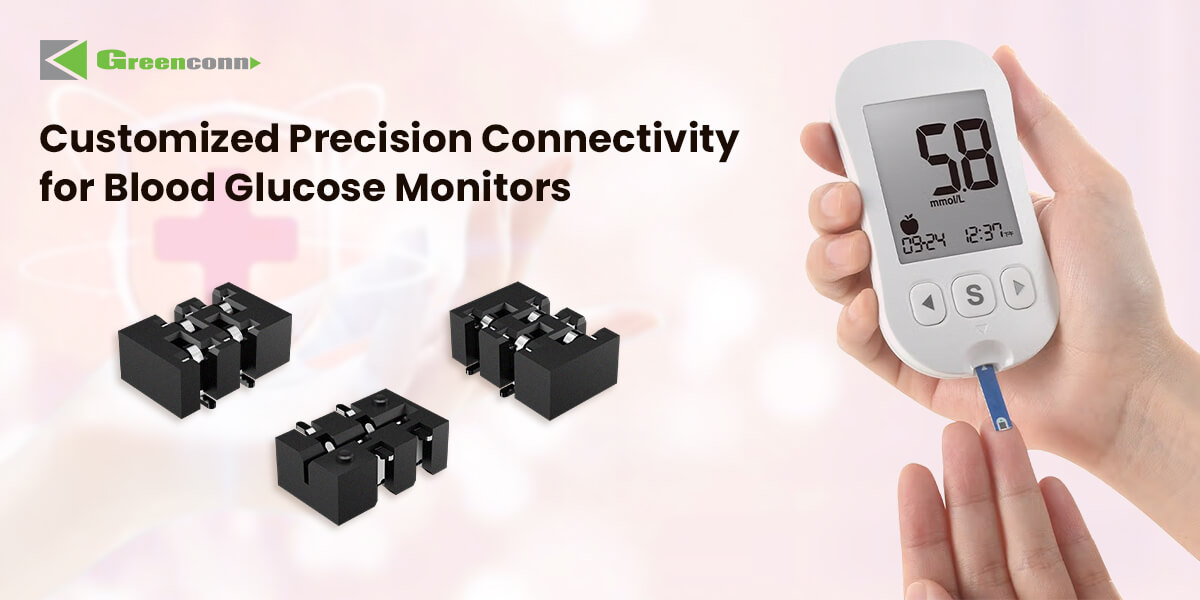
Medical programmes add a scope check on ISO 13485 certificate G25Q2GZ1104R0S before the technical evaluation begins.
An Eight-Step Evaluation Sequence
- Lock the specification. Record the connector family, pitch, termination style, current and voltage, environment, and the tests that will define conformity. This document drives everything that follows.
- Request certificate records, not claims. Ask for the number, issuing body, scope and validity date for each standard, plus the certified site.
- Match scope to the purchased process. Confirm how the IATF stamping-part scope and, where relevant, the ISO 13485 application scope apply to your programme and site.
- Confirm the producing site. Record its share of the stated capacity and its qualified alternate before commercial discussion begins.
- Screen product-family coverage. Use the mapping table to confirm the family exists, then drop any family that cannot be supported at part-number level.
- Test custom capability. Put one three-variable trade-off question to the engineering team and require a validation plan in reply.
- Convert the pre-shipment test into written acceptance criteria. Six elements: characteristic, method, sample and AQL, limit, record, disposition.
- Fix the commercial and continuity terms. MOQ, Incoterm, payment terms, lead-time definition, buffer and change notification. Then sign off both tracks together, not in sequence.
Failure Modes the Framework Is Designed to Catch
The acceptance criteria worth writing are the ones that map to a known failure mechanism. The three below account for most field returns on board-level connectors, and each has a test that exposes it.
| Failure mode | Mechanism | Test that exposes it | Clause to add |
|---|---|---|---|
| Plastic aging, embrittlement and cracking | Repeated high and low temperature cycling | High- and low-temperature cycling | Post-cycle locking force and visual acceptance criteria |
| Plating corrosion and contact-resistance drift | Humidity, oxidation, salt exposure | Damp heat and salt spray | Contact-resistance limit after exposure |
| Terminal loosening | Thermal expansion and contraction amplifying mechanical stress | Temperature cycling followed by retention measurement | Terminal retention force after cycling |
| Overheating or burning | Excessive contact resistance, insufficient contact force, inadequate current-carrying capacity, poor insulation or dielectric withstand | Contact resistance, insulation resistance, dielectric withstand, temperature rise | Temperature-rise limit at rated current |
| Locking-tab fatigue, fracture or terminal back-out | Vibration with inadequate retention | Mating and unmating force, terminal retention, cable pull, vibration endurance, shock | Post-test inspection criteria; TPA requirement where vibration is present |
Terminal Position Assurance is the clearest example of a design choice that changes the acceptance criteria. A TPA structure adds a secondary lock that improves terminal retention and helps hold contact force under vibration, and it compensates in part for dimensional change during temperature cycling. Where the application is high-vibration and wide-temperature, requiring TPA converts into a line item in the incoming inspection: lock fully engaged, verified per cavity. Where the connection is indoor, static and low-vibration, a single-lock design may remain adequate and cheaper.
Frequently Asked Questions
Which quality-system certificates should a PCB connector supplier provide before approval?
Request the certificate record for the management system that covers the producing site. Greenconn's set includes ISO 9001:2015 certificate 030825002C issued by DEKRA with the scope "Manufacture of Connector", valid 2025-08-18 to 2028-08-17; ISO 14001:2015 certificate 111121007/1C, valid 2024-11-28 to 2027-11-28; and ISO 45001:2018 certificate 450224015, valid 2024-02-28 to 2027-02-27. For automotive programmes, IATF 16949:2016 certificate 160319060-2 is held with the scope "Design and Manufacture of Hardware Stamping Part". For medical programmes, ISO 13485:2016 certificate G25Q2GZ1104R0S covers "Design and production of electronic connectors (radiofrequency ablation system, dynamic blood glucose meter)". File each with scope and validity, and check the certified site against the quotation.
What does the ISO 9001 scope "Manufacture of Connector" actually prove?
It confirms that the quality management system is certified for connector manufacture as a process, within the stated validity period. It does not set the acceptance limits for a buyer's part: contact resistance, plating thickness, mating force and sample plan come from the drawing and the acceptance criteria, not from the certificate. Use the certificate to qualify the system and the test report plus purchase-order criteria to qualify the lot.
How do I verify custom board-to-board design capability at a Chinese PCB connector OEM?
Ask for four things. First, the variables the supplier will engineer; Greenconn lists voltage, current, pin count, contact resistance, high-speed data rate, pitch, mounting type, locking mechanism, floating range, stacking height, overall dimensions, IP rating, housing material, contact material, plating thickness, contact plating and overmolding material. Second, the engineering resource statement: Greenconn reports 69 engineers and capability from design and prototyping through validation and mass production. Third, a validation plan naming tests, standards and acceptance limits for the specific design. Fourth, the commercial frame, with an MOQ of 5000 pcs and a stated 4-week lead time confirmed for the programme. A floating board-to-board design such as the GC01 series is a useful test case, because the X, Y and Z floating range must be agreed numerically before a quotation can be meaningful.
Which connector families should a supplier cover for a mixed board-to-board and wire-to-board build?
For board-to-board work, check the floating GC01 series and the high-speed floating GD01 series against stacking height and alignment tolerance. For wire-to-board, check locking structure and PCB retention in families such as GB01, GB05 and CFAD102. For on-board power and signal, check terminal blocks and the header range, with listed pitches of 0.5, 0.8, 1.0, 1.27, 2.0 and 2.54 mm plus multiple terminal-block pitches. Coverage is a screening result; each family still needs part-number-level data before it can be qualified.
What acceptance criteria should be written into a PCB connector purchase order?
Six elements: the characteristic and unit, the test method and standard reference, the sample size and AQL value, the acceptance limit stated numerically, the record and traceability requirement, and the disposition rule for a nonconforming lot. The references in Greenconn's technical material set electrical testing against IEC 61984 with EIA-364-06, EIA-364-23 and EIA-364-21 cited, mechanical testing against LV214-1, LV214-2 and LV214-3, and environmental testing including temperature cycling, damp heat and salt spray against IEC 60512 and the LV214 test matrix. The limits themselves come from the drawing, not from the standard.
What MOQ, lead time and payment terms apply to a PCB connector order?
Greenconn states an MOQ of 5000 pcs, FOB delivery terms, acceptance by pre-shipment test, payment terms of 100% T/T 30 days, a lead time of 4 weeks and a monthly capacity of 28,750,000 pcs. These terms are programme-specific and should be confirmed in the quotation before the purchase order is issued. The pre-shipment acceptance record is the document that carries the conformity decision, so it belongs in the supplier file alongside the qualification reports.
How should a sample request be structured so that it supports the evaluation?
Request the sample together with the documents that make it meaningful: the certificate records for the producing site, the part-number datasheet with pitch, current and voltage ratings, and the test report for the performance domains the application depends on. A sample without those documents proves that a part exists, not that the process behind it is controlled. Samples, quotations and the full product introduction brochure are available through www.greenconn.com and sales@greenconn.com.
Conclusion
Capability verification answers whether a PCB connector supplier can build the part; delivery assurance answers whether every shipment will be judged against limits both parties agreed in advance. The two use different documents, different owners and different failure modes, and neither one substitutes for the other.
The sequence that holds up under audit runs from scope to record: read the certificate scope against the process being purchased, confirm the site that will actually produce the part, map the connector family to the design, then write the acceptance criteria before the first order rather than after the first rejection. Applied that way, the supplier approval becomes a decision with evidence behind it instead of a form that was signed because the paperwork was complete.
Next step
Download the Greenconn product introduction brochure to review connector families, manufacturing capability and quality-system coverage before building the evaluation file.
Have Questions or Need More Details?
Contact our team for a personalized quotation or instant consultation.
Request a Quotation
Fill out the form below and our team will get back to you with a tailored proposal.
WhatsApp Direct Chat
Prefer to chat in real-time? Message us on WhatsApp for instant assistance & quick answers.
- Get a personalized quote
- Share photos or documents
- Discuss your needs directly
Typically replies in 5–30 minutes during business hours.