
Waterproof vs Standard Wire-to-Wire PCB Connectors: A Harsh-Environment Buyer's Comparison
Harsh-Environment Buyer's Comparison
For a buyer comparing a standard wire-to-wire PCB connector against a waterproof version, the decision often starts as a simple price check. In equipment exposed to rain, washdown, condensation, dust, or temperature cycling, it rarely stays that simple. A standard connector that performs reliably inside a sealed indoor enclosure can fail within two or three seasons once moisture reaches its plated contacts. By the time the failure appears in the field, the cost is no longer a component price — it is service labor, downtime, and warranty handling.
This buyer's comparison frames the decision around four measurable dimensions: sealing capability, IP67/IP68 environmental protection, contact resistance under wet conditions, and five-year total cost of ownership (TCO). It is written for evaluation-to-execution buyers — engineers and sourcing teams specifying wire-to-wire PCB connectors for outdoor LED lighting, industrial automation, marine equipment, and agricultural machinery.
Problem Definition: Why Standard Wire-to-Wire Connectors Fail in Harsh Environments
A standard wire-to-wire connector establishes its electrical interface through housing geometry and terminal design. It does not include an integrated seal that blocks water or dust from the mating face and the wire entry point. In a dry, controlled indoor environment, that architecture is reliable and remains the right choice for cost-sensitive assemblies.
Once the same connector is exposed to moisture, the ingress paths become predictable. Water can reach the contact chamber through the mating-face gap, along the terminal-to-housing clearance, and at the wire entry point — especially where cable-side lateral pull exists. Greenconn's environmental risk guidance describes the resulting failure chain as well understood:
- Plating corrosion and oxidation at the contact interface
- Drift of contact resistance over time
- Plastic aging and embrittlement under repeated temperature cycling
- Thermal expansion and contraction that accelerates terminal loosening
Any single effect can degrade an electrical joint. Combined, they frequently produce intermittent faults that appear only in the field. The pattern is a delayed failure: a connector passes initial validation in a dry lab, then fails during the third or fourth seasonal cycle. The misjudgment buyers make at the evaluation stage is comparing datasheets written for dry conditions. Standard contact-resistance figures apply to freshly mated, uncontaminated samples — they do not represent what happens after two years of condensation and salt-laden moisture.
Industry Background: Where Wire-to-Wire Connectors Meet Harsh Environments
Four equipment categories drive most harsh-environment wire-to-wire connector demand.
Outdoor LED lighting. Pole-mounted and facade fixtures operate in rain, snow, and heavy condensation. The connector between the driver and the LED module is the most exposed electrical joint in the assembly.
Industrial automation. Factory-floor equipment is exposed to coolant, washdown, and high humidity. Cabinet-to-machine and sensor-to-controller wiring runs through cable entries that regularly collect moisture.
Marine. Salt spray, UV exposure, and constant humidity accelerate corrosion. Marine wire-to-wire connections need both sealing and corrosion-resistant plating.
Agricultural equipment. Harvesters, sprayers, and irrigation controllers are exposed to mud, high-pressure washdown, and wide temperature swings — a combination that repeatedly stresses both seals and terminal retention.
Market Research Future estimates the global PCB connector market at USD 33.83 billion in 2025, projected to reach USD 47.96 billion by 2035 (Source: Market Research Future, PCB Connector Market Report, 2026). Global Market Insights reports that board-to-board connectors represented the largest single segment of that market in 2025 at approximately 24.3% share (Source: Global Market Insights, PCB Connector Market Report, 2026). Wire-to-wire connections form a smaller but strategically important slice of the same harsh-environment ecosystem — a single failed cable joint can take a full fixture or machine offline.
Detailed Solution: What Waterproof Sealing Changes Across Four Decision Dimensions
1. Sealing Capability
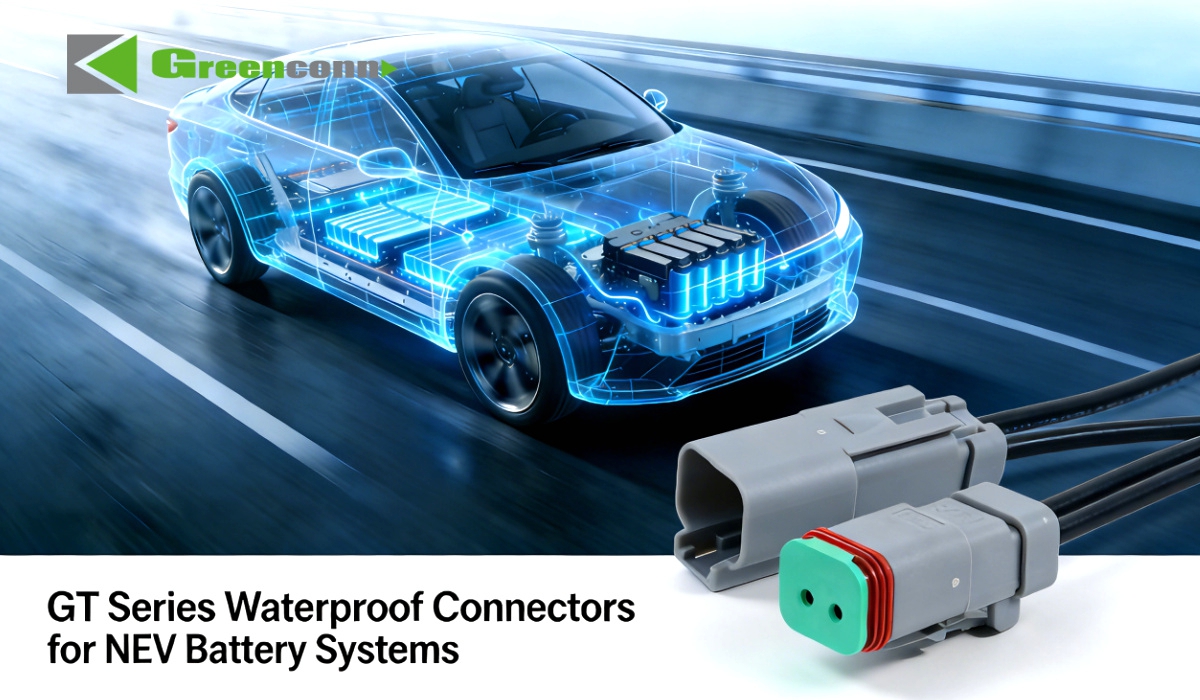
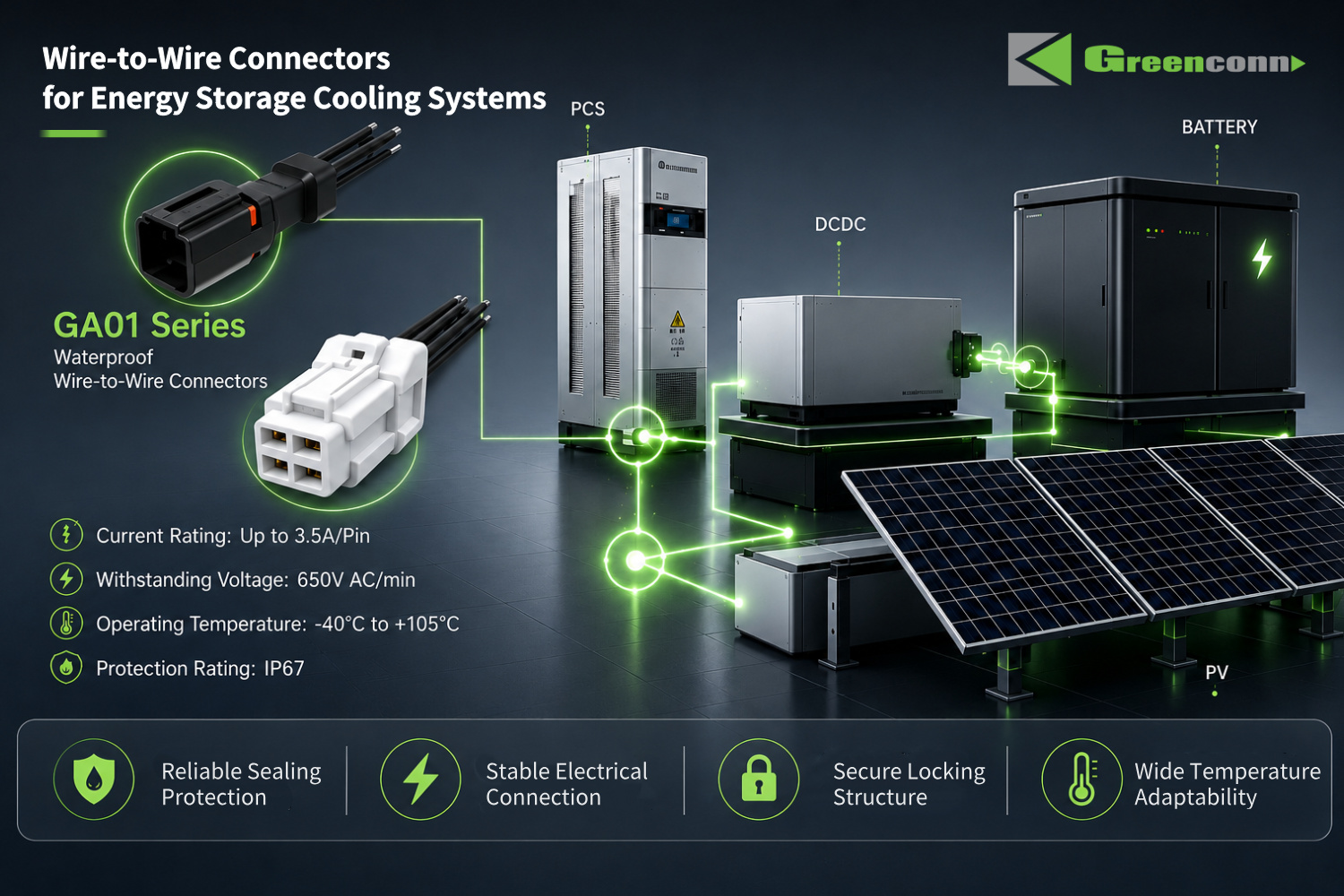
A waterproof wire-to-wire connector uses sealing structures at the mating face and wire entry points to create a barrier against water and dust ingress. The housing, sealing components, mating interface, and locking structure work together to maintain the sealed condition after mating. In the Greenconn GA01 and GT waterproof wire-to-wire series, this sealing is implemented with silicone seals paired to a durable housing:
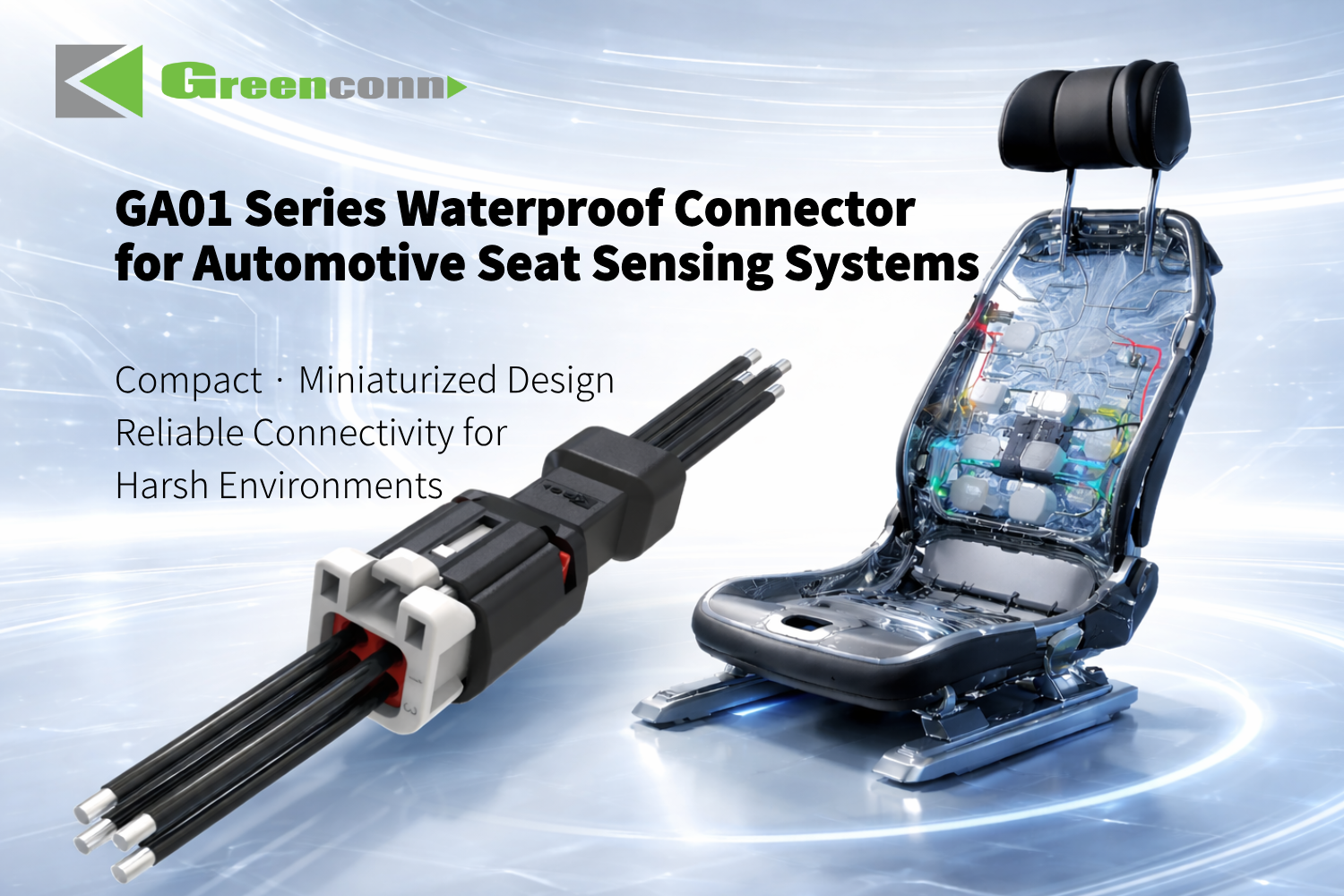
- GA01: PBT housing (black), phosphor bronze contacts, silicone seal (reddish brown) — IP67 protection
- GT: PA66 housing (gray), silicone seal (reddish brown) — IP68 and IP6K9K protection
Standard connectors do not carry this sealing layer. Their protective strategy is external — enclosure gaskets, cable glands, or potting — which adds process steps and shifts seal reliability away from the connector itself.
2. IP67 and IP68 / IP6K9K Protection
Ingress protection is the clearest single differentiator between standard and waterproof wire-to-wire connectors.
| Protection attribute | Standard wire-to-wire | Waterproof — GA01 | Waterproof — GT |
|---|---|---|---|
| Integrated seal at mating face | No | Yes (silicone) | Yes (silicone) |
| Degree of protection | Not specified as sealed | IP67 | IP68, IP6K9K |
| Operating temperature range | Application dependent | -40°C to +105°C | -55°C to +125°C |
| Housing material | Application dependent | PBT (black) | PA66 (gray) |
| Contact resistance (spec) | Dry-condition figure only | 30 mΩ Max | 20 mΩ |
| Dielectric withstand voltage | Application dependent | 650V AC / 1 minute | 1500V AC / 1 minute |
| Current rating per pin | Application dependent | 5.0 A (20 AWG) down to 3.0 A (26 AWG) | 13 A max AC/DC |
| Applicable wire gauge | Application dependent | AWG 20 to AWG 26 | AWG 14 to AWG 20 |
Standard test sequences for these protection claims follow recognized frameworks. IEC 60512 and LV214 define temperature/humidity cycling and salt-spray conditions, after which mechanical locking and electrical parameters are re-evaluated (Source: Greenconn risk knowledge base, referencing IEC and VDA/LV214). For low-voltage automotive applications, USCAR-2 is the recognized performance standard for electrical connector systems (Source: SAE International, USCAR-2).
3. Contact Resistance Under Wet Conditions
Contact resistance is where the waterproof version delivers a measurable design advantage.
- GA01: 30 mΩ Max contact resistance, 1000 MΩ Min insulation resistance, 650V AC dielectric withstand for 1 minute
- GT: 20 mΩ contact resistance, 1000 MΩ insulation resistance, 1500V AC dielectric withstand for 1 minute
These figures are specified on clean, freshly mated samples. The waterproof advantage is not a lower starting number — it is that the sealed design protects the plating interface from the corrosion and oxidation that would otherwise drive resistance drift. Once plating corrodes or oxidizes, resistance can move well outside the original specification. A standard connector's dry-condition figure remains accurate only as long as moisture stays out, which is why two connectors with similar datasheet values can behave very differently after three years in the field.
4. Five-Year Total Cost of Ownership
The upfront cost gap between standard and waterproof wire-to-wire connectors is narrower than most buyers expect. Waterproof versions typically cost 10–15% more initially, but reduce 5-year TCO by 35% by eliminating water-damage failures.
The TCO delta comes from four cost categories that never appear on the component quote:
- Field replacement labor and travel — a pole-mounted LED fixture or an agricultural control harness can take hours to access
- Downtime — a lighting array or automated line stopped by an intermittent fault carries a much higher hourly cost than the connector
- Rework and warranty handling — failed connectors returned from the field carry returns administration and re-testing costs
- Channel and brand exposure — for a distributor or OEM, a repeat water-damage failure affects the customer relationship, not just the bill of materials
For equipment with an expected service life of five years or more, the standard connector's lower unit price is offset by at least one field replacement in most wet-exposure applications. This is the core buying logic behind specifying a waterproof version even when the initial quote is higher.
Step-by-Step Breakdown: A Harsh-Environment Evaluation Framework
The following six-step framework helps a buyer move from a shortlist to a qualified supplier decision.
Step 1 — Classify the Exposure
Determine what the connector will actually see. Intermittent rain and splash typically justify IP67. Periodic immersion or high-pressure washdown typically justify IP68 and, in vehicle-adjacent applications, IP6K9K.
Step 2 — Define the Temperature Cycle Envelope
GA01 covers -40°C to +105°C. GT covers -55°C to +125°C. Match the envelope to the coldest overnight and hottest in-operation surface temperatures, not to the average ambient temperature.
Step 3 — Match Current and Voltage Requirements
GA01 carries 5.0 A per pin at 20 AWG (falling to 3.0 A at 26 AWG) with a 650V AC dielectric withstand. GT supports up to 13 A per pin with 1500V AC dielectric withstand. Selecting beyond the actual requirement adds cost without adding reliability.
Step 4 — Review Locking and Terminal Retention
In high-vibration environments, the locking structure and terminal retention must resist the same vibration that acts on the cable. Connectors that rely on a single locking feature may fatigue over time. A secondary locking element such as a Terminal Position Assurance (TPA) structure provides additional terminal retention and is preferred where continuous vibration is expected.
Step 5 — Validate With Samples Before Qualification
Request pre-production samples and confirm environmental performance against the target application. Greenconn applies AQL sampling inspection for outgoing quality control and defines acceptance criteria as pre-shipment test.
Step 6 — Negotiate at the TCO Level, Not the Unit Price Level
If a quote compares a waterproof connector against a standard connector, model the total cost over three to five years instead of reading the component unit price. The waterproof premium typically disappears within the first field failure avoided.
Use Cases: Where Waterproof Wire-to-Wire Connectors Change the Outcome
Outdoor LED Lighting
The connector between the driver and the LED module is exposed to rain, condensing humidity, and seasonal temperature cycling. Specifying an IP67 connector such as the GA01 series is well matched to pole-mounted and facade fixtures, where a sealed junction replaces a combined gland-plus-standard-connector approach.
Industrial Automation
Washdown and coolant exposure create a continuous moisture load on cabinet-to-machine wiring. In these installations, IP67 or IP68 connectors reduce the number of separate sealing accessories required and consolidate the environmental barrier into the connector itself.
Marine and Coastal Equipment
Salt spray plus UV exposure accelerates corrosion on any plated surface not protected by a seal. The GT series, with its IP68 and IP6K9K rating and -55°C to +125°C range, is engineered for these conditions, and the sealed interface isolates the plated contacts from salt-laden moisture.
Agricultural Equipment
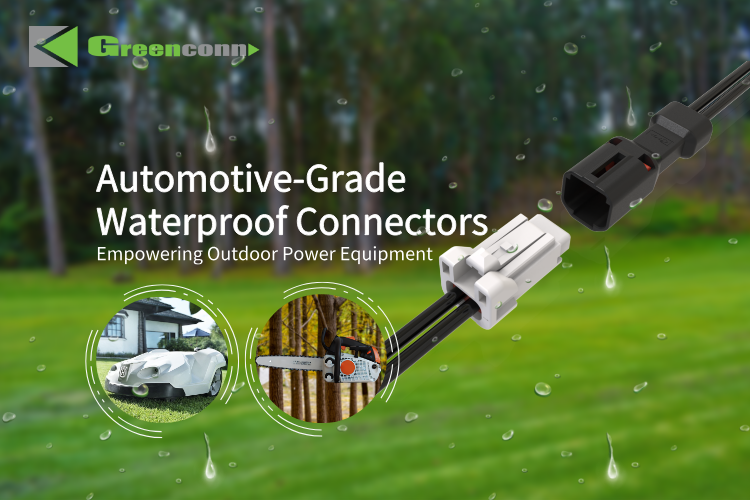
Harvesters, sprayers, and irrigation controllers see mud, high-pressure washdown, and wide temperature swings. In this environment, the waterproof version's 10–15% price premium is typically outweighed by eliminating the field replacement that a standard connector would need after a wet season.
Comparison Table: Waterproof vs Standard Wire-to-Wire PCB Connectors
| Decision Dimension | Standard Wire-to-Wire | Waterproof Wire-to-Wire (GA01, IP67) | Waterproof Wire-to-Wire (GT, IP68 / IP6K9K) |
|---|---|---|---|
| Mating-face seal | None integrated | Silicone seal | Silicone seal |
| Ingress protection | Not specified as sealed | IP67 | IP68, IP6K9K |
| Operating temperature | Application dependent | -40°C to +105°C | -55°C to +125°C |
| Contact resistance (spec) | Dry-condition only | 30 mΩ Max | 20 mΩ |
| Dielectric withstand | Application dependent | 650V AC / 1 min | 1500V AC / 1 min |
| Current per pin | Application dependent | 5.0 A to 3.0 A (AWG 20–26) | Up to 13 A (AWG 14–20) |
| Housing material | Application dependent | PBT (black) | PA66 (gray) |
| Initial cost index | Baseline | +10% to +15% | +10% to +15% |
| 5-year TCO | Higher (water-damage failures included) | -35% vs standard | -35% vs standard |
| Typical best fit | Dry indoor enclosures | Outdoor LED, industrial washdown | Marine, agricultural, high-current harsh environments |
Frequently Asked Questions
What standards should a waterproof wire-to-wire PCB connector meet?
Waterproof connector qualification typically references IEC 61984 for electrical requirements, IEC 60512 for test methods, and EIA-364 procedures for contact resistance, insulation resistance, and dielectric withstand testing. For automotive applications, USCAR-2 is the recognized performance standard for automotive electrical connector systems in low-voltage road-vehicle applications. LV214 defines additional environmental and mechanical test sequences for vehicle connectors, including temperature/humidity cycling and salt-spray exposure followed by re-evaluation of locking performance and electrical parameters. After environmental testing, plating corrosion or significant deterioration of insulation performance may be treated as a failure depending on the applicable test specification and acceptance criteria.
Can Greenconn supply OEM and ODM waterproof connector designs?
Greenconn provides both OEM and ODM services, with customization covering voltage, current, pin count, contact resistance, high-speed data rate, pitch, mounting type, locking mechanism, floating range, stacking height, overall dimensions, IP rating, housing material, contact material, plating thickness, contact plating, and overmolding material. Engineering resources support product development, prototyping, validation, and volume manufacturing from established production facilities in China and Vietnam.
What is the cost difference between waterproof and standard wire-to-wire connectors?
Waterproof wire-to-wire PCB connectors are typically 10–15% more expensive than comparable standard versions at the initial quote. Over a five-year operating period, the waterproof design lowers total cost of ownership by approximately 35% by eliminating water-damage failures and the associated field replacements, downtime, and warranty handling.
What are the minimum order quantity and acceptance criteria?
Greenconn's standard commercial terms for connector supply include a minimum order quantity of 5,000 pcs, FOB delivery terms, pre-shipment test as the acceptance criterion, and 100% T/T at 30 days. AQL sampling inspection is applied for outgoing quality control.
What is the typical production lead time for waterproof wire-to-wire connectors?
The typical production lead time is 4 weeks, supported by monthly connector production capacity of 28,750,000 pcs. OEM and ODM engineering support is available from the same production platform. Buyers who want to move from evaluation to execution can request samples through the Greenconn sales team at sales@greenconn.com or through a local Greenconn office or distributor.
Conclusion
For harsh-environment wire-to-wire PCB connections, the waterproof-versus-standard decision is not a premium option — it is a lifecycle cost decision. The waterproof version costs 10–15% more at the component level and reduces 5-year TCO by 35% by removing water-damage failures from the maintenance plan.
The dimensions that decide the outcome are sealing capability, IP67 versus IP68 / IP6K9K protection, contact resistance under wet conditions, and total cost of ownership over five years. Greenconn's GA01 and GT waterproof wire-to-wire series map directly to these requirements: GA01 (IP67, -40°C to +105°C) is suited to outdoor LED and industrial washdown, while GT (IP68 / IP6K9K, -55°C to +125°C) is suited to marine, agricultural, and high-current environments.
Greenconn is a connector manufacturer established in 1998, providing interconnect solutions for electronic and electrical systems with integrated capabilities covering design, tooling, stamping, plating, injection molding, automated assembly, testing, and quality control, supported by production facilities in China and Vietnam. For buyers who need to verify performance on their own application, samples and a project-specific quote are the fastest way to move from evaluation to execution.
Sample, Quote, and Catalog
Request samples of GA01 and GT waterproof wire-to-wire connectors, obtain an application-specific quotation, or download the Greenconn connector catalog to start your technical evaluation.
Email: sales@greenconn.com | Tel: +86-755-27070050 | Website: www.greenconn.com | Blog: blog.greenconn.com
Download the Greenconn Introduction Brochure: Greenconn Introduction Brochure (PDF)
Have Questions or Need More Details?
Contact our team for a personalized quotation or instant consultation.
Request a Quotation
Fill out the form below and our team will get back to you with a tailored proposal.
WhatsApp Direct Chat
Prefer to chat in real-time? Message us on WhatsApp for instant assistance & quick answers.
- Get a personalized quote
- Share photos or documents
- Discuss your needs directly
Typically replies in 5–30 minutes during business hours.