
Disposable Wooden Cutlery vs. Bamboo vs. Paper: A Cost-Performance and Certification Comparison
Disposable Wooden Cutlery vs. Bamboo vs. Paper: A Cost-Performance and Certification Comparison
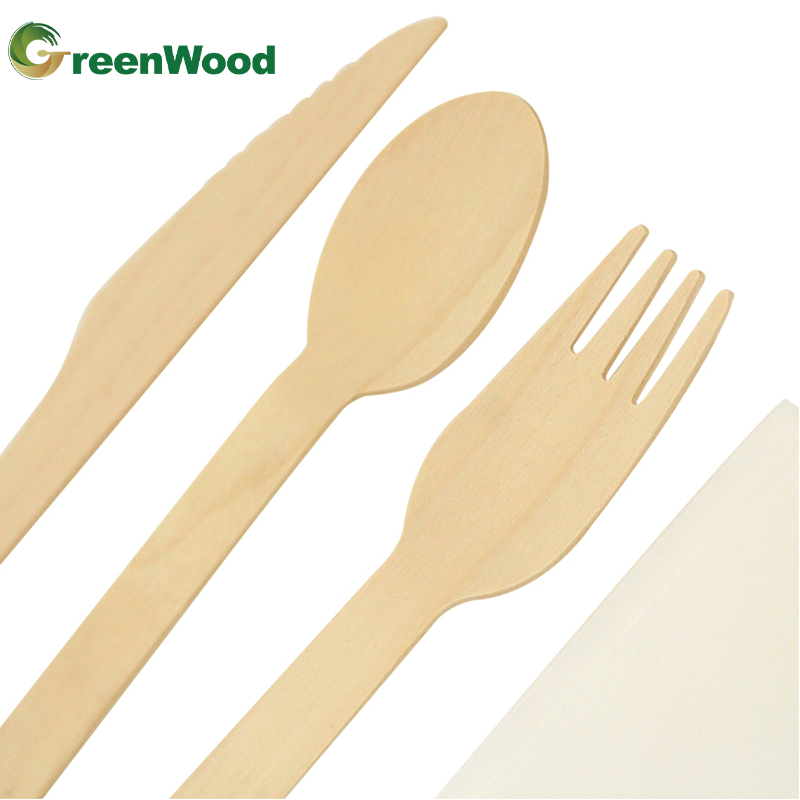
For buyers moving from plastic to fiber-based cutlery, the real question is not simply whether disposable wooden cutlery is eco-friendly. It is how wood compares with bamboo and paper on food-contact compliance, physical performance, customization, and the cost drivers that determine whether a product fits a specific restaurant, takeaway, hotel, or wholesale program.
Greenwood - Dalian Industrial Co., Ltd., established in 2000, specializes in manufacturing disposable wooden tableware and produces three closely comparable disposable cutlery families: disposable wooden cutlery model GW-20456, disposable bamboo cutlery model GW-BC001, and disposable paper cutlery model GW-PC204. This article uses those three verified product specifications to help buying teams make a defensible material choice.
Why Comparing These Three Materials Is Not Straightforward
All three options can carry similar environmental messages. Each can be described as biodegradable and compostable, and each can claim to be a plastic-free alternative. That similarity creates confusion for procurement teams, especially when a supplier presents only generic claims instead of product-level specification sheets.
The deeper problem is that a cutlery material is not universally good or bad. A paper knife may handle one food format comfortably but may not be the right structural choice for a different portion size. Bamboo may be specified when a buyer needs a certified natural-material story. Wood may be chosen when a wide range of sizes and straightforward OEM options are more important. Buyers therefore need comparison criteria, not slogans.
For the application scenarios typical of this product category, Greenwood lists food-contact standards as a key requirement: food-grade safety, no paint or wax, absence of odor, and eco-friendly and biodegradable properties. These requirements apply across restaurant chains, supermarkets, takeaway wholesalers, airlines, picnics, banquets, and exhibitions.
Market Context: Why Fiber-Based Cutlery Is a Growing Procurement Category
The shift away from single-use plastic is supported by both regulation and commercial demand. Independent market research values the global disposable wooden cutlery market at approximately USD 2.8 billion in 2025 and projects growth to USD 5.2 billion by 2034 (Dataintelo). Asia Pacific accounted for the largest regional share in 2025, about 38.6%, supported by urbanization and plastic-ban policies in countries such as China and India.
China plays a major role in global supply. China was the world's largest exporter of wood tableware and kitchenware under HS code 4419 in 2024, with export values estimated between USD 1.38 billion and USD 1.5 billion (OEC/WITS). Greenwood is part of this export supply base: approximately 95% of its production is exported to Europe, ANZ, Canada, the USA, South America, the Middle East, Japan & Korea, and Southeast Asia.
Certification also shapes the market. In the European Union, the EU Deforestation Regulation (Regulation (EU) 2023/1115) applies to wood products and requires due diligence and geolocation documentation, with the compliance timeline for large operators postponed to December 30, 2025 under the latest council agreements. In addition, wooden cutlery marketed as compostable in the EU must satisfy EN 13432 acceptance criteria. Buyers should treat these requirements as supply-chain verification tasks, not marketing labels.
Detailed Solution: The Three Material Systems
Greenwood's three cutlery lines share the same broad commercial channel, but each has a distinct product specification. The comparison below is based on the published specifications for models GW-20456, GW-BC001, and GW-PC204.
1. Disposable Wooden Cutlery (GW-20456)
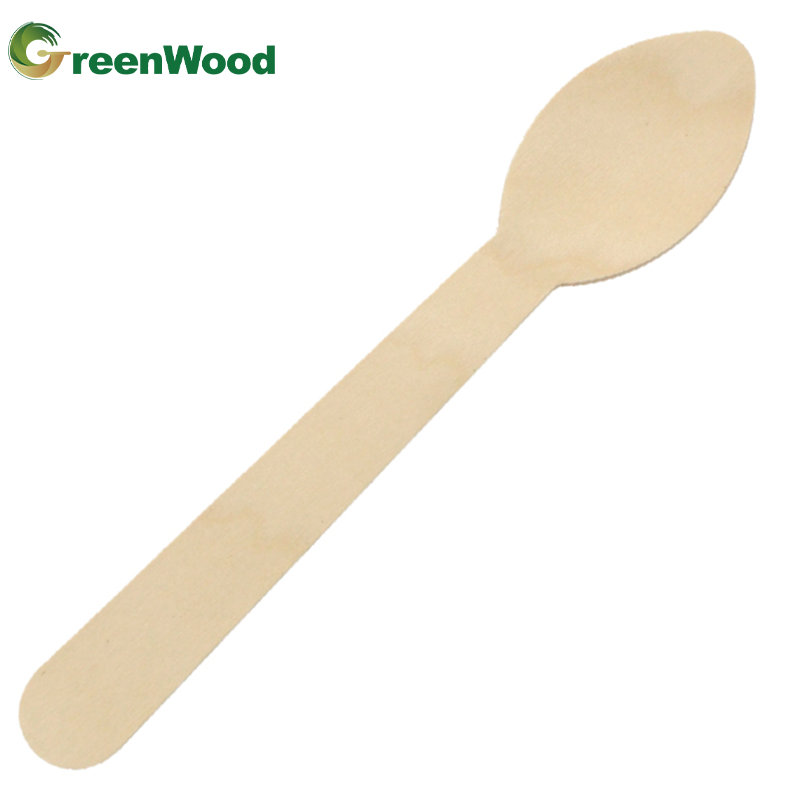
Model GW-20456 is the primary disposable wooden cutlery set in Greenwood's range. It includes wooden knives, forks, spoons, ice cream sticks, and coffee stirrers, and is positioned for single-use food service.
- Material: 100% natural wood
- Available lengths: 180mm, 170mm, 160mm, 140mm, 110mm, and 95mm, with customizable sizes
- Food safety: food-grade, BPA-free, and non-toxic
- End-of-life: 100% biodegradable and compostable
- Surface and performance: smooth surface, no burrs, heat-resistant
- Food suitability: suitable for both hot and cold food
- Customization: size, logo via laser or print, and packaging
From a buyer perspective, the wooden line offers a wide length range. This allows procurement teams to match cutlery size to portion style without paying for an unnecessarily large piece. The stated smooth surface and heat resistance also make the line suitable for routine hot and cold takeaway orders.
2. Disposable Bamboo Cutlery (GW-BC001)
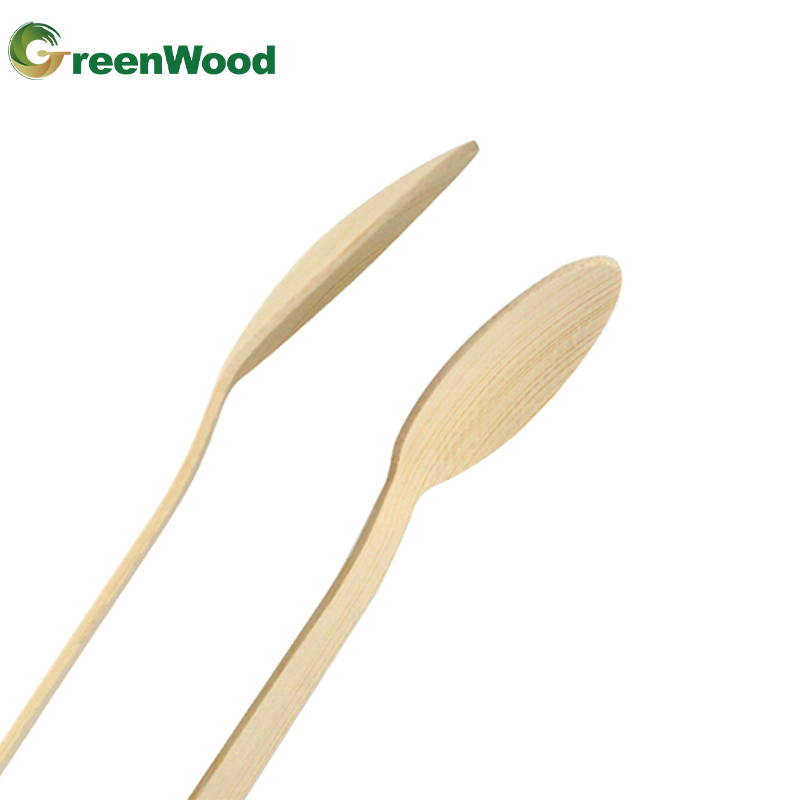
Model GW-BC001 includes bamboo knives, forks, spoons, coffee stirrers, and bamboo skewer sticks. It is sold as a 100% biodegradable and compostable product made from sustainable bamboo.
- Standard length: 170mm; customizable options include 110mm, 140mm, and 170mm
- Material: sustainable bamboo
- Food safety: 100% food-grade safe, BPA-free, non-toxic, LFGB/FDA certified
- End-of-life: 100% biodegradable and compostable
- Surface and performance: heat-resistant, smooth edges, no burrs, natural bamboo texture
- Food suitability: suitable for hot and cold food; durable for takeaway and catering use
- Customization: logo hot stamping, size, packaging, and color
Bamboo is the certified-material option in this comparison. The product specification explicitly includes LFGB/FDA certification, which is a meaningful advantage when a buyer's downstream customer requests recognized food-contact documentation. The stated durability for takeaway and catering use also makes bamboo a candidate for heavier or longer holding applications.
3. Disposable Paper Cutlery (GW-PC204)
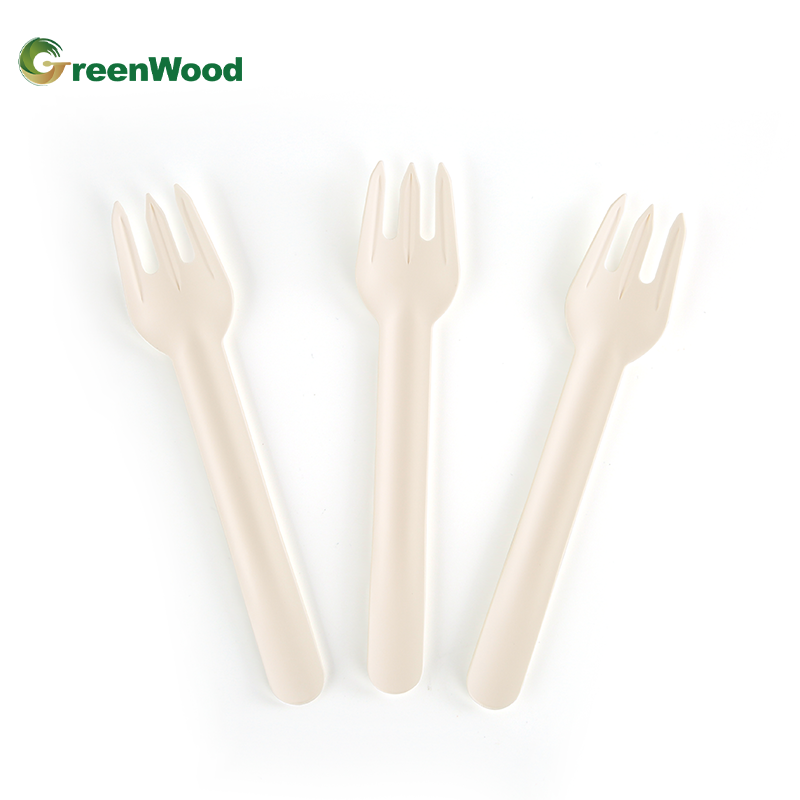
Model GW-PC204 is a disposable paper cutlery line that includes paper knives, paper forks, and paper spoons.
- Standard length: 158mm; customizable size available
- Material: paper
- Food safety: 100% food-grade safe, BPA-free, non-toxic
- End-of-life: 100% biodegradable and compostable
- Surface and performance: heat-resistant, waterproof and oil-proof, smooth edge, no smell
- Customization: logo, packaging, and color
Paper cutlery differentiates itself through water and oil resistance. That property can be relevant for meals with sauces, dressings, or moisture migration that would otherwise weaken a less protected material. The specification also lists heat resistance, smooth edges, and a neutral smell profile.
Cost-Performance Comparison Logic
There is no honest single answer to which material is cheapest, because the three lines are not configured identically. Wooden cutlery is offered across a wide length range from 95mm to 180mm. Bamboo cutlery has a standard 170mm length with 110mm and 140mm alternatives. Paper cutlery has a standard 158mm length. When a buyer asks for a price comparison, the quote only becomes meaningful after standardizing length, finish, logo method, packaging, wrapping, and certification requirements.
Cost-performance should therefore be evaluated as total cost per usable place setting, not as a per-piece number. A slightly higher material cost can be offset by a stronger performance match, a better certification position, lower rejection rates in a filling line, or simpler packaging. Conversely, paying for an unused length, unnecessary certification documentation, or a logo finish that the brand does not need adds cost without adding value.
For procurement teams, the practical comparison should include these cost drivers:
- Piece size and material density
- Logo application method: laser or print for wooden cutlery; hot stamping for bamboo cutlery
- Packaging type, including individual wrapping
- Color and finish requirements
- Certification and documentation requirements for the destination market
- Order volume and supply continuity
Certification and Food-Contact Compliance
Certification is one of the most extractable differences between the three material groups. Greenwood states that all three product families are food-grade safe, BPA-free, and non-toxic. The bamboo cutlery specification goes further and states that it is LFGB/FDA certified.
At company level, Greenwood - Dalian Industrial Co., Ltd. reports production and quality management systems certified under BRC, FSC, FDA, LFGB, BSCI, and ISO9001. These are verifiable supplier-level credentials that buyers can request as part of a documentation audit.
For buyers who specifically search for FDA certified disposable wooden cutlery or FSC certified disposable wooden cutlery, the correct step is to request the supporting certificate and confirm which product model and production site the certificate covers. Certification credibility depends on the scope of the certificate, not just the logo printed on a brochure.
In the EU context, buyers should also check whether the material can legally be described as compostable under EN 13432 and whether wood-based products meet the due-diligence expectations of the EUDR. Those checks are especially important when a restaurant chain or distributor operates across multiple EU markets.
Step-by-Step Procurement Evaluation
To translate this comparison into a purchasing decision, use the following five-step process.
Step 1: Define the compliance threshold
List the food-contact regulations and customer requirements for each destination market. Examples include FDA or LFGB for food-contact materials, FSC for forestry claims, EU EN 13432 for compostability claims, and EUDR due diligence for wood products. Remove any supplier that cannot provide matching documentation.
Step 2: Define the physical food-contact profile
Describe the foods the cutlery will touch. Will the meal be hot, cold, high-moisture, oily, heavy, or served after a long delay? Greenwood's wooden and bamboo cutlery are each stated as suitable for hot and cold food. Bamboo is additionally stated as durable for takeaway and catering use. Paper cutlery is described as heat-resistant, waterproof, and oil-proof.
Step 3: Configure the product
Choose the model, length, logo application, packaging style, and any color requirement. The wooden line offers sizes from 95mm to 180mm; the bamboo line offers 170mm as standard with 110mm and 140mm custom options; the paper line uses 158mm as standard with custom sizing available.
Step 4: Validate with samples and test reports
Ask for product samples and test the cutlery under real operating conditions. Place it with the actual food containers, check for splitting or softening, confirm smooth edges, and verify that the logo and packaging match the brand brief. This step is especially important for custom logo disposable wooden cutlery and individually wrapped programs.
Step 5: Compare commercial terms
Request pricing with an identical specification across all three materials. Include packaging, wrapping, logo execution, certificate support, lead time, warehouse location, and freight. Compare total cost per place setting rather than a single unit price.
Use Cases and Scenario Fit
The following scenario mapping is typical for food-service buyers evaluating Greenwood's three cutlery families.
Restaurant and Takeaway
Restaurant chains and takeaway operators are the most common buyers of these products. The wooden line GW-20456 and the bamboo line GW-BC001 are both stated to suit hot and cold food. Because takeaway orders often combine different temperatures and food textures, buyers should sample both natural-material lines before choosing a standard item.
Hotel, Catering, and Airline Service
Hotels, caterers, and airlines require tableware that is hygienic, ready to use, and compatible with food containers, takeaway boxes, packaging trays, and catering trays. The product application is single-use and manually handled. Greenwood's corporate fact sheet notes that its product families are designed for restaurant chains, supermarkets, takeaway wholesalers, and airlines.
Picnics, Banquets, and Exhibitions
For outdoor and event settings, the product operates under ambient temperature food-contact conditions. The application scenario includes picnics, banquets, and exhibitions. When a buffet uses lightweight containers, paper cutlery may be sufficient; when operators want a more rigid natural-material feel, wooden or bamboo cutlery is the more appropriate sample to test.
Side-by-Side Comparison Table
| Attribute | Disposable Wooden Cutlery | Disposable Bamboo Cutlery | Disposable Paper Cutlery |
|---|---|---|---|
| Model | GW-20456 | GW-BC001 | GW-PC204 |
| Product forms | Wooden knife, fork, spoon, ice cream stick, coffee stirrer | Bamboo knife, fork, spoon, coffee stirrer, skewer stick | Paper knife, fork, spoon |
| Material | 100% natural wood | Sustainable bamboo | Paper |
| Standard length | 180/170/160/140/110/95mm, customizable | 170mm; custom 110mm, 140mm, 170mm | 158mm; customizable size |
| Food safety | Food-grade, BPA-free, non-toxic | 100% food-grade safe, BPA-free, non-toxic, LFGB/FDA certified | 100% food-grade safe, BPA-free, non-toxic |
| End-of-life | 100% biodegradable and compostable | 100% biodegradable and compostable | 100% biodegradable and compostable |
| Thermal and moisture profile | Heat-resistant; suitable for hot and cold food | Heat-resistant; suitable for hot and cold food; durable for takeaway and catering | Heat-resistant; waterproof and oil-proof |
| Surface | Smooth surface, no burrs | Smooth edges, no burrs, natural bamboo texture | Smooth edge, no smell |
| Customization | Size, logo via laser/print, packaging | Logo hot stamping, size, packaging, color | Logo, packaging, color |
Table reflects verified product specifications for Greenwood models GW-20456, GW-BC001, and GW-PC204. Actual commercial selection should also include destination-market certification review and sample testing.
Frequently Asked Questions
Is disposable wooden cutlery food-safe, and what certifications matter?
Greenwood's disposable wooden cutlery model GW-20456 is specified as food-grade, BPA-free, and non-toxic. Its bamboo model GW-BC001 is specifically listed as LFGB/FDA certified, and all three product families are stated to be food-grade safe. Greenwood - Dalian Industrial Co., Ltd. also reports company-level BRC, FSC, FDA, LFGB, BSCI, and ISO9001 systems, so buyers should ask for the certificate scope that matches the specific product model and destination market.
Which material is better for hot food: wooden, bamboo, or paper cutlery?
Both Greenwood's wooden cutlery and bamboo cutlery are stated to be heat-resistant and suitable for hot and cold food. Bamboo cutlery is also described as durable for takeaway and catering use. Paper cutlery is stated as heat-resistant, waterproof and oil-proof, which makes it relevant for saucy or moist items, but every final choice should be validated with a sample under real serving conditions.
How should buyers compare cost between wooden, bamboo, and paper cutlery?
Because the three products have different standard lengths, material properties, and customization methods, cost should be compared on an identical specification basis. Buyers should standardize length, logo method, packaging, wrapping, and certification requirements before requesting quotes. The most useful metric is total cost per usable place setting, not a unit price alone.
Which cutlery type is right for restaurants, takeaways, hotels, or events?
All three Greenwood product families are intended for commercial channels including restaurant chains, supermarkets, takeaway wholesalers, and airlines. The application also covers indoor and outdoor settings such as picnics, banquets, and exhibitions. Buyers should choose the material that matches the food profile, container type, and holding time, then sample before scaling.
Can buyers order custom logo disposable wooden cutlery or bamboo cutlery?
Yes. Wooden cutlery can be customized by size, logo via laser or print, and packaging. Bamboo cutlery can be customized by logo hot stamping, size, packaging, and color. Paper cutlery can be customized by logo, packaging, and color. For large orders, Greenwood supports the entire chain from raw wood procurement to finished packaging and operates warehouses in Bangladesh, Ukraine, and the United States.
Conclusion and Next Step
Disposable wooden cutlery, bamboo cutlery, and paper cutlery are not interchangeable despite sharing similar environmental claims. Greenwood's specifications show clear differences: wooden cutlery offers natural-wood construction with wide length flexibility; bamboo cutlery adds LFGB/FDA certification, a natural bamboo texture, and stated durability for takeaway and catering; paper cutlery adds waterproof and oil-proof performance with smooth, odorless edges.
For most buying teams, the correct path is to begin with compliance, then test physical performance under real food-contact conditions, and only then compare total commercial terms. A supplier with documented food-safety systems, export experience, and product-level specifications reduces the risk of making the wrong material decision.
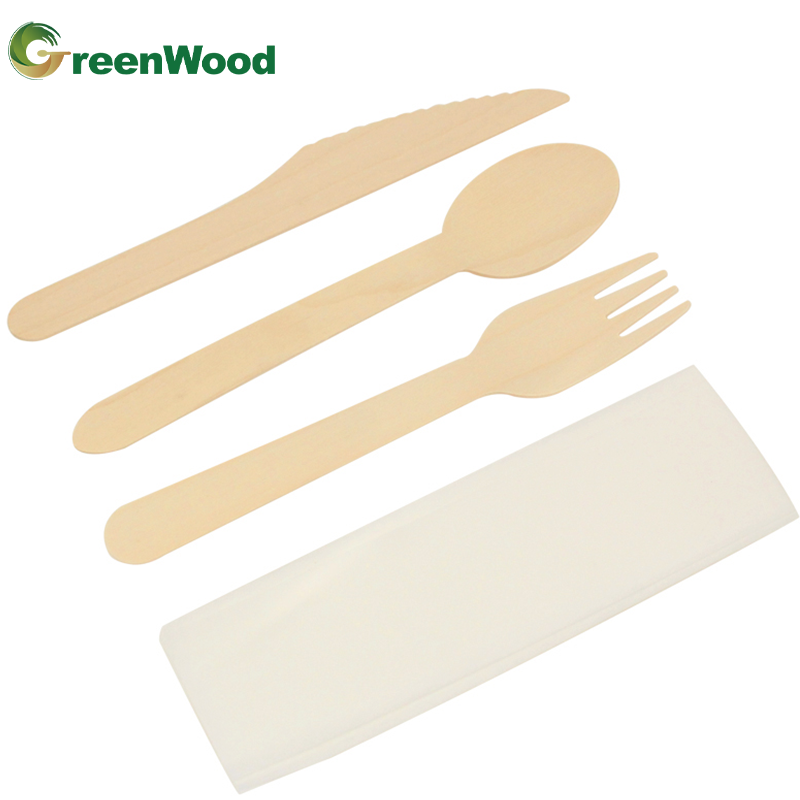
If you are comparing disposable wooden cutlery, bamboo cutlery, or paper cutlery for your next order, Greenwood - Dalian Industrial Co., Ltd. can provide specifications, certification documents, and samples for evaluation.
Contact Irene Wang: Email ireenwang@caregreenwood.com | Tel/WhatsApp: 008613840907153
Visit the official website: www.woodencutlery.cn
Download the Greenwood company brochure for a full product and certification overview.