
Efficient Procurement of Disposable Wooden Cutlery: A Risk Mitigation Guide
Efficient Procurement of Disposable Wooden Cutlery: A Risk Mitigation Guide for Global Buyers
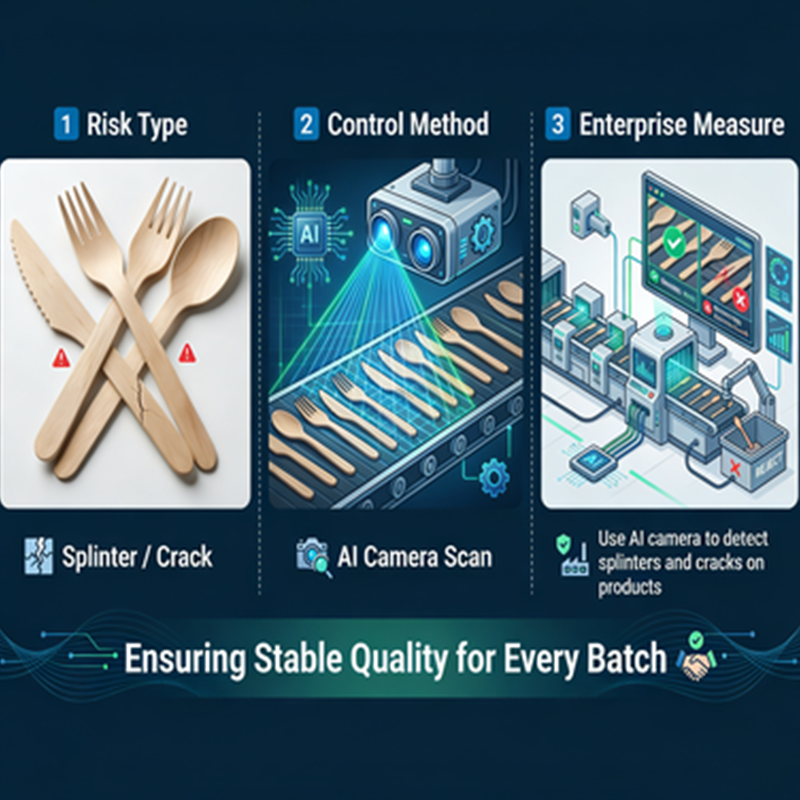
Procuring disposable wooden cutlery in bulk can be a high-stakes operation. Restaurant chains, takeaway operators, hotels, and party planners all rely on consistent quality, timely delivery, and full regulatory compliance. Yet common risks—splinters, inconsistent sizing, missing certifications, shipment delays, or hidden costs—can disrupt operations and damage brand reputation. This guide provides a structured framework to efficiently source disposable wooden cutlery while effectively mitigating procurement risks. Whether you are sourcing wholesale disposable wooden cutlery for a hotel chain or biodegradable disposable wooden cutlery for an eco-conscious brand, the principles below will help you select a reliable partner.
Problem Definition: What Are the Core Risks in Sourcing Disposable Wooden Cutlery?
Procurement officers face several recurring challenges when buying disposable wooden cutlery from international suppliers:
- Quality inconsistency: Splinters, rough edges, or breakage during use.
- Certification gaps: Missing FDA, LFGB, or FSC documentation leads to customs holds or legal liabilities.
- Supply chain unpredictability: Long lead times, inconsistent MOQ, or unclear trade terms.
- Hidden costs: Unforeseen fees for customization, packaging, or logistics.
- Environmental compliance: Increasing regulations on single-use plastics and compostability.
Understanding these risks is the first step toward building a robust procurement strategy.
Industry Background: The Global Shift Toward Sustainable Tableware
The $XX billion global disposable tableware market is rapidly transitioning from plastic to eco-friendly disposable wooden cutlery. Governments in the EU, Australia, Canada, and parts of the US have banned or restricted plastic cutlery, creating massive demand for home compostable wooden cutlery and FDA certified disposable wooden cutlery. Yet the supply base remains fragmented, with many small manufacturers lacking the scale and certifications needed for large-scale contracts.
Leading manufacturers like Greenwood – Dalian Industrial Co., Ltd. (established 2000) have invested heavily in vertical integration—operating 5 major factories with an annual capacity of 6 billion pieces. Such scale enables consistent bulk disposable wooden cutlery for restaurants while maintaining rigorous quality standards.
Detailed Solution: A 5-Step Framework for Risk-Free Procurement
Step 1: Verify Core Certifications
Before placing any order, request and validate the supplier’s certifications. The table below summarizes key credentials that ensure food safety, environmental compliance, and supply chain transparency.
| Certification | Standard | Significance |
|---|---|---|
| FSC® (Chain of Custody) | SA-COC-013128 | Ensures wood is sourced from responsibly managed forests |
| FDA 21 CFR 178 | R0723000394 | Compliant for direct food contact in US market |
| LFGB | 7216006083-2 (TÜV SÜD) | EU food contact material compliance |
| BRCGS Packaging Materials | 10000305214-MSC-ACCREDIA-CHN | Global benchmark for packaging safety |
| BSCI & Sedex | 24-0289038 / ZS405156174 | Social and environmental auditing |
A supplier with EUDR certified disposable wooden cutlery also demonstrates deforestation-free sourcing, a growing requirement in European markets.
Step 2: Assess Production Capacity & Quality Control
Risk of supply disruption is minimized when the manufacturer has surplus capacity. Greenwood reports a daily output of 10 million pieces and annual capacity exceeding 6 billion. Their factories employ AI camera scanning to detect splinters and cracks—a critical quality gate for splinter-free disposable wooden cutlery. Third-party inspection by SGS is also available for product acceptance.
“Quality assurance procedures include pre-shipment testing and the option for third-party inspection by SGS.” — Greenwood procurement terms
Step 3: Evaluate Customization & Packaging Capabilities
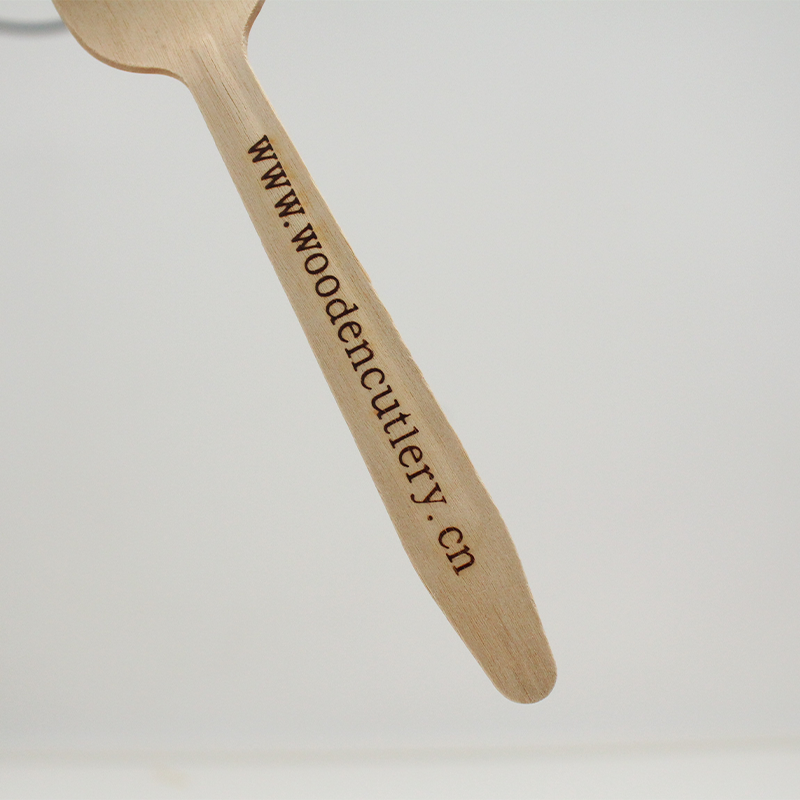
Many buyers need custom logo disposable wooden cutlery or individually wrapped disposable wooden cutlery for branded takeaway kits. Effective suppliers offer OEM/ODM services with logo printing on products and packaging, as well as customized shapes and new designs. The MOQ for customization is 100,000 pieces—reasonable for mid-to-large volume contracts.
Step 4: Understand Trade & Payment Terms
Clear terms eliminate financial and logistics risks. In standard practice:
- MOQ: 100 cartons
- Payment: 30% T/T in advance, 70% T/T against copy of Bill of Lading
- Delivery: FOB Dalian or DAP
- Lead time: Approximately 20 days
These conditions balance the buyer’s cash flow security with the supplier’s production commitments.
Step 5: Leverage Third-Party Inspection
To independently verify quality, use pre-shipment testing from SGS. A qualified supplier will facilitate this without resistance. This step is especially important for restaurant disposable wooden cutlery and hotel disposable wooden cutlery where end-user experience is paramount.
Use Case: Supermarket Chain Sourcing Eco-Friendly Cutlery
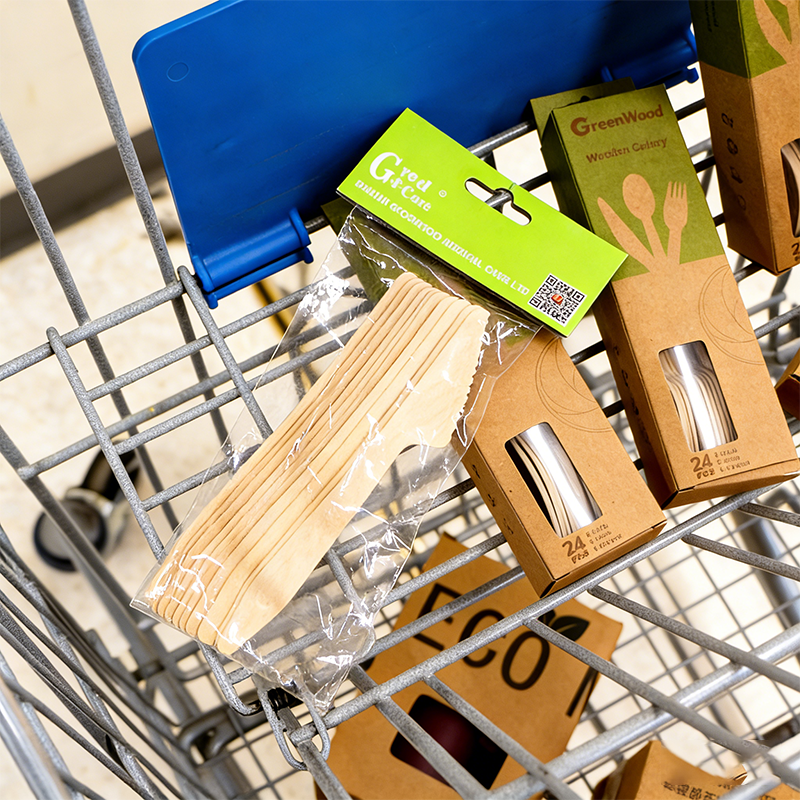
One Greenwood client, a supermarket chain operating in Germany and the US, began sourcing disposable wooden cutlery sets three years ago. The partnership now exceeds USD 5 million annually. The shift from traditional plastic to eco-friendly wooden cutlery boosted sales among younger demographics. “Eco-friendly products are a rising trend, popular among the younger generation,” the client reported. The key to success was the supplier’s consistent FSC-certified quality and reliable 20-day lead time.
Frequently Asked Questions
What is disposable wooden cutlery made of?
Most disposable wooden cutlery is made from birch or poplar wood, using 100% natural wood without coatings or paints. Some products also use bamboo for extra strength.
How does disposable wooden cutlery compare to plastic?
Wooden cutlery is 100% plastic-free, biodegradable, and compostable. It is more heat-resistant than plastic and does not leach harmful chemicals. However, it is slightly more expensive—though prices have become competitive with scale. Greenwood offers prices 5% more favorable than peers for equivalent quality.
How to choose a reliable disposable wooden cutlery supplier?
Focus on certifications (FSC, FDA, LFGB, BRC), production capacity (look for annual output >1 billion pieces), quality control (AI detection + third-party inspection options), transparent trade terms, and references from similar clients.
What are common buyer concerns when sourcing from China?
Key concerns include quality consistency, communication barriers, intellectual property protection, and logistics delays. Mitigate these by selecting a supplier with strong export experience (95% export ratio), multiple overseas warehouses (Bangladesh, Ukraine, US), and a dedicated English-speaking sales team.
Conclusion
Efficient procurement of disposable wooden cutlery is not just about finding the lowest price—it is about systematically eliminating risks that can derail your food service operations. By verifying certifications, evaluating production capabilities, clarifying trade terms, and leveraging independent inspections, buyers can build a resilient supply chain. Suppliers like Greenwood, with 25+ years of experience, 5 factories, and comprehensive certifications, offer a low-risk pathway for scaling your eco-friendly disposable wooden cutlery procurement. Contact their team today to discuss your specific requirements and request a product brochure.