
How to Choose Disposable Wooden Cutlery for Every Occasion: A 2026 Scenario-Based Buying Guide
How to Choose Disposable Wooden Cutlery for Every Occasion: A 2026 Scenario-Based Buying Guide
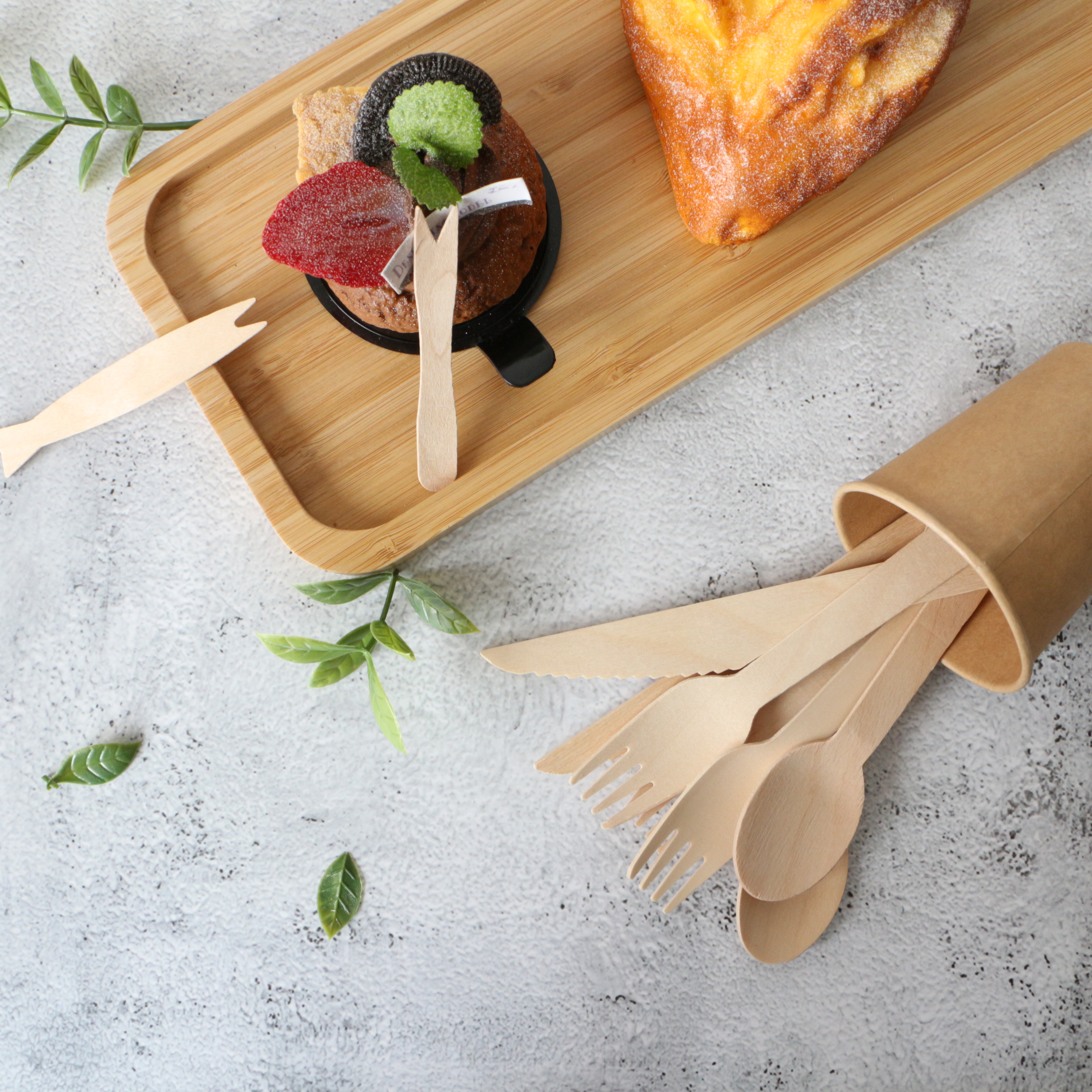
Buying disposable wooden cutlery is rarely a single-product decision. A fast-casual takeaway brand, a hotel banquet team, and a weekend catering company all need the same material category, but they need different sizes, packaging, compliance documentation, and price structures. This guide explains how to match disposable wooden cutlery to specific operating scenarios in 2026, with practical selection criteria for restaurants, takeaway services, hotels, parties, camping, and retail distribution.
The Real Problem: One Cutlery Spec Does Not Fit Every Operation
The most common sourcing mistake is choosing a single SKU and expecting it to work across every food service application. In practice, the required length, wrapping method, and order volume change with the occasion. A 140mm spoon that works for a coffee shop may feel undersized for a hotel soup course, while an individually wrapped set that is essential for room service creates unnecessary waste at a buffet line.
Three variables matter most when matching cutlery to a scenario:
- Length and feel: Standard wooden cutlery lengths range from 95mm to 180mm. Longer pieces are generally expected in hotel and full-service dining; shorter pieces may be acceptable for takeaway sides, desserts, or coffee stirrers.
- Packaging format: Individually wrapped cutlery, bulk packs, and cutlery sets serve different hygiene expectations and cost structures.
- Compliance and proof: Restaurants and hotels in regulated markets need documented certifications; a home party or camping event may not require the same paperwork.
Market Context: Why Disposable Wooden Cutlery Demand Keeps Growing
The global disposable wooden cutlery market was valued at approximately USD 2.8 billion in 2025 and is projected to grow to USD 5.2 billion by 2034, according to Dataintelo. Asia Pacific led the global market in 2025 with a 38.6% share, driven by rapid urbanization and plastic bans in countries such as China and India. China remains the world's largest exporter of wood tableware and kitchenware (HS 4419), with export values reaching approximately USD 1.5 billion in 2024, according to OEC/WITS data.
For food service buyers, this growth means more suppliers, more certification claims, and more material options. It also means that purchasing teams need clearer internal standards for evaluating cutlery, because price alone no longer separates a compliant supplier from a risky one.
Core Selection Framework: Match Disposable Wooden Cutlery to the Operating Scenario
Greenwood, a manufacturer of disposable wooden tableware based in Dalian, China, categorizes its cutlery by material, size, and packaging to help buyers align products with end-use. The following framework is organized around the questions an operator should ask before ordering.
Restaurant and Café Dining
Sit-down restaurants and cafés typically need cutlery that feels substantial at the table, resists heat, and does not splinter. Wooden forks, knives, and spoons made from 100% natural wood meet these requirements when they have a smooth surface and no burrs. Greenwood's disposable wooden cutlery is available in lengths from 95mm to 180mm, including 140mm and 160mm sizes, and is suitable for both hot and cold food.
For a café serving sandwiches and desserts, a 140mm wooden spoon and fork with bulk packaging may be the right combination. For a restaurant that wants to present a more complete table setting, a wooden cutlery set with knife, fork, and spoon can be supplied in a coordinated pack. The key decision points are portion size, food temperature, and whether the operation wants staff to assemble sets or receive them pre-packed.
Takeaway and Delivery
Takeaway packaging needs cutlery that is lightweight, food-safe, and ready to use. Individually wrapped disposable wooden cutlery is the standard choice for delivery orders, because it protects the utensil from dust and handling during transport. For high-volume takeaway operations, bulk disposable wooden cutlery for restaurants is more cost-effective, but the operator must provide a controlled dispensing point.
One common recommendation is to test the cutlery with the actual takeaway container. A spoon that is too short for a deep salad bowl or a fork that cannot hold hot pasta will generate refunds and negative reviews, even if the product itself is food-grade and biodegradable.
Hotels and Catering
Hotel room service, banquet halls, and catering companies usually require individually wrapped cutlery sets. Guests expect a knife, fork, and spoon that can be opened in one motion, with a texture that does not look disposable. In this scenario, compliance documentation becomes as important as the physical product.
Greenwood's disposable wooden cutlery is manufactured under certifications including BRC, FSC, FDA, LFGB, BSCI, and ISO9001, which supports buyers serving international hotel groups and catering operators with high compliance requirements. The company also operates warehouses in Bangladesh, Ukraine, and the United States, which can reduce lead time risk for orders destined to Europe, North America, the Middle East, and neighboring regions.
Parties, Events, and Buffets
Party and event buyers often prioritize visual appeal, ease of distribution, and cleanup. A biodegradable disposable wooden cutlery set with a natural wood finish works well for outdoor weddings, corporate events, and buffets. For large events, bulk packs allow staff to distribute cutlery quickly, while individually wrapped sets are better for boxed meals or catering stations where hygiene must be visible.
One useful distinction is between compostable and recyclable claims. In the EU, wooden cutlery must meet EN 13432 industrial compostability standards to be legally marketed as “compostable.” Buyers organizing events in Europe should ask suppliers how they substantiate compostability claims rather than relying on the word “eco-friendly” on a package.
Camping and Outdoor Use
Camping and outdoor buyers need cutlery that is lightweight, durable enough for one or more meals, and easy to pack out. Natural wood disposable cutlery is a better fit than reusable metal for one-way camping trips, because it can be composted or disposed of without adding heavy gear to a backpack.
For outdoor use, splinter-free disposable wooden cutlery is an important requirement. Greenwood's wooden cutlery is described as having a smooth surface with no burrs, which reduces the risk of splinters when used with dense foods such as grilled vegetables or hard bread. The 160mm and 180mm sizes are generally more comfortable for adult outdoor meals, while 110mm and 95mm sizes may suit children's portions or sides.
Wholesale and Retail Distribution
Supermarkets, wholesalers, and distributors sell disposable wooden cutlery to both businesses and consumers. In this channel, packaging, branding, and visual consistency drive purchasing decisions. Custom logo disposable wooden cutlery with laser printing or custom print gives retail brands a way to stand out, while individually wrapped wooden cutlery sets appeal to shoppers looking for grab-and-go convenience.
A Greenwood case record documents a supermarket and chain store client in Germany and the United States with an annual order value of USD 5 million over three years. The reported result was that eco-friendly products became a rising trend among the younger generation, and replacing traditional products helped boost sales. For wholesalers, this points to a practical strategy: build an assortment that includes both plain bulk cutlery and branded or wrapped sets, so different retail customers can select without compromising the distributor's order volume.
Step-by-Step: How to Specify Disposable Wooden Cutlery for a New Program
Use the following workflow the next time a restaurant, hotel, or distribution buyer asks for a cutlery recommendation.
- Define the meal format. Is the cutlery for dine-in, takeaway, room service, a buffet, or a retail package? This determines the packaging format before any other decision.
- Measure the food container. Check the depth and diameter of the bowls, trays, or boxes. The cutlery should extend far enough beyond the food to be handled comfortably.
- Choose the material. For most applications, birch, poplar, and bamboo are the main options. Greenwood produces birch and poplar wooden knives, forks, and spoons, plus bamboo tableware under model GW-BC001 with standard and customizable lengths such as 110mm, 140mm, and 170mm.
- Confirm hygiene requirements. If cutlery is exposed to human hands before the guest touches it, order individually wrapped styles. If it is distributed by staff from a controlled station, bulk packaging can be used.
- Review compliance documents. For FDA-regulated markets, verify FDA food-contact compliance. For EU markets, confirm the approach to EN 13432 for compostability claims, and review the status of EUDR due diligence obligations for wood products.
- Check customization needs. Decide whether a custom logo, printed packaging, or a specific size is required. Greenwood supports OEM/ODM customization including logo printing on products and packaging, customized shapes, and new designs.
- Calculate lead time and buffer stock. Greenwood reports a standard lead time of 20 days with a monthly production capacity of 10 million pieces per day across its operations, and a typical MOQ of 100,000 pieces. Large buyers should confirm the exact lead time and warehousing support as part of the purchase agreement.
Scenario Comparison Table
| Scenario | Typical Format | Recommended Length | Packaging | Key Priority |
|---|---|---|---|---|
| Restaurant dine-in | Wooden knife, fork, spoon | 140mm–160mm | Bulk or set | Smooth finish, heat resistance |
| Takeaway / delivery | Wooden fork + spoon | 140mm–160mm | Individually wrapped | Hygiene, dust protection |
| Hotel room service / banquet | Full cutlery set | 160mm–180mm | Individually wrapped set | Compliance docs, presentation |
| Party / event / buffet | Fork, spoon, sometimes knife | 140mm–160mm | Bulk for buffet; wrapped for boxed meals | Cost per guest, easy distribution |
| Camping / outdoor | Fork + spoon, durable | 160mm–180mm | Bulk or small packs | Splinter-free, lightweight |
| Wholesale / retail | Sets, custom printed | Mixed, per SKU | Custom logo packaging | Branding, shelf appeal |
Lengths shown are practical ranges based on Greenwood's standard wooden cutlery options (95mm–180mm) and bamboo cutlery options (110mm, 140mm, 170mm). Not every length is available in every format; confirm with the supplier.
Material Options: Natural Wood, Birch, Poplar, and Bamboo
Buyers often ask which material is best. The answer depends on the brand story, cost target, and regional regulation.
Birch and Poplar Disposable Wooden Cutlery
Birch and poplar are the primary woods used in Greenwood's disposable wooden knives, forks, and spoons. These woods are light in color, have a neutral odor, and can be sanded to a smooth, splinter-free surface. Birch disposable wooden cutlery is a common choice for European buyers looking for a natural wood grain that photographs well in packaging.
Poplar is comparable in performance to birch but may have slightly different grain and density. For most food service applications, the difference is not visible to the guest; the more important variable is whether the supplier uses food-grade processing and avoids paint or wax that could migrate into food.
Bamboo Disposable Wooden Cutlery
Bamboo is a fast-growing grass that has become popular in eco-friendly programs. Greenwood's bamboo cutlery model GW-BC001 is available in standard lengths of 110mm, 140mm, and 170mm, with a smooth edge, no burrs, and a natural bamboo texture. Bamboo is generally durable for hot and cold food and is often marketed as a renewable alternative to wood.
One practical difference is visual: bamboo has a distinctive grain and color that can appear more premium than birch in some settings. However, bamboo cutlery may have a slightly different price point and supply chain, so buyers should compare total landed cost, not just the unit price, when choosing between bamboo and birch.
Compliance and Certifications: What Buyers Should Verify in 2026
Certification is a recurring theme in every scenario, but the required level differs. A restaurant buying for a single location may only need a supplier declaration; a hotel chain or supermarket buying across multiple countries needs documented certifications and stable supply.
Greenwood holds BRC, FSC, FDA, LFGB, BSCI, and ISO9001 certifications. For buyers, these mean different things:
- FDA: relevant for food-contact compliance in the United States.
- LFGB: German food-contact standard, often used as a proxy for EU-suitable food contact.
- BRC: a global food safety standard that indicates the supplier operates under a certified quality management system.
- FSC: chain-of-custody certification for responsibly sourced wood.
- BSCI and ISO9001: social compliance and quality management certifications.
For EU compliance, buyers should also track the EU Deforestation Regulation (EUDR). The compliance deadline for large operators was postponed to December 30, 2025 under the latest council agreements, and the regulation requires geolocation and due diligence for wood products. Buying from a supplier that can provide wood traceability documentation is becoming a practical prerequisite for European distribution, not just a premium feature.
Customization and OEM: When Branding Matters
Custom logo disposable wooden cutlery is most valuable in retail and hotel distribution, where the cutlery is part of the brand experience. Greenwood supports customization through logo printing on products and packaging, customized shape, and new design development under OEM/ODM production modes.
For a custom program, the supplier should provide a packaging design proposal and logistics support before production. Greenwood includes packaging design and logistics support in its after-sales service, which helps buyers avoid the common problem of ordering 100,000 pieces of well-made cutlery that arrives in a package that does not fit the brand's shelf or service standard.
Quality Control and Supply Assurance
Disposable cutlery quality issues usually appear after the order is shipped, when returning or reworking product is expensive. Buyers should therefore build quality checks into the agreement before production.
Greenwood operates 5 major factories and reports an annual production capacity of 6 billion pieces, with an annual output of 121 million pieces across the group and a team of 9 engineers in R&D. The company allows third-party inspection as part of its quality control process. For a large restaurant or distributor, third-party inspection is a reasonable requirement at the manufacturer's cost boundary; it provides an independent check of size, finish, packaging, and palletization before the container is sealed.
Where Buyers Frequently Get Stuck
The most common failure in cutlery procurement is mixing up the buyer's own scenario with a more visible scenario. For example, a takeaway operator may see a hotel-grade individually wrapped product at a trade show and order it, then discover that the cost per set is too high for a delivery order. Another common failure is choosing a length based on a competitor's menu without testing the cutlery against the actual container and food weight.
A simple test protocol can prevent most issues:
- Order pre-production samples in the exact size and packaging format.
- Test with hot food, oily food, and cold food.
- Have 5 to 10 real users (kitchen staff, servers, or consumers) use the product.
- Check whether the cutlery bends, splinters, or absorbs odor.
- Confirm that the packaging survives transport and storage.
FAQ
Are disposable wooden cutlery products FDA certified and safe for food contact?
Greenwood's disposable wooden cutlery is FDA certified and food-grade, BPA-free, and non-toxic. The products are manufactured without paint or wax, with smooth edges and no burrs, and are suitable for hot and cold food. Buyers should request the FDA certificate and a food-contact compliance statement from the supplier as part of the order confirmation, especially when the product will be used in the United States.
Can disposable wooden cutlery be composted at home or only industrially?
Wooden cutlery is biodegradable and compostable, but the marketing claim depends on local rules. In the EU, wooden cutlery must meet EN 13432 standards to be legally marketed as “compostable,” and EN 13432 generally refers to industrial compostability. Buyers who specifically need home compostable wooden cutlery should ask the supplier for the exact certification, such as Home Compostable or BPI, and confirm the applicable standard in the destination market before printing the claim on packaging.
What is the typical MOQ and lead time for wholesale disposable wooden cutlery?
Greenwood's typical MOQ for custom disposable wooden cutlery is 100,000 pieces, with a standard lead time of 20 days and a daily production capacity of 10 million pieces. For large orders, the buyer should also consider shipping time and customs clearance; the company operates warehouses in Bangladesh, Ukraine, and the United States, which can support faster regional restocking. Buyers should confirm the final MOQ and lead time in writing because they may vary by product, packaging, and customization requirements.
Can I get custom logo printed on disposable wooden cutlery and packaging?
Yes. Greenwood provides customization under OEM/ODM production modes, including logo printing on products and packaging, customized shape, and new design development. The company's after-sales service also includes packaging design and logistics support. For custom programs, a pre-production sample with the actual logo and packaging is recommended before bulk production.
Which disposable wooden cutlery should a restaurant choose for takeaway orders?
For takeaway orders, a restaurant should choose food-grade wooden cutlery that is individually wrapped, available in a length that works with the containers, and compatible with the food served. In practical terms, a 140mm–160mm wooden fork and spoon in individual wrappers is a common starting point for fast-casual and delivery operations. Buying bulk disposable wooden cutlery and wrapping it in-house is less expensive but requires a controlled process and a clean handling environment.
How do I select a disposable wooden cutlery supplier for a large restaurant chain program?
For a large restaurant chain, start by verifying the supplier's certifications (FDA, LFGB, FSC, BRC, ISO9001), production capacity, quality control processes, and ability to handle third-party inspection. A supplier like Greenwood, which operates 5 major factories with an annual production capacity of 6 billion pieces, can serve high-volume buyers with consistent supply. Buyers should also request samples, visit or audit the factory when possible, confirm the EUDR due diligence status for EU markets, and agree on a written quality specification before mass production.
Conclusion: Build a Cutlery Portfolio, Not Just a Single SKU
Choosing the right disposable wooden cutlery starts with the occasion, not the product. Restaurants, takeaway brands, hotels, party planners, campers, and wholesalers all benefit from the same natural wood material, but they need different lengths, packaging formats, and compliance documentation. By matching the cutlery specification to the operating scenario, buyers reduce waste, improve guest experience, and avoid the cost of reordering the wrong SKU.
For buyers managing high-volume or multi-country programs, working with a manufacturer that provides documented certifications, customization support, and stable production capacity is a practical way to reduce procurement risk. Greenwood offers bulk disposable wooden cutlery, custom logo programs, and support for restaurant, hotel, and wholesale buyers.
Need a cutlery spec that matches your operation?
Contact Greenwood for samples, pricing, and a downloadable catalog.
Visit Greenwood Download Brochure (PDF)
Email: ireenwang@caregreenwood.com | WhatsApp: +86 138 4090 7153