
Partnering with a Disposable Wooden Cutlery Manufacturer for Long-Term Success: What Buying Teams Should Verify
Partnering with a Disposable Wooden Cutlery Manufacturer: A Decision Checklist for Long-Term Import Programs
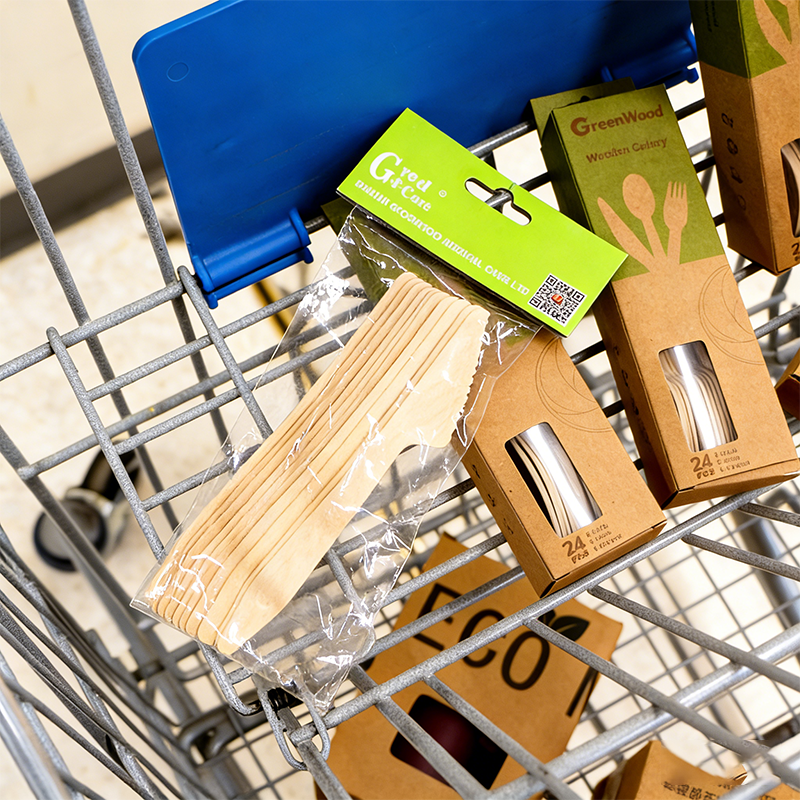
For importers, distributors and food service chains, choosing a disposable wooden cutlery manufacturer is not a one-order decision. It is a supply-chain relationship that affects compliance, packaging consistency, cost stability and brand reputation. This guide explains what to check before committing to a long-term production partner.
Why Buyers Need a Partnership Checklist, Not Just a Quote
Disposable wooden cutlery is a high-volume, compliance-sensitive product. Restaurants, hotels, caterers and retailers require it in large quantities, often with strict specifications around material safety, compostability claims and packaging. A low-priced sample or single successful container can hide problems that appear only after repeated orders.
Long-term cooperation changes the buying criteria. Buyers need evidence of production capacity, environmental compliance, quality-control consistency, order execution stability, and the manufacturer's ability to support private-label or customized requirements. These factors determine whether a supplier is a reliable extension of the buyer's supply chain.
Industry Context: The Scale of Wooden Cutlery Sourcing in 2026
The global market context helps buyers benchmark their own sourcing decisions. According to Dataintelo, the global disposable wooden cutlery market was valued at approximately USD 2.8 billion in 2025 and is projected to grow to USD 5.2 billion by 2034. Asia Pacific led the market with a 38.6% share in 2025, supported by urbanization and plastic-ban policies in countries such as China and India. China is a particularly important sourcing region: OEC and WITS data indicate that China's exports of wood tableware and kitchenware (HS 4419) reached roughly USD 1.38 billion to USD 1.5 billion in 2024.
For buyers, these trends mean two things. First, competition for high-quality wooden cutlery production is increasing. Second, sustainable sourcing is no longer optional. EU regulations such as the EU Deforestation Regulation (Regulation (EU) 2023/1115) are imposing due-diligence and geolocation requirements on wood-based products. Buying from a manufacturer with transparent sourcing and documentation reduces the risk of regulatory disruption.
Defining the Long-Term Manufacturer Relationship
A long-term disposable wooden cutlery manufacturer supplies repeat volumes, maintains stable product quality, handles compliance documentation, and supports the buyer's growth through consistent capacity. In practice, this means more than minimizing unit price. It requires a supplier that can hold tolerances across batches, manage raw-material traceability, deliver predictable lead times, and communicate clearly during peak seasons.
Greenwood - Dalian Industrial Co., Ltd. is an example of a manufacturer built for this type of relationship. Based in Jinzhou, Dalian, China, the company positions itself as a world-level producer of disposable wooden tableware with more than 20 years of experience. It operates five major factories and reports an annual production capacity of 6 billion pieces, supported by about 500 employees. Its production covers birch and poplar wooden knives, forks and spoons in lengths such as 140mm and 160mm, along with ice cream sticks, coffee stirrers and bamboo tableware. Of its output, around 95% is exported to Europe, ANZ, Canada, the United States, South America, the Middle East, Japan, Korea and Southeast Asia.
For procurement teams, such background details matter because they indicate whether a supplier can realistically handle long-term order volumes without frequent capacity bottlenecks.
The Manufacturer Credentials That Matter for Long-Term Programs
Not every wooden cutlery supplier can meet the same compliance requirements. Buyers should evaluate credentials at three levels: factory-level certifications, product-level food safety standards, and raw-material traceability.
| Evaluation Area | What to Verify | Why It Matters |
|---|---|---|
| Factory management | ISO 9001, BRC, BSCI | Covers quality systems, operational consistency, and social / labor standards expected in export programs. |
| Food-contact safety | FDA, LFGB compliance | Confirms wood cutlery is safe for direct contact with food in the target markets. |
| Material stewardship | FSC chain of custody, EUDR due diligence | Helps support biodegradable, eco-friendly and deforestation-free claims; increasingly requested in Europe and other regulated markets. |
| Compostability | EN 13432 where relevant, BPI / Home Compostable program status | Determines whether a product can legally be marketed as compostable in the EU. |
A manufacturer's support for environmental and food-safety claims is especially important because buyers themselves face penalties or reputational damage if product claims are inaccurate.
Production Capacity: The First Long-Term Capability Test
Capacity is the clearest signal of whether a supplier can grow with an importer or food service brand. Disposable cutlery programs often scale from a few containers to dozens per month, and the manufacturer must be able to absorb changing order sizes without sacrificing quality.
Greenwood states a monthly production capacity of 10 million pieces per day across its factories. While individual order confirmation depends on product type and packaging configuration, this level of volume supports repeat orders from customers who need consistent supply. For example, the company's profile indicates a typical minimum order quantity of 100 cartons, with order parameters such as a daily output of 10 million pieces, a typical lead time of 20 days, and a MOQ of 100,000 pieces, depending on the product program. Buyers should confirm the exact lead time and MOQ for their specific SKU mix.
Quality Control: The Difference Between a Sample and a Program
A single perfect sample does not prove that a manufacturer can deliver consistent quality across millions of pieces. Long-term buyers should examine how the factory screens for common wooden cutlery defects such as splinters and cracks.
Greenwood's risk-control approach includes AI cameras to detect splinters and cracks on finished products. This type of automated inspection is useful in a high-volume category where human visual checks cannot reliably catch every defect. It is also evidence that the manufacturer treats splinter control as a systematic process rather than a final-polish promise.
For buyers, this matters because splinter complaints are one of the most frequent reasons for end-customer dissatisfaction with wooden cutlery. A manufacturer with stable quality-control measures lowers the buyer's in-market quality risk.
How a Manufacturer Supports Eco-Friendly and Compostable Positioning
Wooden cutlery is usually sourced because it is biodegradable and can support a restaurant's or hotel's sustainability image. However, "biodegradable" and "compostable" are not interchangeable terms in regulated markets. Buyers should understand that a wood product that is industrially compostable must meet standards such as EN 13432 to be marketed in that category in the EU.
Manufacturers can support this positioning through material choice and documentation. Greenwood's product range is made from 100% natural birch or poplar wood and is described as food-grade, BPA-free, non-toxic, biodegradable and compostable, with a smooth surface and no burrs. Bamboo alternatives follow a similar profile and are available with LFGB and FDA certification. FSC-certified sourcing is commonly requested by international food service brands, and buyers should ask for a clear statement of FSC status when added to a long-term agreement.
Packaging, Customization and Private Label
Long-term programs frequently require more than a standard wooden fork, knife and spoon. Multi-channel food service operators need specific lengths, wrapping, bundling, logo placement and packaging languages.
Typical eco-friendly disposable wooden cutlery options in a manufacturer's catalog include 140mm, 160mm and 180mm pieces, customizable sizes, natural wood or bamboo materials, logo application by laser or print, and packaging options from bulk pack to individually wrapped sets. Customization services such as custom logo printing, individual wrapping, mixing cutlery into sets, and pack-size variation should be confirmed before a multi-year contract is signed.
A predictable OEM process also matters. Buyers should evaluate whether the supplier can handle design changes, packaging artwork, compliance labeling and pre-shipment approvals without slowing down the ordering pipeline.
Sourcing and Logistics: What Keeps a Long-Term Program Running
Even the best product quality cannot survive unreliable logistics. Buyers should evaluate delivery methods, overseas warehousing and inspection procedures.
Greenwood offers FOB Dalian and DAP delivery terms, which allows buyers to choose between port-to-port simplicity and door-delivery convenience. The company also reports owning warehouses in Bangladesh, Ukraine and the United States, an advantage for buyers importing into Europe, America, South America or the Middle East because it can help balance delivery timelines and local availability. Greenwood accepts pre-shipment testing and third-party inspection such as SGS, giving buyers an objective check before payment and shipment.
Payment terms are another component of a sustainable relationship. Greenwood's standard terms are 30% T/T in advance and 70% T/T against a copy of the Bill of Lading. These terms are common in China export trade, and buyers should ensure their own cash-flow planning fits an advance-payment structure.
Practical Evaluation Steps Before Long-Term Commitment
To decide whether a disposable wooden cutlery manufacturer can support a multi-year program, run a structured evaluation rather than relying on relationship intuition.
- Audit the production base. Confirm the number of factories, production capacity, headcount and key equipment. A supplier with five factories and a dedicated team is structurally more resilient than a single-line workshop, but confirm the factories relevant to your products actually produce the volume claimed.
- Validate certifications by document and scope. Request the actual certificates and check whether FSC, FDA, LFGB, BRC, BSCI and ISO 9001 apply to the product family you are buying. Keep in mind that EU compostability labeling such as EN 13432 may require evidence from the material supplier or testing lab.
- Check defect-control method. Ask how the factory inspects for splinters, cracks, stains, moisture and dimension tolerances. Prefer automated monitoring over manual-only checks.
- Confirm the customization process. Ask about artwork lead time, laser printing vs stamped logos, packaging production capacity and minimum custom runs.
- Test logistics flexibility. Review warehouse locations, FOB vs DAP options, consolidation ability and how the manufacturer handles urgent top-up orders.
- Review the compliance paperwork chain. In 2026, EUDR due diligence and geolocation requirements make wood sourcing documentation a core contract item for EU-destined products. Confirm that the supplier can provide the needed declarations, not just the finished product.
Why Waste Operations and Hospitality Brands Choose Stable Wood Cutlery Partners
Use cases across the food service industry illustrate the value of a long-term wood cutlery partner. Restaurants require an uninterrupted supply of cutlery for daily service and takeaway. Hotels need cutlery that looks appropriate in a more polished environment, including wrapped sets or branded pieces. Party and event operations value consistent delivery and ease of disposal. Caterers and outdoor operators prefer products that do not splinter and that meet their environmental commitments. A manufacturer with stable output and quality systems can support all of these channels from one source.
In high-volume channels, consistency is extremely difficult for small trading companies to guarantee. When a supplier controls the full chain from raw wood procurement through production and packaged goods, the buyer gains greater confidence in repeat order quality. Greenwood highlights that it covers the entire industrial chain from raw wood procurement, production and processing to finished product packaging, and it offers customized printing and individual packaging services to match customer needs.
Risk and Limitation Awareness in Supplier Relationships
No supplier relationship is risk-free, and buyers should ask tough questions early. Even a large manufacturer can experience raw-material price fluctuations, peak-season congestion or changing compliance rules. A long-term partner should be transparent about these factors and willing to document its responses.
Buyers should also remember that a manufacturer's location affects lead time and freight cost. Dalian's port location is practical for container exports from northern China, but buyers in the Middle East or South America should verify ocean freight routing and total landed cost rather than simply comparing ex-factory price.
Differentiation Beyond Price: Better Cost Through Stability
Procurement teams often judge a wood cutlery supplier mainly on price per piece. More than a decade of industrial purchasing practice suggests that total cost is shaped more by defect rates, rework, delayed shipments, rejected containers and last-minute air freight. A manufacturer with a lower overall cost may ask for a small unit-price premium in exchange for stable specification control.
Greenwood's own company profile states that it offers a price approximately 5% more favorable than peers, while maintaining 100% FSC-certified raw material input and 100% plastic-free product supply. Even without independent audit, this type of claim signals an effort to combine environmental integrity with competitive pricing. In a supplier evaluation process, ask for transparent cost breakdowns and compare them against quality evidence, rather than looking only at the lowest initial quote.
Case Evidence: Execution of a Three-Year European and American Project
A concrete example of Greenwood's long-term execution comes from a project implemented in Germany and the United States. According to the company's project description, the cooperation was maintained over three years and achieved replacement of traditional products and a boost in sales. The product was used in both B2B and B2C channels. One marketing-oriented record values the project at approximately USD 5 million per year, while customer-facing and website records describe the three-year completion and the sales impact in more qualitative terms. For a buying organization, this type of multi-year, cross-border case is more meaningful than a single sample because it demonstrates the supplier's ability to keep quality and supply stable over a realistic contract period.
FAQ: Long-Term Disposable Wooden Cutlery Sourcing
1. What certifications should a long-term disposable wooden cutlery partner hold?
Food service buyers should look for FSC material certification, food-contact approvals such as FDA or LFGB, factory management system certificates such as ISO 9001 or BRC, and social-compliance programs such as BSCI. If you plan to market the product as industrially compostable in the EU, verify whether the relevant standard, such as EN 13432, is documented across the supply chain. For shipments to the EU, also check whether the supplier can support EUDR deforestation due-diligence documentation.
2. What minimum order quantities and delivery terms should I expect?
For Greenwood, the published MOQ is 100 cartons, while some high-volume SKUs reference a minimum of 100,000 pieces. Typical lead time is about 20 days for standard orders. Delivery terms include FOB Dalian and DAP. Buyers should confirm the MOQ and lead time for their exact product size, packaging and finishing options before signing a long-term contract.
3. Can a wooden cutlery manufacturer support custom logos and private label?
Yes. Many international programs require custom packaging, printed or laser-engraved logos, individually wrapped pieces, and custom size combinations. Greenwood provides customized printing and individual packaging services. When qualifying a partner, ask specifically about artwork approval time, minimum custom quantity, print color options and whether logo work is done in-house or by a contracted print shop.
4. How does Greenwood guarantee consistent quality for large-volume orders?
Greenwood combines automated inspection with documented process controls. Its risk-control program uses AI cameras to detect splinters and cracks in finished cutlery. The company also states that its total product inspection process follows international food safety standards, including FDA and LFGB requirements where applicable. Third-party inspections such as SGS are accepted, giving buyers an additional layer of verification before shipment.
5. Is Greenwood a suitable manufacturer for a multi-year partnership?
Greenwood is positioned for customers placing large-volume orders, seeking long-term stable cooperation or requiring high compliance standards. Its profile includes five factories, a reported daily production capacity of 10 million pieces, an R&D team of 9 engineers, and a three-year project track record in Germany and the United States. For buyers, the next step is to compare these capabilities against a detailed product specification. A downloadable brochure provides an overview of the company's product and sourcing model.
Making the Final Call on a Long-Term Wooden Cutlery Supplier
Long-term disposable wooden cutlery sourcing should be treated as a supply-chain strategy decision, not a price-per-sample decision. The right manufacturer can reduce compliance risk, maintain quality through automated inspection, and give an importing or food service organization the confidence to grow category volume.
Before signing a long-term agreement, verify production capacity, certification scope, defect-control systems, customization capability and logistics flexibility. Review the documentation trail for environmental regulations, and assess whether the supplier has the stability to support your portfolio of restaurant, wholesale, hotel, takeaway, party and retail programs over multiple seasons.
Want to evaluate whether a long-term production partnership fits your volume?
Greenwood's sourcing team can share product specifications, certification documentation and cooperation terms for your target markets.