
Regulatory Compliance Roadmap for Disposable Wooden Cutlery
: Certification & Market Entry
Market entry for disposable wooden cutlery is not granted by a single certificate. It is granted by a document stack in which each file answers a different question: who controls the wood source, who controls food contact, who controls the factory system, and who controls labour conditions. This roadmap sets out that stack for a Chinese manufacturer's wooden and bamboo cutlery lines — with issuing body, standard, scope and certificate number for every item — and then translates it into the region-by-region acceptance patterns buyers actually meet.
The reference document set in this article belongs to Greenwood (Dalian) Industrial Co., Ltd., a manufacturer of disposable wooden and bamboo tableware founded in 2000, operating five production plants with a reported annual capacity of six billion pieces and exporting to Europe, North America, ANZ, South America, the Middle East, Japan and Korea, and Southeast Asia. Because every item below is published with its certificate number and issuing body, a purchasing team can verify each one in the issuer's registry instead of accepting a logo on a website.
Why a certificate logo is not a compliance file
Compliance failures in wooden cutlery rarely come from a supplier holding no certificates at all. They come from a certificate that does not say what the buyer assumed it said.
Five attributes decide whether a certificate is usable in a purchasing decision:
- Issuing body — an accredited certification body or a recognised laboratory, not a trading agent acting as an intermediary.
- Certificate number — verifiable in the issuer's public database.
- Scope text — the certified activity and product family, for example 'wooden product' or 'manufacturing of disposable wooden and bamboo tableware'.
- Standard and version — ISO 9001:2015 is a different document from an earlier revision, and BRCGS Issue 6 is not Issue 9.
- Validity window — including the audit cycle that keeps the certificate alive.
An ISO 9001 certificate scoped to 'wooden product' tells a buyer that a management system has been audited at a site. It does not tell them the migration limits of a specific fork, and it does not replace a food-contact test document for the SKU being shipped. Three regulatory systems converge on a wooden fork — food-contact material law, timber sourcing and traceability, and social compliance — and a supplier that is strong in one is not automatically strong in the other two. That is why 'are you certified?' is not a yes-or-no question.
Industry background: why documentation became a gate
Demand-side growth has made the category worth auditing properly. Dataintelo's 2026 report values the global disposable wooden cutlery market at USD 2.8 billion in 2025 and projects USD 5.2 billion by 2034. On the supply side, China is the leading exporter of wood kitchenware under HS 4419, at approximately USD 1.5 billion in 2024 according to the Observatory of Economic Complexity. A large, consolidated export base is exactly the condition under which buyers stop evaluating suppliers on price alone and start evaluating them on file quality.
Two regulatory layers drive that shift. The first is food contact. EU buyer guidance published by CBI identifies disposable cutlery intended to contact food as food-contact material, requiring compliance with Regulation (EC) No 1935/2004 and manufacture under the Good Manufacturing Practice Regulation (EC) No 2023/2006. The second is timber. The EU Deforestation Regulation, Regulation (EU) 2023/1115, becomes enforceable for large and medium enterprises on 30 December 2026, and covered wooden products must be traceable to the plot of land where the wood was produced. Whether a specific cutlery SKU falls inside that product scope is a classification question that has to be confirmed against the regulation and with the buyer's compliance team — it should not be assumed in either direction.
The practical consequence for a buying team is simple: documentation now runs in parallel with price, MOQ and lead time as a qualification gate, and it is far cheaper to screen it before the first order than after the first container has been released.
The certification stack to request from a disposable wooden cutlery supplier
The nine documents below form a complete stack for a wooden and bamboo cutlery programme. Each entry states what the file proves and, just as importantly, what it does not.
1. ISO 9001 — quality management system
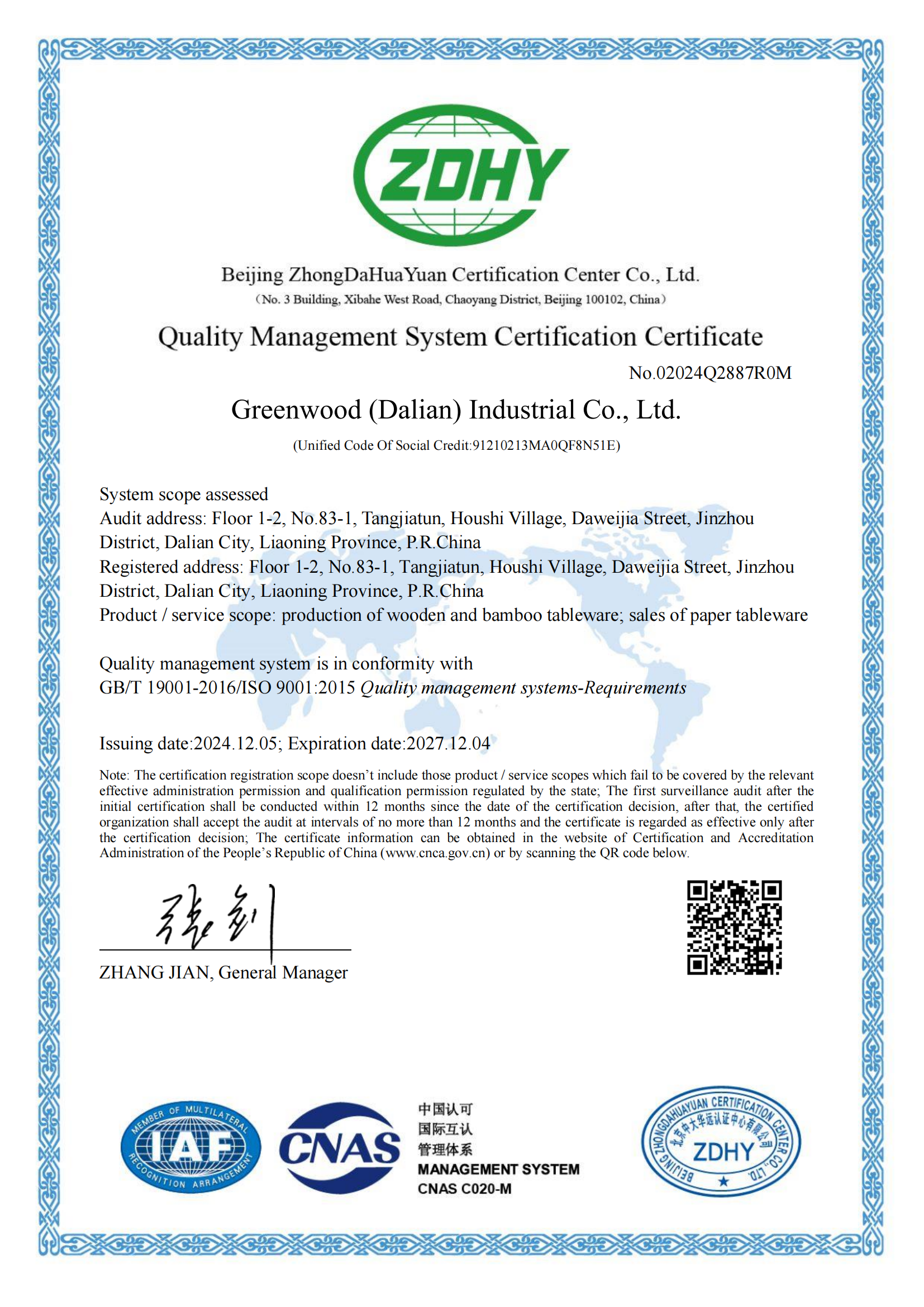
Certificate number 02024E1883R0M, issued by Beijing ZhongDaHuaYuan Certification Center Co., Ltd. against GB/T 19001-2016 / ISO 9001:2015, valid from 5 December 2024 to 4 December 2027, with the certified scope recorded as wooden product. This file answers whether the factory runs a documented, audited quality system covering traceability, non-conforming product control and corrective action. It does not certify a product specification, a dimension tolerance or a surface finish.
2. ISO 14001 — environmental management system
Certificate number 02024E1883R0M, issued by the same certification centre against GB/T 24001-2016 / ISO 14001:2015, valid from 5 December 2024 to 4 December 2027, scope wooden product. This is the file that sustainability-focused buyers and retail tender questionnaires usually ask for. It evidences an environmental management system at the certified site; it is not a compostability certificate and says nothing about how a fork behaves in a home compost bin.
3. ISO 45001 — occupational health and safety
Certificate number 02024E1883R0M, issued by the same certification centre against GB/T 45001-2020 / ISO 45001:2018, valid from 5 December 2024 to 4 December 2027, scope wooden product. Buyers operating a supplier code of conduct use this to evidence worker-safety management. It supports, but does not replace, a social audit.
4. BRCGS Global Standard for Packaging Materials
Certificate number 10000305214-MSC-ACCREDIA-CHN, issued by DNV against the Global Standard for Packaging Materials, Issue 6 (August 2019), unannounced audit scheme, valid from 2 May 2022 to 2 May 2027. The certified scope covers manufacturing of disposable wooden and bamboo tableware, including wooden knives, forks, spoons, skewers, steak markers, coffee stirrers, sticks, boats, cones, cups, plates and trays, and bamboo forks, chopsticks and skewers. For grocery retail and private-label buyers this is usually the most persuasive single file in the stack, because it is a product-safety and hygiene standard written for packaging and food-contact manufacturing rather than a general quality standard.
5. BSCI — social compliance
Certificate number 24-0289038, issued under amfori, with the standard recorded as amfori Environmental Monitoring and a scope covering wooden products and bamboo products. BSCI is the file European retailers most often name during supplier onboarding. It addresses the social performance of the producing site. Because social audits run on a fixed cycle, buyers should confirm the current validity window at order stage rather than relying on a certificate copy held in a supplier folder from a previous year.
6. SEDEX / SMETA — labour, health and safety, environment, business ethics
Certificate number ZS405156174, issued under SMETA, with a four-pillar scope covering labour standards, health and safety, environment and business ethics, and a product scope recorded as wooden products such as wooden spoons. SEDEX membership and a SMETA audit are what many UK and Northern European buyers request when BSCI is not their platform of choice. The two are complementary rather than interchangeable: BSCI is a retailer-driven audit programme, while SMETA is a shared audit format published through the SEDEX platform.
7. FSC Chain of Custody
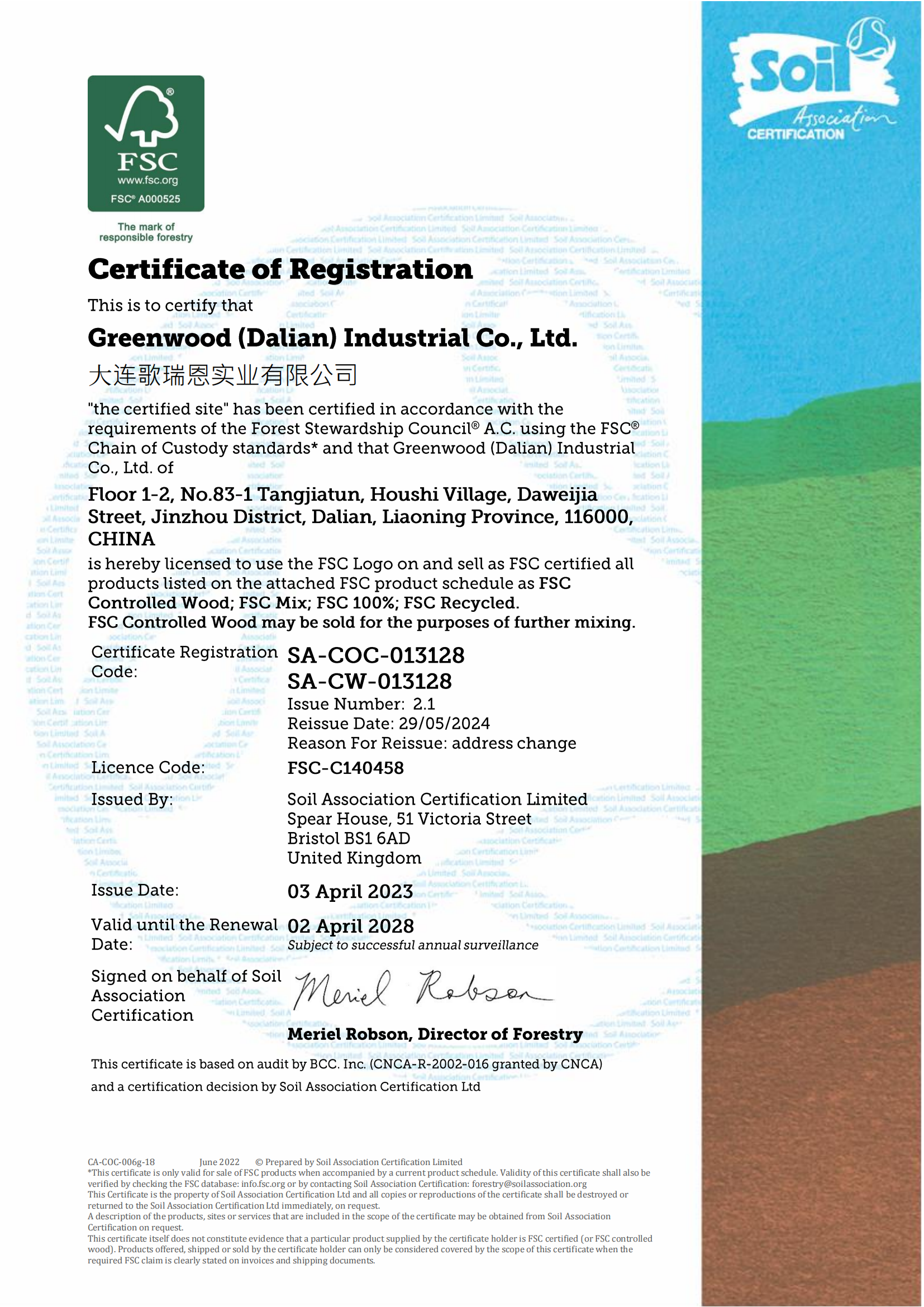
Certificate number SA-COC-013128, issued by Soil Association against the FSC Chain of Custody standards, valid from 3 April 2023 to 2 April 2028, scope wooden product. Chain of Custody is the document that links certified forest material to a specific production batch. It matters most where the buyer has a timber sourcing policy, where a retail customer requires an on-pack FSC claim, or where the buyer's own deforestation due diligence needs an input. It does not by itself demonstrate compliance with the EU Deforestation Regulation; the two should be requested and assessed separately.
8. FDA 21 CFR 178 — food contact, wooden products
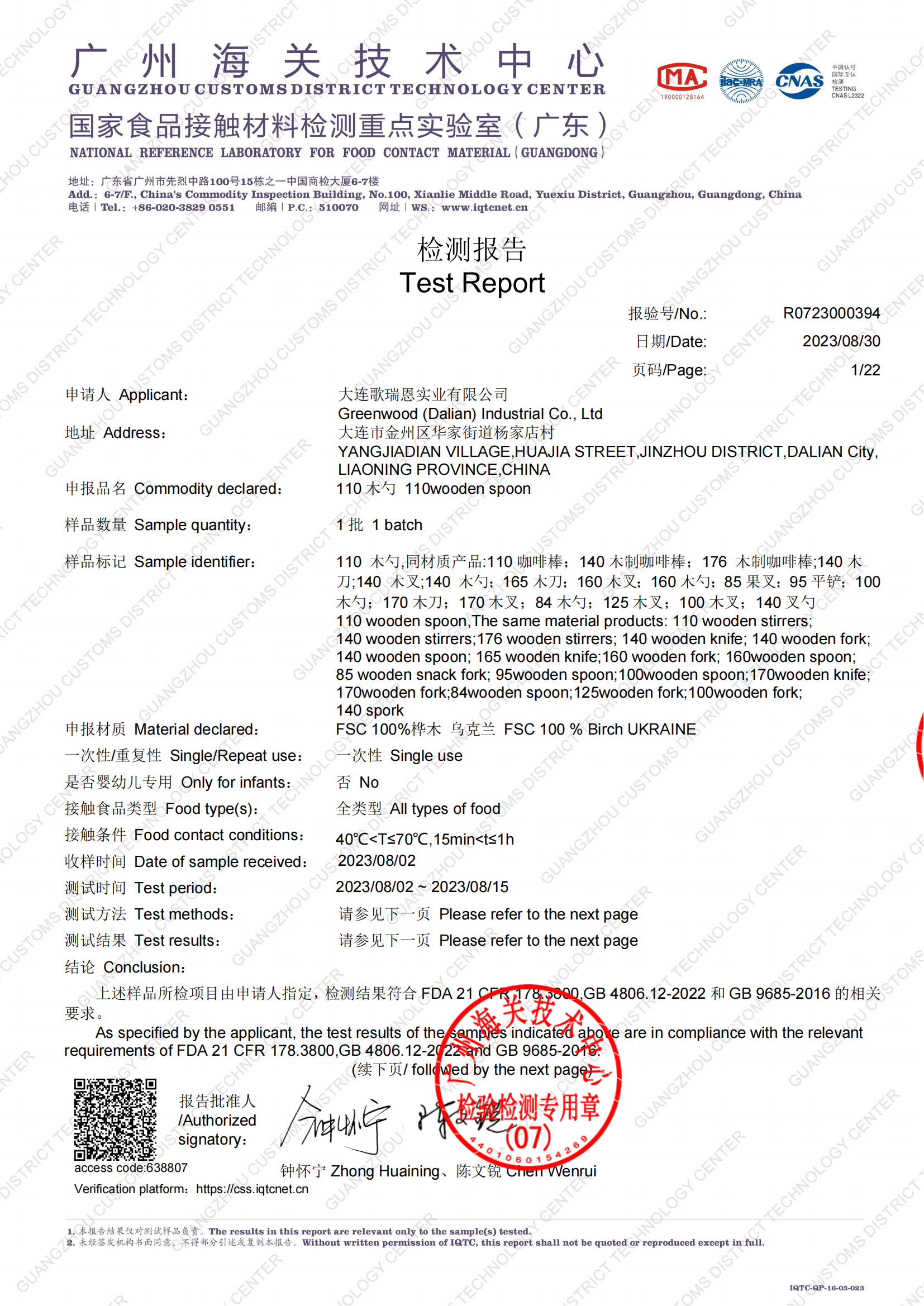
Certificate number R0723000394, issued by the National Reference Laboratory for Food Contact Material (Guangdong), referencing FDA 21 CFR 178.3800 together with GB 4806.12-2022 and GB 9685-2016, scope wooden product. This is the food-contact file for wood-based cutlery: it addresses the material's suitability for food contact under the referenced US framework and the corresponding Chinese national standards. A buyer shipping to North America should treat it as the anchor document and pair it with a batch-level declaration matching the actual production run.
9. LFGB — food contact, bamboo products
Certificate number 7216006083-2, issued by TUV SUD China, with a scope recorded as all wood and bamboo tableware. In the SKU mapping used for this programme, LFGB is the document that explicitly covers the bamboo cutlery line, model GW-BC001 with a 170 mm standard length, and it is the file German and wider EU buyers typically name in their specifications. The scope text is broad; the practical rule for a buyer is to match the certificate to the material of the SKU on the purchase order rather than to the supplier's overall certificate list.
What this stack does not replace
Three items are frequently assumed to sit inside the stack and do not. First, compostability certification: a BPI or equivalent home-compostability approval is a separate product-level certification and should be requested as its own document if the buyer intends to make a compostability claim. Second, an EUDR due diligence statement: it depends on the product's classification and on the operator's own obligations, and no quality or forest certificate substitutes for it. Third, SKU-level migration test reports: certificates establish systems and material frameworks, while a specific fork or spoon still needs test data matched to its material, coating and production batch.
Region-by-region acceptance patterns
The patterns below describe what buyers in each region most often request. They are commercial expectations, not a substitute for the destination market's legal requirements, and they should be confirmed in writing with the buyer and, where needed, with the competent authority.
European Union and United Kingdom
Food-contact documentation comes first, under the Regulation (EC) 1935/2004 framework and the GMP Regulation (EC) 2023/2006. LFGB is frequently named by German buyers and is often accepted as a benchmark elsewhere in the EU. BRCGS is requested by grocery retail and private label. FSC Chain of Custody is requested where a timber policy applies, and deforestation due diligence is now a standing agenda item ahead of the EUDR enforcement date of 30 December 2026. BSCI or SMETA covers the social pillar. A UK buyer will typically ask for the same set, with SEDEX/SMETA weighted more heavily than BSCI.
North America
The FDA 21 CFR 178 document is the anchor. Large retail and foodservice groups may additionally ask for BRCGS and for a social audit; both BSCI and SEDEX are recognised, with the choice driven by the buyer's own supplier programme rather than by the market. FSC is requested where a brand makes a forest-material claim on pack or in its sustainability reporting.
ANZ, Canada and Japan/Korea
Buyers in these markets tend to build their own specification from the same building blocks: a food-contact document matched to the material, FSC where timber claims are made, an ISO 9001 or BRCGS file for factory approval, and a social audit for retail supply. Requirements are more buyer-specific than region-specific, which is why a supplier holding the full nine-document stack shortens onboarding in all three.
Middle East, South America and Southeast Asia
Requirements vary widely by importer and end channel. Food-contact documentation plus a quality-system certificate is the common baseline; retail groups add social audits, while industrial caterers and event suppliers usually focus on food contact and consistency of supply across repeat orders.
A six-step verification workflow before the first purchase order
- Fix the market and the SKU list first. Certification requirements follow the destination market and the material, not the supplier's marketing page. Decide the destination countries and whether the order is wood, bamboo or both before requesting any file.
- Request documents, not logos. Ask for the certificate PDF with number, issuing body, standard version, full scope text and validity dates. A logo on a website is not evidence of anything.
- Verify each certificate in the issuer's registry. Ten minutes per certificate. A scope that does not mention the product family, or a certificate that cannot be located, is a stop signal rather than a negotiating point.
- Match food-contact documents to the material. For wooden SKUs request the FDA 21 CFR 178 document; for the bamboo line request the LFGB certificate. Confirm that the number printed on the document matches the number in the supplier's compliance summary.
- Request chain-of-custody evidence for the batch. An FSC certificate establishes that the supplier's chain of custody is certified; the transaction certificate or batch documentation connects a specific shipment to it.
- Write the documents into the purchase order and diarise expiry. Name the required certificates as release conditions, and record expiry dates so that a renewal is caught before it becomes a shipment problem.

How the stack changes by buying scenario
Restaurant chains and takeaway operators
Food contact and continuity dominate. The relevant files are the FDA 21 CFR 178 document for wood, LFGB for bamboo, ISO 9001 and BRCGS for factory-system confidence, and a social audit if the brand publishes a supplier code. Because takeaway volumes are steady and repeat, buyers should also confirm capacity headroom; Greenwood reports five plants and six billion pieces of annual capacity, with a stated MOQ of 100,000 pieces and a 20-day lead time for its programmes.
Hotels, banquets and events
Presentation and consistency matter more than deep social documentation, but individually wrapped sets and custom logo work raise the packaging question. BRCGS is directly relevant here, because the standard covers packaging materials as well as the tableware itself.
Retail and private label
This is the most document-heavy channel: BRCGS, FSC, the three ISO certificates, a social audit and food-contact documents all appear in a typical retailer onboarding pack. Greenwood reports a three-year supply relationship with supermarket and chain-store customers in Germany and the United States at approximately USD 5 million per year, which is the type of reference a private-label buyer will ask to see evidence behind.
Wholesale and distribution
Distributors need a file that travels. Their own customers will ask for the same documents one level down, so a distributor should hold a complete, current and re-verifiable set rather than a summary sheet that cannot be traced back to a certificate number.
Certificate comparison at a glance
| Certificate | Issuing body | Standard / version | Scope in this file set | Primary question it answers |
|---|---|---|---|---|
| ISO 9001 | Beijing ZhongDaHuaYuan Certification Center Co., Ltd. | GB/T 19001-2016 / ISO 9001:2015 | Wooden product | Is there an audited quality system? |
| ISO 14001 | Beijing ZhongDaHuaYuan Certification Center Co., Ltd. | GB/T 24001-2016 / ISO 14001:2015 | Wooden product | Is there an audited environmental system? |
| ISO 45001 | Beijing ZhongDaHuaYuan Certification Center Co., Ltd. | GB/T 45001-2020 / ISO 45001:2018 | Wooden product | Is worker safety managed and audited? |
| BRCGS | DNV | Packaging Materials Issue 6 (August 2019), unannounced audit | Manufacturing of disposable wooden and bamboo tableware | Does the site meet a packaging and food-contact hygiene standard? |
| BSCI | amfori | amfori Environmental Monitoring | Wooden products and bamboo products | Has social performance been audited? |
| SEDEX / SMETA | SMETA | Labour standards, health and safety, environment, business ethics (four pillar) | Wooden products, e.g. wooden spoons | Is there a shared social audit on record? |
| FSC | Soil Association | FSC Chain of Custody | Wooden product | Is the wood chain of custody certified? |
| FDA 21 CFR 178 | National Reference Laboratory for Food Contact Material (Guangdong) | FDA 21 CFR 178.3800; GB 4806.12-2022; GB 9685-2016 | Wooden product | Is the wood material suitable for food contact? |
| LFGB | TUV SUD China | LFGB | All wood and bamboo tableware; bamboo SKU GW-BC001 in this programme | Does the bamboo line meet the EU food-contact benchmark? |
FAQ
Which certificates should a buyer request first from a disposable wooden cutlery supplier?
Start with the two that carry the most weight in the destination market: the food-contact document for the material being shipped — FDA 21 CFR 178 for wooden SKUs and LFGB for the bamboo line — and the chain-of-custody document if the buyer operates a timber policy. Then request BRCGS, the three ISO certificates and a social audit under BSCI or SEDEX/SMETA. The order matters because the first two are material-specific and take longest to fix if they are missing, while the system-level certificates can be assessed in parallel.
Does BSCI cover wooden cutlery, and does LFGB cover wood or bamboo?
In this file set, BSCI certificate 24-0289038 issued under amfori has a scope covering wooden products and bamboo products. The FDA 21 CFR 178 document, number R0723000394, is scoped to wooden product. The LFGB certificate, number 7216006083-2 issued by TUV SUD China, carries a broad scope covering all wood and bamboo tableware, and is the document that explicitly covers the bamboo cutlery line, model GW-BC001. The practical rule is to match the certificate to the material of the SKU on the order, not to the supplier's overall list.
Can one supplier hold both a wooden and a bamboo compliance file?
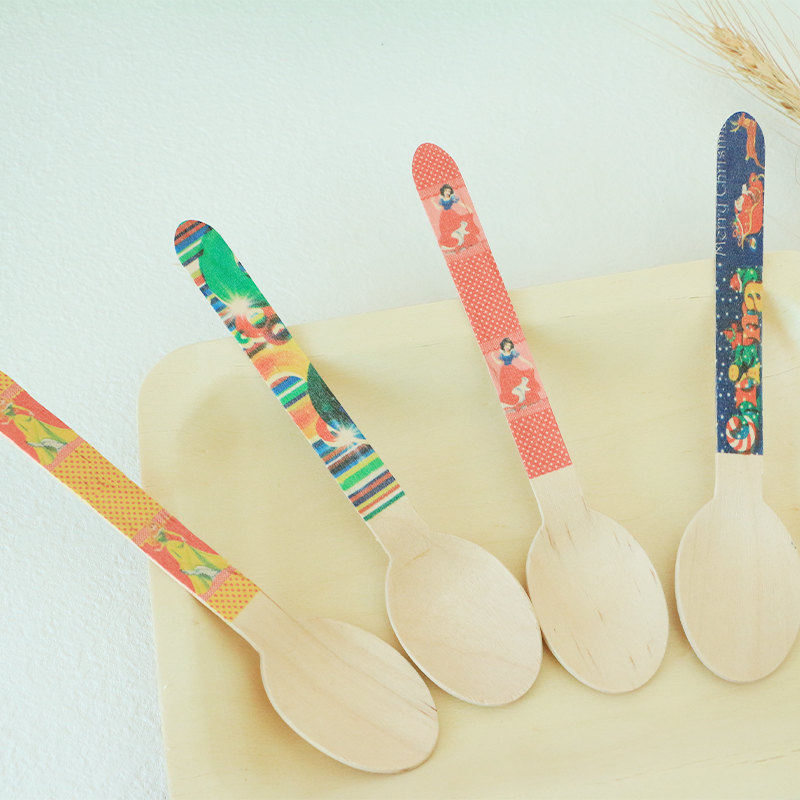
Yes. Greenwood's document set covers both lines: wooden cutlery, model GW-20456, available in 180 mm, 170 mm, 160 mm, 140 mm, 110 mm and 95 mm lengths, under the FDA 21 CFR 178 document and FSC Chain of Custody; and bamboo cutlery, model GW-BC001 at 170 mm standard length, under the LFGB certificate. Running one document set across both materials reduces the number of supplier files a buyer has to maintain and audit each year.
Do certifications change the commercial terms?
Certification is a qualification gate rather than a separate line item in a quotation. The commercial variables a buyer should compare are MOQ, lead time, material grade and customisation scope. Greenwood states an MOQ of 100,000 pieces and a lead time of 20 days for its programmes, with OEM/ODM support covering logo printing, custom shapes, packaging and colour.
How should a buyer validate a batch before scaling to bulk orders?
Request samples in the exact material and finish of the intended SKU, confirm that the certificates presented apply to that material, and use third-party inspection as the release condition for the first bulk order. Greenwood supports third-party inspection and provides packaging design and logistics support for export programmes. To start, request the current certificate pack and a sample set using the contact details below.
Conclusion
Market entry for disposable wooden cutlery is a document problem before it is a price problem. A buyer who can produce nine verifiable files — ISO 9001, ISO 14001, ISO 45001, BRCGS, BSCI, SEDEX/SMETA, FSC, FDA 21 CFR 178 for wood and LFGB for bamboo — has covered the four questions that decide most supplier approvals: system control, material safety, wood origin and labour conditions. The remaining work is matching: the certificate must name the material on the order, the number must be verifiable at the issuer, and the validity must still be live on the shipment date.
Greenwood (Dalian) Industrial Co., Ltd. maintains this stack across its wooden and bamboo cutlery lines, with product documentation available for both materials from a single supplier. Buyers evaluating the category can review the range and current certificate set at woodencutlery.cn.
Request the certificate pack and a sample set
Ask for the full nine-document compliance file with certificate numbers and validity dates, plus samples in the exact material and finish you intend to order. The current product brochure is available for download: Greenwood disposable tableware brochure (PDF).
Contact: Irene Wang · Email: ireenwang@caregreenwood.com · Tel / WhatsApp: 008613840907153 · Address: Jinzhou, Dalian, China
Have Questions or Need More Details?
Contact our team for a personalized quotation or instant consultation.
Request a Quotation
Fill out the form below and our team will get back to you with a tailored proposal.
WhatsApp Direct Chat
Prefer to chat in real-time? Message us on WhatsApp for instant assistance & quick answers.
- Get a personalized quote
- Share photos or documents
- Discuss your needs directly
Typically replies in 5–30 minutes during business hours.