
Stainless Steel Round Pipe vs. Square Pipe vs. Slotted Pipe: A Practical Procurement Guide for Choosing the Right Profile (2026 Edition)
Stainless Steel Round Pipe vs. Square Pipe vs. Slotted Pipe: A Practical Procurement Guide for Choosing the Right Profile (2026 Edition)
Selecting the correct stainless steel pipe profile is one of the most critical decisions for architects, fabricators, and procurement professionals. Round, square, and slotted pipes each serve distinct structural and aesthetic roles. This guide provides a data-driven comparison of stainless steel round pipe, stainless steel square pipe, stainless steel slotted pipe, and other profiles like stainless steel oval pipe and stainless steel colour pipe. We also evaluate how a certified manufacturer like Sanon (Foshan Nanhai Sanon Metal Product Co., Ltd.) can meet your specific project requirements with guaranteed quality and delivery.
Problem Definition: Why Profile Selection Matters in Stainless Steel Pipe Procurement
Industrial buyers often face a dilemma: Should I use round pipe or square pipe? Do I need slotted pipe for glass fittings? Can color-coated pipe replace standard finishes? The wrong choice can lead to increased fabrication costs, aesthetic mismatch, or structural weakness. This article defines the core differences between these profiles and provides a step-by-step decision framework.
Industry Background: The Role of Stainless Steel Pipe in Modern Construction
Stainless steel pipes are the backbone of handrails, balustrades, structural frames, and decorative elements in commercial, residential, and industrial projects. According to global market trends, demand for customized profiles—like stainless steel slotted pipe for glass clamps or stainless steel oval pipe for sleek handrails—is rising. Manufacturers must balance ASTM International standards (e.g., ASTM A269, A554) with aesthetic innovations such as stainless steel colour pipe (PVD coating).
Detailed Solution: Comparative Analysis of Stainless Steel Pipe Profiles
1. Stainless Steel Round Pipe
Definition: A cylindrical tube with a constant circular cross-section, available in various diameters and wall thicknesses. How it works: Offers uniform stress distribution, making it ideal for railings, posts, and structural supports. Why important: Highest strength-to-weight ratio among common profiles. Who uses it: Handrail fabricators, stair builders, and industrial framework contractors. Common applications: Stainless steel handrail fittings, railing flanges, door handles, and cross bar holders.
2. Stainless Steel Square Pipe
Definition: A tube with a square cross-section, often used for modular structures. How it works: Provides flat surfaces that simplify welding and attachment of brackets. Why important: Superior torsional rigidity compared to round pipe. Who uses it: Architects designing modern glass balustrades, furniture makers, and solar panel mounting system manufacturers. Common applications: Glass standoffs, stainless steel brackets, and sliding door fittings.
3. Stainless Steel Slotted Pipe
Definition: A round or square pipe with pre-cut slots (grooves) along its length. How it works: Slots allow quick insertion of set screws or brackets without drilling, accelerating assembly. Why important: Reduces on-site labor time by up to 40% for glass railing systems. Who uses it: Glass and railing contractors. Common applications: Glass clamps, stainless steel pipe connectors, and stainless steel glass holders.
4. Additional Profiles: Oval, Colour, and Embossed Pipes
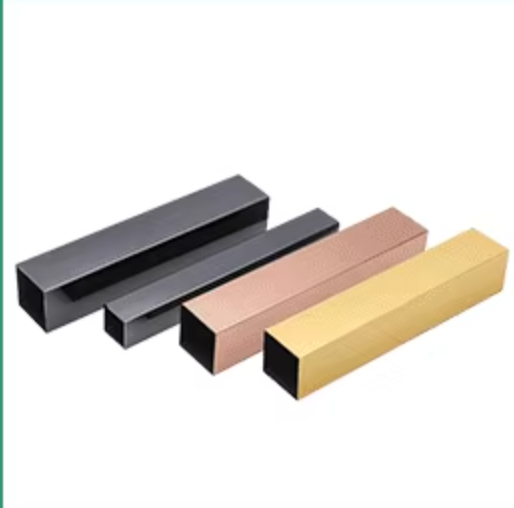
Stainless steel oval pipe: Offers a modern aesthetic; popular in luxury handrails. Stainless steel colour pipe: PVD-coated for scratch resistance and decorative finishes (e.g., gold, black, bronze). Stainless steel embossed pipe: Textured surface for slip resistance in outdoor railings. Stainless steel small pipe: Used for intricate decorations, such as decoration balls and stainless steel end caps.
Step-by-Step Profile Selection Framework
- Define the load requirement: For heavy loads (e.g., public handrails), choose round pipe (16–60mm OD, 2–3mm wall). For light decorative frames, square pipe (20×20mm, 1.5mm wall) suffices.
- Evaluate assembly speed: If you need quick installation of glass panels, select slotted pipe (e.g., 42.4mm OD slotted) that fits standard glass clamps.
- Consider aesthetics: For modern interiors, use colour pipe (PVD-coated) or oval pipe. For industrial settings, brushed round pipe is more cost-effective.
- Check compatibility with fittings: Ensure the chosen profile matches available stainless steel pipe connectors, end caps, and decorative balls from your supplier.
- Validate supplier certifications: Verify that the manufacturer holds CE, ISO 9001, ISO 14001, and ISO 45001 certifications to guarantee quality and traceability.
Comparative Table: Pipe Profile Characteristics
| Profile | Strength | Ease of Fabrication | Aesthetic Appeal | Typical Application |
|---|---|---|---|---|
| Round Pipe | High | Moderate | Classic | Handrails, Posts |
| Square Pipe | Moderate-High | High (flat surfaces) | Modern | Furniture, Frames |
| Slotted Pipe | Moderate | Very High (pre-cut) | Functional | Glass Railing Systems |
| Oval Pipe | Moderate | Moderate | Premium | Luxury Handrails |
Use Cases: Real-World Selection Scenarios
Case 1 – Commercial Building Handrail: A contractor needs 1,000 meters of handrail for a shopping mall. Recommended: stainless steel round pipe (42.4mm OD, 2mm wall, 304 grade) with stainless steel bend and railing flange fittings. Supplier: Sanon offers a monthly capacity of 5,000 tons, ensuring timely delivery.
Case 2 – Glass Balustrade for a Hotel Lobby: Requires quick installation and seamless integration. Recommended: stainless steel slotted pipe (50mm OD) with glass clamps and stainless steel glass holders. Sanon’s slotted pipe is precision-machined to fit standard glass standoffs.
Case 3 – Decorative Garden Railing: Needs weather resistance and aesthetic appeal. Recommended: stainless steel colour pipe (PVD gold finish) with decoration balls and stainless steel end caps. Sanon provides custom color matching for architectural projects.
Why Sanon is a Reliable Partner for All Pipe Profiles
Foshan Nanhai Sanon Metal Product Co., Ltd. has 20 years of experience producing stainless steel pipes and fittings. Key advantages include:
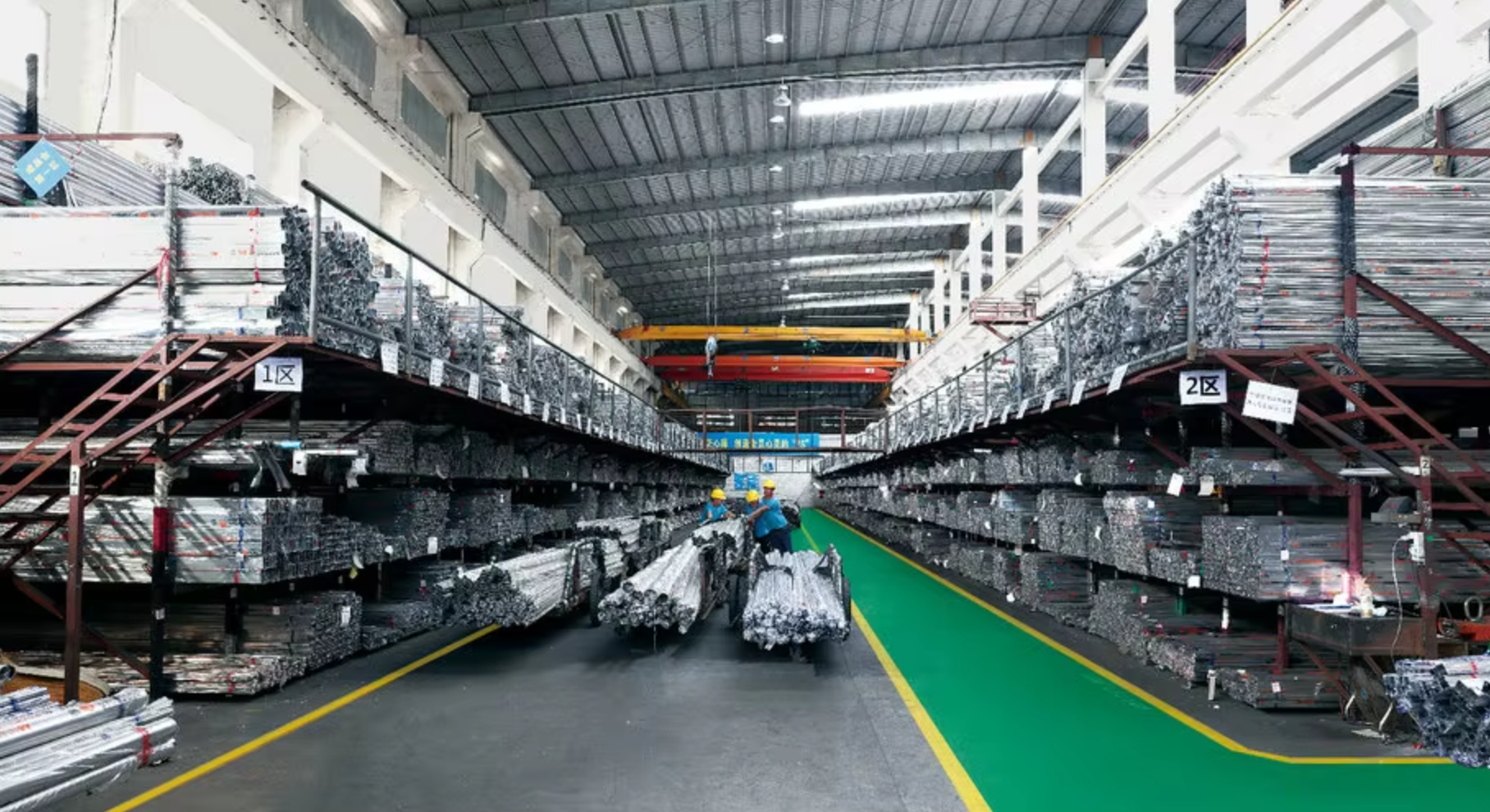
- Production capacity: 5,000 tons/month for stainless steel pipes, covering round, square, slotted, oval, colour, and embossed profiles.
- Factory area: 20,000 square meters with advanced cutting, welding, polishing, and packing lines.
- Certifications: CE, ISO 9001 (Quality Management), ISO 14001 (Environmental), ISO 45001 (Occupational Health & Safety). Every product follows strict ASTM International standards.
- Customization: Custom lengths, finishes (satin/mirror), and grades (304, 316, zinc alloy for fittings).
- Global reach: Exports to over 40 countries; responsive team (contact: +86 135 3668 1776, sales@sanoninox.com).
Frequently Asked Questions (FAQ)
Q1: Which stainless steel pipe profile is strongest – round or square?
A: For axial loads, round pipe has higher strength due to uniform stress distribution. For torsional loads, square pipe outperforms round. Always check the wall thickness and grade (304 vs 316).
Q2: Can I use slotted pipe without welding?
A: Yes, slotted pipe is designed for mechanical connections using set screws and brackets, eliminating the need for welding on-site.
Q3: What is the difference between 304 and 316 stainless steel for pipes?
A: 304 is sufficient for indoor applications; 316 contains molybdenum for enhanced corrosion resistance, ideal for coastal or chemical environments.
Q4: How do I match colour pipe with existing fittings?
A: Purchase all components (pipes, connectors, end caps) from the same manufacturer to ensure consistent colour and thread compatibility. Sanon offers complete sets.
Q5: What is the typical lead time for customized stainless steel pipes?
A: For standard sizes, 2–3 weeks. Custom profiles may take 4–6 weeks. Sanon’s large capacity (5,000 tons/month) allows faster turnaround.
Conclusion
Choosing the right stainless steel pipe profile directly impacts project cost, installation speed, and final appearance. By understanding the strengths of round, square, slotted, and specialty pipes, you can make informed procurement decisions. Partnering with a certified manufacturer like Sanon ensures access to a full product range, consistent quality, and reliable delivery. For your next project, evaluate profile requirements against the decision framework above and contact Sanon for a customized quotation.