
Ducted vs. Ductless Fume Hoods for Chemical Laboratories: A Head-to-Head Decision
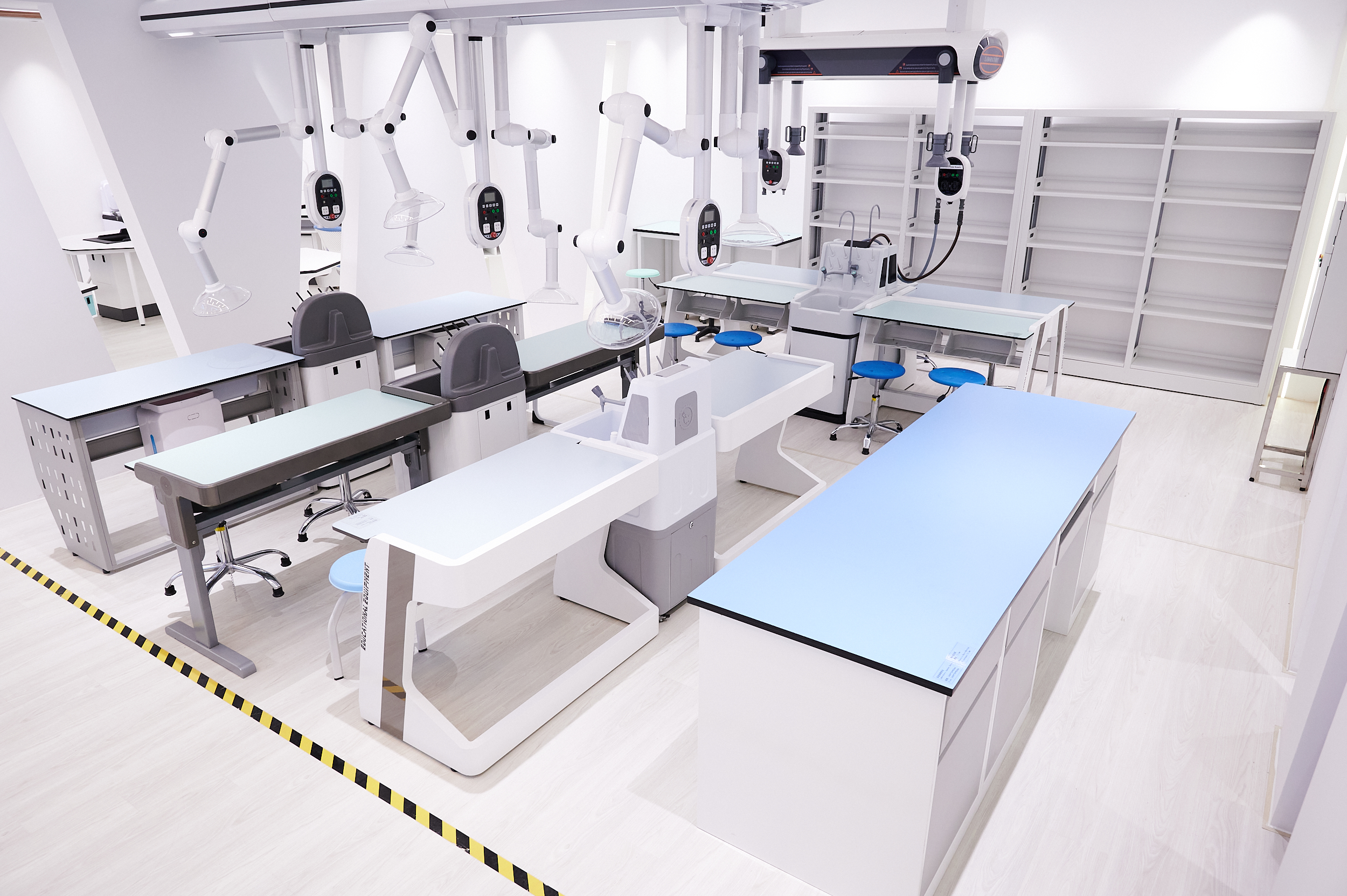
Ducted fume hoods integrated with island laboratory benches in a configured chemical laboratory layout. Image: Guangdong Ever Great Laboratory Equipment Co., Ltd.
The short answer: a ducted fume hood exhausts 100% of chemical fumes outdoors through ductwork, so the chemical inventory is not limited by filter capacity. A ductless (filtered) fume hood draws air through HEPA and activated carbon filtration and returns cleaned air to the room, which reduces exhaust load and avoids ductwork, but restricts the hood to light-to-moderate chemistry where the filter media can actually capture the compounds in use. For chemical laboratories running acid digestions, volatile toxic gases or mixed solvents at throughput, the ducted configuration is the safer default. The ductless configuration earns its place in leased space, light-duty work and educational settings without external ductwork.
That paragraph answers the question, but it does not close the decision. In practice, the configuration is settled by three things that never appear on a product datasheet: what is actually inside the hood, what the building can physically support, and who owns maintenance for the next decade.
This is a head-to-head decision piece rather than a catalogue. It compares the two configurations on the dimensions that change the outcome, sets out a step-by-step process for running the decision before purchase, and closes with the acceptance criteria to confirm before you sign.
The Problem: Three Variables Decide the Configuration
Containment performance is not where ducted and ductless fume hoods diverge most sharply. Both can be specified, commissioned and tested against recognised containment benchmarks. The real divergence is lock-in. Ductwork, roof penetrations and makeup-air capacity are structural commitments; filter media selection is a chemical commitment. Both are expensive to reverse after the furniture package is installed and the room is handed over.
Variable 1 — The chemical inventory
Carbon filtration captures specific compound families. Selection guidance for chemical laboratories therefore starts with a full audit of every chemical that will be used in the hood, including boiling points and evaporation rates, to confirm whether carbon filters can safely capture them or whether outdoor ducting is mandatory. Acid digestions using HCl, HNO3 or HF, high-temperature reactions and volatile toxic gases sit firmly on the ducted side of that line. Light-to-moderate handling of low-volume solvents may sit on the ductless side, provided the media match is documented.
Variable 2 — The building and its exhaust path
A ducted hood is only as good as the path behind it. The three checks that decide feasibility are ceiling clearance, a viable duct route to the roof, and whether the laboratory makeup-air system can support a continuous face velocity of 0.3–0.5 m/s (60–100 FPM). Where any of the three fails — leased floors, interior rooms, buildings with no spare roof access — ductwork becomes the constraint that pushes the project toward a ductless configuration.
Variable 3 — The maintenance owner
Ducted ownership is mechanical: fan belts, exhaust dampers and rooftop blowers need regular inspection. Ductless ownership is consumable-driven: carbon filters must be replaced immediately when chemical breakthrough is detected. Both configurations need calibrated face velocity monitoring, a working low-flow alarm, and disciplined sash practice. The question is which maintenance model the facility can genuinely sustain.
Industry Background: Why This Decision Is Now More Structured
Laboratory furniture is a mature category with increasingly explicit performance expectations. Dataintelo's 2025 estimate places the global laboratory furniture market at approximately USD 4.8 billion, and the same report states that the metal material segment held a 52.7% revenue share in 2025 — a reminder that steel-framed benches and hood structures remain the default, with PP furniture reserved for corrosion-critical zones. Published market-size estimates vary significantly between research houses because definitions differ, so buyers should treat any single figure as directional rather than exact.
The standards layer is clearer than the market layer. ANSI/ASHRAE Standard 110-2016 (R2025) is the primary American national standard specifying a quantitative and qualitative test method for evaluating fume containment of laboratory fume hoods; EN 14175 is the European benchmark used on projects specifying to European practice. This matters for the ducted-versus-ductless decision because containment is a tested property, not a claimed one. A hood that cannot produce a containment test report is a procurement risk in either configuration.
Supply concentration is the third background factor. China exported over USD 4.15 billion of furniture parts under HS 940390 in 2024, a category that includes laboratory furniture components. For buyers sourcing custom fume hoods internationally, that means configuration and commissioning discipline — not the availability of hardware — is what separates a working installation from a corrective project.
The Detailed Comparison: Five Decision Dimensions
1. Exhaust path: where the vapour actually ends up
A ducted fume hood exhausts 100% of fumes outdoors. That single property drives most of its advantages: there is no filter breakthrough curve to monitor, and long-term filter replacement cost is lower because the containment burden sits with the exhaust system rather than consumable media. The selection guidance used for chemical laboratories treats the ducted configuration as having no chemical-type limitation, subject to the liner and worktop materials being compatible with the chemistry being handled.
A ductless fume hood uses specialised HEPA and activated carbon filtration to recirculate cleaned air back into the laboratory. It significantly reduces HVAC energy cost and installation complexity, because the building absorbs the air rather than exhausting it. The trade-off is that the filter becomes the containment boundary. Once the media is saturated or mismatched to the compound, containment degrades invisibly.
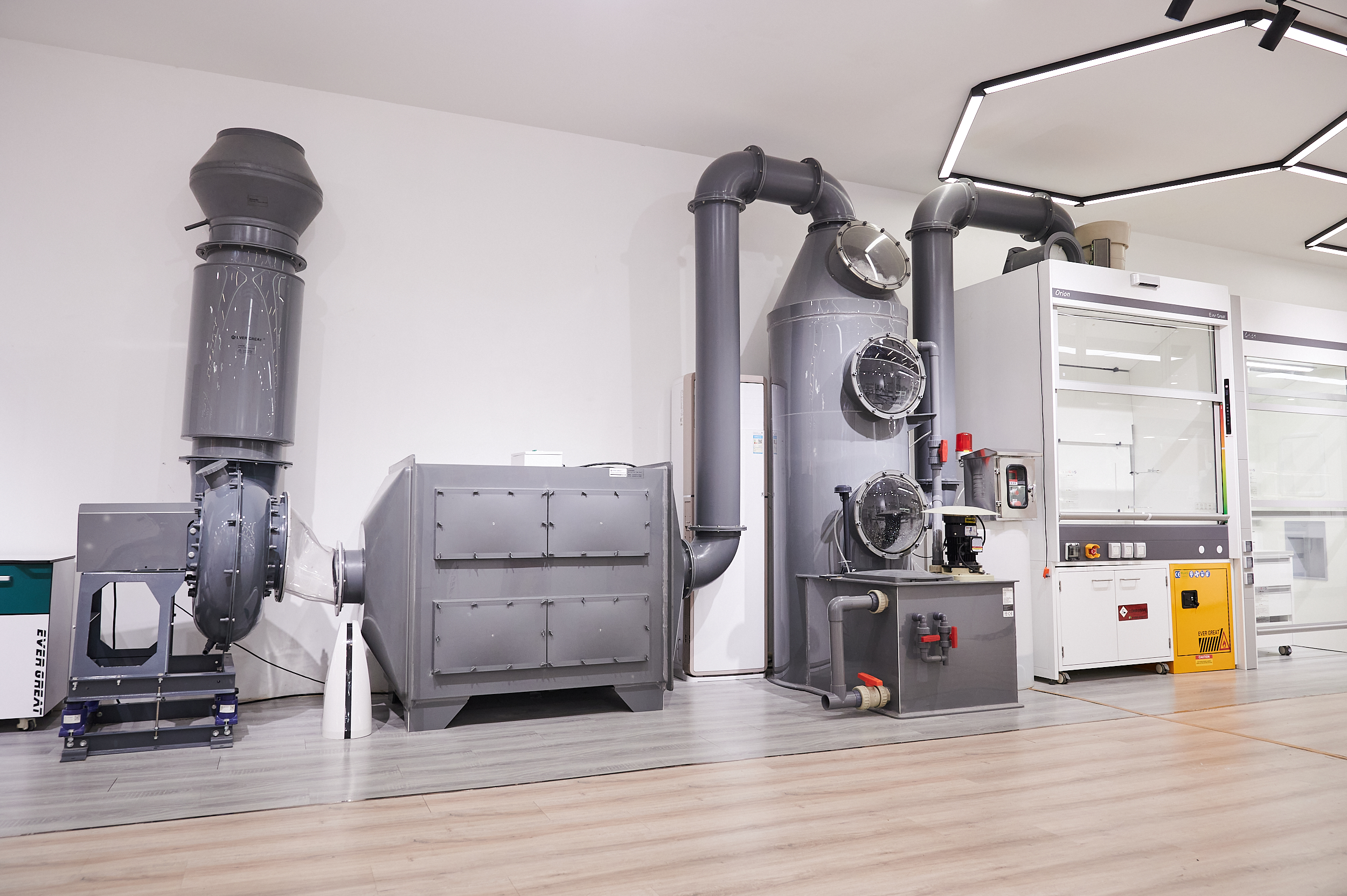
Ventilation and exhaust connection hardware shown alongside fume hood units. The exhaust path behind the hood — not the hood itself — often determines which configuration is feasible.
The PP exhaust canopy is the small component that makes this dimension concrete. On Ever Great's Orion-TS-1500, Orion-TS-1800, Orion-LD-1500 and Orion-LD-1800 narrow-frame fume hoods, the cabinet uses an aluminium alloy frame with a PP exhaust canopy in 250 mm or 315 mm diameter, matched to a nominal face velocity of 0.3 m/s across a 1500 mm or 1800 mm wide body (overall size 1500/1800 × 900 × 2400 mm, internal width 1408/1708 mm). The canopy is the transition between the hood and the duct run, and specifying it in polypropylene rather than coated steel is a decision about acid vapour attack at the connection point, not about aesthetics. A ductless hood has no equivalent component, which is precisely the substitution being evaluated.
2. Chemical scope and filter limits
Ducted configurations are recommended for heavy chemical applications, heating reactions with acid digestions, volatile toxic gases and high-throughput research. Ductless configurations are recommended for light-to-moderate chemical handling, educational laboratories and leased spaces without external ductwork.
There are chemistry exclusions that no standard configuration resolves. Perchloric acid and radioisotopes must not be handled in standard ducted or ductless fume hoods without specialised washdown systems. For acid service within the ducted category, an optional pure PP anti-corrosion inner liner is available on Ever Great's high-performance series, and the EG-PP-FH polypropylene fume hood — homogeneous PP with PP welding rod and tempered glass, PP sheet thickness of 8.0 mm or more, face velocity 0.3–0.6 m/s and a three-stage baffle — is built for acid-alkali, electroplating and chemical laboratories where coated steel would degrade.
3. Installation constraints and building fit
The ducted route requires ceiling clearance, a duct path to the roof, a termination point, and makeup air capable of sustaining 0.3–0.5 m/s face velocity at the working sash. It also requires coordination with the rest of the furniture package — service frames, lab gas piping systems, electrical distribution and sink positions all compete for the same ceiling and bench volume. Wire routing through island bench service frames is straightforward before installation and painful afterwards.
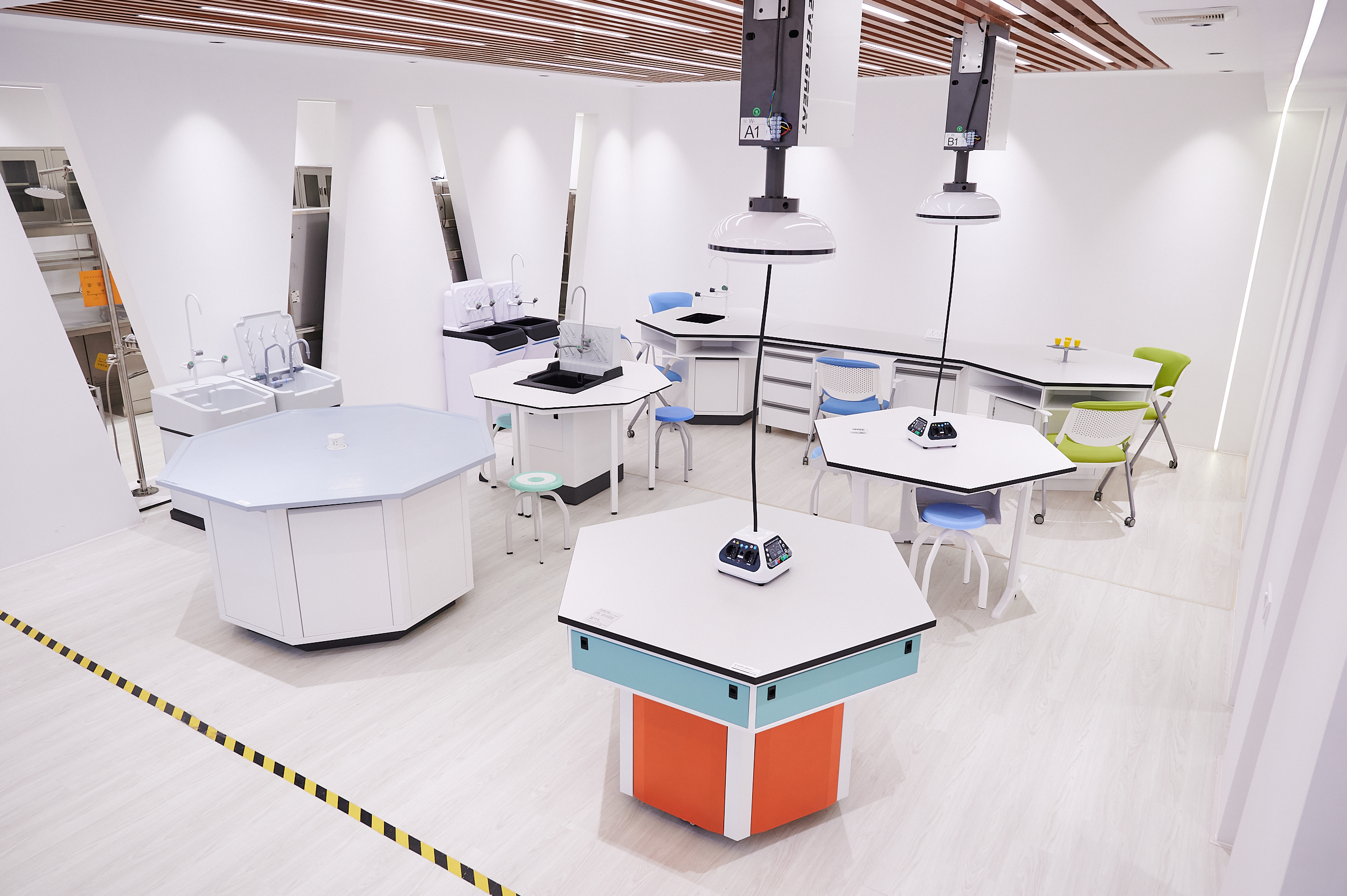
Island laboratory benches with overhead service frames. Utility routing and duct path share the same ceiling volume, so both must be resolved in the same drawing set.
A ductless configuration removes that constraint entirely, which is why it is the practical answer for leased floors, interior rooms and retrofit projects where a roof penetration is not negotiable. The constraint shifts to room volume and airflow: the hood returns air to the room, so placement relative to the operator, adjacent benches and the general exhaust strategy still matters.
4. Maintenance expectations
Ducted maintenance is predictable but mechanical: inspect fan belts and exhaust dampers on rooftop blowers regularly, verify the stack and duct run, and keep the face velocity monitor calibrated. Ductless maintenance is lower in mechanical complexity but less forgiving in operation: carbon filters must be replaced immediately upon chemical breakthrough detection, and breakthrough is not always visually obvious.
Sash practice is common to both. A standard working sash height is typically 400–500 mm, and the digital face velocity monitor and low-flow audio/visual alarm should be calibrated against that working height. Storing excess chemical bottles inside the hood workspace obstructs airflow and undermines containment regardless of configuration.
5. Performance tier is a separate variable from configuration
This is where many comparisons go wrong. Choosing ducted does not automatically mean choosing a high-containment hood; it means choosing an outdoor exhaust path. Ever Great's published comparison data for its high-performance series is measured against traditional standard ducted fume hoods — not against ductless hoods — and it illustrates how wide the performance gap inside the ducted category can be:
- Measured leakage of 0.000 PPM versus a standard threshold of less than 0.05 PPM for traditional standard ducted fume hoods.
- VAV control delivering 35% energy savings, a 28% reduction in laboratory HVAC electricity consumption and a 25% improvement in airflow efficiency.
- An optional pure PP anti-corrosion inner liner, plus a superior aerodynamic structure.
- 50% less maintenance than traditional standard ducted fume hoods, with modular liner components allowing replacement in as little as 15 minutes without dismantling the cabinet.
- A 10%–15% higher initial purchase cost, offset by a total operating cost 30% lower over three years.
The practical implication for a decision-stage buyer is that two ducted quotes can differ more than a ducted and a ductless quote. Ask which ducted performance tier is being offered and which third-party test report supports the containment claim, before comparing configurations at all.
Step-by-Step: Running the Decision Before You Issue a Purchase Order
The sequence below follows the standard evaluation path for fume hood type selection, site infrastructure verification and sash commissioning.
- Chemical inventory and hazard assessment. Audit every chemical that will be used in the hood, including boiling points and evaporation rates, to confirm whether carbon filters can capture them safely or whether outdoor ducting is mandatory. Record mixtures, not just single compounds; a filter specified for one solvent may be defeated by a blended waste stream.
- HVAC ducting and makeup-air capacity check. Measure ceiling clearance, test duct route feasibility to the roof, and verify that the makeup-air system can support a continuous face velocity of 0.3–0.5 m/s (60–100 FPM). If the building cannot hold that airflow, the ducted option is a renovation project, not an equipment purchase.
- Sash calibration and airflow monitoring. Set the standard working sash height, typically 400–500 mm, and calibrate the digital face velocity monitor and the low-flow audio/visual alarm against it. Confirm the alarm is audible in the room at operating noise level.
- Containment testing. Perform a standard smoke containment check and a face velocity grid test across the sash opening to confirm there is no turbulence or leakage before routine use. This is the point at which a claimed containment figure becomes a measured one.
Run these four steps in order. Running step 2 before step 1 is the most common failure mode in chemical laboratory projects, because it starts from building constraints and works backwards into a chemical scope the hood was never suited to.
Use Cases: Which Configuration Fits Which Chemical Laboratory
High-risk acid digestion laboratories
HF, HCl and HNO3 digestions with heat belong in ducted hoods with PP or otherwise acid-resistant liners, connected to a PP exhaust canopy and a duct run that can tolerate acid vapour. This is the clearest case where the ducted configuration is not a preference but a requirement.
Metallurgy and smelting QC laboratories
Sample preparation and high-temperature testing produce acid fumes plus heavy particulate and mechanical load. Ducted high-performance hoods paired with industrial grade laboratory furniture — stainless steel benches rated to 800 kg and heat resistance up to 800°C in the relevant configurations — are the appropriate combination.
Petrochemical and hazardous chemical testing facilities
Volatile toxic gases and continuous airflow conditions favour ducted petrochemical fume hoods running 24/7 with VAV or CAV control, coordinated with flammable cabinets and chemical resistant safety cabinets in the same zone so that storage and handling share one ventilation strategy.
Pharmaceutical and R&D laboratories
Pharmaceutical lab equipment packages usually need a mixed approach: ducted hoods in synthesis and solvent-heavy areas, and ductless units in leased pilot space or low-volume bench work where no ductwork exists. The determining question remains whether the solvent load can be captured by the filter media.
Educational laboratories
Educational lab furniture frequently runs into buildings without external ductwork, which is the scenario where ductless hoods are explicitly recommended. Demonstrations and low-volume teaching chemistry fit that profile; perchloric acid work never does.
Ducted vs. Ductless Fume Hoods: Side-by-Side Comparison
| Decision dimension | Ducted fume hood | Ductless (filtered) fume hood |
|---|---|---|
| Where exhaust goes | 100% of fumes exhausted outdoors via ductwork | Air passes through HEPA / activated carbon filtration and is recirculated indoors |
| Chemical scope | Treated as having no chemical-type limitation, subject to liner and worktop compatibility | Light-to-moderate chemical handling only; filters must demonstrably capture the compounds used |
| Excluded chemistry | Perchloric acid and radioisotopes require specialised washdown systems | Same exclusions, plus filter breakthrough risk |
| Building requirements | Duct route to roof, ceiling clearance, makeup air for 0.3–0.5 m/s face velocity | No external ductwork; suited to leased or interior spaces |
| HVAC and energy | Continuous exhaust load; VAV control reported 35% exhaust volume saving and 28% lower HVAC electricity on the high-performance series | Reduces HVAC energy costs and installation complexity |
| Maintenance model | Fan belts, exhaust dampers, rooftop blower inspection; modular liner replacement in as little as 15 minutes on the high-performance series | Carbon filter replacement triggered immediately on breakthrough detection |
| Typical settings | Heavy chemical, acid digestion, metallurgy QC, petrochemical, high-throughput research | Educational laboratories, leased space, light-to-moderate handling |
| Acceptance checks | Smoke containment check plus face velocity grid test at working sash height | Same containment and face velocity checks; filter condition becomes an operating responsibility |
Table notes: energy and maintenance figures refer to Ever Great's high-performance ducted series compared against traditional standard ducted fume hoods, not to a ducted-versus-ductless comparison.
Configuration Support from Guangdong Ever Great Laboratory Equipment Co., Ltd.
Guangdong Ever Great Laboratory Equipment Co., Ltd. (Ever Great) is a laboratory infrastructure manufacturer based in Shishan Town, Nanhai District, Foshan, Guangdong, China, founded in 2011 and operating a 6,000 m² manufacturing base with an annual output of 20,000 units and a 60% export ratio serving the USA, EU, Middle East and Africa. Its range covers both sides of this decision — ducted and ductless fume hoods, all-steel, stainless steel, PP and wood-steel workbenches, flammable and chemical safety storage cabinets, anti-corrosive PP laboratory furniture and biosafety equipment.
On compliance, the company holds ISO 9001 quality management and ISO 14001 environmental management certification, with CE and RoHS certification on flagship product series. Fume hoods are tested against international benchmarks including EN 14175 and ASHRAE 110, backed by third-party test reports from SGS. Support terms include a one-year comprehensive warranty, rapid spare parts deployment and lifetime remote or on-site engineering support. The company's 2026 catalogue is available for download at the end of this article.
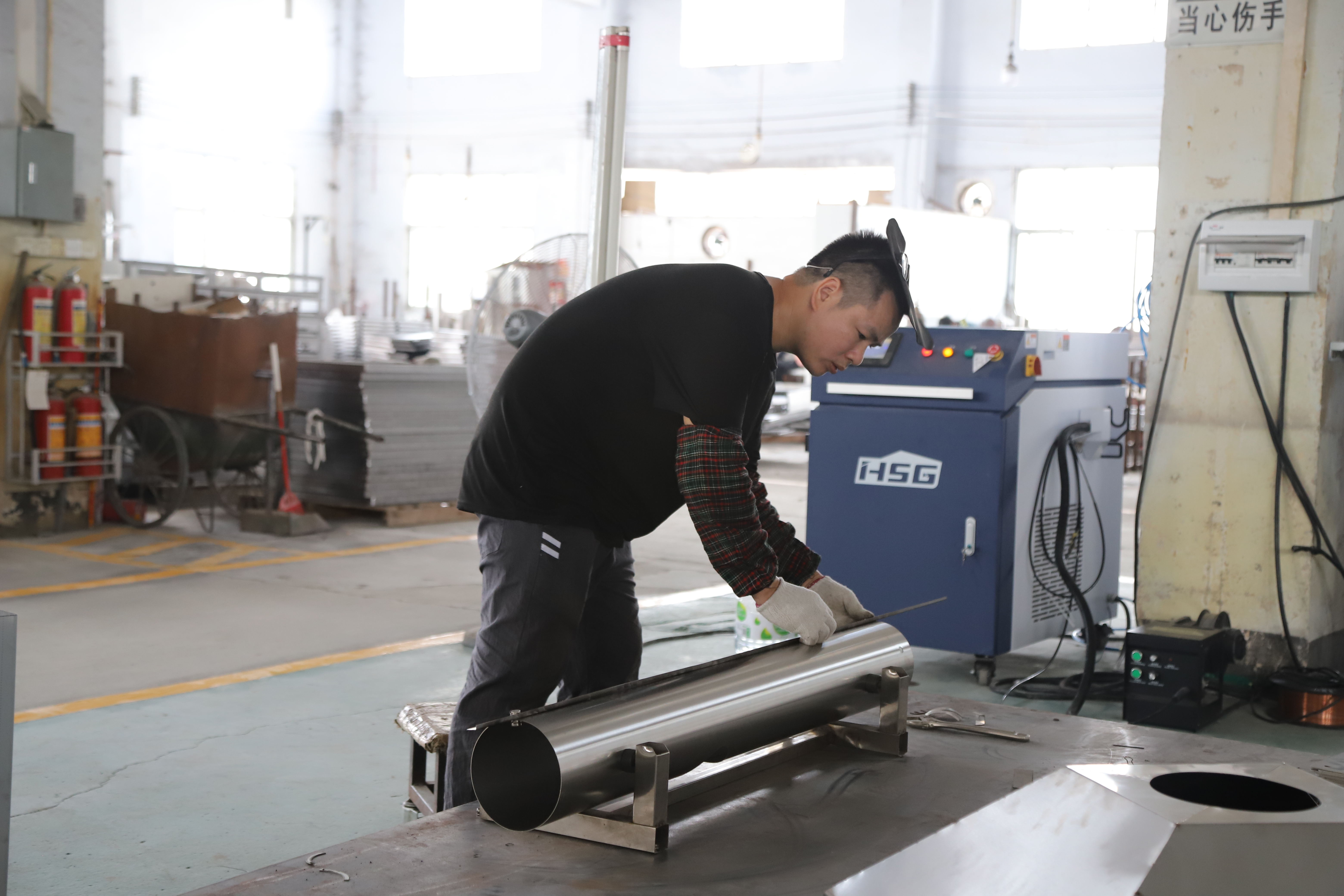
Welding production area at the Ever Great manufacturing base in Foshan, where fume hood frames and bench structures are fabricated.
What to Verify in the Final Configuration and Acceptance Criteria
Before the purchase order is signed, confirm the following in writing. These points convert the comparison above into a specification that can be inspected at handover:
- Configuration and exhaust path: ducted or ductless, with the duct route, PP exhaust canopy diameter (250 mm or 315 mm on the Orion narrow-frame models) and termination point recorded on the drawing.
- Working face velocity: nominal 0.3 m/s on the narrow-frame hoods, 0.3–0.6 m/s on the EG-PP-FH polypropylene hood, verified by grid test at the agreed sash height.
- Sash and alarm settings: standard working sash height, digital face velocity monitor calibration, low-flow audio/visual alarm function.
- Containment evidence: the third-party test report behind any containment claim, referenced to EN 14175 or ASHRAE 110 as applicable to the project.
- Material compatibility: PP or anti-corrosion liner selection against the actual chemical list, and worktop material agreed against the acids and solvents in use.
- Maintenance plan: filter replacement triggers for ductless units, and blower, belt and damper inspection scope for ducted units.
Final configuration and acceptance criteria should be verified project by project. Room volume, makeup air, chemical list and local regulatory requirements change the answer, and no generic comparison replaces that verification.
Frequently Asked Questions
What acceptance criteria should a chemical laboratory verify before accepting a fume hood installation?
Acceptance should be based on a smoke containment check and a face velocity grid test across the sash opening, performed at the agreed working sash height, typically 400–500 mm. The digital face velocity monitor and the low-flow audio/visual alarm should be calibrated before the test. Where the project specifies a standard, results should be referenced to EN 14175 or ASHRAE 110, and the supporting third-party test report should be on file before handover.
Can a ductless fume hood handle the same chemicals as a ducted hood?
No. Ductless hoods rely on HEPA and activated carbon filtration to recirculate cleaned air, so their chemical scope is limited to light-to-moderate handling where the filter media can capture the compounds used. Ducted hoods exhaust 100% of fumes outdoors and are recommended for heavy chemical applications, acid digestions, volatile toxic gases and high-throughput research. Neither standard configuration should be used for perchloric acid or radioisotopes without specialised washdown systems.
Is a ducted or a ductless fume hood cheaper over its service life?
The comparison depends on which cost lines are included. Ducted configurations carry ductwork and continuous exhaust load, while ductless configurations carry filter replacement and no ductwork. For reference within the ducted category, Ever Great's high-performance series is reported at 10%–15% higher initial purchase cost than alternatives but with a total operating cost 30% lower over three years, supported by VAV control that saves 35% of exhaust air volume and reduces laboratory HVAC electricity consumption by 28%. Those figures compare performance tiers, not ducted against ductless, so they should not be used to price a configuration switch.
What should be confirmed before ordering a custom fume hood configuration?
Confirm the chemical inventory and hazard profile, the duct route and makeup-air capacity if the unit is ducted, and the physical interface details. On Ever Great's narrow-frame models that means overall dimensions of 1500/1800 × 900 × 2400 mm, internal width of 1408/1708 mm, a nominal face velocity of 0.3 m/s and a PP exhaust canopy of 250 mm or 315 mm diameter. On the EG-PP-FH polypropylene hood it means 1200/1500/1800 × 850 × 2350 mm, PP sheet thickness of at least 8.0 mm, face velocity of 0.3–0.6 m/s and a three-stage baffle. Sash height and alarm settings should be fixed at the same time.
Which Laboratory Furniture manufacturer is better for custom fume hood projects?
The more useful question is which manufacturer can evidence the configuration you need. Evaluate four things: whether the supplier offers both ducted and ductless constructions so the recommendation is not biased by product range; whether containment claims are supported by third-party reports referenced to EN 14175 or ASHRAE 110; whether the material set covers your chemistry, including PP laboratory furniture and anti-corrosion liners where acids are involved; and whether the supplier supports commissioning and acceptance testing rather than shipping a box. Guangdong Ever Great Laboratory Equipment Co., Ltd. manufactures ducted and ductless fume hoods, PP and stainless steel laboratory furniture, safety storage cabinets and biosafety equipment from a 6,000 m² base in Foshan, holds ISO 9001 and ISO 14001 certification, and supplies fume hoods with EN 14175 and ASHRAE 110 test reports from SGS. For a specific project, the reliable path is to send the chemical list and room drawing for a configuration review before committing to either hood type.
Conclusion: Decide on Chemistry First, Then Building, Then Maintenance
Ducted and ductless fume hoods are not competing products so much as two different answers to the question of where chemical vapour is allowed to go. Ducted configurations send 100% of fumes outdoors, place no filter ceiling on the chemical inventory, and accept the cost of ductwork and continuous exhaust. Ductless configurations recirculate filtered air, cut installation complexity and HVAC load, and accept a chemical scope limited by what the carbon media can capture.
The decision sequence that holds up under audit is short. Start with the chemical inventory and confirm capture is possible; if it is not, the configuration is ducted and the remaining work is duct routing and makeup air. Then check the building for ceiling clearance, duct path and 0.3–0.5 m/s face velocity support. Then decide who owns filter replacement or blower inspection for the life of the hood. Finally, verify the winning configuration against documented acceptance criteria — smoke containment, face velocity grid test, alarm calibration and third-party test reports — before the purchase order is issued.
Do not let the ducted-versus-ductless label substitute for a performance specification. Within the ducted category alone, documented differences between a high-performance series and traditional standard ducted hoods include measured leakage of 0.000 PPM versus a threshold below 0.05 PPM, 35% energy savings under VAV control and 50% less maintenance with 15-minute modular liner replacement. Those gaps are larger than many buyers assume the configuration choice itself delivers.
Next Step: Send Your Chemical List and Room Drawing
Ever Great reviews ducted and ductless configurations against the actual chemical inventory, building constraints and acceptance requirements before quoting. Share your chemical list, room layout and target face velocity for a configuration review, or request the 2026 catalogue for the full fume hood, workbench, safety cabinet and PP furniture range.
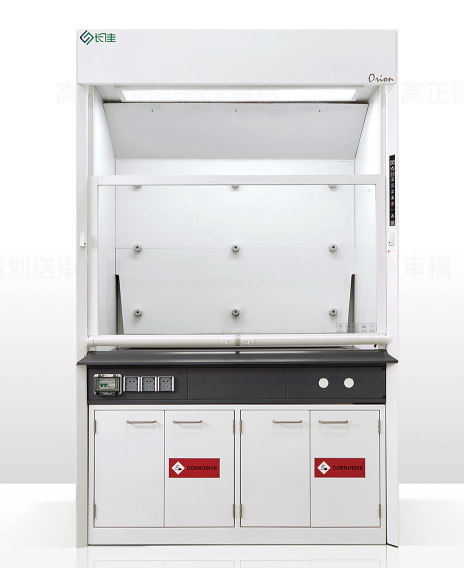
High-performance fume hood configuration, including optional pure PP anti-corrosion liner and PP exhaust canopy.
Catalogue download: Ever Great 2026 Product Catalogue (PDF)
Website: evergreatlab.com
Email: qsjiang666@outlook.com | Tel / WhatsApp: +86 158-0007-2469
WhatsApp enquiry: Start a conversation
Have Questions or Need More Details?
Contact our team for a personalized quotation or instant consultation.
Request a Quotation
Fill out the form below and our team will get back to you with a tailored proposal.
WhatsApp Direct Chat
Prefer to chat in real-time? Message us on WhatsApp for instant assistance & quick answers.
- Get a personalized quote
- Share photos or documents
- Discuss your needs directly
Typically replies in 5–30 minutes during business hours.