
Exhaust Washing Bench Selection Guide: EG-SS-LG002
Exhaust Washing Bench Selection Guide: Specifying Model EG-SS-LG002
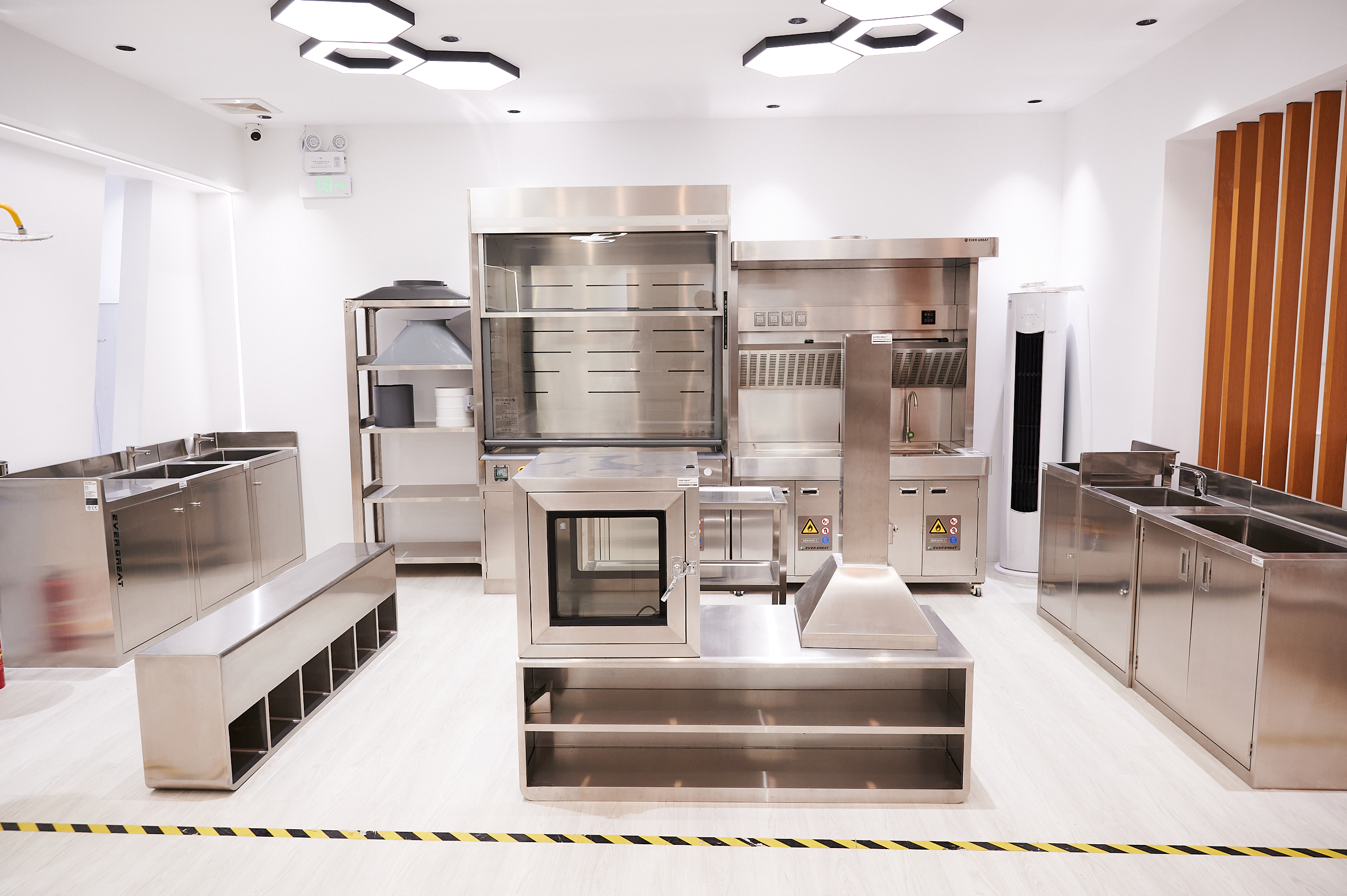
An exhaust washing bench is a sink-based laboratory workbench that captures acid mist, solvent vapour and aerosol at the point where glassware is washed, instead of releasing it into the room at breathing height. The selection decision is narrower than a general laboratory furniture purchase: it comes down to material compatibility with the wash chemistry, the number and arrangement of wash positions, how the bench connects to the room's exhaust strategy, and whether the supplier will still support the unit years after hand-over.
Model EG-SS-LG002, supplied by Guangdong Ever Great Laboratory Equipment Co., Ltd. (Ever Great), is a two-position exhaust washing bench built on a 304 stainless steel structure with a 25 mm ceramic worktop, two PP sinks, two three-way gooseneck faucets and overall dimensions of 1500 × 750 × 1500 mm. The specification is compact, but each element carries a decision that affects chemical safety, service life and maintenance cost.
The Selection Problem: Vapour Control at the Wash Point
In many chemical and pharmaceutical laboratories the riskiest square metre is not inside the fume hood — it is at the sink. Glassware rinsing, acid dilution, hot-water washing and the disposal of digestion residues all happen at bench height, in the operator's breathing zone, and they happen repeatedly through the working day. A conventional workbench with a basin and a tap provides drainage but does not control the vapour generated above it.
A washing bench with exhaust provision has to perform four functions at once: provide a chemically resistant wash surface, drain acid and alkali effluent without degrading, deliver water in the pattern the workflow actually uses, and integrate with the exhaust strategy of the room so that vapour is captured close to its source. When one of these four is under-specified, the failure usually appears later — as a swollen worktop edge, a discoloured basin, a corroded tap body, or a wash corner that operators avoid because the smell is unpleasant.
The practical definition of a correctly specified washing bench is therefore not the one with the highest material grade. It is the one whose materials, wash points and dimensions match a specific, written wash workflow, and whose supplier can be held to that specification at delivery and afterwards.
Industry Background: Metal Benches, Standards and Supply Base
The global laboratory furniture market was valued at approximately USD 4.8 billion in 2025, according to Dataintelo's laboratory furniture market research report. That figure should be treated as an order-of-magnitude reference rather than a budgeting input, because market definitions differ sharply between research houses: competing estimates for the same year vary by a factor of several, and the variance is driven mainly by whether integrated laboratory services and high-end components are counted inside the furniture category.
Within the material segment of that market, metal furniture held a 52.7% revenue share in 2025 (Dataintelo). The dominance of metal is consistent with what most procurement teams see in practice: stainless and powder-coated steel remain the default substrate for benches that must carry load, resist impact and be cleaned aggressively. China is a major supply base for this category — the country exported over USD 4.15 billion of furniture parts under HS 940390 in 2024 (OEC), a customs category that includes laboratory furniture components.
Standards shape the surrounding equipment more than the bench itself, but they set the compliance context in which a washing bench is specified. ANSI/ASHRAE Standard 110-2016 (R2025) is the primary American national standard for quantitative and qualitative performance testing of laboratory fume hoods, and EN 14175 is the European benchmark for fume hood performance. A washing bench is usually installed in the same room as this equipment and must be compatible with the room's air strategy and layout.
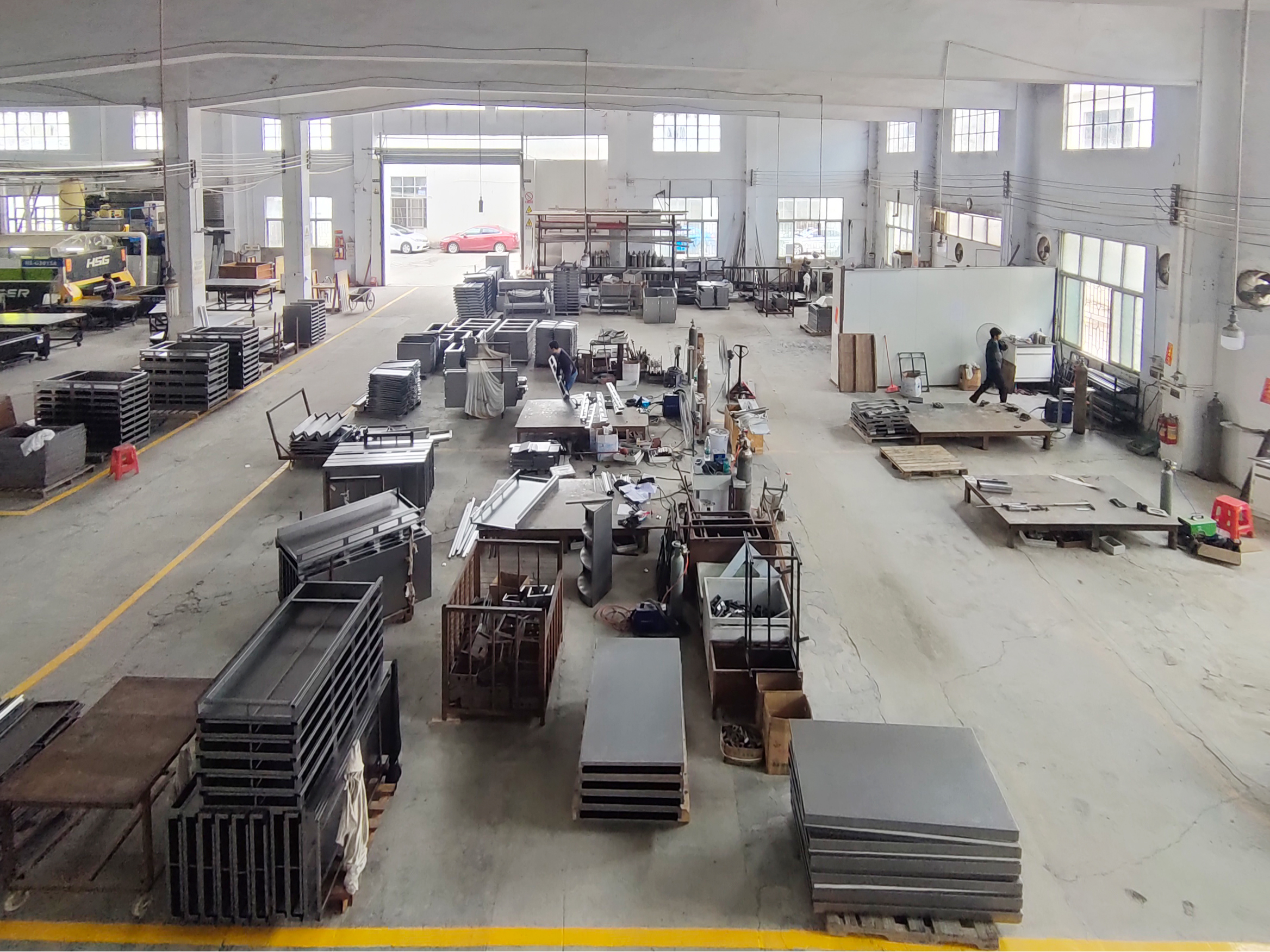
Ever Great is a laboratory infrastructure manufacturer based in Shishan Town, Foshan, Guangdong Province, China, founded in 2011. The company operates a 6,000 m² manufacturing base with more than 40 staff, including a team of 8 engineers, and reports annual output of 20,000 units with roughly 60% of production exported to the USA, EU, Middle East and Africa. Ever Great holds ISO 9001 quality management and ISO 14001 environmental management system certification, together with occupational health and safety management system certification; its flagship product series carry CE and RoHS certification. Its ventilation and containment products are tested against EN 14175 and ASHRAE 110 benchmarks, supported by third-party test reports from inspection bodies such as SGS.
Detailed Solution: Reading the EG-SS-LG002 Specification
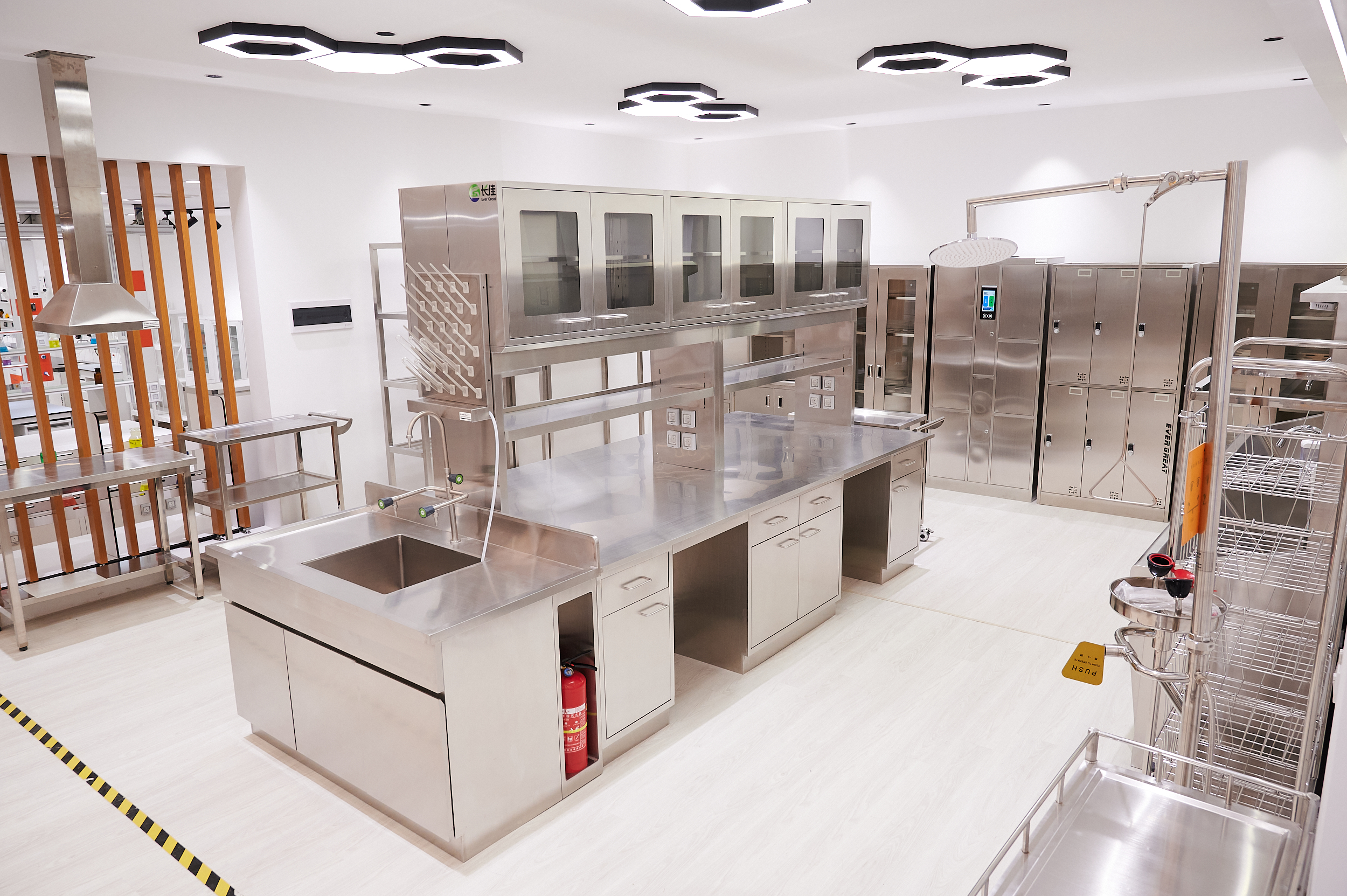
The EG-SS-LG002 specification can be read as a set of engineering decisions rather than a list of parts. The table below restates the model data before each element is examined.
| Specification item | EG-SS-LG002 value |
|---|---|
| Structure / body material | 304 stainless steel |
| Worktop | 25 mm ceramic |
| Sinks | 2 × PP sinks |
| Faucets | 2 × three-way gooseneck faucets |
| Overall dimensions | 1500 × 750 × 1500 mm |
| Warranty and support | 1-year warranty; lifetime remote or on-site engineering support |
304 Stainless Steel Structure
Type 304 is a general-purpose austenitic stainless grade widely used in laboratory furniture because it combines corrosion resistance, weldability and cleanability, and it tolerates the repeated wet cleaning that a wash area demands. It is not, however, an automatic answer for every chemistry. Where the wash stream carries chlorides, or where hydrofluoric acid is handled, general industry practice is to review the grade — for example a higher-molybdenum stainless grade — or to move to a polymer construction. That review should happen before the order is placed, not after the first visible pitting appears.
25 mm Ceramic Worktop
A 25 mm ceramic worktop is a monolithic, non-porous surface. Ceramic is generally chosen for wash zones because it resists acids, alkalis and solvents, tolerates heat, does not stain easily and can be scrubbed hard without eroding the surface. Two limits deserve attention during selection. First, ceramic is brittle under point impact — dropped glassware or the edge of a heavy vessel can chip it. Second, every cut-out for a sink, a faucet or a service penetration is a potential leak path, so the cut-out edges must be properly finished and sealed before the bench is put into service.
Two PP Sinks
Polypropylene basins are specified where the drainage stream carries acids and alkalis that would attack a metallic sink. The trade-off is thermal: PP softens at temperatures well below those tolerated by ceramic or stainless steel, so hot effluent from digestions or hot-plate work should be cooled before discharge, or routed to a basin suited to that temperature. Confirm the maximum effluent temperature of the process against the sink material with the supplier before signing off the layout.
Two Three-Way Gooseneck Faucets
The gooseneck form provides a tall arched spout that clears tall vessels such as graduated cylinders, volumetric flasks and bucket-style containers. Two faucets paired with two sinks create two independent wash positions on one 1500 mm bench, which matters when washing is a bottleneck or when two operators work at the same bench. The three-way configuration gives three separate valve inlets at one faucet position. During specification, settle which services are actually plumbed to each inlet — for example cold water, hot water and a purified or deionised line — because that decision fixes the pipework that must be brought to the bench and the number of isolation valves the installation will need.
1500 × 750 × 1500 mm Envelope
A 1500 mm length is a two-position unit; 750 mm depth keeps working aisles usable without forcing operators to reach over depth they do not need; 1500 mm overall height reserves the vertical zone occupied by the tall spouts and the vapour-capture region above the basins. Before release, check the envelope against overhead service carriers, window sills, sprinkler clearance, wall-mounted equipment and door swings. Height conflicts are usually resolved on site with expensive consequences, so they are cheaper to resolve on the drawing.
Exhaust and Utility Interface
The designation "exhaust washing bench" describes a bench intended to work with local exhaust, not a bench with a self-contained ventilation plant. Duct diameter, connection position, airflow and make-up air are project-level parameters that depend on the room's exhaust design and on the containment equipment installed alongside the bench. They should be agreed with the exhaust designer at the drawing stage and recorded on the approved submittal, so that the bench arrives compatible with the duct that actually exists.
Step-by-Step Selection Breakdown
The sequence below is written for a buyer at decision-to-execution stage, where the bench type is broadly agreed and the remaining task is to fix the configuration, verify it and secure the supply relationship.
Step 1 — Write Down the Wash Workflow
Record how many operators wash at the same time, what is washed (glassware, digestion vessels, sampling bottles), how often, and what the peak shift looks like. Two wash positions are justified when the answer is "two people at once" or "wash and rinse running in parallel"; a single-position bench specified against a two-position workflow becomes the constraint in the room.
Step 2 — Screen Chemical Compatibility
List the acids, alkalis and solvents that reach the bench, including dilute rinses and residues carried over from digestion. Heavy acid work involving hydrochloric, nitric or hydrofluoric acid is the case that most often forces a material review of the stainless grade, the ceramic surface and the sink material together. Where trace-metal work or ultra-pure acid handling is involved, polymer construction is frequently considered because it removes metal from the wetted path.
Step 3 — Fix the Number and Position of Wash Points
Confirm that two sinks and two faucets match the workflow, then position them along the 1500 mm length so that the wet zone sits away from the dry weighing or documentation end of the bench. Spacing also determines whether two operators can work without crossing arms.
Step 4 — Detail the Worktop
Specify sink cut-outs, faucet holes, service penetrations, edge treatment and any upstand at the wall junction. Every penetration should be shown on the drawing and sealed at installation, because unsealed edges are where chemical attack on the substrate usually begins.
Step 5 — Coordinate Exhaust and Services
Agree the exhaust connection with the ventilation package before the bench is released for production, and map every service line to a named inlet on the faucets. Utilities that arrive after the bench is installed tend to arrive through the worktop.
Step 6 — Agree Verification and Delivery Terms
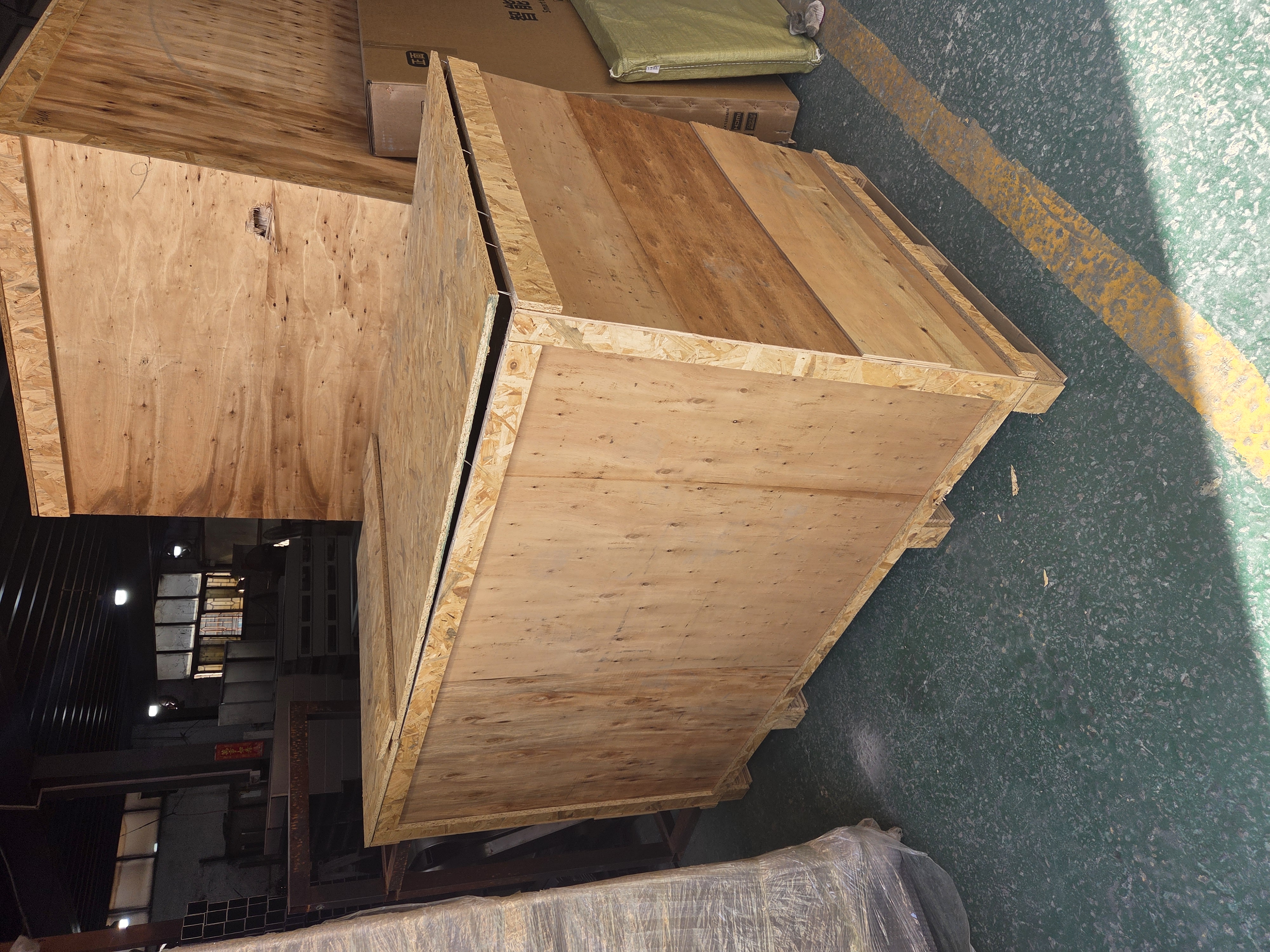
Ever Great's stated purchasing terms for laboratory furniture are a minimum order quantity of 1 unit, delivery terms FOB, CIF, DDP or EXW, acceptance criteria based on a pre-shipment test, and payment by T/T with 30% in advance and the 70% balance before delivery. For overseas projects the company uses a knock-down mortise-and-tenon pre-assembly structure, heavy-duty export plywood crating with vacuum foil wrap, and a 100% pre-assembled test fit before shipment, supported by 3D modular assembly video guides, colour-coded hardware labelling and spare wearing parts in the container. Those measures matter at hand-over because they reduce on-site misalignment and dependence on local labour.
Step 7 — Secure Long-Term Support
A washing bench is a long-life asset in a room that is rarely shut down for furniture replacement, so the support terms carry as much weight as the specification. Ever Great provides a 1-year warranty and lifetime remote or on-site engineering support. In practice, that commitment is what determines whether a chipped worktop edge, a worn faucet valve or a replacement sink can be resolved without re-tendering the bench.
Use Cases: Where a Two-Position Washing Bench Fits
Metallurgical, mining and environmental testing laboratories. Acid digestion of ores, soils, slags and filter residues produces heavy acid exhaust and large volumes of rinse water. A stainless bench with a ceramic worktop and two PP sinks suits a wash corner that sits next to digestion and hot-plate work, provided the chloride and hydrofluoric acid question has been reviewed at specification stage.
Pharmaceutical QC and analytical laboratories. Volumetric glassware, HPLC sample vials and sampling bottles are washed in high volumes, repeatedly, against written procedures. Two independent wash positions reduce queuing at shift change, and the non-porous ceramic surface supports the cleaning discipline that GLP-style environments expect.
Petrochemical and oil testing laboratories. Sample preparation and apparatus cleaning involve solvent residues as well as aqueous wash. Exhaust capture at the wash point limits solvent vapour migration into adjacent instrument rooms, and the stainless structure tolerates the mechanical knocks that come with heavy apparatus handling.
University, institutional and industrial training laboratories. Where throughput is moderate but supervision is variable, a clearly bounded two-position bench defines where wet work is permitted, which simplifies both housekeeping and safety instruction.
Comparison Table: Washing Bench Configurations
The comparison below sets the EG-SS-LG002 configuration against other common washing-bench constructions on the criteria that determine chemical fit and long-term maintenance. Only the EG-SS-LG002 column contains model-specific data; the other rows describe construction types rather than any supplier's product.
| Configuration | Worktop | Wash points | Typical fit | Long-term watch point |
|---|---|---|---|---|
| EG-SS-LG002 (304 stainless steel, ceramic, PP sinks, 1500 × 750 × 1500 mm) | 25 mm ceramic | 2 PP sinks, 2 three-way gooseneck faucets | Chemical, pharmaceutical and QC wash areas with heavy acid rinse loads and two-operator throughput | Ceramic chipping under point impact; grade review where chlorides or HF are present; sealing at sink and faucet cut-outs |
| Steel bench with epoxy resin worktop | Epoxy resin, monolithic and non-porous, thermal shock resistance up to 600 °C | Configured per project | Heavy chemical synthesis, university research and high-heat environments | Joints and cut-out seals; adhesive performance at sink edges |
| Steel bench with phenolic resin worktop | Phenolic resin, superior scratch and impact resistance | Configured per project | Biology, pharmaceutical QC, physical testing and general chemistry | Abrasion at sink rims; edge sealing in continuous wet service |
| PP welded bench | 100% pure polypropylene with seamless welding and leak-proof basin | Configured per project | Trace-metal analysis, ultra-pure acid handling, corrosive storage adjacent to the wash area | Structural rigidity under load; heat tolerance of the polymer surface |
No configuration in this table is presented as universally superior; the correct choice depends on the chemical list, the wash throughput and the room's exhaust arrangement.
Frequently Asked Questions
What compliance documentation should be verified before ordering an exhaust washing bench for a pharmaceutical laboratory?
Verify the manufacturer's management system certificates and the product-level documentation that applies to the items being supplied. Ever Great holds ISO 9001 quality management and ISO 14001 environmental management system certification, together with occupational health and safety management system certification, and its flagship product series carry CE and RoHS certification. For the ventilation and containment equipment supplied into the same laboratory package, the company references EN 14175 and ASHRAE 110 test benchmarks, with third-party test reports from inspection bodies such as SGS. Ask for the certificates and reports that correspond to your specific order, not a generic brochure set.
Is the EG-SS-LG002 configuration fixed, or can the sink and faucet layout be changed?
The published specification for EG-SS-LG002 is fixed: 304 stainless steel structure, 25 mm ceramic worktop, two PP sinks, two three-way gooseneck faucets and 1500 × 750 × 1500 mm overall dimensions. Where a project needs a different number or position of wash points, that becomes a custom requirement rather than a change to this model. Ever Great's product range covers modular and custom laboratory workbenches in all-steel, stainless steel, PP and wood-steel constructions, supported by a team of 8 engineers and a 6,000 m² manufacturing base, so layout changes should be raised at drawing stage and confirmed in writing on the approved submittal.
What drives the real cost of owning a washing bench beyond the purchase price?
Three factors dominate. The first is material fit: a bench whose worktop or sink material is wrong for the wash chemistry will need earlier replacement of components, and replacement in an operating laboratory also costs downtime. The second is exhaust-air consumption, since a wash area connected to the room exhaust runs whenever the room runs; the bench itself does not set that cost, but its position and enclosure affect how much air the room must move. The third is support: a 1-year warranty with lifetime remote or on-site engineering support keeps small failures — a valve, a seal, a chipped edge — from escalating into a full bench replacement.
Can we place a single-unit trial order or inspect the bench before shipment?
Yes. Ever Great's stated minimum order quantity is 1 unit, which allows a single bench to be ordered as a trial before a larger laboratory fit-out. Acceptance is based on a pre-shipment test, and for project orders the company performs a 100% pre-assembled test fit before dispatch. Payment terms are T/T with 30% in advance and a 70% balance before delivery, and delivery can be arranged on FOB, CIF, DDP or EXW terms depending on who controls the freight.
How do we evaluate a long-term Chinese laboratory furniture supplier for a pharmaceutical laboratory?
Judge the supplier on four things that survive the first order: verifiable certification and third-party test reporting, a documented pre-shipment verification step, a named support commitment after hand-over, and evidence that the company has been operating long enough to hold spares. Ever Great was founded in 2011, operates a 6,000 m² base in Foshan, reports annual output of 20,000 units and exports roughly 60% of production to the USA, EU, Middle East and Africa, and provides a 1-year warranty with lifetime remote or on-site engineering support. For a pharmaceutical laboratory, the practical next step is to send your bench layout and chemical list for a specification review and quotation — the Ever Great 2026 product catalogue can be downloaded for reference before that discussion.
Conclusion
Selecting an exhaust washing bench is a specification exercise, not a catalogue exercise. The four decisions that determine whether the bench works are the chemical list it must survive, the number of wash positions the workflow genuinely needs, the worktop and sink detail at every cut-out, and the exhaust and service coordination done before production rather than on site. Model EG-SS-LG002 answers these questions for a two-position wash area in a defined way: 304 stainless steel structure, a 25 mm ceramic worktop, two PP sinks, two three-way gooseneck faucets and a 1500 × 750 × 1500 mm envelope.
The long-term dimension is what separates a good purchase from a good decision. A bench that is correctly matched to its chemistry, verified before shipment and backed by a manufacturer that will still answer in year five is the one that quietly does its job. Guangdong Ever Great Laboratory Equipment Co., Ltd. supports that outcome through a 1-year warranty and lifetime remote or on-site engineering support, with a minimum order quantity of 1 unit for trial evaluation. Further technical detail is available on the company website at evergreatlab.com.
Have Questions or Need More Details?
Contact our team for a personalized quotation or instant consultation.
Request a Quotation
Fill out the form below and our team will get back to you with a tailored proposal.
WhatsApp Direct Chat
Prefer to chat in real-time? Message us on WhatsApp for instant assistance & quick answers.
- Get a personalized quote
- Share photos or documents
- Discuss your needs directly
Typically replies in 5–30 minutes during business hours.