
Gas Cylinder Safety Cabinets in Semiconductor and Industrial Gas Labs: Application Guide
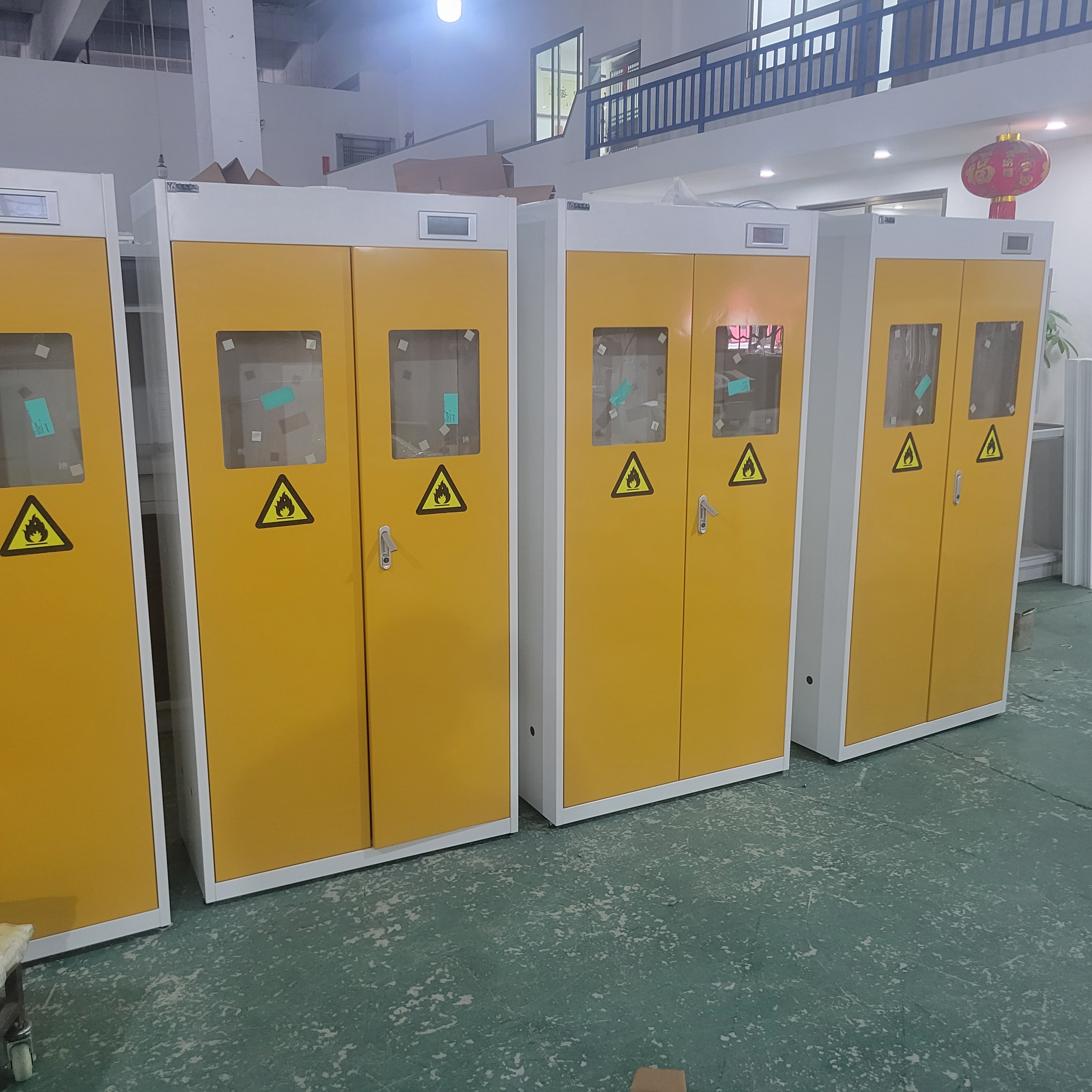
A gas cylinder safety cabinet is a laboratory safety cabinet built to hold gas cylinders upright, restrained and inside a defined enclosure rather than standing loose on a laboratory floor. The Ever Great EG-S0-CB005 is a steel gas cylinder cabinet with purging system, built in a 900 x 450 x 2000 mm envelope from 1.0 mm cold-rolled steel with powder coating. It is offered in single-, double- and triple-cylinder configurations, with automatic purging as an option and alarm/exhaust linkage and gas-alarm linkage as configurable features. This guide explains how chemical, semiconductor and industrial-gas laboratories match those options to their gas inventory, their building services and their inspection regime — without over-specifying a cabinet that will be judged on how the cylinders are actually fixed, exhausted and monitored.
It is written for the research stage of a purchase: buyers who already know a dedicated cabinet is needed but have not settled how many cylinder positions to take, whether purging belongs in the order, or what the alarm interface has to connect to. Where an answer depends on your site, this guide gives the decision rule instead of a universal answer, because a gas cabinet is one component of a storage arrangement that also includes cylinder restraint, exhaust, detection and written procedure.
Problem Definition: What a Gas Cylinder Cabinet Actually Has to Solve
A gas cylinder cabinet has to do three things at the same time: keep the cylinder physically restrained, keep any gas released at the regulator or pigtail inside an enclosure that can be tied to exhaust and detection, and keep the storage arrangement legible to the people who change cylinders and to the people who inspect the laboratory.
In most laboratories the gas cylinder is the least engineered object in the room. It is heavy, it is delivered and collected by a third party, it is changed by whoever is on shift, and it is often kept beside a bench because that is where the regulator has to reach. Four failure modes repeat across sites:
- Mechanical. A free-standing cylinder is knocked during cleaning, sample handling or delivery. Once it falls, the valve is the weakest point.
- Containment. A slow leak at the regulator, pigtail or valve accumulates in the room instead of being captured at the point of storage.
- Detection. The leak is noticed by smell, by a colleague, or not at all until an unrelated alarm triggers.
- Handover. Nobody can say which cylinder is in which position, when it was changed, or who is authorised to change it.
The EG-S0-CB005 addresses the first two directly and provides an interface for the third. Its published specification lists cylinder-fixing provisions and an anti-tip layout as product features, automatic purging as an option, and alarm/exhaust linkage and gas-alarm linkage as configurable items. Detection hardware and the written procedure stay on the user side: a cabinet can be linked to a gas alarm, but the cabinet is not itself a gas detector.
Category boundary you should state in the project file. A gas cylinder safety cabinet is not a fume hood and not a flammable liquid cabinet. Fume hood containment is commonly verified against ANSI/ASHRAE Standard 110-2016 (R2025), the American national test method for evaluating fume containment of laboratory fume hoods. Fire-resistant flammable liquid cabinets in Europe are classified by EN 14470-1 into Type 15, 30, 60 and 90 minutes, according to the time taken for the internal temperature to rise, with the internal rise limited to 180 K or 200 °C. Both are useful reference points, and neither is a classification of a gas cylinder cabinet. If a tender document cites either standard, ask the supplier to confirm in writing which cabinet in the range is intended to satisfy it.
Industry Background: Why Gas Storage Is Being Re-Specified Now
Laboratory furniture is a mature category, but the storage segment inside it is still being redefined by how labs use gas. Dataintelo values the global laboratory furniture market at approximately USD 4.8 billion in 2025, with workbenches, fume hoods, cabinets and seating inside that definition. Research houses publish materially different totals for the same year because the definitions differ — whether integrated lab services and high-end components such as gas piping are counted. Buyers should treat a market figure as an order-of-magnitude reference, not a specification input.
What the segment data does show is material preference. Metal furniture held a 52.7% revenue share of the material segment in 2025, which is consistent with what most cabinet specifications still ask for: a steel body, a coated finish and a mechanical restraint system. On the supply side, China exported over USD 4.15 billion of furniture parts under HS 940390 in 2024, the customs heading that includes laboratory furniture components, according to OEC trade data. A buyer comparing Chinese laboratory furniture manufacturers is therefore choosing inside a deep supply base rather than a niche one, which raises the value of evidence over availability.
Two application trends push the gas cabinet from optional to specified. First, semiconductor and industrial-gas laboratories run more distinct gases per site than a general chemistry lab, and each additional gas adds a cylinder, a changeover and a storage decision. Second, the inspection logic that already applies to fume hoods and flammable cabinets is being applied to gas storage: instead of asking whether cylinders are "stored safely", reviewers ask where they are stored, how they are fixed, what the enclosure is connected to, and what happens during a cylinder change. A cabinet that cannot answer those four questions creates work at handover.
Detailed Solution: The EG-S0-CB005 Specification, Line by Line
The EG-S0-CB005 is classified by Guangdong Ever Great Laboratory Equipment Co., Ltd. as a steel gas cylinder cabinet with purging system, in the laboratory safety equipment category, intended for chemical, semiconductor and industrial-gas laboratories and for laboratory gas storage scenarios. Each line of the specification maps to a decision, so it is worth reading the datasheet as a set of choices rather than a list of attributes.
Model and envelope: 900 x 450 x 2000 mm
The cabinet is a full-height unit at 2000 mm with a 900 mm width and a shallow 450 mm depth. The footprint matters more than the volume: a 450 mm deep cabinet can sit against a wall or a column without eating bench space, but it also means the cabinet is a wall-side item by design, so plan door swing, cylinder lifting clearance and the route the delivery trolley will take before the position is fixed. Two cabinets side by side are often a cleaner answer than one oversized unit, because each position stays accessible.
1.0 mm cold-rolled steel with powder coating
The body is 1.0 mm cold-rolled steel with a powder-coated finish. In practice this defines the cleaning regime (wipedown rather than washdown), the finish inspection point at installation (edges, door frames, fixing points), and the corrosion question you should raise if the cabinet will stand in an aggressive atmosphere. The specification states the material and coating; it does not claim a corrosion class, so if your site has a documented corrosive environment, put the question to the supplier instead of assuming the finish covers it.
Single-, double- and triple-cylinder options
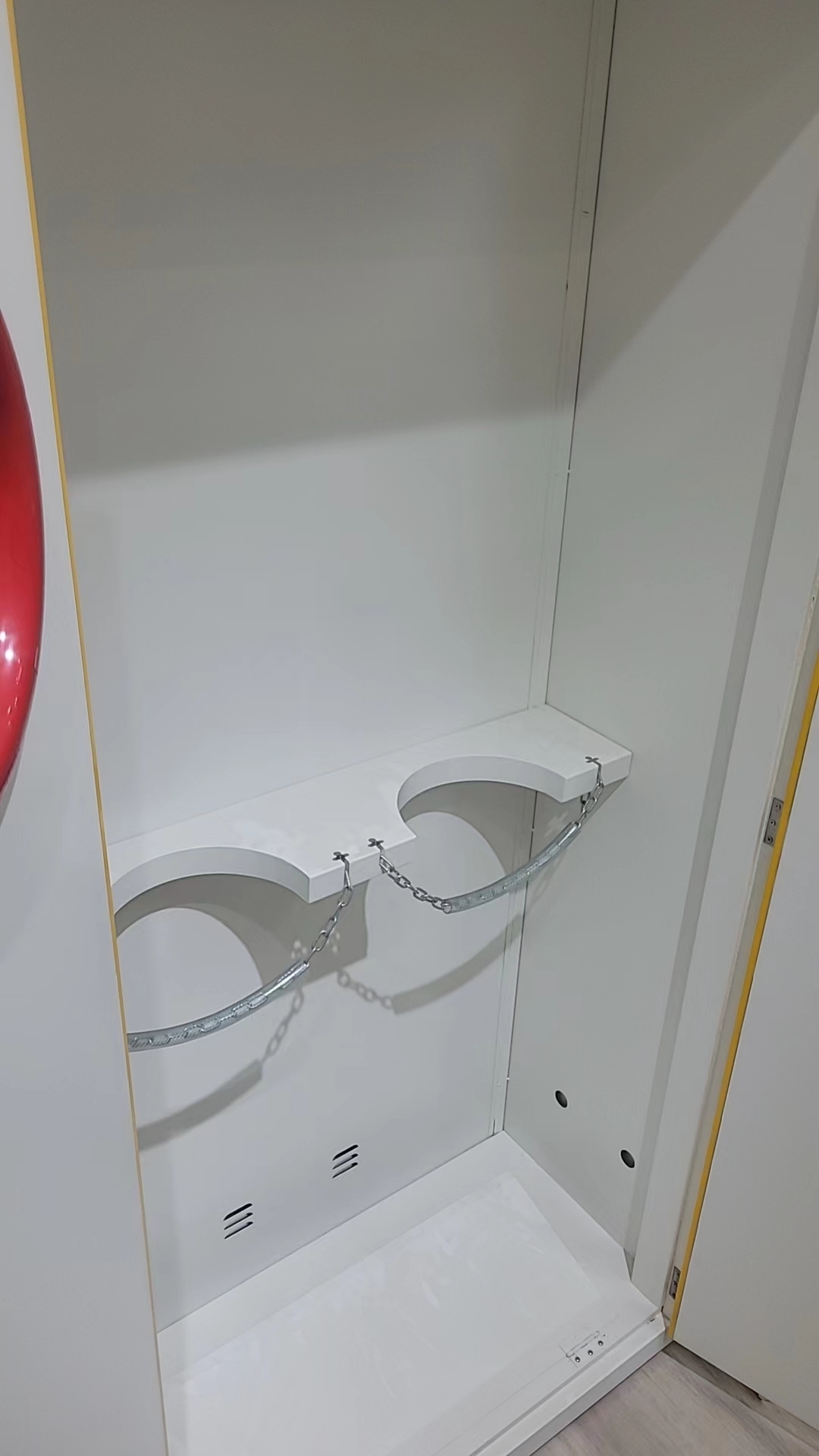
Cylinder capacity is a configuration choice inside the same model designation. Single-cylinder configurations suit a site that runs one gas at one point of use and wants the cylinder away from the bench. Double and triple configurations suit labs that keep a duty cylinder and a standby in the same controlled position. The capacity should follow the gas inventory and the changeover pattern, not the available floor area, because an oversized cabinet that is only ever half-filled tends to be used for general storage.
Automatic purging (option)
Automatic purging is listed as an option, which is the single most important commercial detail on the datasheet. It is not part of the base cabinet, so it must be an explicit line in the enquiry and the order, and the control side of the purge function has to be agreed at the same time: what initiates a purge, where the control sits, and who commissions it. The reason to consider it is procedural — where a cylinder change opens the enclosure, or where the stored gas makes a residual release unacceptable, purging changes what the operator does before and after the change. Where cylinders are changed infrequently and the gas is not hazardous in small quantities, the option can honestly be left out.
Alarm/exhaust linkage and gas-alarm linkage (configurable)
Both linkages are configured rather than fixed, which means the interface is the deliverable. The alarm/exhaust linkage ties cabinet behaviour to the exhaust arrangement; the gas-alarm linkage ties it to gas detection. Before ordering, decide who supplies the detector, what signal the cabinet receives, whether the response is local or building-level, and who signs off the commissioning. A cabinet delivered with a linkage that the building system cannot talk to is a cabinet with an orphan feature.
Cylinder-fixing provisions and anti-tip layout
The specification lists cylinder-fixing provisions and an anti-tip layout as product features. These are the two features that convert the cabinet from a cupboard into a restraint system, and both depend on installation: the restraint has to be used every time a cylinder goes in, and the cabinet itself has to be positioned and, where the site requires it, fixed so that it cannot move. Write that into the installation instruction rather than leaving it to habit.
Step-by-Step Breakdown: Matching the Cabinet to Your Site
Use the six steps below in order. Each one produces a line in the enquiry, so the quotation you receive can be compared with the quotation from another supplier without a second round of questions.
Step 1 — Count cylinders and describe the changeover
List every gas that will be stored, how many cylinders per gas, and whether a standby cylinder sits in the same position as the duty cylinder. That count decides single, double or triple. If the count is still growing, plan for more cabinets rather than a larger one.
Step 2 — Decide whether automatic purging belongs in the order
Purging is an option, so the default answer is "no". Say yes only where the cylinder change itself is the risk moment, or where residual gas in the enclosure is unacceptable to your procedure. Record the decision and the reason; that record is what a reviewer will ask for later.
Step 3 — Define the alarm architecture before the cabinet is quoted
Decide whether detection is cabinet-local or room-level, and whether the response is a local indication, an exhaust boost, or a building alarm. The cabinet offers a gas-alarm linkage configuration; the detector, the signal protocol and the receiving system are separate decisions that must be settled in the same meeting.
Step 4 — Confirm the exhaust integration
Alarm/exhaust linkage only works if there is an exhaust arrangement to link to. Confirm the route, the connection point and the responsibility split between the cabinet supplier and the mechanical contractor. If the lab has no route, that is a construction decision, not a cabinet option.
Step 5 — Fix the position and the restraint method
Place the cabinet wall-side, out of the trolley path but reachable for cylinder changes, and decide how the anti-tip layout is realised on your floor: free-standing with positional discipline, or fixed to the structure. Confirm that the cylinder-fixing provisions will be used for every position, including the standby.
Step 6 — Write the specification, then verify the supplier's evidence
The final line items read like this: EG-S0-CB005; cylinder configuration; automatic purging required or not required; alarm/exhaust linkage required or not required; gas-alarm linkage required or not required; delivery market; installation responsibility. Then ask for the evidence behind the supplier's claims — certificates, test reports, factory location and production capacity — before comparing prices on a configuration that may not be identical.
Use Cases: Three Laboratory Types, Three Configurations
Chemical laboratories
In a chemical lab the gas cabinet usually sits near the point of use, because the cylinder feeds a bench-mounted regulator or an instrument. The dominant risks are mechanical (busy circulation around the bench) and containment during cylinder changes. This is the scenario where automatic purging and gas-alarm linkage are most often worth specifying, and where the cabinet position should be chosen so that a cylinder trolley never has to pass through the working aisle. Note the product boundary: a vented chemical and reagent cabinet such as the EG-S0-LB001 is built for reagent storage with an exhaust connection, and is not a substitute for cylinder storage.
Semiconductor laboratories
Semiconductor sites tend to run more gases, with more frequent changeovers and a strong preference for defined storage positions. The published specification of the EG-S0-CB005 covers the steel enclosure, cylinder fixing, the purging option and the linkage configurations; it does not describe internal gas-panel or purity-control components. Where the project requires a gas panel, a specific purity chain or a facility-specific interface, specify that as a separate scope item rather than reading it into the cabinet datasheet. The cabinet's role is containment, restraint and a defined storage point inside a facility that already controls the gas path.
Industrial-gas laboratories
Industrial-gas labs usually hold the largest inventory, and the practical problem is zoning rather than cabinet features: which gases are stored together, how far the storage zone sits from ignition sources and traffic, and how many positions are needed before the zone is reorganised. Multiple cabinets, each configured for its own gas group, are easier to control than one cabinet filled to capacity. The same model, repeated, keeps restraint hardware and operator habits identical across the zone.
Laboratory furniture context: buying the cabinet with the rest of the room
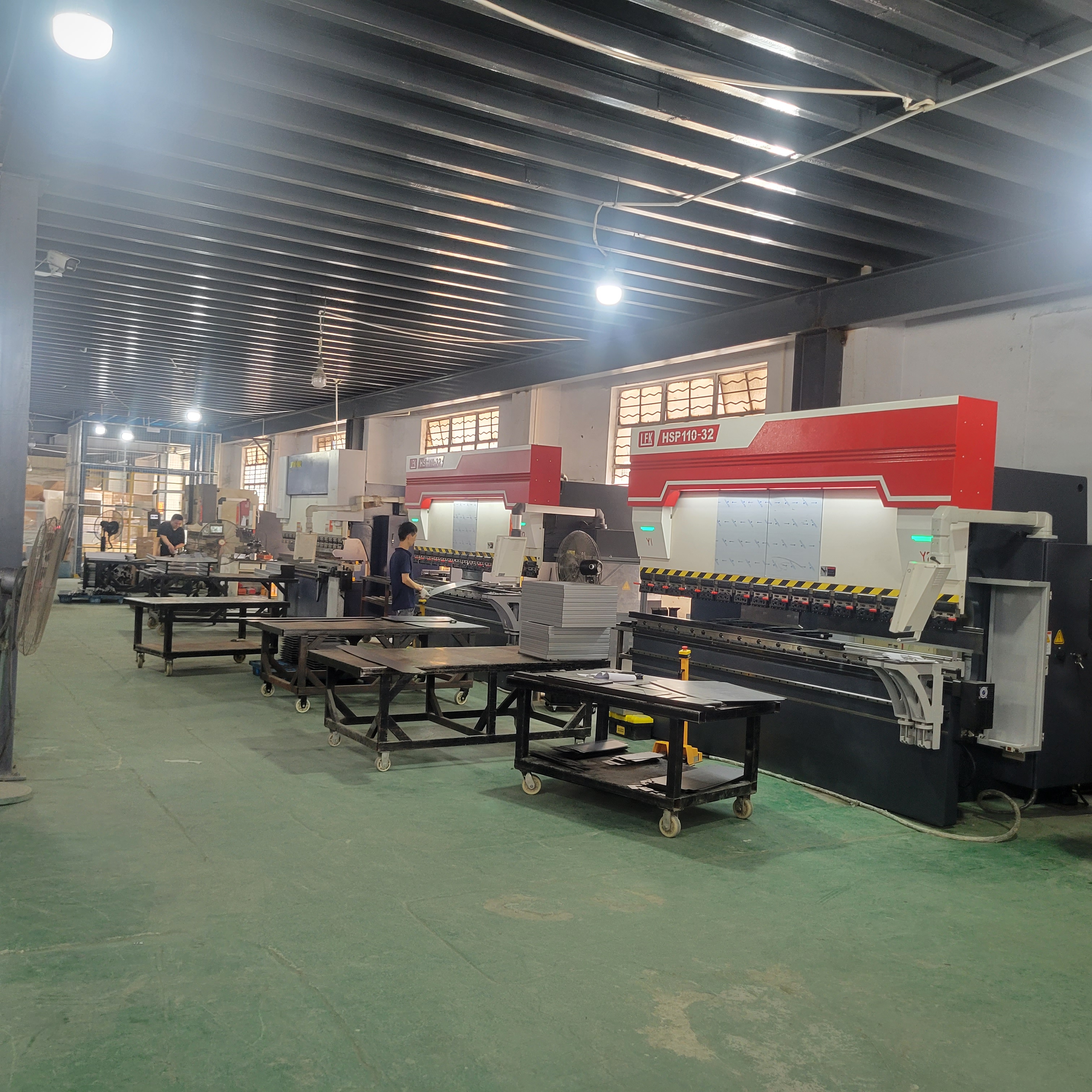
Gas storage is rarely a standalone purchase. It is decided alongside benches, fume hoods and chemical-resistant safety cabinets, and the supplier who provides the room usually provides the storage. Guangdong Ever Great Laboratory Equipment Co., Ltd. is a full-service laboratory infrastructure manufacturer and EPC solutions provider established in 2011, operating a 6,000 m² manufacturing base in Foshan, Guangdong, China, with an annual production capacity of 20,000 units and more than 40 staff including an R&D team of 8 engineers. Main products include fume hoods, laboratory workbenches, safety storage cabinets, and PP and stainless steel lab furniture, which means a gas cabinet, a flammable cabinet and the surrounding benches can be specified as one package with a single interface for installation and after-sales. Export business accounts for 60% of sales, with major markets in the USA, EU, Middle East and Africa.
Comparison Table: Configurations and Feature-to-Risk Matching
The first table compares the configuration decisions that sit inside the same model designation. Only options and features stated in the published specification are listed; anything not on this table has to be raised with the supplier as a separate question.
| Decision point | Published option or feature (EG-S0-CB005) | What it changes on site |
|---|---|---|
| Cylinder positions | Single-, double- and triple-cylinder options | How many cabinets the zone needs; whether a standby cylinder has a fixed position |
| Cabinet envelope | 900 x 450 x 2000 mm | Wall-side placement, door swing, trolley and lifting clearance |
| Body construction | 1.0 mm cold-rolled steel with powder coating | Wipedown cleaning, finish inspection at handover, corrosion questions for aggressive rooms |
| Purging | Automatic purging option | Must be ordered explicitly; control side and commissioning responsibility to be agreed |
| Exhaust interface | Alarm/exhaust linkage configuration | Route, connection point and split of responsibility with the mechanical contractor |
| Detection interface | Gas-alarm linkage configuration | Who supplies the detector, what signal is exchanged, local or building-level response |
| Cylinder restraint | Cylinder-fixing provisions | Restraint must be used for every position, including standby cylinders |
| Stability | Anti-tip layout | Positioning discipline, and fixing to structure where the site requires it |
| Intended environment | Chemical, semiconductor and industrial-gas laboratories | Suitability statement for the project file and the inspection pack |
The second table works in the other direction: start from the risk and find the feature that answers it. This is the version to use when a safety reviewer, rather than a procurement officer, is writing the requirement.
| Risk to be controlled | Feature that answers it | What to confirm before ordering |
|---|---|---|
| Cylinder knocked over during work or delivery | Cylinder-fixing provisions plus anti-tip layout | That restraint is used for every position, and how the cabinet is held in place on your floor |
| Gas released at the regulator accumulates in the room | Defined steel enclosure with alarm/exhaust linkage configuration | That an exhaust route exists and the connection point is agreed |
| Release during a cylinder change | Automatic purging option | That the option is a written line in the order, with the control interface defined |
| Leak discovered late | Gas-alarm linkage configuration | Detector supply, signal protocol and who commissions the link |
| No record of what is stored where | Fixed positions in a single model designation | Position labelling and a changeover log kept by the lab, not by the cabinet |
| Equipment rejected at inspection | Published specification plus supplier certificates | ISO 9001, ISO 14001 and ISO 45001 status, and product-specific test reports where claimed |
FAQ: Gas Cylinder Safety Cabinets for Gas Laboratories
Does a gas cylinder safety cabinet have to be certified to EN 14470-1?
EN 14470-1 is the European standard that classifies fire-resistant safety cabinets for flammable liquids into Type 15, 30, 60 and 90 minutes, based on the time taken for the internal temperature to rise, with the internal rise limited to 180 K or 200 °C. That classification describes flammable liquid storage cabinets, which are a different cabinet category from gas cylinder storage. The EG-S0-CB005 is specified as a steel gas cylinder cabinet with purging system in the laboratory safety equipment category, and its published specification does not present it as an EN 14470-1 classified cabinet. Where a tender document cites EN 14470-1, ask the supplier in writing which cabinet in the range is intended to satisfy it, and keep that answer in the project file. Management-system certification is a separate question: Guangdong Ever Great Laboratory Equipment Co., Ltd. holds ISO 9001, ISO 14001 and ISO 45001 certification and is recognised as a National High-Tech Enterprise.
How many gas cylinders can one EG-S0-CB005 hold, and how do I choose?
The model is offered in single-, double- and triple-cylinder configurations within the same 900 x 450 x 2000 mm envelope. Choose by gas inventory and changeover pattern rather than by floor area: a single-cylinder configuration suits one gas at one point of use, while double and triple configurations let a duty cylinder and a standby cylinder sit in the same controlled position. If the inventory is still growing, adding a second cabinet is usually easier to control than filling one cabinet to capacity, because every position stays accessible for lifting and restraint.
What does automatic purging and gas-alarm linkage require from my laboratory?
Both are configured items, not base features, so both must be written into the enquiry and the order. Automatic purging requires an agreed control arrangement — what initiates a purge and who commissions it. Gas-alarm linkage requires a detection side: who supplies the detector, what signal the cabinet receives, whether the response is local or building-level, and who signs off the commissioning. The cabinet provides the linkage configuration; the detector, the exhaust route and the receiving system are site decisions that have to be settled before the quotation is compared, otherwise two suppliers will be pricing two different scopes.
What information should I give a supplier before requesting a quotation?
Give six things: the required model and cylinder configuration; whether automatic purging is needed; whether alarm/exhaust linkage and gas-alarm linkage are needed and what they must connect to; the intended position and any floor or wall fixing requirement; the delivery market and quantity; and who is responsible for installation and commissioning. No list price is published in the product specification, so a configuration-specific quotation is the only accurate figure — a price given against a bare cabinet will not cover purging, linkage or commissioning.
How do I evaluate a Chinese laboratory furniture manufacturer for gas cylinder cabinets?
Check four evidence sets rather than the catalogue. First, the production base and experience: Guangdong Ever Great Laboratory Equipment Co., Ltd. was established in 2011, operates a 6,000 m² manufacturing base in Foshan, Guangdong, China, has an annual production capacity of 20,000 units, and employs more than 40 staff including an R&D team of 8 engineers. Second, management-system certification: ISO 9001, ISO 14001 and ISO 45001, plus National High-Tech Enterprise recognition. Third, product-specific test evidence where it is claimed: Ever Great fume hoods are tested to EN 14175 and ASHRAE 110 standards with third-party reports from SGS. Fourth, export and application experience: export business accounts for 60% of sales, with major markets in the USA, EU, Middle East and Africa, and clients served in Mainland China, Hong Kong SAR, Malaysia, India, Australia, Italy, Saudi Arabia, the UAE and the United States. Ask for the same evidence set for the gas cabinet itself, and request a technical review of your configuration before placing an order.
Conclusion: Specify the Function, Not the Maximum
The EG-S0-CB005 is a straightforward product once the decisions behind it are separated: a 1.0 mm cold-rolled steel body with powder coating in a 900 x 450 x 2000 mm envelope, single-, double- or triple-cylinder capacity, cylinder-fixing provisions and an anti-tip layout as standard product features, automatic purging as an option, and alarm/exhaust and gas-alarm linkage as configured interfaces. The over-specification risk sits in the middle of that list. Purging and both linkages are worth having where the changeover is the risk moment or where the building already has exhaust and detection to connect to; they are expensive complexity where the cabinet is simply being used to get cylinders off the floor and away from the aisle.
The three questions that decide most projects are: how many cylinders need a defined position today and in twelve months, what the enclosure must connect to on this site, and who is responsible for commissioning that connection. Answer those in writing before comparing prices, and the cabinet you receive will match the arrangement you planned.
Next step. Send your gas inventory and site constraints, and Guangdong Ever Great Laboratory Equipment Co., Ltd. will confirm the cylinder configuration, whether automatic purging is required, and what the alarm/exhaust and gas-alarm linkages need to connect to on your site. Ask for a configuration-specific quotation, or request the catalogue and product documentation first.
Email: qsjiang666@outlook.com · Tel / WhatsApp: +86 158-0007-2469 · Website: evergreatlab.com
Download the full product catalogue: Ever Great 2026 catalogue (PDF)
Have Questions or Need More Details?
Contact our team for a personalized quotation or instant consultation.
Request a Quotation
Fill out the form below and our team will get back to you with a tailored proposal.
WhatsApp Direct Chat
Prefer to chat in real-time? Message us on WhatsApp for instant assistance & quick answers.
- Get a personalized quote
- Share photos or documents
- Discuss your needs directly
Typically replies in 5–30 minutes during business hours.