
Laboratory Furniture Partnership FAQ: Acceptance, Installation, After-Sales
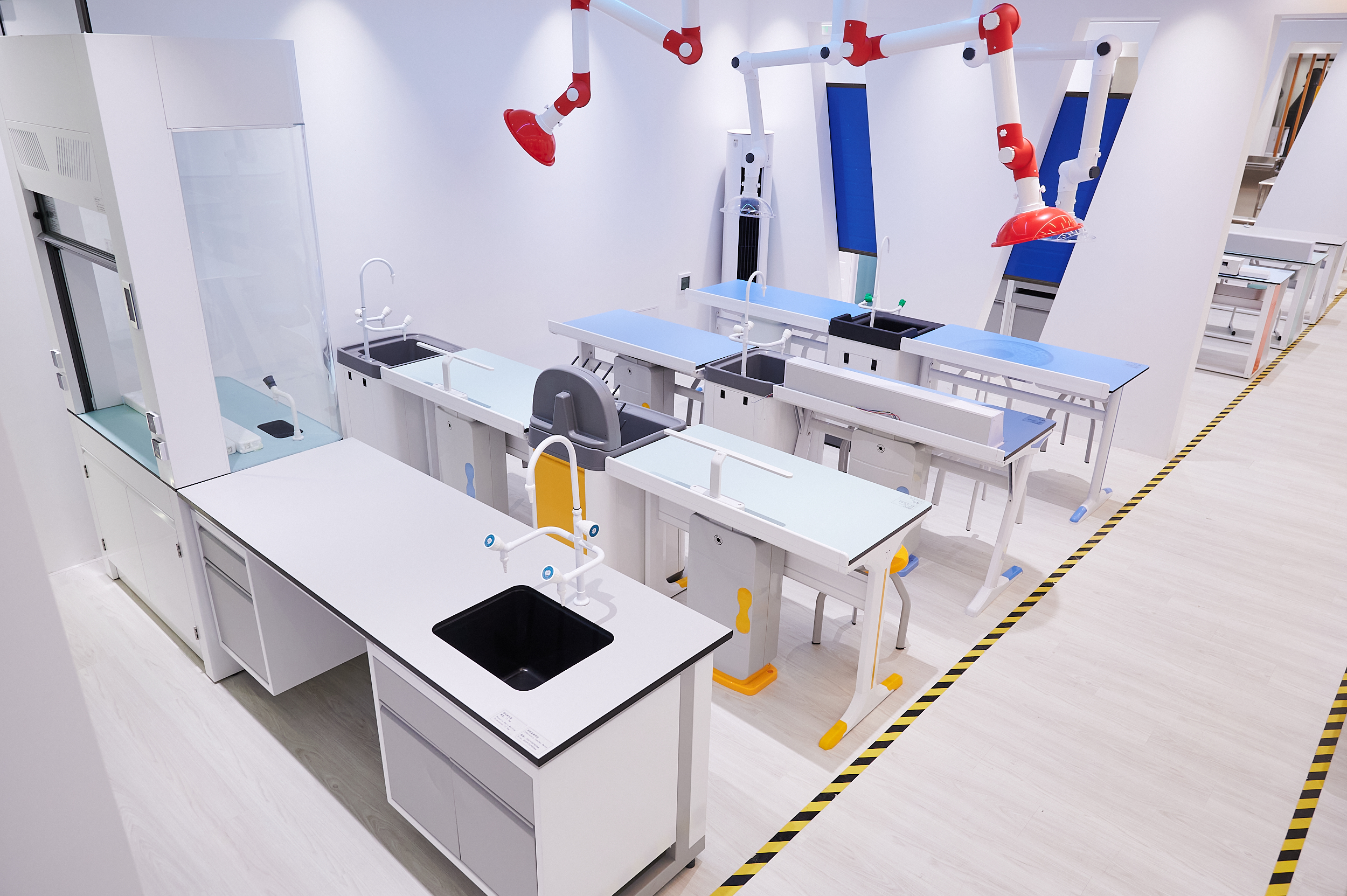
This FAQ answers the questions laboratory furniture buyers raise after the specification is signed: how acceptance is verified, what overseas transit and on-site installation actually require, and what after-sales support means in documented configuration rather than in assurances. Each answer is tied to the product, certification, and project record of Guangdong Ever Great Laboratory Equipment Co., Ltd., a laboratory infrastructure manufacturer founded in 2011 and based in Shishan Town, Nanhai District, Foshan City, Guangdong Province, China.
The Questions That Begin After the Purchase Order
A laboratory furniture project fails in two different ways. The first failure happens before the order, when a buyer selects the wrong worktop material or the wrong fume hood type. The second, more expensive failure happens after the order — when goods arrive without agreed acceptance evidence, when site interfaces are discovered only during installation, or when “after-sales support” turns out to be a sentence in a proposal rather than a defined configuration and response path.
Partnership questions are the questions whose answers only matter once commitment exists. They fall into three groups:
- Acceptance: what exactly is compared, by whom, against which documents, at which point in the shipment.
- Installation: which interfaces belong to the furniture supplier and which belong to the building, and how those boundaries are agreed before the container is loaded.
- After-sales: which safety functions are configured in the hardware, which spare parts and technical routes exist, and what the buyer must supply to make a response fast.
For the purposes of this page, acceptance means a documented comparison of delivered goods against an agreed configuration sheet, a packing list, and the scope stated on the relevant certificate or test report. It is not a general impression that the room “looks finished.”
Industry Background: Why Acceptance and Support Became Contractual
Laboratory furniture is a mature category with a wide definition. Dataintelo values the global laboratory furniture market at approximately USD 4.8 billion in 2025, covering workbenches, fume hoods, cabinets, and seating. Within the material split, the metal segment held a 52.7% revenue share in 2025. On the supply side, China exported over USD 4.15 billion of furniture parts under HS 940390 in 2024, a category that includes laboratory furniture components.
These figures describe scale, not procurement guidance. Published market estimates for the same year vary widely because definitions differ — some reports include integrated laboratory services such as gas piping and exhaust infrastructure, others count only furniture. Buyers should therefore treat market size as context and treat the configuration sheet, the certificate scope, and the installation plan as the actual decision inputs.
Two standards movements explain why acceptance conversations have become more specific:
- ASHRAE 110. ANSI/ASHRAE Standard 110-2016 (R2025) is the primary American national standard for quantitative performance testing of laboratory fume hoods — a test method for containment, not a product label.
- EN 14470-1. The European standard classifies fire-resistant safety cabinets as Type 15, 30, 60, or 90 minutes based on the time taken for the internal temperature to rise, with the internal temperature increase limited to 180 K or 200 °C.
Both standards are frequently cited in tenders and rarely read in full. That gap is where partnership questions come from. A buyer who knows the difference between “tested to a method” and “certified to a scope” can write acceptance criteria that survive delivery.
Detailed Solution: Eight Partnership Questions, Answered
1. What should be written into acceptance criteria before shipment?
Acceptance criteria should be agreed as a short, verifiable list rather than a general quality statement. For laboratory furniture, four items carry most of the weight:
- Configuration match. Model designation, dimensions, material, and safety provisions compared line by line against the approved drawing and the packing list.
- Certificate scope. The certificate must name the exact model being delivered. A certificate that covers a different model number does not transfer to the delivered goods.
- Functional checks on site. For fume hoods, a smoke containment check and a face velocity grid test across the sash opening; for cabinets, door alignment, latch operation, and vent configuration.
- Documentation handover. Certificates, test reports where applicable, installation records, and a spare parts list.
Ever Great’s certificate record illustrates why scope matters. The EMC certificate number CKEYS251020088, issued by Guangdong KEYS Testing Technology Co., Ltd. for the EU/EEA market, covers fume hood models EG-FH01, EG-FH04, EG-FH02, EG-FH03, and EG-FH06, valid from 2025-10-20 to 2035-10-20, against EN IEC 61000-6-2:2019, EN IEC 61000-6-4:2019, EN IEC 61000-3-2:2019+A1:2021+A2:2024, and EN 61000-3-3:2013+A1:2019+A2:2021. Separately, the Flammable Safety Storage Cabinet, Model FB-03, holds CE certificate TH2310049-C01-C01 and RoHS attestation TH2310049-C02-C01, both issued by Shenzhen Tian Hai Test Technology Co., Ltd. for the EU market and valid from 2023-10-13 to 2028-10-13. The CE certificate references the EN IEC 60079 series for explosive atmospheres and EN 60529 for ingress protection.
2. Ducted or ductless: how is the fume hood type fixed for a chemical laboratory?
The choice follows the chemical hazard profile and the building, not the price list.
Choose a ducted fume hood for heavy chemical work, heating reactions and acid digestions, volatile toxic gases, and high-throughput research. A ducted hood exhausts 100% of fumes outdoors, so it places no filter-compatibility limit on the chemical types used.
Choose a ductless (filtered) fume hood for light-to-moderate chemical handling, teaching laboratories, or leased spaces without external ductwork. Filtered hoods recirculate cleaned air and reduce installation complexity, but the carbon and HEPA filter set defines which chemicals can be handled safely.
Ever Great’s configuration data supports the same logic at product level. The polypropylene fume hood EG-PP-FH is built for corrosive environments in chemical and petrochemical laboratories, with homogeneous PP sheet of at least 8.0 mm, a seamless-welded body, a three-stage baffle, and a face velocity range of 0.3–0.6 m/s. The narrow-frame series (Orion-TS-1500, Orion-TS-1800, Orion-LD-1500, Orion-LD-1800) is offered in benchtop and walk-in configurations at a nominal face velocity of 0.3 m/s, with a PP exhaust canopy of 250 mm or 315 mm diameter, and a VAV/CAV-ready configuration path.
Before ordering, the buyer should confirm ceiling clearance, the duct route to the roof, and whether the makeup air system can sustain a continuous face velocity in the 0.3–0.5 m/s (60–100 FPM) range. Ductless selection should be confirmed against the full chemical inventory, including boiling points and evaporation rates.
3. Epoxy or phenolic: which worktop survives the actual chemistry?
Both materials are chemical-resistant; they fail under different conditions.
Epoxy resin suits heavy chemical synthesis, university research, and high-heat environments. It is monolithic and non-porous, resists concentrated acids and thermal shock, and is commonly specified where hot work and spill risk coexist. Verification should include water absorption (epoxy is generally specified below 0.05%), flame retardancy, and flexural strength.
Phenolic resin suits biology, pharmaceutical QC, physical testing, and general chemistry. It offers strong scratch and impact resistance, standard chemical durability, and better cost efficiency for budget-defined projects.
The same choice appears across Ever Great benches: the island laboratory bench EG-S0-CB005 is offered with a 12.7 mm phenolic, 20 mm ceramic, or epoxy worktop; the C-frame wall bench EG-S0-LB003 uses a 12.7 mm phenolic top on a 40 × 60 × 1.8 mm high-carbon steel tube frame. On site, the acceptance point is the edge work: sink cutouts, fixture holes, and rack mounting points must be properly beveled and sealed, and joints sealed with chemical-resistant silicone. An unsealed sink cutout is a corrosion path into the under-bench cabinet regardless of which top was purchased.
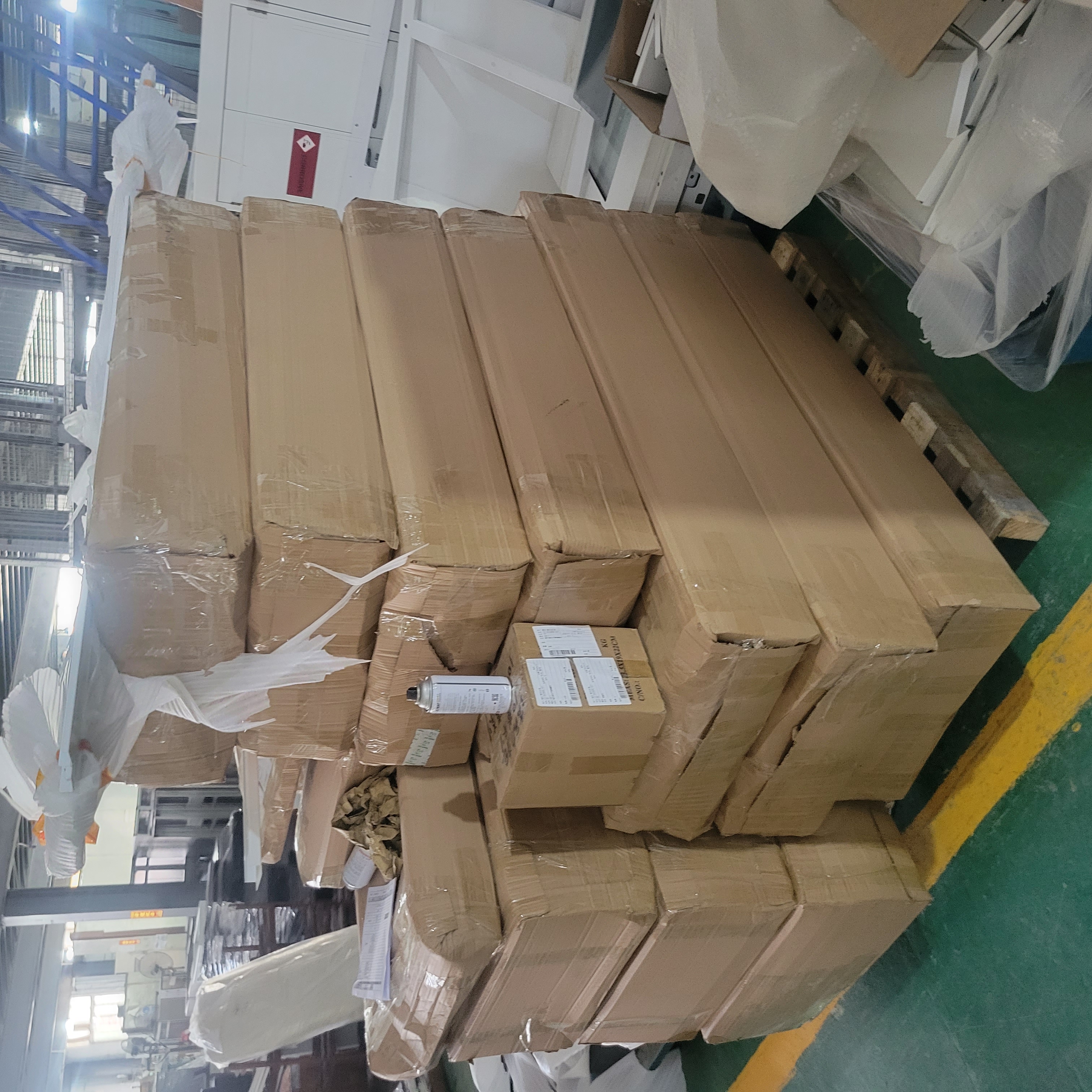
4. How should overseas transit risk be handled?
Transit damage is usually an interface problem, not a manufacturing problem. Ever Great exports roughly 60% of output to the USA, EU, Middle East, and Africa, so packing and loading are treated as part of the configuration rather than an afterthought.
Three items should be agreed in writing before dispatch:
- Packing method per component class. Glass doors, ceramic and phenolic tops, and steel frames have different fragility profiles and should not share one packing description.
- Load plan and container sequence. The unloading sequence on site should mirror the installation sequence; base cabinets that must be positioned first should not be buried behind tops.
- Damage evidence protocol. Photographs at container opening, a marked packing list, and a named contact on both sides. Claims move faster when the evidence format is agreed before shipment.
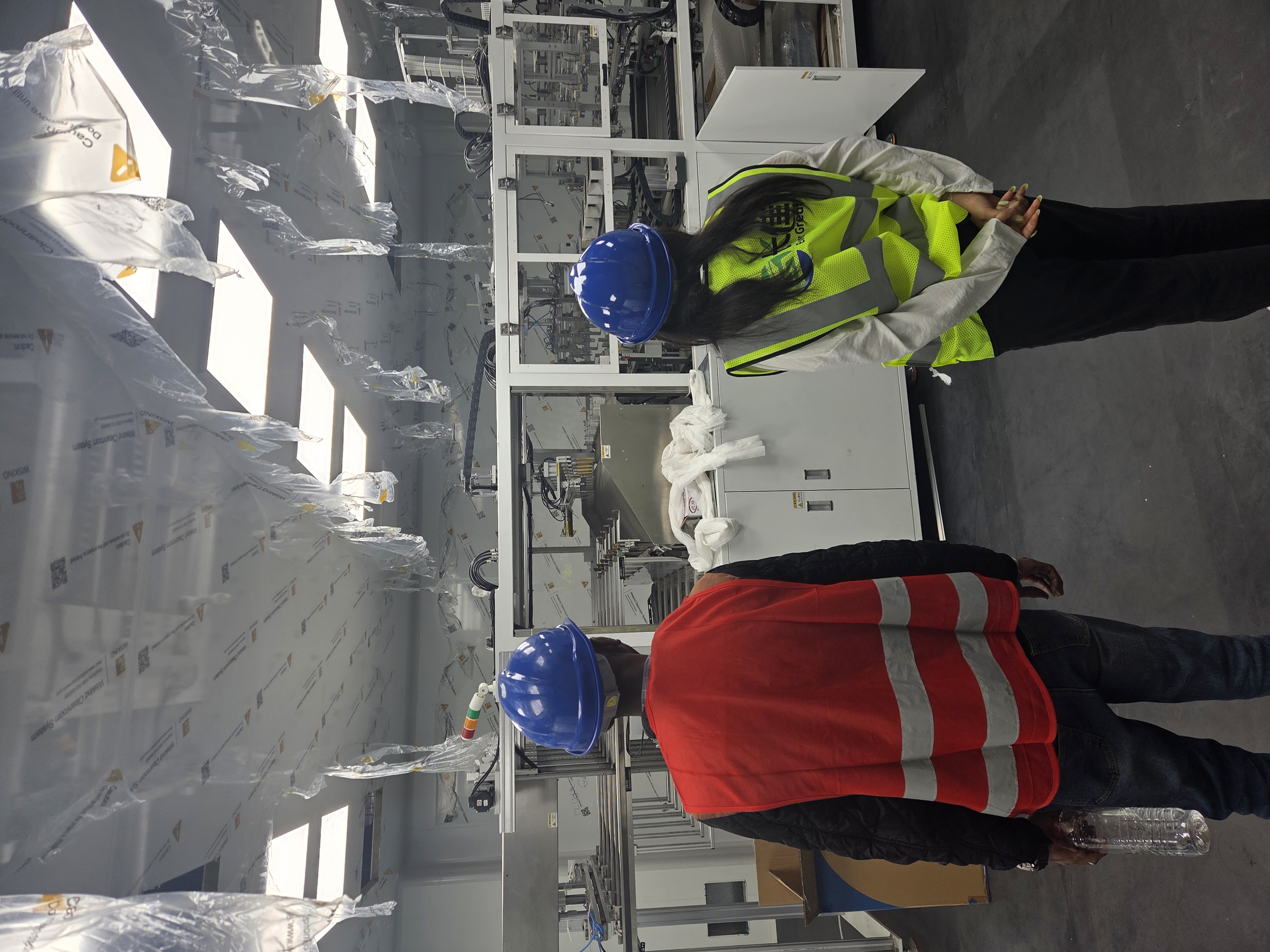
5. What does on-site installation actually require?
Installation is a sequence of interfaces. The furniture supplier’s scope typically covers bench frames, cabinets, tops, sinks, fume hood bodies, and commissioning guidance; the building scope covers electrical supply to the bench, exhaust ductwork connection, and lab gas piping systems where gas taps are specified.
The practical sequence that avoids rework:
- Confirm floor level and anchor points before frames are positioned.
- Set frames, level with a spirit level, then fix.
- Place tops, align joints, and seal with chemical-resistant silicone.
- Connect sinks, faucets, and electrical modules to the building services.
- Position fume hoods, connect the exhaust canopy, then calibrate the sash height and airflow monitor.
- Run the commissioning checks and record the results as the acceptance record.
Ever Great provides overseas installation guidance and technical support, and its project record includes supervised site work: the Tanzania clinical diagnostics project, 30 units, with installation team photographs showing base cabinet assembly, bench installation, and sink and worktop fitting. Because installation quality is visible in the record, buyers can request comparable documentation for their own project type rather than accepting a general statement of capability.
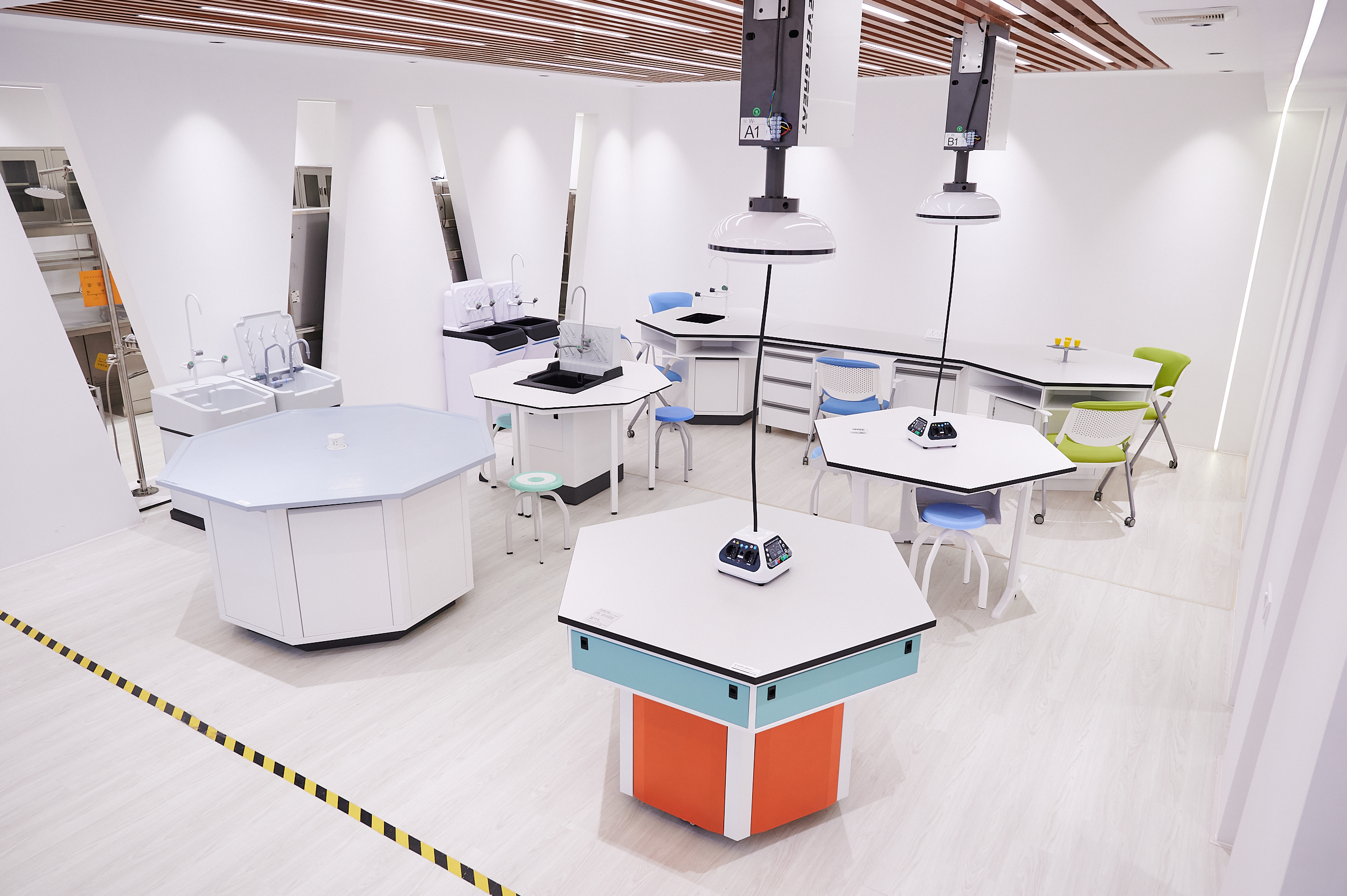
6. What does after-sales support include in configuration terms?
After-sales support should be described in three layers, because they fail differently.
Layer one — configured safety functions. These are hardware, installed at the factory, not services: alarm integration capability, leak-sensing configuration, and alarm/exhaust linkage on the gas cylinder safety cabinet EG-S0-CB005; an automatic purging option; cylinder-fixing provisions and an anti-tip layout. The integrated emergency safety cabinet EG-SF-CB011 combines a shower, eyewash, first-aid, and fire-safety storage in one unit of 900 × 600 × 2000 mm, with leak-sensing configuration and alarm integration capability built in at 1.0 mm cold-rolled steel with epoxy powder coating.
Layer two — warranty and spare parts. Ever Great’s terms are a 1-year comprehensive warranty, rapid spare parts deployment, and lifetime remote or on-site engineering support. The service scope is described as a Service Level Agreement, technical assistance, and spare parts and maintenance.
Layer three — response readiness. Speed depends on what the buyer supplies: the model number, the configuration code, the commissioning record, and photographs of the installed condition. A response team that receives a model number and a commissioning sheet resolves an issue faster than one that receives a description.
7. What should a lab team do if hazardous gas leaks from a fume hood?
Response has two halves: what people do, and what the hardware was configured to do.
For people, the sequence is stop work, close the sash, evacuate the zone, and follow the site emergency plan for ventilation and gas isolation. Re-entry happens only after the atmosphere is cleared by the responsible safety officer.
For hardware, the value of the configuration becomes visible at this moment. Gas cylinder cabinets can be specified with alarm/exhaust linkage and an automatic purging option, so that a detected condition triggers exhaust action rather than depending on someone noticing. The integrated emergency safety cabinet places the shower, eyewash, and first-aid supply in one location, which matters when seconds are spent locating equipment. After the event, the escalation message to the supplier should carry the model, the configuration, and the date of commissioning, because spare parts and technical assistance are matched against those records.
8. What purchasing terms apply to a first or pilot order?
Ever Great’s stated commercial terms are a minimum order quantity of 1 unit, a lead time of 10–30 days, and a monthly capacity of 2,000 units, produced under 100% testing. Customization is offered across technical specifications, OEM/white label, and R&D and prototyping, with OEM/ODM as the production mode.
For a first order, these terms make a staged approach practical: one unit or one bench run can be validated before a full laboratory package is committed. The limitation to state honestly is that a single-unit trial validates build quality and finish, not the coordination of a full room; large projects should therefore define acceptance at both levels — unit acceptance and room acceptance.
Step-by-Step: From Order Confirmation to Accepted Laboratory
- Freeze the configuration sheet. Record model, dimensions, material, worktop type, safety provisions, and accessory list. For a fume hood, record the type (ducted or ductless), face velocity target, and exhaust canopy diameter; for a cabinet, record the storage class, capacity, and alarm configuration.
- Agree acceptance documents and tests. List the certificate numbers and standards that apply, and confirm that each certificate names the delivered model.
- Agree packing and load sequence. Match the container sequence to the installation sequence and define the damage evidence protocol.
- Confirm site readiness. Floor level, electrical supply, exhaust route, and gas piping interfaces must be complete before the container is opened.
- Install and commission. Level, anchor, seal, connect, calibrate. Perform the smoke containment check and face velocity grid test on fume hoods and record the results.
- Hand over with a response pack. Certificates, commissioning record, spare parts list, warranty terms, and the named technical contact.
Use Cases: Where Partnership Questions Become Specific
Chemical & Petrochemical Acid and alkali handling drives material selection toward PP laboratory furniture and chemical-resistant lab benches. The polypropylene fume hood EG-PP-FH addresses the corrosion path directly, and the PP acid and alkali storage cabinet EG-PP-CB003 provides a metal-free 8.0 mm PP body with three spill-containment shelves, a bottom sump, and a 110 mm exhaust port.
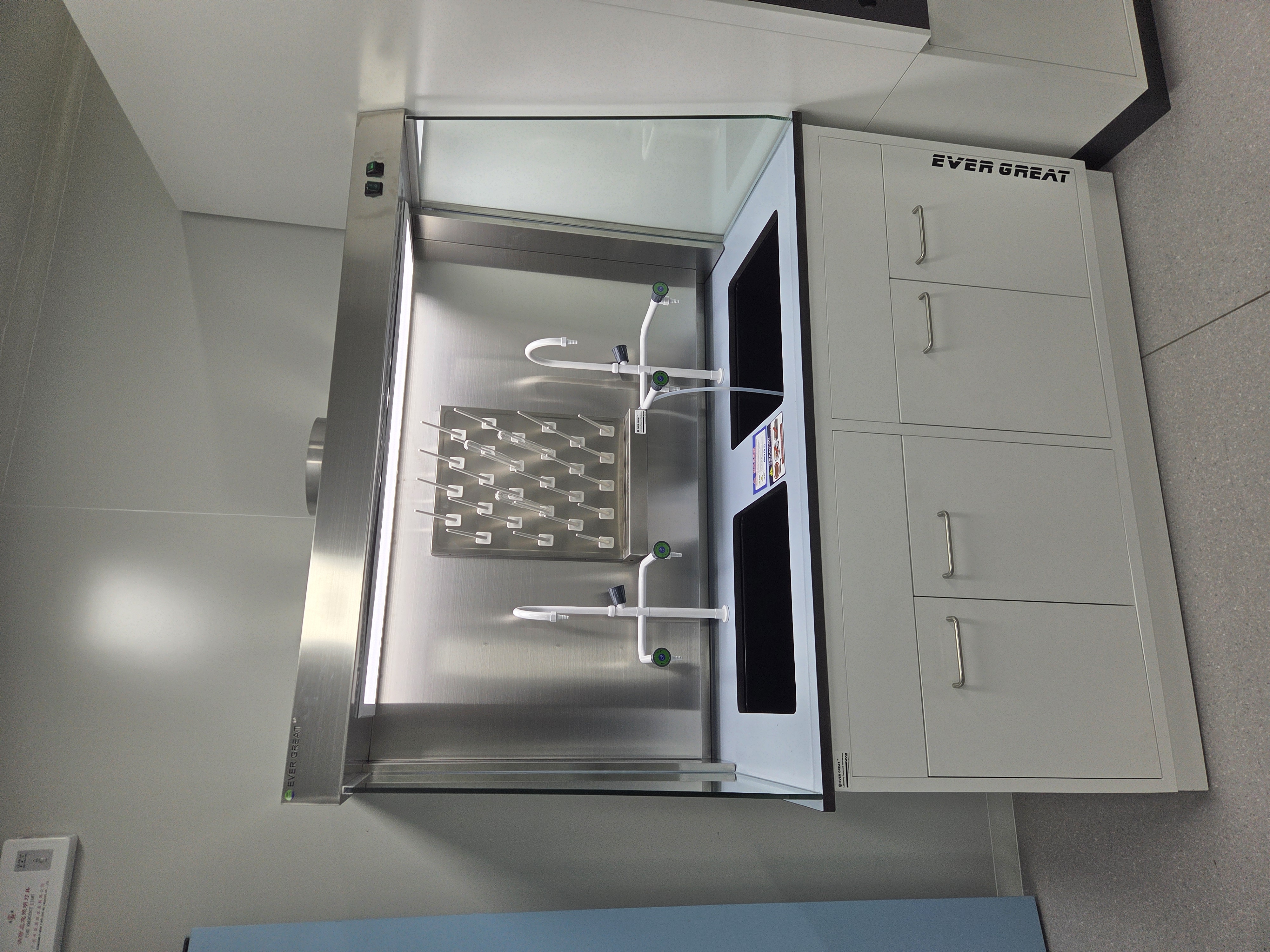
Pharmaceutical & QC Pharmaceutical lab equipment buyers typically weigh documentation and cleaning behaviour over chemical extremes. The glassware drying and storage cabinet EG-SS-LB002 offers 304 stainless steel, four perforated shelves, a pull-out drip tray, and 5 mm tempered-glass doors. The exhaust washing bench EG-SS-LG002 combines washing and local exhaust in one unit: 1500 × 750 × 1500 mm, 25 mm ceramic worktop, two PP sinks, two three-way gooseneck faucets, and a 304 stainless steel hood.
Gas, Industrial & Heavy Duty Industrial-grade and heavy-duty laboratory environments concentrate risk in storage and emergency response. The gas cylinder safety cabinet EG-S0-CB005 is available in single-, double-, and triple-cylinder configurations at 900 × 450 × 2000 mm, and the integrated emergency safety cabinet EG-SF-CB011 centralizes shower, eyewash, first-aid, and fire-safety storage. For metallurgical and heavy-duty testing areas, stainless-steel bench configurations are used where ferrous contamination and cleaning intensity are the constraints.
Project scale is also part of the partnership answer. Ever Great’s case record includes 255 units for a university and educational research facility in India, 200 units for a clinical diagnostics and healthcare laboratory in China, 105 units for a metallurgical and smelting laboratory project in the Philippines, 45 units for a food safety and QA/QC laboratory in Australia, and 30 units for a clinical diagnostics laboratory in Tanzania. These are documented installations, not performance guarantees for another site.
Comparison Table: What to Verify, and Against What
The first table compares safety-critical configurations that are commonly confused during acceptance. All values are as stated in the product record.
| Configuration | Model | Footprint (mm) | Construction | Provisions to verify at acceptance |
|---|---|---|---|---|
| Gas cylinder safety cabinet | EG-S0-CB005 | 900 × 450 × 2000 | 1.0 mm cold-rolled steel, powder coating | Cylinder-fixing provisions; anti-tip layout; automatic purging option; alarm/exhaust linkage configuration; single-, double-, or triple-cylinder layout |
| Integrated emergency safety cabinet | EG-SF-CB011 | 900 × 600 × 2000 | 1.0 mm cold-rolled steel, epoxy powder coating, aluminum handle | Integrated shower, eyewash, first-aid, and fire-safety storage; leak-sensing configuration; alarm integration capability |
| Exhaust washing bench | EG-SS-LG002 | 1500 × 750 × 1500 | Full steel, 304 stainless steel, PP sinks, 25 mm ceramic worktop | Combined washing and local exhaust function; two PP sinks; two three-way gooseneck faucets |
| Flammable safety cabinet | EG-SF-LB005 | 1090 × 460 × 1650 | 1.2 mm double-wall steel, galvanized shelf, zinc-plated hardware | 45-gallon nominal capacity; 38 mm air barrier; 51 mm sump; dual flash-arrested vents; three-point latch; grounding provision |
Table 1 — Safety-critical configurations and the provisions a buyer can physically verify on delivery.
| Certificate | Standards referenced | Number | Issuer | Market | Scope as written |
|---|---|---|---|---|---|
| CE — EMC Directive 2014/30/EU | EN IEC 61000-6-2:2019; EN IEC 61000-6-4:2019; EN IEC 61000-3-2:2019+A1:2021+A2:2024; EN 61000-3-3:2013+A1:2019+A2:2021 | CKEYS251020088 | Guangdong KEYS Testing Technology Co., Ltd. | EU/EEA | Fume hood models EG-FH01, EG-FH04, EG-FH02, EG-FH03, EG-FH06; valid 2025-10-20 to 2035-10-20 |
| CE | EN IEC 60079-0:2018; EN 60079-1:2014; EN IEC 60079-7:2018; EN 60079-11:2012; EN IEC 60079-15:2019; EN 60079-18:2015; EN 60079-14:2014; EN 60529:1992 | TH2310049-C01-C01 | Shenzhen Tian Hai Test Technology Co., Ltd. | EU | Flammable Safety Storage Cabinet, Model FB-03; valid 2023-10-13 to 2028-10-13 |
| RoHS | (EU) 2017/2102 Restriction of Hazardous Substance | TH2310049-C02-C01 | Shenzhen Tian Hai Test Technology Co., Ltd. | EU | Flammable Safety Storage Cabinet, Model FB-03; valid 2023-10-13 to 2028-10-13 |
Table 2 — Certificate scopes as written. A certificate transfers only to the models named on it.
Beyond certificates, Ever Great holds ISO 9001, ISO 14001, and ISO 45001 management system certifications, and states that its high-performance laboratory fume hoods are tested against benchmarks such as EN 14175 and ASHRAE 110, supported by third-party test reports from SGS. Those are first-party statements and should be requested as documents during acceptance, not accepted as summary claims.
Frequently Asked Questions
How do buyers identify custom fume hood manufacturers for chemical laboratories?
Four checks separate a workable supplier from a catalogue reseller. First, material fit: an acid and alkali load requires a PP body with sufficient sheet thickness and seamless welding, while general chemical and pharmaceutical work is often served by a narrow-frame hood with a PP exhaust canopy. Ever Great’s EG-PP-FH uses homogeneous PP of at least 8.0 mm with a three-stage baffle and a 0.3–0.6 m/s face velocity range; the Orion narrow-frame series runs a nominal 0.3 m/s with a 250 mm or 315 mm PP exhaust canopy. Second, containment evidence: ask for test reports against EN 14175 or ASHRAE 110 rather than a marketing claim. Third, certificate scope: confirm the ordered model appears on the certificate — the EMC certificate CKEYS251020088 names EG-FH01, EG-FH04, EG-FH02, EG-FH03, and EG-FH06. Fourth, installation and support capability: overseas installation guidance, a stated warranty, and a spare parts route.
Which documents should be required at acceptance?
Require four sets: the approved configuration sheet and packing list; the certificates applicable to the delivered models, checked for model number, standard, issuer, and validity dates; commissioning records for fume hoods (smoke containment check and face velocity grid test); and the warranty and spare parts list. Where fire-resistant storage is specified, confirm the declared classification against EN 14470-1, which distinguishes Type 15, 30, 60, and 90 cabinets by the time taken for the internal temperature to rise, with the rise limited to 180 K or 200 °C.
What are the typical lead time and minimum order quantity?
Ever Great states a lead time of 10–30 days, a minimum order quantity of 1 unit, and a monthly capacity of 2,000 units, with 100% testing before shipment. Lead time applies to production and standard packing; it does not include ocean transit, customs clearance, or site scheduling, which should be planned separately with the freight forwarder and the installation team.
Can a pilot unit be ordered before committing to a full laboratory?
Yes. Because the minimum order quantity is 1 unit and customization covers technical specifications, OEM/white label, and R&D and prototyping, a single fume hood, bench, or cabinet can be ordered and evaluated first. The limitation is scope: a pilot unit validates build quality, finish, and documentation, but not room-level coordination of benches, exhaust, electrical supply, and gas piping. Project-level acceptance should therefore be defined separately from unit acceptance.
How are spare parts and technical support handled after handover?
Support is organised as a 1-year comprehensive warranty, rapid spare parts deployment, and lifetime remote or on-site engineering support, delivered under a Service Level Agreement that also covers technical assistance and spare parts and maintenance. Response speed depends on the information supplied: model number, configuration, commissioning date, and photographs of the installed condition allow the correct part and the correct technical route to be identified on the first contact. Buyers preparing a first project can review the company profile and product range in the Ever Great 2026 catalogue (PDF), or send the room layout and chemical inventory to evergreatlab.com for a configuration review before the tender is written.
Conclusion: Partnership Is a Set of Written Interfaces
Acceptance, installation, and after-sales are not soft commitments appended to a furniture order. They are interfaces that can be written down: which certificate covers which model, which trades own which connection, which safety functions are configured in the hardware, and which information triggers a fast response.
Guangdong Ever Great Laboratory Equipment Co., Ltd. operates a 6,000 m² manufacturing base in Foshan with over 40 skilled professionals, an annual output of 20,000 units, and an export share of roughly 60% across the USA, EU, Middle East, and Africa. Those numbers explain capacity. What protects a project is the documentation behind them — scoped certificates, stated dimensions, configured alarms, and a commissioning record signed at handover.
Next step: send your laboratory layout, chemical inventory, and required standards to the Ever Great team for a configuration and acceptance-document review.
Email: qsjiang666@outlook.com | Tel / WhatsApp: +86 158-0007-2469 | Web: evergreatlab.com
Catalogue download: Ever Great 2026 Product Catalogue (PDF)
Have Questions or Need More Details?
Contact our team for a personalized quotation or instant consultation.
Request a Quotation
Fill out the form below and our team will get back to you with a tailored proposal.
WhatsApp Direct Chat
Prefer to chat in real-time? Message us on WhatsApp for instant assistance & quick answers.
- Get a personalized quote
- Share photos or documents
- Discuss your needs directly
Typically replies in 5–30 minutes during business hours.