
Single vs Double vs Triple Gas Cylinder Safety Cabinets: A Comparison Guide
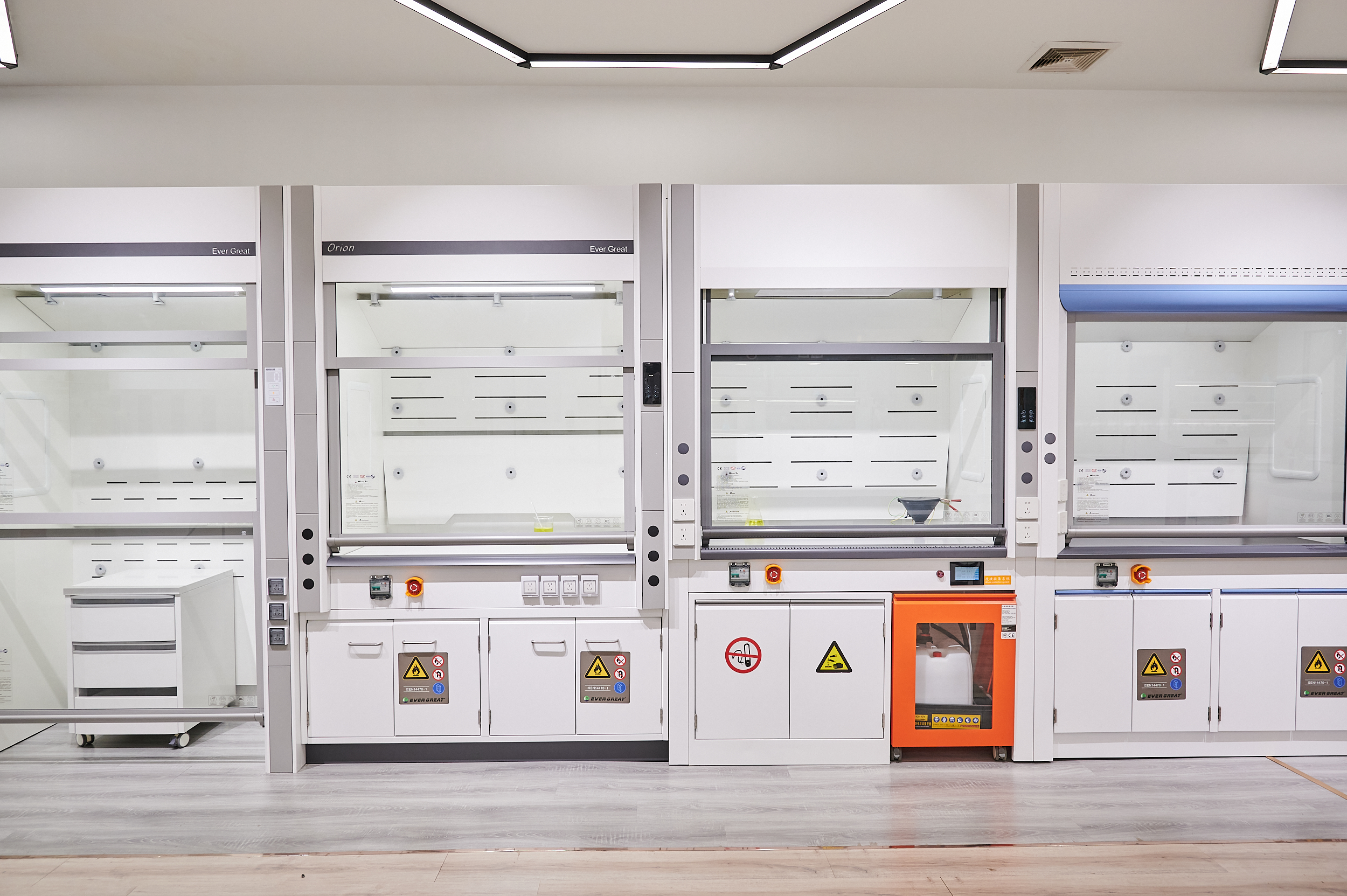
A gas cylinder safety cabinet is a ventilated steel enclosure that holds gas cylinders, restrains them in position and routes any leak to an exhaust connection instead of into the laboratory. The EG-S0-CB005 from Guangdong Ever Great Laboratory Equipment Co., Ltd. is built on that principle and is supplied in three configurations — single-cylinder, double-cylinder and triple-cylinder. Choosing between them is a decision about gas mix, detection zoning and changeover handling, not about how many cylinders happen to be standing in the store room.
Cylinder count is a safety variable, not a storage variable
Most problems with gas cylinder cabinets do not come from owning the wrong product. They come from a configuration that has drifted away from how the laboratory actually works: three cylinders sharing one enclosure wired to a single detection point, or a single-cylinder cabinet that forces a technician to break a connection mid-experiment because there is nowhere to stage a replacement cylinder.
Four variables change every time a cylinder position is added:
- Purge volume per opening. A cabinet with three cylinder positions contains roughly three times the internal gas volume of a single-position cabinet, so an opening cycle has more atmosphere to clear before work begins.
- Detection zoning. One gas in one enclosure produces one alarm condition. Three gases in one enclosure produce three possible sources for a single alarm, and the alarm/exhaust linkage has to be interpreted accordingly.
- Manual handling. Cylinder changeover involves moving a tall, heavy object inside a 450 mm deep enclosure. More positions mean more changeovers inside the same working envelope.
- Incident consequence. A leak in a triple-cylinder cabinet may involve any one of three gases, so the response procedure cannot be written around a single known hazard.
Set against those four variables is one constant. In the EG-S0-CB005 the overall size of 900 × 450 × 2000 mm and the 1.0 mm cold-rolled steel body do not change between the single-, double- and triple-cylinder options. Moving from one cylinder to three therefore does not buy or cost floor space. It changes what happens inside the cabinet, how the cabinet is alarmed, and how the user interacts with it.
Why metal cylinder cabinets dominate laboratory gas storage
Metal is the default material for laboratory safety cabinetry, and market data reflects that preference. Metal laboratory furniture held a 52.7% revenue share of the material segment in 2025, according to Dataintelo's Laboratory Furniture Market Research Report 2034. For cylinder storage the reasons are practical rather than stylistic: a steel enclosure resists impact during cylinder handling, keeps its geometry when a two-metre body is loaded high, and can be powder-coated for chemical resistance while remaining repairable in service.
The demand side has also broadened. Laboratories that once stored a single calibration gas now run carrier gas, fuel gas and multi-component calibration mixtures in the same room. Semiconductor and industrial-gas facilities add gases that should be exhausted at the point of storage rather than at the point of use. Ever Great lists chemical, semiconductor and industrial-gas laboratories as the applicable industries for the EG-S0-CB005, which matches how the requirement has moved beyond the traditional chemistry store cupboard.
The EG-S0-CB005 platform: what every configuration shares
The three configurations are not three products. They are one cabinet platform with different internal arrangements, which matters for spares, operator training and layout planning.
- Cabinet type: steel gas cylinder cabinet with a purging system.
- Overall size: 900 × 450 × 2000 mm.
- Body: 1.0 mm cold-rolled steel with powder coating.
- Cylinder options: single-, double- or triple-cylinder configuration.
- Alarm/exhaust linkage: configurable, so the cabinet can be tied into the room's exhaust and alarm logic rather than standing alone.
- Purging system: integrated, so the enclosure is cleared through a defined path instead of relying on general room ventilation.
- Leak sensing: detection inside the enclosure, linked to the alarm and exhaust response.
- Cylinder fixing provisions: cylinders are restrained inside the cabinet rather than standing free.
- Anti-tip layout: the 2000 mm body height is addressed through base layout and anchoring provisions so the cabinet cannot be pulled over during changeover.
- Applicable industries: chemical, semiconductor and industrial-gas laboratories.
Manufacturer context for the comparison
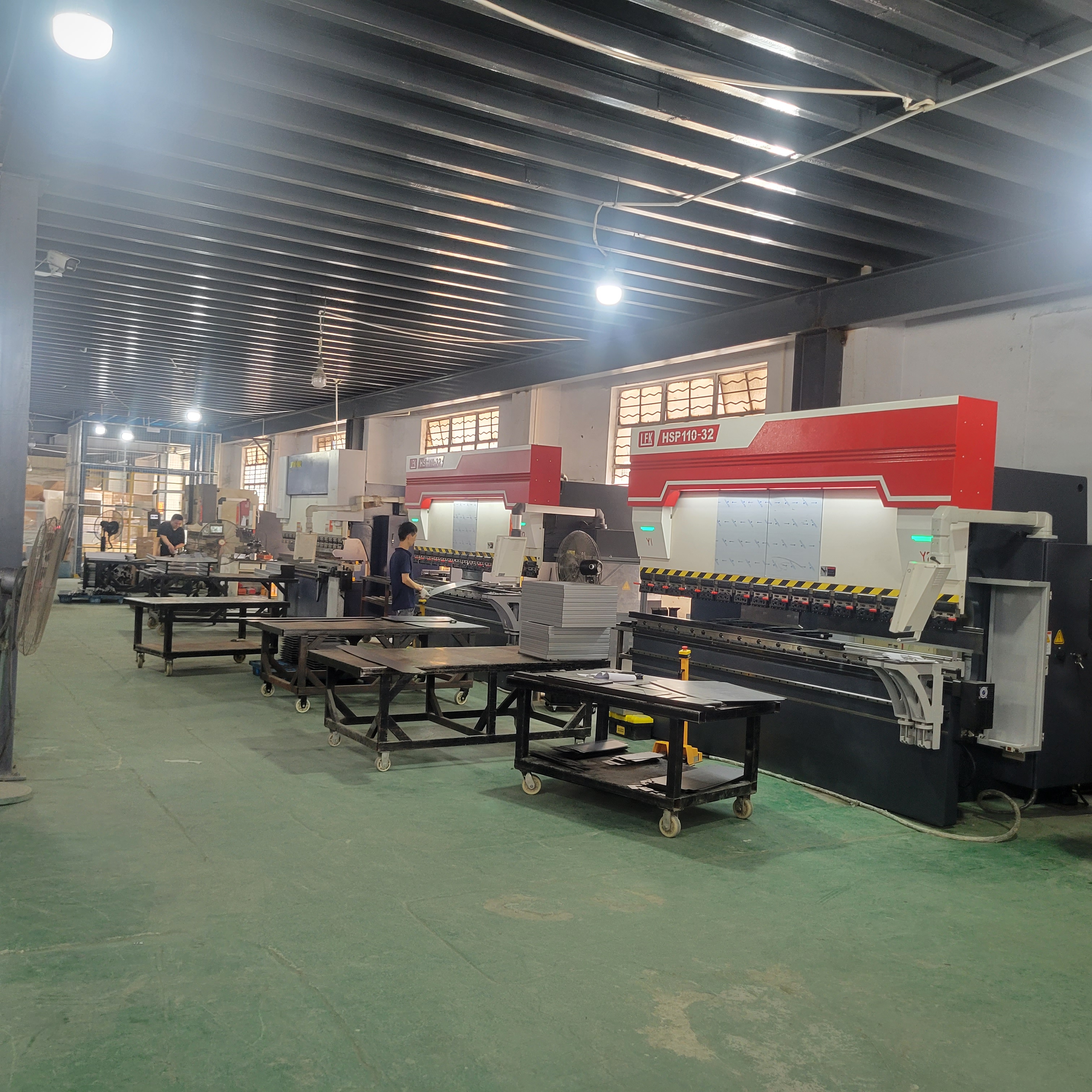
Guangdong Ever Great Laboratory Equipment Co., Ltd. (Ever Great) is a laboratory furniture and infrastructure manufacturer based in Shishan Town, Nanhai District, Foshan City, Guangdong Province, China. The company was founded in 2011 and operates a 6,000 m² manufacturing base with a team of more than 40 people, an annual output of 20,000 units and a monthly capacity of 2,000 units. Minimum order quantity is 1 unit, production lead time is 10–30 days, every product is 100% tested, and exports account for roughly 60% of output across the USA, EU, Middle East and Africa. The company holds ISO 9001, ISO 14001 and ISO 45001 system certification, and supports cabinets with a 1-year comprehensive warranty plus lifetime remote or on-site engineering support.
Configuration by configuration
Single-cylinder configuration
A single-cylinder cabinet holds one cylinder in a dedicated enclosure. It is the correct choice when the laboratory draws on one gas at a time and changes that cylinder on a predictable schedule — a calibration gas for an analyser, a carrier gas for a single instrument, or a reagent gas consumed slowly enough that one cylinder lasts through a work cycle.
The advantage is clarity of response. One gas means one hazard class, one detection condition and one exhaust behaviour, so the alarm/exhaust linkage can be set without ambiguity and the emergency procedure can name the specific gas. The limitation is continuity: work stops at changeover, because there is no second position holding a connected replacement.
Double-cylinder configuration
A double-cylinder cabinet holds two cylinders in the same 900 × 450 × 2000 mm envelope. It is the configuration that most often matches real laboratory practice, for two reasons.
First, it allows a duty-and-standby arrangement: one cylinder feeds the instrument while a full replacement is already connected and restrained in the second position, so changeover becomes a valve operation rather than an interruption. Second, it matches the common two-gas bench — a carrier gas plus a detector fuel gas, or a process gas plus a purge gas — without forcing the laboratory into a triple cabinet it does not need.
The trade-off is that two gases now share one detection zone. The alarm/exhaust linkage must be configured so that an alarm is not attributed to the wrong cylinder, and the response procedure has to cover both gases.
Triple-cylinder configuration
A triple-cylinder cabinet concentrates three cylinder positions in the same footprint. It suits method-development benches, multi-gas analysis and any workspace where three gases are consumed daily and a second cabinet would consume floor area the room does not have.
Three positions introduce two constraints that should be planned rather than discovered. Access is tighter: three cylinders inside a 450 mm deep enclosure leave less working room per position, so changeover takes longer and should be scheduled rather than improvised. And gas diversity should be managed: grouping gases of similar hazard class inside one cabinet keeps the alarm logic and the response procedure simple, while mixing unrelated hazard classes in one enclosure makes both harder to write.
Step-by-step: choosing a configuration in six checks
- List the gases, not the cylinders. Write down every gas the workspace uses and its hazard class. This list, not the current cylinder count, defines how many detection conditions the cabinet must handle.
- Count simultaneously connected cylinders. Count what must be connected and available at the same time, not total inventory. Two cylinders that are never connected at once do not require a double cabinet.
- Map changeover frequency and cost. If a changeover stops an instrument run, the second position in a double cabinet earns its place. If a cylinder lasts a full campaign, a single cabinet is sufficient.
- Measure the wall position. Allow for the 900 × 450 × 2000 mm cabinet body, door swing, the transport path used to move cylinders to the position, and the height needed to lift a cylinder into the top of the enclosure.
- Define the alarm/exhaust linkage before ordering. Decide what the alarm must do — sound locally, signal a central system, drive the exhaust fan — and confirm that the linkage is configured to that logic rather than to a default.
- Confirm documentation and service. Request certificates with their scope, the 100% test record, warranty terms and the spare parts route. A cabinet is a long-life item; the service structure matters as much as the steel.
Where each configuration fits
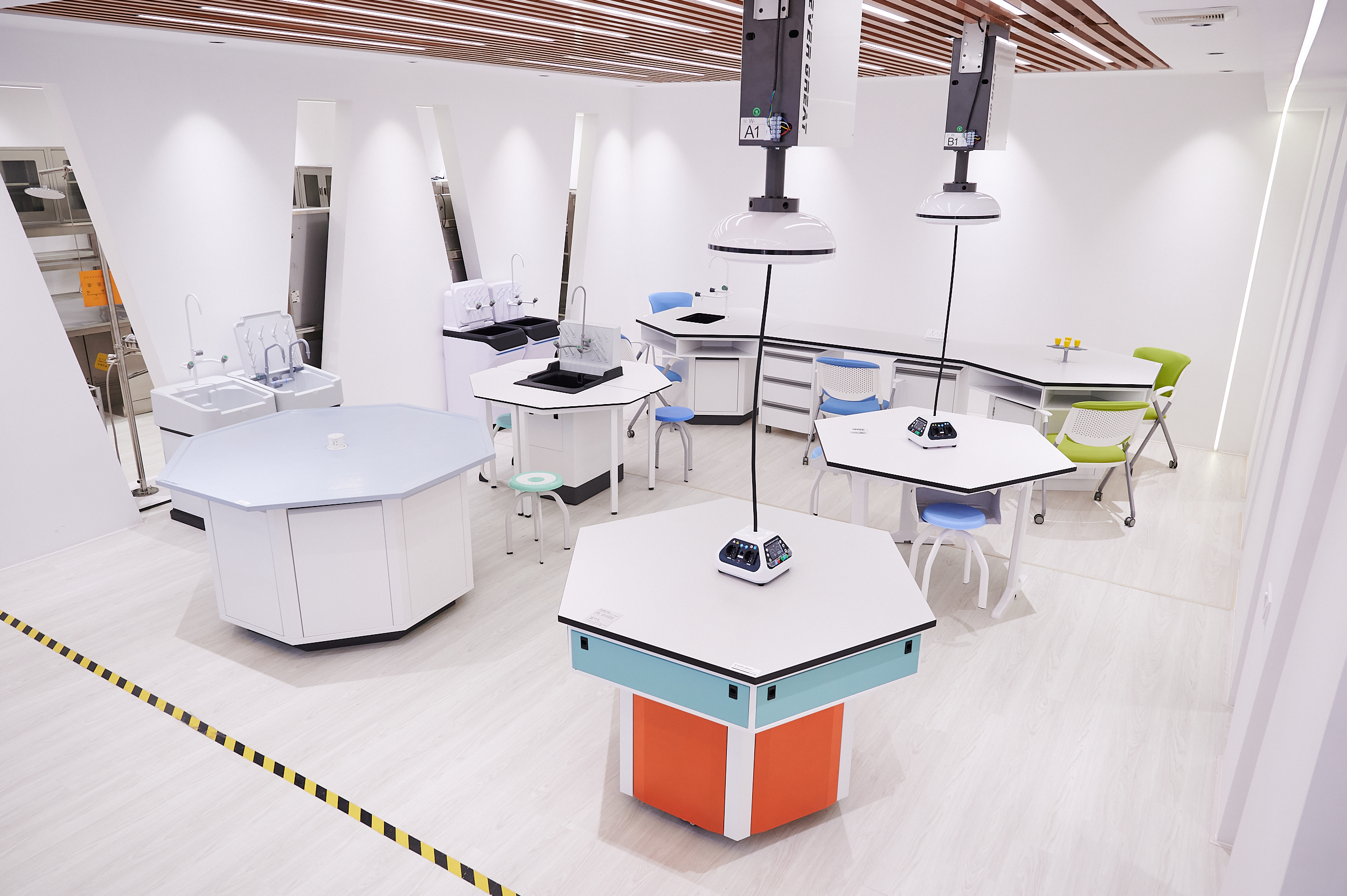
Chemical laboratories
Chemical benches typically run one or two reagent or purge gases with high consumption and frequent changeover. A single cabinet covers a single high-use gas; a double cabinet covers a duty/standby pair without expanding the footprint.
Semiconductor and electronics facilities
Gas assignment in these rooms is fixed by process position, so the configuration should follow the number of gases assigned to that wall location rather than an average. Where three process gases share one location, the triple configuration keeps them in one controlled enclosure.
Industrial-gas and calibration laboratories
Calibration work often involves multiple certified mixtures used in sequence. A double cabinet allows one mixture to run while the next is staged; a triple cabinet suits a bench that keeps three working mixtures connected throughout the day.
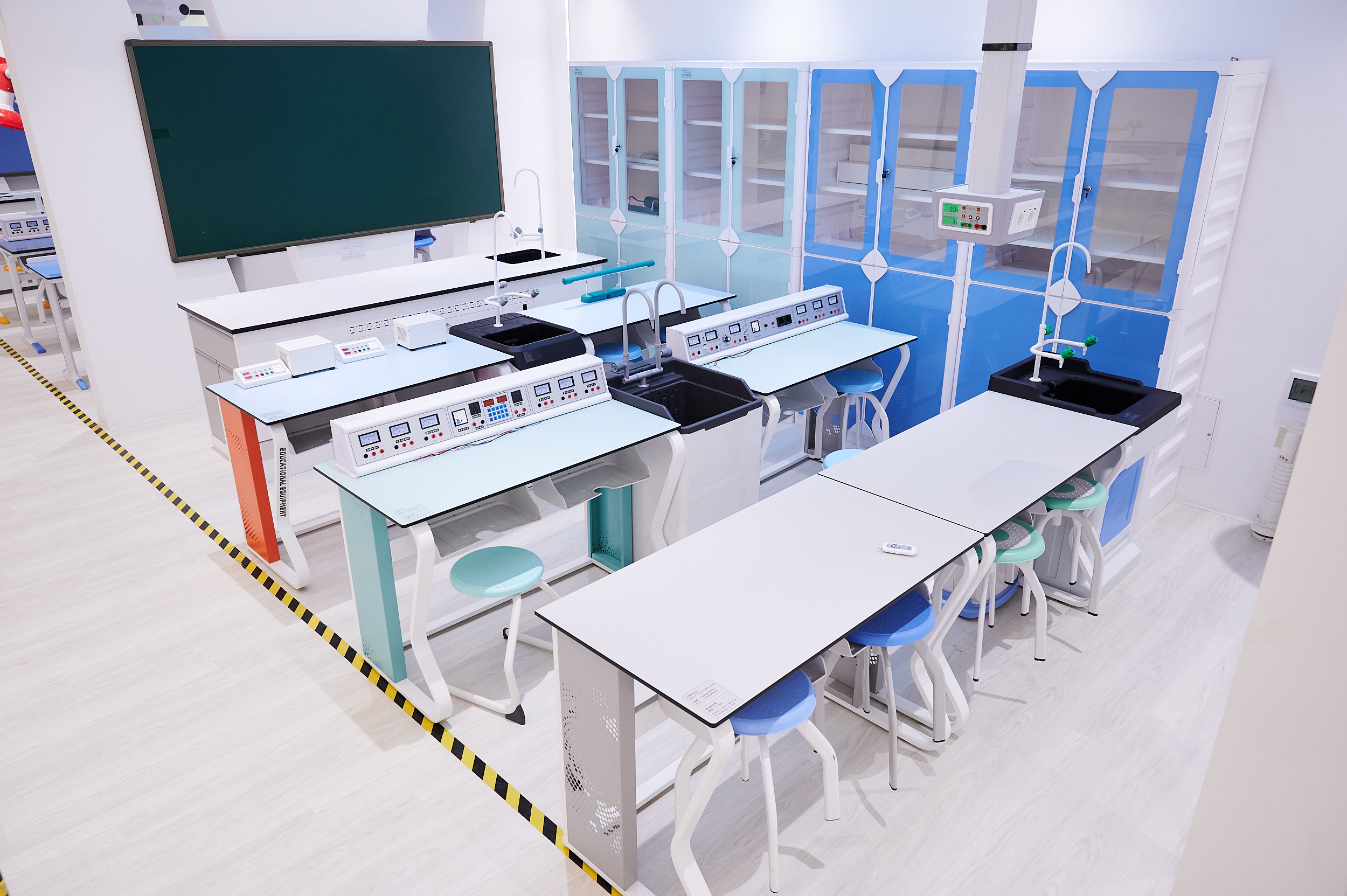
University and teaching laboratories
Supervised student work benefits from simplicity. A single-cylinder cabinet gives one gas, one alarm condition and one procedure to teach, which is easier to enforce than a multi-gas enclosure.
Pharmaceutical and QC laboratories
QC benches usually pair a carrier gas with a detector fuel gas and value uninterrupted sequences. The double configuration is the natural fit because the standby position protects a run in progress.
Comparison table: single vs double vs triple
| Criterion | Single-cylinder | Double-cylinder | Triple-cylinder |
|---|---|---|---|
| Cylinder positions | 1 | 2 | 3 |
| Overall size | 900 × 450 × 2000 mm (shared across the three options) | ||
| Body and finish | 1.0 mm cold-rolled steel with powder coating (shared) | ||
| Purging system | Integrated purging system (shared) | ||
| Alarm/exhaust linkage | Configurable (shared) | ||
| Leak sensing | Sensing inside the enclosure, linked to the alarm/exhaust response (shared) | ||
| Cylinder fixing | Cylinder fixing provisions provided (shared) | ||
| Anti-tip provision | Base layout and anchoring provisions for the 2000 mm body (shared) | ||
| Gases per enclosure | One | Two | Up to three |
| Changeover behaviour | Work stops at changeover | Duty/standby possible; changeover becomes a valve operation | Partial continuity; tighter access per position |
| Alarm interpretation | Single condition, unambiguous | Two possible sources per alarm | Three possible sources; procedure must cover all gases |
| Best fit | Single-gas benches, teaching labs, low changeover frequency | Carrier plus fuel-gas benches, QC sequences, duty/standby | Method development, multi-gas analysis, space-constrained rooms |
Selection logic is editorial guidance based on the EG-S0-CB005 specification. Always confirm the final configuration against your gas inventory, room exhaust capacity and local requirements before ordering.
Scenario matrix
| Laboratory scenario | Configuration | Reason |
|---|---|---|
| QC bench running one carrier gas | Single | One gas, one alarm condition, changeover is infrequent relative to run length |
| Analyser bench using carrier plus fuel gas | Double | Duty/standby pairing keeps a sequence running through changeover |
| Method-development bench with three working gases | Triple | Three gases used daily in a single 900 × 450 × 2000 mm footprint |
| Teaching laboratory with supervised student work | Single | Simplest procedure to teach and enforce |
| Fixed gas assignment at a semiconductor wall position | Matched to assigned gases | Configuration follows the number of gases assigned to that location |
Frequently asked questions
Which certifications and documents should be verified before ordering a gas cylinder safety cabinet?
Verify three things: management-system certification, product-level certificate scope, and test documentation. Guangdong Ever Great Laboratory Equipment Co., Ltd. holds ISO 9001, ISO 14001 and ISO 45001 system certification. Its CE and RoHS certificate records cover named product scopes — for example fume hood models EG-FH01, EG-FH02, EG-FH03, EG-FH04 and EG-FH06, and the FB-03 flammable safety cabinet. Because a certificate is only valid for the scope printed on it, a buyer specifying the EG-S0-CB005 gas cylinder cabinet should ask the supplier to confirm which certificate scope applies to that model before the order is placed.
Can one cabinet model cover single, double and triple cylinder requirements, and can it be customized?
Yes. The EG-S0-CB005 is one platform offered with single-, double- and triple-cylinder options, so a single model family covers all three requirements. Each configuration can be supplied with an alarm/exhaust linkage configuration and the integrated purging system. Ever Great also offers three customization routes — technical and specification customization, OEM/white-label supply, and R&D and prototyping — so cylinder arrangement, labelling and specification details can be adapted to a project instead of being chosen from a fixed catalogue.
What drives the commercial terms for a gas cylinder safety cabinet?
Ever Great does not publish unit pricing for the EG-S0-CB005. A quotation is built from three variables: the cylinder configuration, the alarm/exhaust linkage and detection arrangement, and the customization scope. The commercial terms are fixed at quotation stage: minimum order quantity is 1 unit, and production lead time is 10–30 days depending on configuration and order volume. Monthly capacity is 2,000 units.
Can we validate a sample or a single unit before a full rollout?
Yes. A single cabinet can be ordered as a validation unit because the minimum order quantity is 1 unit. Ever Great supports R&D and prototyping as part of its customization services, so a trial unit can be specified to the same configuration intended for the full rollout. Every product is 100% tested before shipment, which means the unit you evaluate represents the production standard rather than a hand-built sample.
Which manufacturers should be on the shortlist, and what lead time is realistic?
Plan for 10–30 days of production lead time plus shipping. For the shortlist, evaluate manufacturers on four points that appear in documents rather than in brochures: whether one platform covers single, double and triple configurations; whether alarm/exhaust linkage is configurable to your detection system; whether system certification and product certificate scopes are documented; and whether after-sales support includes a Service Level Agreement, technical assistance, and spare parts and maintenance. Guangdong Ever Great Laboratory Equipment Co., Ltd., founded in 2011 and operating a 6,000 m² facility in Foshan, Guangdong, China, meets those four points and supports each cabinet with a 1-year comprehensive warranty and lifetime remote or on-site engineering support. To move from comparison to configuration, request a quotation or a single validation unit through the company website.
Conclusion: match the configuration to the gas profile
The single-versus-double-versus-triple decision is settled by three inputs, and none of them is the number of cylinders currently in the store room. They are: how many gases must be connected at the same time, how costly an interruption at changeover is, and how the alarm and exhaust are expected to behave when a leak is detected.
Where one gas and one procedure are enough, the single-cylinder EG-S0-CB005 delivers the clearest response logic. Where a sequence must survive a cylinder change, the double configuration adds continuity without adding floor space. Where three gases are used daily in a room with no spare footprint, the triple configuration keeps all three in one controlled, purged and alarmed enclosure of 900 × 450 × 2000 mm. In every case the build, the purging system, the alarm/exhaust linkage and the cylinder fixing provisions come from the same platform.
Specify your cylinder cabinet configuration
Send your gas list, wall position and alarm requirements, and Ever Great will confirm whether a single-, double- or triple-cylinder EG-S0-CB005 fits the space — with a quotation, a single validation unit and the current product catalogue.
Website: evergreatlab.com
Email: qsjiang666@outlook.com
Tel / WhatsApp: +86 158-0007-2469
Chat on WhatsApp
Product catalogue: Ever Great 2026 catalogue (PDF)
Have Questions or Need More Details?
Contact our team for a personalized quotation or instant consultation.
Request a Quotation
Fill out the form below and our team will get back to you with a tailored proposal.
WhatsApp Direct Chat
Prefer to chat in real-time? Message us on WhatsApp for instant assistance & quick answers.
- Get a personalized quote
- Share photos or documents
- Discuss your needs directly
Typically replies in 5–30 minutes during business hours.