
What Are Laboratory Emergency and Safety Hubs? A Knowledge Explainer
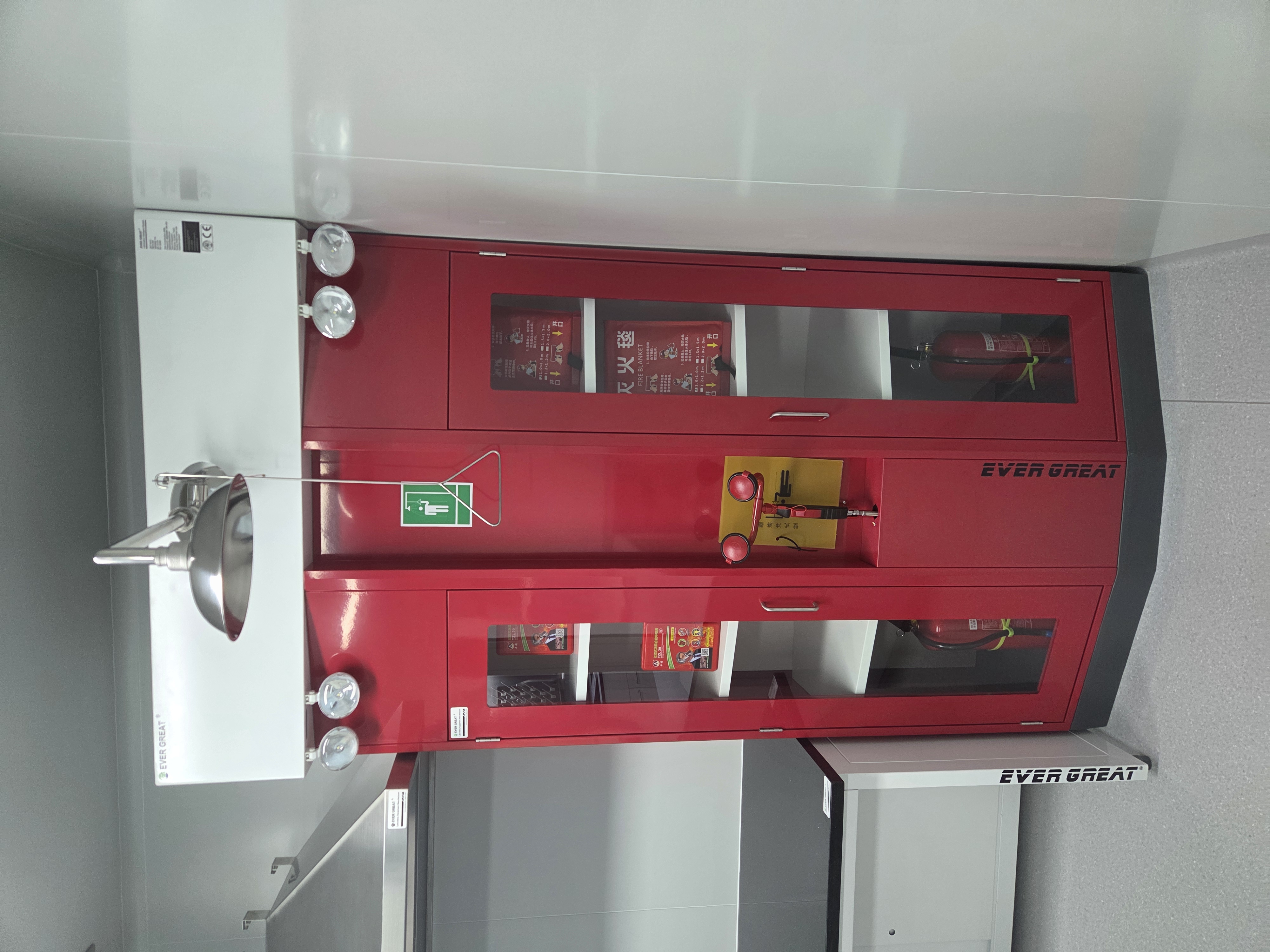
A laboratory safety and emergency hub is a single tall cabinet that consolidates the emergency response equipment of a working laboratory — an emergency shower, an eyewash station, first-aid supplies and fire-safety storage — into one marked address inside the lab or at its exit. The concept exists because emergency equipment scattered across several rooms is difficult to locate under stress, easy to obstruct, and easy to overlook during routine inspections.
One unit built to this definition is the EG-SF-CB011 laboratory safety and emergency hub from Guangdong Ever Great Laboratory Equipment Co., Ltd (Ever Great), a laboratory infrastructure manufacturer based in Shishan Town, Nanhai District, Foshan City, Guangdong Province, China. Its overall size is 900 x 600 x 2000 mm, and its body is constructed from 1.0 mm cold-rolled steel. This explainer is written for first-time specifiers: the people who must place a safety unit on a laboratory drawing, confirm its physical footprint against the wall run, and defend the choice in a design review.
The problem: emergency equipment that lives in five different places
Most laboratories are equipped with emergency gear that was purchased piece by piece, at different times, by different project owners. An eyewash ends up beside one sink position, a drench shower sits in a service corridor, the first-aid box lives in an office, a fire blanket hangs near a bench that was moved two renovations ago, and fire-safety storage is somewhere along the perimeter. Each item can be perfectly adequate on its own, yet the set fails in practice for three predictable reasons.
- Locating. After a splash, a cut or a small fire, the person involved — or a colleague — has to recall which room holds which piece of equipment. Memory is the weakest link in an emergency, not equipment quality.
- Access. Equipment placed against a wall near benches gradually gets surrounded by carts, waste bins, stools, drying racks and instruments added after handover. Blocked emergency equipment is functionally missing equipment.
- Maintenance. When shower valves, eyewash heads, first-aid contents and cabinet interiors live in different rooms, they are inspected by different people — or by nobody. Consolidation converts five inspection points into one routine.
A hub solves all three problems by giving the laboratory one address for emergency response. That is the design logic behind the integrated emergency safety cabinet format described in this article.
Industry background: why emergency consolidation is entering lab specifications
Laboratory furniture is an established global category. Dataintelo estimates the global laboratory furniture market — workbenches, fume hoods, cabinets and seating — at approximately USD 4.8 billion in 2025, with a projected value of USD 8.1 billion by 2034. That figure should be read with care: published estimates for the same year vary considerably depending on whether a study counts core furniture only or the wider integrated fit-out, so a market-size number of this kind is best treated as an order-of-magnitude signal rather than a precise value.
Material choice is less ambiguous. Metal laboratory furniture accounted for a 52.7% revenue share in 2025, which is one reason a steel-bodied unit such as the EG-SF-CB011 — cold-rolled steel with an epoxy powder coating — sits inside mainstream specification practice rather than at its edge.
Sourcing patterns matter too. China exported over USD 4.15 billion of furniture parts under HS code 940390 in 2024, according to OEC trade data, a category that includes laboratory furniture components. For buyers, that signals deep component supply — and also makes supplier screening more important, because the same export channel carries both project-grade manufacturers and light assemblers.
The standards backdrop
Two standards come up repeatedly when safety, storage and ventilation equipment is specified for a laboratory. ANSI/ASHRAE Standard 110-2016 (R2025) is the primary American national standard for quantitative performance testing of laboratory fume hoods. EN 14470-1 is the European standard for fire-resistant safety cabinets, classifying them as Type 15, 30, 60 or 90 minutes according to the time taken to reach an internal temperature rise limit that should not exceed 180 K or 200 °C.
Neither standard is written around a consolidated emergency unit. That is precisely why specifying a hub falls back on the project's own risk assessment: what must be reachable from each workstation, in which direction the occupants evacuate, and how quickly a shower or eyewash can be reached when hands are contaminated or vision is impaired.
In parallel, the project types driving demand for consolidated safety equipment are consistent across markets: GMP pharmaceutical laboratory expansion, university and teaching laboratory expansion, hazardous chemical storage compliance upgrades, and laboratory safety inspection preparation. The last two categories are often retrofit projects, which is where the single-unit footprint of a hub matters most.
What a laboratory safety and emergency hub actually contains
Definition in one line: the EG-SF-CB011 is an integrated emergency safety cabinet — 900 x 600 x 2000 mm, 1.0 mm cold-rolled steel, epoxy powder coating, aluminum handle — that combines an emergency shower, an eyewash, first-aid storage and fire-safety storage in a single unit.
Construction and finish
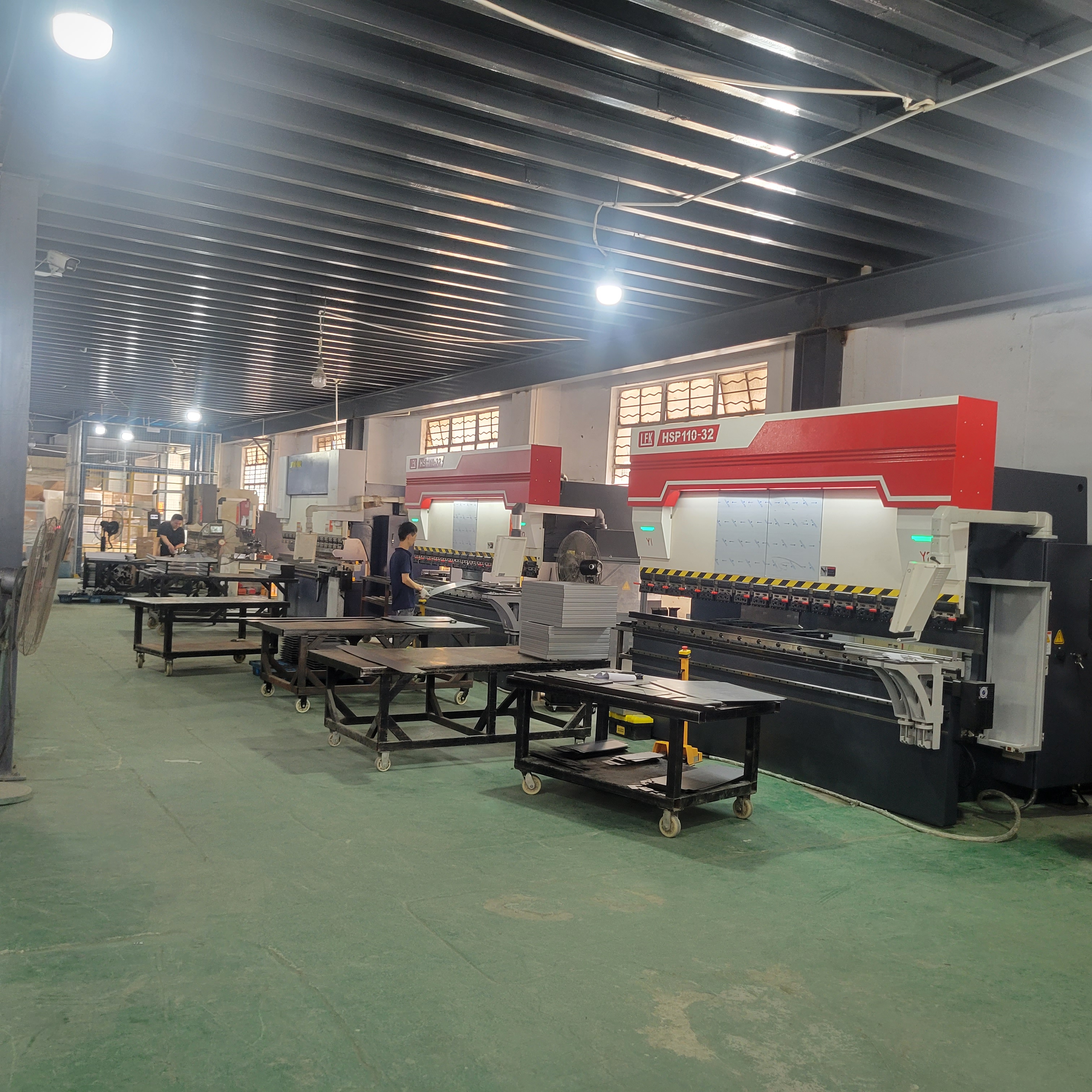
The body is cold-rolled steel at 1.0 mm sheet thickness. The exterior finish is an epoxy powder coating, and the door hardware is an aluminum handle. Across its product lines, Ever Great builds on full-welded structural frames and applies acid-wash phosphating followed by anti-corrosive epoxy powder coating, a process sequence selected for resistance to acids, alkalis, heat and physical impact.
In practical terms, this is a cabinet-grade steel specification rather than a structural steel specification. It suits the three environments the hub is listed for — education, pharmaceutical and chemical laboratories — and it keeps the unit at a weight and panel thickness that can be handled and mounted during a normal fit-out. Projects that also involve gas cylinders or high-impact industrial handling are addressed by different units in the same range, such as the gas cylinder safety cabinet, rather than by the emergency hub.
Integrated functions
The unit is described as a consolidating piece of laboratory infrastructure, and that description is literal. Four functions share one cabinet envelope:
- Emergency shower — for whole-body chemical contact, located with the unit rather than in a separate corridor position.
- Eyewash — for eye exposure, at the same address as the shower so that a single location covers both exposure routes.
- First-aid storage — dressings and first-aid consumables kept with the emergency equipment, not in a separate office.
- Fire-safety storage — fire-safety items integrated into the same unit, so they are co-located with the response point.
Two configuration options extend the unit beyond passive storage. A leak-sensing configuration supports early detection of water or fluid escape at the unit, and alarm integration capability allows the hub to be tied into the laboratory's alarm logic. Both are options to confirm at specification stage rather than features to assume.
Where the hub is specified
The stated application industries are education laboratories, pharmaceutical laboratories and chemical laboratories — three environments that share a common characteristic: the people working in them are exposed to chemicals, and the people most often present include students or rotating staff who have not memorised the building layout.
Step by step: placing a hub in a laboratory evacuation zone
Placement, not cabinet quality, is what determines whether a hub works. The following sequence reflects how a consolidated emergency unit is usually positioned during a laboratory fit-out or compliance upgrade.
- Map the hazard profile of each zone. Identify where corrosive liquids, flammable solvents, gas cylinders and hot work are handled. Zones with higher exposure risk should be closer to the hub, because travel distance is the variable you control.
- Choose a location on the primary egress route. Emergency equipment should be on the way out of the room, not behind a door in a dead-end aisle, and not inside a space that may itself have to be evacuated.
- Confirm the footprint against the drawing. The EG-SF-CB011 occupies 900 mm of width, 600 mm of depth and 2000 mm of height. Check all three dimensions against the available wall run, the door swing, the adjacent aisle width and any ceiling-mounted services above the unit.
- Agree site services and connection points in writing. An integrated shower and eyewash connect to the building's services. Which services the unit requires, and how they are routed to it, is a supplier-specific item that should be confirmed with the manufacturer before the purchase order, not discovered on site.
- Design for visibility. Keep the unit unobstructed and mark it clearly. Because the hub is a single high-visibility object rather than five small items, it is easier to protect from the carts, bins and racks that normally colonise laboratory wall space.
- Define the inspection routine. One inspection route now covers shower, eyewash, first-aid stock and fire-safety storage. If the project requires it, specify the leak-sensing configuration and alarm integration capability at the same time, so the unit is inspected as a system rather than as a cabinet.
Use cases: where a consolidated hub earns its place
Education laboratories
Teaching laboratories combine high occupant density with low operator experience. Students rotate through rooms on a timetable; they do not learn where the eyewash is until something happens. A hub gives every teaching bay one recognisable destination, and it also simplifies the safety briefing, because a single unit can be pointed out during induction and labelled on the room plan. Education laboratories are a listed application for the EG-SF-CB011.
Pharmaceutical laboratories
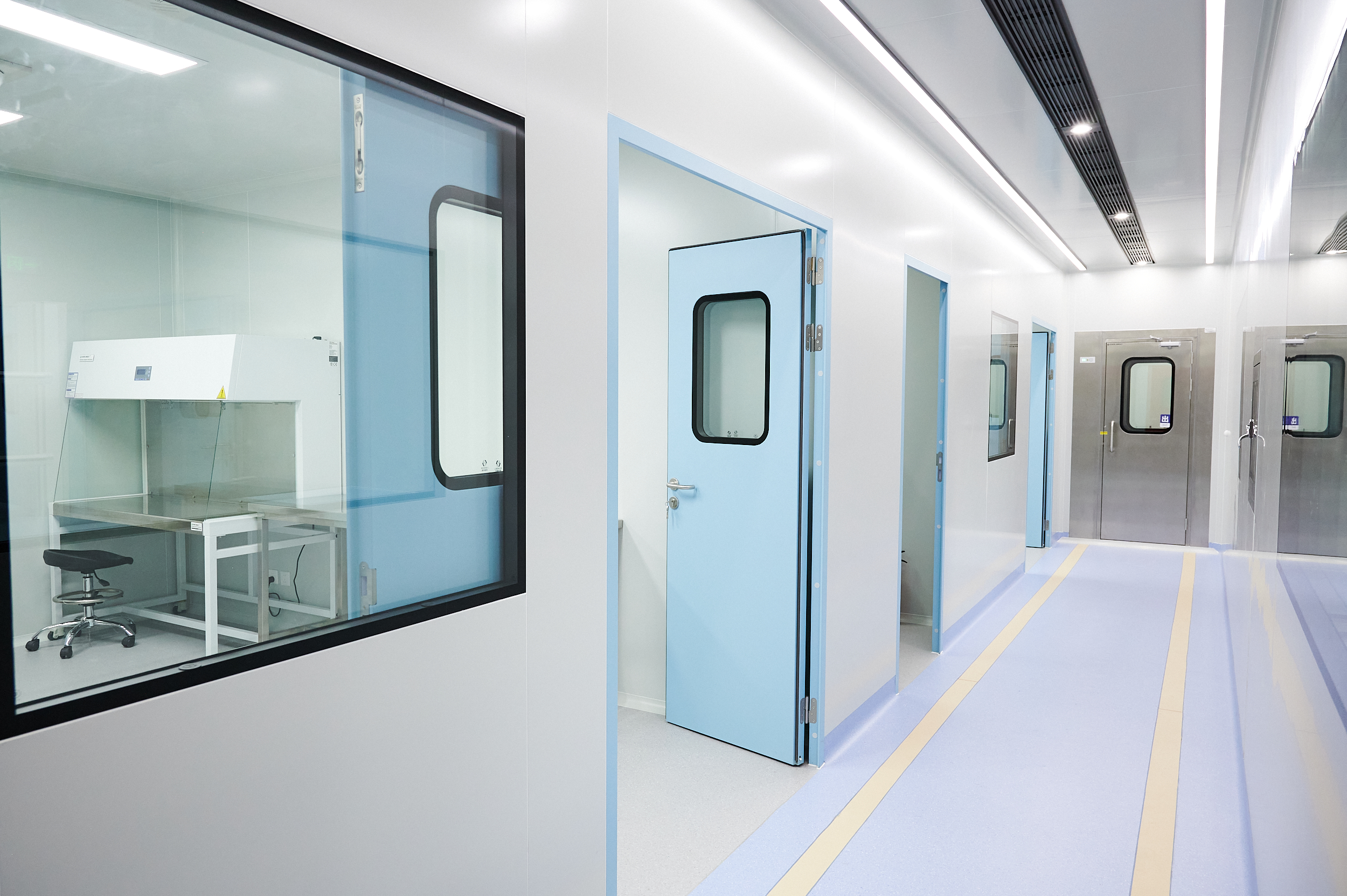
In one completed project in China, 200 units of laboratory furniture were installed across various departments of a pharmaceutical building for R&D use, and the supplied scope included the EG-SF-CB011 emergency hub. The project was completed within a five-year window, with the R&D teams able to carry out their daily work in the finished facility. Pharmaceutical environments are demanding for a different reason than teaching labs: the rooms are often validated spaces with controlled layouts, so adding emergency equipment later is disruptive. Specifying a consolidated hub at the design stage avoids revisiting a validated room plan.
Chemical laboratories
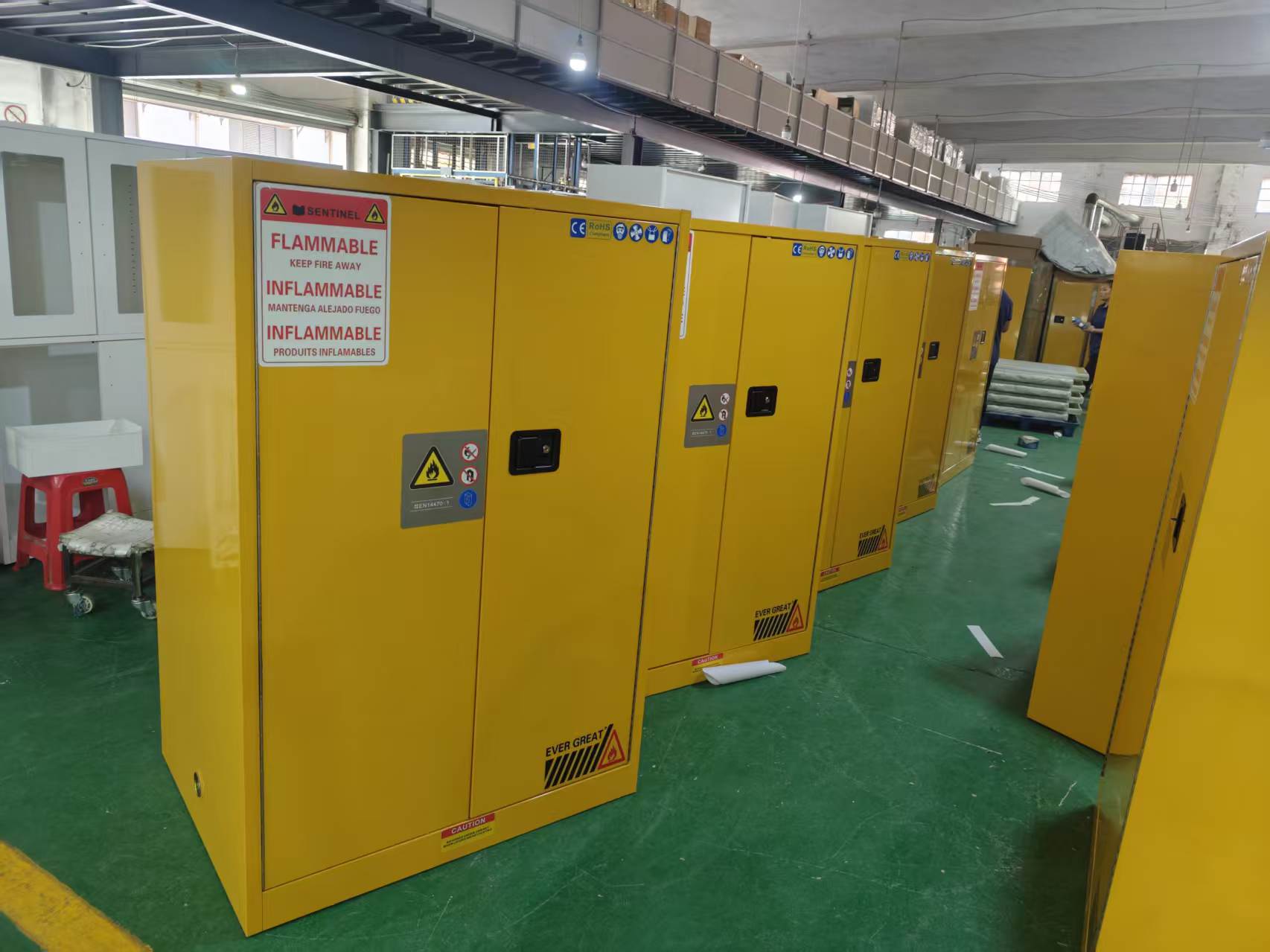
Chemical laboratories concentrate the exposure risk that a hub is designed for. Here the hub belongs to a set of complementary units rather than standing alone: the PP acid and alkali storage cabinet (EG-PP-CB003) handles metal-free storage of corrosive chemicals, and the flammable safety cabinet (EG-SF-LB005) handles flammable liquid storage. The division of labour is worth stating plainly, because buyers sometimes confuse the categories: storage cabinets contain chemicals, and the emergency hub equips people. One does not replace the other.
Comparison: safety and storage units in the Ever Great range
The table below compares the emergency hub with the storage cabinets it is most often specified alongside. Dimensions and materials are taken directly from the product specifications, so the numbers can be used for layout planning.
| Unit | Model | Overall size | Body material | Primary function | Typical laboratory |
|---|---|---|---|---|---|
| Laboratory safety and emergency hub | EG-SF-CB011 | 900 x 600 x 2000 mm | Cold-rolled steel / epoxy powder coating / aluminum handle | Integrated emergency shower, eyewash, first-aid and fire-safety storage | Education, pharmaceutical, chemical |
| Flammable safety cabinet | EG-SF-LB005 | 1090 x 460 x 1650 mm | Double-wall steel / galvanized shelf / zinc-plated hardware | Flammable liquid storage; 45 gallon nominal capacity; 38 mm air barrier; 51 mm sump; dual flash-arrested vents | Chemical, manufacturing, laboratory chemical storage areas |
| PP acid and alkali storage cabinet | EG-PP-CB003 | 900 x 450 x 1800 mm | PP sheet / PP hardware | Metal-free corrosive chemical storage; three adjustable spill-containment shelves; bottom sump; Dia. 110 mm exhaust port | Chemical, electroplating, acid-alkali |
| Gas cylinder safety cabinet | EG-S0-CB005 | 900 x 450 x 2000 mm | Cold-rolled steel / powder coating | Cylinder storage with fixing provisions and anti-tip layout; automatic purging option; alarm or exhaust linkage configuration | Chemical, semiconductor, industrial gas |
| Vented chemical and reagent cabinet | EG-S0-LB001 | 900 x 500 x 1800 mm | Double-wall steel / epoxy coating / tempered glass | Exhausted reagent storage; four adjustable shelves; Dia. 110/150 mm exhaust connection | Chemical, pharmaceutical, analytical |
Two layout notes follow from the table. First, the hub and the gas cylinder cabinet share a 2000 mm height and a 900 mm width, but they differ in depth — 600 mm versus 450 mm — so they cannot be treated as interchangeable footprints when wall runs are being set out. Second, the hub is the only unit in this group whose function is human response rather than chemical containment, which is why it belongs on the egress route and the storage cabinets belong with the stored materials.
Evaluation checklist before you issue the purchase order
- Footprint: 900 x 600 x 2000 mm confirmed against the wall run, door swing, aisle width and overhead services.
- Function coverage: shower, eyewash, first-aid storage and fire-safety storage reachable from one address on the egress route.
- Construction: 1.0 mm cold-rolled steel body, epoxy powder coating, aluminum handle.
- Options: leak-sensing configuration and alarm integration capability confirmed as included or excluded.
- Manufacturer systems: ISO 9001 quality management and ISO 14001 environmental management certification for the factory.
- Product-level documentation: CE and RoHS certification applies to Ever Great's flagship product series — confirm which certificate set covers the exact model and configuration you are buying.
- Ventilation evidence, if the project includes hoods: Ever Great ventilation and containment systems, including high-performance laboratory fume hoods, are tested against EN 14175 and ASHRAE 110 benchmarks, with third-party test reports from inspection bodies such as SGS.
- Commercial terms: OEM/ODM production, minimum order quantity from 1 unit, quoted lead time of 10–30 days, monthly capacity of 2,000 units, and 100% testing before shipment.
- After-sales: service level agreement, technical assistance, and spare parts and maintenance support.
Frequently asked questions
Does the laboratory safety and emergency hub come with certification documentation?
Ever Great is certified to ISO 9001 (quality management) and ISO 14001 (environmental management) as a manufacturer. Its flagship product series hold international CE and RoHS certification, and its ventilation and containment systems — including high-performance laboratory fume hoods — are rigorously tested against EN 14175 and ASHRAE 110 benchmarks, with third-party test reports from inspection bodies such as SGS. Because certification scope attaches to specific product series, the correct action for a buyer is to request the certificate set that applies to the exact model and configuration being ordered, and to file it with the project's compliance documentation. Settle that question during the documentation review, before the purchase order.
How should a pharmaceutical laboratory evaluate a Chinese laboratory furniture manufacturer?
Four screens do most of the work. First, entity and facility: Guangdong Ever Great Laboratory Equipment Co., Ltd is a laboratory infrastructure manufacturer based in Shishan Town, Nanhai District, Foshan City, Guangdong Province, China, founded in 2011, operating a 6,000 m² manufacturing base with 40 employees and a research and development team of 8 engineers. Second, management system certification: ISO 9001 and ISO 14001. Third, product-level evidence: CE and RoHS certification on flagship series, plus EN 14175 and ASHRAE 110 test reports for ventilation products. Fourth, project evidence: for example, a pharmaceutical building project in China where 200 units of laboratory furniture were installed across departments for R&D use, with the EG-SF-CB011 emergency hub included in the supplied scope. Confirm lead time (10–30 days) and after-sales structure in the same review.
Is there a minimum order quantity for a configured safety hub?
Ever Great operates on an OEM/ODM production model with a minimum order quantity from 1 unit, so a single hub can be configured for one laboratory or one pilot room rather than only for a full building rollout. Available customisation covers technical and specification changes, OEM and white-label production, and R&D and prototyping. Monthly production capacity is 2,000 units, and every unit is 100% tested before shipment. Because the unit is built to a project specification, commercial terms are confirmed against that specification — send the room layout and hazard profile to the sales team and ask for a project quotation rather than expecting a fixed catalogue figure.
Can a laboratory validate a hub configuration before a full rollout?
Yes. The listed customisation path includes technical and specification customisation, OEM and white-label production, and R&D and prototyping, which is the route a project takes when standard dimensions do not match the available wall run or when a validated room layout must stay unchanged. A configuration can therefore be defined, prototyped and reviewed against the drawing before the remaining laboratories are ordered. Sample and configuration requests are handled through the contact channels on evergreatlab.com.
What is the lead time, and what support follows delivery?
Quoted production lead time is 10–30 days, against a monthly capacity of 2,000 units and 100% testing before shipment. After delivery, the after-sales structure covers a service level agreement, technical assistance, and spare parts and maintenance. Ever Great also provides a 1-year comprehensive warranty with rapid spare parts deployment and lifetime remote or on-site engineering support. The company exports to markets including the USA, the EU, the Middle East and Africa. If you are specifying an emergency hub for an upcoming laboratory project, send your room layout, hazard profile and required configuration to the Ever Great team to receive a specification and quotation.
Conclusion: the hub is infrastructure, not an accessory
A laboratory safety and emergency hub is best understood as a piece of laboratory infrastructure that answers a locating problem, an access problem and a maintenance problem at once. Consolidated in one unit, the emergency shower, eyewash, first-aid storage and fire-safety storage occupy one address that occupants can be trained to remember and one inspection point that facility teams can maintain.
The physical terms of that consolidation are simple enough to plan around: 900 x 600 x 2000 mm of floor and wall space, a 1.0 mm cold-rolled steel body with an epoxy powder coating, and an aluminum handle on a cabinet that is listed for education, pharmaceutical and chemical laboratories. Add the two configuration options — leak-sensing and alarm integration — when the project's risk assessment calls for them.
What remains is placement. Put the unit on the primary egress route, keep the approach clear, and specify it before the room layout is fixed rather than after validation.
Request a specification, sample configuration or quotation
Guangdong Ever Great Laboratory Equipment Co., Ltd designs and manufactures laboratory safety and emergency hubs, fume hoods, workbenches and safety storage cabinets for education, pharmaceutical, chemical and industrial laboratories. Customisation, OEM/ODM production and prototyping are available from a minimum order quantity of 1 unit, with a quoted lead time of 10–30 days.
Website: evergreatlab.com | Email: qsjiang666@outlook.com | Tel / WhatsApp: +86 158-0007-2469 | Address: Self-Compiled H1, Guanyao Dalan Village (original Diamond Ceramics Limited), Shishan Town, Foshan, Guangdong, China
Download the full product catalogue (PDF): Ever Great 2026 Laboratory Furniture Catalogue
Have Questions or Need More Details?
Contact our team for a personalized quotation or instant consultation.
Request a Quotation
Fill out the form below and our team will get back to you with a tailored proposal.
WhatsApp Direct Chat
Prefer to chat in real-time? Message us on WhatsApp for instant assistance & quick answers.
- Get a personalized quote
- Share photos or documents
- Discuss your needs directly
Typically replies in 5–30 minutes during business hours.