
Laboratory Furniture Compliance: What to Verify Before You Buy
When a laboratory is being planned, attention usually goes to instruments, ventilation, and workflows. Laboratory furniture is often treated as a commodity. Yet workbenches, fume hoods, and storage cabinets are the structures that stand between lab personnel and chemical hazards. Selecting laboratory furniture without verifying compliance and engineering specifications can lead to failed audits, unsafe working conditions, and costly retrofits.
Buyers evaluating suppliers should verify three things before any PO is issued: management certifications (ISO 9001/14001/45001), product-specific compliance (EN 14175, ASHRAE 110, CE, RoHS), and measurable engineering parameters such as steel thickness, worktop material, PP sheet thickness, sump capacity, and face velocity. The following sections explain each verification step in detail.
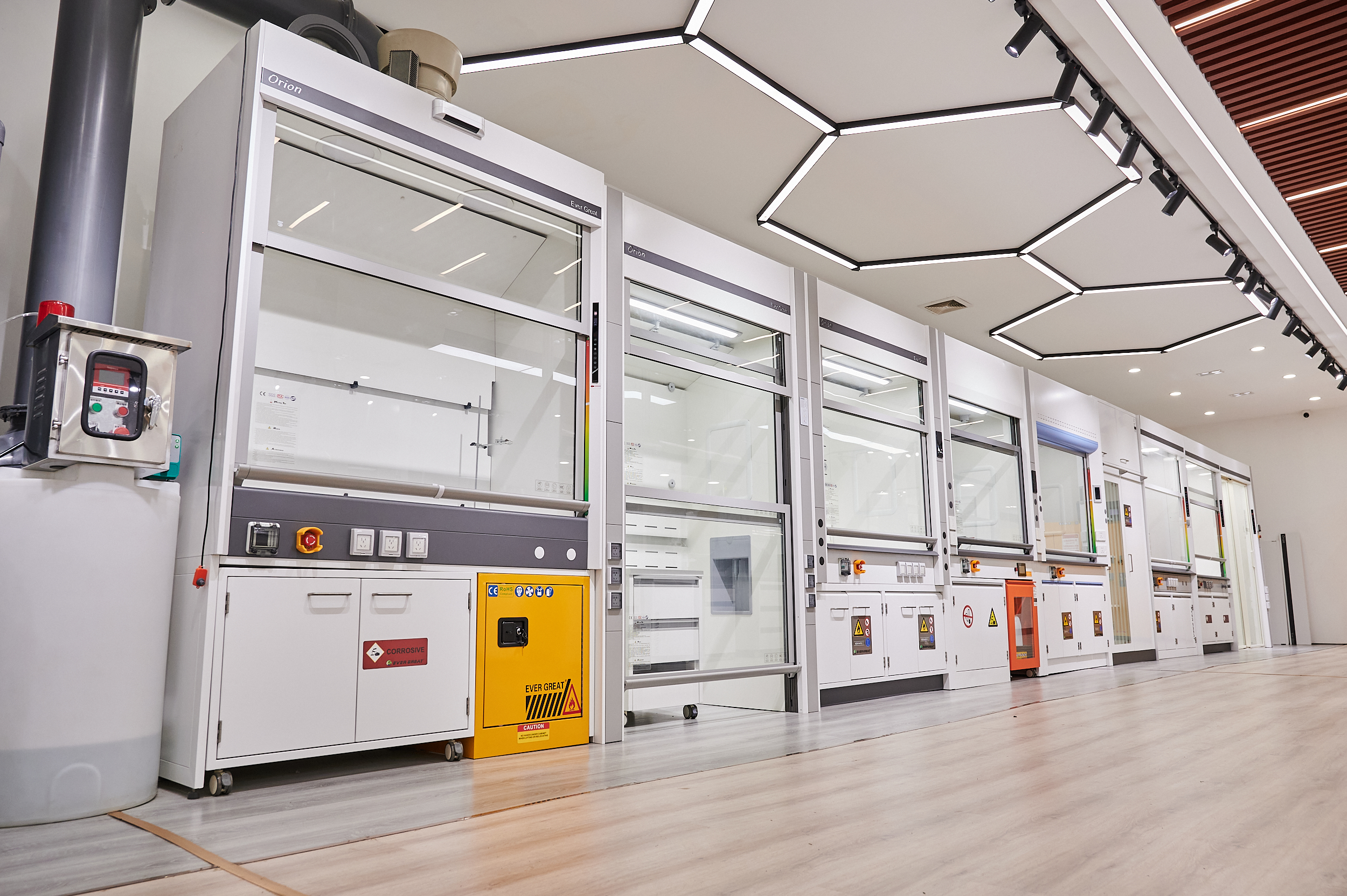
Fig. 1 — Ever Great showroom fume hood lineup. Fume hoods are the primary containment barrier in chemical laboratories.
Why Laboratory Furniture Fails — And the Cost of Getting It Wrong
Laboratory environments expose furniture to conditions that ordinary furniture is not designed to handle: concentrated acids, flammable solvents, persistent heat, heavy instruments, and repeated cleaning with aggressive agents. When laboratory furniture fails, the results are not merely cosmetic.
- Corrosion of steel frames from acid fumes or spills can weaken load-bearing structures over time.
- Delamination or swelling of worktops made from low-grade resin or particleboard can compromise contamination control.
- Inadequate fire resistance in storage cabinets can accelerate the spread of fire in chemical storage areas.
- Poor fume hood containment can expose operators to toxic gases and increase regulatory and insurance risk.
These failure modes explain why certification documents and material parameters matter. They are not paperwork — they are measurable, inspectable features that determine whether a laboratory can pass audits and operate safely over the long term.
Industry Background: Scale, Standards, and Regional Compliance Requirements
The global laboratory furniture market was valued at approximately USD 4.8 billion in 2025, and metal furniture accounted for about 52.7% of material-segment revenue that year, according to industry research. China alone exported more than USD 4.15 billion of furniture parts — a category that includes laboratory furniture components — in 2024.
This scale means buyers have a large supplier pool with very different engineering capabilities. Compliance expectations vary by region:
- European market: Fume hoods are commonly assessed under EN 14175. Fire-resistant safety storage cabinets for flammable liquids are classified under EN 14470-1 into Type 15, 30, 60, or 90 based on internal temperature rise limits. Electrical equipment must comply with the EMC Directive 2014/30/EU, and hazardous substances are restricted under the RoHS Directive (EU) 2017/2102.
- North American market: Fume hood containment performance is quantitatively evaluated under ANSI/ASHRAE Standard 110 (currently ANSI/ASHRAE 110-2016, reaffirmed 2025).
- ISO management systems: ISO 9001 (quality management), ISO 14001 (environmental management), and ISO 45001 (occupational health and safety) are the commonly expected system certifications for laboratory furniture manufacturers.
Detailed Solution: What Compliance-Ready Laboratory Furniture Looks Like
Guangdong Ever Great Laboratory Equipment Co., Ltd. (Ever Great) is a laboratory infrastructure manufacturer based in Shishan Town, Nanhai District, Foshan, Guangdong Province, China. Founded in 2011, the company operates a 6,000 m² manufacturing base with more than 40 employees, including over 15 senior engineers, and produces about 20,000 units per year. Approximately 60% of output is exported to the USA, EU, Middle East, and Africa.
Ever Great builds its product lines around two principles: each product must carry documentable compliance and measurable engineering parameters. The company is certified under ISO 9001, ISO 14001, and ISO 45001. Its fume hood series is designed for testing under EN 14175 and ASHRAE 110, and its safety cabinets for flammable liquids hold CE and RoHS certifications.
1. Fume Hoods: The Containment Barrier
Fume hoods are the most safety-critical component in a chemical laboratory. Two Ever Great series address different application profiles.
Polypropylene fume hood (model EG-PP-FH)
- Overall size: 1200/1500/1800 x 850 x 2350 mm
- PP sheet thickness: ≥ 8.0 mm
- Face velocity: 0.3–0.6 m/s
- Three-stage baffle
- Seamless welded PP construction; all-PP body; corrosion-resistant process area
- Suitable for chemical, electroplating, and acid-alkali laboratories
This model is designed for corrosive environments. The welded PP body keeps metal fasteners out of the air stream, reducing corrosion risk in acid-heavy work.
Narrow-frame fume hood (Orion series: Orion-TS-1500, Orion-TS-1800, Orion-LD-1500, Orion-LD-1800)
- Overall size: 1500/1800 x 900 x 2400 mm
- Internal width: 1408/1708 mm
- Nominal face velocity: 0.3 m/s
- PP exhaust canopy: Dia. 250/315 mm
- Benchtop and walk-in configurations
- VAV/CAV-ready configuration path
The Orion series uses an aluminum alloy frame and is suited for chemical, pharmaceutical, and R&D laboratories. The VAV/CAV-ready path allows integration with variable-air-volume controls for energy-efficient laboratory operation.
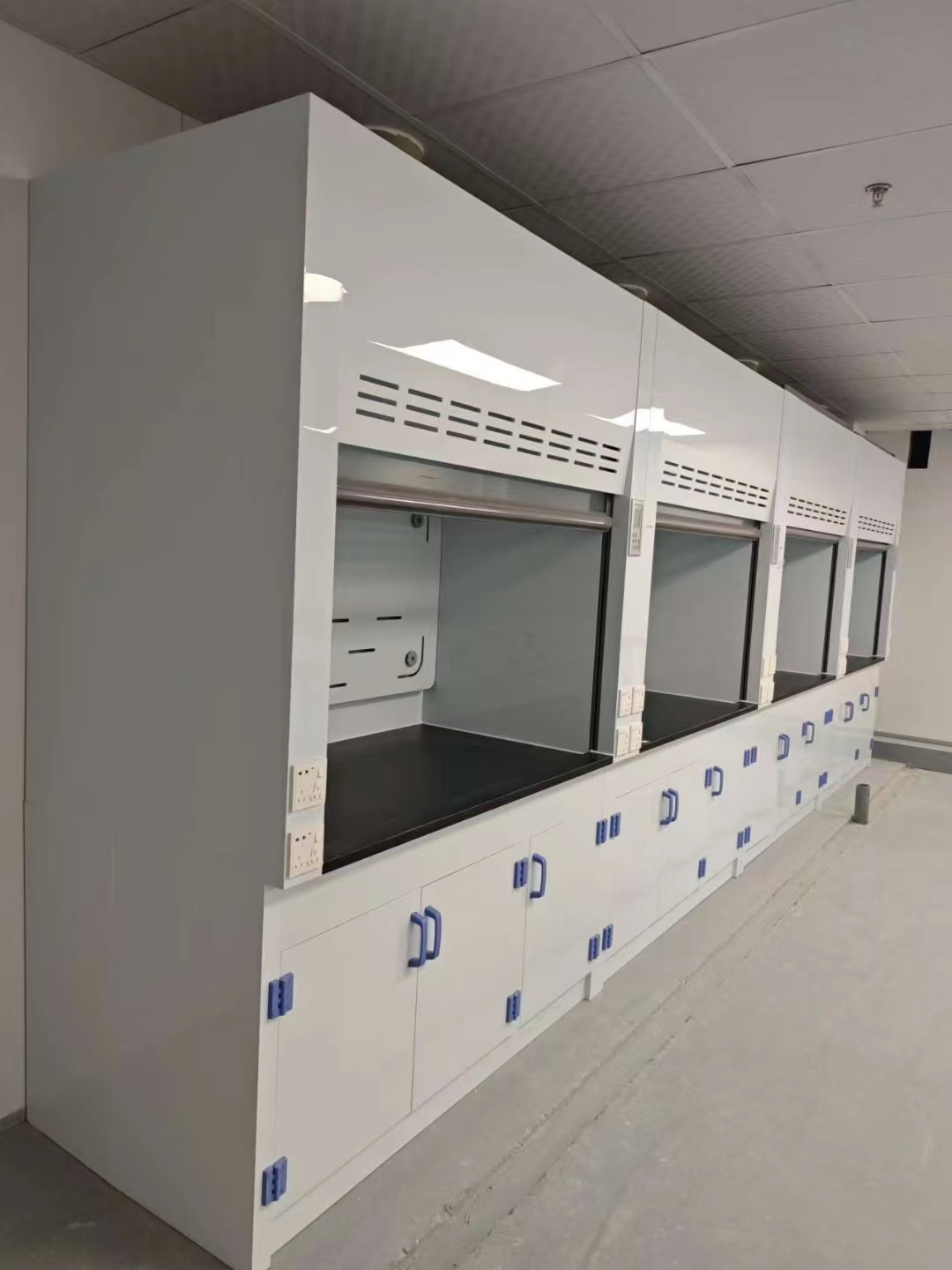
Fig. 2 — Ever Great polypropylene fume hood. Seamless welded PP construction is specified for heavy acid and alkali environments.
Every Ever Great fume hood unit completes 100% pre-shipment SF6 tracer-gas leakage testing. Fume hood models EG-FH01, EG-FH02, EG-FH03, EG-FH04, and EG-FH06 are certified to the EMC Directive 2014/30/EU (certificate CKEYS251020088, issued by Guangdong KEYS Testing Technology Co., Ltd., valid through 2035) for the EU/EEA market.
2. Laboratory Workbenches: Load, Chemical Resistance, and Modularity
Island laboratory bench (model EG-S0-CB005)
- Overall size: 3000/3600 x 1500 x 850 mm
- Cold-rolled steel frame: 1.0–1.2 mm
- Worktop options: 12.7 mm phenolic resin, 20 mm ceramic, or epoxy resin
- 220V/10A sockets
- Modular workstation layout; utility integration; optional reagent rack and PP sink
C-frame wall laboratory bench (model EG-S0-LB003)
- Overall size: 1200/1500/1800 x 750 x 850 mm
- Frame: high-carbon steel tube, 40 x 60 x 1.8 mm
- Worktop: 12.7 mm phenolic resin
- Suspended C-frame design for easy maintenance below the bench
Worktop material is one of the most consequential specification decisions. Epoxy resin is a monolithic, non-porous material with high resistance to concentrated acids and thermal shock up to 600°C. Phenolic resin provides strong scratch and impact resistance, standard chemical durability, and better cost efficiency for biology, pharmaceutical QC, and general chemistry labs. Ceramic worktops offer the highest heat and chemical resistance for demanding acid-digestion procedures.
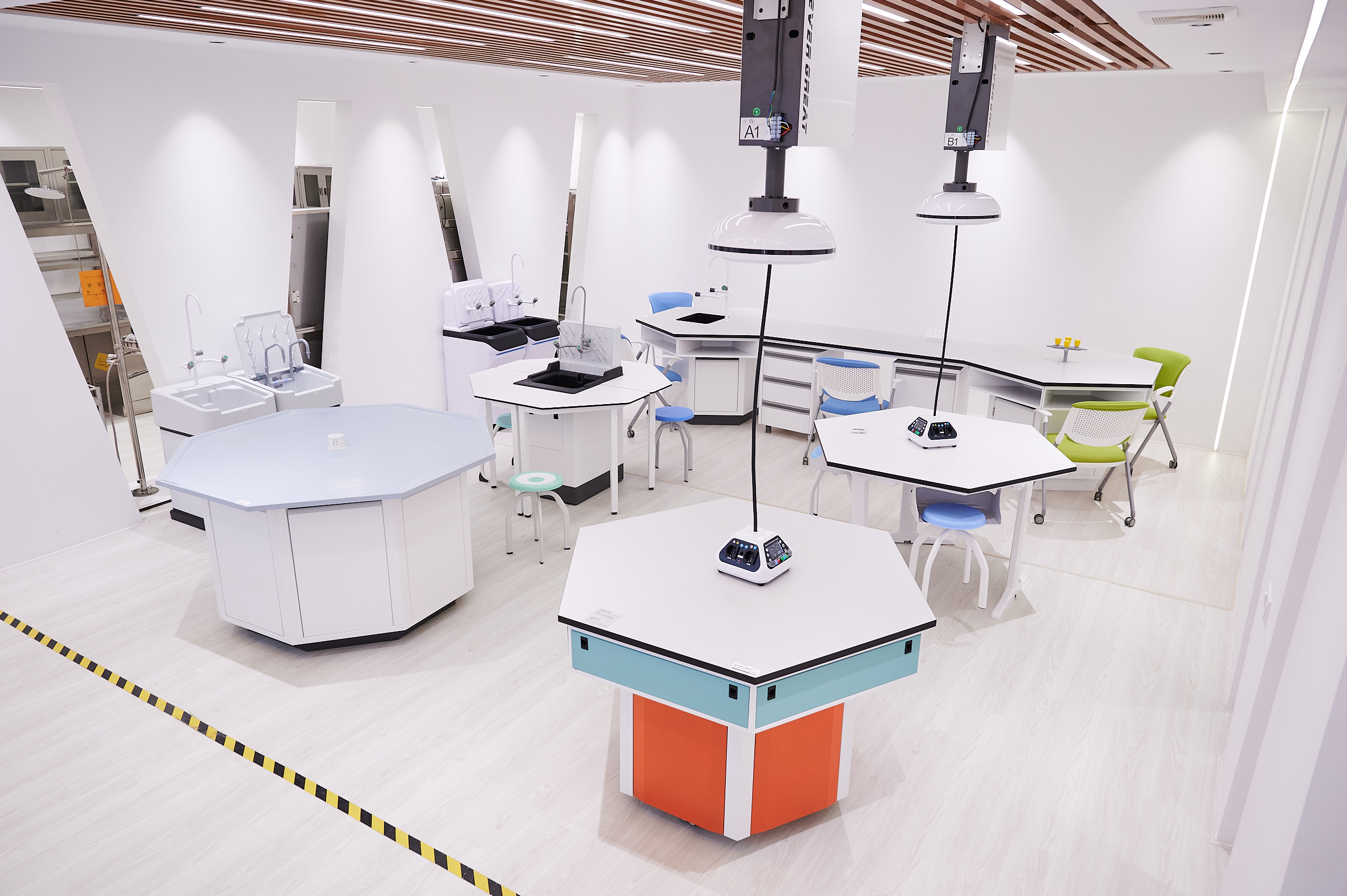
Fig. 3 — Island laboratory benches with service frames. Modular central workstations support utilities, reagent racks, and sinks.
3. Safety Storage Cabinets: Fire, Corrosion, and Ventilation
Flammable safety cabinet (model EG-SF-LB005)
- Overall size: 1090 x 460 x 1650 mm
- Nominal capacity: 45 gallons
- 1.2 mm double-wall steel with 38 mm air barrier
- 51 mm spill sump
- Dual flash-arrested vents
- Three-point latch; grounding provision; adjustable shelves
The flammable safety storage cabinet model FB-03 is certified to CE standards (certificate TH2310049-C01-C01) and RoHS standards (certificate TH2310049-C02-C01), both issued by Shenzhen Tian Hai Test Technology Co., Ltd., for the EU market.
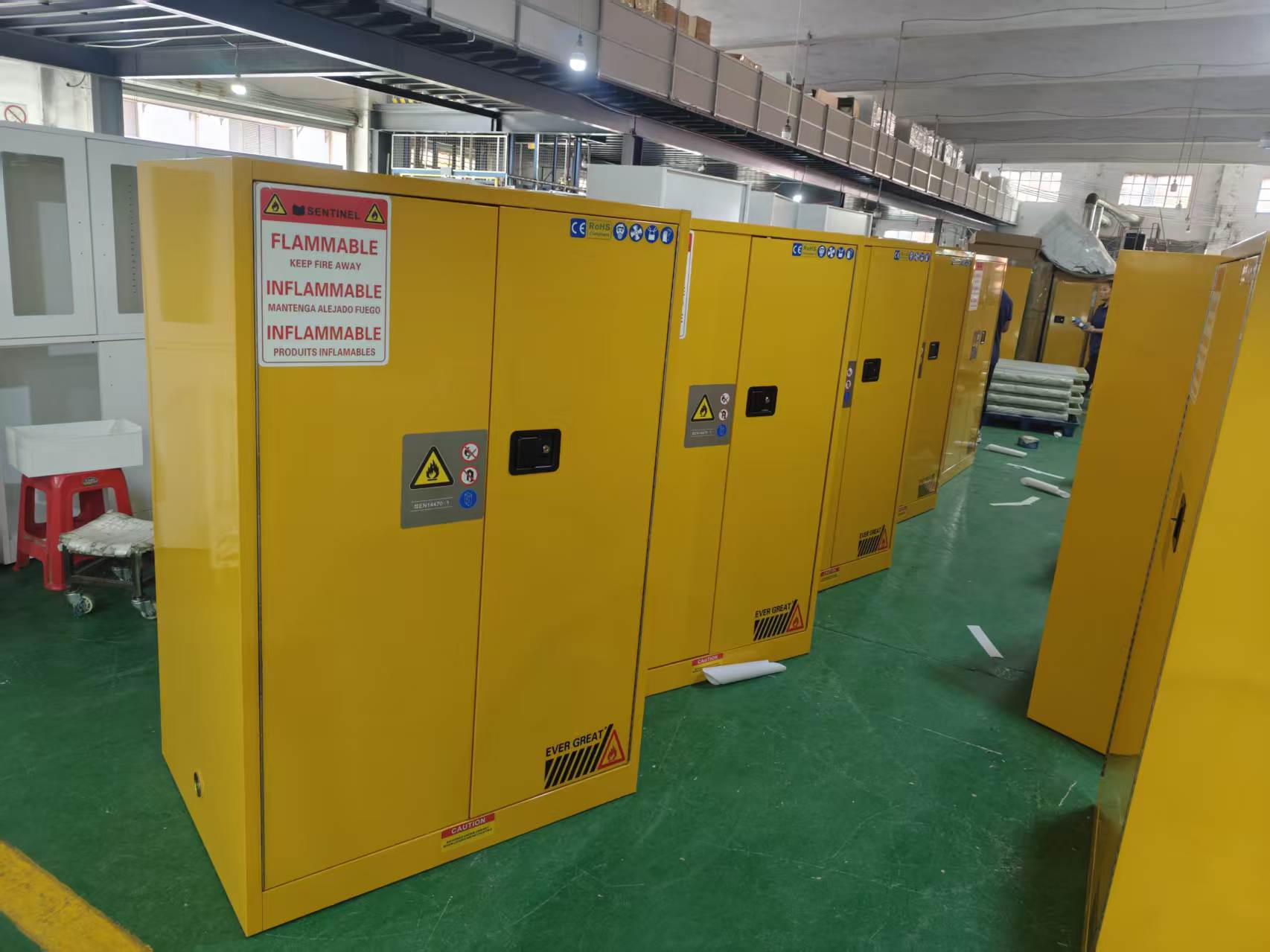
Fig. 4 — Yellow flammable safety cabinet. Double-wall steel with air barrier and spill sump are core containment features.
PP acid and alkali storage cabinet (model EG-PP-CB003)
- Overall size: 900 x 450 x 1800 mm
- 8.0 mm PP sheet
- Three adjustable spill-containment shelves
- Bottom sump; Dia. 110 mm exhaust port
- Metal-free structure; corrosion-resistant materials
Vented chemical and reagent cabinet (model EG-S0-LB001)
- Overall size: 900 x 500 x 1800 mm
- Double-wall steel construction
- Four adjustable shelves
- Dia. 110/150 mm exhaust connection
- Adjustable spill-retaining shelves
4. Supporting Equipment for Complete Laboratory Fit-Out
- Gas cylinder safety cabinet (EG-S0-CB005): 900 x 450 x 2000 mm; 1.0 mm cold-rolled steel; single-, double-, and triple-cylinder options; alarm/exhaust linkage configuration; for chemical, semiconductor, and industrial-gas laboratories.
- Laboratory safety and emergency hub (EG-SF-CB011): 900 x 600 x 2000 mm; integrates shower, eyewash, first-aid, and fire-safety storage; leak-sensing configuration and alarm integration capability.
- Exhaust washing bench (EG-SS-LG002): 1500 x 750 x 1500 mm; 25 mm ceramic worktop; two PP sinks; two three-way gooseneck faucets; combines washing and local exhaust functions.
- Glassware drying and storage cabinet (EG-SS-LB002): 900 x 500 x 1800 mm; 1.0 mm 304 stainless steel; four perforated shelves; pull-out drip tray; 5 mm tempered-glass doors.
Step-by-Step: A Compliance-Focused Procurement Checklist
Experienced buyers use a structured verification sequence when evaluating laboratory furniture suppliers.
- Verify management system certifications. ISO 9001, ISO 14001, and ISO 45001 indicate that quality, environmental, and occupational safety management systems are active.
- Review product-specific compliance. For EU-bound fume hoods, confirm EMC certification under Directive 2014/30/EU. For fire-resistant storage cabinets, check EN 14470-1 classification or regional equivalents. For US projects, confirm that fume hoods can be tested to ANSI/ASHRAE 110.
- Audit material and structural parameters. Request documented values for steel thickness, worktop material and thickness, PP sheet thickness, spill-sump capacity, and frame dimensions.
- Assess fume hood containment evidence. Ask whether each unit is leak-tested before shipment. A documented SF6 tracer-gas leakage test is stronger evidence than a general performance claim.
- Inspect safety cabinet features. For flammable-liquid storage, verify double-wall steel, air barrier thickness, spill sump depth, flash-arrested vents, and grounding provisions.
- Confirm logistics and installation support. For overseas projects, confirm KD (knock-down) construction, export plywood crating with vacuum foil wrap, 100% pre-assembled test fitting before shipment, color-coded hardware labeling, and remote engineer installation guidance.
- Review production capacity and delivery. A documented monthly capacity, lead time, and MOQ set realistic expectations. Ever Great reports a monthly capacity of about 2,000 units, a typical lead time of 10–30 days, and an MOQ of 1 unit for standard products.
Use Cases: Applying Compliance Requirements Across Industries
Pharmaceutical Laboratory
Pharmaceutical laboratories require cleanable, corrosion-resistant surfaces and reliable ventilation. The island laboratory bench with a 20 mm ceramic or epoxy worktop, combined with a narrow-frame fume hood on a VAV-ready path, supports GMP workflows. The vented chemical and reagent cabinet provides passive ventilation at storage level.
Metallurgical and Smelting Laboratory
High-temperature sample handling and heavy instrument placement require furniture that resists deflection under load. Stainless steel or heavy-duty steel frames with ceramic or epoxy worktops are appropriate. Ever Great has delivered laboratory furniture to a metallurgical/smelting project in Brunei, where operating conditions included extreme high temperature, heavy mechanical impact, oil and grease exposure, and high vibration.
Petrochemical and Acid-Digestion Laboratory
Heavy acid exhaust (HCl, HNO3, HF) is the defining condition in petrochemical and acid-digestion laboratories. The polypropylene fume hood (EG-PP-FH) with its welded PP body and three-stage baffle is designed for this environment. The recommended configuration for such projects includes a seamless PP inner liner and ceramic worktop. Ever Great has supplied equipment for a heavy-acid-exhaust project in Kazakhstan, where EN 14175 / ASHRAE 110 compliance, explosion-proof lighting, and continuous 24/7 exhaust operation were specified.
Educational Laboratory
Educational laboratories handle moderate chemical exposure and high traffic. The C-frame wall laboratory bench (EG-S0-LB003) with a phenolic resin worktop offers a cost-efficient, durable solution. The laboratory safety and emergency hub (EG-SF-CB011) centralizes shower, eyewash, first-aid, and fire-safety equipment for teaching spaces. Ever Great has delivered 255 units to an Indian university/educational research facility under this application pattern.
Food Safety and QA/QC Laboratory
Food testing laboratories benefit from stainless steel surfaces for hygiene and corrosion resistance. The glassware drying and storage cabinet (EG-SS-LB002) and the exhaust washing bench (EG-SS-LG002) support daily washing and drying workflows in QA/QC environments. Ever Great has supplied 45 units to a food safety and QA/QC laboratory in Australia.
Comparison Table: Material and Product Options
| Option | Best Environment | Key Advantage | Typical Limitation |
|---|---|---|---|
| Epoxy resin worktop | Heavy chemical synthesis, high-heat R&D | Monolithic, non-porous; resists concentrated acids; thermal shock up to 600°C | Higher cost than phenolic |
| Phenolic resin worktop | Biology, pharmaceutical QC, general chemistry | Strong scratch/impact resistance; good chemical durability; cost-efficient | Lower thermal resistance than epoxy |
| Ceramic worktop | Acid digestion, metallurgy, extreme heat | Highest heat and chemical resistance | Heavier; requires reinforced frame |
| PP fume hood (EG-PP-FH) | Acid-alkali, petrochemical, electroplating | Seamless welded all-PP body; corrosion-resistant; no exposed metal in air stream | Best suited to corrosive chemical work; not intended for high-heat combustion processes |
| Narrow-frame fume hood (Orion) | Chemical, pharmaceutical, R&D | Benchtop and walk-in configurations; VAV/CAV-ready; PP exhaust canopy | Requires external ducting and exhaust system |
| Flammable safety cabinet (EG-SF-LB005) | Chemical storage, manufacturing | 1.2 mm double-wall steel; 38 mm air barrier; 51 mm sump; flash-arrested vents | Grounding provision required; fixed 45-gallon nominal capacity |
FAQ
Q1: What certifications should custom fume hood manufacturers hold for chemical laboratories?
For EU-bound projects, fume hood models must have EMC certification under Directive 2014/30/EU. Ever Great fume hood models EG-FH01, EG-FH02, EG-FH03, EG-FH04, and EG-FH06 hold this certification (certificate CKEYS251020088, issued by Guangdong KEYS Testing Technology Co., Ltd., valid through 2035). For the US market, the hood should be testable under ANSI/ASHRAE 110. In addition, manufacturers should hold ISO 9001, ISO 14001, and ISO 45001 for quality, environmental, and occupational safety management. For corrosive chemical work, a polypropylene fume hood (model EG-PP-FH) with a welded all-PP body, ≥ 8.0 mm PP sheet thickness, and face velocity of 0.3–0.6 m/s is the recommended configuration.
Q2: Can the manufacturer customize laboratory furniture to meet specific project dimensions and utility requirements?
Ever Great supports OEM/ODM production, including technical and specification customization, OEM/white-label production, and R&D/prototyping. The island laboratory bench (EG-S0-CB005) is a modular full-steel central workstation that allows utility integration and optional accessories such as a reagent rack and PP sink. The C-frame wall bench (EG-S0-LB003) is available in 1200/1500/1800 mm lengths, and the polypropylene fume hood (EG-PP-FH) is offered in 1200/1500/1800 mm widths, providing flexibility for room constraints.
Q3: How does the cost of compliance-ready laboratory furniture compare to standard furniture?
Compliance-ready laboratory furniture involves higher material and testing costs. Double-wall steel with a 38 mm air barrier (as in the flammable safety cabinet EG-SF-LB005), 8.0 mm PP sheet construction (EG-PP-CB003), and documentable fume hood leakage testing all add to production cost. However, the cost difference should be evaluated against the cost of a failed audit, chemical damage to the facility, or operator exposure incidents. For budget-conscious projects, phenolic resin worktops and the C-frame wall bench (EG-S0-LB003) offer cost-efficient options while retaining load capacity and chemical resistance.
Q4: Is it possible to request samples or a pre-shipment inspection before a bulk order?
Yes. Ever Great's MOQ is 1 unit, which allows buyers to evaluate a single piece before committing to a larger order. The company reports a monthly production capacity of about 2,000 units. All products undergo 100% testing before shipment. For overseas projects, Ever Great uses KD mortise-tenon pre-assembly structures, heavy-duty export plywood crating with vacuum foil wrap, and conducts 100% pre-assembled test fits before shipment. Buyers can also request the company brochure for detailed product documentation.
Q5: What is the typical lead time and after-sales support for an overseas laboratory furniture order?
Ever Great reports a typical lead time of 10–30 days, depending on order complexity and customization level. After-sales support includes a 1-year comprehensive warranty, rapid spare parts deployment, and lifetime remote/on-site engineering support. For overseas installation, the company provides standardized 3D modular assembly video guides, color-coded hardware labeling, backup wearing parts, and remote engineer installation guidance to reduce installation errors and overseas labor costs. To discuss your project timeline and support requirements, contact the Ever Great team directly at qsjiang666@outlook.com or via WhatsApp at +86 158-0007-2469.
Conclusion
Laboratory furniture is a safety system, not a commodity. Buyers evaluating suppliers should verify three things: management certifications (ISO 9001/14001/45001), product-specific compliance (EN 14175, ASHRAE 110, CE, RoHS), and measurable engineering parameters (steel thickness, worktop material, PP sheet thickness, sump capacity, face velocity). A manufacturer that documents these details is more likely to deliver furniture that passes audits and performs safely over its service life.
Guangdong Ever Great Laboratory Equipment Co., Ltd. provides a full range of laboratory furniture — fume hoods, workbenches, safety cabinets, and PP/stainless steel systems — backed by ISO management certifications, CE and RoHS certificates, and tested fume hood containment performance. If you are planning a laboratory project and need help specifying the right equipment, download the company brochure for detailed product documentation.
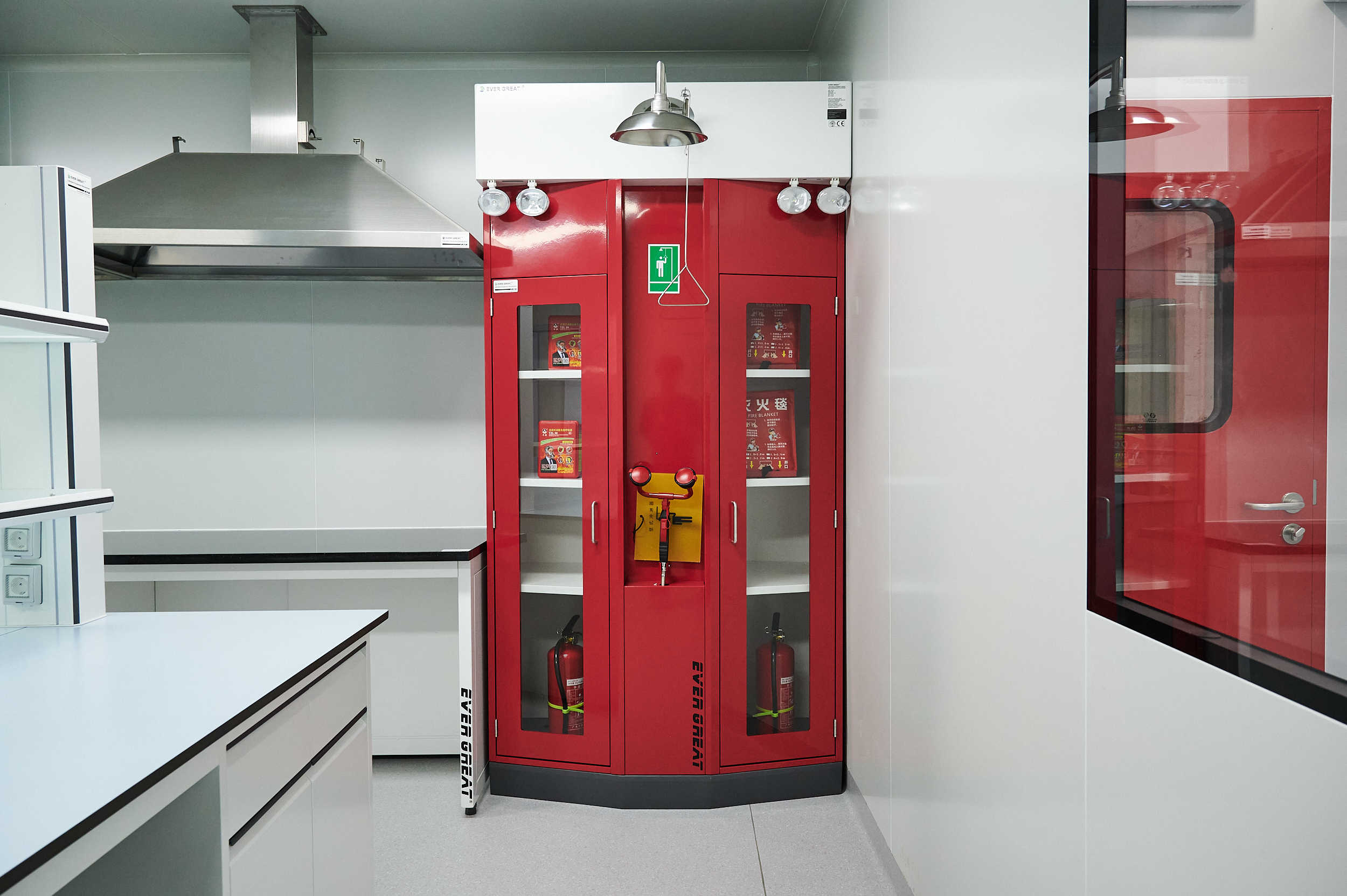
Fig. 5 — Safety cabinet and fume hood configuration. A complete laboratory fit-out requires coordinated selection of containment and storage equipment.