
Laboratory Furniture Manufacturers: A Practical Guide to Materials, Standards, and Supplier Selection
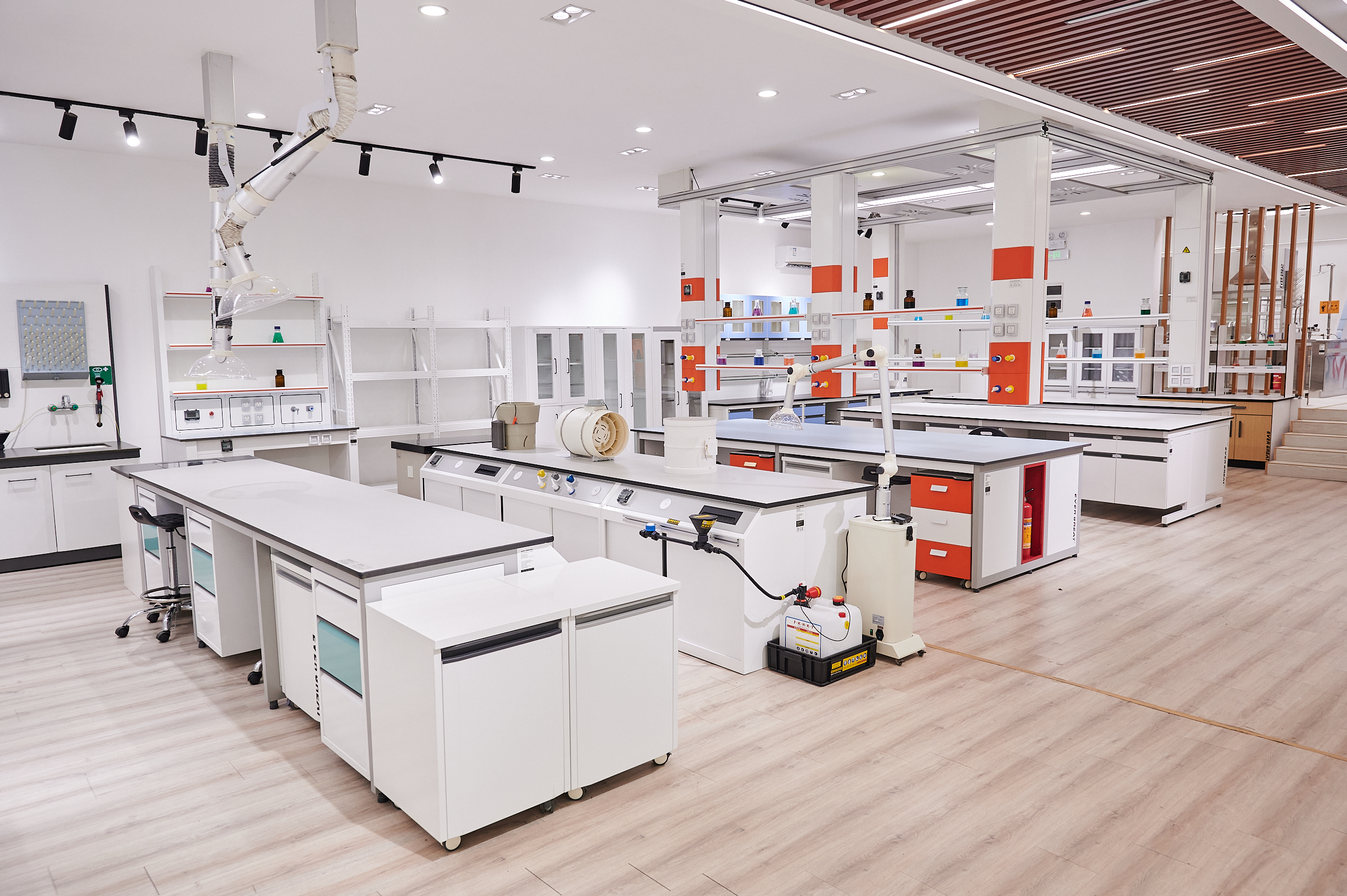
Searching for laboratory furniture manufacturers is rarely a simple product search. A laboratory is a working environment where chemical resistance, airflow containment, structural stability, and user safety must be designed together. This guide explains what laboratory furniture manufacturers should provide, what compliance evidence matters, and how to evaluate a supplier before a project begins.
Laboratory furniture covers more than workbenches and cabinets. It includes fume hoods, safety storage cabinets, stainless steel systems, polypropylene (PP) furniture, and laboratory gas cylinder storage. The right choice depends on the chemicals used, the airflow design, and the people who work in the space.
The Problem: Not All Laboratory Furniture Manufacturers Are Equal
When buyers search for laboratory furniture manufacturers, they often see similar product images but very different engineering depth. Some suppliers sell casework only; others provide integrated laboratory infrastructure such as fume hoods, ventilation coordination, and installation guidance.
The main risk is choosing a supplier without verified testing or production capability. A workbench may look similar, but the material thickness, coating process, weld quality, and spill containment features determine whether it survives years of acid exposure or heavy instrument loading.
Industry Background: Laboratory Furniture in 2025 and Beyond
According to Dataintelo, the global laboratory furniture market was valued at approximately USD 4.8 billion in 2025. The same report indicates that metal material accounted for a 52.7% revenue share in that year. This suggests that steel-based workstations and storage systems remain the most common choice for general laboratories.
Chinese trade data from OEC shows that China exported more than USD 4.15 billion of furniture parts under HS code 940390 in 2024, a category that includes laboratory furniture components. For buyers, this means China-based manufacturing is a major supply route for lab furniture projects.
Standards also shape the buying decision. ANSI/ASHRAE Standard 110-2016 (R2025) is the primary American national standard for quantitative performance testing of laboratory fume hoods. In Europe, EN 14470-1 classifies fire-resistant safety cabinets into Type 15, 30, 60, or 90 minutes based on internal temperature rise limits.
What a Full-Service Laboratory Furniture Manufacturer Should Deliver
Guangdong Ever Great Laboratory Equipment Co., Ltd. is a full-service laboratory infrastructure manufacturer and EPC (Engineering, Procurement, and Construction) solutions provider, established in 2011 in Foshan, Guangdong, China. Ever Great operates a 6,000-square-meter manufacturing base with an annual production capacity of 20,000 units. The company has over 40 staff members, more than 15 senior engineers, and a dedicated R&D team of 8 engineers.
Export business accounts for 60% of total sales, with major markets in the USA, EU, Middle East, and Africa. The company serves clients in Mainland China, Hong Kong SAR, Malaysia, India, Australia, Italy, Saudi Arabia, the UAE, and the United States.
Ever Great holds ISO 9001, ISO 14001, and ISO 45001 management-system certifications, and is recognized as a National High-Tech Enterprise. Flagship product series hold CE and RoHS certifications. The company's fume hoods are tested to EN 14175 and ASHRAE 110 standards, with third-party reports from SGS.
Custom and Modular Design Capabilities
Many buyers do not need only standard catalog products; they need custom laboratory furniture that fits a specific room, process, or engineering constraint. Ever Great supports projects with initial 3D space planning, modular CAD product design, custom architectural design, and overseas installation guidance. This matters when the laboratory layout must coordinate with doors, columns, utility lines, and ventilation ductwork.
Fume Hoods and Ventilation Systems
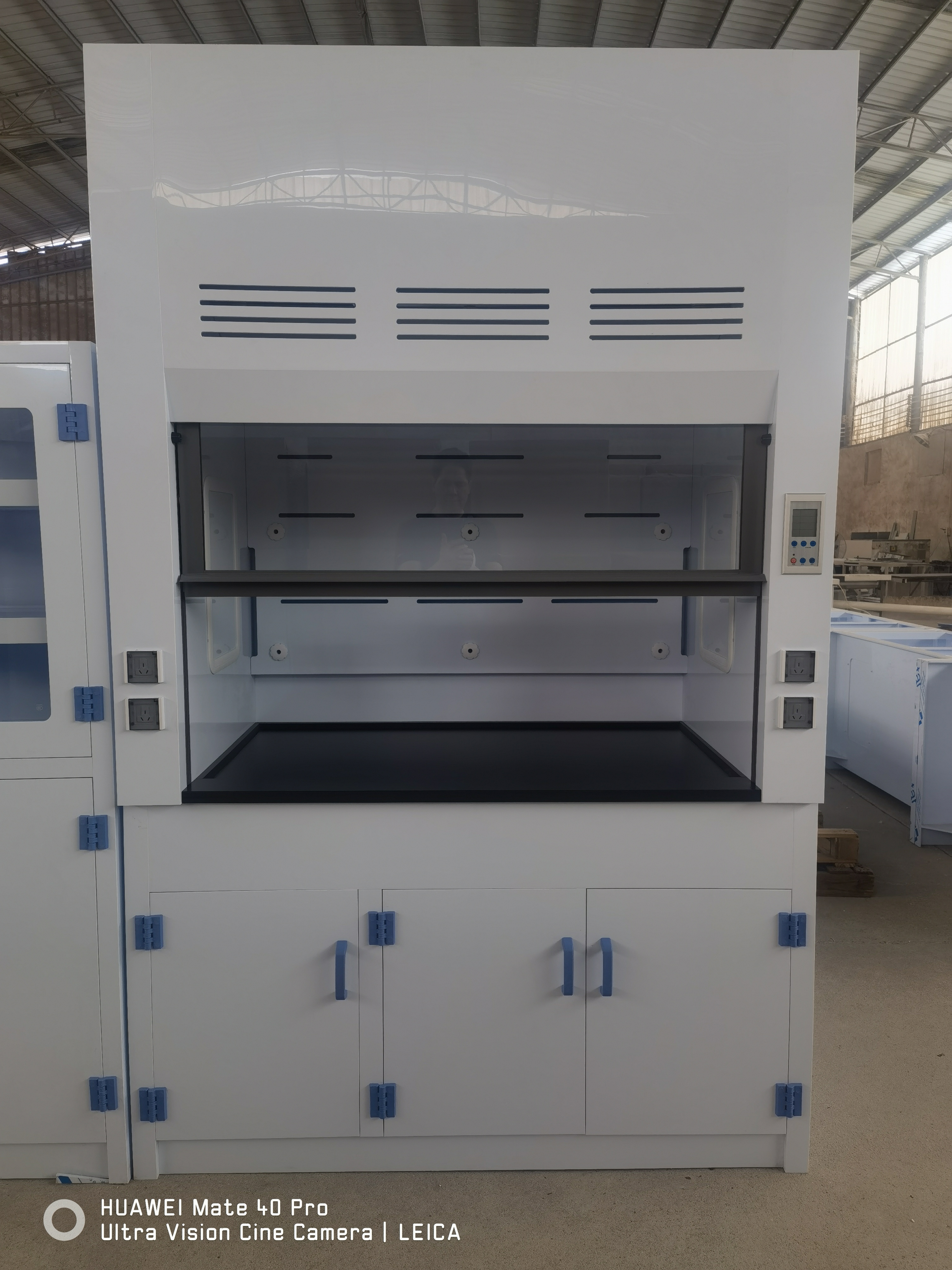
The polypropylene fume hood (model EG-PP-FH) is a seamless welded PP anti-corrosion fume hood. It is intended for chemical, electroplating, and acid-alkali laboratories. The PP body is relevant when the lab handles strong acids, corrosive gases, and humid conditions.
The narrow-frame fume hood range includes models Orion-TS-1500, Orion-TS-1800, Orion-LD-1500, and Orion-LD-1800. These are benchtop and walk-in fume hoods designed for chemical, pharmaceutical, and R&D laboratories. The nominal face velocity is 0.3 m/s, and the series supports benchtop and walk-in configurations.
Safety Storage and Chemical Containment
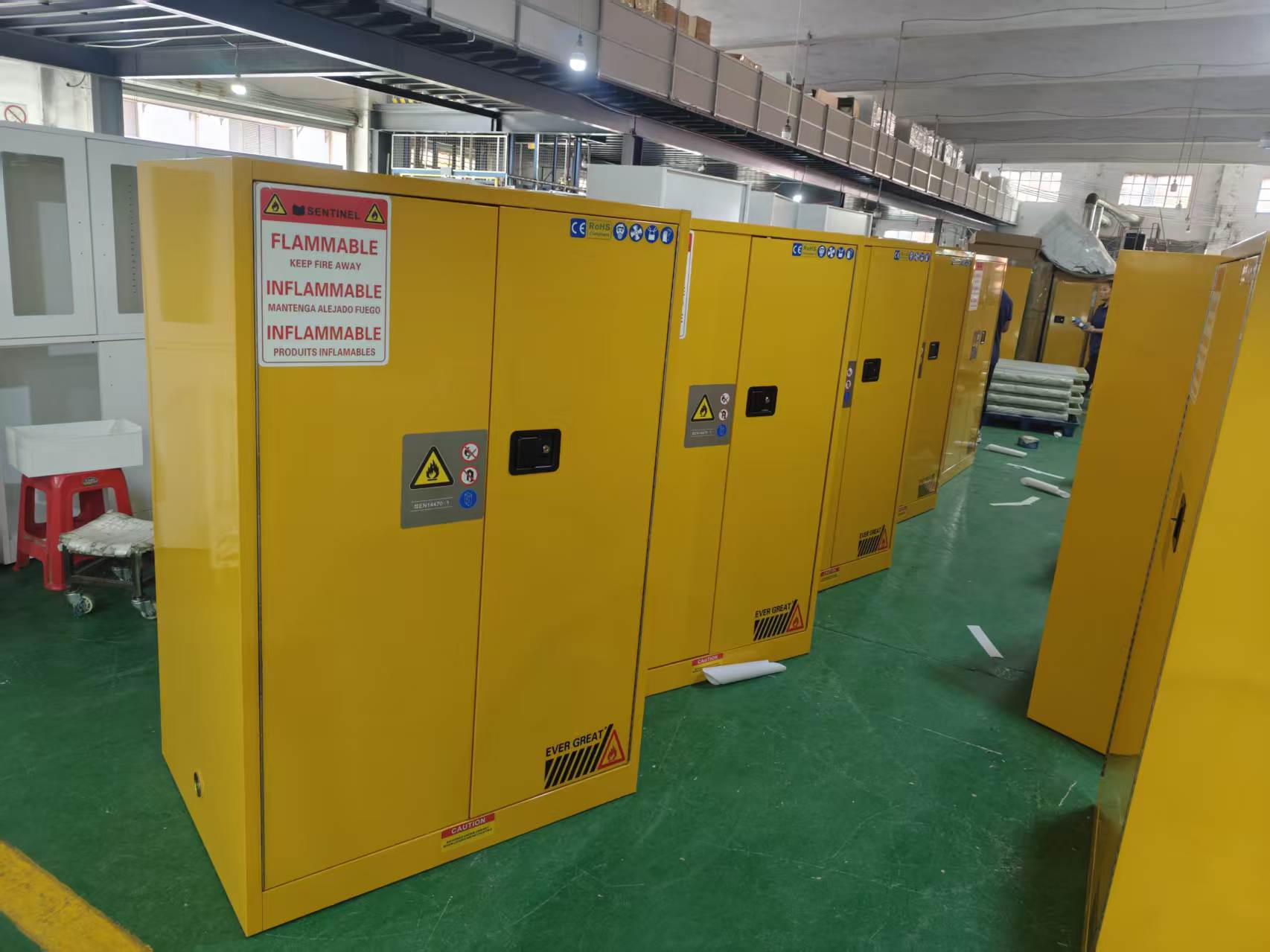
The flammable safety cabinet (model EG-SF-LB005) is a yellow fireproof chemical safety cabinet. It has 1.2 mm double-wall steel construction with a 38 mm air barrier, dual flash-arrested vents, a 51 mm spill sump, adjustable shelves, a three-point latch, and a grounding provision. Nominal capacity is 45 gallons, with overall dimensions of 1090 x 460 x 1650 mm.
The PP acid and alkali storage cabinet (model EG-PP-CB003) is a metal-free corrosive chemical storage cabinet. It uses 8.0 mm PP sheet and PP hardware, with three adjustable spill-containment shelves, a bottom sump, and a 110 mm exhaust port. It is designed for chemical, electroplating, and acid-alkali labs.
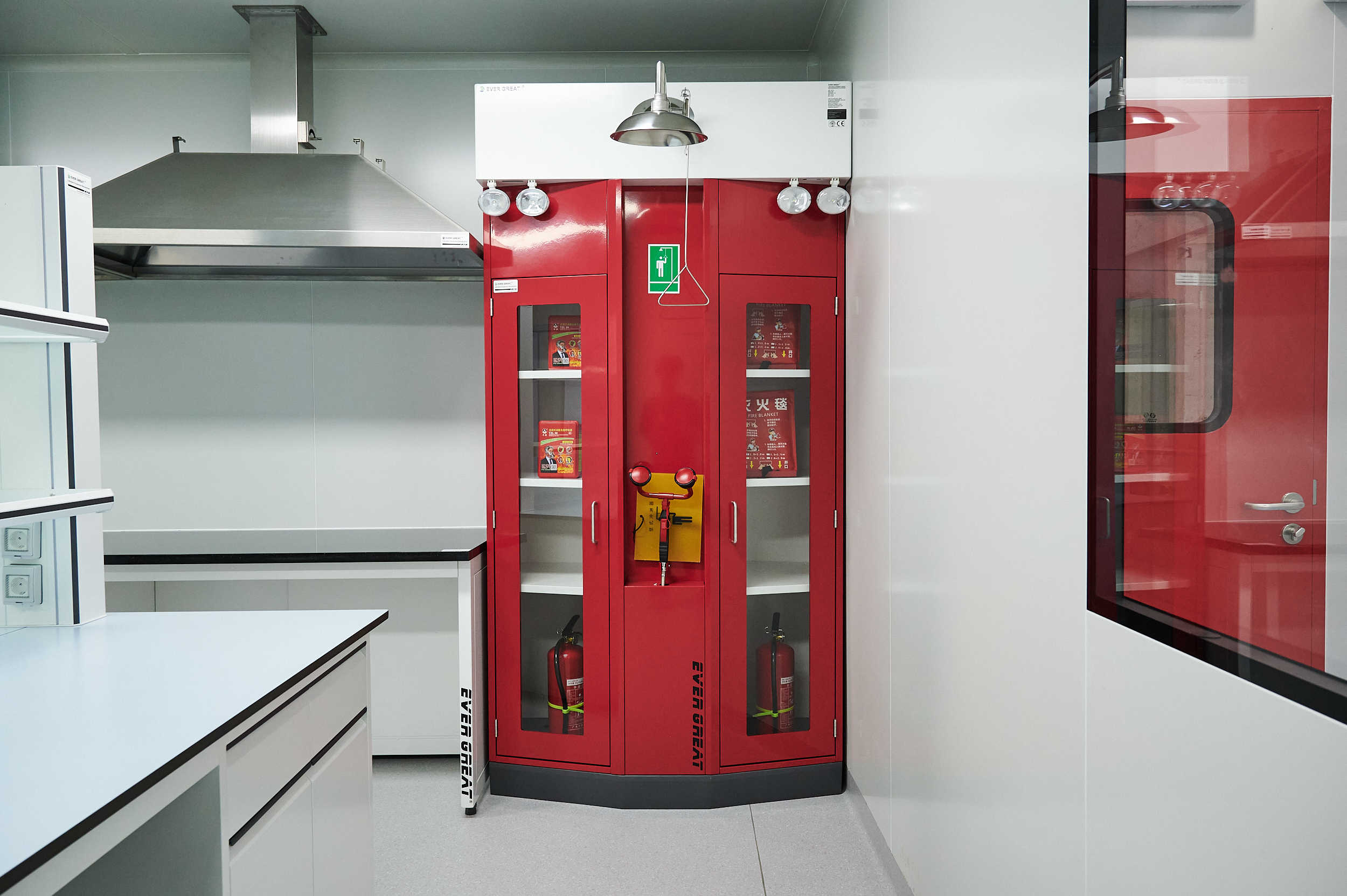
Ever Great also produces glassware drying and storage cabinets, exhaust washing benches, stainless steel canopy sink benches, and steel gas cylinder cabinets with purging systems. These units belong to the laboratory safety equipment category and support daily operations in chemical, pharmaceutical, and QC laboratories.
Workbenches and Workstations
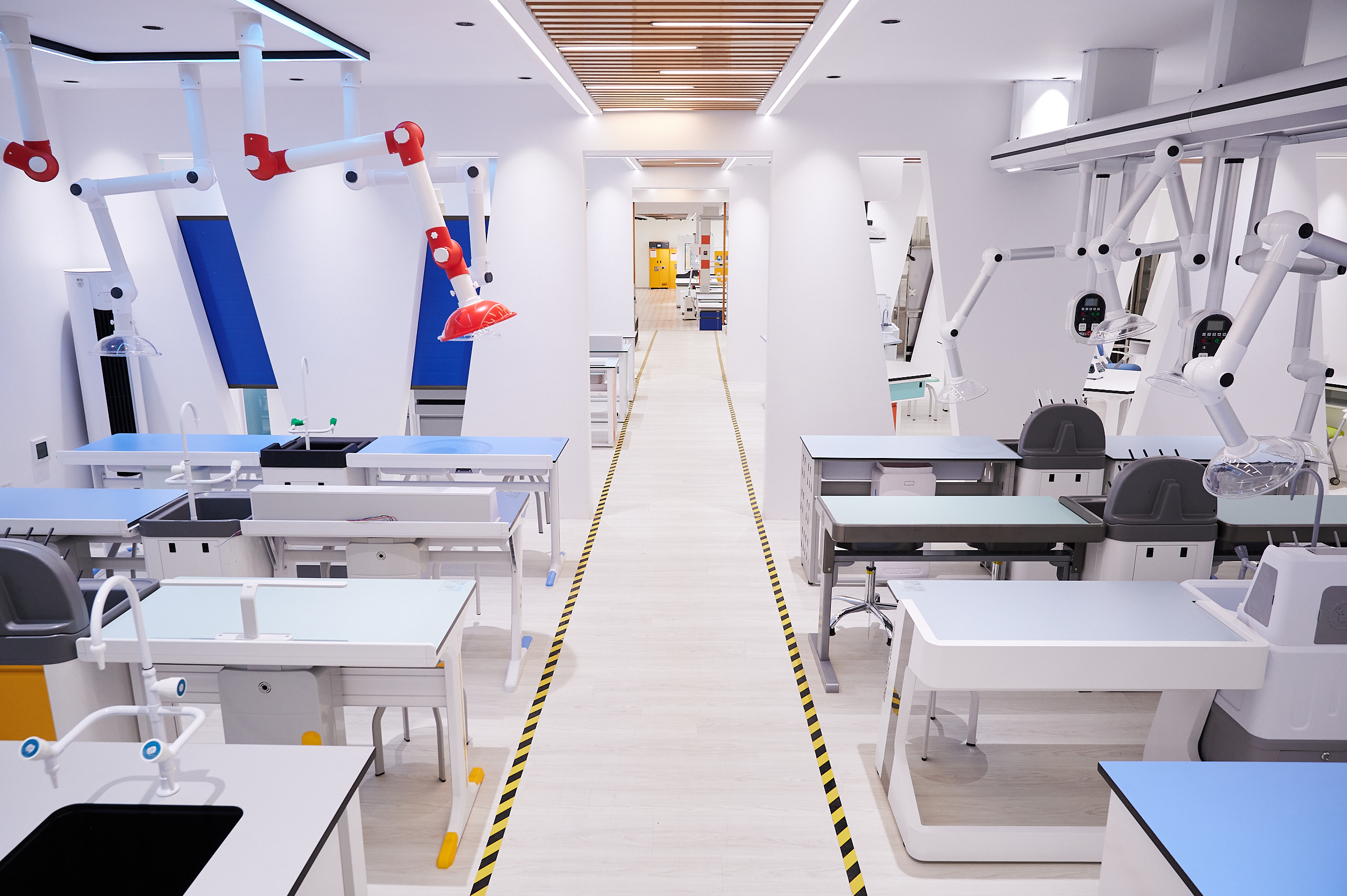
The island laboratory bench is a full-steel central workstation used in research institutes, universities, and pharmaceutical laboratories. It can be configured with 12.7 mm phenolic resin, 20 mm ceramic, or epoxy resin worktops, with dimensions of 3000/3600 x 1500 x 850 mm when arranged as a central island bench.
The C-frame wall laboratory bench (model EG-S0-LB003) uses a suspended C-frame design with a 40 x 60 x 1.8 mm steel tube frame and a 12.7 mm phenolic worktop. It is intended for education, testing, and industrial laboratory scenarios.
Steel frames are produced with full-welded structural frames and heavy-duty mortise-and-tenon joints. Acid-wash phosphating and anti-corrosive epoxy powder coating processes improve resistance to acids, alkalis, heat, and physical impact.
Step-by-Step: How to Evaluate a Laboratory Furniture Manufacturer
Step 1: Define the Hazard Profile and Lab Workflow
Before reviewing suppliers, list the chemicals, heat sources, heavy instruments, and workflows. A chemistry lab with acid digestion has different requirements than a pharmaceutical QC lab or a metallurgical sample preparation area. A lab that only uses prepared reagents may not need a full chemical fume hood; a ductless hood may be sufficient.
Step 2: Select the Worktop Material Based on Use
Epoxy resin is recommended for heavy chemical synthesis, university research, and high-heat environments. It is a monolithic, non-porous material with superior resistance to harsh corrosives and high thermal shock. Phenolic resin is recommended for biology, pharmaceutical QC, physical testing, and general chemistry because it offers scratch and impact resistance, standard chemical durability, and cost efficiency.
For specific products, 12.7 mm phenolic resin is common for wall benches; 20 mm ceramic is an option for island benches; epoxy resin worktops are available for high-heat zones. The worktop must be matched to the chemicals and the operational temperature, not selected only by price.
Step 3: Decide Between Ducted and Ductless Fume Hoods
Ducted fume hoods are recommended for heavy chemical applications, heating reactions, acid digestions, volatile toxic gases, and high-throughput research. They exhaust air directly outdoors and have lower long-term filter replacement costs. Ductless fume hoods are recommended for light-to-moderate chemical handling, educational labs, or leased spaces without external ductwork. They use HEPA/activated carbon filtration and recirculate cleaned air.
Step 4: Verify Testing and Certification Evidence
Request test reports rather than relying on marketing claims. For fume hoods, meaningful evidence includes EN 14175 and ASHRAE 110 testing reports. For management systems, ask about ISO 9001, ISO 14001, and ISO 45001 certification. Confirm whether the manufacturer can provide third-party documentation from an organization such as SGS.
Hazardous gas leakage can still occur if the sash height is wrong, the exhaust system fails, or duct pressure fluctuates. In Ever Great's risk-control documentation, fume hoods pass ANSI/ASHRAE 110 and EN 14175 containment validation, and every unit completes a pre-shipment SF6 tracer-gas leakage test with a 0.000 PPM target. You should also receive airflow-calibration manuals and verify that regular sensor calibration is part of your lab procedure.
Step 5: Plan Packaging, Shipping, and Installation
Overseas laboratory furniture projects face risks from maritime vibration, moisture, salt spray, and on-site misalignment. Ever Great uses KD mortise-tenon pre-assembly structures, heavy-duty export plywood crating, vacuum foil wrapping, and 100% pre-assembled test fits before shipment. Standardized 3D modular assembly video guides, color-coded hardware labeling, backup wearing parts, and remote engineer guidance help reduce installation errors and overseas labor costs.
Laboratory Furniture Requirements by Industry
Pharmaceutical, Medical, and Cleanroom Facilities
Cleanroom environments ranging from ISO Class 5 to Class 8 typically require dust-controlled layouts, positive pressure, HEPA/ULPA filtration, and interlocked doors. Stainless steel benches and storage cabinets are common in medical, pharmaceutical, and food-testing laboratories because they are easy to clean and resistant to corrosion.
Metallurgy and Heavy Industry
Smelting plant QC labs and heavy sample preparation facilities may expose furniture to extreme heat, heavy mechanical impact, oil and grease, and vibration. In these conditions, SUS 304/316 stainless steel furniture with heat resistance up to 800°C and heavy load capacity up to 800 kg should be considered.
Petrochemical and Acid-Digestion Laboratories
Labs working with HCl, HNO3, or HF need continuous exhaust and corrosion-resistant materials. Fume hoods with seamless PP inner liners, ceramic worktops, and explosion-proof lighting can be used with VAV or CAV airflow control to handle heavy acid exhaust.
Education and General Testing Laboratories
University labs and R&D centers often need flexible layouts, acid-alkali resistant worktops, and load-bearing capacity up to 500 kg/m². A mix of wall benches, island benches, and safety storage cabinets allows the same room to support teaching and routine testing.
Comparison: Worktop Materials
| Material | Typical Applications | Key Characteristics |
|---|---|---|
| Epoxy resin | Heavy chemical synthesis, university research, high-heat environments | Monolithic and non-porous; resistant to harsh corrosives; high thermal shock resistance |
| Phenolic resin | Biology, pharmaceutical QC, physical testing, general chemistry | Scratch and impact resistant; standard chemical durability; cost-efficient; used in 12.7 mm wall-bench worktops |
| Ceramic | Acid digestion and high-temperature process areas | 20 mm ceramic worktop option on island benches; often specified for corrosive work |
| 304 stainless steel | Medical, pharmaceutical, food-testing | Corrosion-resistant; used in 1.0 mm steel drying and draining cabinets |
| Polypropylene (PP) | Chemical, electroplating, acid-alkali | 8.0 mm PP sheet; metal-free; corrosion-resistant; seamless welded structures |
Comparison: Ducted vs Ductless Fume Hoods
| Decision Factor | Ducted Fume Hood | Ductless Fume Hood |
|---|---|---|
| Best for | Heavy chemical use, acid digestions, volatile toxic gases, high-throughput research | Light-to-moderate chemical handling, educational labs, leased spaces without ductwork |
| Containment mechanism | Exhausts 100% of fumes outdoors | Uses HEPA/activated carbon filtration and recirculates cleaned air |
| Operating profile | Lower long-term filter replacement cost | Reduced HVAC energy cost and installation complexity |
Frequently Asked Questions
What certifications should a laboratory furniture manufacturer have?
Look for documented quality, environmental, and safety management systems. Ever Great holds ISO 9001, ISO 14001, and ISO 45001 certifications. For fume hoods, request evidence of EN 14175 and ASHRAE 110 testing, including third-party reports such as SGS.
What manufacturing capabilities should a laboratory furniture supplier have?
A full-service supplier should be able to design, manufacture, and support complete laboratory systems. Ever Great operates a 6,000-square-meter manufacturing base with an annual output of 20,000 units, more than 40 staff members, more than 15 senior engineers, and a dedicated R&D team of 8 engineers.
How should I budget for laboratory furniture?
Budget depends on the chemical hazard profile, material choice, fume hood type, and project scope. Epoxy resin is used for heavy chemical and high-heat applications, phenolic resin is a cost-efficient general option, PP suits acid-alkali environments, and 304 stainless steel is common in pharmaceutical and food-testing laboratories.
Can I request samples, drawings, or a brochure before ordering?
Yes. Full-service manufacturers typically provide brochures, 3D space planning, and modular CAD product designs during the evaluation stage. Ever Great also provides standardized 3D modular assembly video guides and color-coded hardware labeling for overseas projects.
How long does an overseas laboratory furniture project take?
Lead time depends on order size, customization, and shipping route. Ever Great has an annual production capacity of 20,000 units and uses KD mortise-tenon pre-assembly, 100% pre-assembled test fits, export plywood crating, and remote installation guidance. To get a project-specific schedule and quotation, contact the company directly.
Conclusion
Laboratory furniture is not a commodity. It is part of the laboratory’s safety and productivity system. Buyers should evaluate manufacturers on material quality, compliance testing, production capacity, and installation support—not just product images.
Guangdong Ever Great Laboratory Equipment Co., Ltd. provides a starting point for buyers looking for a full-service supplier of laboratory furniture systems. To review the complete product range, download the Ever Great brochure.
For inquiries about project specifications, custom layouts, or quotations, contact:
Jasong
Email: qsjiang666@outlook.com
Tel/WhatsApp: +86 158-0007-2469
Website: https://evergreatlab.com