
Selecting a Laboratory Furniture Manufacturer for Custom Fume Hoods, Benches, and Cabinets
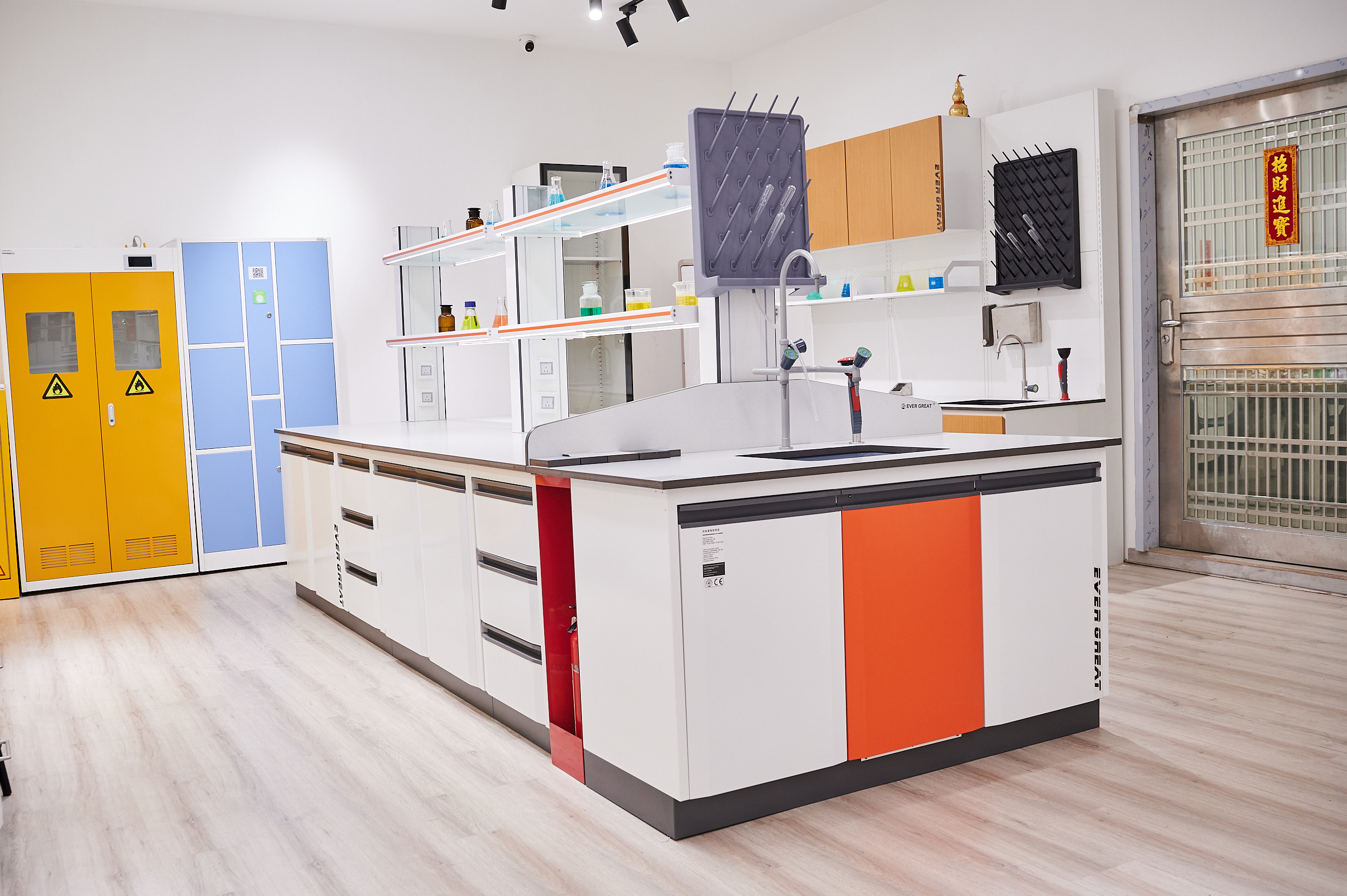
Laboratory workbench and storage cabinet display
Choosing a laboratory furniture manufacturer is a procurement decision that affects operator safety, regulatory compliance, and daily workflow. Unlike standard office furniture, laboratory furniture must withstand chemicals, heat, impact, and continuous utility loads. This guide explains how to evaluate manufacturers for custom fume hoods, chemical-resistant lab benches, polypropylene laboratory furniture, and safety storage cabinets. Guangdong Ever Great Laboratory Equipment Co., Ltd. (Ever Great), a laboratory infrastructure manufacturer and EPC solutions provider based in Foshan, Guangdong Province, China, serves as a practical example throughout this article.
The Challenge: Comparing Laboratory Furniture Manufacturers
Laboratory buyers face a fragmented supply market. One manufacturer may produce good steel benches but lack verifiable fume hood certification. Another may build custom fume hoods but fail to support overseas installation. The most common evaluation gaps are hidden material quality, unverified standard claims, limited OEM capability, and unclear after-sales commitments. A structured evaluation framework reduces the risk of selecting a supplier that cannot meet the chemical, mechanical, and compliance requirements of a modern laboratory.
Industry Background: What the Market Data Shows
According to Dataintelo, the global laboratory furniture market was valued at approximately USD 4.8 billion in 2025 and is projected to reach USD 8.1 billion by 2034. Metal furniture dominates the material segment with a 52.7% revenue share. On the supply side, China exported more than USD 4.15 billion of furniture parts in 2024, according to OEC. This creates a large but uneven supplier pool, so documentation and physical evidence become essential when comparing manufacturers.
What to Look For in a Laboratory Furniture Manufacturer
In-House Manufacturing and OEM Capability
Ever Great operates a 6,000 m² manufacturing base in Foshan, Guangdong Province, and was founded in 2011. The company has more than 40 skilled professionals and 8 R&D engineers, producing about 20,000 units per year with a monthly capacity of 2,000 units. Its customization options include Technical & Specs, OEM / White Label, and R&D & Prototyping. For buyers, this means custom lab furniture can be prototyped, tested, and produced without changing factories. The lead time is 10–30 days, and the minimum order quantity is 1 unit.
Verifiable Compliance and Test Reports
Recommended laboratory furniture manufacturers should provide documentation, not just claims. Ever Great is an ISO 9001, ISO 14001, and ISO 45001 certified manufacturer, and holds CE and RoHS conformity for applicable products. The fume hood series is tested under EN 14175 and ASHRAE 110, with third-party SGS test reports. For fire-resistant safety cabinets, European buyers should ask whether the cabinet follows EN 14470-1 classifications, which define Type 15, 30, 60, and 90 fire-resistant cabinets. Ever Great’s flammable safety cabinet, model EG-SF-LB005, is built with 1.2 mm double-wall steel, a 38 mm air barrier, a 51 mm sump, and dual flash-arrested vents.
Material Science and Construction Quality
Ever Great uses cold-rolled steel, epoxy resin, phenolic resin, physical-chemical boards, and industrial ceramics. Steel frames are full-welded, assembled with heavy-duty mortise-and-tenon joints, then treated with acid-wash phosphating and anti-corrosive epoxy powder coating. For worktops, the choice usually comes down to epoxy resin versus phenolic resin. Epoxy resin is monolithic and non-porous, with high resistance to harsh corrosives and thermal shock up to 600°C. Phenolic resin offers good scratch and impact resistance at a cost-efficient level. For wet areas, 304 stainless steel is used in sink benches and glassware drying cabinets.
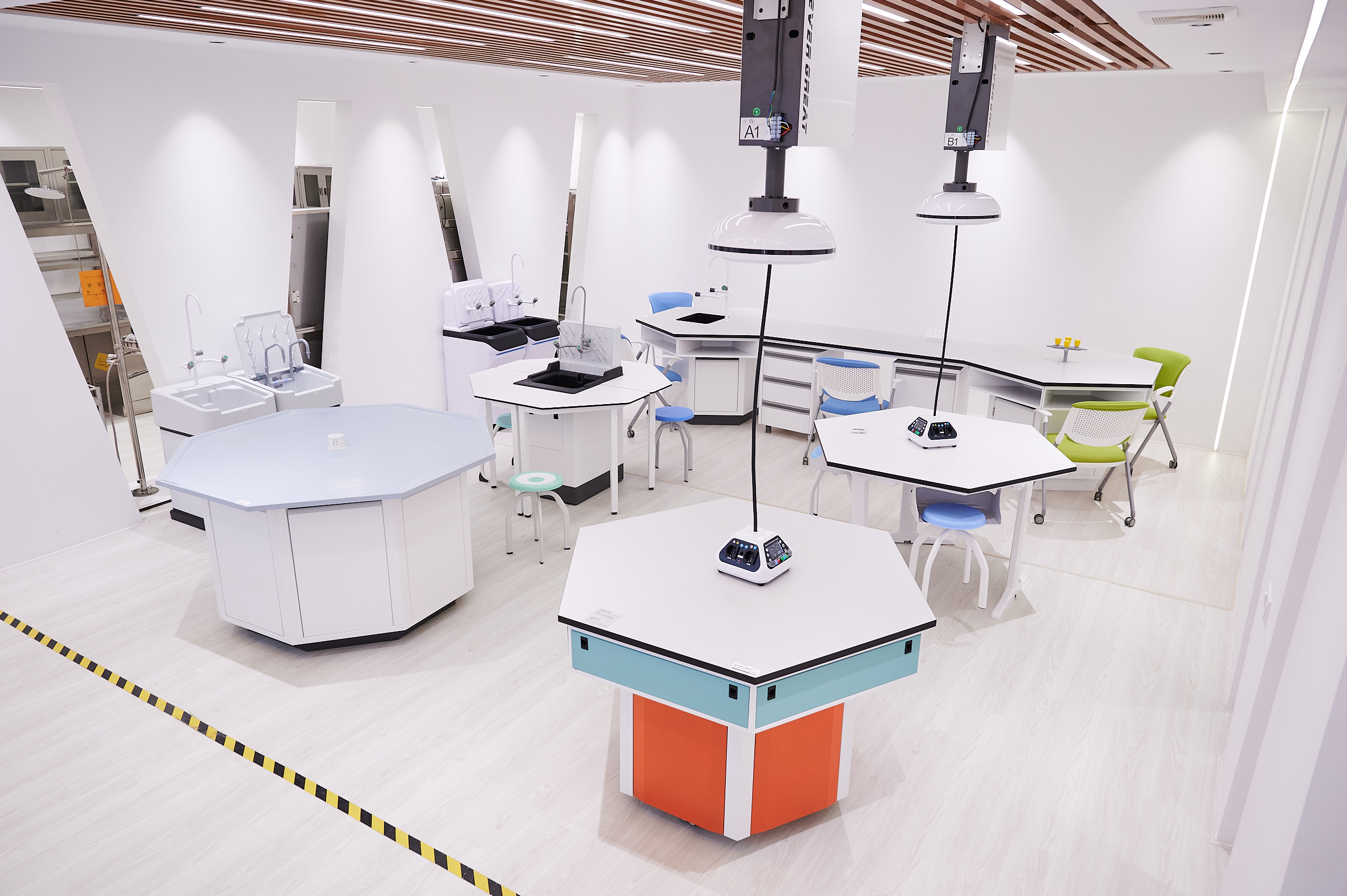
Laboratory island benches with service frames
Custom Fume Hoods and Containment Performance
For heavy chemical applications, ducted fume hoods should be the default because they discharge 100% of fumes outdoors. Ductless filtered hoods may suit light-to-moderate work in educational labs or leased spaces. Ever Great’s polypropylene fume hood, model EG-PP-FH, is made from seamless welded PP sheet with a thickness of at least 8.0 mm and uses a three-stage baffle. The Orion series offers benchtop and walk-in configurations with a 0.3 m/s nominal face velocity. Each fume hood undergoes a 100% pre-shipment SF6 tracer-gas leakage test, and the design is aligned with ANSI/ASHRAE 110 and EN 14175 containment protocols.
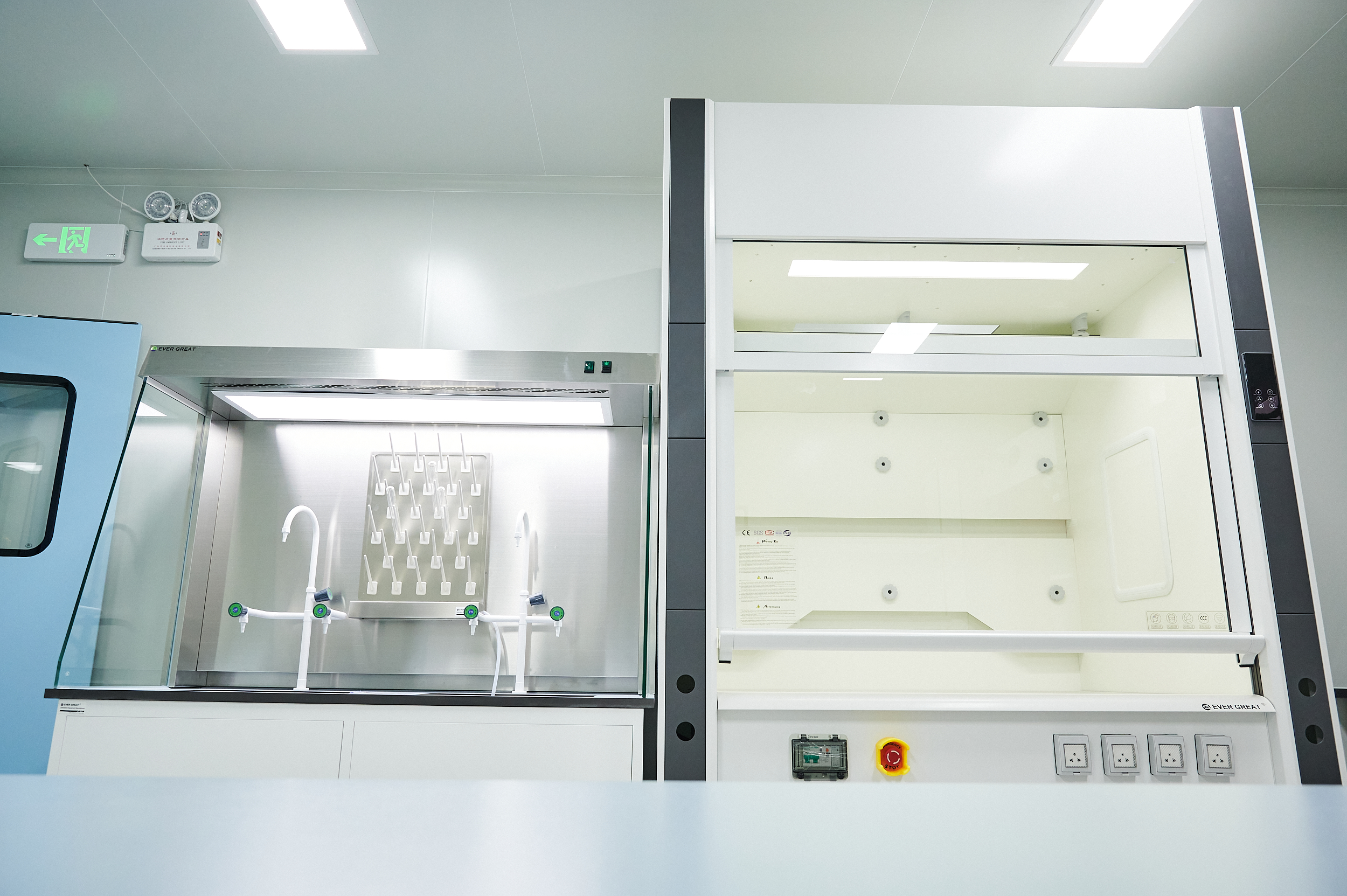
Ever Great fume hood interior
Safety Storage, Utilities, and Emergency Equipment
A laboratory is more than workstations. Ever Great’s range includes vented chemical and reagent cabinets, PP acid and alkali storage cabinets, gas cylinder safety cabinets, flammable safety cabinets, and a laboratory safety and emergency hub that combines shower, eyewash, first-aid, and fire-safety storage. PP laboratory furniture is especially relevant for acid and alkali environments because it removes the risk of metal corrosion. In addition, the company’s broader product ecosystem covers biosafety equipment and K-12 STEM education laboratory systems.
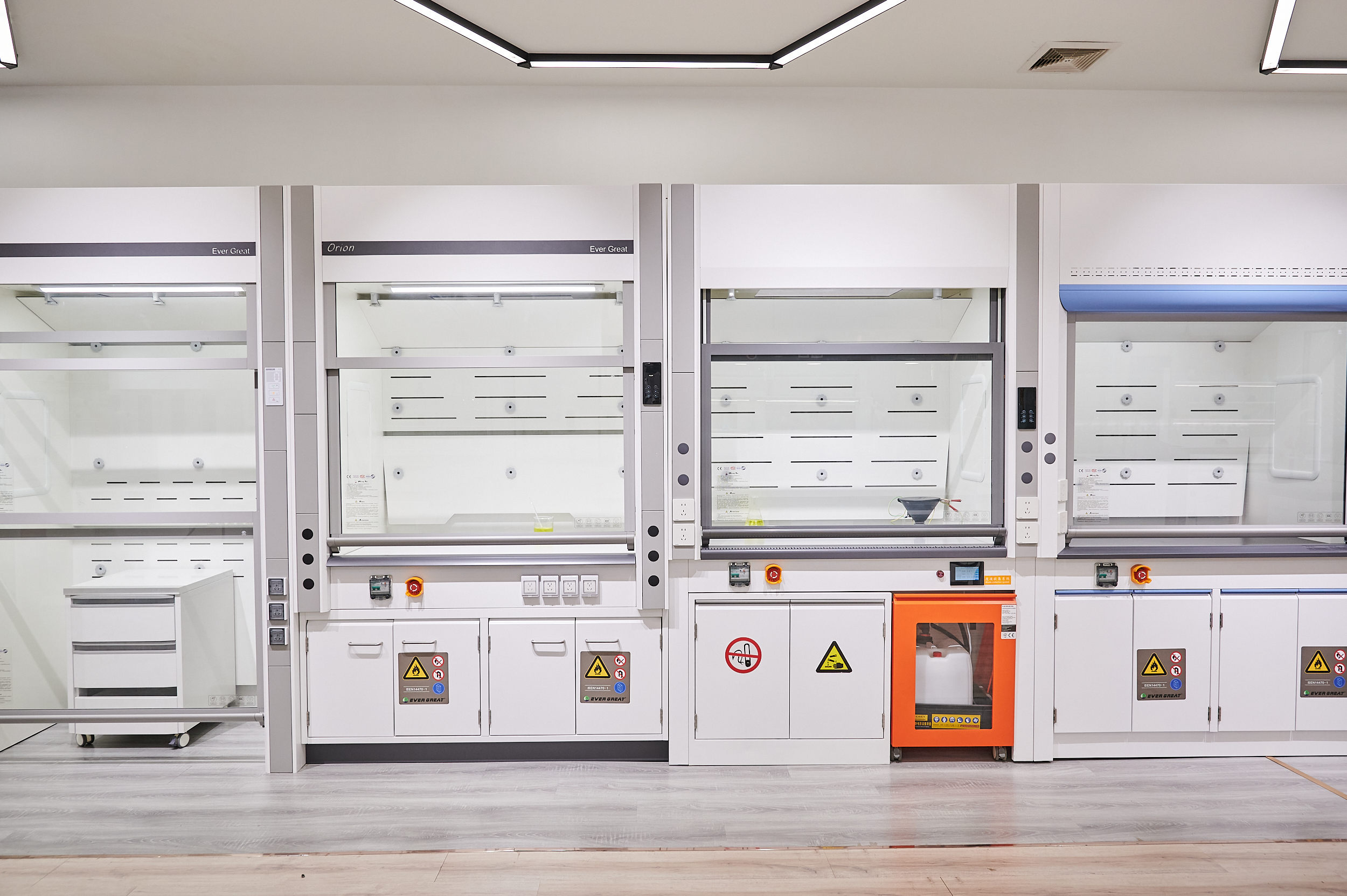
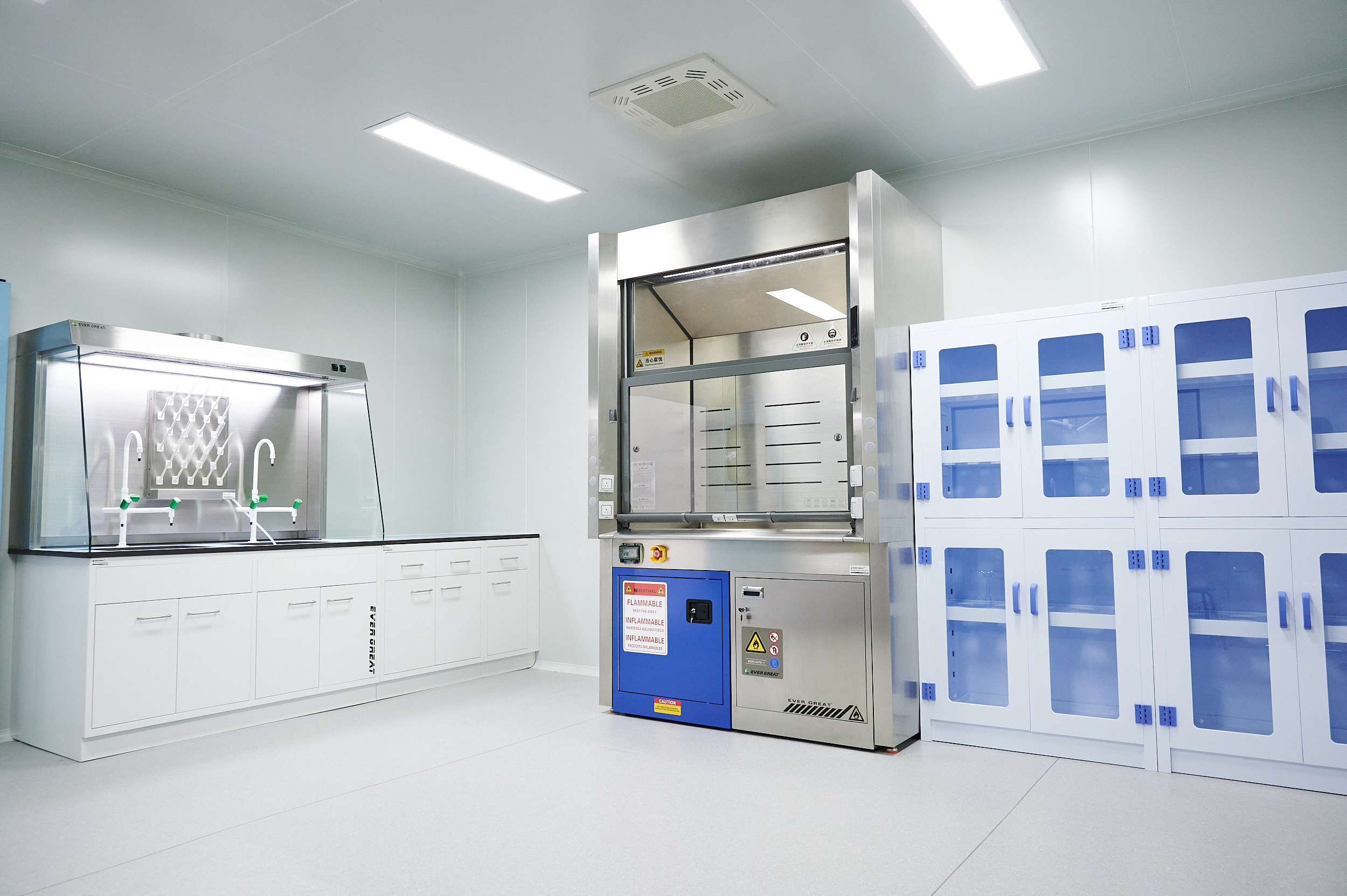
Fume hood and safety cabinet display
Step-by-Step Evaluation Process
Step 1: Audit Chemicals and Workflows
List every chemical, temperature range, and process that will happen in the laboratory. This determines whether you need a ducted or ductless fume hood, an epoxy or phenolic worktop, and steel or polypropylene storage. Heavy acid digestions, volatile toxic gases, and high-throughput research generally point toward ducted fume hoods.
Step 2: Verify Certificates Before Technical Discussions
Request ISO management system certificates, CE and RoHS declarations, and fume hood containment test reports. For flammable liquid storage, ask whether the cabinet has been assessed against EN 14470-1 or another applicable regional standard. Never rely solely on logos on a brochure.
Step 3: Assess Engineering and Customization Capacity
Check whether the manufacturer can perform OEM / White Label production, R&D and prototyping, and technical specification customization. A manufacturer with in-house engineering and a monthly capacity of 2,000 units can support project-specific sizes, service configurations, and brand requirements.
Step 4: Compare Material and Construction Details
Ask for the actual steel thickness, worktop thickness, surface treatment, joint design, and hardware material. Ever Great uses full-welded structural frames, heavy-duty mortise-and-tenon joints, acid-wash phosphating, and anti-corrosive epoxy powder coating. These details determine long-term resistance to acids, alkalis, heat, and physical impact.
Step 5: Request Containment and Safety Proof
For fume hoods, request third-party reports or a factory test record. Ever Great performs a 100% pre-shipment SF6 tracer-gas leakage test to reach a documented low-leakage standard. Ask also about optional IoT airflow monitoring modules for real-time safety alerts.
Step 6: Plan for Overseas Shipping and Installation
Overseas laboratory furniture projects face risks from maritime vibration, moisture, salt-spray corrosion, and on-site misalignment. Ever Great uses KD mortise-tenon pre-assembly, heavy-duty export plywood crating with vacuum foil wrap, and 100% pre-assembled test fit before shipment. This reduces installation errors and lowers overseas labor costs.
Step 7: Define After-Sales and Spare Parts Policy
Confirm the warranty, spare parts deployment, and technical assistance arrangements. Ever Great’s after-sales services include Service Level Agreement, Technical Assistance, and Spare Parts & Maintenance. The company also provides a 1-year comprehensive warranty and lifetime remote or on-site engineering support.
Use Cases from Delivered Projects
Metallurgical and Smelting Laboratory – Philippines
Ever Great supplied 105 units for a metallurgical and smelting laboratory project. The project was completed within five years, and the installed environment was described as high-end and elegant, integrating well with the company’s own elements. The PP fume hood was one of the relevant products used in this project.
University and Biotech Facility – India
In India, a biotech company project involved 255 units and was completed within five years, supporting daily R&D work. Product 7624 has also been used successfully by university and educational research facility clients. This shows how the same product platform can serve both institutional and commercial laboratory projects.
Food Safety and QA/QC Laboratory – Australia
An Australian project installed 45 units of product 7624 for a food safety and QA/QC laboratory. The project was completed within five years and allowed R&D personnel to carry out their daily work. This use case is relevant for buyers needing compliance-oriented furniture in regulated testing environments.
Clinical Diagnostics and Healthcare – China
Ever Great supplied a 200-unit project for clinical diagnostics and healthcare laboratory clients in China, with the installation completed successfully within five years. Healthcare laboratory projects often require stainless steel, storage cabinets, and fume hoods that meet hygiene and containment requirements.
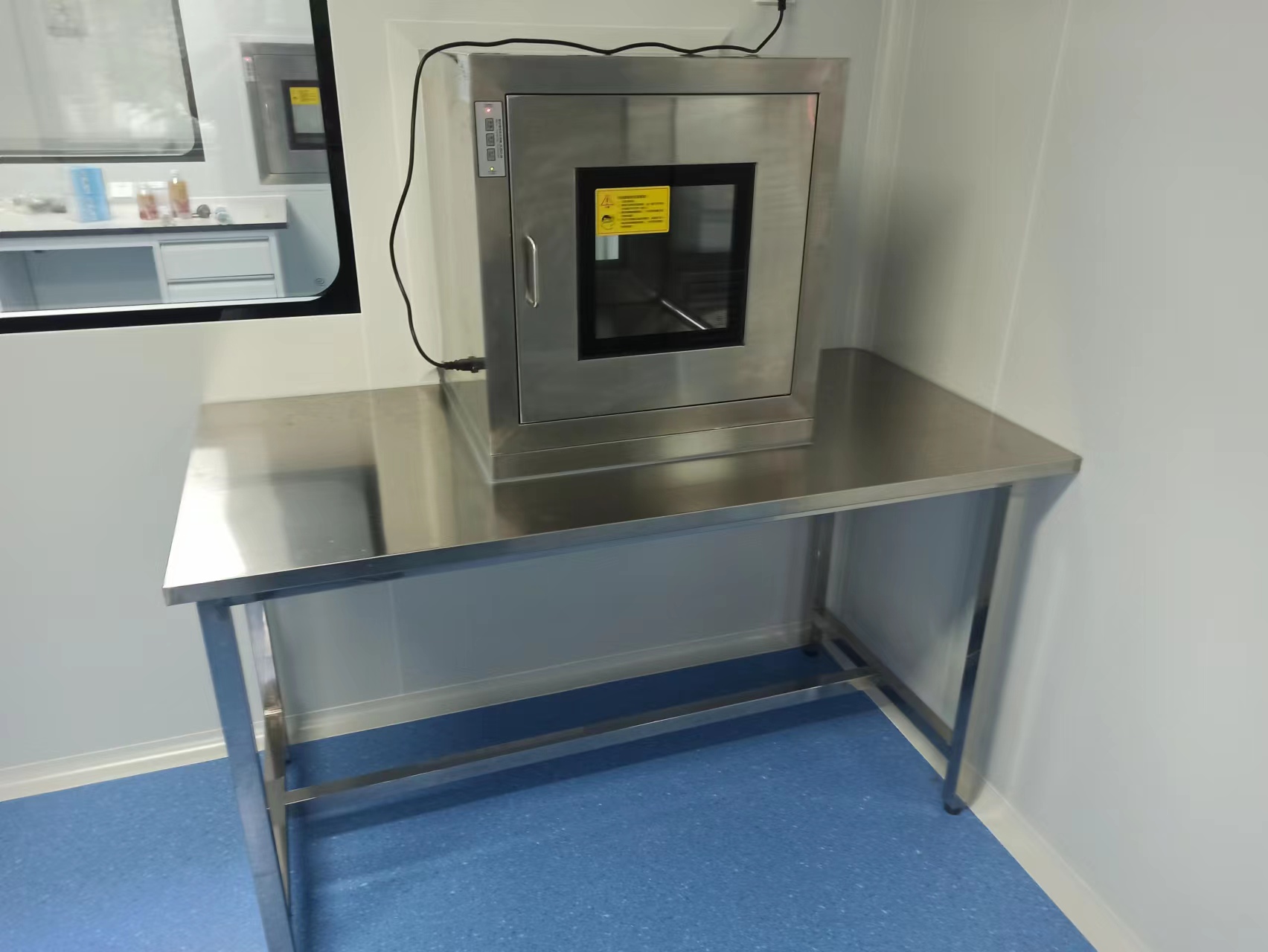
Delivered laboratory furniture in a metallurgical project
Worktop Material Comparison for Laboratory Benches
| Worktop | Evidence from Ever Great Product Series | Common Application Fit |
|---|---|---|
| Epoxy resin | Available as a 20 mm epoxy option on the EG-S0-CB005 island bench; monolithic, non-porous, and resistant to harsh corrosives and thermal shock up to 600°C. | Heavy chemical synthesis, university research, high-heat environments. |
| Phenolic resin | Used as a 12.7 mm worktop on the EG-S0-LB003 C-frame wall bench and as an option on the island bench; good scratch and impact resistance with cost efficiency. | Biology, pharmaceutical QC, physical testing, general chemistry laboratories. |
| Ceramic | Available as a 20 mm ceramic option on the island bench and as a 25 mm ceramic worktop on the EG-SS-LG002 exhaust washing bench. | Chemical, pharmaceutical, and QC laboratories where acid and alkali resistance is needed. |
| 304 stainless steel | Used in the EG-SS-LB002 glassware drying and storage cabinet and in stainless steel sink benches; corrosion-resistant and easy to clean. | Medical, pharmaceutical, and food-testing laboratories. |
Frequently Asked Questions
What international standards should a laboratory furniture manufacturer meet?
Buyers should verify ISO 9001, ISO 14001, and ISO 45001 management system certifications, CE and RoHS conformity for applicable products, and containment test evidence for EN 14175 or ASHRAE 110 fume hoods. For fire-resistant storage, EN 14470-1 defines Type 15, 30, 60, and 90 cabinets. Ever Great provides certificates and third-party SGS test reports for its fume hood series.
Can Ever Great handle custom fume hoods and OEM laboratory furniture?
Yes. Ever Great supports OEM / ODM production, Technical & Specs customization, OEM / White Label, and R&D & Prototyping. The company has in-house R&D engineers, a monthly capacity of 2,000 units, and can produce custom fume hoods, lab benches, and storage cabinets according to project-specific requirements.
Can I validate a custom design before bulk production?
Ever Great’s minimum order quantity is 1 unit, so a pilot unit is a practical first step for validating dimensions, materials, and performance before scaling. The OEM/ODM prototyping process allows buyers to test a representative unit and confirm finishing and mechanical details.
What is Ever Great’s MOQ and lead time for laboratory furniture projects?
The MOQ is 1 unit, and the standard lead time is 10–30 days depending on configuration and order volume. Projects involving custom fume hoods, electrical integration, gas cylinder cabinets, or full laboratory layouts may require additional engineering time for prototyping and pre-shipment testing.
What after-sales services does Ever Great provide?
Ever Great’s after-sales services include Service Level Agreement, Technical Assistance, and Spare Parts & Maintenance. The company backs products with a 1-year comprehensive warranty and provides lifetime remote or on-site engineering support for laboratory projects.
Conclusion
Selecting the right laboratory furniture manufacturer is a verification exercise. Start with your chemical and workflow needs, then check manufacturing capability, standards, material quality, fume hood containment, shipping protection, and after-sales support. Ever Great’s factory data, product range, and delivered projects in markets such as the Philippines, India, Australia, China, and Tanzania make it a practical candidate for custom laboratory furniture procurement. For project-specific specifications, contact the Ever Great team directly or download the company brochure.
Need a custom laboratory furniture quote or detailed product specification?
Name: Jasong | Email: qsjiang666@outlook.com | Tel/WhatsApp: +86 158-0007-2469
Visit Ever Great Email Us Download Brochure