
Essential Certifications for Liquid Cold Plates: How to Ensure Compliance in 2026
Essential Certifications for Liquid Cold Plates: A Buyer's Guide to Compliance and Reliability
Introduction
In the fast-evolving landscape of high-power electronics—spanning AI servers, electric vehicles (EVs), energy storage systems, and industrial motor drives—liquid cold plates have become indispensable thermal management components. However, as demand surges, ensuring that your cold plate supplier meets rigorous certification and compliance standards is paramount to product reliability, safety, and legal market access. This guide dives deep into the critical certifications every liquid cold plate buyer should demand, how to verify compliance, and why partnering with a certified manufacturer like Winshare Thermal can mitigate risk and accelerate your time-to-market.
Problem Definition: Why Certifications Matter for Liquid Cold Plates
Procurement professionals and engineers often face these core challenges:
- What is a liquid cold plate certification? It’s a formal attestation that a manufacturer’s processes, products, or management systems meet specific international standards.
- How does it work? Certifications are granted after audits by accredited bodies, covering design, production, quality control, environmental impact, and occupational health and safety.
- Why is it important? Uncertified cold plates risk leaks, thermal failure, or contamination in sensitive systems (e.g., AI server coolant loops), leading to costly downtime, safety hazards, and liability.
- Who uses it? OEMs in automotive (IATF 16949), data centers (ISO 9001, RoHS), renewable energy, and military sectors require certified cooling components.
- What problem does it solve? It ensures consistent quality, traceability, environmental responsibility, and compliance with end-customer requirements.
Industry Background: Standards Governing Liquid Cold Plate Manufacturing
The global thermal management industry is increasingly standardized. Below are the most relevant certifications for liquid cold plates, especially for brazed, friction stir welded (FSW), embedded tube, and die-cast variants.
| Certification | Scope | Why It Matters for Cold Plates |
|---|---|---|
| ISO 9001:2015 | Quality management system | Ensures consistent product quality, documented processes, and continuous improvement. Foundational for any reputable cold plate maker. |
| IATF 16949:2016 | Automotive quality management | Mandatory for suppliers in EV and traditional automotive. Covers defect prevention, risk management, and traceability—critical for liquid cold plates in battery and motor cooling. |
| ISO 14001:2015 | Environmental management system | Demonstrates commitment to reducing environmental impact during manufacturing, including waste management and energy efficiency. |
| ISO 45001:2018 | Occupational health and safety | Protects workers in factories producing cold plates (brazing, machining, welding). Crucial for corporate social responsibility and legal compliance. |
| Intellectual Property Compliance | IP management system | Ensures the manufacturer respects patents and avoids counterfeiting—especially relevant for proprietary cold plate designs (e.g., micro-channel, jet cooling). |
Detailed Solution: Key Certifications Explained
Let’s examine each certification in the context of liquid cold plate production, using Winshare Thermal as an example of a fully certified manufacturer.
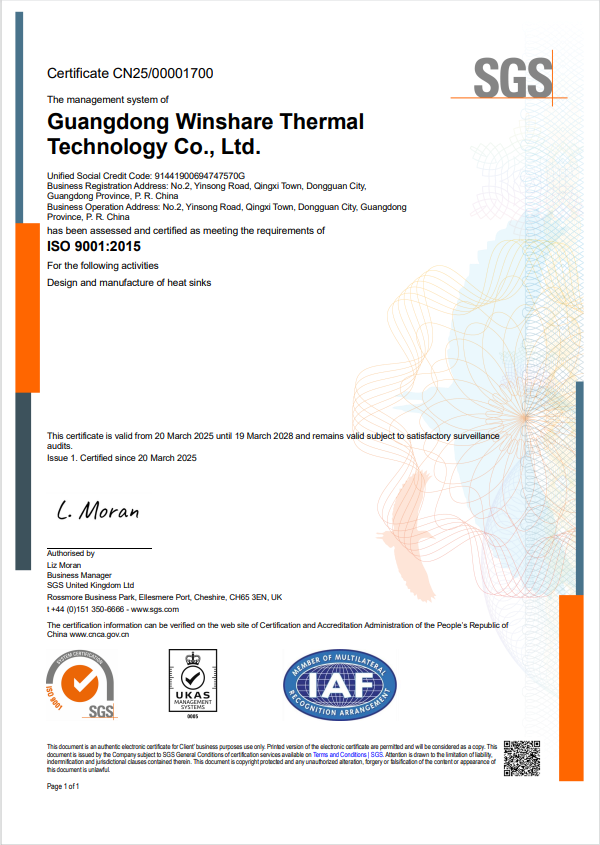
1. ISO 9001:2015 – Foundation of Quality
ISO 9001 is the most widely adopted quality management standard. For cold plates, it covers design control, supplier management, inspection, and corrective actions. Winshare Thermal holds ISO 9001:2015 certification, confirming its systematic approach to delivering consistent, high-quality brazed cold plates, FSW cold plates, embedded tube cold plates, and die-cast solutions.
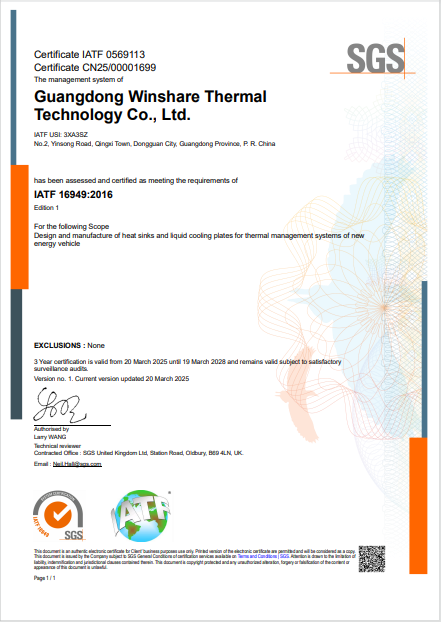
2. IATF 16949:2016 – Automotive-Grade Reliability
If your liquid cold plate is destined for electric vehicles, IATF 16949 is non-negotiable. This standard adds stringent requirements for failure mode analysis (FMEA), control plans, and product traceability. Winshare Thermal’s IATF 16949:2016 certification (see certificate below) demonstrates its capability to serve Tier-1 automotive customers with products like FSW cold plates and deep hole drilled cold plates for battery and inverter cooling.
3. ISO 14001:2015 – Environmental Stewardship
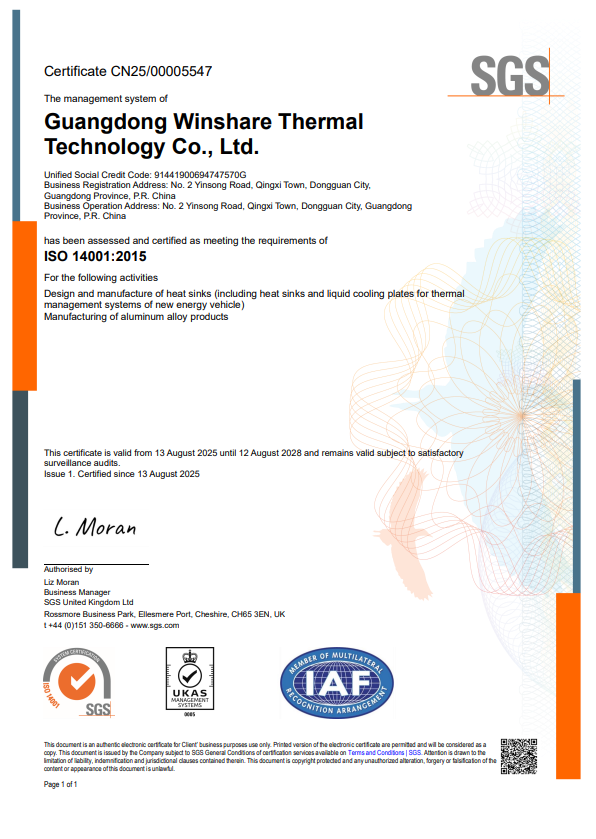
As environmental regulations tighten globally (e.g., EU’s PFAS restrictions), cold plate manufacturers must manage emissions, coolant disposal, and energy use. ISO 14001:2015 certification, held by Winshare Thermal, assures buyers that the supplier operates with minimized ecological footprint—a growing requirement for ESG-conscious corporations.
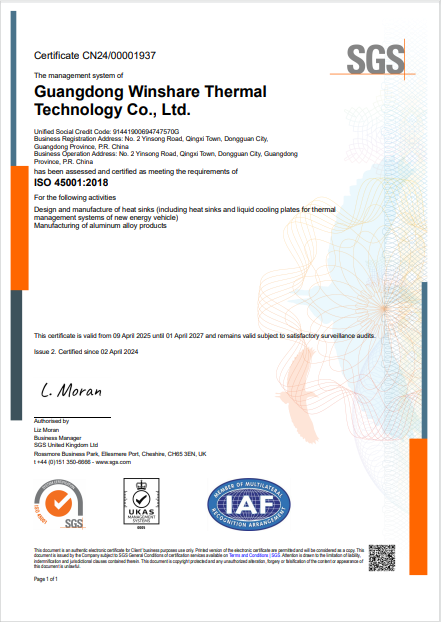
4. ISO 45001:2018 – Worker Safety
Manufacturing liquid cold plates involves brazing, machining, and welding. ISO 45001:2018 certification ensures a safe working environment, reducing accident risks and complying with labor laws. This is especially relevant for deep hole drilled cold plates and jet cooling units requiring high-precision machining.
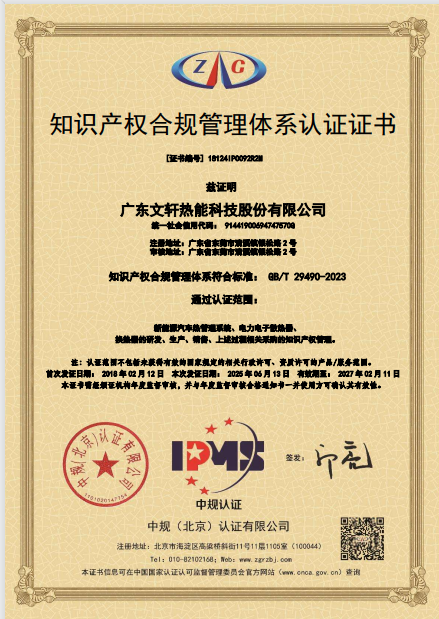
5. Intellectual Property Compliance – Protecting Innovation
With the rise of proprietary designs like micro-channel cooling and jet cooling, IP compliance certification (e.g., the certificate held by Winshare Thermal) verifies that the manufacturer respects third-party patents and has its own IP protection mechanisms. This mitigates legal risks for buyers incorporating the cold plate into their products.
Step-by-Step Breakdown: How to Verify Liquid Cold Plate Compliance
Follow this actionable checklist when evaluating a potential supplier:
- Request certification copies: Ask for valid certificates (not expired). Check the issuing body and scope.
- Match certifications to your application: Automotive projects require IATF 16949; AI servers need ISO 9001 and RoHS/REACH compliance; energy storage systems often demand ISO 14001.
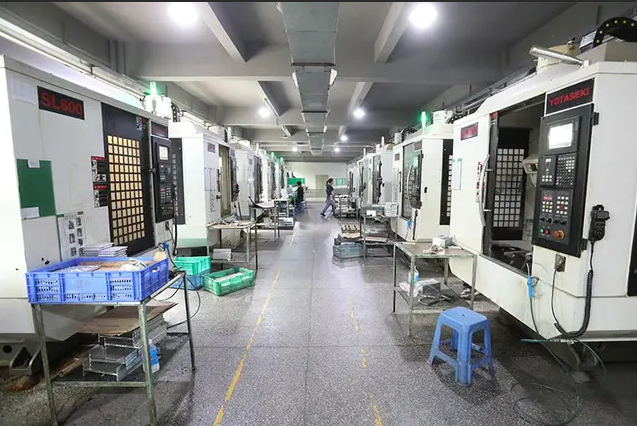
- Audit the factory: If possible, visit the production workshop. Look for organized workflows, quality control stations, and safety measures. Winshare Thermal’s modern workshop (see below) reflects its commitment to standards.
- Ask about product-level compliance: Beyond system certifications, ensure the cold plate itself meets UL 94 flammability, pressure test standards, and any applicable coolant compatibility tests.
- Check for continuous improvement: ISO requires internal audits and management reviews. Ask for evidence of corrective actions from recent audits.
Use Cases: Applying Certifications Across Industries
Understanding which certifications apply to your specific use case saves time and reduces risk.
| Application | Cold Plate Type | Required Certifications | Example from Winshare Thermal |
|---|---|---|---|
| AI Server CPU/GPU Cooling | Die-cast cold plate, micro-channel cold plate | ISO 9001, RoHS/REACH, UL recognized | Die Cast Cold Plates |
| Electric Vehicle Battery Pack | FSW cold plate, embedded tube cold plate | IATF 16949, ISO 14001, ISO 45001 | FSW Cold Plates, Embedded Tube Cold Plates |
| Energy Storage Systems | Brazed cold plate, deep hole drilled cold plate | ISO 9001, ISO 14001, IP compliance | Brazed Cold Plates, Deep Hole Drilled Cold Plates |
| Industrial Motor Drives | Extruded cold plate, manifold | ISO 9001, CE marking | Extruded Cold Plates, Durable Manifold |
Frequently Asked Questions (FAQ)
Q1: What is the single most important certification for a liquid cold plate supplier?
A: It depends on your industry. For automotive and EV applications, IATF 16949 is critical. For general industrial and data center use, ISO 9001 is the foundation. Always check that the certification is current and covers the specific factory producing your cold plates.
Q2: How can I ensure the supplier’s certifications are not counterfeit?
A: Verify the certificate number with the issuing body (e.g., BSI, TÜV, SGS). Look for the accreditation mark (e.g., UKAS, ANAB). Many issuers provide online databases for validation.
Q3: Does Winshare Thermal provide product-level compliance documents?
A: Yes. Winshare Thermal can supply material declarations, pressure test reports, and coolant compatibility data upon request. Visit winsharethermalloy.com or contact Alisa at wst03@winsharethermal.com.
Q4: Is ISO 14001 required for liquid cold plate buyers?
A: While not always mandatory, many large OEMs now require ISO 14001 as part of their supplier sustainability programs. It demonstrates that the manufacturer manages environmental risks, which can be critical for export markets with strict environmental laws.
Q5: Can a small factory be IATF 16949 certified?
A: Yes, IATF 16949 is applicable to any automotive supplier regardless of size. Winshare Thermal, though a focused thermal solutions provider, invested heavily to achieve IATF 16949, showing its capability to serve the automotive supply chain.
Conclusion
Certifications are not just badges—they are evidence of a manufacturer’s commitment to quality, safety, environmental responsibility, and legal compliance. For high-power applications relying on liquid cold plates, skipping due diligence on certifications can lead to catastrophic failures and costly recalls. By demanding ISO 9001, IATF 16949, ISO 14001, ISO 45001, and IP compliance certifications—all held by Winshare Thermal—you de-risk your supply chain and ensure your cooling solution meets global standards.
Contact Winshare Thermal today to discuss your certification needs and receive a compliance package for your next liquid cold plate project.
Winshare Thermal Technology Co., Ltd.
Address: No.2 Yinsong Road, Qingxi Town, Dongguan City, Guangdong Province, China 523640
Phone/WhatsApp: +86 15622535543
Email: wst03@winsharethermal.com
Web: https://www.winsharethermalloy.com