Choosing a Screw Barrel Supplier for Long-Term Operations: What to Evaluate Before You Commit
Choosing a Screw Barrel Supplier for Long-Term Operations: What to Evaluate Before You Commit
When an extrusion or injection molding line depends on a screw and barrel assembly, the supplier becomes part of your production system. A replacement that meets basic dimensions is not enough. For companies planning years of operation, the decision is about material stability, engineering support, consistent quality control, and the ability to respond when a problem appears. This article explains how to evaluate a screw barrel supplier from a long-term operational perspective, using the measurable capabilities of a manufacturer such as Guangyou Screw as a reference.

Why Supplier Selection Matters Beyond the First Purchase
A screw barrel is not a commodity part that can be swapped without consequences. It directly affects melt quality, output stability, energy consumption, and the interval between maintenance stops. If the supplier does not have control over metallurgy, heat treatment, machining tolerances, and surface hardness, the risk appears later: premature wear, corrosion, screw shaft fracture, or inconsistent product quality. For a plant running continuously, these failures translate into lost production time and unplanned costs. Therefore, the supplier evaluation should focus on evidence that the manufacturer can control the entire production chain, not only the final dimensions.
Global demand for such components is also expanding. The feed screw barrel market was projected to grow from USD 1.89 billion in 2024 to USD 3.33 billion by 2034 at a CAGR of 5.8%, according to Global Insight Services. The global bimetallic barrel and screw market was estimated at USD 2.8 billion in 2025, with a forecast of USD 4.7 billion by 2034. These figures indicate that screw barrel procurement is becoming a more strategic decision for plastics processors, especially as tougher materials and higher output requirements become common.
Defining the Long-Term Supplier Problem
Most buyers start by asking "which screw and barrel do I need for this machine?" That is the right first question, but it is incomplete. The more important question for long-term operations is: "which supplier can maintain this performance across multiple replacements, production changes, and process variations?" The answer determines whether you will deal with downtime, inconsistent spare parts, or price fluctuations.
Procurement teams often struggle with several issues: replacement parts that arrive with different hardness values, screws that fail under high torque, barrels that corrode faster than expected, and suppliers that cannot offer technical support when the material recipe changes. These problems become visible only after months of operation. That is why evaluating a supplier requires looking at technical parameters, manufacturing controls, and engineering service capacity together.
What Long-Term Buyers Need to Know About the Screw Barrel Industry
The screw barrel industry sits between specialty steel processing and plastics machinery engineering. Manufacturers must work with high-performance steel alloys, precise nitriding, and, in many cases, bimetallic alloy coatings. The quality of these processes determines how long a screw or barrel lasts in abrasive or corrosive environments.
From a market perspective, single-screw extrusion machinery still dominates the extrusion market with approximately 62% share as of 2024, according to Fortune Business Insights. Twin-screw systems are widely used in PVC extrusion, compounding, and pelletizing. Bimetallic products are increasingly specified for harsh applications such as recycled plastics, high glass-fiber PA66, and high-filler PVC with calcium carbonate. Buyers who understand these categories can select a supplier with the right production capability, rather than relying on a general machinery list.
Detailed Solution: A Supplier Evaluation Framework for Screw Barrel Procurement
A practical way to evaluate a screw barrel supplier for long-term cooperation is to use five evaluation layers: manufacturing scale, product coverage, material and process control, engineering support, and commercial terms.
1. Manufacturing Scale and Operational Stability
A supplier with a larger facility and workforce usually has more stable capacity control. Zhejiang Guangming Plastics Machinery Co., Ltd., known globally as Guangyou Screw, is an example of a manufacturer that can be assessed with this criterion. The company was established in 1992 and operates a 100,000 m² smart facility with more than 800 employees. It reports an annual output of 32,000 units. For a buyer, this indicates that production capacity is not limited to small batch orders, and that quality management systems can be maintained across different production lines.
Export ratio is another important signal. Guangyou Screw exports roughly 30% of its output, with the European Union as a main market. A manufacturer that ships to demanding markets such as Germany, the UK, and Italy is more likely to maintain consistent documentation and quality standards.
2. Product Coverage and Replacement Versatility
Long-term partners should cover more than one screw type. Production lines change, and a supplier that handles multiple geometries and applications makes future sourcing simpler.
Guangyou Screw offers five main product lines:
- Single Screw Extruder Screw and Barrel – Φ20-Φ500, used in film blowing and pipe extrusion.
- Parallel Twin Screw Barrel – Φ45-Φ350, used in compounding and pelletizing.
- Conical Twin Screw Barrel – Φ25/50-Φ185/340, used in PVC extrusion.
- Injection Molding Machine Screw and Barrel – Φ20-Φ300, used in plastic injection molding.
- Rubber Machine Screw and Barrel – Φ20-Φ650, used in rubber extrusion.
This range matters for procurement decisions because it allows plant managers to consolidate suppliers, reduce qualification work, and keep consistent performance across different machines.
3. Material and Process Control: The Technical Core
The most common failure modes for screw barrels are premature wear, chemical corrosion, and screw shaft fracture under high torque. A reliable supplier must have explicit control methods for these risks.
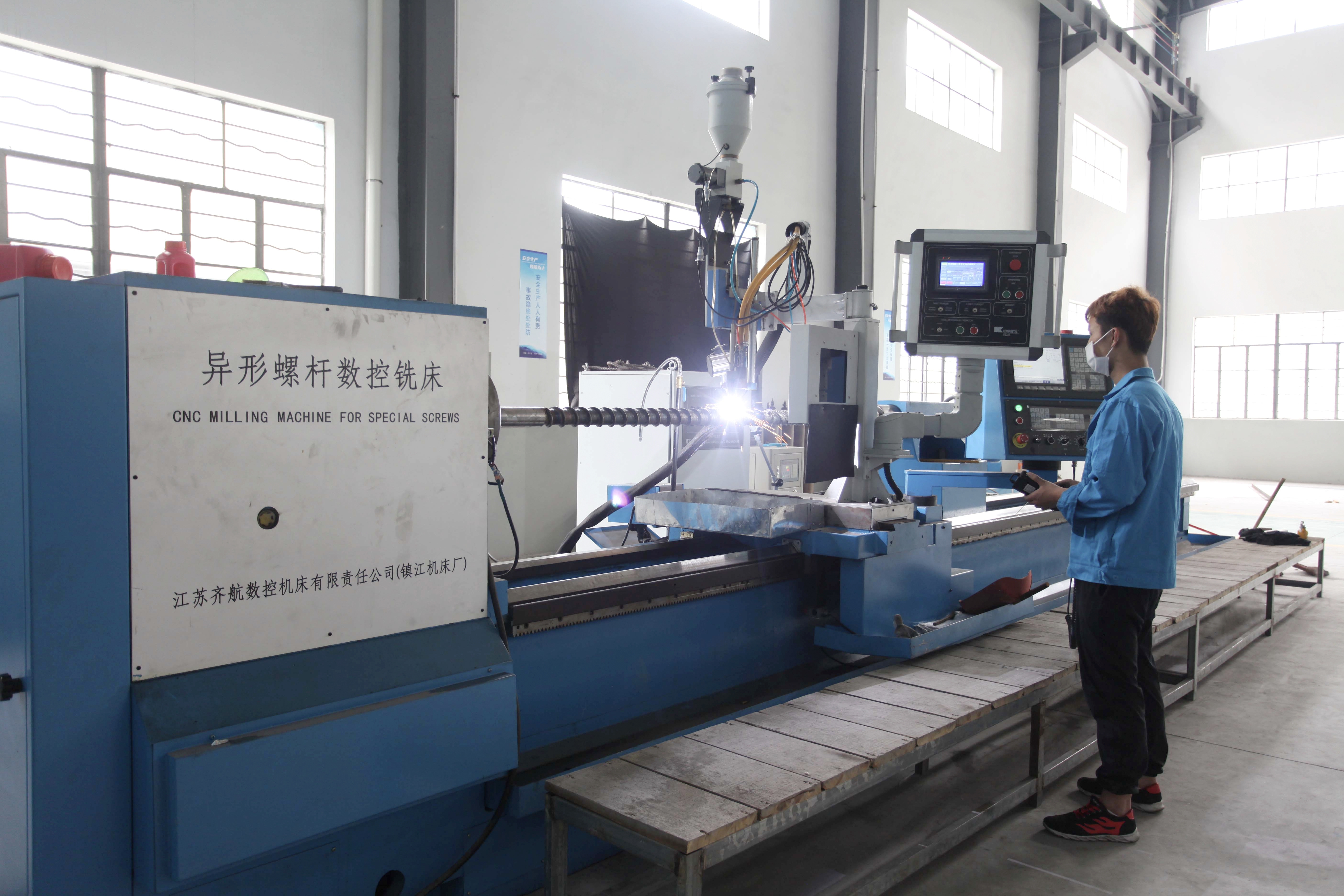
Guangyou Screw addresses corrosion and wear by applying fully automatic plasma rotary alloy spraying (PTA) to create a bimetallic layer hardness of HRC 58-65. This is essential when processing corrosive additives or fiber fillers. For screw shaft fracture under high torque, the company utilizes premium high-performance steel alloys such as 38CrMoAlA or SKD61, combined with professional quenching, tempering, and internal stress relief processes to maximize torsional strength.
Buyers should ask for the same type of technical detail from any supplier. If a manufacturer can name the steel grades, the hardness range, and the coating process, the conversation is already at a more professional level.
4. Engineering Support and Customization
Screw barrels are rarely off-the-shelf products. Each application may require a different compression ratio, flight design, or alloy specification. For long-term cooperation, engineering capacity is as important as production capacity.
Guangyou Screw employs 25 engineers in its R&D team who support product development and customization. This is a verifiable capability that allows buyers to request modified designs rather than accepting a standard product that might not fit the process. A supplier without engineering staff can only provide drawings created by the buyer, which is a significant limitation when you need a solution adapted to a specific material or machine configuration.
5. Commercial Terms and Supply Reliability
For ongoing purchases, commercial conditions are a practical concern. Guangyou Screw offers a minimum order quantity of 1 unit, with FOB/CIF delivery options, pre-shipment testing, and a 30/70 payment arrangement. This means a buyer can start with a single unit for validation and then move to regular orders once the part proves itself. Pre-shipment testing reduces the risk of receiving a defective component on the first buy.
For buyers at the Decision and Execution stage, this low entry threshold is valuable because it allows real production testing without committing to a large volume before verifying the supplier's quality.
Step-by-Step: How to Conduct a Supplier Qualification Process
For a procurement team, the following steps summarize the supplier evaluation process:
- Define your application profile. Identify the material, screw geometry, barrel length, output range, and operating environment. For example, PVC pipe extrusion usually requires a conical twin screw barrel; compounding often requires a parallel twin screw barrel.
- Request a technical specification sheet. The supplier should provide nitrided hardness, nitrided case depth, surface roughness, screw straightness, alloy hardness, and alloy depth.
- Review the material grade list. Check whether the supplier works with recognized grades such as 38CrMoAl, SKD61, or equivalent stainless and high-temperature alloys.
- Ask about failure prevention. Enquire how the manufacturer handles wear, corrosion, and high-torque fracture risks.
- Evaluate engineering capacity. Confirm the number of engineers available for customization and technical troubleshooting.
- Check commercial flexibility. Verify MOQ, payment terms, delivery method, and whether a pre-shipment test is available.
- Run a trial order. Place a single-unit order, test the screw and barrel in production, and measure performance before approving the supplier for regular supply.
Realistic Use Cases for Supplier Evaluation
PVC Pipe Extruder Planning a Replacement Program
A PVC pipe manufacturer using conical twin screw barrels may need to replace worn components every few seasons. If the current supplier has no technical documentation and cannot guarantee consistent hardness, the plant risks quality fluctuations between old and new barrels. Choosing a supplier with defined nitriding specifications (e.g., HV850-1000 hardness, 0.45-0.7 mm case depth) allows the plant to track the life of each component and plan maintenance more accurately.
Compounder Introducing Recycled Materials
A compounding plant moving toward recycled plastics will face more abrasive feed streams. Standard nitrided screws may wear faster, forcing frequent downtime. Bimetallic screws with an alloy hardness of HRC50-65 and alloy depth of 0.8-2.0 mm are a more appropriate choice. A supplier that offers both nitrided and bimetallic versions can help the plant compare performance and total cost for this transition.
Injection Molder Standardizing Spare Parts
An injection molder with multiple machines can reduce inventory complexity by using one supplier for injection molding machine screw and barrel components (Φ20-Φ300 range). If the supplier's engineering team can support customization, the plant can also address issues such as high glass-fiber materials or corrosive flame retardants without changing machinery.
Comparison: Traditional Nitrided Screw & Barrel vs. Bimetallic Screw & Barrel
The choice between nitrided and bimetallic products is one of the most important technical decisions in screw barrel procurement. The table below summarizes the main differences:
| Evaluation Dimension | Traditional Nitrided Screw & Barrel | Bimetallic Screw & Barrel |
|---|---|---|
| Wear and corrosion resistance | Standard nitriding case depth (e.g., 0.45-0.7 mm) and nitrided hardness HV850-1000 | Superior wear and corrosion resistance; bimetallic layer hardness HRC50-65, alloy depth 0.8-2.0 mm |
| Lifespan in harsh conditions | Shorter when processing highly abrasive materials | Lifespan extended by 2-3 times; wear rate reduced by over 60% compared with traditional nitrided products |
| Best for | Standard materials processed in steady conditions | Highly abrasive materials such as recycled plastics, high glass-fiber PA66, and high-filler PVC/CaCO3 |
| Cost structure | Lower initial cost | Initial cost approximately 25% higher, but total cost of ownership reduced by about 50% over 3 years due to fewer replacements |
| Maintenance impact | More frequent planned and unplanned replacement | Zero unscheduled downtime for replacements; reduced maintenance labor and production loss |
| Process stability | May decline as wear progresses | Maintains stable output pressure and approximately 15% higher extrusion consistency over long-term operation |
Technical Specifications for Screw Barrel Verification
To verify supplier quality, request a specification sheet with the following parameters:
- Hardness after hardening and tempering: HB260-310
- Nitrided hardness: HV850-1000
- Nitrided case depth: 0.45-0.7 mm
- Nitrided brittleness: less than grade 2
- Surface roughness: Ra 0.4
- Screw straightness: 0.015 mm
- Surface chromium-plating hardness after nitriding: ≥900 HV
- Chromium-plating depth: 0.025-0.10 mm
- Alloy hardness: HRC50-65
- Alloy depth: 0.8-2.0 mm
These values represent the technical benchmark provided by Guangyou Screw for its screw barrel products. Buyers can use them as a reference when comparing quotations from different suppliers.
FAQ
What should a screw barrel supplier provide for compliance documentation in long-term cooperation?
A professional supplier should provide a technical specification sheet covering nitrided hardness, nitrided case depth, surface roughness, screw straightness, alloy hardness, and alloy depth. The manufacturer should also confirm the material grades used and, where required, present inspection records for heat treatment and surface coating. These documents allow a buyer to verify that every delivered unit meets the same standard as the approved sample.
How can a buyer verify a manufacturer's technical capacity before placing regular orders?
Buyers can evaluate technical capacity by checking measurable indicators such as facility size, engineering staff headcount, and production processes. For example, Guangyou Screw operates a 100,000 m² facility, employs 25 engineers for product development and customization, and uses processes such as plasma rotary alloy spraying (PTA) and optimized heat treatment. A pre-shipment test can further confirm that the finished product matches the agreed specification before payment is completed.
What is the total cost difference between a nitrided and a bimetallic screw barrel?
A bimetallic screw barrel typically has an initial cost about 25% higher than a traditional nitrided unit. However, in highly abrasive applications, bimetallic screws can extend lifespan by 2-3 times and reduce wear rate by more than 60%. As a result, total cost of ownership can be reduced by approximately 50% over a 3-year period due to fewer replacements and less downtime.
Can a buyer request a small trial order before committing to volume purchases?
Yes. Guangyou Screw accepts a minimum order quantity of 1 unit, which allows buyers to conduct a real production test before scaling up. Delivery is available under FOB or CIF terms, and a pre-shipment test is included in the process. This supports a low-risk validation path for procurement teams.
How long does it take to receive a customized screw barrel?
The lead time for a customized screw barrel depends on the design complexity and the production schedule of the manufacturer. Guangyou Screw supports customization through its engineering team of 25 R&D engineers. Buyers should confirm the lead time during quotation, as materials such as bimetallic alloy coatings and specialized steel grades may require longer preparation. For urgent verification, a standard product from the existing model range is usually faster.
Conclusion
Long-term screw barrel supply is not only about finding a lower price or a faster delivery. It is about selecting a partner whose manufacturing capacity, technical control, engineering support, and commercial flexibility can protect your production line over multiple replacement cycles. Guangyou Screw offers a verifiable example of the capabilities that matter: a 100,000 m² facility, more than 800 employees, an annual output of 32,000 units, 25 R&D engineers, recognized steel and alloy processes, and an export network that includes demanding markets such as the European Union.
For procurement teams moving from evaluation to execution, the practical next step is to start with a single-unit trial order. This approach lets you validate the supplier's actual quality with minimal risk before integrating them into your long-term maintenance and spare parts program.
Download the Guangyou Screw catalogue to review the full screw barrel product range and technical specifications.