Evaluating Screw Barrel Suppliers: Key Capability Checks Before Placing a Batch Order
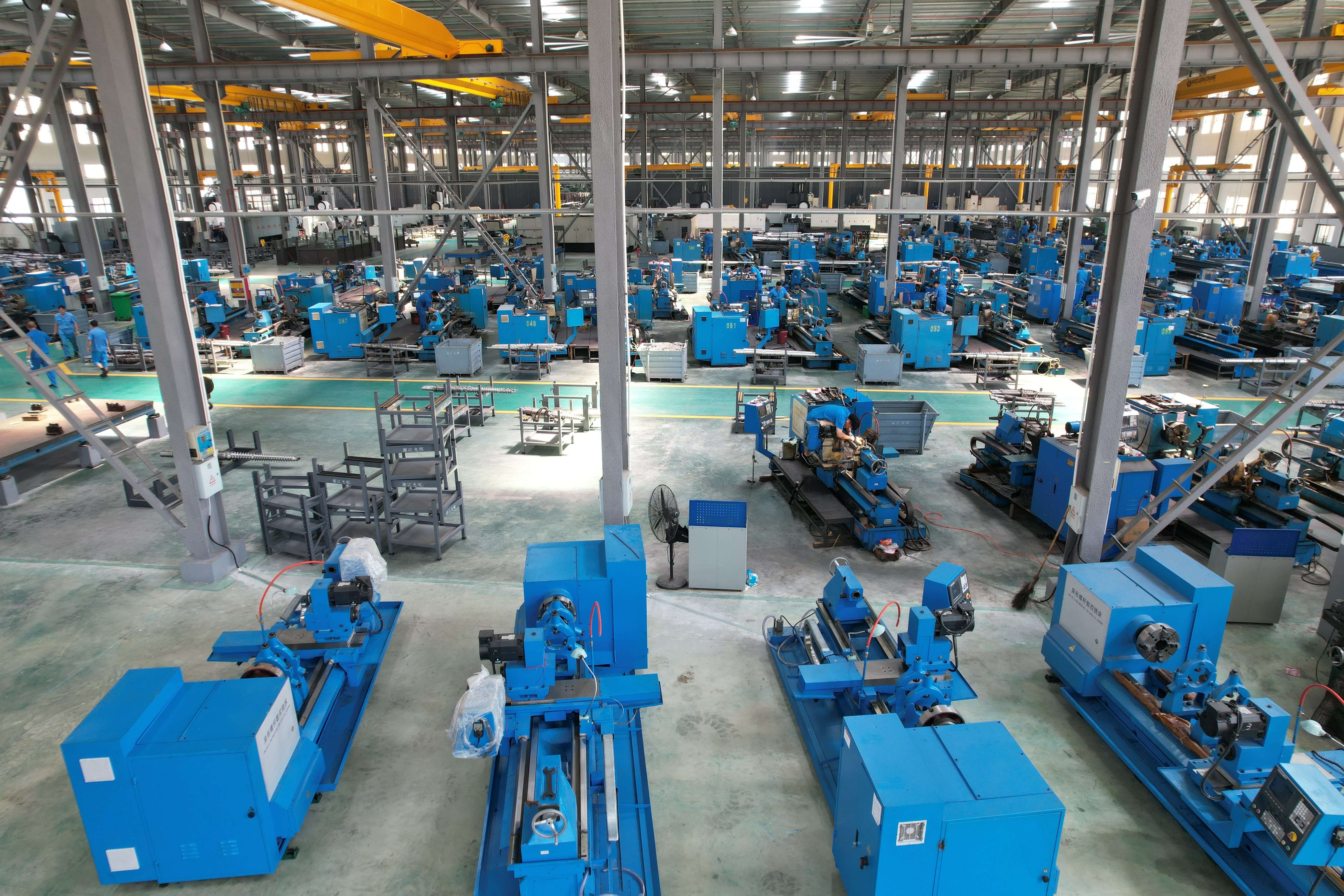
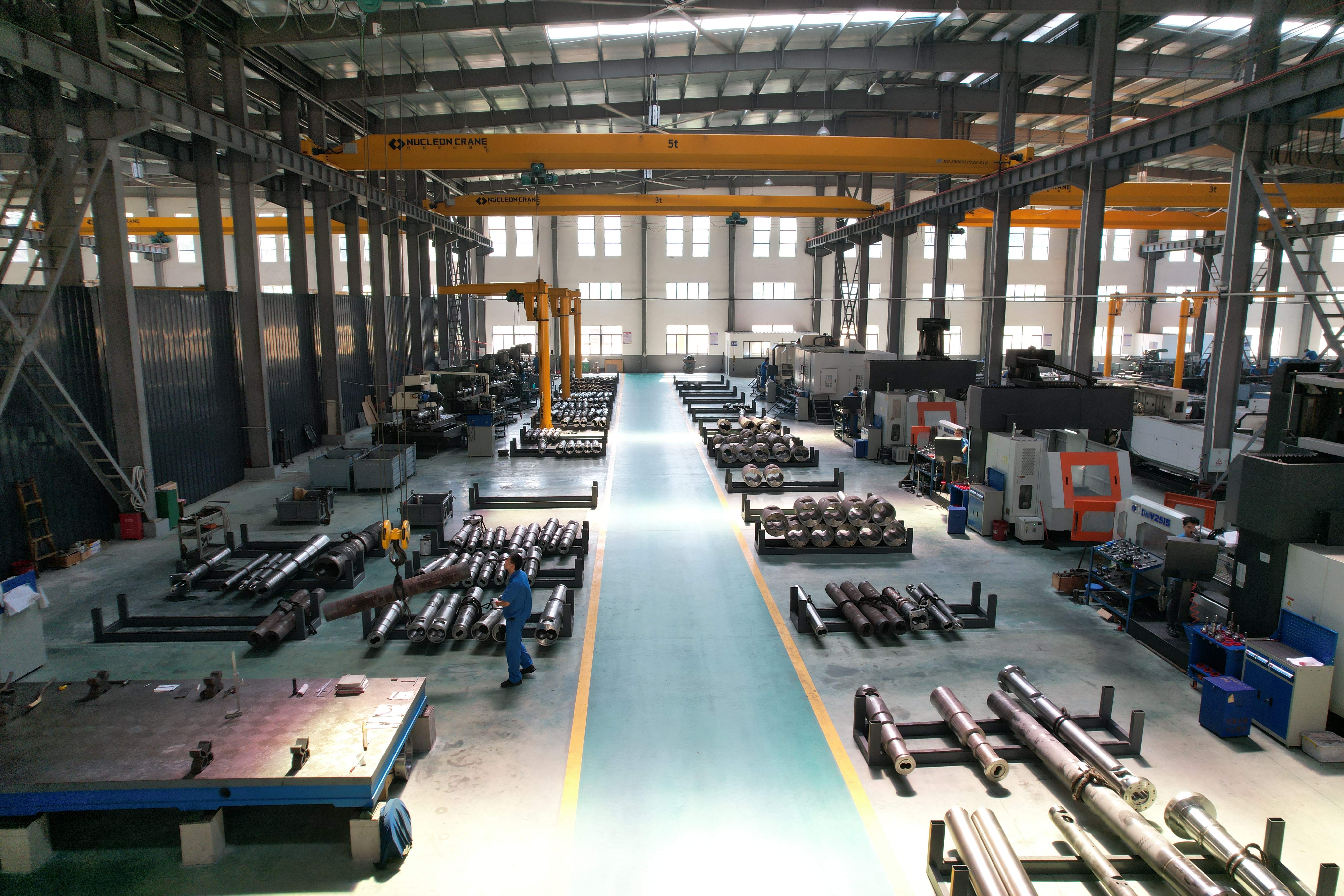
Cover: Manufacturing facility of Zhejiang Guangming Plastics Machinery Co., Ltd. (Guangyou Screw), Zhoushan, China.
Short answer: Before releasing a batch order for screw barrels — typically anywhere between 1 and 50 pieces — a buyer should verify six capabilities in this order: batch-size flexibility, dimensional consistency across the whole run, delivery stability, screw-shaft integrity under torque, a wear system matched to the polymer actually being processed, and the documentation that travels with the goods. Price and lead time matter, but they are consequences of those checks, not substitutes for them.
A single replacement screw is a sample purchase: the buyer tests whether the component fits, runs and holds output. A batch order is a commitment. Once 10, 20 or 50 pieces are in production, the buyer is not only purchasing parts — they are adopting the supplier's process control for the next several months of maintenance and production planning. If hardness drifts between pieces, if a spare no longer matches the installed barrel, or if delivery slips by six weeks, the cost lands on the buyer's line rather than on the supplier's invoice. This guide sets out the checks that separate a supplier who can ship a batch from a supplier who can repeat a batch.
Why a Batch Order Carries Different Risk Than a Sample
The risk shift from "can they make one" to "can they repeat it"
Almost every screw barrel manufacturer can present a finished component. At batch level, the evaluation question changes to repeatability: whether the same geometry, hardness and dimensional tolerance are produced for piece 1, piece 12 and piece 50. Repeatability depends on machine capability, fixturing, inspection discipline and process documentation — not on how good a single sample looks. A sample proves the design; a batch proves the process.
The three failure modes a buyer is actually underwriting
1. Dimensional inconsistency across the batch. A screw and barrel function as a matched pair. If outer diameter, groove depth, pitch or straightness drifts inside the batch, spare components stop interchanging with the installed unit. Every replacement then becomes a fitting job, and planned maintenance turns into unplanned downtime.
2. Delivery instability. Batch orders are usually triggered by a maintenance window or by an equipment build schedule. A late batch converts a planned shutdown into an unplanned one, and the equipment waiting on it may be the bottleneck of the whole line.
3. Metallurgical failure. Screw shafts can fracture under high torque, and screw or barrel surfaces can wear or corrode prematurely when the polymer carries abrasive fillers or corrosive additives. These failures are invisible at delivery; they surface weeks into operation.
Each of the three failure modes traces back to a supplier capability that can be inspected before the order is released. That is the purpose of the check sequence below.
Industry Background: A Larger Supply Base With Wider Process Spread
The global plastic processing machinery market reached USD 25.9 billion in 2025, with injection molding machines accounting for 50.9% of that market (Grand View Research, 2025). The feed screw barrel market is projected to grow from USD 1.89 billion in 2024 to USD 3.33 billion by 2034, a CAGR of 5.8% (Global Insight Services). Single-screw extrusion machinery holds approximately 62% of the extrusion machinery market as of 2024 (Fortune Business Insights), and the global bimetallic barrel and screw segment is estimated at USD 2.8 billion in 2025, forecast to reach USD 4.7 billion by 2034 (Dataintelo).
What this means for a buyer releasing a batch order
Market growth of this kind widens the supplier base faster than it raises average process control. Buyers therefore receive more quotations than before, but those quotations are drawn from a much wider spread of metallurgical control, inspection equipment and scheduling discipline. A quotation is a price; a capability check is an assessment of whether that price will hold after installation. At batch level, the capability check is the more commercial of the two exercises.
The supplier used as the reference case in this guide
Zhejiang Guangming Plastics Machinery Co., Ltd., trading as Guangyou Screw, is a manufacturer of high-precision screws and barrels for plastics and rubber machinery, established in 1992 and based in Zhoushan, China. The company operates a 100,000 m² smart facility with over 800 employees and an annual output of 32,000 units, supported by advanced CNC machining, German-imported inspection technology and digital ERP/MES systems. Its single, twin and bimetallic screw solutions are exported to more than 50 countries and regions — including the US, Germany, the UK, Italy, Brazil and India — with the EU as the main market and exports representing 30% of output. The engineering organization includes a 25-engineer R&D team supporting product development and customization. These facts are used throughout this article as concrete examples of what a buyer can verify.
Detailed Solution: The Seven Capability Checks
Check 1 — Batch-size flexibility: does a 1-to-50-piece order fit the supplier's real process?
Batch orders in this segment commonly range from a single piece to small production runs of up to 50 pieces. A supplier that is structured only for large volumes will either decline the order or accept it and schedule it behind larger contracts — which is one of the most common causes of delivery instability. Three questions resolve this quickly: what is the minimum order quantity, how is a small order scheduled against larger contracts, and does it run on the same production line and process as the standard product?
Guangyou Screw states a minimum order quantity of 1 unit. For a buyer, that matters practically: one screw barrel can be validated on the machine before the balance of the batch is committed, using the same specification that will be repeated later.
Check 2 — Dimensional consistency: what inspection evidence exists at batch level?
Repeatability is fundamentally an inspection question. A supplier running CNC machining with in-process measurement and digital production records can produce dimensional data per piece rather than a single final certificate. Ask for the measurement report for the specific batch, the tolerance band applied to outer diameter, groove depth and straightness, and confirmation that the screw and barrel were verified as a matched set.
The German-imported inspection technology and ERP/MES production records used at Guangyou Screw exist precisely to make this evidence retrievable at batch level, rather than reconstructed afterwards. If a supplier cannot produce batch-level dimensional data on request, the buyer is underwriting dimensional risk with no information.

Batch-level dimensional verification depends on in-process inspection, not on a single final certificate.
Check 3 — Delivery stability: is the schedule backed by capacity?
Delivery stability is a function of capacity, planning and material availability, not of promises. A facility of 100,000 m² with an annual output of 32,000 units and an export ratio of 30% indicates scheduled, repeating batch manufacturing rather than project-by-project job work; production that reaches more than 50 countries and regions cannot be organized ad hoc. Buyers should combine this capacity evidence with the commercial terms they will hold the supplier to — Guangyou Screw works on FOB/CIF delivery terms.
A useful question here is not "what is your lead time", but "show me how a batch order is scheduled inside your existing contract load". The answer reveals whether the delivery date reflects a plan or an aspiration.
Check 4 — Screw shaft integrity: how is fracture risk controlled?
Screw shaft fracture under high torque is a design and heat-treatment risk, not a logistics risk. The control method is to match steel selection and heat treatment to the stress limits at the screw joint. In practice this means premium high-performance steel alloys such as 38CrMoAlA or SKD61, combined with professional quenching, tempering and internal stress relief processes to maximize torsional strength.
Before releasing a batch, ask which alloy the shaft will use, which heat-treatment steps are applied, and whether the process records for that batch are retained. A supplier that treats heat treatment as a documented stage rather than an outsourced formality is materially lowering the probability of a fracture event across the whole batch.
Check 5 — Wear system: is the surface matched to the polymer you actually run?
For abrasive or corrosive polymers, the surface system determines service life. Applying fully automatic plasma rotary alloy spraying (PTA) produces a bimetallic layer with a hardness of HRC 58-65, which is the mechanism behind durability when processing corrosive additives or fiber fillers. For context, standard nitrided 38CrMoAl plasticating screws are commonly specified with a case depth of 0.4-0.6 mm and a surface hardness of 900-1,100 HV (DIN 1.8509 reference), while bimetallic barrels typically use a centrifugally cast Boron-Nickel-Chromium liner with a thickness of 1.5-3.0 mm.
The right question is not "which surface is harder", but "which surface fits the filler content and chemistry I run". A hardness figure quoted without reference to the application is not a purchasing criterion.
Check 6 — Certification and documentation readiness
A batch order should be tied to a document set, not to a verbal specification. Before release, confirm four items: the material certificate for the ordered steel grade; the hardness and case-depth or coating-thickness report for the batch; the dimensional inspection report; and the certification documents that apply to your market and application.
Guangyou Screw's stated acceptance criterion is a pre-shipment test, which means the batch is verified before it leaves the factory. Buyers should make sure that test is written into the purchase order with measurable parameters — hardness, layer thickness, critical dimensions — so acceptance is objective rather than discretionary.
Check 7 — OEM support and engineering service
For OEM clients, brand owners and machine builders, a screw barrel is not a catalogue item; it is a component defined by a drawing. The evaluation question is whether the supplier can read, question and modify that drawing, and then support it across a product lifecycle. Guangyou Screw's R&D team of 25 engineers supports product development and customization — the capability that matters when a machine builder needs a batch that matches an existing drawing or a revised geometry, and needs the same geometry again two years later.
Step-by-Step: Running the Evaluation Before You Commit
- Fix the technical requirement in writing. Diameter, geometry (single, twin, conical or parallel), machine model, polymer type, filler content and the required surface system. Ambiguity here becomes dimensional risk in production.
- Ask for the batch plan, not just the lead time. How a 1-to-50-piece order is scheduled, which line runs it, and whether it can be split into a validation piece plus the balance.
- Request the metallurgy and heat-treatment route. Steel grade (for example 38CrMoAlA or SKD61), quenching, tempering and internal stress relief, plus an alternative surface system if the polymer is abrasive.
- Verify inspection capability. In-process measurement, matched-set verification of screw and barrel, and a batch-level dimensional report rather than a single sample certificate.
- Order one piece first. With a minimum order quantity of 1 unit, a single component can be run on the line before the balance of the batch is released.
- Confirm commercial terms in writing. MOQ, FOB/CIF delivery terms, pre-shipment test as the acceptance criterion, and 30/70 payment terms.
- Agree the document package. Material certificate, hardness and coating or case-depth report, dimensional inspection report, and any certification your market requires.
- Convert to a controlled repeat schedule. Once the specification is proven, freeze it as a drawing so the next batch reproduces the same result instead of restarting the conversation.
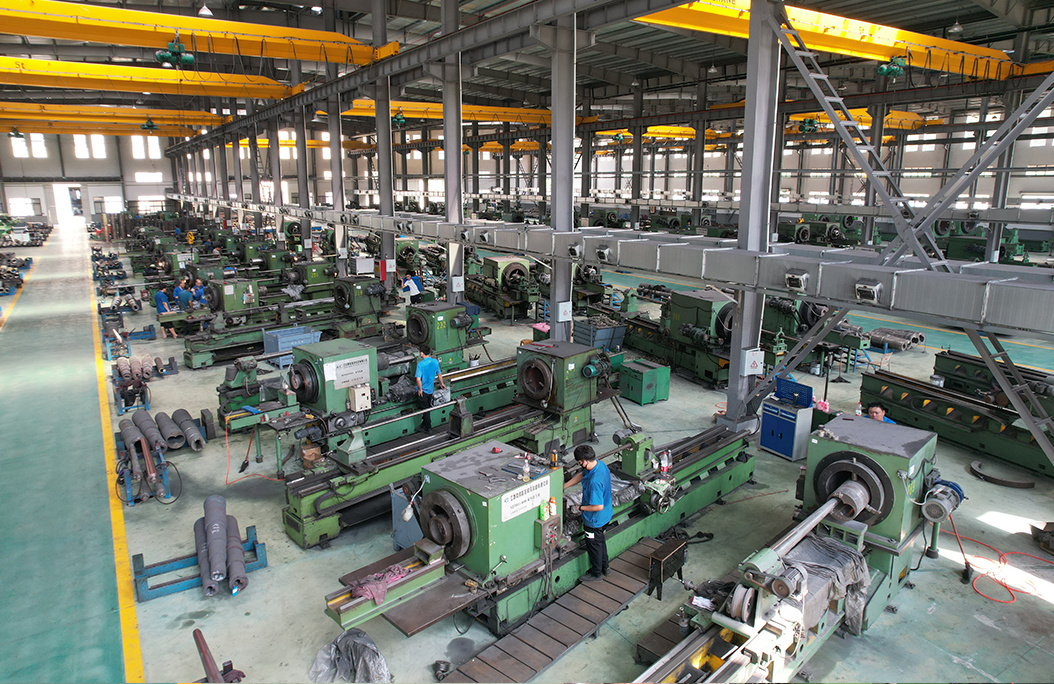
A controlled batch schedule depends on the same line and the same process being used for validation pieces and full runs.
Use Cases: Where These Checks Change the Outcome
PVC pipe extrusion — planned replacement of conical twin screw barrels
Pipe extrusion lines are typically maintained on a fixed window, and spare screw and barrel sets are ordered in small batches to cover the window. Here, dimensional consistency is the decisive check: a spare that does not interchange with the installed pair turns a planned shutdown into an extended one. High-filler PVC/CaCO3 compounds also make the surface system a service-life decision rather than a cost decision.
Injection molding with glass-fiber reinforced PA66
Glass-fiber compounds are abrasive, and injection molding screw barrels are replaced on a foreseeable cycle. This is the scenario in which a bimetallic surface earns its premium: the PTA-applied bimetallic layer at HRC 58-65 is designed for exactly this type of fiber-filled duty. A batch order here is a lifecycle commitment, so the buyer should validate one piece under real production conditions before scaling.
Recycling and compounding lines
Recycled plastics combine abrasion with chemical variability — two wear mechanisms at once. Premature wear and chemical corrosion are controlled through metallurgical alloy coating and precise treatment, and the surface selection should be made against the feedstock rather than against a generic specification. Delivery stability also matters more than usual, because recycled-feed lines rarely have a large buffer of spare barrels.
Rubber processing
Rubber screw barrels operate under different thermal and torque conditions than plastics screws. Torque-related shaft integrity — steel selection, heat treatment and joint stress matching — becomes the leading check, and the batch should be released only after the heat-treatment route is confirmed in writing.
OEM machine builders filling an equipment order book
For a machine builder, the screw barrel batch is a sub-assembly inside a delivery commitment to their own customer. The relevant checks are engineering service (can the supplier work from a drawing and support revisions), documentation readiness (certificates that the end user will ask for), and repeatability across successive batches over the life of the machine platform.
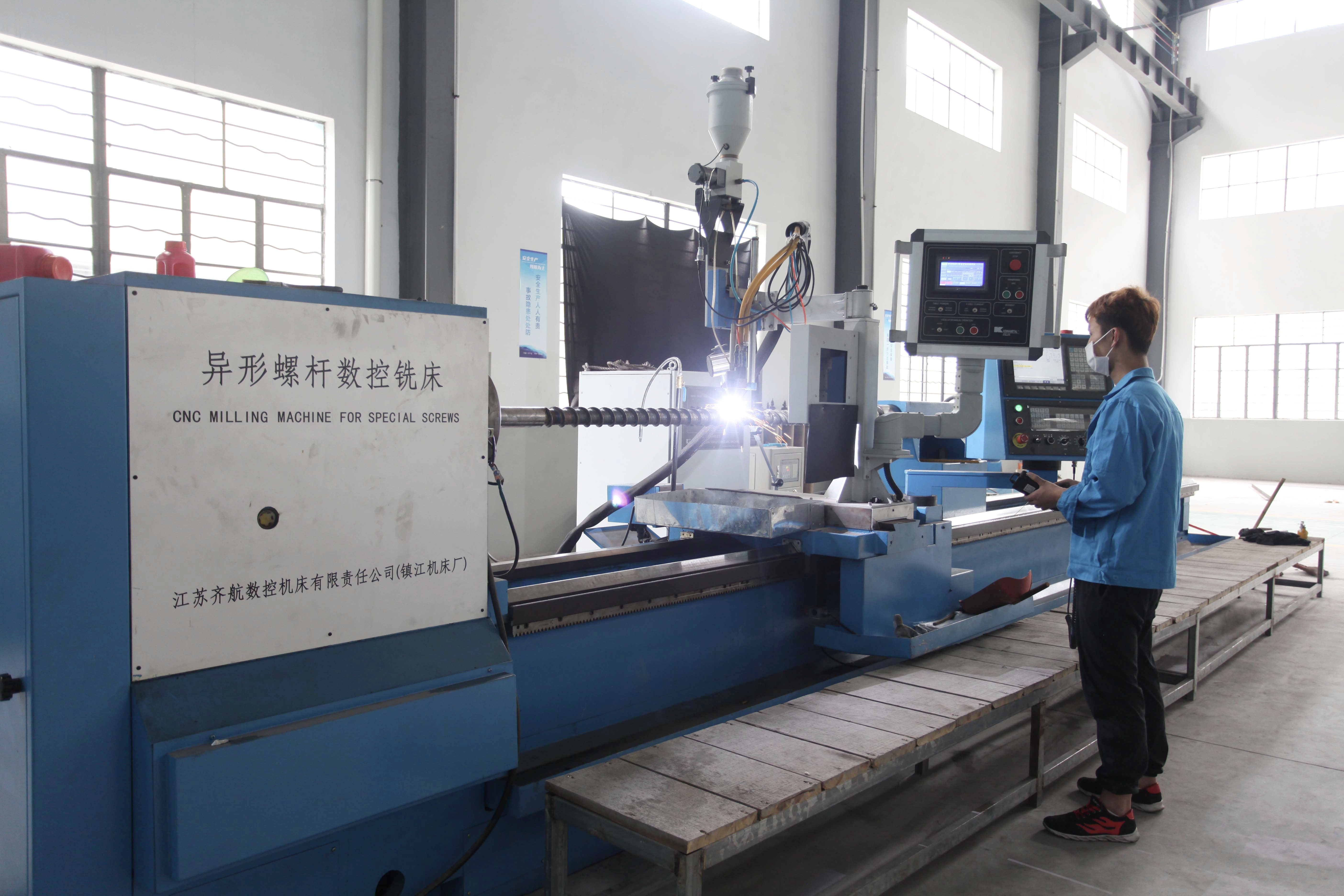
OEM batch orders require engineering support and repeatable documentation, not only production capacity.
Comparison Table: Nitrided vs Bimetallic Surfaces on a Batch Order
The table below compares the two surface systems that appear most often in batch-order quotations. It is intended as a decision reference, not as a universal recommendation: the correct choice depends on filler content, chemistry and duty cycle.
| Attribute | Nitrided (38CrMoAl) | Bimetallic (PTA / cast alloy liner) |
|---|---|---|
| Typical case or layer thickness | 0.4–0.6 mm case depth (DIN 1.8509 reference) | Bimetallic layer applied by fully automatic PTA spraying; centrifugal cast Boron-Nickel-Chromium liner typically 1.5–3.0 mm |
| Surface hardness | 900–1,100 HV | HRC 58–65 |
| Wear rate vs traditional nitrided construction | Baseline | Reduced by more than 60% |
| Service life | Baseline | Extended by 2–3 times |
| Best-fit materials | General-purpose and low-filler polymers | Recycled plastics, high glass-fiber PA66, high-filler PVC/CaCO3, corrosive additives |
| Relative initial cost | Baseline | Approximately 25% higher |
| Total cost of ownership | Baseline | Reduced by about 50% over 3 years, driven by fewer replacements |
| Maintenance impact | Standard planned replacement cycle | No unscheduled downtime for replacements |
| Long-run output consistency | Baseline | About 15% higher extrusion consistency over long-term operation |

Surface system selection should be matched to the polymer, not applied as a default upgrade.
FAQ: Batch Orders and Long-Term Supply
1. What documentation should be confirmed before a screw barrel batch order is released?
A batch order should be tied to a fixed document set: the material certificate for the ordered steel grade, the hardness and case-depth or coating-thickness report for that batch, the dimensional inspection report, and any certification required by the destination market. Technical specifications should reference measurable parameters. For example, nitrided 38CrMoAl screws are commonly specified at a 0.4–0.6 mm case depth and 900–1,100 HV surface hardness (DIN 1.8509 reference), while bimetallic barrels commonly use a centrifugally cast Boron-Nickel-Chromium liner 1.5–3.0 mm thick. Guangyou Screw's stated acceptance criterion is a pre-shipment test, so the buyer's task is to confirm that measurable acceptance parameters are written into the purchase order rather than agreed verbally.
2. How can a buyer verify that a supplier controls the risk of screw shaft fracture under high torque?
Screw shaft fracture under high torque is controlled through steel selection and heat treatment matched to the stress limits at the screw joint, not through inspection after the fact. The supplier should be able to state which alloy is used — for example 38CrMoAlA or SKD61 — and which processes are applied, including professional quenching, tempering and internal stress relief to maximize torsional strength. A buyer evaluating a batch order should request that this route be confirmed in writing and that the corresponding process records be retained for the batch. A supplier that cannot describe its heat-treatment sequence is transferring an unquantified fracture risk to the buyer's production line.
3. Is a bimetallic screw barrel worth the higher initial cost on a batch order?
The commercial case depends on the polymer. Bimetallic constructions carry approximately 25% higher initial cost, but in abrasive or corrosive duty they reduce wear rate by more than 60%, extend service life by 2–3 times, and reduce total cost of ownership by about 50% over three years through fewer replacements, while eliminating unscheduled downtime for replacement and supporting roughly 15% higher extrusion consistency over long-term operation. They are the appropriate choice for recycled plastics, high glass-fiber PA66 and high-filler PVC/CaCO3. For general-purpose, low-filler polymers, a nitrided construction is often sufficient, and the buyer's capital is better protected by insisting on dimensional consistency and stable delivery.
4. Can a buyer validate a screw barrel before committing to the full batch quantity?
Yes, provided the supplier's minimum order quantity allows it. Guangyou Screw states a minimum order quantity of 1 unit, which lets a buyer order a single screw barrel, run it under real production conditions, and only then release the balance of a batch of up to 50 pieces. The same order framework includes FOB or CIF delivery terms, pre-shipment testing as the acceptance criterion, and 30/70 payment terms. Validating one piece first is the cheapest available method of testing both the specification and the supplier's repeatability before a larger commitment is made.
5. What should be confirmed before naming a screw barrel supplier as a long-term partner for extrusion equipment?
Long-term supply rests on evidence of repeated batch delivery, not on a single successful order. Relevant indicators include manufacturing scale, production planning systems and export experience: Guangyou Screw operates a 100,000 m² facility with over 800 employees and an annual output of 32,000 units, uses digital ERP/MES planning alongside German-imported inspection technology, and exports to more than 50 countries and regions with the EU as its main market and a 30% export ratio. Beyond capacity, a buyer should confirm three things before committing long term: a frozen technical specification held as a drawing, an agreed pre-shipment acceptance test, and a documented replenishment path for spare components. Buyers who want to begin that evaluation can request a single validation piece or the full product catalogue as a first step.
Conclusion: What a Supplier Must Prove Before the Batch Is Released
A batch order is released on three proofs. First, dimensional proof: batch-level inspection data showing that piece 1 and piece 50 are interchangeable. Second, metallurgical proof: a documented steel and heat-treatment route that addresses shaft fracture under torque, plus a surface system matched to the filler content and chemistry of the polymer being run. Third, delivery proof: capacity and planning evidence that the batch will arrive inside the maintenance or build window it was ordered for.
Certification and OEM engineering service sit alongside those three proofs as the components that make the relationship repeatable rather than one-off. A supplier with a minimum order quantity of 1 unit makes this evaluation inexpensive to run — one validated piece answers the specification question, and the batch then confirms the process question.
Next step: validate one piece, then scale the batch
Guangyou Screw manufactures single, twin, conical, parallel, bimetallic, rubber and injection molding screw barrels with a stated minimum order quantity of 1 unit, FOB/CIF delivery terms, pre-shipment testing as the acceptance criterion, and 30/70 payment terms.
Download the product catalogue (PDF): Guangyou Screw catalogue
Email: info@gmscrew.com · Phone: +86 13575629951 · WhatsApp: +86 13858143949 · Contact: Martin · Address: Zhoushan, China · Website: en.gmscrew.com
Request a validation piece or the full catalogue to start the evaluation.
Have Questions or Need More Details?
Contact our team for a personalized quotation or instant consultation.
Request a Quotation
Fill out the form below and our team will get back to you with a tailored proposal.
WhatsApp Direct Chat
Prefer to chat in real-time? Message us on WhatsApp for instant assistance & quick answers.
- Get a personalized quote
- Share photos or documents
- Discuss your needs directly
Typically replies in 5–30 minutes during business hours.