ISO Certifications for Screw and Barrel Systems: A Compliance Roadmap for Global Buyers
Three ISO certificates decide whether a screw and barrel supplier can serve compliance-driven buyers: ISO 9001:2015 for quality management, ISO 14001:2015 for environmental management, and ISO 45001:2018 for occupational health and safety. Guangyou Screw (Zhejiang Guangming Plastics Machinery Co., Ltd.), a manufacturer of screw and barrel systems established in 1992 in Zhoushan, China, holds this certificate set under registration number 15/25E6429R20, issued by WIT ASSESSMENT.
This roadmap is written for buyers who have already shortlisted a geometry and now need to pass compliance review — procurement managers, plant engineers, importers and OEM project teams. It maps each standard onto the product families that are actually ordered: single screw barrels, parallel twin screw barrels, conical twin screw barrels, injection molding screw barrels, rubber screw barrels and extruder screw barrels. It also sets out the verification steps that turn a certificate PDF into a defensible sourcing decision.
Problem Definition: Why Screw Barrel Compliance Usually Fails at the Contract Stage
Screw and barrel selection normally begins with engineering. Buyers compare diameter, L/D ratio, compression ratio, base material (38CrMoAlA, SKD61, AISI316), surface hardness, and the choice between a nitrided screw barrel and a bimetallic screw barrel. Compliance sits at the end of that list — and it is precisely where a purchase can stall.
Four documentation failures appear repeatedly in screw and barrel procurement:
- Scope mismatch. The certificate exists and is valid, but the declared scope covers a different activity — for example, a quality system registered for general machining rather than for the manufacture of twin screw barrels or extruder screw barrels.
- Unverifiable registration. The buyer receives a scanned certificate with no registration number that the issuing body can confirm.
- No process evidence. The certificate is valid, but no traceable record exists for the heat treatment, nitriding or alloy spraying parameters that actually determine barrel life.
- Failure-mode blind spots. Certification is treated as a document rather than as a control, so the two failure modes that matter most in service are never mapped to a controlled process.
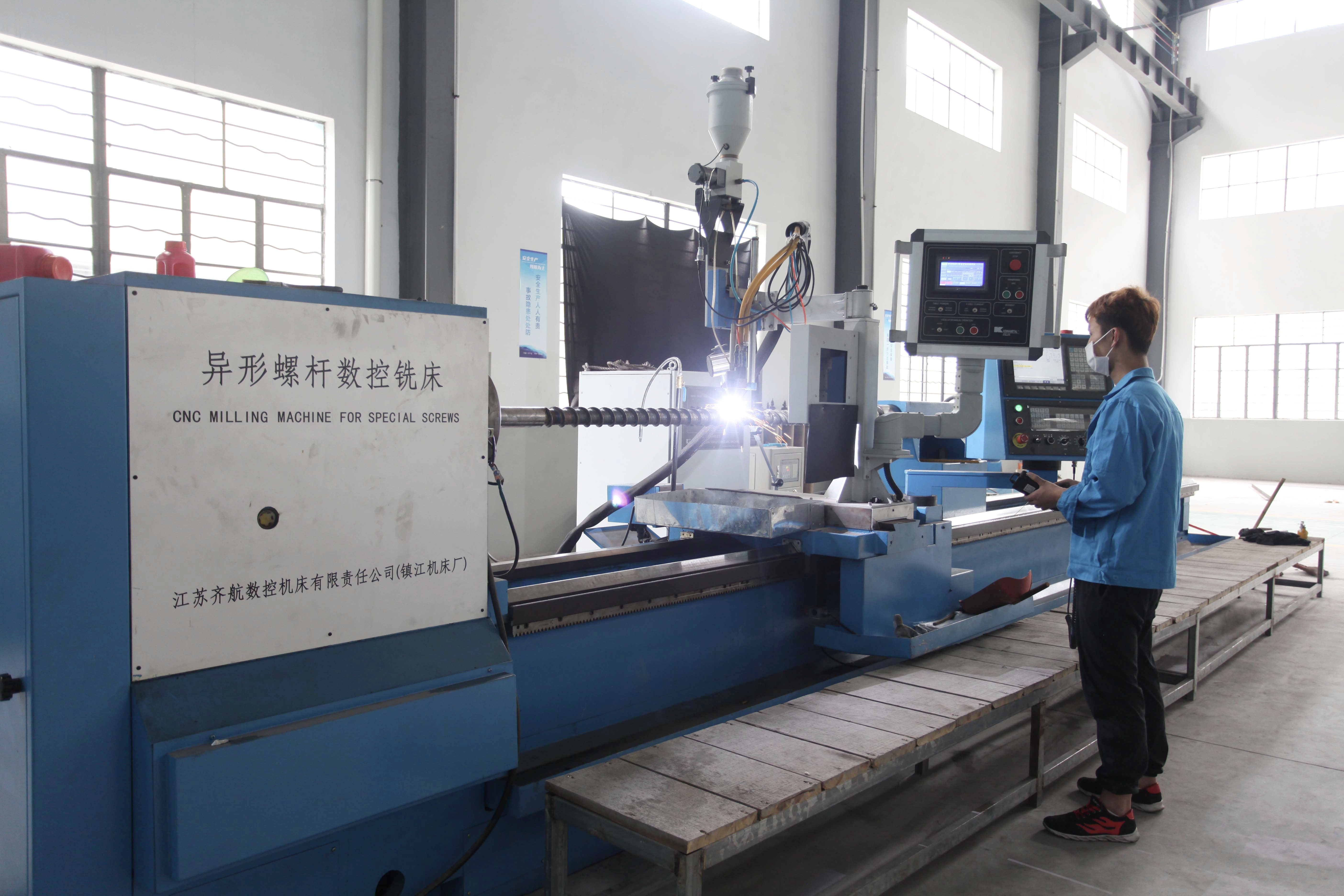
Those two failure modes are well defined in screw and barrel manufacturing. Screw shaft fracture under high torque is addressed through optimised steel selection and heat treatment matched to joint stress limits; the documented approach is to use premium high-performance steel alloys such as 38CrMoAlA or SKD61 and to apply professional quenching, tempering and internal stress relief processes to maximise torsional strength. Premature wear and chemical corrosion is addressed at the surface through metallurgical alloy coating and precise nitriding, or through fully automatic plasma rotary alloy spraying (PTA) that produces a bimetallic layer with hardness of HRC 58-65.
Both controls are auditable, and that is the link to ISO 9001:2015. A quality management certificate is only useful to a buyer when the processes it governs are the same processes that determine whether the screw and barrel survive in service.
Industry Background: A Growing Market With Rising Documentation Expectations
The screw and barrel market is expanding, and the buyer mix is shifting toward purchasers who audit. Published market research gives the scale:
- The global plastic processing machinery market reached USD 25.9 billion in 2025, with injection molding machines accounting for 50.9% of market share (Grand View Research).
- The feed screw barrel market is projected to grow from USD 1.89 billion in 2024 to USD 3.33 billion by 2034, at a CAGR of 5.8% (Global Insight Services).
- Single-screw extrusion machinery dominates the extrusion market with approximately 62% market share as of 2024 (Fortune Business Insights).
- The global bimetallic barrel and screw market is estimated at USD 2.8 billion in 2025 and forecast to reach USD 4.7 billion by 2034 (Dataintelo).
Market estimates are not interchangeable. Published 2025 figures for the total plastic processing machinery market range from USD 25.9 billion (Grand View Research) to USD 39.0 billion (IMARC Group), depending on whether peripheral equipment is included. Any single market figure should be read as a directional estimate, not as a procurement input.
Three structural shifts matter for certification. Injection molding remains the largest single application segment, which places injection molding screw barrels and screw cylinder assemblies inside the most heavily audited part of the market. Bimetallic screw barrels are moving from a niche upgrade toward a standard specification in abrasive applications, which pushes PTA spraying into the supplier qualification checklist. And management-system certification is increasingly used as a proxy for process discipline — not because a certificate proves barrel quality, but because an uncertified heat treatment and nitriding operation is far harder to audit.
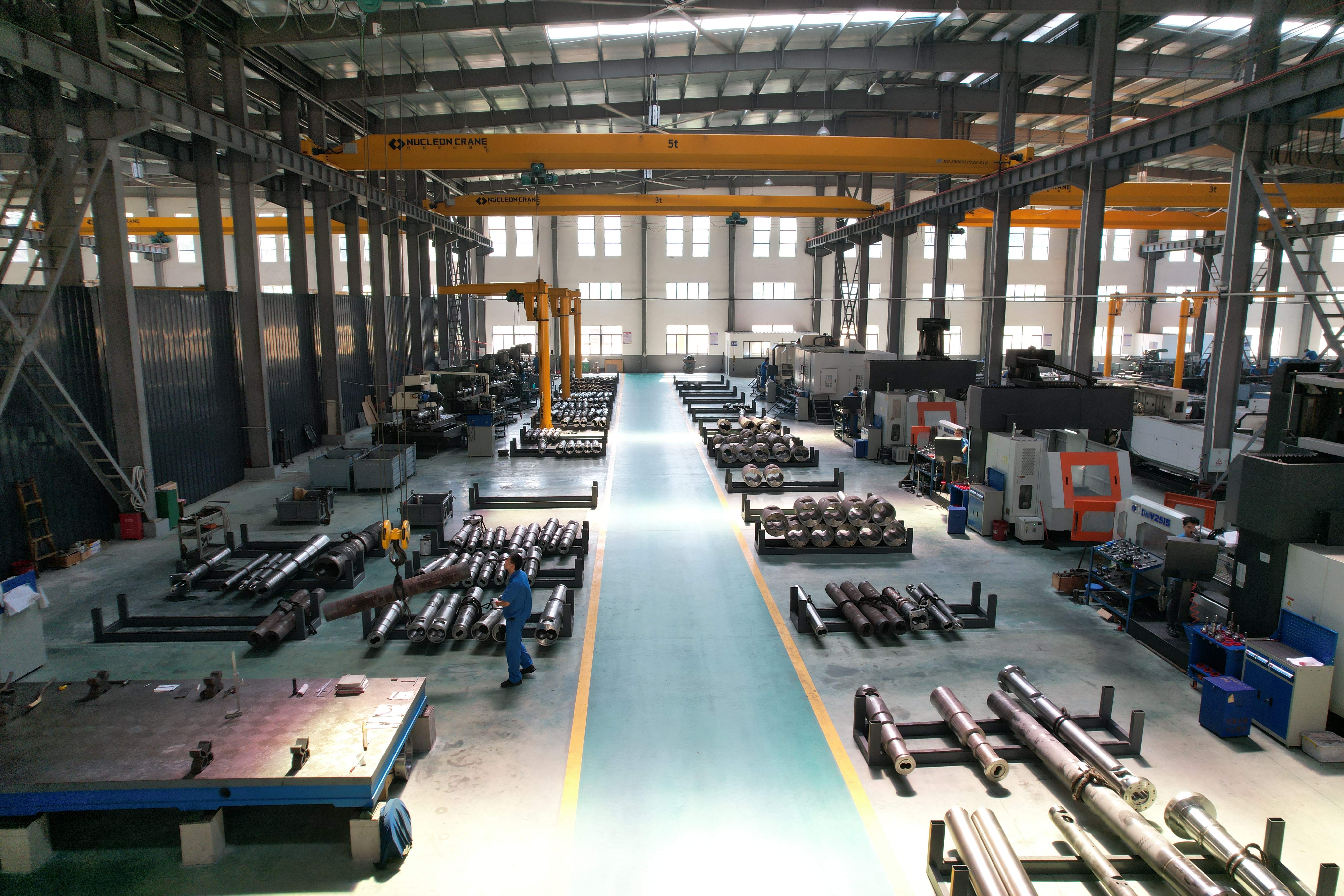
Guangyou Screw operates in this context with a 100,000 m² facility in Zhoushan, China, more than 800 employees, a 25-engineer R&D team and an annual output of 32,000 units. Roughly 30% of production is exported, with main markets in the EU and deliveries to more than 50 countries and regions including the US, Germany, the UK, Italy, Brazil and India.

Detailed Solution: What Each ISO Certificate Covers — and Which Products It Applies To
Each of the three standards answers a different buyer question, and each has a different scope boundary. Conflating them is the most common compliance error in screw and barrel sourcing.
ISO 9001:2015 — quality management for screw and barrel manufacture
ISO 9001:2015 governs how a manufacturer controls design inputs, production processes, inspection and non-conforming output. The scope question is whether the certificate covers the product family being ordered. For screw and barrel buyers, that means the registration scope should extend across the geometries a plastics or rubber processor actually runs: single screw barrel, parallel twin screw barrel, conical twin screw barrel, injection molding screw barrel, rubber screw barrel, PVC screw barrel and extruder screw barrel.
For Guangyou Screw, the quality management scope registered under 15/25E6429R20 covers the manufacture of screw and barrel systems for rubber machinery, injection molding machinery, single-screw extrusion, parallel twin-screw extrusion and conical twin-screw extrusion.
ISO 14001:2015 — environmental management at the manufacturing site
ISO 14001:2015 applies to the site, not to the product. It governs how the plant controls air emissions from nitriding and alloy spraying, chemical and coolant waste streams, energy use and environmental compliance obligations across the facility. This matters commercially because buyers in the EU and other regulated markets increasingly have to document that their supplier base operates under recognised environmental controls.
ISO 45001:2018 — occupational health and safety
ISO 45001:2018 covers the processes with the highest physical risk in a screw and barrel plant: heat treatment furnaces, nitriding, PTA alloy spraying, heavy machining and material handling. It is a delivery-reliability document as much as a safety document, because a site with a managed OH&S system has fewer unplanned production interruptions.
Certificate registration 15/25E6429R20 (WIT ASSESSMENT)
Guangyou Screw's compliance package is issued by WIT ASSESSMENT under registration number 15/25E6429R20 and covers ISO 9001:2015, ISO 14001:2015 and ISO 45001:2018. The registration number is the first field a buyer should verify: it is what allows the issuing body to confirm that the certificate is genuine, that the standard is correctly stated, and that the scope statement matches the products being purchased.
| Standard | What it governs | Scope for screw and barrel buyers | Buyer check |
|---|---|---|---|
| ISO 9001:2015 | Quality management system: process control, inspection, traceability, corrective action | Manufacture of screw and barrel systems for rubber machinery, injection molding machinery, single-screw extrusion, parallel twin-screw extrusion and conical twin-screw extrusion | Does the scope statement name your product family? |
| ISO 14001:2015 | Environmental management system: emissions, waste, energy, legal compliance | Manufacturing site — heat treatment, nitriding and alloy spraying operations | Is the certificate valid at the site that produces your order? |
| ISO 45001:2018 | Occupational health and safety management system | Manufacturing site — furnace, spraying, machining and handling operations | Is OH&S performance part of the supplier review file? |
The quality system is what should make the following specification parameters reproducible batch to batch: base material grades such as 38CrMoAlA and SKD61; a standard nitriding case depth for plasticating screws of 0.4–0.6 mm with surface hardness of 900–1,100 HV (DIN 1.8509 / industry standard); a bimetallic liner, typically centrifugally cast boron-nickel-chromium, with a thickness of 1.5–3.0 mm; and a PTA bimetallic layer hardness of HRC 58–65.
These figures are the parameters a compliance-driven buyer should see reproduced in inspection records. A certificate without corresponding heat treatment and coating records confirms that a system exists; it does not confirm the barrel that arrives at your plant.
Step-by-Step Breakdown: A Six-Step Compliance Roadmap
Step 1 — Define the product scope before requesting any document. Write down the exact product family and machine context: single screw barrel for pipe extrusion, conical twin screw barrel for PVC, parallel twin screw barrel for WPC or SPC, injection molding screw barrel with screw cylinder, or rubber screw barrel for rubber machinery. Certificate checks are only meaningful against a defined scope.
Step 2 — Request the complete certificate set, not a single PDF. Ask for all three documents together: ISO 9001:2015, ISO 14001:2015 and ISO 45001:2018. A quality certificate alone leaves environmental and OH&S risk unassessed, and many European buyers now require all three.
Step 3 — Verify the registration number with the issuing body. For Guangyou Screw, that number is 15/25E6429R20, issued by WIT ASSESSMENT. Verification is a direct enquiry to the certifying body, not a search of the supplier's own website.
Step 4 — Match the scope statement to your product family. Scope wording is the section buyers skip. Confirm that the registration covers the manufacture of the specific geometry you are ordering — for example parallel twin screw barrels — and not simply general mechanical processing.
Step 5 — Check validity and the surveillance cycle. Certifications run on a multi-year cycle with periodic surveillance. A certificate that has lapsed between surveillance audits is not an active certification, even if the document still carries a valid-looking date range.
Step 6 — Close the loop with process evidence for the actual batch. Request heat treatment records, nitriding case depth measurements, and PTA coating hardness for the production run that will ship. This is the step that converts certification from paperwork into a quality gate.
At contract renewal, repeat steps 3 to 6. Certification status changes; a supplier that was compliant at the last order may not be at the next one.
Use Cases: Where Certification Scope Changes the Specification
PVC pipe extrusion — conical twin screw barrel
PVC compounds are corrosive and heat-sensitive, so conical twin screw barrels must combine corrosion resistance with controlled shear. In a compliance-driven purchase, the ISO 9001:2015 scope statement should explicitly cover conical twin-screw extrusion, and nitriding or bimetallic coating records should be available for the barrel pair.
WPC and SPC profile and sheet extrusion — parallel twin screw barrel
WPC and SPC lines run highly filled formulations with abrasive mineral content. Buyers specifying parallel twin screw barrels for sheet and profile extrusion need wear-rate evidence, which is why bimetallic construction is increasingly treated as a baseline requirement rather than an upgrade.
Injection molding — injection molding screw barrel and screw cylinder
Injection molding machines account for the largest share of the plastic processing machinery market, and the injection molding screw barrel is a wear part inside a high-cycle process. Certificate scope here should cover injection molding machinery, and the screw cylinder assembly should be traceable to the same quality system.
Rubber processing — rubber screw barrel
Rubber machinery is a distinct scope category, not a subset of plastics. Buyers sourcing rubber screw barrels should confirm that the certificate scope names rubber machinery explicitly, because a plastics-only scope does not cover the product being ordered.
Recycling and compounding with high filler loading — bimetallic screw barrel
For recycled plastics, high glass-fiber PA66 and high-filler PVC/CaCO3, the dominant failure mode is wear rather than geometry. Bimetallic screw barrels are specified here, and the qualification file should combine the ISO certificate set with PTA layer hardness of HRC 58-65.
Comparison Table: Nitrided vs Bimetallic Screw Barrels
The certification discussion has a commercial consequence, because the choice between a nitrided screw barrel and a bimetallic screw barrel changes both the invoice and the operating cost. The following comparison uses the documented performance gap between a traditional nitrided screw and barrel and a bimetallic screw and barrel.
| Parameter | Traditional nitrided screw and barrel | Bimetallic screw and barrel |
|---|---|---|
| Wear and corrosion resistance | Baseline reference | Superior wear and corrosion resistance, significantly prolonged lifespan under harsh conditions |
| Service lifespan | Baseline reference | Extended by 2-3 times |
| Wear rate | Baseline reference | Reduced by over 60% |
| Extrusion consistency | Baseline reference | Stable output pressure maintained, 15% higher extrusion consistency over long-term operation |
| Surface layer | Nitrided case (0.4–0.6 mm, 900–1,100 HV on 38CrMoAl) | Bimetallic layer hardness HRC 58-65 via PTA; centrifugally cast boron-nickel-chromium liner 1.5–3.0 mm |
| Initial cost | Baseline reference | 25% higher |
| Total cost of ownership | Baseline reference | Reduced by 50% over 3 years due to fewer replacements |
| Maintenance | Baseline reference | Zero unscheduled downtime for replacements, drastically reducing maintenance labour and production loss |
| Best-fit materials | Unfilled, non-abrasive polymers | Highly abrasive materials: recycled plastics, high glass-fiber PA66, high-filler PVC/CaCO3 |
The table explains why ISO 9001:2015 scope wording matters more than the certificate logo. A 25% higher initial cost only converts into a 50% lower three-year total cost of ownership if the bimetallic layer is actually produced to specification — which is a process-control question, and process control is what the quality system is meant to guarantee.
Frequently Asked Questions
Which ISO certifications should a screw and barrel manufacturer hold?
A compliance-ready screw and barrel manufacturer should hold three management-system certifications: ISO 9001:2015 for quality management, ISO 14001:2015 for environmental management, and ISO 45001:2018 for occupational health and safety. ISO 9001:2015 covers design, production process control, inspection and traceability; ISO 14001:2015 covers emissions, waste and energy at the manufacturing site; ISO 45001:2018 covers worker safety in furnace, spraying, machining and handling operations. Guangyou Screw holds this set under registration number 15/25E6429R20, issued by WIT ASSESSMENT.
Which ISO certification covers which screw and barrel product?
ISO 9001:2015 is the standard that carries the product scope, so it is the one to read against your order. For Guangyou Screw, the registered quality management scope covers the manufacture of screw and barrel systems for rubber machinery, injection molding machinery, single-screw extrusion, parallel twin-screw extrusion and conical twin-screw extrusion — which maps onto rubber screw barrels, injection molding screw barrels, single screw barrels, parallel twin screw barrels and conical twin screw barrels. ISO 14001:2015 and ISO 45001:2018 cover the manufacturing site and its operations rather than individual product models.
Does a bimetallic screw barrel cost more than a nitrided one?
Yes on purchase price and no on total cost of ownership. A bimetallic screw and barrel carries an initial cost about 25% higher than a traditional nitrided screw and barrel, but the total cost of ownership is reduced by 50% over three years because fewer replacements are needed. The performance basis is a lifespan extended by 2-3 times, a wear rate reduced by over 60%, and 15% higher extrusion consistency over long-term operation, with zero unscheduled downtime for replacements. The trade-off is worthwhile mainly for highly abrasive materials such as recycled plastics, high glass-fiber PA66 and high-filler PVC/CaCO3.
How do you verify an ISO certificate before ordering a screw barrel sample?
Verify the registration number directly with the issuing body, confirm that the standard and scope statement match the product family you are ordering, check that the certificate is currently valid within its surveillance cycle, and then request process evidence for the sample batch — heat treatment records, nitriding case depth and coating hardness. For Guangyou Screw, the certificate set to verify is registration number 15/25E6429R20 from WIT ASSESSMENT, covering ISO 9001:2015, ISO 14001:2015 and ISO 45001:2018.
Which screw barrel manufacturer is better for extrusion equipment?
The better supplier for extrusion equipment is the one that can be verified against four criteria rather than the one that makes the strongest claim. First, certification: an ISO 9001:2015 registration whose scope names extrusion product families — single screw barrel, parallel twin screw barrel or conical twin screw barrel — plus ISO 14001:2015 and ISO 45001:2018. Second, process control: documented control of the two dominant failure modes, screw shaft fracture under high torque through alloy selection such as 38CrMoAlA or SKD61 with quenching, tempering and stress relief, and premature wear and chemical corrosion through nitriding or PTA bimetallic layers at HRC 58-65. Third, specification fit: geometry and surface treatment matched to the polymer, with bimetallic construction for abrasive and filled compounds. Fourth, manufacturing and delivery capability, including capacity and export track record — Guangyou Screw, for example, has operated since 1992 with a 100,000 m² facility, more than 800 employees and an annual output of 32,000 units, exporting to more than 50 countries and regions. Buyers who want to close the loop can request a sample, a quotation, or the full product catalogue as the next step.
Conclusion: Certification Is a Scope Question, Not a Logo Question
For a global buyer, the value of ISO certification in screw and barrel sourcing comes down to one question: does the registered scope cover the product you are ordering, and is the process behind it auditable? ISO 9001:2015 carries the product scope and should name the relevant product families — rubber machinery, injection molding machinery, single-screw extrusion, parallel twin-screw extrusion and conical twin-screw extrusion. ISO 14001:2015 and ISO 45001:2018 cover the site and its operations, and they increasingly determine whether a supplier can be listed at all in regulated markets.
Guangyou Screw (Zhejiang Guangming Plastics Machinery Co., Ltd.) holds this three-standard set under registration number 15/25E6429R20, issued by WIT ASSESSMENT — a number that can be verified directly with the issuing body. Combined with documented control of screw shaft fracture risk through 38CrMoAlA or SKD61 alloy selection and heat treatment, and of wear and corrosion risk through nitriding and PTA bimetallic layers at HRC 58-65, that package gives procurement teams something a marketing brochure cannot: a claim that can be checked before the purchase order is signed.
Next Step: Verify, Sample, Quote
Request the certificate set, a sample, or a quotation for your specific applications — single screw barrels, parallel and conical twin screw barrels, injection molding screw barrels, rubber screw barrels and bimetallic screw barrels.
Catalogue download: New Catalogue (PDF)
Website: en.gmscrew.com | Email: info@gmscrew.com | Tel: +86 13575629951 | WhatsApp: +86 13858143949
Address: Zhoushan, China
Have Questions or Need More Details?
Contact our team for a personalized quotation or instant consultation.
Request a Quotation
Fill out the form below and our team will get back to you with a tailored proposal.
WhatsApp Direct Chat
Prefer to chat in real-time? Message us on WhatsApp for instant assistance & quick answers.
- Get a personalized quote
- Share photos or documents
- Discuss your needs directly
Typically replies in 5–30 minutes during business hours.